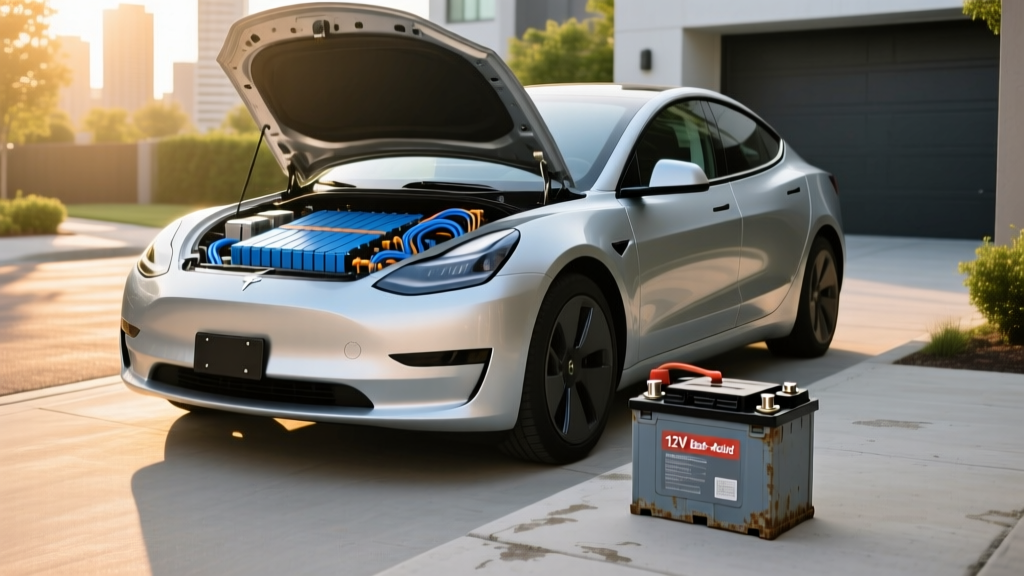
If you've ever searched for a battery for a 2002 Toyota Camry, you already understand a fundamental truth of car ownership: batteries don't last forever. A replacement 12V lead-acid battery for that mid-2000s sedan runs about $120–$180 at any auto parts store and takes five minutes to swap. But if you're now shopping for an electric vehicle, the conversation changes dramatically. The high-voltage traction battery powering an EV is a fundamentally different piece of engineering — larger, more complex, more expensive, and far longer-lasting than any 12V starter battery.
This guide breaks down exactly what's inside a modern EV battery pack, how long it realistically lasts, what degradation looks like in real data, what warranties protect you, and what a replacement would actually cost if you ever need one. We'll also compare the two dominant chemistries — LFP and NMC/NCA — so you can choose the right battery type for your driving pattern.
First Things First: The 12V Battery vs. the High-Voltage Traction Battery
Every EV on the road in 2026 still carries a small 12V auxiliary battery (or, in some newer models, a 12V lithium-iron-phosphate unit) that powers the infotainment system, lights, door locks, and onboard computers. This is the same role the 12V battery plays in a gas car — and yes, it can die just like the one in your old Camry. Replacing it is straightforward and inexpensive.
The traction battery is something else entirely. This is the high-voltage pack (typically 400V or 800V architecture) that stores the energy to actually drive the wheels. Capacities range from roughly 40 kWh in a compact city EV to over 130 kWh in a long-range pickup. It's this battery that determines your range, your charging speed, and — critically — the long-term value of the vehicle. Everything in this guide refers to the traction battery unless otherwise noted.
EV Battery Chemistry Explained: LFP vs. NMC/NCA
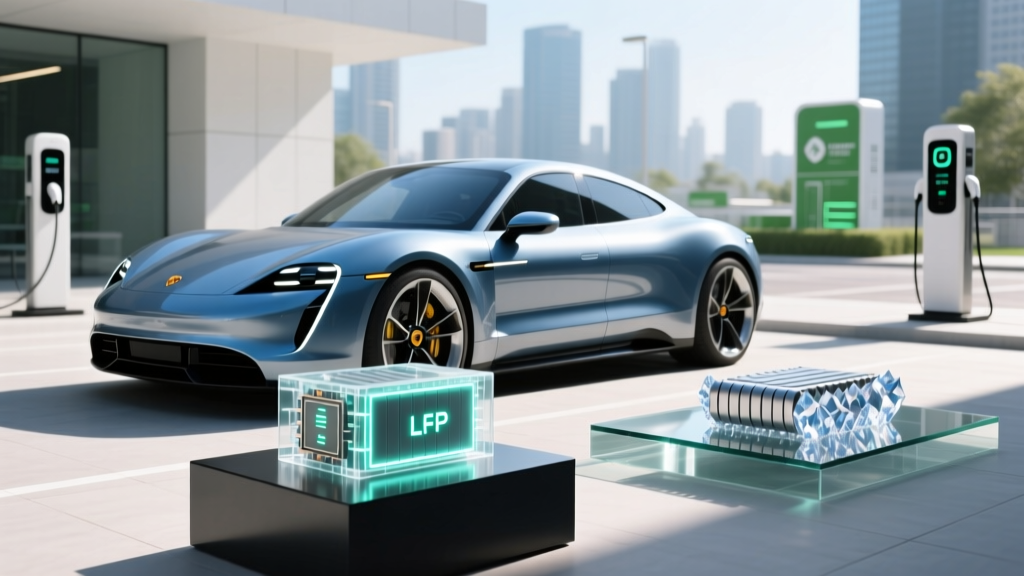
Not all EV batteries are built the same. The cathode chemistry inside the cells determines energy density, lifespan, cold-weather behavior, and cost. Two chemistries dominate the 2026 EV market:
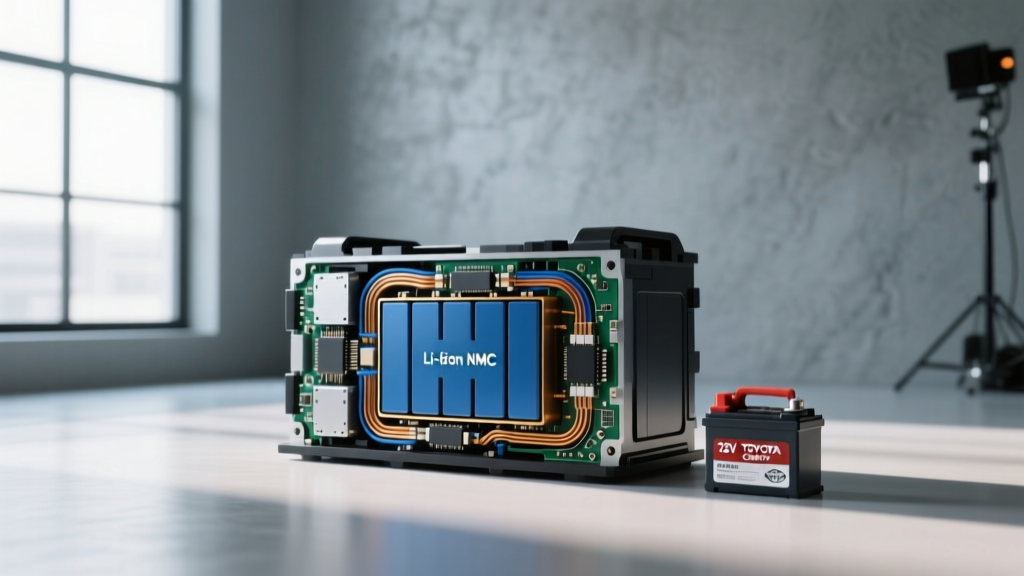
- NMC (Nickel Manganese Cobalt) and NCA (Nickel Cobalt Aluminum) — used in most long-range vehicles (Tesla Model 3 Long Range, Hyundai Ioniq 5, Ford Mustang Mach-E Extended Range, Rivian R1S).
- LFP (Lithium Iron Phosphate) — increasingly used in standard-range and value-oriented models (Tesla Model 3 RWD, BYD vehicles, base-trim Ford Mustang Mach-E, many Chinese-market EVs now entering global markets).
| Attribute | LFP (Lithium Iron Phosphate) | NMC / NCA |
|---|---|---|
| Energy Density | Lower (~160–180 Wh/kg cell-level) | Higher (~220–260 Wh/kg cell-level) |
| Typical Pack Size | 50–65 kWh (standard range models) | 75–130+ kWh (long range models) |
| Cycle Life | 3,000–5,000+ cycles to 80% SoH | 1,000–2,000 cycles to 80% SoH |
| Cold-Weather Performance | Weaker — more range loss below 32°F | Better low-temp discharge capability |
| Cost per kWh (2026) | ~$80–$100/kWh at pack level | ~$110–$140/kWh at pack level |
| Charging to 100% Regularly | Recommended (helps BMS calibration) | Not recommended daily (80% preferred) |
| Cobalt Content | None | Contains cobalt (supply chain/ethical concerns) |
| Thermal Stability | Superior — lower thermal runaway risk | Good, but requires more active thermal management |
Which Chemistry Is Better?
Neither is universally superior — it depends on your use case. If you drive a predictable daily commute under 60 miles and can charge at home every night, LFP is arguably the smarter choice: lower cost, far longer cycle life, and you can charge to 100% without guilt. If you regularly take road trips exceeding 250 miles, need maximum range in cold climates, or tow heavy loads, NMC/NCA's higher energy density delivers the range buffer you need.
How Long Do EV Batteries Actually Last?
The short answer: almost certainly longer than you'll own the car. Real-world fleet data from high-mileage EVs consistently shows that modern liquid-cooled battery packs lose roughly 10–15% of their original capacity over 150,000–200,000 miles, with the steepest drop occurring in the first 20,000–30,000 miles (typically 2–5%) before the degradation curve flattens significantly.
Typical Degradation Curve (NMC, liquid-cooled, moderate climate):
- Year 1 / 15,000 mi: ~2–4% capacity loss (initial settling)
- Year 3 / 45,000 mi: ~5–7% total loss
- Year 5 / 75,000 mi: ~7–9% total loss
- Year 8 / 120,000 mi: ~10–12% total loss
- Year 10+ / 150,000–200,000 mi: ~12–18% total loss
LFP packs in similar conditions show even slower degradation, with many fleet examples retaining 90%+ capacity past 100,000 miles. Tesla's 2025 Impact Report noted that Model 3/Y batteries retained an average of 85% capacity at 200,000 miles. Source: Digital Trends / Tesla Impact Report.
For context, a 2026 Hyundai Ioniq 5 with a 77.4 kWh NMC pack rated at 305 miles EPA would, at 85% state of health after ~200,000 miles, still deliver roughly 259 miles of EPA-equivalent range — more than adequate for most drivers. The idea that EV batteries need replacing every few years like a phone battery is not supported by fleet data.
What Does the Battery Warranty Actually Cover?
Federal law in the United States mandates that EV manufacturers warranty the traction battery for a minimum of 8 years or 100,000 miles (whichever comes first). In California Air Resources Board (CARB) states, that extends to 10 years or 150,000 miles. Most manufacturers meet or exceed these minimums.
| Vehicle | Warranty Period | Mileage Cap | Capacity Threshold |
|---|---|---|---|
| Tesla Model 3 (LFP, RWD) | 8 years | 100,000 mi | Below 70% retention |
| Tesla Model 3 (NMC, Long Range) | 8 years | 120,000 mi | Below 70% retention |
| Hyundai Ioniq 5 | 10 years | 100,000 mi | Below 70% retention |
| Ford Mustang Mach-E | 8 years | 100,000 mi | Below 70% retention |
| Chevrolet Equinox EV | 8 years | 100,000 mi | Below 60% retention |
| Rivian R1S / R1T | 8 years | 175,000 mi | Below 70% retention |
| BMW i4 | 8 years | 100,000 mi | Below 70% retention |
How warranty claims work: If your battery's measured state of health drops below the stated threshold within the warranty window, the manufacturer will repair or replace the pack (or individual modules, depending on the design) at no cost to you. In practice, very few owners have needed to file these claims — the vast majority of packs remain well above 70% capacity even at the end of the warranty term.
The warranty covers defects and abnormal degradation. It does not cover damage from accidents, flooding, improper modifications, or running the battery to 0% and leaving it uncharged for extended periods. Always check your specific owner's manual for exclusions.
How Much Does an EV Battery Replacement Cost?
This is the question that generates the most anxiety — and the most misinformation. Yes, a full traction battery replacement is expensive. But it's also extremely rare within the first 10–15 years of ownership, and costs have been declining steadily.
| Vehicle / Pack Size | Battery Cost (Parts) | Labor | Total Estimate |
|---|---|---|---|
| Nissan LEAF (40 kWh, NMC) | $6,500–$8,500 | $1,500–$2,500 | $8,000–$11,000 |
| Chevrolet Bolt EV (65 kWh, NMC) | $9,000–$12,000 | $2,000–$3,000 | $11,000–$15,000 |
| Tesla Model 3 (57 kWh LFP / 79 kWh NMC) | $8,000–$14,000 | $1,500–$2,500 | $10,000–$16,500 |
| Hyundai Ioniq 5 (77.4 kWh, NMC) | $11,000–$15,000 | $2,000–$3,500 | $13,000–$18,500 |
| Ford F-150 Lightning (131 kWh, NMC) | $18,000–$25,000 | $3,000–$4,500 | $21,000–$29,500 |
| Rivian R1T (149 kWh, NMC) | $20,000–$28,000 | $3,000–$5,000 | $23,000–$33,000 |
Important context: These are worst-case, full-pack-replacement figures. Many degradation issues can be resolved by replacing individual modules rather than the entire pack, which can cost 40–60% less. Additionally, a growing market for refurbished and second-life battery packs is emerging, offering replacements at 30–50% below new-pack pricing. By the time most 2026 EVs need a battery replacement (likely the late 2030s or 2040s), costs are projected to be significantly lower due to continued cell-price declines and a maturing aftermarket.
For perspective, a timing belt replacement on a gas car costs $800–$1,500 and is needed every 60,000–100,000 miles. A transmission rebuild runs $3,000–$7,000. An EV battery replacement is a larger single expense, but it's needed far less frequently — and most EVs will reach end-of-life (from other mechanical or economic factors) before the pack fails outright.
What Affects Battery Life — and How to Maximize It
Battery degradation isn't random. It's driven by measurable, controllable factors. Here's what actually matters, ranked by impact:
Battery Longevity Checklist
- Avoid sustained extreme State of Charge: For NMC/NCA packs, daily charging to 80% and avoiding drops below 10% significantly slows degradation. LFP packs are the exception — charge to 100% at least weekly for BMS calibration.
- Minimize DC fast charging when possible: Occasional DC fast charging (road trips) is fine. Daily reliance on 150+ kW DC charging accelerates wear due to heat generation. Level 2 home charging (7–11 kW) is gentler on cells.
- Use preconditioning: Most EVs let you precondition the battery before fast charging or departure. This warms the cells to optimal temperature (typically 70–90°F / 21–32°C), reducing stress during high-rate charging and improving regenerative braking in cold weather.
- Park in shade or a garage when possible: Sustained exposure to ambient temperatures above 95°F (35°C) accelerates calendar degradation, even when the car isn't driven. Liquid-cooled packs mitigate this, but thermal management systems work harder (and consume energy) in extreme heat.
- Don't store at 100% or 0%: If leaving your EV unused for more than a week, set the charge limit to 50–60%. Storing at full charge stresses the cathode; storing near empty risks the 12V system draining and leaving the contactors unable to close.
- Drive it regularly: Batteries prefer regular, moderate use over long periods of inactivity. Even a short 10-minute drive every few days keeps cells balanced and the thermal management system active.
How to Monitor Your Battery's State of Health (SoH)
State of Health (SoH) is a percentage representing your battery's current maximum capacity relative to its original factory capacity. A brand-new pack is 100% SoH; a pack that can now only hold 88 kWh of its original 100 kWh is at 88% SoH.
How to check it:
- In-vehicle displays: Tesla, BMW, and Hyundai/Kia offer varying levels of battery health information through the infotainment or service menus. Tesla's "Battery Health" test (introduced in 2024) runs a controlled discharge cycle and reports an SoH estimate.
- OBD-II dongles + apps: Third-party tools like OBDeleven, Leaf Spy (for Nissan LEAF), and Scan My Tesla can read the BMS (Battery Management System) directly and report detailed cell-level data, including individual cell voltage variance, which is a leading indicator of pack imbalance.
- Dealer diagnostics: Any authorized service center can pull a full battery health report. Request one at your annual service visit — it's typically free under warranty.
- Third-party services: Companies like Recurrent Auto and Geotab offer battery health reports based on telematics data, and some used-EV listing platforms now include verified SoH data (similar to a Carfax report for battery condition).
What to watch for: A sudden drop in SoH (more than 3–4% in a single month) or increasing cell voltage variance (above 50mV between the highest and lowest cells) may indicate a failing module. This is exactly the kind of issue a warranty claim should cover.
Looking Ahead: Solid-State and Silicon-Anode Batteries
The next major leap in battery technology is solid-state batteries, which replace the liquid electrolyte with a solid material (ceramic, sulfide, or polymer). The promised benefits are substantial:
- Energy density of 350–500 Wh/kg (roughly 2x current NMC cells)
- Faster charging (potential for 10–80% in under 10 minutes)
- Improved safety (no flammable liquid electrolyte)
- Longer cycle life
Realistic timeline: As of early 2026, Toyota has announced limited production of solid-state-equipped vehicles for the Japanese market in 2027–2028, with broader global availability expected no earlier than 2029–2030. Samsung SDI and QuantumScape are in advanced prototype and early sampling phases with OEM partners. No solid-state EV is currently available for purchase in the United States. Treat any marketing claims to the contrary as preliminary.
Silicon-anode batteries are closer to market. By blending silicon into the graphite anode (currently 5–10% silicon content, targeting 20–50%), manufacturers can boost energy density by 15–30% without a full chemistry overhaul. Group14 Technologies and Sila Nanotechnologies are supplying silicon-anode materials to battery manufacturers, and several 2027–2028 model-year EVs are expected to feature cells with elevated silicon content. This is an incremental improvement, not a revolution — but it will meaningfully extend range within the same physical pack size.
Frequently Asked Questions
How long do EV batteries last in years and miles?
Based on fleet data from Tesla, Hyundai, and large-scale telematics studies by Geotab and Recurrent Auto, modern liquid-cooled EV batteries retain 85–90% of their original capacity at 150,000–200,000 miles (roughly 10–15 years of average use). Complete failure requiring full replacement within the warranty period is statistically rare — well under 2% of vehicles according to manufacturer warranty claim data. Most EV batteries will outlast the vehicle's useful economic life.
How much does an EV battery cost to replace in 2026?
Out-of-warranty full-pack replacement costs range from approximately $8,000 for a smaller pack (40–57 kWh) to $25,000–$33,000 for a large pack (130–150 kWh) in a truck or large SUV, including labor. Module-level repairs are significantly cheaper. These costs are expected to decline as cell prices continue falling and the refurbished-pack market matures. For reference, fueleconomy.gov provides detailed efficiency and range data to help you evaluate whether a used EV's remaining range meets your needs even with some degradation.
What does the federal EV battery warranty cover?
Under federal mandate, all EV traction batteries sold in the U.S. carry a minimum warranty of 8 years/100,000 miles (10 years/150,000 miles in CARB states). The warranty covers capacity loss below a stated threshold — typically 70% of original capacity (some manufacturers use 60%). If your battery degrades below that threshold within the warranty window, the manufacturer repairs or replaces it at no cost. The warranty does not cover physical damage, abuse, or neglect (such as leaving the pack at 0% SoC for extended periods).
How do I check and maximize my EV battery health?
Monitor SoH through your vehicle's built-in diagnostics, OBD-II apps (Leaf Spy, Scan My Tesla, OBDeleven), or dealer service reports. Maximize longevity by charging NMC/NCA packs to 80% daily (LFP to 100%), minimizing daily DC fast charging, using preconditioning before fast charges, avoiding extreme storage temperatures, and not leaving the car at 0% or 100% SoC for extended periods. See the battery care checklist above for a complete guide.
LFP vs. NMC — which battery chemistry should I choose?
Choose LFP if you have predictable daily driving under 80 miles, charge at home nightly, prioritize lowest cost and longest cycle life, and don't regularly face sub-freezing temperatures. Choose NMC/NCA if you need maximum range (300+ miles), frequently road-trip, tow, or live in a cold climate where energy density matters more. Both chemistries are proven and reliable — the right choice depends on your driving pattern, not on one being universally "better."
Will I need to replace my EV battery like I replaced the battery in my old Camry?
No. The 12V auxiliary battery in an EV may need replacement every 4–6 years, just like in a conventional car (and the process is similar to swapping a battery in a 2002 Toyota Camry — straightforward and inexpensive). The high-voltage traction battery is a fundamentally different system designed to last the life of the vehicle. Treat the 12V battery as routine maintenance; treat the traction battery as a long-term asset protected by an 8–10 year warranty.
EV battery technology in 2026 is mature, well-understood, and backed by extensive real-world data. The fear of a surprise $20,000 battery bill is not supported by degradation curves or warranty claim rates. Whether you choose LFP for its durability and value or NMC for its range and cold-weather capability, modern battery packs are engineered to outlast the car around them — a far cry from the $150 lead-acid swap you'd do on a two-decade-old sedan.