The Real Story on EV Battery Longevity
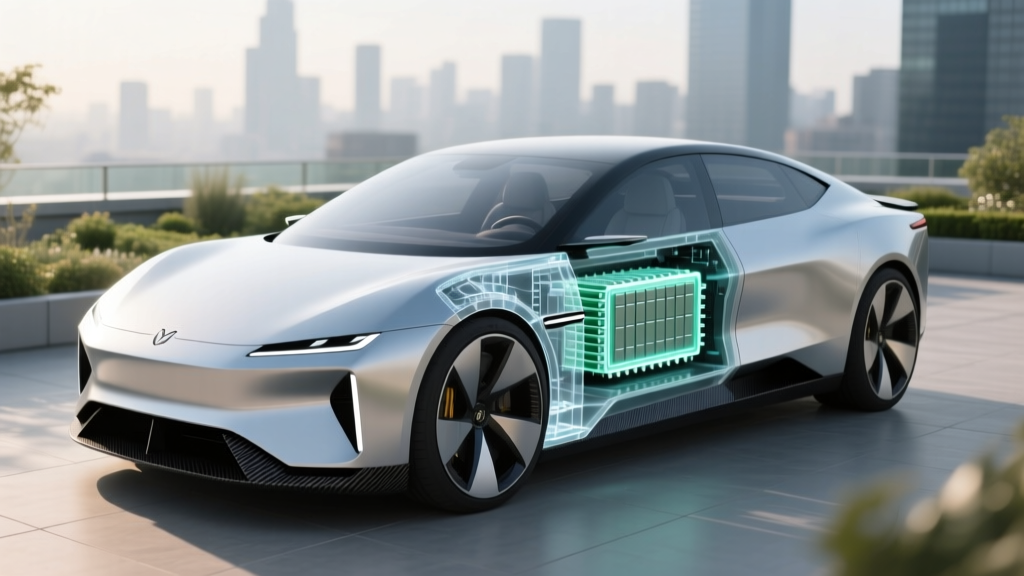
The single most expensive component in any electric vehicle is the high-voltage traction battery — the large lithium-ion pack that stores energy and powers the motor. For most 2026 EVs, that pack represents 25-40% of the vehicle's total manufacturing cost. Yet widespread fear that the battery in electric car ownership will inevitably lead to a $15,000+ replacement bill within a few years doesn't match the data we've accumulated over more than a decade of real-world EV deployments.
Modern EV batteries are engineered to outlast the useful life of the vehicle itself in most cases. Tesla's 2025 Impact Report showed its Model 3 and Model Y packs retained an average of 85% capacity after 200,000 miles. Hyundai's Ioniq 5 fleet data tells a similar story: roughly 90% state of health (SoH) at 100,000 miles under normal use. The chemistry, thermal management, and buffer strategies have improved dramatically since the early Nissan Leaf days.
This guide breaks down exactly what's inside your EV's battery, how it degrades, what the warranty actually covers, and what you'd pay if the worst happened — all backed by published data, not marketing claims.
LFP vs. NMC/NCA: Which Battery Chemistry Is in Your EV?
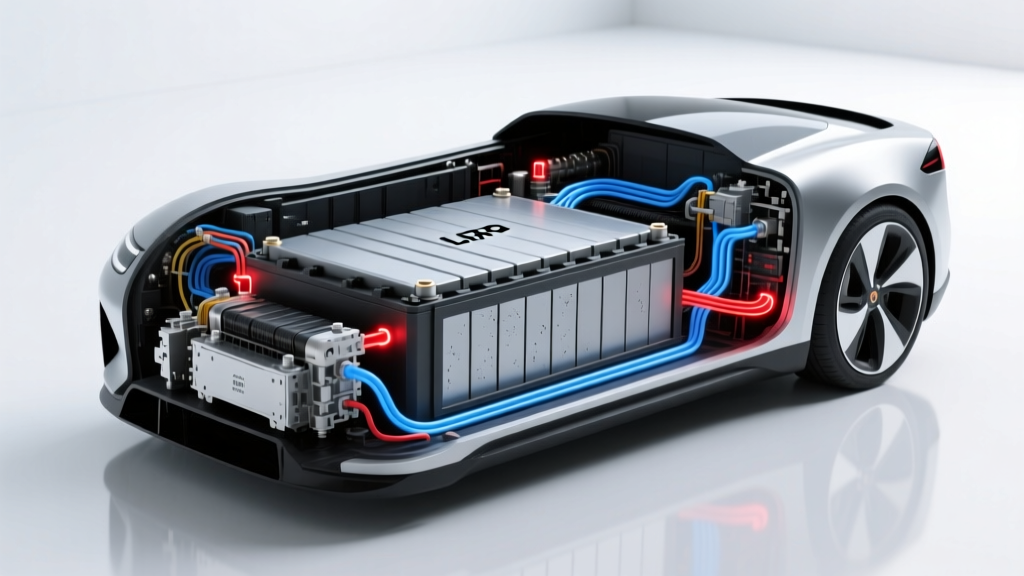
Not all lithium-ion batteries are the same. The cathode chemistry determines energy density, cycle life, cost, cold-weather behavior, and how aggressively you can charge to 100%. In 2026, two chemistries dominate the US market:
- LFP (Lithium Iron Phosphate): Used in the Tesla Model 3 RWD, Model Y RWD (Standard Range), base Ford Mustang Mach-E Select, and several Chinese-market imports. No cobalt or nickel.
- NMC (Nickel Manganese Cobalt) / NCA (Nickel Cobalt Aluminum): Used in most long-range and performance trims — Tesla Model 3 Long Range, Hyundai Ioniq 5/6, Kia EV6/EV9, Chevrolet Equinox EV, Rivian R1S/R1T, Ford F-150 Lightning Extended Range.
| Attribute | LFP (LiFePO4) | NMC / NCA |
|---|---|---|
| Energy density (cell-level) | ~160-180 Wh/kg | ~220-300 Wh/kg |
| Typical cycle life (to 80% SoH) | 3,000-5,000+ cycles | 1,000-2,000 cycles |
| Cold-weather range loss (~20°F) | ~30-40% loss | ~20-30% loss |
| 100% SoC daily charging | Recommended (helps BMS calibration) | Not recommended (accelerates degradation) |
| DC fast-charge tolerance | Excellent; less dendrite risk | Good; thermal management critical |
| Cost per kWh (2026 pack-level) | ~$95-$115 | ~$120-$155 |
| Cobalt/nickel sourcing concerns | None | Moderate to high |
| §30D critical-mineral eligibility | Often easier to meet (no cobalt) | Depends on supply chain |
How Long Do EV Batteries Actually Last?
The honest answer: longer than most owners keep the car. Federal law mandates that EV battery warranties cover at least 8 years or 100,000 miles (10 years/150,000 miles in CARB states like California, New York, and Massachusetts). But real-world degradation data consistently shows packs lasting 200,000-300,000+ miles before hitting the 70% capacity threshold that triggers a warranty claim.
- Tesla Model 3/Y (NMC, 2018-2023 fleet): ~85% SoH at 200,000 miles per Tesla's 2025 Impact Report. Loss rate slows significantly after the first 30,000 miles.
- Chevrolet Bolt EV/EUV (NMC, 65 kWh): GM reported average 94% SoH at 60,000 miles in warranty-claim data. The Bolt's conservative 90% usable buffer protects the pack.
- Nissan Leaf (early 2011-2017, air-cooled, 24-30 kWh): The cautionary tale — passive air cooling and small buffers led to 70-80% SoH at 60,000-80,000 miles in hot climates. Modern liquid-cooled packs avoid this.
- Hyundai Ioniq 5 (NMC, 77.4 kWh): Owner-reported data on EV tracking forums averages ~92% SoH at 50,000 miles.
The degradation curve is not linear. Most packs lose 3-5% in the first year (calendar aging + initial formation losses), then settle into roughly 1-2% loss per year or per 15,000 miles under normal use. This means a 300-mile EPA-range EV might deliver 285 miles at year one, 275 miles at year five, and 260 miles at year ten — still entirely usable for daily driving.
What the Battery Warranty Actually Covers
Every EV sold in the US in 2026 includes a federally mandated high-voltage battery warranty. Here is how the major manufacturers structure theirs:
| Manufacturer | Duration / Mileage | Capacity Retention Threshold | Notes |
|---|---|---|---|
| Tesla (Model 3/Y RWD — LFP) | 8 yr / 100,000 mi | 70% | Module-level repair where possible |
| Tesla (Model 3/Y LR, S, X — NMC/NCA) | 8 yr / 120,000 mi (S/X: 150,000 mi) | 70% | Full pack replacement if below threshold |
| Hyundai / Kia (Ioniq 5/6, EV6/EV9) | 10 yr / 100,000 mi | 70% | Longest standard duration among non-CARB |
| GM (Equinox EV, Blazer EV, Silverado EV) | 8 yr / 100,000 mi | 70% | Ultium platform; modular repair capability |
| Ford (Mach-E, F-150 Lightning) | 8 yr / 100,000 mi | 70% | Covers battery and hybrid/EV components |
| Rivian (R1S, R1T) | 8 yr / 175,000 mi | 70% | Highest mileage threshold in the segment |
| CARB-state coverage (CA, NY, MA, etc.) | 10 yr / 150,000 mi | Varies (typically 70%) | Applies to all brands in those states |
Critical fine print: The warranty covers the battery dropping below the stated capacity threshold — not normal gradual loss. If your 77.4 kWh Ioniq 5 pack shows 75% SoH at year 9, that's a warranty claim. If it shows 72% at year 8 and 105,000 miles, you're outside coverage. The warranty also does not cover damage from accidents, flooding, or improper aftermarket modifications.
EV Battery Replacement Costs: What You'd Actually Pay
If your battery fails outside warranty — which, statistically, is uncommon before 200,000+ miles — the replacement cost depends on pack size, chemistry, and whether the manufacturer supports module-level repair versus full pack swap.
| Vehicle / Pack Size | Chemistry | Est. Parts Cost | Est. Labor | Total Range |
|---|---|---|---|---|
| Tesla Model 3 RWD (60 kWh LFP) | LFP | $6,000-$8,000 | $1,500-$2,500 | $7,500-$10,500 |
| Tesla Model Y LR (75 kWh NMC) | NMC | $9,000-$12,000 | $1,500-$2,500 | $10,500-$14,500 |
| Hyundai Ioniq 5 (77.4 kWh NMC) | NMC | $10,000-$13,000 | $2,000-$3,000 | $12,000-$16,000 |
| Ford F-150 Lightning Ext. (131 kWh NMC) | NMC | $16,000-$22,000 | $3,000-$4,500 | $19,000-$26,500 |
| Chevrolet Bolt EV (65 kWh NMC) | NMC | $7,500-$10,000 | $1,500-$2,500 | $9,000-$12,500 |
| Rivian R1T Dual-Motor (149 kWh NMC) | NMC | $18,000-$24,000 | $3,000-$5,000 | $21,000-$29,000 |
When is replacement typically needed? The vast majority of battery replacements happen due to manufacturing defects caught under warranty, physical damage from road debris or collisions, or coolant system failures that damage cells — not gradual wear. Out-of-pocket replacement due to end-of-life degradation is rare before 15-20 years of service. According to fueleconomy.gov, the failure rate for modern liquid-cooled packs in the first 100,000 miles is well under 1%.
Five Factors That Accelerate (or Preserve) Battery Life
Your daily habits have a measurable impact on how quickly the battery in electric car ownership degrades. Here are the five biggest variables, ranked by impact:
- 1. State of Charge habits (High impact): For NMC/NCA packs, keep daily SoC between 20-80%. Charging to 100% occasionally for road trips is fine — leaving it at 100% for days or weeks accelerates calendar aging. LFP packs are the exception: charge to 100% at least once a week for accurate BMS calibration.
- 2. Extreme temperature exposure (High impact): Battery degradation accelerates above 95°F and below 10°F at high SoC. Garage parking in summer and preconditioning while plugged in during winter are the most effective protections. Modern liquid-cooled packs (all 2026 US-market EVs) actively manage this, but they can't fight physics if parked unplugged in a Phoenix July at 90% SoC.
- 3. DC fast-charging frequency (Moderate impact): Exclusive use of DC fast charging (150+ kW) does increase degradation — studies from NREL show roughly 1-2% additional annual loss versus primarily Level 2 home charging. The real risk is frequent fast charging combined with high SoC and high temperatures. Occasional road-trip fast charging is not a concern.
- 4. Sustained high SoC storage (Moderate impact): Storing an EV at 100% SoC for weeks (vacation, long business trip) causes more calendar degradation than any driving pattern. Set the charge limit to 50-60% if the car will sit for more than a week unplugged.
- 5. Regenerative braking aggressiveness (Low impact): High regen settings cause more frequent micro-cycles at the top of the SoC range, but the effect is minor compared to temperature and SoC habits. Use whatever regen setting you prefer for comfort.
How to Check Your Battery's State of Health
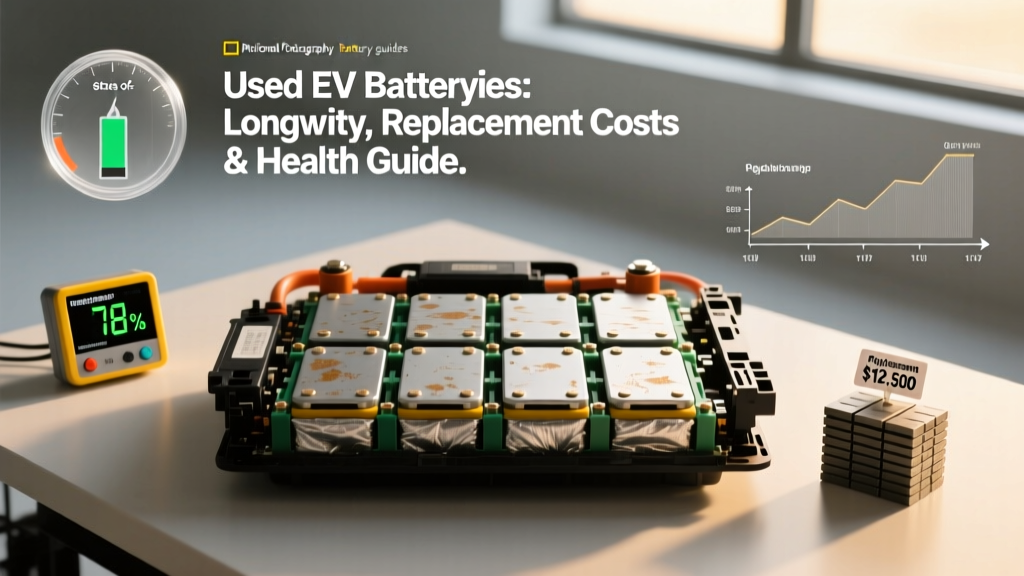
State of Health (SoH) is the percentage of original capacity your battery can still hold. A new 77.4 kWh pack at 95% SoH can store roughly 73.5 kWh. Here's how to monitor it:
Manufacturer Apps and In-Car Displays
Most 2026 EVs surface SoH data directly. Tesla shows estimated range and you can calculate SoH by comparing current max range at 100% to original EPA range (adjusted for known test-cycle differences). Hyundai/Kia's infotainment includes a battery health screen under EV diagnostics. GM's Ultium-based vehicles display SoH percentage in the myChevrolet/myCadillac app. Ford provides a battery health indicator in the FordPass app.
Third-Party Tools
For more granular data, OBD-II dongles paired with apps like Scan My Tesla, Leaf Spy (Nissan), or Car Scanner ELM OBD2 can read the battery management system's internal SoH calculation, cell voltage deltas, and pack temperature. These readings are more precise than the dashboard estimate and help you spot early signs of cell imbalance.
Dealer Diagnostic Reports
Any authorized dealer can pull a full battery health report during a service visit. If you're approaching a warranty mileage threshold (say, 95,000 miles on an 8yr/100,000 mi warranty), requesting this report proactively gives you documentation in case you need to file a claim.
Emerging Battery Tech: Solid-State and Silicon Anodes
Several next-generation battery technologies are in advanced development, but none are available in production vehicles sold in the US as of 2026. Here's where they stand:
- Solid-state batteries: Toyota has announced a solid-state pack targeting 2027-2028 production with ~450-mile range and 10-minute fast charging. QuantumScape (backed by Volkswagen) continues prototype testing with promising energy density numbers (~350-400 Wh/kg). Samsung SDI targets 2027 production. Realistic timeline: limited production in luxury models by 2028-2029; mainstream availability not before 2030-2032.
- Silicon anode batteries: Replacing graphite anodes with silicon increases energy density by 20-40%. Sila Nanotechnologies and Group14 are supplying early production cells for niche applications. Mercedes-Benz's EQG (G-Class EV) is expected to use silicon anode cells. Realistic timeline: appearing in premium vehicles 2026-2028; cost parity with graphite anodes likely post-2030.
- Sodium-ion batteries: CATL and BYD are deploying sodium-ion packs in Chinese-market vehicles. Lower energy density (~120-150 Wh/kg) but dramatically lower cost and no lithium, cobalt, or nickel. Realistic timeline: possible in US-market budget EVs or stationary storage by 2028-2030, but not in current US models.
Frequently Asked Questions
How long does the battery in electric car ownership typically last?
Based on fleet data from Tesla, Hyundai, GM, and independent tracking, modern liquid-cooled EV batteries retain 70-85% of original capacity at 200,000 miles or 15+ years. Most packs will outlast the vehicle's economic life. The days of early battery failure (a problem for the 2011-2015 Nissan Leaf with passive air cooling) are behind the industry.
How much does it cost to replace an EV battery?
Out-of-warranty replacement costs range from roughly $7,500 for a Tesla Model 3 RWD (60 kWh LFP) to $26,500+ for a Ford F-150 Lightning Extended Range (131 kWh NMC). However, the overwhelming majority of replacements happen under warranty due to manufacturing defects, not end-of-life wear. The statistical likelihood of paying out of pocket for a battery replacement is low.
Is LFP better than NMC?
Neither is universally better — they serve different use cases. LFP wins on cycle life (3,000-5,000 cycles vs. 1,000-2,000), cost (~$95-$115/kWh vs. $120-$155/kWh), and daily charging convenience (100% SoC is fine). NMC wins on energy density (220-300 Wh/kg vs. 160-180 Wh/kg), which means more range in the same pack size, and better cold-weather performance (~20-30% range loss vs. 30-40% at 20°F). Choose LFP for daily commuting under 250 miles; choose NMC for maximum range and cold-climate driving.
Does fast charging damage the battery?
Exclusively relying on DC fast charging (150+ kW) causes roughly 1-2% additional annual degradation compared to primarily Level 2 home charging, according to NREL research. The real risk is combining frequent fast charging with high state of charge and high ambient temperatures. Using DC fast charging for road trips while doing daily charging at home on Level 2 is a perfectly healthy pattern for your battery.
How do I check my EV battery health?
Most 2026 EVs display SoH data in the manufacturer's app or in-car diagnostics screen. For more detailed readings — cell voltage variance, internal resistance, precise SoH percentage — use an OBD-II dongle with apps like Scan My Tesla or Car Scanner. You can also request a full battery health report from any authorized dealer, which is smart to do before your warranty mileage expires.
What voids an EV battery warranty?
Typical warranty exclusions include physical damage from collisions or road debris, water submersion, unauthorized aftermarket modifications to the high-voltage system, and use of the battery for non-automotive purposes (e.g., stationary storage without manufacturer approval). Normal degradation above the 70% threshold is covered; gradual loss that stays above 70% is not a warranty event.