When a battery icon lights up on your EV's dashboard, it can range from a routine low-state-of-charge alert to a high-voltage system fault that demands immediate attention. Unlike a gas car's check-engine light, EV battery warnings are tied directly to the traction battery—the large lithium-ion pack that powers your drivetrain—and understanding what triggers them is essential for both safety and long-term ownership costs.
This guide breaks down every layer of EV battery ownership: the chemistry inside your pack, what real-world degradation data shows, what warranties actually cover, what a replacement costs if you ever need one, and how to monitor your battery's State of Health (SoH) before a warning light ever appears.
What the Battery Icon on Your Dashboard Actually Means
Modern EVs use several distinct battery-related dashboard indicators, and confusing them is easy. Here is what each one signals:
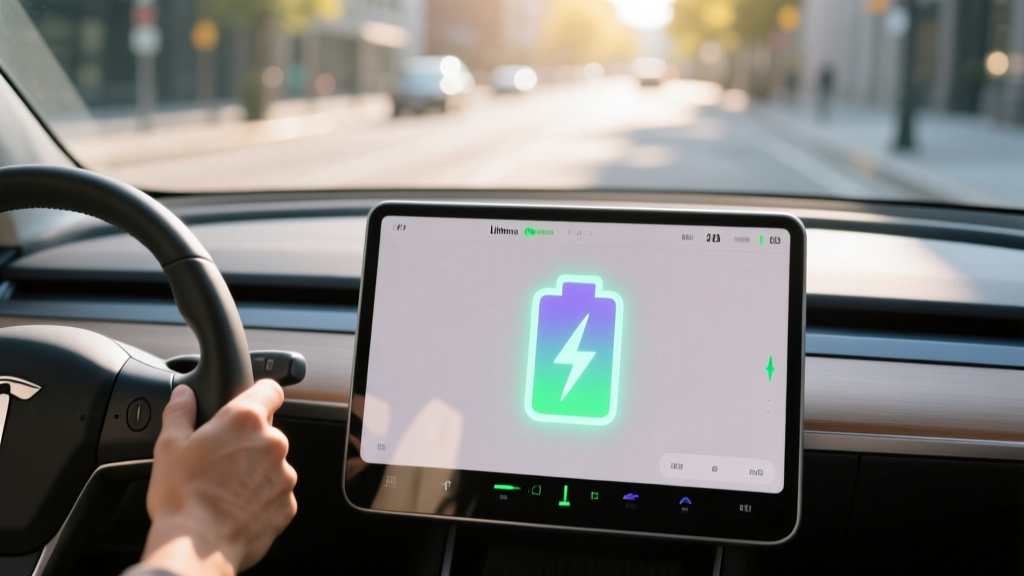
- Low State of Charge (SoC) warning: Typically a green or yellow battery icon showing remaining percentage. This is not a fault—it is simply telling you the pack is below a threshold (often 10–15%) and you should plan to charge soon.
- Battery temperature warning: A red or orange icon, sometimes with a thermometer symbol. This indicates the traction battery has exceeded its safe operating temperature, usually from sustained high-power DC fast charging in hot weather, aggressive track driving, or a cooling system fault. Pull over and let the thermal management system work.
- High-voltage system fault: A red battery icon, often accompanied by a "Stop Safely" or "Service Required" message. This signals a cell imbalance, isolation fault, contactor issue, or sensor failure within the pack. Do not continue driving—contact roadside assistance or your dealer.
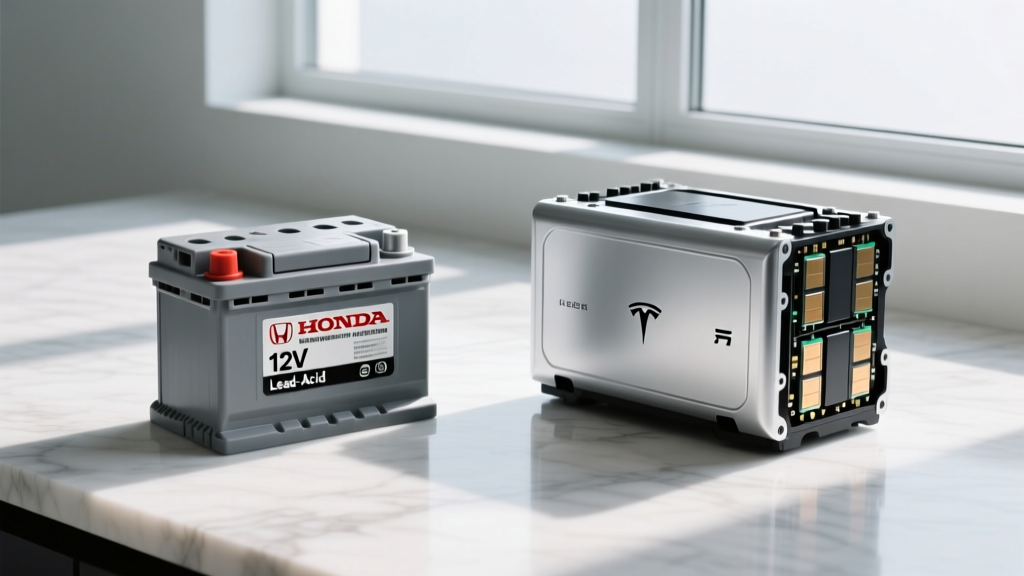
- 12V auxiliary battery warning: A separate icon (usually a traditional battery symbol) indicating the small 12V lead-acid or lithium-iron-phosphate auxiliary battery that powers electronics, lights, and the contactor that closes the high-voltage circuit. This is not your traction battery, but if it dies, your EV will not start.
EV Battery Chemistry: LFP vs. NMC vs. NCA Explained
The two dominant lithium-ion chemistries in today's EVs are Lithium Iron Phosphate (LFP) and Nickel Manganese Cobalt (NMC), with Nickel Cobalt Aluminum (NCA) used primarily by Tesla and a few others. The chemistry determines your pack's energy density, lifespan, cold-weather behavior, and cost.
| Attribute | LFP (Lithium Iron Phosphate) | NMC / NCA (Nickel-based) |
|---|---|---|
| Energy Density | Lower (~160–200 Wh/kg cell-level). Heavier pack for same kWh. | Higher (~220–300 Wh/kg cell-level). More range per kg. |
| Cycle Life | 3,000–5,000+ full cycles to 80% SoH | 1,000–2,000 full cycles to 80% SoH |
| Cold Performance | Weaker below 32°F (0°C); more range loss and slower charging in winter | Better low-temp conductivity; less winter range penalty |
| Thermal Stability | Excellent; higher thermal runaway threshold (~270°C) | Good but lower runaway threshold (~210°C); requires robust BMS |
| Recommended SoC | Can charge to 100% regularly without accelerated degradation | Best kept 20–80% for daily use; 100% only before trips |
| Cost per kWh | Lower (~$90–110/kWh at cell level, 2025–2026) | Higher (~$120–150/kWh at cell level) |
| Common Vehicles (2026) | Tesla Model 3/Y RWD, Ford Mustang Mach-E Select (LFP option), BYD models, base Chevy Equinox EV | Tesla Long Range/Performance, Hyundai Ioniq 5/6, Kia EV6/EV9, Ford F-150 Lightning Extended, Rivian, BMW iX |
Which Chemistry Is Better?
Neither is universally superior. LFP is better if you want maximum cycle life, lower cost, can charge to 100% daily, and live in a moderate or warm climate. NMC/NCA is better if you need maximum range from a lighter pack, drive in cold winters, or want the fastest DC fast-charging speeds in low temperatures. Most buyers prioritizing longevity and value should lean LFP; those prioritizing range and cold-weather usability should lean NMC.
How Long Do EV Batteries Last? Real-World Degradation Data
The question "how long will my EV battery last?" has a data-backed answer that is reassuring for most buyers. EV batteries do not suddenly fail like a phone battery; they gradually lose capacity over time and miles.
- Year 1 / ~15,000 miles: 2–5% capacity loss (initial formation loss)
- Years 2–5 / ~75,000 miles: ~1–2% loss per year (linear phase)
- Years 5–10 / ~150,000 miles: Cumulative ~10–15% loss for most packs
- 200,000+ miles: Most NMC packs retain 75–85% SoH; LFP packs often retain 85–92%
According to data compiled by Recurrent Auto, which tracks over 15,000 EVs in real-world conditions, the median Tesla Model 3 fleet showed approximately 88% State of Health at 100,000 miles. Hyundai Ioniq 5 owners tracked on the EPA's fueleconomy.gov database and owner forums report similar trajectories, with most 2022–2024 models retaining 92–95% capacity at 30,000 miles.
LFP packs degrade more slowly. Tesla's own impact report and third-party analyses show LFP Model 3 RWD packs retaining approximately 92–95% capacity at 100,000 miles, with the chemistry's superior cycle life being the primary driver.
Factors That Accelerate Degradation
Not all miles are equal for battery wear. The following factors measurably increase capacity loss:
- Frequent DC fast charging above 150 kW: High C-rates generate heat. Occasional road-trip fast charging is fine; daily 250 kW sessions will accelerate degradation by an estimated 1–3% over 5 years versus Level 2-only charging.
- Sustained high State of Charge (NMC/NCA only): Storing an NMC pack at 100% SoC for days or weeks accelerates electrolyte decomposition. LFP packs are immune to this concern.
- Extreme heat exposure: Ambient temperatures consistently above 95°F (35°C) without active cooling degrade cells faster. Vehicles with liquid-cooled packs (nearly all modern EVs) mitigate this significantly.
- Deep discharge cycles: Regularly running the pack below 5% SoC stresses cells. Most BMS systems have a bottom buffer (~2–5% of gross capacity) to prevent true zero, but habitually arriving at 0% is still suboptimal.
- Cold charging without preconditioning: Charging an NMC or LFP pack below freezing without battery preconditioning can cause lithium plating on the anode, a permanent degradation mechanism. Always precondition before winter fast charging.
What the Battery Warranty Covers — and What It Doesn't
Federal law mandates that EV battery warranties cover a minimum of 8 years / 100,000 miles (10 years / 150,000 miles in California Air Resources Board states). Most manufacturers exceed this baseline.
| Manufacturer | Coverage Period | Capacity Retention Threshold | Notes |
|---|---|---|---|
| Tesla (Model 3/Y) | 8 yr / 120,000 mi (LR/Perf); 8 yr / 100,000 mi (RWD) | 70% retention | Covers defects and capacity below threshold |
| Hyundai / Kia | 10 yr / 100,000 mi | 70% retention | Among the longest coverage periods |
| Ford (Mach-E, F-150 Lightning) | 8 yr / 100,000 mi | 70% retention | Covers battery components and capacity |
| GM (Chevy, Cadillac, GMC EVs) | 8 yr / 100,000 mi | 60% retention (some models 70%) | Check specific model—Ultium terms vary |
| BMW | 8 yr / 100,000 mi | 70% retention | Transferable to second owner |
| Rivian | 8 yr / 175,000 mi (R1T/R1S) | 70% retention | Highest mileage threshold in segment |
What is covered: Manufacturing defects, cell failures, BMS malfunctions, and capacity loss below the stated threshold. If your pack drops below 70% SoH within the warranty window, the manufacturer replaces or refurbishes it at no cost.
What is typically excluded: Damage from accidents, flooding, unauthorized modifications, or use outside normal operating parameters (e.g., stationary energy storage use of a vehicle pack). Normal gradual degradation above the threshold is not a warranty claim.
EV Battery Replacement Cost: What You Would Actually Pay
Out-of-warranty battery replacement is the single biggest fear among prospective EV buyers. Here is the reality: the vast majority of EV batteries outlive their vehicles. Data from Recurrent Auto and IIHS vehicle longevity studies suggest fewer than 2–3% of EVs require a full pack replacement under normal ownership. When replacement is needed, it is usually due to a manufacturing defect (covered by warranty), physical damage, or extreme mileage well beyond 200,000 miles.
That said, if you do face an out-of-warranty replacement, here are current (2025–2026) cost ranges:
| Vehicle | Battery Size | Estimated Pack Cost | Total w/ Labor |
|---|---|---|---|
| Tesla Model 3 RWD (LFP) | ~60 kWh | $7,000–$10,000 | $10,000–$14,000 |
| Tesla Model Y Long Range (NMC) | ~75 kWh | $12,000–$16,000 | $15,000–$20,000 |
| Hyundai Ioniq 5 (NMC) | 77.4 kWh | $12,000–$18,000 | $16,000–$22,000 |
| Ford F-150 Lightning Ext. Range | 131 kWh | $20,000–$30,000 | $25,000–$36,000 |
| Chevy Equinox EV (NMC) | ~85 kWh | $11,000–$16,000 | $14,000–$20,000 |
Costs are declining. Cell prices have fallen from over $300/kWh in 2015 to roughly $100–130/kWh in 2025–2026. Module-level repairs (replacing individual faulty modules rather than the entire pack) are increasingly available from independent EV shops for $2,000–$6,000, depending on the number of modules affected.
How to Check and Maximize Your EV Battery Health
Monitoring your battery's State of Health (SoH) is proactive ownership. Here is how to check it and what to do with the data.
How to Check Battery SoH
- In-vehicle diagnostics: Many 2024–2026 EVs include a battery health readout in the settings menu. Tesla added a battery health percentage display via software update. Hyundai/Kia offers SoH via the infotainment service menu. BMW iDrive shows estimated range vs. original as a proxy.
- OBD-II scanners with EV support: Tools like the OBDLink SX paired with apps such as EV Bat Mon or Car Scanner can read BMS-reported SoH, cell voltage spreads, and pack temperature directly.
- Dealer diagnostic report: Request a battery health printout during service visits. Most manufacturers can provide a detailed cell-balance and capacity report.
- Third-party services: Companies like Recurrent provide battery health reports for used EVs, useful when purchasing a pre-owned electric vehicle.
Battery Care Best Practices
- NMC/NCA daily charge limit: Set to 80% for daily driving; charge to 100% only before long trips and drive off promptly after reaching full.
- LFP daily charge limit: Charge to 100% at least once per week for BMS cell-balancing. Daily 100% is fine.
- Minimize DC fast charging: Use Level 2 (7–19 kW) for daily charging. Reserve DC fast charging (50–350 kW) for road trips.
- Precondition before winter fast charging: Navigate to a charger via the car's built-in route planner to trigger battery preconditioning. This warms the pack to ~85–95°F for optimal charge acceptance and avoids lithium plating.
- Avoid prolonged storage at extremes: If leaving the car for 2+ weeks, store at ~50% SoC in a cool, shaded location.
- Use scheduled charging: Set your car to finish charging just before departure to minimize time spent at high SoC.
Emerging Battery Technology: Solid-State and Beyond
Next-generation battery technologies promise step-change improvements, but realistic timelines matter more than press-release promises.
Solid-state batteries: These replace the liquid electrolyte with a solid ceramic, polymer, or sulfide material, potentially offering 40–50% higher energy density, faster charging, and improved safety. Toyota has announced solid-state EV production targeting 2027–2028, with initial deployment in limited-run models. Samsung SDI and QuantumScape are also advancing prototypes. However, manufacturing scale-up and cost reduction remain significant hurdles. Expect solid-state to reach mainstream, affordable EVs no earlier than 2029–2031.
Silicon-dominant anodes: Replacing graphite anodes with silicon can boost energy density by 20–40%. Companies like Sila Nanotechnologies and Group14 are supplying silicon-carbon composite anodes to battery manufacturers now. Expect incremental adoption in 2026–2028 model-year EVs, primarily in premium segments first.
Sodium-ion batteries: Using abundant sodium instead of lithium, these packs trade energy density for dramatically lower cost and excellent cold performance. CATL and BYD are producing sodium-ion packs for small, affordable EVs in China. US-market availability is projected for 2027–2029 in entry-level models where range is secondary to price.
None of these technologies are available in production EVs sold in the US as of early 2026. Any vehicle claiming solid-state capability is either a limited prototype or a future announcement.
Understanding What the Battery Icon Means for Your Ownership Plan
A battery icon on your dashboard is not automatically a crisis. In most cases, it is a low-charge reminder or a temperature advisory that resolves with normal behavior. Genuine high-voltage faults are rare, and when they occur within the warranty window—which spans 8 to 10 years and 100,000 to 175,000 miles depending on the brand—the manufacturer covers the repair.
The data is clear: modern EV batteries, whether LFP or NMC, are engineered to last the life of the vehicle. Median degradation after 100,000 miles is 8–12% for NMC and 5–8% for LFP. Replacement costs, while significant at $10,000–$36,000 depending on pack size, are needed by a small minority of owners and continue to decline as cell prices fall.
Your most impactful ownership decision is not which chemistry you choose—it is how you charge. Level 2 daily charging, appropriate SoC limits for your chemistry, preconditioning in cold weather, and periodic SoH checks will keep your pack healthy well past the 200,000-mile mark.
Frequently Asked Questions
How long do EV batteries last in years and miles?
Most modern EV batteries are designed to retain 70–85% of original capacity after 200,000 miles and 15+ years. Real-world fleet data from Recurrent Auto shows median NMC packs at ~88% SoH at 100,000 miles, and LFP packs at ~92–95% SoH at the same mileage. Full pack failure is rare; gradual capacity loss is the norm.
How much does it cost to replace an EV battery out of warranty?
Out-of-warranty replacement costs range from approximately $10,000 for a ~60 kWh pack (e.g., Tesla Model 3 RWD) to $36,000 for a 131 kWh pack (e.g., Ford F-150 Lightning Extended Range), including labor. However, fewer than 3% of EVs require full pack replacement under normal use, and costs are declining annually as cell prices fall.
What does the EV battery warranty actually cover?
Federal law requires a minimum of 8 years/100,000 miles of battery coverage (10 years/150,000 miles in CARB states). Warranties cover manufacturing defects and capacity loss below a stated threshold—typically 70% retention. If your battery falls below that threshold within the warranty period, the manufacturer replaces or refurbishes it at no cost. Damage from accidents, misuse, or unauthorized modifications is excluded.
How do I check my EV battery's State of Health?
Check via the in-vehicle diagnostics menu (available on many 2024–2026 models), an OBD-II scanner with EV-specific software (such as Car Scanner or EV Bat Mon), a dealer diagnostic report, or a third-party battery health service like Recurrent. Check at least annually or before buying a used EV.
LFP vs. NMC — which battery chemistry should I choose?
Choose LFP if you prioritize longevity (3,000–5,000+ cycles), lower cost, and the convenience of daily 100% charging, and you live in a moderate climate. Choose NMC/NCA if you need maximum range from a lighter pack, regularly drive in sub-freezing temperatures, or want the fastest cold-weather DC charging speeds. Both chemistries are proven to outlast typical ownership periods.
Does fast charging damage my EV battery?
Occasional DC fast charging (road trips) has minimal impact. Daily use of 150+ kW chargers can accelerate degradation by an estimated 1–3% over 5 years compared to Level 2-only charging. The main risk is heat buildup; modern liquid-cooled packs manage this well, but frequent high-power sessions still cause more wear than slower charging.
What should I do if a red battery icon appears while driving?
If a red high-voltage battery warning illuminates with a "Stop Safely" or "Service Required" message, pull over safely, power off the vehicle, and contact roadside assistance or your dealer. Do not continue driving. If the icon is yellow/amber or simply indicates low SoC, plan to charge at the nearest station—this is not a fault condition.