The Two Batteries in Your EV: Traction Pack vs. 12V AGM
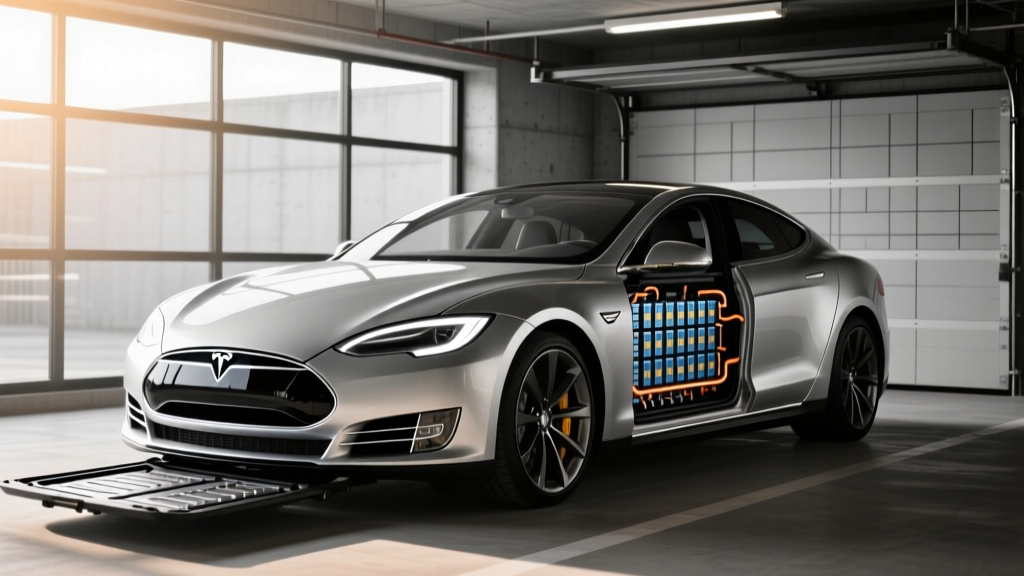
If you've been searching for a smart charger for AGM battery in the context of your electric vehicle, you're likely conflating two very different energy storage systems. Every modern EV — from the Tesla Model Y to the Ford F-150 Lightning to the Hyundai Ioniq 5 — contains two batteries: a high-voltage lithium-ion traction pack (400V or 800V architecture) that propels the vehicle, and a low-voltage 12V auxiliary battery (often AGM or lithium-iron-phosphate) that powers the electronics, door handles, infotainment, and safety systems.
A smart charger designed for an AGM battery — like the NOCO Genius or CTEK MXS 5.0 — is strictly for that 12V auxiliary unit. It cannot and should never be connected to the high-voltage traction battery. The traction pack is charged exclusively through the vehicle's onboard charge port via Level 1, Level 2, or DC fast charging infrastructure.
This guide covers what actually matters for EV owners: the health, longevity, chemistry, and replacement economics of the high-voltage traction battery — the component that stores 60 to 130+ kWh of energy and determines your vehicle's range, performance, and resale value.
LFP vs. NMC/NCA: Understanding Your Traction Battery Chemistry
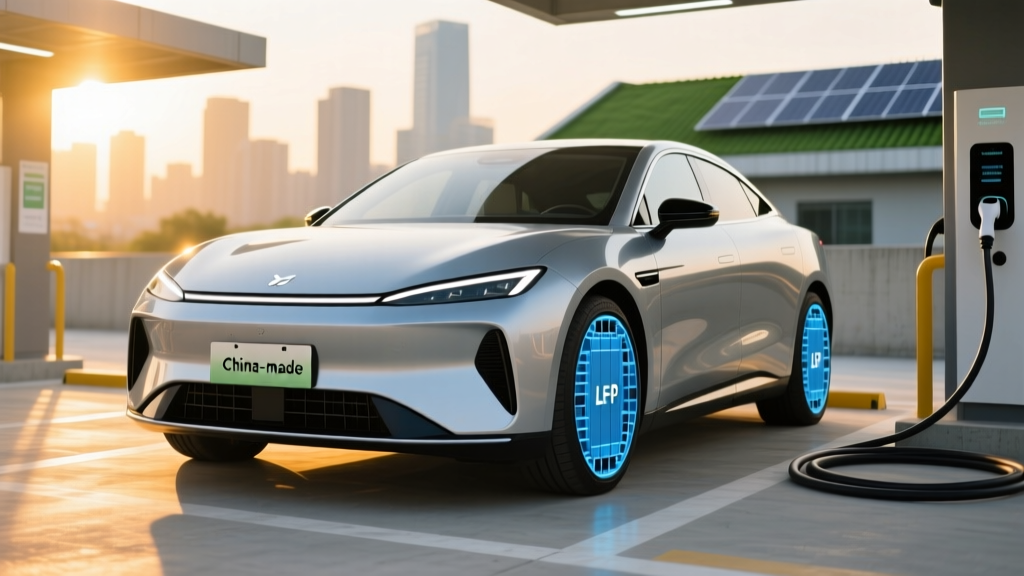
Not all EV batteries are created equal. The two dominant chemistries in the 2025–2026 EV market are LFP (lithium iron phosphate) and NMC/NCA (nickel manganese cobalt / nickel cobalt aluminum). Your vehicle's chemistry affects range, charging behavior, longevity, and even how you should manage daily state of charge.
| Attribute | LFP (LiFePO₄) | NMC / NCA |
|---|---|---|
| Energy Density | Lower (~160 Wh/kg cell-level) | Higher (~250–300 Wh/kg cell-level) |
| Cycle Life | 3,000–5,000+ cycles | 1,000–2,000 cycles typical |
| Cold-Weather Performance | Weaker below 32°F; slower charging | Better low-temp conductivity |
| Cost (per kWh) | ~$80–100/kWh (2025–2026 pack-level) | ~$110–140/kWh |
| Daily Charge Recommendation | 100% SoC is fine; recommended weekly | 80% daily; 100% only for trips |
| Thermal Stability | Superior; higher runaway threshold | Good with active thermal management |
| Examples (2025–2026) | Tesla Model 3 RWD, BYD Seal, base Ford Mustang Mach-E Select | Tesla Model Y LR, Hyundai Ioniq 5 LR, Rivian R1T, BMW iX |
Which is better? It depends on your use case. LFP excels for daily commuters who want maximum cycle life and can charge to 100% without worry. NMC/NCA delivers more range per kilogram, making it preferable for long-range and performance trims where packing maximum kWh into limited space matters. Neither chemistry is universally superior — the right choice depends on your driving patterns, climate, and budget.
How Long Do EV Batteries Last? Real Degradation Data
The most persistent myth in EV ownership is that batteries need replacement every few years like smartphone batteries. The data tells a different story.
Typical Degradation Trajectory (NMC/NCA and LFP combined fleet data):
- Year 1 / 15,000 mi: ~2–4% capacity loss (initial formation loss)
- Year 3 / 45,000 mi: ~6–8% total loss
- Year 5 / 75,000 mi: ~8–12% total loss
- Year 8 / 120,000 mi: ~10–15% total loss
- Year 10+ / 150,000+ mi: ~12–20% total loss (highly usage-dependent)
Sources: Geotab fleet degradation study, Recurrent Auto battery health reports, and manufacturer warranty thresholds.
A 2025 Tesla Model 3 Long Range with an EPA-rated 341 miles and an NMC pack showing 12% degradation at 100,000 miles still delivers roughly 300 miles of range — more than adequate for the vast majority of drivers. LFP packs in vehicles like the base Model 3 RWD (EPA 272 mi) often show even slower degradation curves thanks to their superior cycle life, though real-world range is lower to begin with.
The critical insight: degradation is non-linear. Most capacity loss occurs in the first 20,000–30,000 miles, after which the curve flattens considerably. Many EVs on the road today have surpassed 200,000 miles on their original traction battery with 75–85% of original capacity retained.
What the Battery Warranty Actually Covers
Federal law mandates a minimum 8-year / 100,000-mile warranty on EV battery packs for all vehicles sold in the United States. California and states adopting CARB standards extend this to 10 years / 150,000 miles. Here's how major manufacturers structure their coverage as of the 2025–2026 model year:
| Manufacturer | Warranty Period | Capacity Retention Threshold | Coverage Type |
|---|---|---|---|
| Tesla (Model 3/Y LR) | 8 yr / 120,000 mi | 70% of original capacity | Defect + degradation |
| Tesla (Model 3 RWD LFP) | 8 yr / 100,000 mi | 70% | Defect + degradation |
| Hyundai / Kia | 10 yr / 100,000 mi | 70% | Defect + degradation |
| Ford (Mustang Mach-E) | 8 yr / 100,000 mi | 70% | Defect + degradation |
| GM (Ultium platform) | 8 yr / 100,000 mi | 70% (some models 60% for Bolt-era) | Defect + degradation |
| Rivian | 8 yr / 175,000 mi (R1T/R1S) | 70% | Defect + degradation |
| BMW | 8 yr / 100,000 mi | 70% | Defect + degradation |
The 70% threshold is standard across the industry. If your battery's State of Health (SoH) drops below 70% of its original capacity within the warranty window, the manufacturer must repair or replace it at no cost. In practice, very few packs fall below this threshold within the warranty period under normal use. According to Recurrent Auto's analysis, warranty claims for battery degradation remain well under 2% of vehicles covered.
EV Battery Replacement Costs: When and How Much
Out-of-warranty battery replacement is the scenario that generates the most anxiety. Here are realistic cost ranges based on 2025–2026 service data:
| Vehicle / Pack Size | Battery Capacity | Replacement Cost (Parts + Labor) | Typical Replacement Trigger |
|---|---|---|---|
| Tesla Model 3 RWD (LFP) | ~60 kWh | $12,000–$16,000 | Physical damage, cell failure (rare degradation) |
| Tesla Model Y Long Range | ~75 kWh | $14,000–$20,000 | Same |
| Hyundai Ioniq 5 Long Range | 77.4 kWh | $15,000–$22,000 | Same |
| Ford F-150 Lightning Extended | ~131 kWh | $25,000–$35,000 | Same |
| Rivian R1T Large Pack | ~135 kWh | $28,000–$38,000 | Same |
| Chevrolet Equinox EV | ~85 kWh (Ultium) | $16,000–$24,000 | Same |
These are significant sums — but context matters. Battery replacement is typically needed only after 15–20 years or 200,000+ miles, if at all. Most EV batteries outlive the vehicle's useful economic life. Additionally, pack-level prices continue declining; BloombergNEF reports average lithium-ion pack prices fell below $130/kWh in 2025, down from over $1,200/kWh in 2010. By the time a 2026 EV actually needs a new pack in the 2040s, replacement costs will likely be a fraction of today's figures.
Factors That Accelerate (or Preserve) Battery Life
Not all miles are equal when it comes to battery wear. Your habits directly influence how quickly your pack degrades.
Practices That Preserve Battery Health
- Daily SoC between 20–80% (for NMC/NCA); LFP owners should charge to 100% at least once weekly to maintain cell balancing
- Precondition the battery before DC fast charging — most EVs do this automatically when you navigate to a charger
- Park in shade or a garage during hot months; battery thermal management systems work harder (and consume energy) in extreme heat
- Use Level 2 home charging as your primary method; it generates far less thermal stress than DCFC
- Keep the vehicle plugged in during extreme cold so the thermal management system can maintain optimal battery temperature without draining the pack
Practices That Accelerate Degradation
- Frequent DC fast charging (3+ times per week consistently) — adds thermal stress and accelerates lithium plating
- Regularly sitting at 100% SoC for extended periods (days/weeks) in NMC/NCA vehicles
- Deep discharges to 0% followed by prolonged storage — causes copper dissolution in anodes
- Repeated exposure to 110°F+ ambient temps without shade or climate-controlled parking
- Towing at max capacity frequently in hot climates — generates sustained high C-rates
A practical rule: if you charge at home on a Level 2 (7–11.5 kW) overnight and use DC fast charging only for road trips (a few times per month), your battery will likely retain 85–90% capacity at 100,000 miles.
How to Check Your EV Battery's State of Health (SoH)
State of Health (SoH) is the percentage of original capacity your battery can still hold. A new EV has 100% SoH; at 85% SoH, a 75 kWh pack effectively holds ~63.75 kWh of usable energy.
Built-in vehicle tools:
- Tesla: Service menu (hold model name on About screen for 3 seconds → type "service" → Battery Health test). Provides a SoH percentage.
- Hyundai/Kia: Some models display SoH in the EV settings menu; otherwise available through dealer diagnostic scan.
- GM Ultium vehicles: Battery health accessible via the myChevrolet/myCadillac app or OnStar diagnostics.
- Ford: Available through FordPass app diagnostics or dealer scan tool.
- Nissan Leaf: The iconic "health bars" on the dashboard (12 bars = 100%; each bar lost = ~6.25% degradation).
Third-party methods:
- OBD-II dongles + apps: Tools like OBDeleven, LeafSpy (for Nissan), or Scan My Tesla provide real-time SoH, cell voltage variance, and pack temperature data.
- Recurrent Auto: A free service that connects to your vehicle's telematics and provides battery health reports benchmarked against similar vehicles.
- Dealer diagnostic: Any authorized service center can run a full battery health report. Request this during routine service visits.
What About Your 12V AGM Battery? (And When a Smart Charger Helps)
Coming back to the smart charger for AGM battery search that may have brought you here: your EV's 12V auxiliary battery is a genuine maintenance item. Unlike the traction pack, the 12V battery can go flat if the vehicle sits unused for weeks, particularly in cold weather. A dead 12V battery will brick the entire vehicle — you won't even be able to unlock the doors or initiate charging.
A quality smart charger (such as the CTEK MXS 5.0, NOCO Genius10, or Battery Tender Plus) with AGM-specific charging profiles is a worthwhile $40–$100 investment if:
- You store your EV for extended periods (2+ weeks without driving)
- You live in a cold climate where the 12V battery faces additional strain
- Your EV uses a lead-acid AGM 12V battery (many Teslas and newer models have switched to 12V lithium, which has different charging requirements and rarely needs maintenance charging)
Important: always verify your vehicle's 12V battery type before purchasing a smart charger. AGM chargers use a different voltage profile than flooded lead-acid or lithium 12V batteries. Using the wrong profile can damage the battery.
Emerging Battery Tech: Solid-State and Silicon Anodes
The next frontier in EV battery technology includes solid-state batteries (replacing the liquid electrolyte with a solid conductor) and silicon-dominant anodes (replacing graphite for higher energy density). Here's where these stand as of early 2026:
- Solid-state batteries: Toyota has announced limited production in select 2027–2028 models targeting 750+ km (WLTP) range and 10-minute fast charging. Samsung SDI and QuantumScape continue pilot production. Realistic mass-market availability: 2029–2032. These are not available in any vehicle you can buy today.
- Silicon anode batteries: Already in limited deployment — the 2025 Porsche Taycan and some Mercedes EQ models use silicon-carbon composite anodes for modest energy density gains (~10–15%). Expect broader adoption by 2027–2028.
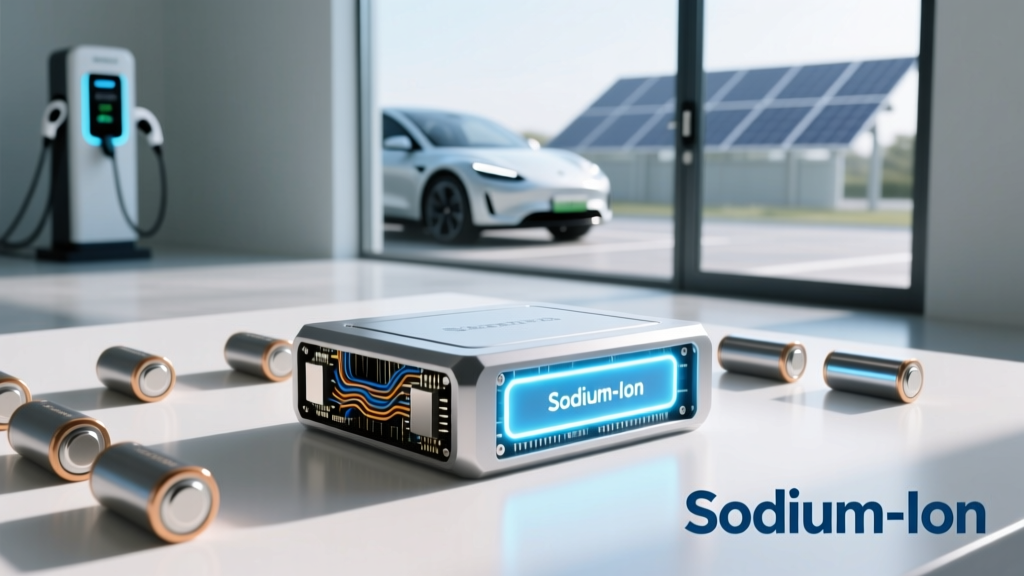
- Sodium-ion batteries: CATL and BYD have begun deploying sodium-ion packs in Chinese-market EVs. Lower energy density but extremely low cost and excellent cold performance. Potential US-market entry in budget EVs by 2028+.
None of these technologies are reasons to delay a current EV purchase. Today's lithium-ion packs already deliver 250–400+ miles of range, 15–20 year lifespans, and declining costs. The improvements ahead will be incremental for most buyers, not transformational enough to justify waiting.
Frequently Asked Questions
How long do EV batteries last in years and miles?
Most modern EV traction batteries are engineered to last 15–20 years or 200,000+ miles while retaining 70–80% of original capacity. Real-world fleet data from Geotab and Recurrent Auto shows median degradation of roughly 1.5–2% per year under normal use. Many Tesla Model S vehicles from 2013–2015 are still on their original packs at 150,000–250,000 miles.
How much does an EV battery cost to replace?
Out-of-warranty replacement costs range from approximately $12,000 for a ~60 kWh LFP pack (Tesla Model 3 RWD) to $35,000+ for a 130+ kWh pack (F-150 Lightning Extended Range, Rivian R1T). However, full replacements are rare — most issues involve individual module or cell repairs at far lower cost. Pack prices continue declining ~10–15% annually.
What does the EV battery warranty cover?
All US-market EVs carry a minimum 8-year / 100,000-mile battery warranty (10/150,000 in CARB states). Coverage includes manufacturing defects and capacity loss below a defined threshold (typically 70% of original capacity). This means if your battery degrades to 69% SoH within the warranty period, the manufacturer replaces or repairs it at no cost.
How do I check and maximize my EV battery health?
Check SoH via your vehicle's built-in diagnostics, the manufacturer's app, an OBD-II scanner with EV-specific software, or a free service like Recurrent Auto. Maximize longevity by charging primarily on Level 2, keeping NMC/NCA packs between 20–80% for daily use, preconditioning before DCFC, avoiding prolonged storage at 0% or 100% SoC, and minimizing frequent DC fast charging.
LFP vs NMC — which battery chemistry is better?
LFP offers superior cycle life (3,000–5,000 cycles), lower cost, better thermal stability, and the convenience of regular 100% charging. NMC/NCA provides higher energy density (more range in a lighter, smaller pack) and better cold-weather performance. For daily commuters with home charging, LFP is often the pragmatic choice. For road-trippers and those in cold climates who need maximum range, NMC/NCA remains preferable.
Can I use a smart charger for AGM battery on my EV's main battery?
No. A smart charger for AGM batteries is designed exclusively for your EV's 12V auxiliary battery — the small battery that runs accessories and computers. The high-voltage traction battery (400V–800V) can only be charged through the vehicle's charge port using EVSE (Level 1/2) or DC fast charging equipment. Never attempt to connect any aftermarket charger directly to the traction battery.
Will my EV battery need replacing before I sell the car?
Statistically, very unlikely. The average American keeps a vehicle 8.4 years and drives ~14,000 miles per year (roughly 118,000 miles total). At that usage level, a modern EV battery will retain 85–90% of its original capacity — well above the 70% warranty threshold and still providing excellent range. Battery replacement is predominantly a concern for high-mileage fleet vehicles or owners who keep cars 15+ years.