Why EV Owners Are Searching for Battery Powered GPS Tracking Devices
Fleet managers, parents of teen drivers, and theft-conscious EV owners increasingly plug a battery powered GPS tracking device into the OBD-II port or hide one under a seat. These compact trackers — from brands like Tracki, Bouncie, and LandAirSea — typically draw power from the vehicle's 12V auxiliary system or run on their own internal lithium cells. The question we hear most at AutoEdgeView: will a GPS tracker damage my EV's expensive high-voltage traction battery?
The short answer is no — but understanding why requires a clear picture of how EV batteries actually work, what degrades them, and how the 12V and high-voltage systems interact. This guide covers the chemistry, the real degradation numbers, warranty protections, and care habits that actually move the needle on pack longevity.
The Two Batteries in Your EV — and Where a GPS Tracker Connects
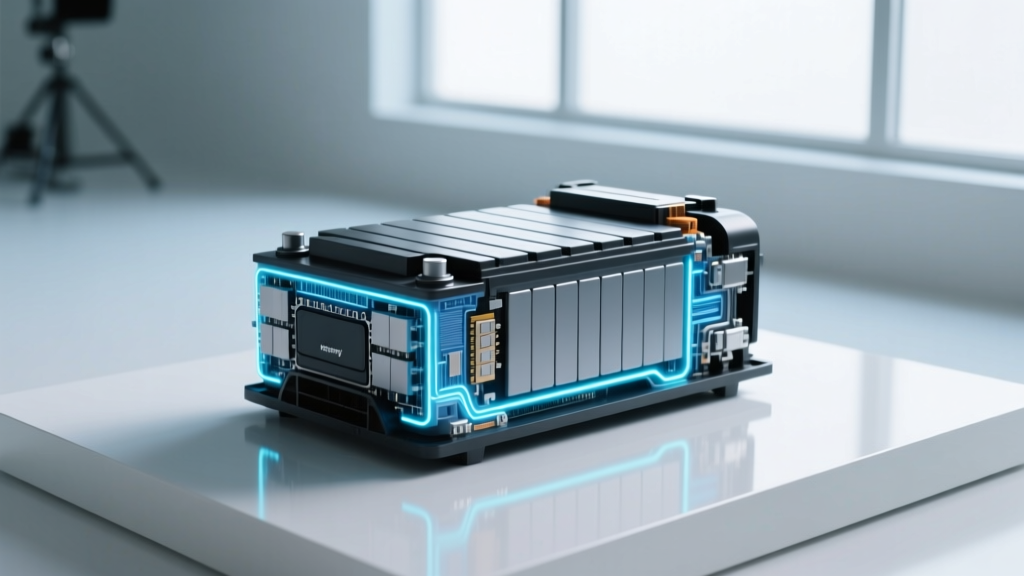
Every modern EV carries two electrically isolated energy stores:
- High-voltage traction battery — typically 400V or 800V architecture, 50–120 kWh of usable energy, powering the drive motors.
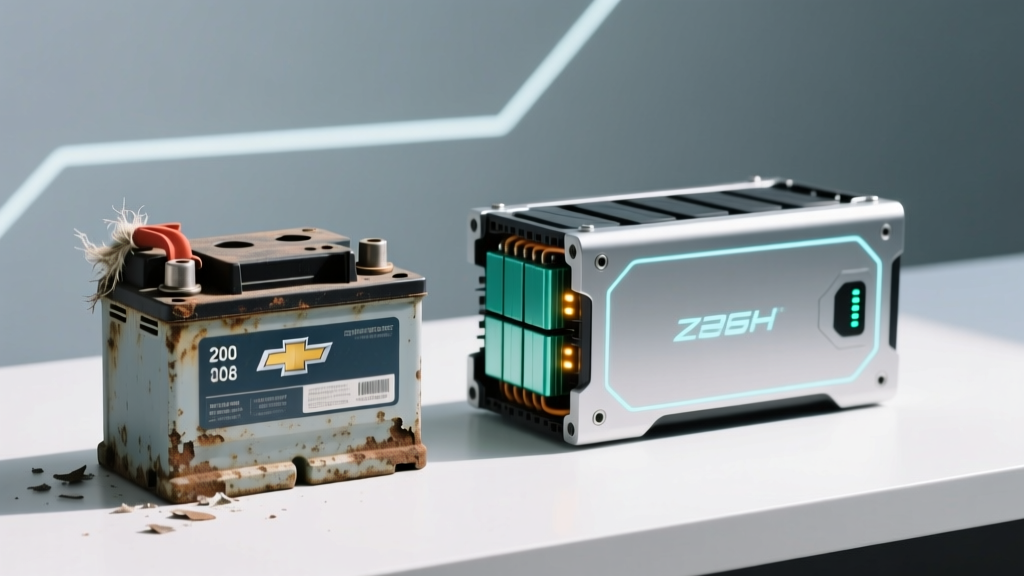
- 12V auxiliary battery — a small lead-acid or lithium-ion pack (usually 12–16V, ~1–2 kWh) that runs lights, infotainment, computers, and accessory ports including OBD-II.
A battery powered GPS tracking device that plugs into the OBD-II port draws from the 12V system only. The DC-DC converter replenishes the 12V battery from the high-voltage pack when the car is on or charging. Typical GPS trackers consume 5–30 mA at idle — roughly 0.06–0.36 watts — which is negligible compared to the traction pack's capacity.
Key distinction: kW (kilowatts) measures power — the rate of energy flow. kWh (kilowatt-hours) measures energy — total capacity. A 30 mA GPS tracker at 12V draws ~0.36W, or 0.00036 kW. Running 24/7 for a full year, it would consume about 3.15 kWh total — less than 5% of a single charge on a 75 kWh pack.
Hardwired trackers (e.g., fleet telematics units) may draw slightly more, but still operate entirely on the 12V side. The high-voltage contactors physically disconnect the traction pack when the vehicle is parked, so no accessory device can access it directly.
LFP vs NMC/NCA: Which Chemistry Is in Your EV?
The two dominant lithium-ion chemistries in 2026 EVs carry different trade-offs. Knowing which one is in your car affects how you should charge, store, and monitor it.
| Attribute | LFP (Lithium Iron Phosphate) | NMC / NCA (Nickel Manganese Cobalt / Nickel Cobalt Aluminum) |
|---|---|---|
| Energy Density | ~160–180 Wh/kg (lower) | ~220–270 Wh/kg (higher) |
| Cycle Life | 3,000–5,000+ cycles to 80% SoH | 1,000–2,000 cycles to 80% SoH |
| Cold Performance | Moderate — slower charge below 32°F | Better low-temp charge acceptance |
| Cost per kWh | ~$80–100 (lower) | ~$110–140 (higher) |
| Storage Best Practice | Can sit at 100% SoC safely | Store at 50–80% SoC for longevity |
| Common In (2026) | Tesla Model 3/Y RWD, Ford Mustang Mach-E Select, BYD, Rivian Standard | Tesla Long Range, Hyundai Ioniq 5/6, BMW iX, Lucid Air, Porsche Taycan |
LFP's tolerance for 100% daily charging makes it ideal for owners who want maximum range every morning without micromanaging state of charge. NMC/NCA delivers more range per kilogram, which is why it dominates long-range and performance trims. Neither chemistry is universally "better" — the right choice depends on your driving pattern and climate.
Real-World Degradation: What the Data Actually Shows
EV battery degradation follows a curve: steeper in the first 1–2 years, then flattening into a long, slow decline. Here is what aggregated fleet and owner data reveals for 2020–2025 model-year vehicles tracked into 2026:
Typical capacity retention by age/mileage (industry averages from Geotab fleet data and owner-reported telemetry):
| Age / Mileage | Average Capacity Retained | Notes |
|---|---|---|
| Year 1 / ~12,000 mi | 96–98% | Initial calibration loss |
| Year 3 / ~36,000 mi | 92–95% | Curve flattens significantly |
| Year 5 / ~60,000 mi | 88–93% | Most packs well above warranty threshold |
| Year 8 / ~100,000 mi | 83–90% | Warranty period ends; most packs still functional |
| Year 10+ / 150,000+ mi | 78–87% | Reduced range but still drivable |
LFP packs in Tesla Model 3 RWD and similar vehicles tend to cluster at the high end of these ranges. NMC packs subjected to frequent DC fast charging above 150 kW and repeated 100% SoC storage in hot climates trend toward the lower end. The critical insight: the vast majority of EV batteries outlast the vehicle's useful economic life. Catastrophic failure is rare; gradual capacity loss is the norm.
What the Battery Warranty Actually Covers
Federal law mandates a minimum 8-year/100,000-mile warranty on EV battery packs for emissions-related components, and every major automaker meets or exceeds this baseline for the traction battery. California and states adopting CARB standards require 10 years / 150,000 miles.
| Automaker | Warranty Term | Capacity Threshold | Coverage Scope |
|---|---|---|---|
| Tesla | 8 yr / 120,000 mi (Model 3/Y), 8 yr / 150,000 mi (S/X) | 70% retention | Defects + degradation below threshold |
| Hyundai / Kia | 10 yr / 100,000 mi | 70% retention | Defects + degradation below threshold |
| Ford | 8 yr / 100,000 mi | 70% retention | Defects + degradation below threshold |
| GM (Chevy/Cadillac) | 8 yr / 100,000 mi | 70% retention (60% for Bolt) | Defects + degradation below threshold |
| Rivian | 8 yr / 120,000 mi (Standard), 8 yr / 175,000 mi (Max) | 70% retention | Defects + degradation below threshold |
| BMW | 8 yr / 100,000 mi | 70% retention | Defects + degradation below threshold |
The warranty triggers a replacement or repair only if the pack falls below the stated capacity threshold (typically 70% of original) within the term. A GPS tracker's ~3 kWh annual draw on the 12V side has no measurable impact on high-voltage pack capacity and would never approach a warranty claim threshold.
For the latest federal warranty and tax credit rules, consult the IRS clean vehicle credit page, which also outlines battery sourcing requirements under §30D.
EV Battery Replacement Cost: When, How Much, and How Rare
Full traction battery replacement is uncommon before 150,000 miles. When it is needed — usually due to physical damage, manufacturing defect, or extreme degradation on high-mileage fleet vehicles — costs vary dramatically by pack size and chemistry.
| Vehicle (2024–2026) | Pack Size (kWh) | Chemistry | Estimated Replacement Cost |
|---|---|---|---|
| Tesla Model 3 RWD | ~60 kWh | LFP | $10,000–$14,000 |
| Tesla Model Y Long Range | ~75 kWh | NMC | $14,000–$18,000 |
| Hyundai Ioniq 5 | 77.4 kWh | NMC | $14,000–$20,000 |
| Ford F-150 Lightning Extended | ~131 kWh | NMC | $22,000–$32,000 |
| Chevrolet Equinox EV | ~85 kWh | NMC | $14,000–$19,000 |
| Lucid Air Grand Touring | 112 kWh | NMC | $24,000–$35,000 |
Module-level repairs — replacing individual cell groups rather than the full pack — are increasingly common and can cost $2,000–$6,000. Independent EV repair shops are expanding this capability. For most private owners driving 12,000–15,000 miles per year, the battery will never need replacement before the car is retired or traded. According to fueleconomy.gov, modern EV battery packs are engineered to last the life of the vehicle under normal use.
Five Factors That Actually Affect Your EV Battery's Lifespan
Whether you run a GPS tracker or not, these five habits determine how quickly your pack degrades:
- DC fast charging frequency: Occasional road-trip fast charging is fine. Daily reliance on 150+ kW DCFC without preconditioning accelerates degradation. Aim for Level 2 home charging as your primary routine. A typical Level 2 home charger delivers 7.2–11.5 kW — plenty to refill overnight.
- State of charge extremes: For NMC/NCA packs, avoid routinely storing at 100% or below 10%. Set your charge limit to 80% for daily driving and 100% only before long trips. LFP packs tolerate 100% storage and actually benefit from periodic full charges for cell balancing.
- Extreme temperatures: Sustained exposure to ambient temperatures above 95°F accelerates chemical degradation. Cold weather (below 20°F) temporarily reduces range by 15–30% and slows charging speeds but does not cause permanent damage. Garage parking and preconditioning mitigate both.
- High discharge rates: Repeated hard launches and sustained high-speed driving generate heat inside the cells. Occasional spirited driving is fine; daily track use is not what these packs are optimized for.
- Calendar aging: Even a parked EV battery degrades slowly over time. Storing at 50–60% SoC in a cool environment minimizes calendar loss. A GPS tracker's small parasitic draw will not meaningfully affect this — the 12V system handles it.
How to Check and Monitor Your Battery's State of Health (SoH)
State of Health (SoH) is the percentage of original capacity your pack currently holds. A new battery is 100% SoH; at 70% SoH, your EPA range drops proportionally. Here is how to monitor it:
- In-car telemetry: Tesla, Hyundai, Kia, BMW, and Rivian display estimated range that adjusts with degradation. Some (like Tesla's service mode) show a direct SoH percentage.
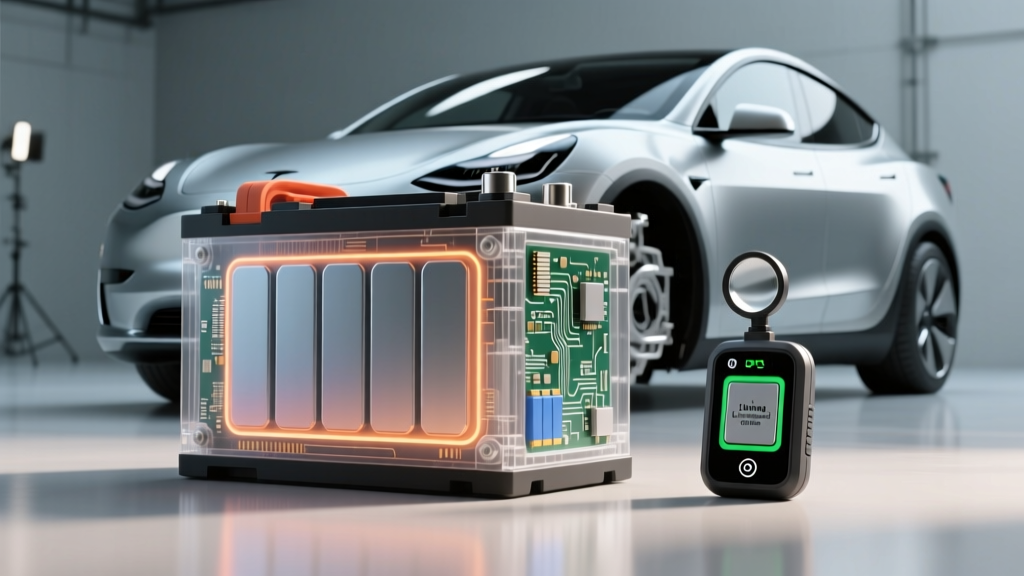
- OBD-II apps: Tools like Leaf Spy (Nissan), TeslaFi, or Scan My Tesla pull live pack data including SoH, cell voltage variance, and cycle count. A battery powered GPS tracking device plugged into the same OBD-II port will not interfere with these readings — most apps and trackers use different CAN bus PIDs.
- Dealer diagnostics: Any authorized service center can run a full battery health report. Request one before purchasing a used EV.
- Third-party reports: Services like Recurrent Auto provide battery health certificates based on connected-vehicle data, useful for resale.
Check SoH at least twice a year, and always before a warranty claim window closes. If your pack shows 85%+ SoH at 60,000 miles, it is tracking well above the warranty threshold and likely to deliver 200,000+ miles of useful service.
Solid-State, Silicon Anode, and What's Actually Coming
Next-generation battery technologies promise higher energy density and faster charging, but timelines remain fluid:
- Solid-state batteries: Toyota, Nissan, and Samsung SDI have announced pilot production for 2027–2029, with initial deployment likely in limited, premium models. Expect 900+ km WLTP range and 10-minute fast charging — but at a significant cost premium initially. These are not available in any 2026 production vehicle.
- Silicon-dominant anodes: Companies like Sila Nanotechnologies and Group14 are supplying silicon-carbon anode materials to manufacturers including Mercedes-Benz (via the G-Class EV and upcoming models). Silicon anodes increase energy density by 20–40% and are beginning to appear in limited 2025–2026 production. Broader adoption is expected by 2028.
- Sodium-ion batteries: CATL and BYD are producing sodium-ion cells for lower-cost, shorter-range EVs, primarily in the Chinese market. US availability remains limited as of 2026.
For today's buyers, current LFP and NMC chemistries are mature, well-understood, and backed by robust warranties. Waiting for solid-state is a personal calculus — but current packs are already lasting 200,000+ miles in real-world use.
Frequently Asked Questions
How long do EV batteries last in years and miles?
Most modern EV batteries retain 83–90% of their original capacity at 8 years / 100,000 miles based on fleet data from Geotab and owner reports. Many packs reach 200,000+ miles before falling to 70% SoH. LFP chemistries tend to outlast NMC in cycle count, though NMC offers higher energy density. The battery will typically outlast the vehicle's economic life.
How much does an EV battery cost to replace?
Full pack replacement ranges from ~$10,000 for a 60 kWh LFP pack (Tesla Model 3 RWD) to $32,000+ for a 131 kWh NMC pack (F-150 Lightning Extended Range). Module-level repairs cost $2,000–$6,000. However, replacement is rare before 150,000 miles under normal use, and warranty coverage protects against premature degradation.
What does the EV battery warranty cover?
Every major automaker warrants the traction battery against defects and degradation below a set capacity threshold (typically 70% of original) for at least 8 years / 100,000 miles. Hyundai and Kia extend this to 10 years / 100,000 miles. The warranty covers the high-voltage pack — not the 12V auxiliary battery, which carries a separate (shorter) warranty.
How do I check and maximize my EV battery health?
Monitor SoH via in-car telemetry, OBD-II apps (TeslaFi, Leaf Spy), or dealer diagnostics. Maximize longevity by using Level 2 home charging as your primary method, limiting NMC packs to 80% daily SoC, avoiding prolonged exposure to extreme heat, and preconditioning before DC fast charging. LFP owners can charge to 100% regularly without concern.
LFP vs NMC — which battery chemistry is better?
Neither is universally better. LFP offers longer cycle life (3,000–5,000+ cycles), lower cost, and tolerance for 100% daily charging — ideal for commuters and fleet use. NMC delivers higher energy density (more range per kg) and better cold-weather charging — ideal for long-range and performance trims. Choose based on your driving pattern: daily commuting favors LFP; road-trip-heavy driving favors NMC.
Will a battery powered GPS tracking device harm my EV battery?
No. GPS trackers draw from the 12V auxiliary system, not the high-voltage traction pack. Typical consumption of 5–30 mA (~0.36W max) is negligible. The DC-DC converter replenishes the 12V battery from the traction pack only when the vehicle is active or charging. Even running 24/7, a GPS tracker adds less than $1/year in electricity cost and has zero measurable effect on traction battery degradation.