The Real Cost of an EV Battery: Separating Myth from Data
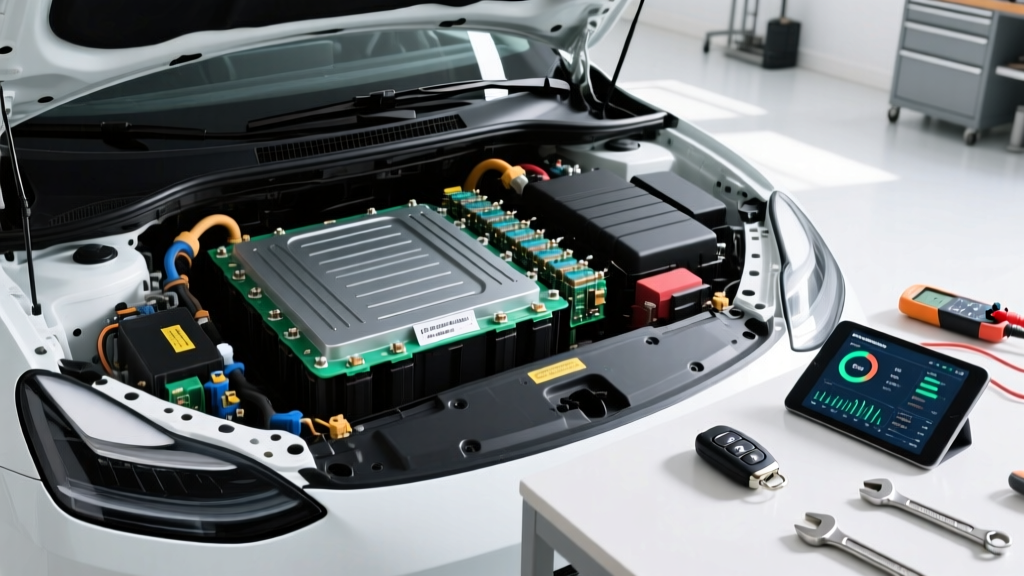
Search "EV battery cost" and you'll find horror stories of $20,000 replacement bills. What you won't find is context: how often replacements actually happen, what warranties cover, and why most EV batteries outlast the cars they power. In 2026, the average EV battery pack replacement runs between $5,000 and $16,000 depending on capacity and chemistry — but the vast majority of owners will never pay it.
This guide breaks down replacement pricing by model, real-world degradation data from high-mileage fleets, federal warranty requirements, and the chemistry choices (LFP vs. NMC) that determine how your battery ages. Whether you're shopping for a new EV or optimizing one you own, these are the numbers that matter.
LFP vs. NMC/NCA: The Chemistry That Determines Longevity and Cost
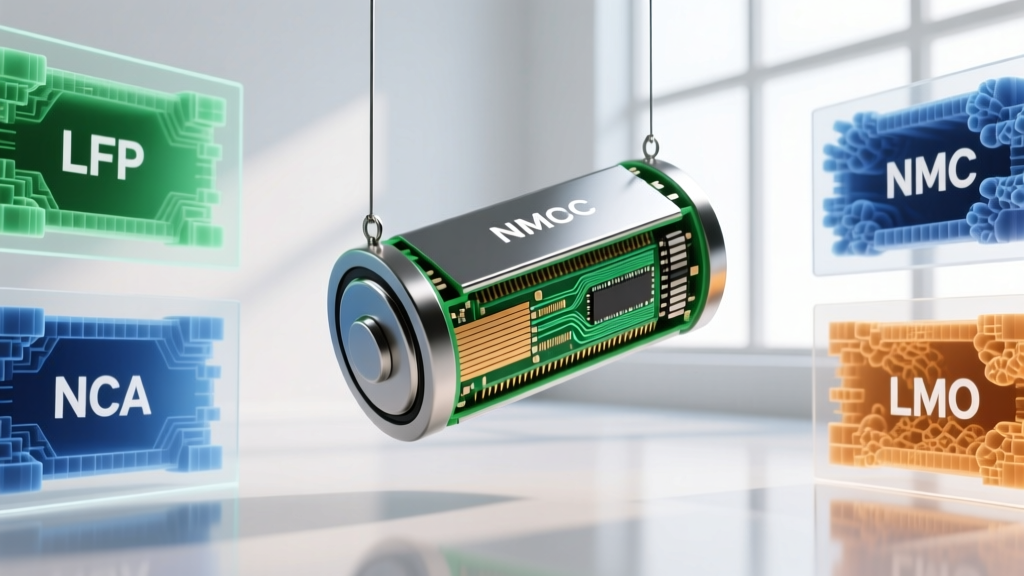
Not all EV batteries are built the same. The two dominant chemistries in 2026 — lithium iron phosphate (LFP) and nickel-manganese-cobalt/nickel-cobalt-aluminum (NMC/NCA) — trade off energy density against cycle life and cost. Your battery's chemistry affects everything from how far you can drive on a charge to how much a replacement will cost a decade from now.
| Factor | LFP (Lithium Iron Phosphate) | NMC / NCA (Nickel-based) |
|---|---|---|
| Energy Density | Lower (~160-180 Wh/kg cell-level) | Higher (~220-260 Wh/kg cell-level) |
| Typical Cycle Life | 3,000-5,000+ cycles to 80% SoH | 1,000-2,000 cycles to 80% SoH |
| Cold-Weather Performance | Weaker — greater range loss below 32°F | Better — retains more usable capacity in cold |
| Cost per kWh (Pack-Level, 2026) | ~$80-$100/kWh | ~$110-$140/kWh |
| Optimal Daily Charging | Can charge to 100% daily (recommended) | Best kept 20-80% for daily use |
| Common Applications | Tesla Model 3/Y RWD, standard-range BYD, Ford LFP Mustang Mach-E | Long-range AWD models, performance trims, most luxury EVs |
| Thermal Stability | Excellent — very resistant to thermal runaway | Good — requires robust BMS and cooling |
The takeaway: LFP batteries cost less to replace and last significantly longer in terms of charge cycles, but they're heavier and lose more range in freezing weather. NMC packs deliver more range per pound and perform better in cold climates, but they degrade faster if routinely charged to 100% and cost more to replace. For high-mileage drivers in warm climates, LFP is the longevity play. For cold-climate drivers who need maximum range, NMC remains the practical choice.
How Long Do EV Batteries Actually Last? Degradation Data
EV batteries don't "die" the way a phone battery might. They gradually lose capacity — a process measured as State of Health (SoH), where 100% is the original capacity and 70-80% is typically the threshold for warranty coverage. A battery at 80% SoH still functions; it just delivers 80% of its original EPA range.
- Tesla fleet data (2025 impact report): Model 3/Y batteries retain approximately 85% capacity at 150,000 miles — meaning a 330-mile EPA range drops to roughly 280 miles.
- Geotab fleet study (6,300+ EVs): Average annual degradation across all brands is approximately 1.8% per year, meaning after 10 years the average pack retains ~82% SoH.
- High-mileage outliers: Tesla Model S taxis and rideshare vehicles have logged 300,000+ miles on original packs with 70-75% SoH — approaching warranty thresholds but still operational.
- Early Nissan Leaf (passive cooling): 2011-2015 models with air-cooled packs showed 20-30% degradation by year 8 in hot climates — a design flaw modern liquid-cooled packs have eliminated.
Modern liquid-cooled battery packs from Tesla, Hyundai/Kia, BMW, and Ford show markedly better longevity than early-generation packs. The chemistry matters too: LFP-equipped vehicles are demonstrating slower degradation curves, with some projections suggesting 80%+ SoH at 300,000 miles under normal use.
For context, the average American drives roughly 14,000 miles per year according to FHWA data. At 1.8% annual degradation, a 10-year-old EV with average mileage would retain approximately 82% of its original range — still entirely usable for daily driving.
EV Battery Replacement Cost: What You'll Actually Pay
Most EV owners never replace their battery. The pack is designed to outlast the vehicle's economic life. But if a failure occurs outside warranty — or if you're buying a used EV with a degraded pack — here's what replacement costs look like in 2026.
| Vehicle | Battery Capacity | Chemistry | Estimated Replacement Cost |
|---|---|---|---|
| Tesla Model 3 RWD | ~60 kWh | LFP | $5,000 - $7,000 |
| Tesla Model Y Long Range | ~75 kWh | NMC | $8,000 - $12,000 |
| Hyundai Ioniq 5 (Long Range) | 77.4 kWh | NMC | $9,000 - $13,000 |
| Ford F-150 Lightning (Extended) | ~131 kWh | NMC | $14,000 - $20,000 |
| Chevrolet Equinox EV | ~85 kWh | NMC | $8,500 - $12,500 |
| BMW i4 eDrive40 | 81.5 kWh (usable) | NMC | $11,000 - $16,000 |
These figures include the battery pack and labor but can vary significantly by region, dealer vs. independent shop pricing, and whether you source a new, refurbished, or salvaged pack. Refurbished packs (replacing only failed modules rather than the entire assembly) can cut costs by 40-60%.
When is replacement typically needed? Catastrophic failure (manufacturing defect, physical damage) usually occurs within the warranty period. Gradual degradation rarely reaches a point requiring full replacement before the vehicle is retired. In practice, the battery outlasts suspension components, infotainment hardware, and often the owner's willingness to keep the car.
What Does the EV Battery Warranty Actually Cover?
Federal law mandates a minimum battery warranty of 8 years / 100,000 miles for all EVs sold in the United States. In California and states adopting CARB standards (currently 17 states), the requirement extends to 10 years / 150,000 miles. Most manufacturers meet or exceed these minimums.
| Manufacturer | Warranty Term | Capacity Retention Threshold | Coverage Type |
|---|---|---|---|
| Tesla (Model 3/Y RWD) | 8 yr / 100,000 mi | 70% | Defect + degradation below threshold |
| Tesla (Model 3/Y LR & Performance) | 8 yr / 120,000 mi | 70% | Defect + degradation below threshold |
| Hyundai / Kia | 10 yr / 100,000 mi | 70% | Defect + degradation below threshold |
| Ford | 8 yr / 100,000 mi | 70% | Defect + degradation below threshold |
| General Motors (Ultium) | 8 yr / 100,000 mi | 70% | Defect + degradation below threshold |
| BMW | 8 yr / 100,000 mi | 70% | Defect + degradation below threshold |
| Rivian | 8 yr / 175,000 mi | 70% | Defect + degradation below threshold |
Critical detail: The warranty covers degradation below the stated threshold — typically 70% of original capacity. If your 300-mile EPA-range EV drops to 215 miles of range (roughly 72% SoH), the warranty does not trigger. You'd need to fall below 210 miles (70%) for a claim. Most manufacturers will replace or repair the pack to bring it above the threshold, not necessarily restore it to 100%.
The warranty covers defects in materials and workmanship as well as abnormal degradation. It does not cover damage from accidents, flooding, improper charging equipment, or modifications. Always retain records of charging equipment used and service performed.
Factors That Accelerate (or Extend) Battery Life
Battery degradation isn't purely a function of time and miles. How you charge, drive, and store your EV significantly impacts how quickly the pack loses capacity. Here's what the data shows:
- Avoid routine 100% charges (NMC/NCA): Daily charging to 80% dramatically reduces stress on nickel-based cells. Reserve 100% for road trips. LFP owners can ignore this — charge to 100% as recommended by the manufacturer for accurate BMS calibration.
- Minimize DC fast charging when possible: Occasional fast charging is fine. Daily DCFC sessions at 150+ kW generate sustained heat that accelerates degradation. NREL research shows packs fast-charged exclusively degrade ~1-2% faster over 5 years than those primarily Level 2-charged.
- Don't store at 0% or 100% SoC: If leaving your EV unused for weeks, set the charge limit to 50-60%. Extended storage at extreme SoC levels causes irreversible capacity loss.
- Precondition in cold weather: Using your EV's preconditioning feature (or scheduled departure) warms the battery before driving and charging. Cold batteries experience higher internal resistance, which accelerates wear during hard acceleration and regenerative braking.
- Avoid prolonged exposure to extreme heat: Parking in shade or a garage during summer months reduces thermal stress. Battery thermal management systems work harder (and consume energy) when ambient temps exceed 95°F.
- Use regen braking moderately: Aggressive one-pedal driving with maximum regen sends high-current pulses into the pack. Moderate regen settings are gentler on cells over hundreds of thousands of miles.
How to Check Your EV Battery's State of Health (SoH)
State of Health is the single most important metric for used-EV buyers and long-term owners. Here's how to monitor it:
Manufacturer Apps and In-Car Displays
Most modern EVs display battery health information through the manufacturer's app or the vehicle's infotainment system. Tesla provides a battery health percentage in the service menu. Hyundai's Bluelink and Kia Connect apps show SoH data. BMW's iDrive includes a battery diagnostics screen. Check your owner's manual for the specific path.
OBD-II Diagnostic Tools
Third-party OBD-II readers paired with apps like LeafSpy (Nissan Leaf), Scan My Tesla, or Car Scanner ELM OBD2 can pull detailed SoH data directly from the battery management system (BMS). These tools typically cost $30-$60 for the adapter and provide granular data including individual cell voltage variance, pack temperature, and cycle count.
Dealer Inspection
Any authorized dealer can run a full battery health report. If you're buying a used EV, request this report before purchase. A reputable seller will provide it willingly. Look for SoH above 85% on vehicles under 80,000 miles — anything lower warrants investigation into charging habits or potential cooling system issues.
Range-Based Estimation
If no digital SoH readout is available, compare your actual range (full charge to near-empty, driven under moderate conditions) to the original EPA rating. A vehicle originally rated at 250 miles that now delivers 210 miles on a full charge is at roughly 84% SoH. This method is imprecise — temperature, driving style, and tire condition all affect range — but it provides a reasonable approximation.
Emerging Battery Technology: Solid-State and Beyond
Next-generation battery chemistries promise higher energy density, faster charging, and longer lifespans. Here's where the technology stands — and when you might actually see it in a vehicle you can buy.
Solid-state batteries replace the liquid electrolyte in current lithium-ion cells with a solid material (ceramic, sulfide, or polymer). The theoretical benefits are substantial: 30-50% higher energy density, faster charging without degradation risk, and reduced fire risk. Toyota has announced a solid-state EV prototype targeting 2027-2028 production, and Samsung SDI is scaling a pilot line. However, manufacturing cost remains 2-3x that of current lithium-ion cells, and volume production for mainstream vehicles is realistically a 2029-2031 timeline.
Silicon-dominant anodes (from companies like Sila Nanotechnologies and Group14) increase the amount of lithium ions a cell can store by replacing graphite anodes with silicon composites. These are closer to market — the Mercedes G-Class 580e (2025) uses a silicon-anode battery from Group14, delivering roughly 20% higher energy density. Expect broader adoption in performance and luxury EVs by 2027-2028, with mainstream vehicles following by 2030.
Sodium-ion batteries use abundant, cheap sodium instead of lithium. CATL has begun production for low-range city EVs in China, with energy density around 140-160 Wh/kg. These won't replace lithium-ion for long-range vehicles but could power affordable urban EVs under $25,000 in the late 2020s.
None of these technologies are available in mainstream 2026 model-year EVs. Current NMC and LFP chemistries — paired with modern thermal management — already deliver 200,000+ mile lifespans for the vast majority of owners.
Frequently Asked Questions
How long do EV batteries last in years and miles?
Modern liquid-cooled EV batteries typically last 15-20 years or 200,000+ miles before degrading below 70% of original capacity. Fleet data from Tesla and Geotab shows average annual degradation of 1.8%, meaning a 10-year-old pack retains roughly 82% of its original range. LFP batteries may extend this to 300,000+ miles given their superior cycle life.
How much does it cost to replace an EV battery in 2026?
Replacement costs range from approximately $5,000 for a 60 kWh LFP pack (Tesla Model 3 RWD) to $20,000 for a 131 kWh NMC pack (F-150 Lightning Extended Range). Most vehicles fall in the $8,000-$14,000 range. However, the vast majority of owners never pay this — failures within the 8-year/100,000-mile federal warranty period are covered, and most packs outlast the vehicle.
What does the EV battery warranty cover?
Federal law requires a minimum 8-year/100,000-mile battery warranty (10 years/150,000 miles in CARB states). Coverage includes manufacturing defects and degradation below a stated capacity threshold — typically 70% of original capacity. The warranty does not cover accident damage, flooding, or damage from improper charging equipment.
LFP vs. NMC — which battery chemistry is better?
It depends on your priorities. LFP batteries offer longer cycle life (3,000-5,000 cycles vs. 1,000-2,000), lower replacement cost, better thermal safety, and the convenience of daily 100% charging. NMC batteries offer higher energy density (more range in a lighter, smaller pack) and better cold-weather performance. For high-mileage warm-climate drivers, LFP wins on longevity. For cold-climate drivers needing maximum range, NMC is the practical choice.
How do I maximize my EV battery's lifespan?
For NMC/NCA packs: charge to 80% daily, avoid exclusive DC fast charging, precondition in cold weather, and don't store at extreme SoC levels. For LFP packs: charge to 100% regularly for BMS calibration, and follow the same temperature and storage guidelines. All EV owners benefit from garage parking in extreme heat and moderate regenerative braking settings.
Can I check my EV battery health myself?
Yes. Most manufacturers provide SoH data through their mobile app or in-car diagnostics. Third-party OBD-II adapters ($30-$60) paired with apps like Scan My Tesla or LeafSpy provide detailed cell-level data. You can also estimate SoH by comparing your actual full-charge range to the original EPA rating under similar driving conditions.
Will solid-state batteries make current EVs obsolete?
Not in the near term. Solid-state batteries remain in prototype and pilot production as of 2026, with mainstream vehicle availability realistically projected for 2029-2031. Current LFP and NMC chemistries already deliver 200,000+ mile lifespans. When solid-state arrives, it will likely debut in premium vehicles at high price points before reaching mainstream models years later.