If you've ever searched for a battery for a 2014 Dodge Journey, you were almost certainly looking for a 12-volt lead-acid starter battery — a Group 34 or Group 24F unit that costs roughly $150–$250 and cranks a 3.6L Pentastar V6. That's a fundamentally different component from the high-voltage lithium-ion traction battery that powers a modern electric vehicle. One starts an engine; the other is the energy source. Understanding that distinction — and how EV batteries actually work, degrade, and age — is essential before you spend $40,000+ on an EV in 2026.
This guide breaks down EV battery chemistry, real-world degradation data, warranty coverage, replacement economics, and the care habits that maximize pack life. We'll also contrast EV traction batteries with the humble 12V battery in a 2014 Dodge Journey so the differences are unmistakable.
12V Starter Battery vs. EV Traction Battery: What's the Difference?
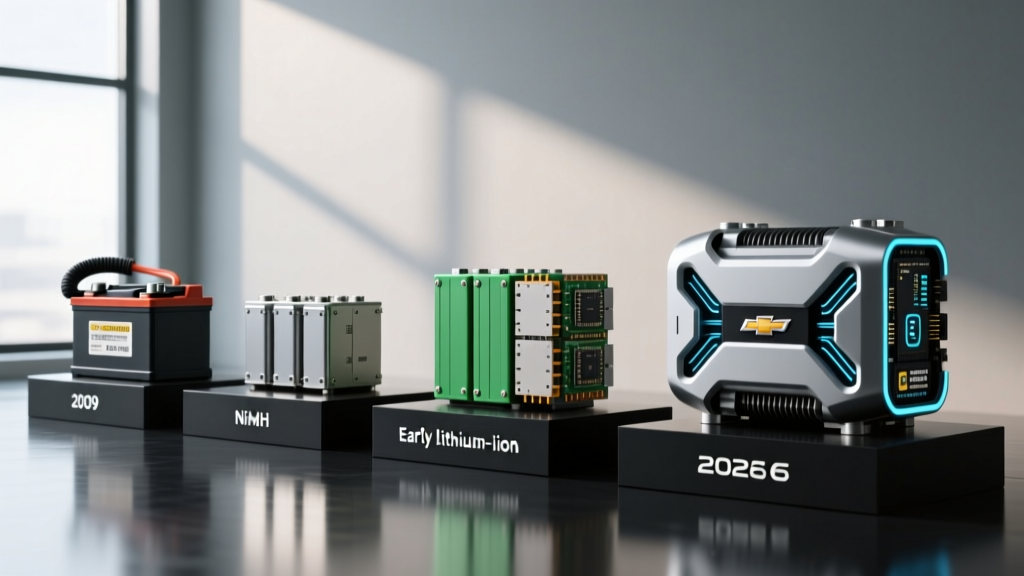
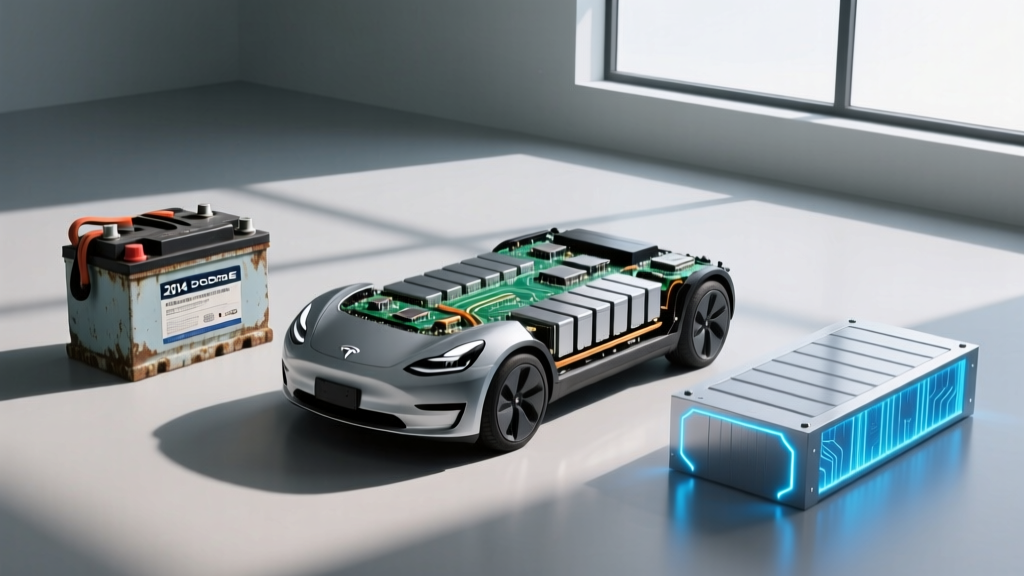
A 12V auxiliary battery — like the one in a 2014 Dodge Journey or the small lead-acid/lithium-iron-phosphate unit still found in most EVs — powers lights, infotainment, door locks, and the DC-DC converter that boots the car's computers. It does not propel the vehicle.
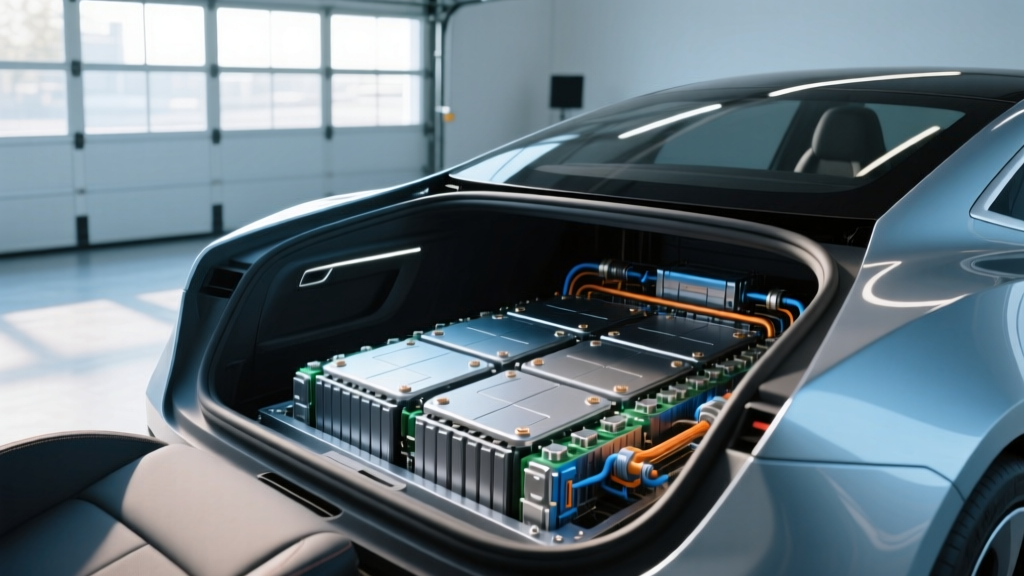
The high-voltage traction battery is the large lithium-ion pack (typically 50–120 kWh) mounted under the floor. It stores the energy that turns the electric motors. When we say "EV battery" in this guide, we mean the traction pack — not the 12V auxiliary.
| Attribute | 12V Battery (e.g., 2014 Dodge Journey) | EV Traction Battery (e.g., 2026 Hyundai Ioniq 5) |
|---|---|---|
| Voltage | 12V nominal | 400V–800V nominal |
| Energy capacity | ~0.6–0.9 kWh | 58–84+ kWh |
| Chemistry | Lead-acid (flooded or AGM) | LFP or NMC/NCA lithium-ion |
| Purpose | Starter / accessories | Vehicle propulsion |
| Typical replacement cost | $150–$250 | $5,000–$20,000+ |
| Typical lifespan | 3–5 years | 15–20+ years (to 70% SoH) |
| Warranty | 1–3 years (pro-rated) | 8 years / 100,000 mi (federal mandate) |
EV Battery Chemistry: LFP vs. NMC/NCA Trade-Offs
Modern EVs use one of two dominant lithium-ion chemistries: LFP (lithium iron phosphate) or NMC/NCA (nickel manganese cobalt / nickel cobalt aluminum). Your choice affects range, longevity, cold-weather behavior, and price.
| Factor | LFP (LiFePO₄) | NMC / NCA |
|---|---|---|
| Energy density | ~160–180 Wh/kg (lower) | ~220–300 Wh/kg (higher) |
| Cycle life | 3,000–6,000+ cycles | 1,000–2,500 cycles |
| Cold-weather performance | Weaker below 32°F; slower charge acceptance | Better low-temp conductivity |
| Thermal stability / safety | Excellent — less prone to thermal runaway | Good, but requires more active cooling |
| Cost (per kWh, 2026) | ~$80–$100 | ~$110–$140 |
| Recommended daily SoC | Can charge to 100% regularly | Best kept at 80% daily; 100% for trips |
| Common in (2026 models) | Tesla Model 3 RWD, Ford Mustang Mach-E Select, BYD, base Hyundai Ioniq 5 | Tesla Long Range, Rivian, BMW iX, Hyundai Ioniq 5 Long Range |
| Cobalt content | None | Some (declining) |
Which is better? Neither is universally superior. LFP wins on longevity, safety, and cost — ideal for daily commuters who charge at home and don't need maximum range. NMC/NCA wins on energy density and cold-weather usability — better for long-range variants and colder climates. If you live in Minnesota and road-trip often, NMC is the pragmatic pick. If you're in Southern California driving 30 miles a day, LFP is the smarter long-term bet.
How Long Do EV Batteries Last? Real Degradation Data
The fear that EV batteries "die" at 100,000 miles is not supported by fleet data. Most modern packs are engineered to retain 70–80% of original capacity after 150,000–200,000 miles. Here's what real-world datasets show:
- Tesla fleet data (2025 Impact Report): Model S/X batteries retain ~88% capacity at 150,000 miles; Model 3/Y (NMC) retain ~85% at the same mileage. LFP variants show even slower fade.
- Geotab fleet study (2024, 10,000+ EVs): Average annual degradation is ~1.8% per year across all brands — meaning a 300-mile EV would still offer ~250 miles of range after 8 years.
- Recurrent Auto data (2025): Chevy Bolt EV packs (LG NMC) showed ~6–8% loss at 100,000 miles, with most stabilizing after the initial 10,000–20,000-mile break-in period.
- Nissan Leaf (passive-cooled, older gen): Earlier 24 kWh and 30 kWh packs showed 15–25% loss by 80,000 miles in hot climates — a cautionary tale about thermal management. Modern liquid-cooled packs have largely solved this.
Key insight: degradation is non-linear. Most packs lose 2–5% in the first year (the "break-in" drop), then settle into a slow, nearly linear decline of ~1–2% annually. Catastrophic failure (a pack suddenly dying) is extremely rare; gradual capacity loss is the norm.
What Does the EV Battery Warranty Actually Cover?
U.S. federal law mandates a minimum EV battery warranty of 8 years / 100,000 miles. California and states that follow CARB rules (including Colorado, New York, Massachusetts, and others as of 2026) extend this to 10 years / 150,000 miles. Here's how major manufacturers stack up:
| Manufacturer | Warranty Period | Mileage Cap | Capacity Retention Threshold |
|---|---|---|---|
| Tesla (Model 3/Y RWD — LFP) | 8 years | 100,000 mi | 70% |
| Tesla (Model 3/Y LR — NMC) | 8 years | 120,000 mi | 70% |
| Hyundai / Kia (Ioniq 5, EV6) | 10 years | 100,000 mi | 70% |
| Ford (Mach-E, F-150 Lightning) | 8 years | 100,000 mi | 70% |
| GM (Ultium platform — Equinox EV, Blazer EV) | 8 years | 100,000 mi | 70% (some trims 60%) |
| Rivian (R1T, R1S) | 8 years | 175,000 mi | 70% |
| BMW (i4, iX) | 8 years | 100,000 mi | 70% |
What triggers a warranty claim? If your pack's State of Health (SoH) drops below the stated threshold (typically 70%) within the warranty period, the manufacturer must repair or replace the battery at no cost. Some brands replace individual modules rather than the entire pack — this is normal and does not diminish the repair. Warranty covers defects and abnormal degradation, not damage from accidents, flooding, or unauthorized modifications.
EV Battery Replacement Cost: What to Expect
Out-of-warranty battery replacement is the single biggest fear for EV buyers — and the most misunderstood. Here are realistic 2026 figures:
| Vehicle / Pack Size | Battery Size | Estimated Replacement Cost (Parts + Labor) |
|---|---|---|
| Chevy Bolt EV (2017–2023) | 60–65 kWh | $14,000–$16,000 |
| Tesla Model 3 (Standard Range / LFP) | 50–60 kWh | $12,000–$15,000 |
| Tesla Model Y (Long Range) | 75–82 kWh | $16,000–$20,000 |
| Hyundai Ioniq 5 (Long Range) | 77.4 kWh | $14,000–$18,000 |
| Ford F-150 Lightning (Extended Range) | 131 kWh | $22,000–$30,000 |
| Rivian R1T (Large Pack) | 135 kWh | $20,000–$28,000 |
| Nissan Leaf (40 kWh pack) | 40 kWh | $8,000–$10,000 |
When is replacement actually needed? Rarely before 150,000–200,000 miles for liquid-cooled packs. By the time a modern EV needs a new battery, the vehicle's resale value may not justify the cost — much like a transmission rebuild on a 15-year-old gas car. And battery costs continue to decline: pack-level pricing has fallen from ~$400/kWh in 2014 to roughly $100–$130/kWh in 2026, according to BloombergNEF. Expect replacement costs to keep dropping.
For perspective, the battery for a 2014 Dodge Journey (a 12V Group 34) costs about $180 at an auto parts store. An EV traction battery is 50–100× that cost — but it also lasts 3–5× longer and powers the entire vehicle, not just the starter.
Factors That Affect EV Battery Life (and What You Can Control)
Not all miles are equal. A pack that lives in moderate climates and charges mostly on Level 2 will outlast one that's DC fast-charged daily in Phoenix heat. Here's what matters most:
- Fast-charging frequency: Occasional DC fast charging (50–350 kW) is fine. Daily reliance on 150+ kW chargers accelerates degradation by ~0.5–1% per year versus Level 2 home charging. Use DCFC for road trips; use Level 2 for daily needs.
- State of Charge habits: For NMC/NCA packs, keep daily SoC between 20–80%. Charging to 100% and letting it sit for days stresses the cathode. LFP packs are an exception — manufacturers like Tesla recommend periodic 100% charges to calibrate the BMS.
- Extreme temperatures: Sustained exposure to 95°F+ ambient heat is the #1 degradation accelerant. Cold weather temporarily reduces range but doesn't permanently harm the pack. Preconditioning (warming the battery before charging) protects against lithium plating in freezing temps.
- Depth of discharge: Regularly draining to 0% is harmful. Try to stay above 10% SoC. If storing the car for weeks, leave it at ~50% SoC.
- Thermal management: Liquid-cooled packs (standard on virtually all 2026 EVs) dramatically outlast passively cooled packs. This is why a 2026 Ioniq 5 will age far better than a 2015 Nissan Leaf.
How to Check and Monitor Battery Health (SoH)
State of Health (SoH) is expressed as a percentage: 100% is a brand-new pack; 85% means the battery holds 85% of its original kWh capacity. Here's how to check it:
- In-car displays: Tesla offers a "Battery Health" percentage in the service menu (Software 2025.8+). Hyundai/Kia shows SoH via the dealer diagnostic tool. Most brands don't expose SoH directly in the infotainment system.
- OBD-II dongles + apps: Devices like the OBDLink SX paired with apps such as EV Health or LeafSpy (Nissan-specific) can read the BMS and report SoH. Compatible with most EVs from 2018 onward.
- Dealer diagnostics: Any authorized service center can pull a full battery health report, including individual module voltage variance — a key indicator of pack balance.
- Third-party services: Companies like Recurrent offer free battery health reports by connecting to your car's telematics (with permission). Useful for used-EV buyers.
Pro tip for used-EV buyers: Before purchasing a used EV, request a battery health report from the seller or an independent EV-certified mechanic. A 2020 Tesla Model 3 with 85% SoH at 60,000 miles is aging normally; one at 75% SoH warrants concern and a potential warranty claim.
Emerging Battery Tech: Solid-State and Silicon Anodes
The next generation of EV batteries promises higher energy density, faster charging, and longer life. But timelines matter — and hype outpaces reality.
- Solid-state batteries: Replace the liquid electrolyte with a solid ceramic or polymer, enabling lithium-metal anodes. Projected energy density: 400–500 Wh/kg (vs. ~260 Wh/kg for today's best NMC). Toyota has announced limited solid-state production for 2027–2028, initially in low volumes for premium models. Toyota's official battery roadmap targets mass production no earlier than 2029. Expect a price premium for years after launch.
- Silicon-dominant anodes: Companies like Sila Nanotechnologies and Group14 are replacing graphite anodes with silicon composites, boosting energy density by 20–40%. Mercedes-Benz's G-Class EV (announced for 2025–2026) is an early adopter. This tech is closer to mainstream than solid-state.
- Sodium-ion batteries: CATL and BYD are producing sodium-ion packs for budget EVs in China. Lower energy density (~140 Wh/kg) but cheaper and cobalt/nickel-free. Possible in US-market budget EVs by 2028–2030.
Bottom line: Solid-state and silicon-anode batteries are real and coming, but they are not available in any mass-market 2026 EV. If you need a car now, today's LFP and NMC packs are mature, well-warrantied, and proven over billions of fleet miles. Waiting for solid-state means waiting at least 3–5 years for meaningful US availability.
Frequently Asked Questions
How long do EV batteries last in years and miles?
Most liquid-cooled EV batteries from 2020 onward are designed to last 15–20 years or 150,000–200,000 miles before falling below 70% capacity. Fleet data from Tesla, Geotab, and Recurrent consistently shows average annual degradation of 1.5–2.0%. Many packs outlive the vehicles they're installed in.
How much does an EV battery cost to replace out of warranty?
Replacement costs range from roughly $8,000 for a small pack (Nissan Leaf 40 kWh) to $30,000 for a large pack (Ford F-150 Lightning 131 kWh). Most mainstream EVs (60–80 kWh packs) fall in the $12,000–$18,000 range including labor. Costs are declining ~5–8% annually as cell prices fall. According to the U.S. Department of Energy via fueleconomy.gov, battery pack prices have dropped over 80% since 2010.
What does the federal EV battery warranty cover?
Federal law requires a minimum 8-year / 100,000-mile warranty on EV batteries. CARB states extend this to 10 years / 150,000 miles. The warranty covers capacity loss below a stated threshold (typically 70% of original capacity) and manufacturing defects. It does not cover accident damage, improper charging equipment, or unauthorized modifications.
LFP vs. NMC — which EV battery chemistry should I choose?
Choose LFP if you prioritize longevity (3,000–6,000 cycle life), lower cost, and can charge to 100% regularly — ideal for daily commuters in mild climates. Choose NMC/NCA if you need maximum range per charge, drive in very cold climates, or take frequent long road trips. Neither is "better" — they optimize for different use cases.
Can I replace the 12V battery in my EV myself, like in a 2014 Dodge Journey?
Yes — the 12V auxiliary battery in most EVs is a standard Group-size lead-acid or lithium unit that owners can swap at home, just like the battery for a 2014 Dodge Journey. However, the high-voltage traction battery is not a DIY job. It requires specialized lifts, high-voltage safety training, and manufacturer-specific calibration. Always use a certified EV technician for traction battery service.
How do I maximize my EV battery's lifespan?
Charge on Level 2 at home for daily use. Keep NMC packs between 20–80% SoC; LFP packs can be charged to 100% regularly. Minimize DC fast charging to road trips. Precondition the battery in cold weather. Avoid leaving the car at 100% or 0% SoC for extended periods. Park in shade or a garage in hot climates. These habits can add 3–5 years to pack life.