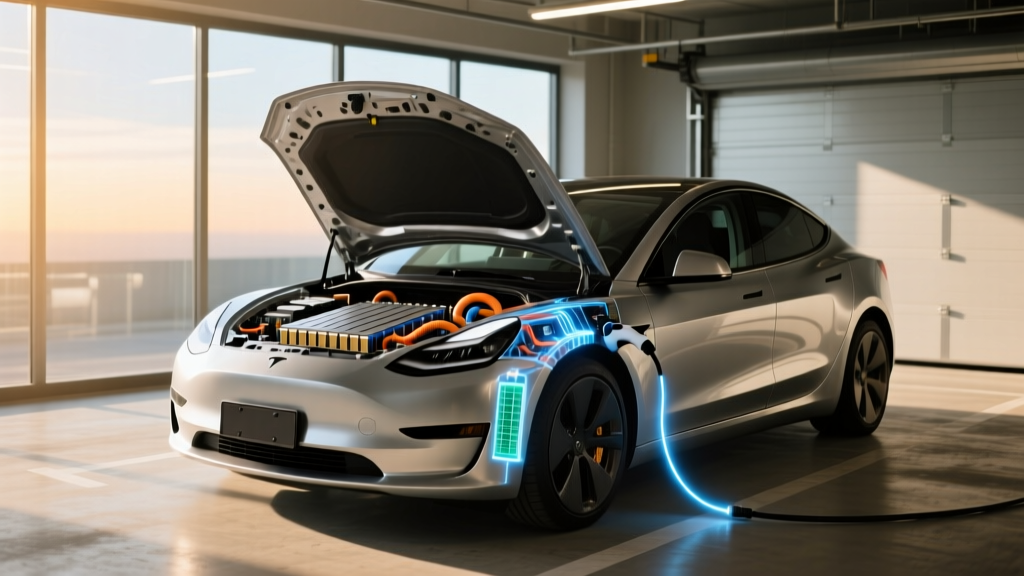
If you have shopped for a new electric vehicle in the last two years, you have likely seen the letters LFP on a window sticker or spec sheet. LFP — lithium iron phosphate — is the dominant cobalt-free battery chemistry in the EV market today, and its adoption has accelerated through the 2025 and 2026 model years as automakers seek lower-cost, longer-lasting packs that sidestep the ethical and supply-chain issues tied to cobalt mining.
But cobalt-free does not mean compromise-free. LFP cells trade some energy density and cold-weather performance for dramatically longer cycle life, lower cost per kWh, and improved thermal stability. Whether that trade-off works in your favor depends on how you drive, where you live, and what kind of ownership horizon you are planning for.
This guide breaks down exactly what cobalt-free batteries are, how they compare to nickel-manganese-cobalt (NMC) and nickel-cobalt-aluminum (NCA) chemistries, what the degradation data actually shows, and what you need to know about warranties, replacement costs, and daily care.
What Are Cobalt-Free EV Batteries?
Cobalt-free batteries eliminate cobalt from the cathode — the positive electrode where lithium ions are stored during discharge. The most commercially proven cobalt-free chemistry is LFP (LiFePO₄), which uses iron and phosphate instead of nickel, manganese, and cobalt.
Cobalt has historically been the most expensive and ethically problematic material in lithium-ion cathodes. Roughly 70% of the world's cobalt is mined in the Democratic Republic of Congo, where labor conditions and environmental practices have drawn sustained scrutiny. Cobalt also accounts for a significant share of a battery cell's raw-material cost.
By removing cobalt entirely, LFP cells achieve:
- Lower cost: LFP cells are roughly 20–30% cheaper per kWh than equivalent NMC cells at the pack level.
- Longer cycle life: LFP cells routinely achieve 3,000–5,000+ full charge cycles before reaching 80% capacity, compared to 1,000–2,000 for many NMC formulations.
- Better thermal stability: LFP's olivine crystal structure resists thermal runaway at higher temperatures, reducing fire risk.
- Simpler supply chain: Iron and phosphate are globally abundant and inexpensive.
The trade-offs are real, though, and they matter for certain buyers. Here is how the two dominant chemistries stack up side by side.
| Attribute | LFP (Cobalt-Free) | NMC / NCA |
|---|---|---|
| Energy density (cell-level) | 160–200 Wh/kg | 220–300 Wh/kg |
| Typical pack-level cost | ~$90–110/kWh | ~$120–150/kWh |
| Cycle life (to 80% SoH) | 3,000–5,000+ | 1,000–2,000 |
| Cold-weather range loss | Higher (~30–40% at 20°F) | Moderate (~20–30% at 20°F) |
| Recommended daily charge limit | 100% (LFP benefits from periodic full charges) | 80–90% for daily use |
| Thermal runaway risk | Very low | Low (with active thermal management) |
| Cobalt content | None | 5–12% of cathode by weight |
| Notable 2026 vehicles using | Tesla Model 3/Y RWD, Ford Mustang Mach-E Select (LFP option), Rivian R1S/R1T Standard, BYD models | Tesla Long Range, Hyundai Ioniq 5/6, Kia EV6/EV9, BMW iX, GM Ultium-based models |
The energy density gap is the most consequential difference for buyers. Because LFP cells store less energy per kilogram, an LFP pack of the same physical size will deliver less range than an NMC pack. That is why LFP is predominantly used in Standard Range or base trims, while Long Range and Performance trims stick with NMC or NCA to maximize miles per charge.
How Long Do EV Batteries Last? Real-World Degradation Data
The short answer: far longer than most buyers assume. The average EV battery in 2026 is engineered to outlast the vehicle's useful economic life. But degradation is not zero, and the rate depends heavily on chemistry, thermal management, and usage habits.
Typical Degradation Curves by Chemistry
Based on aggregated fleet data from sources including Recurrent Auto and manufacturer testing disclosures:
| Timeframe / Mileage | LFP Average Capacity Retention | NMC/NCA Average Capacity Retention |
|---|---|---|
| Year 1 / ~15,000 mi | 97–99% | 95–98% |
| Year 3 / ~45,000 mi | 94–97% | 90–94% |
| Year 5 / ~75,000 mi | 91–95% | 87–92% |
| Year 8 / ~120,000 mi | 88–93% | 82–88% |
| Year 10 / ~150,000 mi | 85–91% | 78–85% |
Note: These are fleet averages. Individual results vary based on climate, charging habits, and whether the vehicle has active liquid thermal management. Vehicles in hot climates (Arizona, Texas) without preconditioning or garage parking may see 2–5% additional loss over these baselines.
The key insight: LFP batteries degrade more slowly and more linearly than NMC cells. NMC packs often show a steeper initial drop in the first year or two (sometimes 3–5%) before settling into a slower, more gradual decline. LFP packs tend to lose 1–2% in the first year and then degrade at a very shallow rate, which is why some Tesla Model 3 RWD owners report 95%+ State of Health (SoH) after 50,000 miles.
What Does the EV Battery Warranty Actually Cover?
Federal law mandates a minimum battery warranty of 8 years or 100,000 miles for EVs sold in the United States (10 years/150,000 miles in California and states that follow CARB standards). But the details of what triggers a warranty claim matter enormously.
| Vehicle | Chemistry | Warranty Term | Capacity Threshold | Notes |
|---|---|---|---|---|
| Tesla Model 3 RWD | LFP | 8 yr / 100,000 mi | 70% retention | LFP pack; Tesla recommends periodic 100% charges for calibration |
| Tesla Model Y Long Range | NMC | 8 yr / 120,000 mi | 70% retention | Higher mileage threshold on LR/Performance trims |
| Hyundai Ioniq 5 | NMC | 10 yr / 100,000 mi | 70% retention | Among the longest term in the industry |
| Ford Mustang Mach-E (LFP Select) | LFP | 8 yr / 100,000 mi | 70% retention | LFP pack on Select trim; NMC on Premium/GT |
| Chevrolet Equinox EV | NMC (Ultium) | 8 yr / 100,000 mi | 60% retention | Note lower threshold — read fine print carefully |
| Rivian R1S Standard | LFP | 8 yr / 175,000 mi | 70% retention | Highest mileage cap in the segment |
The critical detail is the capacity retention threshold. Most manufacturers guarantee the battery will retain at least 70% of its original usable capacity during the warranty period. If your 75 kWh pack drops below 52.5 kWh of usable capacity within 8 years/100,000 miles, the manufacturer is obligated to repair or replace it. Some brands, like Chevrolet on certain models, set the threshold at 60%, which means significantly more degradation must occur before a claim is valid.
Warranties cover defects and abnormal degradation. They do not cover damage from collisions, flooding, improper charging equipment, or modifications to the high-voltage system. Read your owner's manual and warranty booklet carefully.
How Much Does an EV Battery Cost to Replace?
This is the question that generates the most anxiety — and the most misinformation. Let us put the numbers in context.
| Vehicle / Pack Size | Chemistry | Estimated Pack Cost | Labor + Installation | Total Estimate |
|---|---|---|---|---|
| Tesla Model 3 RWD (~60 kWh) | LFP | $6,000–$8,500 | $1,500–$2,500 | $7,500–$11,000 |
| Hyundai Ioniq 5 (~77 kWh) | NMC | $9,000–$13,000 | $2,000–$3,000 | $11,000–$16,000 |
| Ford F-150 Lightning Extended (~131 kWh) | NMC | $15,000–$22,000 | $2,500–$4,000 | $17,500–$26,000 |
| Chevrolet Equinox EV (~85 kWh) | NMC (Ultium) | $10,000–$14,000 | $2,000–$3,000 | $12,000–$17,000 |
| Rivian R1S Standard (~95 kWh) | LFP | $9,500–$13,000 | $2,000–$3,500 | $11,500–$16,500 |
Sources: Industry estimates based on BNEF battery price surveys and service-center data. Actual costs vary by dealer, region, and whether refurbished packs are available. Prices have declined roughly 10–15% since 2023 as LFP adoption and manufacturing scale increase.
Context matters: the vast majority of EV batteries never need replacement during the vehicle's ownership life. Data from Recurrent Auto and fueleconomy.gov indicates that fewer than 2% of EV batteries are replaced under warranty, and most replacements occur due to manufacturing defects in the first 1–3 years rather than end-of-life degradation. A well-maintained LFP pack can realistically serve 15–20 years before dropping to 70% capacity — at which point the vehicle itself may be retired for other reasons.
Factors That Accelerate (or Slow) Battery Degradation
Battery longevity is not purely a function of time and mileage. How you charge, where you park, and how you drive all influence the rate at which your pack loses capacity.
Battery Care Checklist: Maximize Your Pack's Lifespan
- Avoid sustained 100% SoC on NMC packs. For NMC/NCA chemistry, set your daily charge limit to 80–90%. Reserve 100% for road trips. LFP owners can (and should) charge to 100% periodically — the battery management system (BMS) needs full charges to accurately calibrate SoC estimation.
- Minimize DC fast charging above 150 kW when unnecessary. Occasional fast charging is fine, but daily use of 250–350 kW chargers generates sustained heat that accelerates degradation. If you have Level 2 home charging, use it as your primary method.
- Precondition before fast charging. Most modern EVs automatically precondition the battery when you navigate to a DC fast charger. This warms or cools the cells to the optimal temperature window (roughly 70–95°F / 21–35°C), improving charge speed and reducing stress.
- Avoid extreme SoC in extreme temperatures. Do not let your EV sit at 100% SoC in 100°F+ heat for extended periods, and avoid leaving it near 0% SoC in sub-freezing weather for days. If parking in summer heat, a shaded garage and a 50–70% SoC is ideal.
- Use scheduled charging. Set your vehicle to finish charging just before you leave in the morning. This minimizes the time the battery sits at high SoC and ensures the pack is at a moderate temperature from the charge cycle.
- Drive moderately in extreme cold. In sub-20°F weather, battery chemistry is less receptive to high charge/discharge rates. Gentle acceleration and use of regenerative-braking limitations (many EVs reduce regen in cold weather) protect the cells.
Cold-Weather Performance: LFP's Main Weakness
LFP cells have higher internal resistance at low temperatures compared to NMC cells. In practice, this means two things in winter:
- Greater range loss. An LFP-equipped Tesla Model 3 RWD (EPA 272 miles) may deliver only 165–190 miles of real-world range at 20°F on the highway, a 30–40% reduction. An NMC-equipped Model 3 Long Range (EPA 341 miles) typically sees a 20–30% reduction under the same conditions.
- Slower DC fast charging. LFP packs take longer to precondition and may peak at lower charge rates in cold weather. Where an NMC pack might accept 250 kW after preconditioning, an LFP pack may peak closer to 150–170 kW in freezing conditions.
If you live in northern Minnesota, Montana, or New England and regularly drive in sub-freezing temperatures, an NMC-equipped vehicle with a heat pump and robust thermal management system will serve you better in winter. If your winters are mild or you primarily drive in urban and suburban settings, LFP's cold-weather penalty is manageable.
How to Check and Monitor Your Battery's State of Health
State of Health (SoH) is the percentage of your battery's original usable capacity that remains available. A new 75 kWh pack at 95% SoH has roughly 71.25 kWh of usable capacity.
Most modern EVs do not display a precise SoH percentage on the dashboard, but there are several ways to monitor it:
- In-vehicle energy screens: Tesla, Rivian, and some Hyundai/Kia models show estimated range at 100% charge. If your 100%-charge range has dropped from 272 miles (EPA new) to 255 miles after two years, your SoH is approximately 93–94%.
- OBD-II diagnostic apps: Tools like Scan My Tesla, LeafSpy (for Nissan), or general OBD-II readers with EV support can pull SoH data directly from the BMS. This is the most accurate consumer-accessible method.
- Dealer service visits: Request a battery health report during annual service. Most manufacturers can generate a detailed SoH report showing individual module voltage variance and total capacity.
- Third-party services: Companies like Recurrent Auto offer battery health reports that compare your degradation curve to fleet averages for your specific model and climate zone.
For LFP owners specifically, there is one nuance: LFP cells have a very flat voltage curve, meaning the BMS has difficulty estimating SoC (and by extension SoH) accurately unless the battery is periodically charged to 100%. Tesla recommends LFP-equipped Model 3 and Model Y owners charge to 100% at least once per week. If you skip this, your displayed range may appear artificially low even though the actual capacity is fine.
Beyond LFP: Cobalt-Free Chemistries on the Horizon
LFP is the dominant cobalt-free chemistry in production vehicles today, but it is not the last word. Several next-generation technologies are in development, though none are yet available in consumer vehicles as of 2026.
Sodium-Ion Batteries
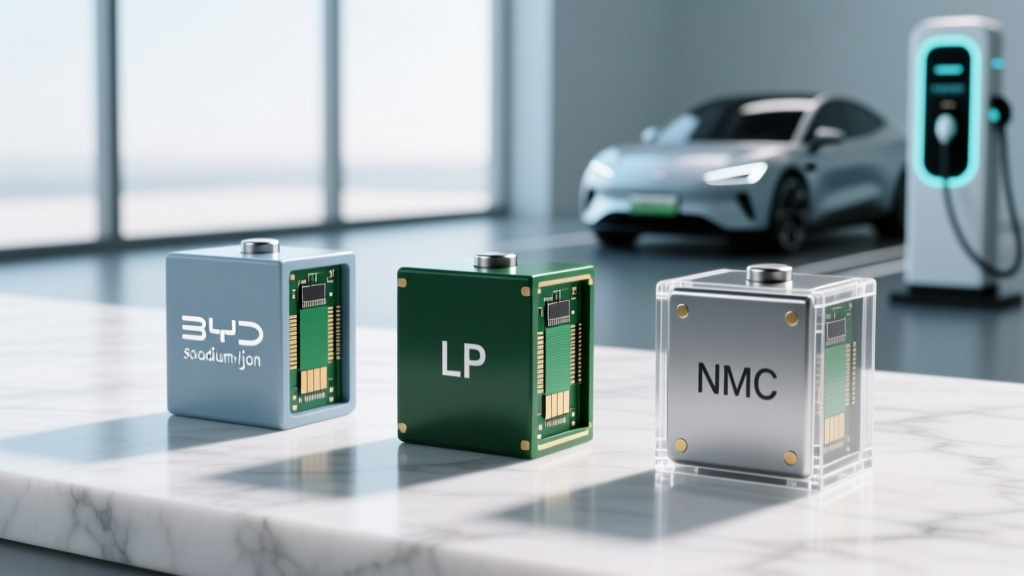
Sodium-ion cells use abundant, inexpensive sodium instead of lithium. They offer lower energy density than LFP (~120–160 Wh/kg) but are cheaper to produce and perform well in cold weather. CATL and BYD have begun limited production of sodium-ion packs for Chinese-market micro-EVs and energy storage. A sodium-ion pack in a US-market vehicle is plausible by 2028–2029, likely in a budget city car or as a supplementary range-extender module.
LMFP (Lithium Manganese Iron Phosphate)
LMFP adds manganese to the LFP formula, boosting energy density by roughly 15–20% while retaining cobalt-free status and much of LFP's cycle-life advantage. Tesla, CATL, and other cell makers have signaled LMFP production timelines in the 2027–2028 window. If realized, LMFP could close the range gap between LFP and NMC, making cobalt-free packs viable for Long Range trims.
Solid-State Batteries
Solid-state cells replace the liquid electrolyte with a solid conductor, promising higher energy density (potentially 400–500 Wh/kg at the cell level), faster charging, and improved safety. Toyota has announced a 2027–2028 production target for solid-state EVs, and QuantumScape is working with Volkswagen on pilot production. However, manufacturing yield, cost, and scalability remain significant challenges. Solid-state batteries are not available in any production vehicle as of 2026, and widespread consumer availability at competitive pricing is more realistically a 2029–2032 timeline.
All of these technologies are forward-looking and subject to production delays. For buyers making a purchase decision today, LFP and NMC are the two proven, widely available options.
LFP vs. NMC: Which Should You Choose?
The answer depends on your priorities, driving patterns, and climate.
Choose LFP (Cobalt-Free) If:
- You plan to own the vehicle for 8+ years and want maximum battery longevity
- You have reliable Level 2 home charging and rarely need 350 kW DC fast charging
- You live in a mild-to-moderate climate (rarely below 20°F for extended periods)
- You are budget-conscious and want a lower purchase price (LFP trims are typically $3,000–$7,000 less than NMC Long Range equivalents)
- You prefer simpler charging habits (charge to 100% without worry)
- You value supply-chain ethics and want a pack with no cobalt
Choose NMC/NCA If:
- Maximum range is critical (you regularly drive 250+ miles between charges)
- You live in a cold climate and need the best winter range and fast-charging performance
- You tow frequently (the extra energy density means more usable range under heavy load)
- You want the highest-performance variant (most Performance/AWD trims use NMC/NCA)
- You are willing to manage charge limits (80–90% daily) for long-term health
Frequently Asked Questions
Are cobalt-free LFP batteries safe?
Yes. LFP is among the safest lithium-ion chemistries in production. Its olivine crystal structure is inherently more stable than NMC's layered structure, making thermal runaway events significantly less likely. LFP cells can withstand higher temperatures and physical damage without venting or igniting. This is one reason LFP has become standard in stationary energy storage systems where safety is paramount.
Does the federal EV tax credit apply to vehicles with LFP batteries?
It depends on sourcing. Under the current IRS §30D rules, the $7,500 credit requires that a specified percentage of critical minerals and battery components are sourced from the US or free-trade-agreement partners. Some LFP packs manufactured in China (including certain CATL-supplied packs) may not meet the sourcing thresholds, reducing or eliminating the credit. Always verify current-year eligibility on the IRS website or with your tax professional before purchasing. MSRP caps ($55,000 for sedans, $80,000 for SUVs/trucks/vans) and buyer income limits ($150,000 single / $300,000 joint) also apply.
Will my LFP battery need to be replaced during ownership?
Almost certainly not. With 3,000–5,000+ cycle life, an LFP pack could theoretically be fully cycled every day for 8–13 years before reaching 80% capacity. In real-world use — where most owners charge partially rather than fully cycling daily — an LFP pack can reasonably last 15–20 years. Fleet data confirms that fewer than 2% of EV batteries of any chemistry require replacement under warranty.
Can I fast-charge an LFP battery?
Yes, but LFP packs generally accept lower peak DC fast-charge rates than NMC packs. A typical LFP-equipped Tesla Model 3 RWD peaks at around 170 kW on a Supercharger, achieving a 10–80% charge in roughly 25–30 minutes. An NMC Model 3 Long Range can peak at 250 kW, reaching 10–80% in approximately 18–22 minutes. For road trips, the difference is meaningful; for daily driving with home Level 2 charging, it is irrelevant.
How do I know if a specific EV has an LFP or NMC battery?
Check the manufacturer's spec sheet or window sticker. In most cases, Standard Range / base trims use LFP, while Long Range / Performance trims use NMC or NCA. Tesla, Ford, and Rivian have been transparent about chemistry by trim. If the spec sheet does not state it explicitly, contact the dealer or check the EPA fueleconomy.gov listing, which sometimes notes battery chemistry in the vehicle details.
Is LFP better for the environment than NMC?
On a per-kWh basis, LFP has a lower environmental impact than NMC. It eliminates cobalt mining entirely, uses abundant iron and phosphate, and requires less energy-intensive processing. However, because LFP packs are heavier for the same energy capacity, the vehicle's overall manufacturing footprint is slightly higher. Over the full lifecycle, LFP's longer lifespan and higher recyclability generally result in a lower total environmental impact.