The average EV owner will never need to replace their high-voltage traction battery. Yet the question of what happens when a battery reaches end-of-life — and how EV battery disposal actually works — remains one of the most searched and least understood topics in electric vehicle ownership. This guide covers the full lifecycle: chemistry, degradation data, warranty coverage, replacement economics, and where batteries go when they leave the car.
EV Battery Chemistry: LFP vs. NMC/NCA Explained
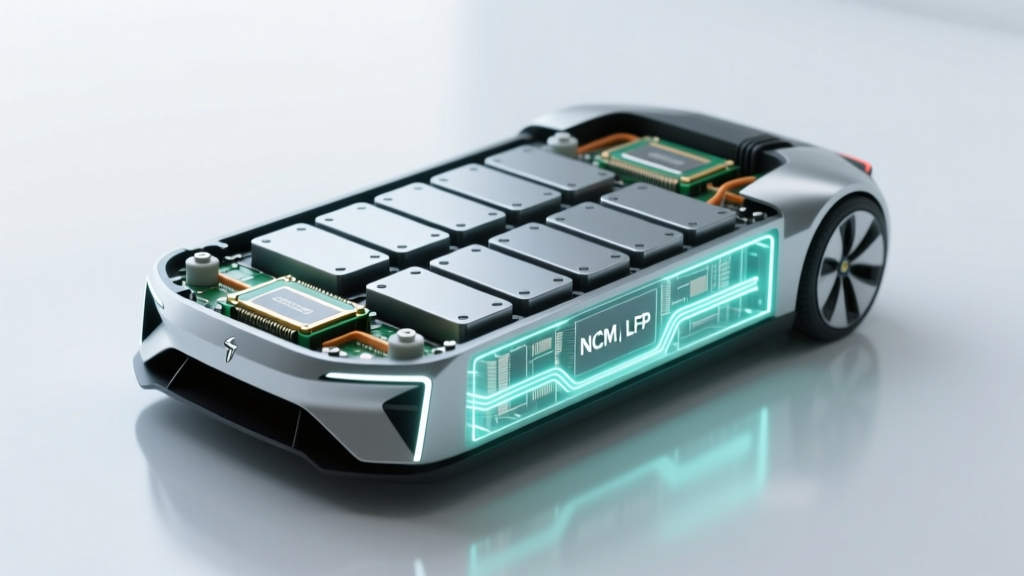
Every modern EV uses one of two dominant lithium-ion chemistries in its traction battery: LFP (lithium iron phosphate) or NMC/NCA (nickel manganese cobalt / nickel cobalt aluminum). The chemistry determines energy density, cycle life, thermal stability, and ultimately how the battery ages and how it's recycled.
| Attribute | LFP (Lithium Iron Phosphate) | NMC / NCA (Nickel-based) |
|---|---|---|
| Energy Density | Lower (~160 Wh/kg cell-level) | Higher (~220–260 Wh/kg cell-level) |
| Typical Cycle Life | 3,000–5,000+ cycles to 80% SoH | 1,000–2,000 cycles to 80% SoH |
| Cold-Weather Performance | Weaker below 32°F; more range loss | Better low-temp discharge capability |
| Thermal Stability | Excellent; less prone to thermal runaway | Good but requires more active management |
| Cobalt Content | Zero cobalt | Contains cobalt and/or nickel |
| Cost (per kWh) | Lower (~$80–100/kWh at cell level, 2025–2026) | Higher (~$110–140/kWh at cell level) |
| Recycling Value | Lower — no high-value cobalt/nickel | Higher — cobalt and nickel recoverable |
| Notable Applications (2026) | Tesla Model 3 RWD, Ford Mustang Mach-E Select (LFP option), BYD models | Tesla Model Y Long Range, Hyundai Ioniq 5, Rivian R1T, most long-range trims |
Which is better? It depends on your use case. If you prioritize maximum range per charge and live in a cold climate, NMC/NCA is the stronger pick. If you plan to keep the vehicle 10+ years, charge daily to 100%, and want the longest possible cycle life, LFP has a meaningful edge — provided you can tolerate somewhat reduced cold-weather range.
How Long Do EV Batteries Actually Last?
The short answer: most EV traction batteries outlast the vehicle they're installed in. The long answer requires looking at real-world degradation data.
Battery lifespan is measured in two ways: calendar age (years) and cycle count (full charge-discharge equivalents). Most degradation occurs in the first 1–2 years, then the curve flattens significantly.
Typical EV Battery Degradation Curve (Aggregate Fleet Data)
| Time / Mileage | Average Capacity Retained (SoH) | Notes |
|---|---|---|
| Year 1 / ~15,000 mi | 94–97% | Initial "break-in" drop; most pronounced in NMC |
| Year 3 / ~45,000 mi | 90–94% | Curve flattens; slow linear decline begins |
| Year 5 / ~75,000 mi | 87–92% | Still well above warranty threshold for most |
| Year 8 / ~120,000 mi | 83–90% | Federal warranty minimum period ends |
| Year 10 / ~150,000 mi | 80–88% | Approaching or at 80% threshold for some packs |
| Year 15 / ~225,000 mi | 75–85% | Beyond warranty; many packs still functional |
Sources: Geotab fleet battery health study, manufacturer warranty data, and aggregated owner reports. Individual results vary by chemistry, climate, and charging habits.
For context, a battery at 80% State of Health (SoH) in a 2026 Hyundai Ioniq 5 Long Range (84.0 kWh usable, EPA 305 miles) would still deliver roughly 244 miles of EPA-equivalent range — more than adequate for daily driving and most road trips.
What Does the EV Battery Warranty Actually Cover?
Federal law mandates a minimum battery warranty of 8 years / 100,000 miles for all EVs sold in the United States. Some manufacturers exceed this, particularly in California Air Resources Board (CARB) states where the requirement extends to 10 years / 150,000 miles.
| Manufacturer | Battery Warranty | Capacity Retention Threshold | Notes |
|---|---|---|---|
| Tesla (Model 3/Y) | 8 yr / 120,000 mi (LR/AWD); 8 yr / 100,000 mi (RWD) | 70% | LFP RWD models may have different terms |
| Hyundai / Kia | 10 yr / 100,000 mi | 70% | Among the most generous in the industry |
| Ford (Mach-E, F-150 Lightning) | 8 yr / 100,000 mi | 70% | Components covered separately |
| GM (Ultium platform) | 8 yr / 100,000 mi | 70% | Covers battery and electric propulsion components |
| Rivian | 8 yr / 120,000 mi | 70% | Covers Max and Large packs |
| BMW (iX, i4) | 8 yr / 100,000 mi | 70% | Includes battery management system |
The 70% threshold means the manufacturer will repair or replace the battery if its usable capacity drops below 70% of original within the warranty period. Source: manufacturer warranty documentation, fueleconomy.gov.
What's covered: Capacity loss below the threshold, cell or module failure, battery management system (BMS) defects, and thermal management system failures that affect battery health.
What's typically NOT covered: Damage from accidents, modifications, improper charging equipment, or failure to follow the manufacturer's maintenance schedule. Cosmetic issues and minor capacity loss above the threshold are excluded.
EV Battery Replacement Cost: When and How Much
Out-of-warranty battery replacement is the single biggest fear among prospective EV buyers. Here's what the numbers actually look like in 2026:
| Vehicle | Battery Size (Usable kWh) | Chemistry | Est. Replacement Cost |
|---|---|---|---|
| Tesla Model 3 RWD | 57.5 kWh | LFP | $8,000–$12,000 |
| Tesla Model Y Long Range | 75 kWh | NMC | $12,000–$16,000 |
| Hyundai Ioniq 5 Long Range | 84.0 kWh | NMC | $13,000–$18,000 |
| Ford F-150 Lightning (Extended Range) | 131 kWh | NMC | $20,000–$28,000 |
| Chevrolet Equinox EV | 85 kWh | NMC (Ultium) | $13,000–$17,000 |
| Rivian R1T (Max Pack) | 141 kWh | NMC | $22,000–$30,000 |
Costs include battery pack, labor, and diagnostics. Prices are declining ~5–8% annually as cell costs fall. Refurbished packs are increasingly available at 30–50% lower cost. Source: dealer service estimates, Recurrent Auto battery replacement data.
When is replacement actually needed? In practice, rarely before 150,000–200,000 miles. The vast majority of EVs are scrapped, sold, or traded in with their original battery still operational. Complete battery failure (not gradual degradation) is uncommon and usually tied to manufacturing defects caught under warranty.
A growing alternative to full-pack replacement is module-level repair. Many modern packs (especially modular designs like older Nissan LEAF and some Hyundai/Kia packs) allow individual module replacement for $2,000–$5,000 rather than a full pack swap.
Factors That Accelerate Battery Degradation
Not all miles are equal when it comes to battery wear. The following factors have the largest measurable impact on long-term State of Health:
Battery Care Best Practices
- Avoid sustained 100% SoC: For NMC/NCA batteries, charge to 80% daily and reserve 100% for road trips. LFP batteries can (and should) be charged to 100% regularly — Tesla and BYD both recommend this for LFP chemistry to maintain cell balancing.
- Minimize DC fast charging frequency: Occasional fast charging is fine. Daily DCFC use (especially at 250+ kW) accelerates degradation by ~1–2% extra over 5 years compared to Level 2-only charging, per Geotab fleet data.
- Precondition before fast charging: Most EVs do this automatically when you navigate to a charger. A cold battery charged at high power suffers lithium plating risk — preconditioning warms the pack to optimal temperature.
- Avoid extreme SoC storage: If storing the vehicle for weeks, leave it at ~50% SoC. Storing at 100% or near 0% for extended periods accelerates calendar degradation.
- Park in shade or garages in hot climates: Sustained high ambient temperatures (95°F+) are more damaging than cold. Battery thermal management systems help, but passive heat soak still matters.
- Don't obsess over daily regen strength: Regenerative braking does not meaningfully accelerate battery wear under normal use. The BMS manages charge acceptance rates.
How to Check and Monitor Your Battery's State of Health
State of Health (SoH) represents the battery's current maximum capacity as a percentage of its original capacity. Here's how to track it:
Built-in vehicle displays: Some manufacturers (BMW, Mercedes-Benz EQ, and newer Hyundai/Kia models) show SoH or a battery health indicator in the infotainment or driver app. Tesla does not display SoH directly but shows estimated range at full charge, which you can cross-reference against the original EPA figure.
OBD-II diagnostic tools: Devices like the OBDLink MX+ paired with apps such as EV Health or LeafSpy (for Nissan LEAF) can read the BMS directly and report SoH with reasonable accuracy. Cost: ~$50–120 for the adapter.
Dealer diagnostic reports: Most service centers can pull a battery health report during routine service. Request this proactively — it's often free and provides the most authoritative SoH reading.
Third-party services: Companies like Recurrent Auto offer free battery health reports by connecting to your vehicle's telematics data. These reports compare your degradation to fleet averages for your specific model.
EV Battery Disposal and Recycling: Where Do Dead Packs Go?
This is where the keyword question gets its real answer. EV battery disposal is not landfill-bound — the economics and regulations make that nearly impossible in 2026.
Second-life applications (Years 10–20+ of battery life): A battery retired from a vehicle at 70–80% SoH still holds enormous energy storage potential. Retired EV packs are increasingly deployed in:
- Grid-scale stationary energy storage (paired with solar and wind)
- Commercial backup power systems
- Residential home battery systems (repurposed modules)
- EV charging station buffer batteries (reducing peak grid demand)
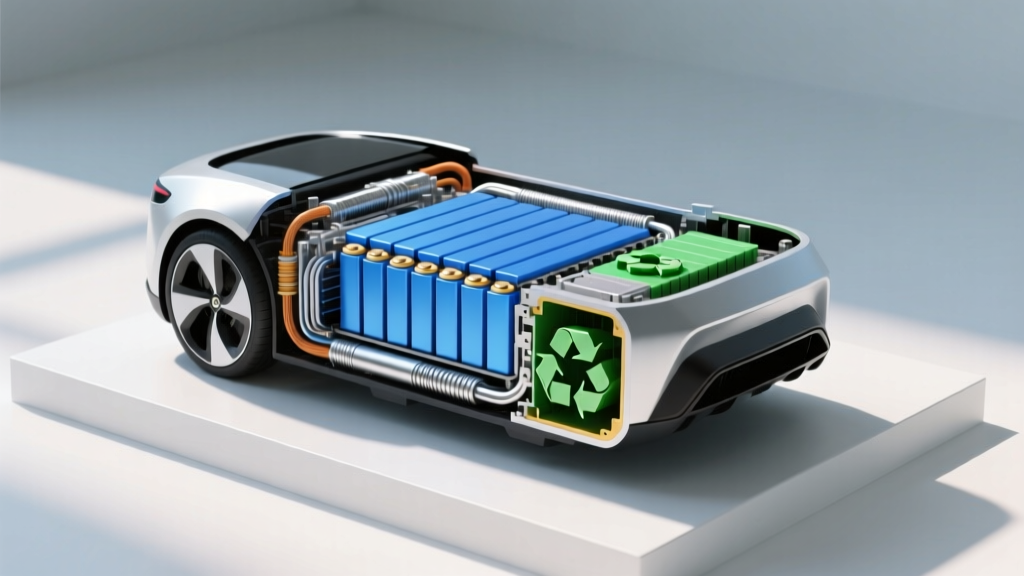
Companies like Redwood Materials (founded by Tesla co-founder JB Straubel), Li-Cycle, and Battery Resources operate large-scale recycling facilities in North America that recover 95%+ of critical materials — including lithium, cobalt, nickel, copper, and aluminum — from spent battery packs.
How recycling works:
- Discharge and disassembly: Packs are fully discharged, then mechanically separated into modules and cells.
- Shredding: Cells are shredded in controlled environments to produce "black mass" — a mixture of cathode and anode materials.
- Hydrometallurgical processing: Black mass is dissolved and separated into individual metals using chemical processes. This recovers battery-grade lithium, cobalt, nickel, and manganese.
- Reintroduction: Recovered materials are sold back to battery cell manufacturers, closing the supply loop.
Regulatory framework: Under current EPA and state regulations (particularly in California, New York, and Washington), EV batteries are classified as universal waste or managed under extended producer responsibility (EPR) laws. Manufacturers bear increasing responsibility for end-of-life battery management. The IRS §30D tax credit battery-sourcing requirements also indirectly incentivize domestic recycling by rewarding supply chains that reduce reliance on foreign critical minerals.
What owners need to do: Virtually nothing. If your battery is replaced under warranty, the dealer handles the old pack. For out-of-warranty replacements, certified EV service centers are required to route spent batteries to licensed recyclers. You will not be handed a 1,000-lb battery and told to figure it out.
Emerging Battery Technology: What's on the Horizon
While today's lithium-ion batteries are mature and reliable, several next-generation technologies are in development. These are not yet commercially available in production EVs as of 2026:
Solid-state batteries: Replace the liquid electrolyte with a solid ceramic or polymer, promising higher energy density (potentially 400+ Wh/kg), faster charging, and improved safety. Toyota, Samsung SDI, and QuantumScape have announced production targets for 2027–2029, but these remain announced timelines subject to manufacturing scale-up challenges. Expect initial deployment in limited, premium models first.
Silicon-dominant anodes: Companies like Sila Nanotechnologies and Group14 are replacing graphite anodes with silicon composites, boosting energy density by 20–40%. These are beginning to appear in consumer electronics and are expected in EV cells by 2027–2028.
Sodium-ion batteries: CATL and BYD have begun limited production of sodium-ion cells, which use no lithium, cobalt, or nickel. Energy density is lower than LFP, making them best suited for budget city EVs and stationary storage. First EV applications are appearing in China-market vehicles in 2025–2026.
None of these technologies change the disposal equation significantly — recycling infrastructure is being designed to handle multiple chemistries, and the economic incentive to recover materials remains regardless of cell type.
Frequently Asked Questions
How long do EV batteries last in years and miles?
Most EV batteries retain 80–90% of their original capacity after 8–10 years or 100,000–150,000 miles. Many packs continue functioning well beyond 200,000 miles, albeit with reduced range. LFP chemistry tends to last longer in terms of cycle count than NMC/NCA.
How much does an EV battery cost to replace?
Full-pack replacement ranges from approximately $8,000 for smaller LFP packs (Tesla Model 3 RWD) to $28,000+ for large packs (Ford F-150 Lightning Extended Range, Rivian Max Pack). Module-level repair, where available, costs $2,000–$5,000. Costs continue declining as cell prices fall and refurbished packs become more available.
What does the battery warranty cover?
Federal law requires a minimum 8-year/100,000-mile warranty guaranteeing the battery retains at least 70% of its original capacity. This covers cell degradation, module failures, and BMS defects. It does not cover accident damage, aftermarket modifications, or capacity loss above the 70% threshold.
How do I check my EV battery health?
Use your vehicle's built-in battery health display (if available), connect an OBD-II adapter with an EV health app, request a diagnostic report from your dealer, or sign up for a free third-party service like Recurrent Auto. Compare your current maximum range to the original EPA figure as a quick proxy.
LFP vs. NMC — which battery chemistry is better?
LFP offers longer cycle life, lower cost, zero cobalt, and better thermal stability but sacrifices energy density and cold-weather performance. NMC/NCA provides higher range per kWh and better cold-weather behavior at higher cost and shorter cycle life. For high-mileage owners who charge daily, LFP is increasingly the pragmatic choice. For maximum range and cold-climate drivers, NMC remains preferred.
Is EV battery disposal bad for the environment?
Modern EV battery disposal is heavily regulated and increasingly circular. Over 95% of critical materials are recoverable through hydrometallurgical recycling. Most retired packs first serve a second life in stationary energy storage for 10+ additional years before recycling. The economics of recovering cobalt, nickel, and lithium make landfill disposal financially irrational.
Will my EV battery need to be replaced before I sell the car?
Statistically, no. The median EV battery outlasts the median vehicle ownership period. Most EVs are traded, sold, or retired with their original battery still above 75% SoH. Battery replacement before sale is uncommon outside of high-mileage fleet vehicles or early-generation EVs (pre-2018) with smaller, air-cooled packs.