Search for "98 Honda Accord battery" and you will find thousands of results for a simple 12-volt lead-acid replacement costing between $120 and $220 at any auto parts store. That search query reveals something important about the transition to electric vehicles: buyers are now applying legacy-car thinking to high-voltage traction batteries that operate on entirely different principles, price scales, and lifespans. This guide bridges that gap, giving you exact data on EV battery longevity, replacement economics, chemistry trade-offs, and health monitoring — with the kind of numbers you need before signing a purchase agreement.
Why Searching for a 98 Honda Accord Battery Misses the EV Reality
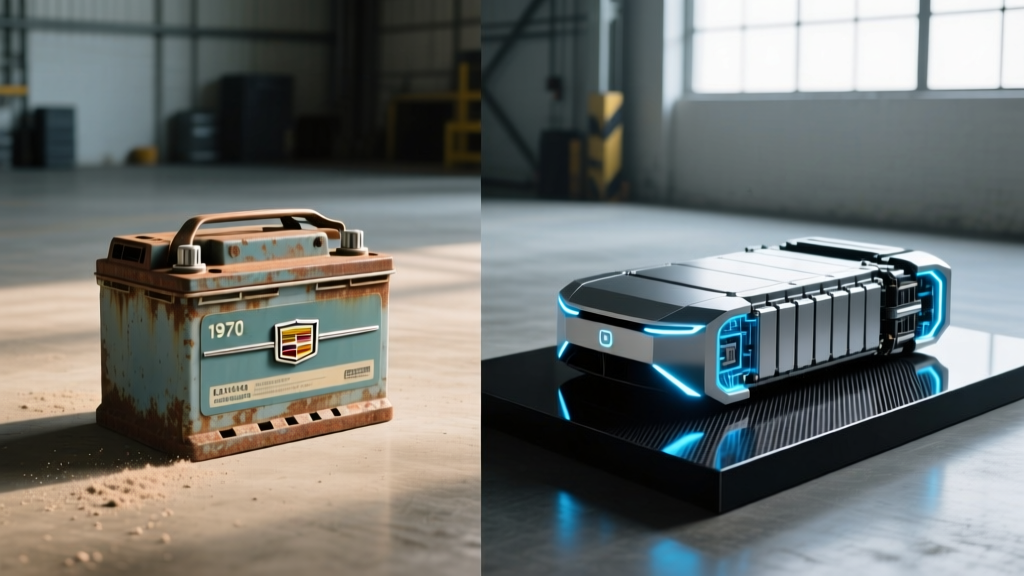
A 1998 Honda Accord uses a Group 51R 12V lead-acid battery rated around 500 cold-cranking amps. It weighs roughly 33 pounds, stores about 0.6 kWh of energy, and typically lasts 3 to 5 years before sulfation or plate degradation forces a swap. Total cost of ownership for that battery over a 15-year vehicle life? Maybe $600 to $1,000 across three or four replacements.
An EV traction battery is a fundamentally different component. A 2026 Tesla Model Y Long Range carries an ~75 kWh NMC (nickel-manganese-cobalt) pack weighing over 1,000 pounds. A base Tesla Model 3 RWD uses a ~60 kWh LFP (lithium iron phosphate) pack. These batteries are engineered to last the life of the vehicle — typically 150,000 to 200,000+ miles — and federal law mandates a minimum warranty of 8 years or 100,000 miles (10 years/150,000 miles in CARB states like California). The comparison to a 98 Accord battery is useful only as a starting point to understand how far battery technology has come and what modern EV owners actually face.
LFP vs NMC Battery Chemistry: The Trade-Offs That Matter
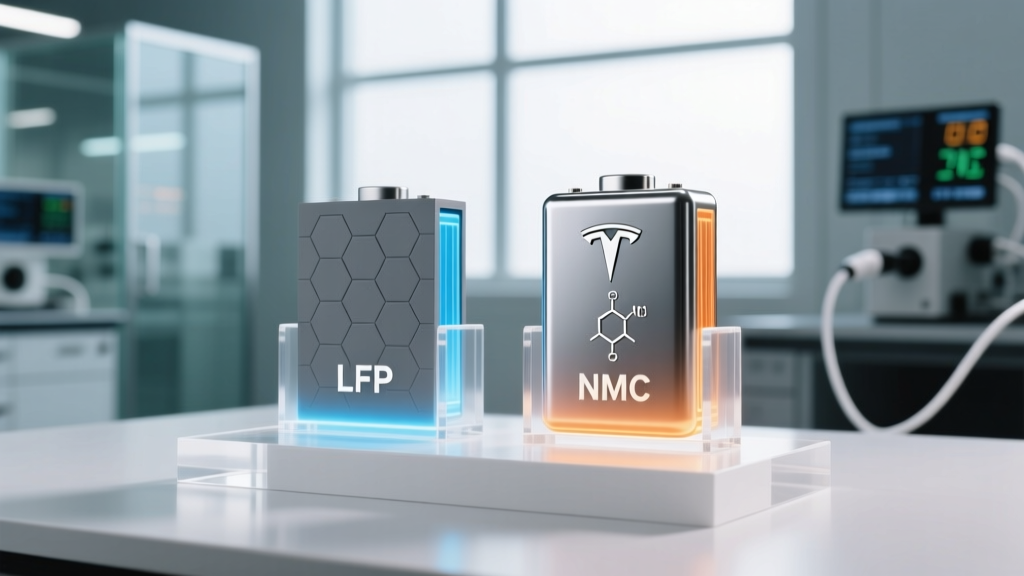
The two dominant lithium-ion chemistries in 2026 EVs are LFP (lithium iron phosphate) and NMC/NCA (nickel-manganese-cobalt / nickel-cobalt-aluminum). Your choice of chemistry affects range, longevity, cold-weather performance, and price. Here is a direct comparison:
| Attribute | LFP (Lithium Iron Phosphate) | NMC/NCA (Nickel-based) |
|---|---|---|
| Energy Density | ~160-180 Wh/kg (lower) | ~220-300 Wh/kg (higher) |
| Typical Cycle Life | 3,000-5,000+ cycles | 1,000-2,000 cycles |
| Cold-Weather Performance | Moderate loss; slower charging below freezing | Better low-temp conductivity |
| Cost per kWh (2026) | ~$80-$100/kWh at pack level | ~$110-$140/kWh at pack level |
| Optimal Daily SoC | Can charge to 100% daily | Best kept at 80% for daily use |
| Thermal Stability | Excellent; less prone to thermal runaway | Good; requires active thermal management |
| Common 2026 Applications | Tesla Model 3 RWD, Ford Mustang Mach-E Select, BYD models | Tesla Model Y LR, Hyundai Ioniq 5, Rivian R1T, most long-range trims |
The bottom line: LFP wins on longevity and daily-use convenience (charge to 100% without worry). NMC wins on energy density, which translates to more range in a lighter package — critical for trucks, SUVs, and long-range sedans. If you plan to own your EV for 10+ years and 150,000+ miles, LFP's cycle-life advantage becomes significant. If you need maximum range per charge and live in a cold climate, NMC's energy density and cold-weather edge matter more.
How Long Do EV Batteries Actually Last? Degradation Data
EV battery degradation follows a curve: the steepest loss occurs in the first 1-2 years (typically 2-5%), then the rate flattens considerably. This is not linear wear like brake pads. Real-world fleet data from sources including Geotab's long-term fleet study and manufacturer warranty claims paint a consistent picture:
| Milestone | Average Capacity Retained | Notes |
|---|---|---|
| Year 1 / 15,000 mi | 95-98% | Initial formation loss; steepest part of curve |
| Year 3 / 45,000 mi | 91-95% | Rate slows significantly after year 2 |
| Year 5 / 75,000 mi | 88-93% | Most owners notice minimal range change day-to-day |
| Year 8 / 100,000 mi | 85-90% | Warranty threshold period; failures rare (<2% of packs) |
| Year 10 / 150,000 mi | 80-88% | Projected; data from early-adopter fleets (2014-2016 models) |
| Year 15 / 200,000 mi | 75-85% | Projected; most vehicles retired before reaching this point |
For context, a 2026 Hyundai Ioniq 5 with a 77.4 kWh NMC pack and an EPA range of 305 miles would retain roughly 275-285 miles of range at 75,000 miles — a difference most drivers barely notice in daily commuting. Tesla's 2025 Impact Report showed their fleet averaging less than 10% degradation at 200,000 miles. The fear of sudden battery "death" is not supported by the data; degradation is gradual and predictable.
What the Battery Warranty Covers (and What It Does Not)
Federal law in the United States mandates a minimum EV battery warranty of 8 years / 100,000 miles. In California Air Resources Board (CARB) states — which include California, New York, Massachusetts, and several others — the requirement extends to 10 years / 150,000 miles. Here is how major manufacturers structure their coverage in 2026:
| Manufacturer | Warranty Term | Capacity Threshold | What Triggers a Claim |
|---|---|---|---|
| Tesla (Model 3/Y) | 8 yr / 100,000-120,000 mi (varies by trim) | 70% retention | Battery falls below 70% of original capacity |
| Hyundai / Kia | 10 yr / 100,000 mi | 70% retention | Capacity below 70% or defect |
| Ford | 8 yr / 100,000 mi | 70% retention | Capacity below 70% or component failure |
| General Motors (Ultium) | 8 yr / 100,000 mi | 70% retention (some models 60%) | Verified capacity loss or defect |
| Rivian | 8 yr / 120,000-175,000 mi | 70% retention | Capacity below threshold |
Critical detail: The warranty covers the battery dropping below the stated retention threshold — typically 70% of original capacity. It does not cover range loss from extreme temperatures, tire/wheel changes affecting efficiency, or damage from accidents, flooding, or unauthorized modifications. If your 80 kWh pack degrades to 55 kWh (below 70%), the manufacturer must repair or replace it. If it degrades to 58 kWh (above 70%), you are within normal wear and the claim will likely be denied.
EV Battery Replacement Costs: The Real Numbers
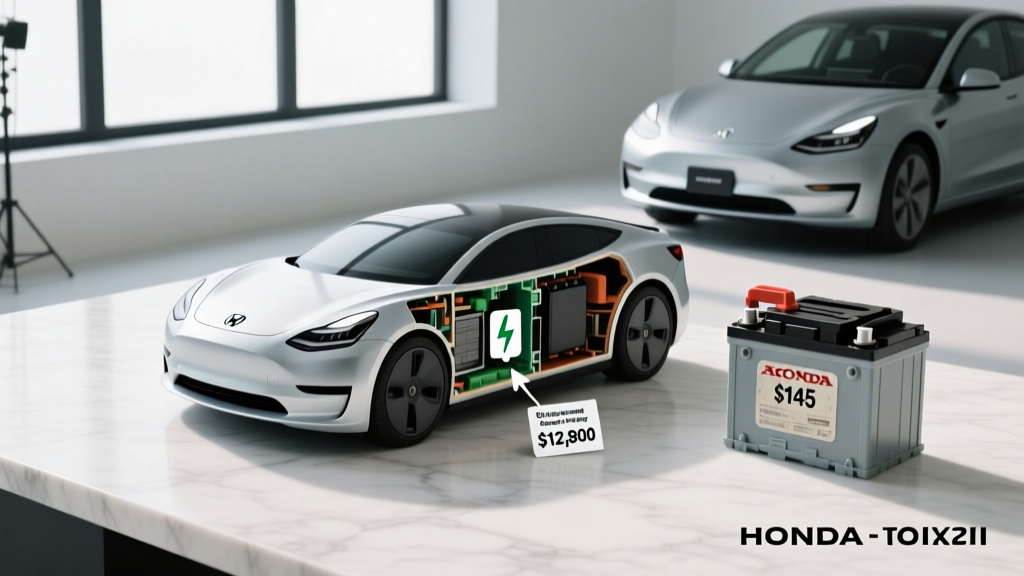
This is where the 98 Honda Accord battery comparison becomes stark. A replacement 12V battery for a 1998 Accord costs $120-$220 installed. An EV traction battery replacement is a five-figure event — but it is also one that the vast majority of owners will never face. Here are current replacement cost ranges based on manufacturer service bulletins and independent EV repair shops:
| Vehicle / Pack Size | Estimated Replacement Cost (2026) | When Typically Needed |
|---|---|---|
| Tesla Model 3 RWD (~60 kWh LFP) | $8,000 - $12,000 | Rarely before 200,000+ mi; module repair often sufficient |
| Tesla Model Y LR (~75 kWh NMC) | $12,000 - $16,000 | Rarely before 200,000+ mi |
| Hyundai Ioniq 5 (~77.4 kWh NMC) | $11,000 - $15,000 | Rarely before 150,000+ mi |
| Ford F-150 Lightning Ext. Range (~131 kWh) | $20,000 - $28,000 | Very rare; module-level repair more common |
| Chevrolet Bolt EV (~65 kWh NMC) | $9,000 - $14,000 | Post-recall replacements largely covered |
| Nissan Leaf (40-62 kWh) | $7,000 - $10,000 | Older models; passive cooling accelerates degradation |
Several important context points: First, pack-level replacement is increasingly rare. Most out-of-warranty battery issues are resolved by replacing individual modules (a pack contains 4-20+ modules), which costs $1,500-$4,000 depending on the vehicle. Second, pack costs have declined roughly 15-20% since 2022 as LFP adoption expanded and manufacturing scaled. Third, the vehicle itself is often totaled by insurance before the battery needs full replacement — a 15-year-old EV with a degraded battery may be worth less than the replacement cost, similar to how you would not put a $4,000 transmission in a 98 Accord valued at $1,500.
Factors That Accelerate (or Preserve) Battery Life
Not all miles are created equal when it comes to battery wear. Based on fleet data and electrochemistry fundamentals, these factors have the largest measurable impact on long-term State of Health (SoH):
- DC Fast Charging Frequency: Occasional fast charging (1-2x per week) shows negligible impact. Daily DCFC use, particularly at 150+ kW without preconditioning, can add 1-3% additional degradation over 100,000 miles compared to Level 2 home charging. The heat generated during high-C-rate charging stresses cell chemistry.
- State of Charge Habits (NMC): Keeping an NMC battery between 20-80% for daily use and only charging to 100% for road trips is the single most impactful habit. Consistent 100% storage can accelerate degradation by 2-5% over 5 years. LFP batteries are exempt from this — charge them to 100% regularly, as their flat voltage curve requires full calibration.
- Extreme Heat Exposure: Sustained ambient temperatures above 95°F (35°C) without active thermal management accelerate degradation. Vehicles with liquid-cooled packs (Tesla, Hyundai, Ford, GM Ultium) handle this far better than passively-cooled older designs (early Nissan Leaf).
- Extreme Cold Charging: Charging an LFP or NMC battery below freezing without preconditioning can cause lithium plating — a permanent damage mechanism. Most 2026 EVs automatically precondition the battery when you navigate to a charger, but plugging in at -10°F without preconditioning remains harmful.
- Deep Discharge Storage: Leaving an EV at 0-5% SoC for weeks can cause cells to drop below their safe voltage floor, potentially bricking modules. If storing, leave the vehicle at 50% SoC plugged in with a charge limit set.
How to Check and Monitor Your EV Battery Health
State of Health (SoH) is the percentage of original capacity your battery currently retains. Unlike the 98 Accord's 12V battery — where you tested voltage with a multimeter at the auto parts store — EV SoH monitoring requires software-level access. Here are the primary methods available to 2026 EV owners:
Manufacturer Apps: Tesla, Hyundai, Ford, and GM provide battery health indicators in their companion apps or vehicle settings menus. Tesla's service mode (accessible via the software menu) shows a degradation graph. Hyundai's Bluelink app displays a battery health percentage. These are the easiest starting points.
OBD-II Diagnostic Tools: Third-party apps like Scan My Tesla, Leaf Spy (for Nissan), and Car Scanner ELM OBD2 read the battery management system (BMS) directly via the OBD-II port. These tools show cell-level voltage variance, pack capacity in kWh, and calculated SoH — often with more granularity than the OEM app.
Third-Party Battery Health Reports: Services like Recurrent and AVILOO provide certified battery health certificates, increasingly used in the used-EV market. If you are buying a pre-owned EV, requesting a battery health report is as essential as checking a Carfax — and far more predictive of future costs.
DIY Range Test: Charge to 100%, drive a consistent route at moderate speed (55-65 mph, mild weather), and measure actual miles against the EPA sticker. A consistent 10% shortfall at 50,000 miles aligns with expected degradation; a 25% shortfall warrants a service visit.
Emerging Battery Technology: What Is Coming and When
Two technologies dominate forward-looking battery discussions, and both require realistic timelines:
Solid-State Batteries: These replace the liquid electrolyte with a solid ceramic or polymer layer, promising 30-50% higher energy density, faster charging, and improved safety. Toyota has announced limited solid-state production for 2027-2028, initially in low-volume hybrid applications. Samsung SDI and QuantumScape are targeting 2028-2030 for broader automotive deployment. These are not available in any 2026 production vehicle. Expect initial solid-state EVs to carry a significant price premium, with cost parity to current lithium-ion projected around 2033-2035.
Silicon Anode Batteries: Replacing graphite anodes with silicon can boost energy density by 20-40%. Sila Nanotechnologies and Group14 are supplying silicon-dominant anode materials to manufacturers including Mercedes-Benz (for the upcoming G-Class EV) and Panasonic. Early implementations are appearing in 2025-2026 model-year premium vehicles, but at limited scale. This is an incremental improvement to existing lithium-ion architecture, not a wholesale replacement, and it will reach mainstream pricing faster than solid-state.
For buyers in 2026, current LFP and NMC chemistries are mature, well-understood, and backed by substantial warranty coverage. Waiting for solid-state is a decision to delay an EV purchase by 4-8+ years — a calculation that only makes sense if your current vehicle meets your needs and the total cost of ownership math favors waiting.
Frequently Asked Questions
How long do EV batteries last in years and miles?
Based on fleet data through 2026, most EV batteries retain 80-90% of original capacity at 100,000 miles (roughly 8 years of average driving). Complete pack failure before 150,000 miles affects fewer than 2% of vehicles from major manufacturers with active thermal management. The battery will typically outlast the rest of the vehicle's useful life.
How much does an EV battery cost to replace?
Full pack replacement ranges from $7,000 (Nissan Leaf 40 kWh) to $28,000 (Ford F-150 Lightning 131 kWh extended range), with most mid-size crossovers falling in the $11,000-$16,000 range. However, most repairs are module-level at $1,500-$4,000. For comparison, a 98 Honda Accord battery costs $120-$220 — but that 12V battery needs replacing every 3-5 years, while an EV traction battery is designed for the vehicle's full lifespan.
What does the EV battery warranty cover?
Federal minimum is 8 years / 100,000 miles; CARB states require 10 years / 150,000 miles. Coverage triggers when capacity drops below the manufacturer's threshold (typically 70% of original). The warranty covers defects and abnormal degradation but not damage from accidents, improper charging, or environmental events. Always check the specific terms for your model year, as they vary by trim and battery size.
How do I check and maximize my EV battery health?
Monitor SoH through your manufacturer's app, an OBD-II scanner with EV-specific software, or a third-party service like Recurrent. To maximize longevity: use Level 2 home charging for daily needs, keep NMC packs at 20-80% SoC (LFP can go to 100%), avoid frequent DC fast charging when Level 2 is available, precondition before charging in cold weather, and never store the vehicle at 0% or 100% SoC for extended periods.
LFP vs NMC — which battery chemistry is better?
Neither is universally better; it depends on your use case. Choose LFP if you want maximum cycle life (3,000-5,000+ cycles), the convenience of daily 100% charging, lower cost, and plan to keep the vehicle 10+ years. Choose NMC if you need maximum range per charge, better cold-weather performance, or are buying a larger vehicle where energy density translates to meaningful weight savings. For a commuter who charges at home nightly, LFP is the pragmatic 2026 choice. For a road-tripper or cold-climate driver, NMC's advantages justify its slightly faster degradation curve.