If you own a Nissan Leaf—or are considering buying one on the used market—one question inevitably dominates the research phase: what happens when the high-voltage traction battery degrades beyond usable capacity? The cost of replacement battery for Nissan Leaf models varies significantly depending on battery pack size, model year, and whether you go through a dealership or an independent EV specialist. This guide breaks down real replacement pricing, degradation data, warranty coverage, and the battery care habits that can delay a swap for years.
Nissan Leaf Battery Replacement Cost: What Owners Actually Pay
The Nissan Leaf has been sold in the U.S. since 2011 with two primary battery configurations: a 40 kWh pack (introduced for the second generation in 2018) and a 62 kWh pack (Leaf Plus). Earlier models (2011–2017) shipped with 24 kWh or 30 kWh packs. Replacement costs differ sharply across these generations.
| Model Years | Battery Size | Chemistry | Dealer Replacement (Parts + Labor) | Independent Shop / Refurbished |
|---|---|---|---|---|
| 2011–2015 | 24 kWh | NMC (LMO cathode) | $6,500 – $8,500 | $3,500 – $5,500 |
| 2016–2017 | 30 kWh | NMC | $7,500 – $9,500 | $4,500 – $6,500 |
| 2018–2023 | 40 kWh | NMC | $8,000 – $10,500 | $5,000 – $7,500 |
| 2019–2023 | 62 kWh (Plus) | NMC | $10,000 – $14,000 | $7,000 – $10,000 |
These figures include the battery module or pack, labor for removal and installation (typically 3–6 hours), and programming. Dealer pricing leans toward new OEM packs, while independent EV shops often source refurbished or reconditioned packs pulled from salvaged Leafs with low mileage. A refurbished 24 kWh pack from a 2013 Leaf, for example, can often be had for under $4,000 installed—a practical choice for a vehicle with a current market value of $5,000–$8,000.
When is replacement typically needed? Most Nissan Leaf owners never replace their battery. Nissan's passive air-cooling design (no liquid thermal management) means Leaf batteries degrade faster than liquid-cooled competitors, particularly in hot climates. Owners in Arizona or Texas may see 20–30% capacity loss by year 8–10, while Pacific Northwest owners often report only 10–15% loss over the same period. Replacement becomes practical when range drops below what your daily driving requires—not at an arbitrary degradation percentage.
How Long Do EV Batteries Last? Degradation Data by the Numbers
Modern EV traction batteries are engineered for 1,000–2,000+ full charge cycles before reaching 70–80% of original capacity. For a vehicle with 250 miles of range, that translates to 250,000–500,000 miles of theoretical battery life. Real-world data, however, tells a more nuanced story.
Typical EV Battery Degradation Curve
Data aggregated from fleet studies, owner surveys, and manufacturer reports (sources include Geotab fleet data and owner-reported databases):
- Year 1–2: 2–5% capacity loss (initial formation loss, then stabilization)
- Year 3–5: ~1–2% loss per year (linear degradation phase)
- Year 6–8: Continued ~1–2% per year for liquid-cooled packs; 2–4% per year for passively cooled packs (Leaf, early models)
- Year 10+: Most liquid-cooled NMC packs retain 80–90% capacity; air-cooled packs may retain 65–80%
The Nissan Leaf's lack of active thermal management is its Achilles' heel. A 2015 Leaf in Phoenix might show 60–65% State of Health (SoH) by year 10, while a 2022 Tesla Model Y with liquid cooling and NMC chemistry typically retains 88–93% SoH over the same timeframe.
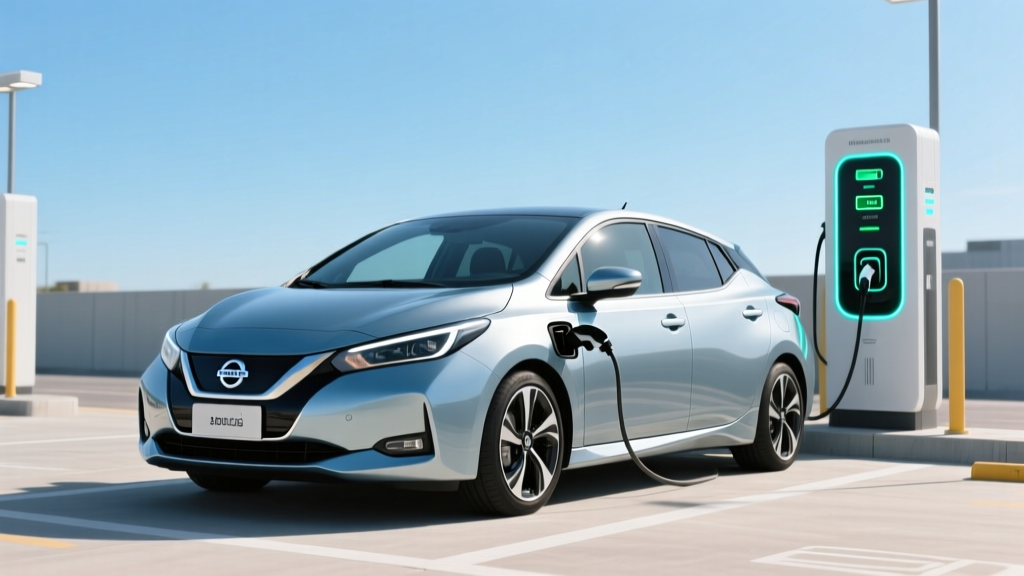
The Leaf's CHAdeMO DC fast-charging port also introduces a variable: frequent DC fast charging without thermal management accelerates degradation. Leaf owners who rely primarily on Level 2 home charging consistently report slower capacity loss than those using 50 kW CHAdeMO stations daily.
LFP vs. NMC Battery Chemistry: Trade-Offs That Matter
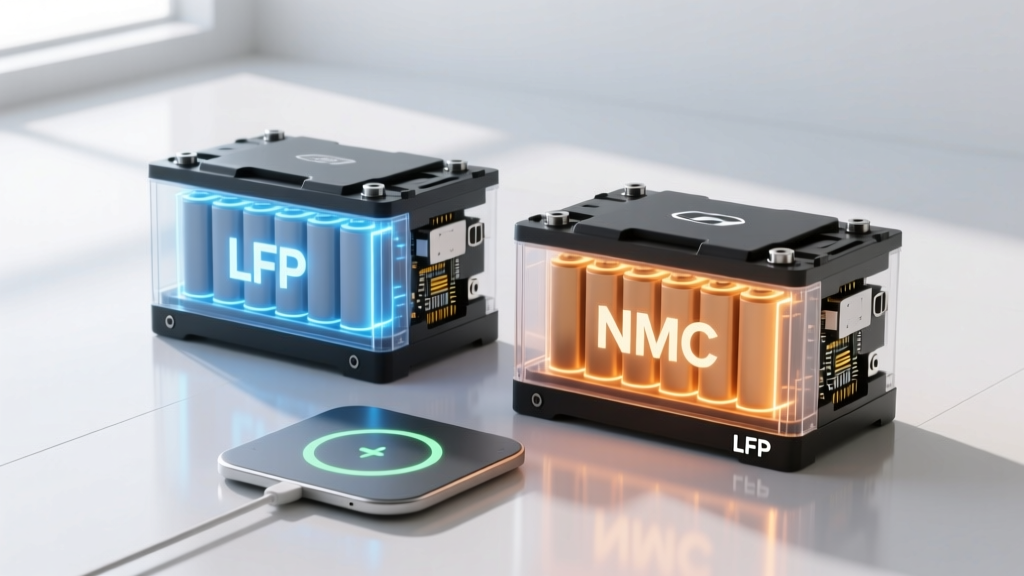
Understanding battery chemistry is essential when evaluating replacement options or comparing EVs. The two dominant chemistries in passenger EVs are NMC (nickel manganese cobalt) and LFP (lithium iron phosphate). The Nissan Leaf has exclusively used NMC-variant chemistry throughout its production run.
| Attribute | LFP (Lithium Iron Phosphate) | NMC (Nickel Manganese Cobalt) |
|---|---|---|
| Energy Density | Lower (~160 Wh/kg cell-level) | Higher (~220–260 Wh/kg cell-level) |
| Cycle Life | 3,000–5,000+ cycles to 80% SoH | 1,000–2,000 cycles to 80% SoH |
| Cold-Weather Performance | Weaker; greater range loss below 32°F | Better low-temp discharge capability |
| Cost per kWh | Lower; no cobalt or nickel | Higher; commodity-sensitive pricing |
| Thermal Stability | Excellent; very low thermal runaway risk | Good, but requires active management |
| Typical Use | Standard-range models (Tesla Model 3 RWD, base BYD) | Long-range / performance models |
| Charging to 100% | Recommended regularly for BMS calibration | 80% daily recommended; 100% for trips |
Which is better? It depends on the use case. LFP wins on longevity, safety, and cost—making it ideal for standard-range commuter vehicles. NMC wins on energy density and cold-weather performance, making it the choice for long-range and performance applications. For a Leaf owner seeking a replacement pack, NMC is the only OEM option, though the aftermarket is beginning to explore LFP retrofit possibilities for older platforms.
Nissan Leaf Battery Warranty: What's Covered and for How Long
Nissan provides a lithium-ion battery capacity warranty that has evolved over the Leaf's production history. Understanding your specific warranty terms is critical before paying out of pocket for a replacement.
| Model Years | Warranty Duration | Capacity Threshold | What Triggers a Claim |
|---|---|---|---|
| 2011–2015 (24 kWh) | 8 years / 100,000 miles | Below 9 of 12 capacity bars (~70%) | Capacity bar loss visible on dashboard gauge |
| 2016–2017 (30 kWh) | 8 years / 100,000 miles | Below 9 of 12 capacity bars (~70%) | Same bar-gauge system |
| 2018–2023 (40 kWh / 62 kWh) | 8 years / 100,000 miles | Below 70% State of Health | SoH reading via diagnostic tool or LeafSpy |
Nissan's warranty covers capacity degradation—not just total failure. If your Leaf's battery falls below the threshold within the warranty window, Nissan will replace or refurbish the pack at no cost. The catch: the replacement pack may be a refurbished unit with capacity at or just above the threshold, not a brand-new pack. This is standard practice across the industry.
For 2011–2017 models, the warranty period has likely expired. Owners of 2018–2023 Leafs still have active coverage through 2026–2031, depending on purchase date. The defect warranty (covering manufacturing flaws, not degradation) extends to 8 years / 100,000 miles across all years and is separate from the capacity warranty.
How to Check and Maximize Your Leaf's Battery Health
Nissan Leaf owners have a distinct advantage in battery health monitoring: the dashboard capacity bar gauge (2011–2017) and the broader availability of third-party diagnostic tools. Here's how to track and protect your pack.
Monitoring State of Health (SoH)
- Dashboard capacity bars (2011–2017): The thin gauge next to the charge-level indicator shows 12 bars when new. Each lost bar represents roughly 6–8% capacity loss. At 9 bars, you're at warranty-claim territory.
- LeafSpy Pro (all years): This OBD-II dongle and smartphone app reads the battery management system directly, reporting SoH percentage, individual cell voltages, battery temperature, and cycle count. It's the gold standard for Leaf owners and costs roughly $20 for the app plus $30–$40 for the OBD adapter.
- Dealer diagnostic: Any Nissan dealer can pull a battery health report. Request this during routine service or before purchasing a used Leaf.
Battery Care Best Practices for Nissan Leaf Owners
- Avoid frequent DC fast charging. The Leaf's passive cooling means 50 kW CHAdeMO sessions generate heat the pack can't shed quickly. Limit DCFC to road trips or once-per-week at most.
- Don't store at 100% SoC in heat. If your Leaf will sit for days in summer, charge to 80% and park in shade or a garage. A full battery at 100°F degrades faster than any other single factor.
- Don't let it sit at 0%. Extended storage below 10% SoC risks cell imbalance and copper dissolution. If storing for weeks, leave it at 50–60%.
- Use Level 2 charging as your default. A 6.6 kW Level 2 charge is gentle on the pack and allows the BMS to balance cells during the top-up phase.
- Precondition in cold weather. While the Leaf lacks a battery heater (unlike Tesla or Hyundai), preconditioning the cabin while plugged in reduces the load on the pack during initial cold-soak driving.
- Monitor cell voltage spread via LeafSpy. A spread greater than 200 mV between highest and lowest cells signals imbalance that may warrant a dealer visit.
Factors That Accelerate EV Battery Degradation
Battery degradation isn't just about age—it's about how the pack is used. The following factors compound over time:
- High-temperature exposure: Sustained ambient temperatures above 90°F, combined with high SoC, are the single biggest degradation accelerator. This is why Leafs in the Southwest degrade noticeably faster than those in maritime or northern climates.
- DC fast-charging frequency: Studies from the Idaho National Laboratory showed that exclusive DC fast charging accelerated degradation by roughly 5–10% over 50,000 miles compared to Level 2-only charging—more pronounced in passively cooled packs like the Leaf.
- High state of charge storage: Keeping the battery at 95–100% SoC for extended periods stresses NMC cathode material. The 80% daily limit recommendation exists for a reason.
- Deep discharges: Regularly driving to 5% or lower SoC stresses the anode. Occasional deep discharges are fine; habitual ones are not.
- High-mileage rapid cycling: A Leaf used for 80+ miles of daily highway driving (requiring near-full charge and near-full discharge daily) will degrade faster than one used for 20-mile commutes with a nightly Level 2 top-up.
Emerging Battery Technology: What's on the Horizon
While current Leaf owners are limited to NMC replacement packs, the broader battery landscape is shifting rapidly:
- Solid-state batteries: Toyota, Nissan, and Samsung SDI have all announced solid-state development programs. Nissan has targeted a solid-state pilot production line by 2028, with commercial availability projected for the early 2030s. These promise higher energy density, faster charging, and improved safety—but remain announced/preliminary and are not available in any production vehicle as of 2026.
- Silicon-dominant anodes: Companies like Sila Nanotechnologies and Group14 are replacing graphite anodes with silicon composites, boosting energy density by 20–40%. These are beginning to appear in premium applications but have not yet reached mass-market EV packs.
- Sodium-ion batteries: CATL and BYD are producing sodium-ion cells for lower-cost, shorter-range applications. These eliminate lithium entirely but sacrifice energy density—likely destined for city cars and stationary storage rather than Leaf-class vehicles.
For a current Leaf owner weighing a replacement, these technologies are 4–8 years from aftermarket availability. The practical choice today remains an NMC pack—new from Nissan or refurbished from the aftermarket.
Should You Replace the Battery or Replace the Car?
This is the economic question that underpins every degradation concern. Consider this framework:
Decision Framework: Replace Battery vs. Replace Vehicle
Replace the battery if:
- The vehicle is otherwise in good mechanical condition (suspension, brakes, interior)
- You can source a refurbished pack for under $6,000 installed
- Your daily driving needs are modest (30–50 miles) and a degraded-but-functional pack still meets them
- You have home Level 2 charging and don't rely on public infrastructure
Replace the vehicle if:
- The Leaf is a 2011–2015 model with multiple mechanical issues beyond the battery
- You need more than 100 miles of range and a replacement pack won't deliver it economically
- You want liquid thermal management, DC fast-charging speeds above 50 kW, or modern ADAS features
- The total cost of a new battery exceeds 60–70% of the vehicle's current market value
Frequently Asked Questions
How much does it cost to replace a Nissan Leaf battery in 2026?
Dealer-installed new OEM packs range from $6,500 (24 kWh, older models) to $14,000 (62 kWh Leaf Plus). Independent shops offering refurbished packs typically charge $3,500–$10,000 depending on pack size and condition. Most Leaf owners who need a replacement opt for refurbished units, as the vehicle's resale value rarely justifies a new OEM pack.
How long does a Nissan Leaf battery last before needing replacement?
With moderate use and Level 2 home charging, a Leaf battery typically provides 10–15 years of service before degrading to a point where range becomes impractical for the owner's needs. In hot climates with frequent DC fast charging, that window can compress to 8–10 years. Most Leafs are retired or sold before the battery requires replacement.
Does Nissan's battery warranty cover degradation?
Yes. Nissan warrants the Leaf battery against capacity loss below approximately 70% (9 of 12 bars on older models) for 8 years or 100,000 miles, whichever comes first. If your pack falls below this threshold within the warranty period, Nissan will replace or refurbish it at no charge. For 2011–2017 models, this window has closed.
Can I upgrade my 24 kWh Leaf to a 40 kWh or 62 kWh battery?
Technically, some independent EV shops have performed pack-size upgrades on older Leafs, but this is not supported by Nissan, requires custom wiring and BMS reprogramming, and may cost more than the vehicle is worth. It's generally not recommended for most owners.
Is LFP better than NMC for battery longevity?
Yes, in terms of cycle life. LFP cells can endure 3,000–5,000+ charge cycles before reaching 80% SoH, compared to 1,000–2,000 for NMC. However, LFP has lower energy density and worse cold-weather performance. The Leaf uses NMC exclusively, so LFP isn't an option for Leaf replacements today.
How do I check my Nissan Leaf's battery health?
Use the LeafSpy Pro app with an OBD-II adapter for the most accurate State of Health reading. For 2011–2017 models, the dashboard capacity bar gauge provides a rough estimate (12 bars = new, each lost bar ≈ 6–8% degradation). Any Nissan dealer can also pull a diagnostic battery health report.
The Nissan Leaf remains one of the most affordable entry points into EV ownership, and its battery replacement costs—while not trivial—are well-documented and manageable, particularly through the refurbished aftermarket. With proper charging habits and climate awareness, most Leaf owners will never need to price a replacement pack at all.