What Are EV X Batteries and Why Does Chemistry Matter?
The term x batteries has become shorthand among EV enthusiasts and analysts for the next-generation traction batteries powering modern electric vehicles — spanning lithium iron phosphate (LFP), nickel manganese cobalt (NMC), and nickel cobalt aluminum (NCA) chemistries. Unlike the small 12V auxiliary battery that runs your EV's lights and infotainment, the high-voltage traction battery (typically 400V–800V architecture) is the multi-thousand-pound energy store that determines your vehicle's range, charging speed, longevity, and resale value.
Understanding battery chemistry isn't academic trivia — it directly affects whether your EV will retain 90% or 78% of its original range after 100,000 miles, how fast you can charge on a road trip, and whether you'll qualify for the full federal tax credit under IRS §30D clean vehicle rules. Let's break down the chemistries, the data, and what it means for your wallet.
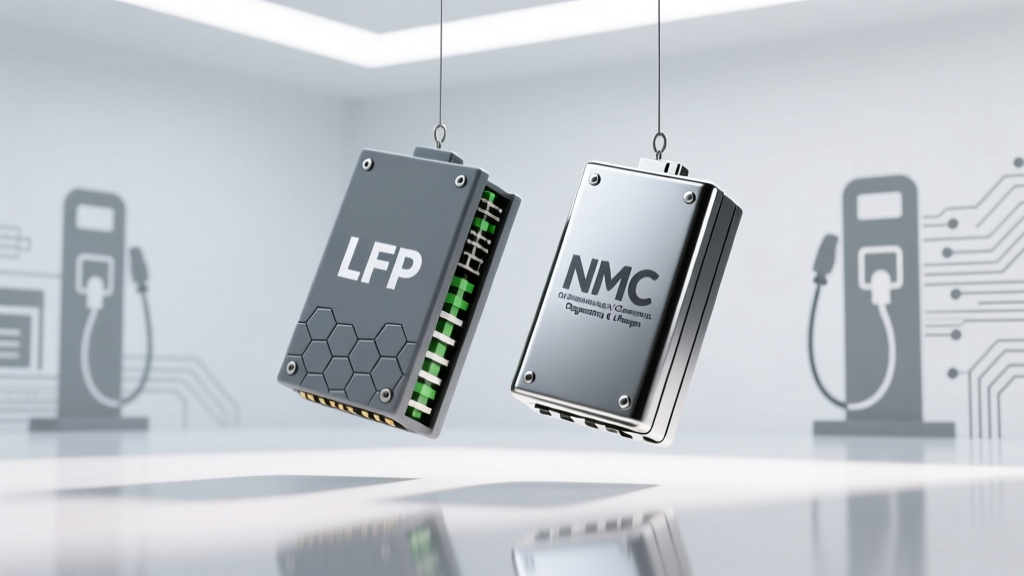
LFP vs NMC vs NCA: Chemistry Trade-Offs Compared
Every EV sold in the US in 2026 uses one of three dominant lithium-ion cathode chemistries. Each carries distinct trade-offs in energy density, cycle life, cold-weather performance, and raw-material cost.
| Attribute | LFP (Lithium Iron Phosphate) | NMC (Nickel Manganese Cobalt) | NCA (Nickel Cobalt Aluminum) |
|---|---|---|---|
| Energy Density | ~160–180 Wh/kg (lower) | ~220–260 Wh/kg (higher) | ~250–280 Wh/kg (highest) |
| Cycle Life | 3,000–5,000+ cycles | 1,000–2,000 cycles | 1,000–1,500 cycles |
| Cold-Weather Range Loss | Greater (~30–40% at 20°F) | Moderate (~20–30% at 20°F) | Moderate (~20–30% at 20°F) |
| Thermal Stability / Safety | Excellent (higher runaway threshold) | Good (requires active thermal mgmt) | Good (requires active thermal mgmt) |
| Recommended Daily SoC | 100% (can charge fully daily) | 80% (daily); 100% for trips only | 80% (daily); 100% for trips only |
| Cost per kWh (2026) | ~$80–$100 | ~$110–$140 | ~$120–$150 |
| Critical Mineral Content | No cobalt or nickel | Cobalt + nickel | Cobalt + nickel |
| Notable 2026 US Vehicles | Tesla Model 3 RWD, Model Y RWD, Ford Mustang Mach-E Select (base) | Hyundai Ioniq 5/6, Kia EV6/EV9, BMW i4/iX, VW ID.4 | Tesla Model S/X, Rivian R1T/R1S (dual-motor) |
LFP vs NMC — Which Is Better and Why?
Neither chemistry is universally superior. LFP wins if you prioritize longevity, daily-commute duty cycles, lower purchase price, and the ability to charge to 100% without degradation anxiety. Tesla's switch to LFP for its Standard Range (now RWD) trims reflects this calculus — the batteries are cheaper, last longer, and avoid cobalt supply-chain risk.
NMC wins if you need maximum range per kilogram (long-range trims, towing, cold-climate driving) or faster DC fast-charging peak rates. The Hyundai Ioniq 5's NMC pack, for example, supports peak charging at 240 kW on a 350 kW charger, reaching 10–80% in roughly 18 minutes — a feat LFP packs of similar capacity typically cannot match as aggressively due to lower C-rate tolerance.
NCA occupies a niche: Tesla uses it in Model S and Model X for maximum energy density, and Rivian employs it in dual-motor configurations. It delivers excellent range but shares NMC's sensitivity to high states of charge and elevated temperatures.
How Long Do EV Batteries Last? Real-World Degradation Data
The most common buyer fear — "Will I need a $20,000 battery swap in five years?" — is largely unfounded for modern chemistries. Degradation follows a nonlinear curve: faster in the first 1–2 years, then flattening into a slow linear decline.
Typical Capacity Retention Over Time (Fleet Averages)
| Milestone | LFP Average Retention | NMC/NCA Average Retention | Real-World Example |
|---|---|---|---|
| 1 year / 15,000 mi | ~97–98% | ~95–97% | Tesla Model 3 RWD (LFP): ~97% at 15k mi per Tesla Impact Report |
| 3 years / 45,000 mi | ~94–96% | ~90–93% | Hyundai Ioniq 5 (NMC): ~92% at 50k mi per Recurrent Auto fleet data |
| 5 years / 75,000 mi | ~91–94% | ~87–91% | Chevrolet Bolt EUV (NMC): ~89% at 75k mi per owner reports |
| 8 years / 120,000 mi | ~86–90% | ~82–87% | Tesla Model S (NCA, older): ~84% at 120k mi per Tesla Impact Report |
| 10 years / 150,000 mi | ~82–87% | ~78–84% | Nissan Leaf (early NMC, passively cooled): ~75–80% — outlier due to no thermal mgmt |
A critical nuance: degradation means range loss, not failure. An EV with 85% capacity retention still drives perfectly — it simply has 15% less range than new. A 2026 Hyundai Ioniq 5 Long Range with an EPA-estimated 305 miles new would still deliver roughly 259 miles at 85% SoH — entirely adequate for most daily driving and road trips.
Battery Warranty Terms: What's Actually Covered?
Federal law mandates a minimum 8-year/100,000-mile warranty on EV battery packs (10 years/150,000 miles in CARB states like California, New York, and Massachusetts). Most automakers exceed this baseline, and the capacity-retention threshold is the critical number to watch.
| Manufacturer | Warranty Term | Capacity Retention Threshold | Chemistry (2026) |
|---|---|---|---|
| Tesla (Model 3/Y RWD) | 8 yr / 100,000 mi | 70% | LFP |
| Tesla (Model 3/Y Long Range) | 8 yr / 120,000 mi | 70% | NMC |
| Hyundai / Kia | 10 yr / 100,000 mi | 70% | NMC |
| Ford (Mach-E, F-150 Lightning) | 8 yr / 100,000 mi | 70% | LFP (base) / NMC (extended) |
| General Motors (Ultium) | 8 yr / 100,000 mi | 70% (60% for commercial) | NMC |
| BMW | 8 yr / 100,000 mi | 70% | NMC |
| Volkswagen | 8 yr / 100,000 mi | 70% | NMC |
| Rivian | 8 yr / 175,000 mi | 70% | NCA |
What triggers a warranty claim? If your battery's usable capacity falls below the stated threshold (typically 70%) within the warranty period, the manufacturer must repair or replace modules to bring it above that level. This is not a full new battery — it's a restoration to above-threshold capacity. Note that the warranty covers defect and abnormal degradation, not normal wear. Damage from accidents, flooding, or unauthorized modifications is excluded.
EV Battery Replacement Cost: When and How Much?
Out-of-warranty battery replacement is the scenario that generates headlines — but it remains rare. The vast majority of EV batteries outlast their vehicles. According to data aggregated by Recurrent Auto, fewer than 1.5% of EVs in their monitored fleet have required full pack replacements outside of recall campaigns.
| Vehicle / Battery Size | Chemistry | Approximate Parts Cost | Labor (Est.) | Total Range |
|---|---|---|---|---|
| Tesla Model 3 RWD (~57 kWh) | LFP | $7,000–$9,000 | $1,500–$2,500 | $8,500–$11,500 |
| Hyundai Ioniq 5 (~77.4 kWh) | NMC | $12,000–$15,000 | $2,000–$3,000 | $14,000–$18,000 |
| Ford F-150 Lightning Ext. Range (~131 kWh) | NMC | $18,000–$25,000 | $3,000–$4,500 | $21,000–$29,500 |
| Chevrolet Equinox EV (~85 kWh) | NMC | $11,000–$14,000 | $2,000–$3,000 | $13,000–$17,000 |
| BMW i4 eDrive40 (~81.5 kWh) | NMC | $14,000–$18,000 | $2,500–$4,000 | $16,500–$22,000 |
When is replacement typically needed? Most full replacements occur after 150,000–200,000 miles or 12–15 years — at which point the vehicle's residual value often makes replacement economically questionable. More commonly, individual battery modules can be replaced for $1,500–$4,000 per module if only one or two cells degrade disproportionately, rather than swapping the entire pack. Many EVs use modular pack designs (Hyundai E-GMP, GM Ultium) that facilitate partial repairs.
Factors That Accelerate Battery Degradation
Not all miles are equal. A battery's lifespan depends heavily on how it's used, charged, and exposed to temperature extremes.
Battery Longevity Checklist
- Avoid sustained 100% SoC: For NMC/NCA, set daily charge limit to 80%. LFP can handle 100% daily — in fact, Tesla recommends periodic 100% charges for LFP to recalibrate the BMS.
- Minimize DC fast charging above 150 kW: Occasional road-trip fast charging is fine, but daily use of 250–350 kW chargers accelerates degradation by an estimated 1–3% over 5 years versus Level 2 home charging (data per Recurrent Auto).
- Avoid deep discharge below 10%: Storing an EV at very low SoC stresses cells. If parking for weeks, aim for 50% SoC.
- Use preconditioning: Preconditioning warms or cools the battery before fast charging, reducing thermal stress. Enable scheduled departure in your EV's app.
- Park in shade or a garage when possible: Sustained battery temperatures above 95°F accelerate calendar degradation. Liquid-cooled packs (nearly all 2026 EVs) mitigate this, but ambient heat still matters.
- Don't obsess over regen braking settings: Regen has negligible impact on battery health compared to SoC and temperature habits.
How to Check and Monitor Battery State of Health (SoH)
State of Health (SoH) is expressed as a percentage of original usable capacity. A new EV has 100% SoH; at 85% SoH, a 75 kWh usable pack effectively holds 63.75 kWh.
Methods to Check SoH
- In-vehicle displays: Tesla shows battery health indirectly through range estimates at 100% charge. Hyundai/Kia's infotainment includes an EV battery diagnostics screen showing approximate SoH. BMW's iDrive includes battery health status under the EV menu.
- OBD-II dongles + apps: Tools like the OBDLink SX paired with apps such as EV Health or Car Scanner ELM OBD2 can read the BMS-reported SoH percentage directly from the CAN bus. Cost: ~$40–$80 for the dongle.
- Third-party services: Recurrent Auto (free enrollment) monitors your battery remotely via connected-car data and provides a battery health score and range trend over time. Useful for pre-purchase inspections on used EVs.
- Dealer diagnostics: Any authorized dealer can run a full battery health report. Request this during routine service or before a warranty claim.
SoH Monitoring Best Practices
Check SoH quarterly, not daily — minor fluctuations from temperature and BMS recalibration are normal. Track the trend line over months. If you observe a sudden drop (e.g., 3% in one month), schedule a dealer diagnostic, as this may indicate a failing module rather than normal degradation.
Emerging Battery Technologies: Solid-State and Silicon Anode
Several next-generation technologies promise to reshape EV batteries, but none are commercially available in US-market passenger vehicles as of 2026.
Solid-State Batteries
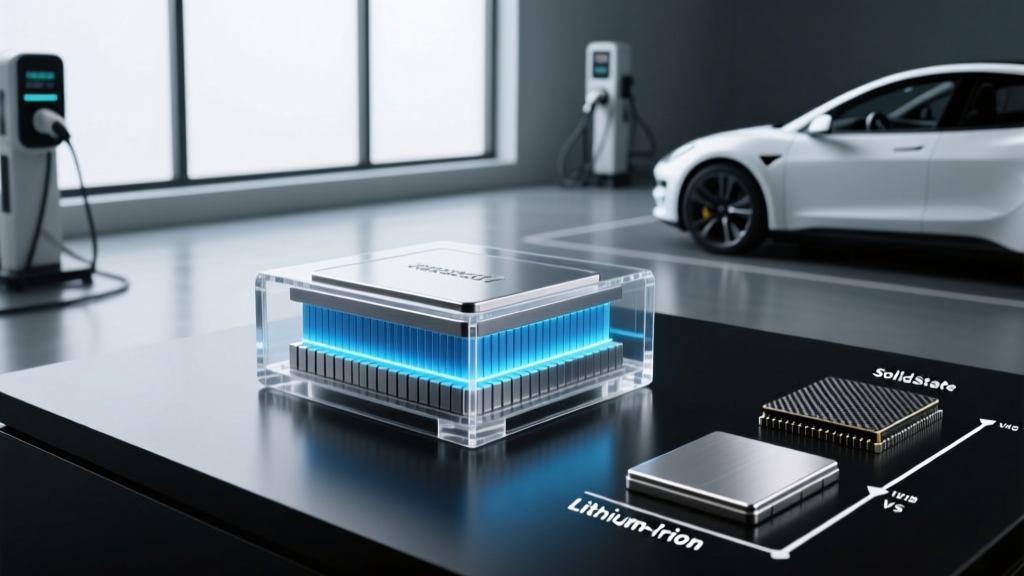
Solid-state batteries replace the liquid electrolyte with a solid ceramic or polymer layer, potentially offering 30–50% higher energy density, faster charging, and improved safety. Toyota has announced a solid-state battery targeting 2027–2028 production in limited volumes, initially for luxury Lexus models. Samsung SDI and QuantumScape are also advancing prototypes. Realistic mass-market timeline: 2029–2032. These are not currently available in any production EV sold in the US.
Silicon Anode Batteries
Replacing graphite anodes with silicon can increase energy density by 20–40%. Companies like Sila Nanotechnologies and Group14 Technologies are supplying silicon-dominant anode materials to battery manufacturers. Mercedes-Benz's upcoming EQG (G-Wagon EV) is expected to use a silicon anode pack. Realistic timeline: limited production 2026–2027, broader availability 2028+.
Sodium-Ion Batteries
Sodium-ion chemistry eliminates lithium entirely, offering lower cost and better cold performance at the expense of energy density. CATL has begun production in China for small urban EVs. US-market relevance: unlikely before 2028–2030 for passenger vehicles, though potential for fleet and budget models exists.
None of these technologies should factor into a 2026 purchase decision. Current LFP and NMC chemistries are mature, well-understood, and backed by real-world fleet data spanning millions of vehicle-miles.
Frequently Asked Questions
How long do EV batteries last in years and miles?
Modern EV batteries (LFP and NMC/NCA with active thermal management) typically retain 82–90% of original capacity at 150,000 miles or 10 years. Full failure requiring replacement before 200,000 miles is rare — fewer than 1.5% of monitored vehicles in Recurrent Auto's fleet required out-of-warranty replacement. Most EV batteries will outlast the vehicle's useful economic life.
How much does an EV battery cost to replace out of warranty?
Replacement costs range from approximately $8,500 for a Tesla Model 3 RWD (LFP, ~57 kWh) to $29,500 for a Ford F-150 Lightning Extended Range (NMC, ~131 kWh), including parts and labor. However, partial module replacement is often possible for $1,500–$4,000 per module. Full pack replacement before 150,000 miles is uncommon for 2020+ model-year vehicles.
What does the EV battery warranty actually cover?
Federally mandated minimum coverage is 8 years / 100,000 miles (10 yr / 150,000 mi in CARB states). The warranty guarantees the battery will retain at least 70% of original usable capacity. If degradation exceeds this threshold within the warranty period, the manufacturer repairs or replaces modules to restore capacity above 70%. Physical damage, flooding, and unauthorized modifications are excluded.
How do I check my EV battery health at home?
Three reliable methods: (1) Check your vehicle's built-in battery diagnostics screen if available (Tesla, Hyundai, BMW). (2) Use an OBD-II dongle (~$40–$80) with an app like Car Scanner to read BMS-reported SoH directly. (3) Enroll in Recurrent Auto's free monitoring service for remote SoH tracking and trend analysis. Check quarterly, not daily.
Is LFP better than NMC for daily commuting?
For daily commuting under 150 miles round-trip, LFP is generally the better choice. It offers 3,000–5,000+ cycle life (vs. 1,000–2,000 for NMC), can be charged to 100% daily without degradation concerns, avoids cobalt sourcing issues, and costs ~$80–$100/kWh vs. $110–$140/kWh for NMC. The trade-off is lower energy density (less range per pound) and greater cold-weather range loss (~30–40% at 20°F vs. ~20–30% for NMC).
Does fast charging damage my EV battery?
Occasional DC fast charging (road trips, 1–2 times per week) causes negligible additional degradation in modern EVs with liquid-cooled battery packs. However, daily use of 250–350 kW chargers can accelerate degradation by an estimated 1–3% over 5 years compared to exclusive Level 2 home charging. Preconditioning the battery before fast charging — enabled via scheduled departure or navigation to a charger — significantly reduces thermal stress.
Will solid-state batteries make current EVs obsolete?
Not in the near term. Solid-state batteries are not available in any US-market production vehicle as of 2026. Toyota targets limited 2027–2028 production; mass-market availability is realistically 2029–2032. Current LFP and NMC chemistries will remain dominant through at least 2030. Buying an EV now does not mean accepting "obsolete" technology — today's batteries are proven, warrantied, and supported by extensive charging infrastructure.