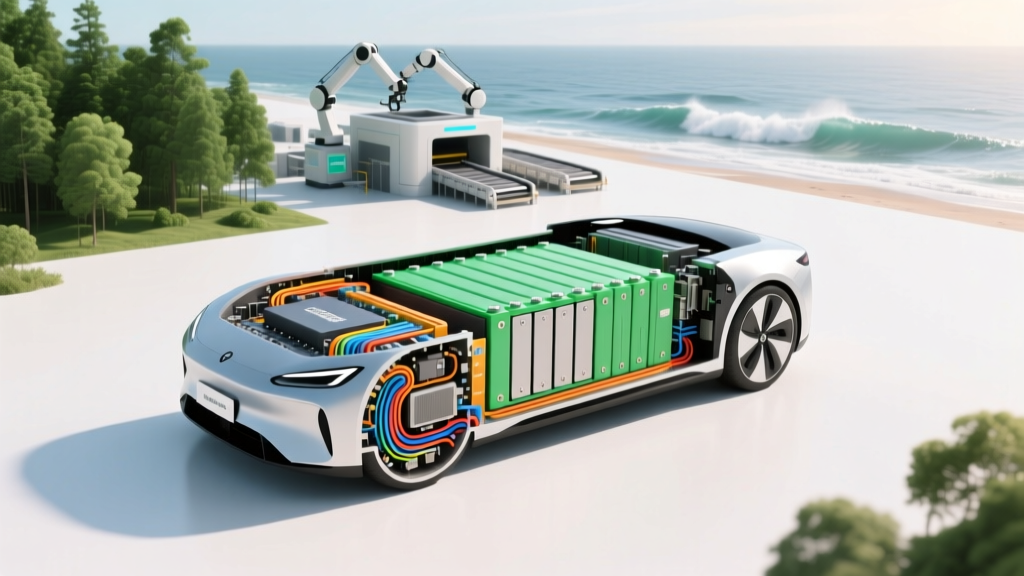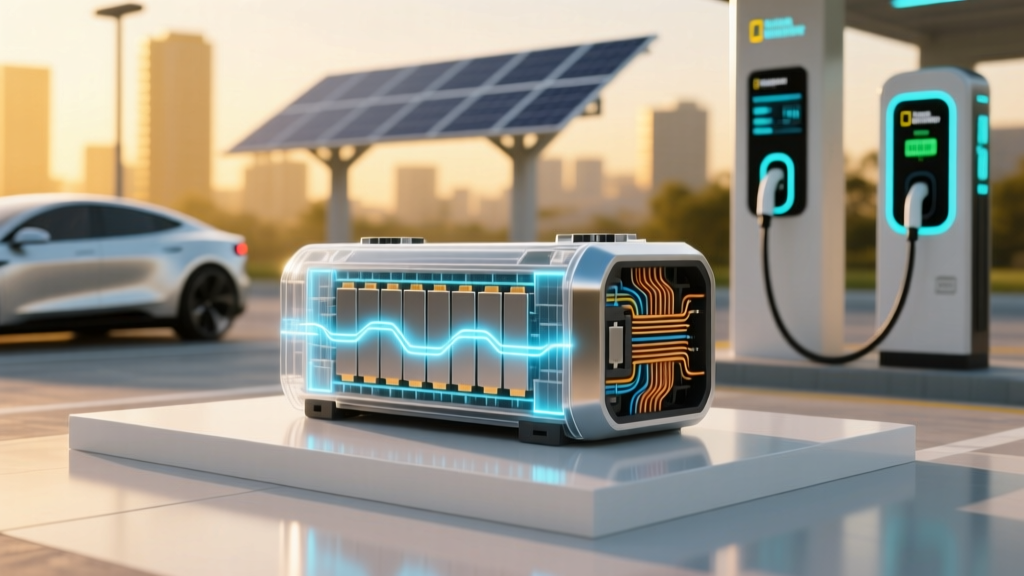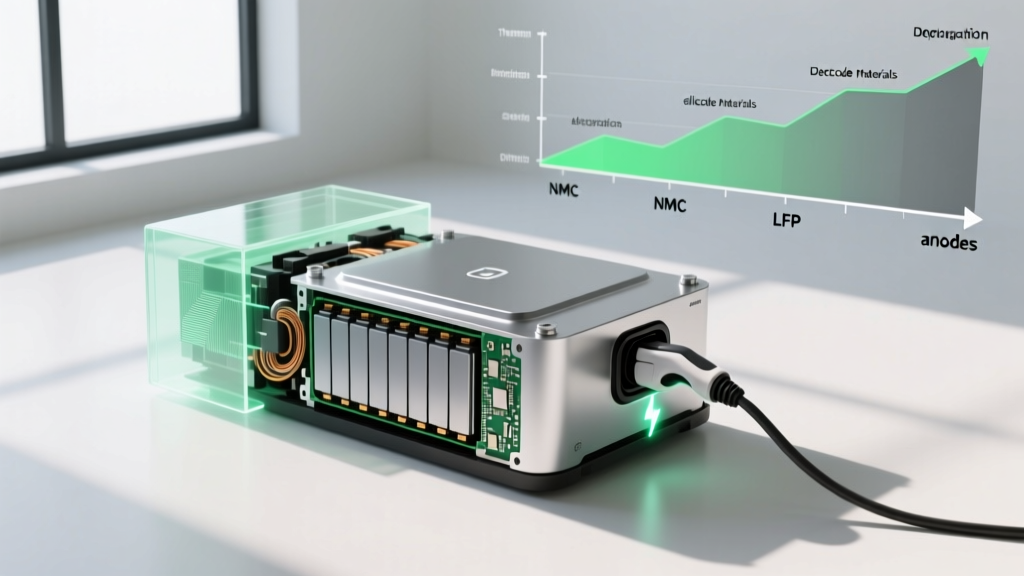
Whether you're researching a new Tesla Model Y, a base-trim Chevy Equinox EV, or comparing pack longevity across brands, the high-voltage traction battery remains the most expensive single component in any electric vehicle. Understanding its chemistry, real-world degradation behavior, warranty coverage, and eventual replacement economics separates informed buyers from anxious ones.
This guide breaks down the data behind EV battery longevity in 2026 — from lithium iron phosphate (LFP) versus nickel manganese cobalt (NMC) trade-offs to the actual cost of replacement when the time comes. We'll also address a tangential but frequently searched topic: how battery and suspension engineering in smaller electric mobility platforms (sometimes referenced in enthusiast forums alongside searches like goku electric bicycles battery suspension) mirrors the same cell-chemistry and thermal-management principles at play in full-size EVs, just at a different scale.
LFP vs NMC vs NCA: Choosing Your Battery Chemistry
Every EV sold in the US in 2026 uses one of three dominant lithium-ion cathode chemistries: LFP (lithium iron phosphate), NMC (nickel manganese cobalt), or NCA (nickel cobalt aluminum). The chemistry dictates range, longevity, cold-weather performance, and cost.
| Attribute | LFP | NMC | NCA |
|---|---|---|---|
| Energy density | ~160–180 Wh/kg | ~220–260 Wh/kg | ~250–280 Wh/kg |
| Cycle life (to 80% SoH) | 3,000–5,000+ | 1,000–2,000 | 1,000–1,500 |
| Cold-weather range loss | Higher (~35–40% at 20°F) | Moderate (~25–30% at 20°F) | Moderate (~25–30% at 20°F) |
| Can charge to 100% daily? | Yes (recommended monthly calibration) | No (80% daily recommended) | No (80% daily recommended) |
| Cost per kWh (pack-level) | ~$90–$110 | ~$120–$145 | ~$130–$155 |
| Typical use in 2026 | Tesla Model 3 RWD, Model Y RWD, Ford Mustang Mach-E Select, Rivian Standard | Hyundai Ioniq 5/6, Kia EV6/EV9, BMW iX, VW ID.4 | Tesla Model S/X, Lucid Air |
Which is better? There is no universal winner. LFP excels in cycle life and cost — ideal for Standard Range trims and daily commuters who can charge to 100%. NMC and NCA deliver more range per kilogram, making them the choice for Long Range and Performance variants where maximizing EPA-rated miles matters. If you live in a cold climate and prioritize winter range, NMC/NCA packs suffer less range loss at freezing temperatures.
How Long Do EV Batteries Last? Real Degradation Data
The most common buyer question: How long do EV batteries actually last? Based on fleet data aggregated by Geotab's EV battery health study and owner-reported telemetry, the answer is longer than most expect.
Typical degradation follows a curve: a steeper initial drop in the first 1–2 years (roughly 2–4% loss), then a slow linear decline of about 1–2% per year thereafter. Here's what that looks like across common ownership timelines:
- Year 1 / 15,000 mi: ~96–98% State of Health (SoH) remaining
- Year 3 / 45,000 mi: ~92–95% SoH
- Year 5 / 75,000 mi: ~89–93% SoH
- Year 8 / 120,000 mi: ~85–90% SoH (NMC/NCA); ~90–95% SoH (LFP)
- Year 10 / 150,000 mi: ~82–88% SoH (NMC/NCA); ~88–93% SoH (LFP)
For context, a Tesla Model Y Long Range (EPA 310 mi, 75 kWh usable, NMC) at 88% SoH after 10 years would still deliver roughly 273 miles of rated range — a meaningful but manageable reduction. LFP-equipped vehicles like the Tesla Model 3 RWD (EPA 272 mi, 60 kWh usable) degrade even more slowly, often retaining 90%+ capacity past 150,000 miles.
The vast majority of EV batteries outlast the vehicle's structural and cosmetic life. Full battery failure before 150,000 miles is statistically rare — well under 2% of packs according to manufacturer warranty claim data.
What Does the Battery Warranty Cover?
Federal regulations mandate a minimum 8-year / 100,000-mile warranty on EV battery packs (10 years / 150,000 miles in CARB states like California, New York, and Massachusetts). Most manufacturers exceed the floor.
| Manufacturer | Warranty Term | Capacity Retention Threshold |
|---|---|---|
| Tesla (Model 3/Y RWD, LFP) | 8 yr / 100,000 mi | 70% |
| Tesla (Model 3/Y LR/Perf, NMC) | 8 yr / 120,000 mi | 70% |
| Hyundai / Kia | 10 yr / 100,000 mi | 70% |
| Ford (Mustang Mach-E, F-150 Lightning) | 8 yr / 100,000 mi | 70% |
| Chevrolet (Equinox EV, Blazer EV) | 8 yr / 100,000 mi | 70% |
| Rivian (R1T/R1S) | 8 yr / 175,000 mi | 70% |
| BMW (iX, i4) | 8 yr / 100,000 mi | 70% |
Key detail: The warranty covers replacement or repair if the battery's usable capacity drops below the stated threshold (typically 70% of original). If your 82 kWh pack falls below ~57 kWh usable within the warranty period, the manufacturer must remedy it. Gradual degradation above that threshold is considered normal wear and is not covered.
EV Battery Replacement Cost: What to Expect
Out-of-warranty battery replacement is the scenario that generates the most anxiety. Here are real-world replacement costs based on 2025–2026 service data and manufacturer parts pricing:
| Vehicle / Pack Size | Battery Cost (parts) | Labor + Total |
|---|---|---|
| Tesla Model 3 RWD (60 kWh, LFP) | $8,000–$10,000 | $10,000–$13,000 |
| Tesla Model Y LR (75 kWh, NMC) | $12,000–$15,000 | $14,000–$18,000 |
| Chevy Equinox EV (85 kWh, NMC) | $11,000–$14,000 | $13,000–$17,000 |
| Ford F-150 Lightning Ext. Range (131 kWh) | $18,000–$22,000 | $20,000–$26,000 |
| Hyundai Ioniq 5 (77.4 kWh, NMC) | $10,000–$13,000 | $12,000–$16,000 |
When is replacement typically needed? For most owners, it isn't. The data shows that fewer than 2% of EV batteries require full replacement under normal use. When replacements do occur, they are most often triggered by manufacturing defects (covered under warranty) or physical damage from road debris or collisions — not gradual degradation.
A growing number of specialized shops now offer module-level repair — replacing individual degraded cell modules rather than the entire pack — for $2,000–$5,000. This option is becoming more viable as packs age past the warranty window.
Factors That Accelerate Battery Degradation
Not all miles are equal when it comes to battery wear. The following factors have the largest measurable impact on long-term State of Health:
- Frequent DC fast charging above 150 kW: Occasional road-trip fast charging is fine, but daily use of 150–350 kW DC chargers generates sustained heat that accelerates electrolyte breakdown. Owners who fast-charge more than 3x per week see ~1–2% additional annual degradation versus Level 2 home charging.
- Sustained high State of Charge (SoC): Storing an NMC/NCA battery at 100% SoC for days or weeks stresses the cathode. Tesla, Hyundai, and BMW all recommend 80% daily charge limits for NMC/NCA packs. LFP is the exception — Tesla recommends periodic 100% charges for cell-balancing calibration.
- Extreme heat exposure: Ambient temperatures above 95°F combined with high SoC is the worst-case degradation scenario. Vehicles parked outdoors in Phoenix or Miami without thermal management preconditioning show measurably faster capacity loss.
- Deep discharges to 0%: Regularly driving the battery to near-zero SoC stresses the anode. Most manufacturers buffer ~2–5% at the bottom of the pack to prevent true zero-voltage conditions, but routinely arriving at 0% still accelerates wear.
- Cold-weather fast charging without preconditioning: Charging a cold battery at high power causes lithium plating on the anode — a permanent, irreversible capacity loss. Always use your vehicle's navigation-routed preconditioning feature when heading to a DC fast charger in cold weather.
How to Check and Monitor Battery Health (SoH)
State of Health (SoH) is the percentage of original usable capacity your battery retains. Here's how to check it:
Built-in vehicle displays: Tesla offers a battery health test accessible through the Service menu (or via the Tesla app on newer software builds). Hyundai/Kia's infotainment system includes an EV battery diagnostics screen. Ford's Sync 4 provides estimated range trends that indirectly reflect SoH.
OBD-II diagnostic tools: Devices like the OBDLink SX paired with apps such as EV Battery Health or LeafSpy (for Nissan Leaf owners) can read the battery management system's (BMS) internal SoH estimate. These readings typically align within 1–2% of manufacturer service-center diagnostics.
Third-party testing: Companies like Recurrent provide battery health reports based on connected-vehicle telemetry — useful when buying a used EV. A pre-purchase battery health check at a dealer service center typically costs $0–$150 and provides an official SoH printout.
DIY range-tracking method: Fully charge to 100% (for LFP) or note the projected range at your standard 80% charge (for NMC/NCA), then compare to the EPA sticker adjusted for your SoC. If your 75 kWh Model Y Long Range shows 225 projected miles at 80% (versus an expected ~248 at 80% when new), that suggests roughly 90–91% SoH.
Emerging Battery Technology: What's Next
Several next-generation battery technologies are in development, though none are available in production vehicles as of early 2026:
Solid-state batteries: Toyota, Samsung SDI, and QuantumScape are targeting 2027–2029 production timelines for solid-state cells that promise 30–40% higher energy density and faster charging. Toyota has announced a solid-state-equipped EV for 2027–2028, though initial production will be limited to specific markets and low volumes. Expect solid-state to reach mainstream US availability no earlier than 2029–2030.
Silicon-dominant anodes: Companies like Sila Nanotechnologies and Group14 are replacing graphite anodes with silicon composites, boosting energy density by 15–25%. Early production applications are appearing in premium vehicles; the Mercedes-Benz G-Class EV (announced) is expected to use silicon-anode cells. Wider adoption across mid-market EVs is projected for 2027–2028.
Sodium-ion batteries: CATL and BYD have begun limited production of sodium-ion cells for low-cost, short-range EVs in China. These eliminate lithium and cobalt entirely, reducing cost and supply-chain risk, but offer lower energy density (~120–140 Wh/kg). US-market availability is not expected before 2028.
None of these technologies should delay a current EV purchase. Today's lithium-ion packs already deliver 200,000+ mile lifespans with manageable degradation — more than sufficient for the vast majority of ownership cycles.
EV Battery FAQ
How long do EV batteries last in years and miles?
Based on fleet data, most EV batteries retain 85–93% of original capacity after 10 years or 150,000 miles, depending on chemistry. LFP packs typically outlast NMC/NCA by 3–5 percentage points over the same period. Full battery failure before 150,000 miles is rare (under 2% of packs).
How much does an EV battery cost to replace?
Out-of-warranty replacement ranges from roughly $10,000–$18,000 for most passenger EVs (60–85 kWh packs) to $20,000–$26,000 for large-pack trucks like the F-150 Lightning Extended Range (131 kWh). Module-level repairs can reduce costs to $2,000–$5,000 in some cases.
What does the EV battery warranty cover?
Federal law requires a minimum 8-year/100,000-mile warranty (10/150,000 in CARB states). Coverage triggers when usable capacity drops below a threshold — typically 70% of original. Gradual degradation above that floor is considered normal and is not covered.
How do I maximize my EV battery's lifespan?
Use Level 2 home charging as your primary method. Set daily charge limits to 80% for NMC/NCA packs (100% is fine for LFP). Avoid frequent DC fast charging above 150 kW. Precondition the battery before cold-weather fast charging. Avoid storing the vehicle at 100% or 0% SoC for extended periods.
LFP vs NMC — which chemistry should I choose?
Choose LFP if you prioritize longevity, lower cost, and daily 100% charging convenience — and can accept slightly less range and more cold-weather loss. Choose NMC/NCA if you need maximum EPA range, better cold-weather performance, or are buying a Long Range / Performance trim. Both chemistries are proven to exceed 150,000 miles with proper care.
Does fast charging damage my EV battery?
Occasional DC fast charging (road trips, 1–2x per week) has minimal measurable impact on long-term health. Daily reliance on 150–350 kW chargers without thermal preconditioning can add 1–2% of annual degradation. Modern battery management systems actively limit charge rates when the pack is cold or hot to protect cells.
For official efficiency and range data, refer to the EPA's fueleconomy.gov database. For current federal tax credit eligibility rules affecting EV purchases, see the IRS clean vehicle credit page. Battery warranty specifics vary by model year and trim — always verify terms on the manufacturer's official specification sheet before purchase.