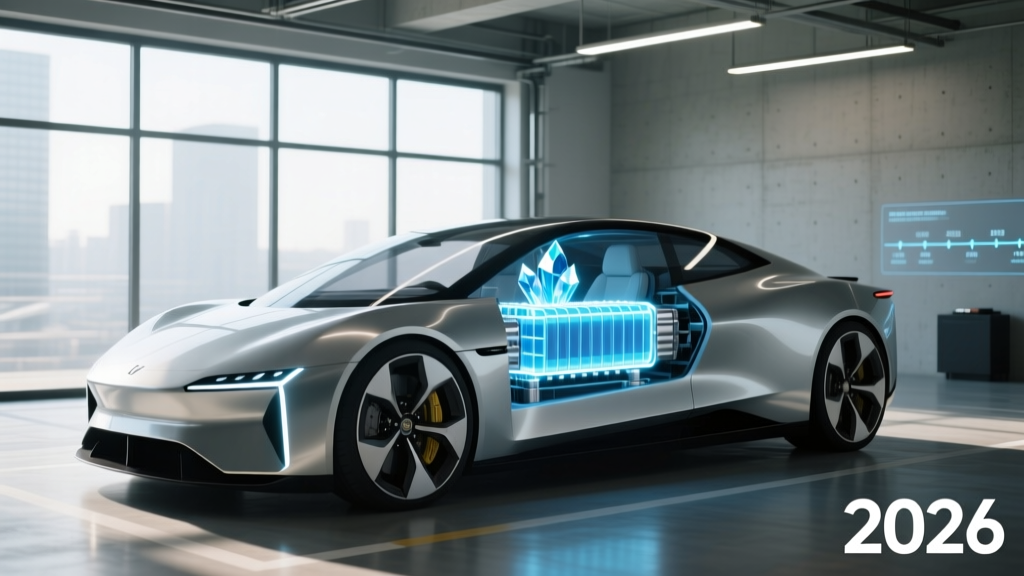
Every electric vehicle relies on two things working in concert: a high-voltage traction battery and the battery charging system the car uses to replenish it. Understanding how these components interact — from cell chemistry to charge management — is the single biggest factor in long-term EV ownership satisfaction. This guide breaks down exactly what's inside your battery pack, how it degrades over time, what your warranty actually covers, and what you can do to maximize lifespan.
Inside the Battery Pack: LFP vs NMC/NCA Chemistry Explained
Not all EV batteries are the same. The two dominant lithium-ion chemistries in 2026 are LFP (lithium iron phosphate) and NMC/NCA (nickel manganese cobalt / nickel cobalt aluminum). The chemistry determines energy density, cycle life, thermal stability, cost, and how aggressively you can charge.
| Attribute | LFP (Lithium Iron Phosphate) | NMC / NCA (Nickel-Based) |
|---|---|---|
| Energy Density | Lower (~160 Wh/kg cell-level) | Higher (~250 Wh/kg cell-level) |
| Cycle Life | 3,000–5,000+ full cycles | 1,000–2,000 full cycles |
| Cold-Weather Performance | Weaker — greater range loss below 32°F | Better low-temp conductivity |
| Thermal Stability | Excellent — very low thermal runaway risk | Good but requires robust BMS cooling |
| Cost per kWh | Lower (~$80–100/kWh at pack level) | Higher (~$110–140/kWh at pack level) |
| Recommended Daily SoC | Can charge to 100% daily without harm | Best kept at 80% daily; 100% for trips only |
| Notable 2026 Vehicles | Tesla Model 3/Y RWD, Ford Mustang Mach-E Select (LFP option), BYD models | Hyundai Ioniq 5, Kia EV6, Chevrolet Equinox EV, Tesla Long Range/Performance |
Which is better? It depends on your use case. If you prioritize longevity, lower cost, and daily charging to 100% without worry, LFP wins. If you need maximum range in a smaller package, better cold-weather range retention, or you're buying a long-range AWD model, NMC/NCA is the standard. Neither is universally superior — they serve different ownership profiles.
How Long Do EV Batteries Last? Real Degradation Data
The question every prospective EV buyer asks: will the battery outlast the car? In most cases, yes. Modern EV batteries are engineered for 15–20 years of service, and real-world degradation data supports this.
Typical Degradation Curve (NMC chemistry, average use):
- Year 1 (~12,000 mi): 2–4% capacity loss — the steepest initial drop as the solid electrolyte interface (SEI) layer stabilizes
- Years 2–4 (~24,000–48,000 mi): ~1% per year linear degradation
- Years 5–8 (~60,000–96,000 mi): ~0.5–1% per year, plateau phase
- Year 10 (~120,000 mi): Total degradation typically 10–15%, meaning 85–90% State of Health (SoH)
Data from fueleconomy.gov and long-term fleet studies by Geotab (analyzing over 10,000 EVs) show average annual degradation of approximately 1.8% across all chemistries, with LFP packs trending lower at ~1.2–1.5% per year after the first year.
A 2026 Tesla Model 3 RWD with a 60 kWh LFP battery, for example, can expect roughly 55–57 kWh usable capacity at 100,000 miles — still delivering well over 250 miles of real-world range from its EPA-rated 272 miles. The battery isn't "dead" at any specific threshold; it simply holds less energy, reducing range proportionally.
What Does the Battery Warranty Actually Cover?
Federal law mandates that EV manufacturers provide a minimum battery warranty of 8 years / 100,000 miles (10 years / 150,000 miles in CARB states including California, New York, Massachusetts, and others). But the details matter — specifically the capacity retention threshold that triggers a warranty claim.
| Manufacturer | Warranty Period | Capacity Threshold | Notes |
|---|---|---|---|
| Tesla (Model 3/Y RWD, LFP) | 8 yr / 120,000 mi | 70% retention | Long Range/Performance: 8 yr / 120,000 mi at 70% |
| Hyundai / Kia | 10 yr / 100,000 mi | 70% retention | Among the most generous terms in the industry |
| Chevrolet (Ultium platform) | 8 yr / 100,000 mi | 70% retention (60% on Bolt-era) | Equinox EV, Blazer EV, Silverado EV covered |
| Ford (Mustang Mach-E, F-150 Lightning) | 8 yr / 100,000 mi | 70% retention | LFP packs on Select trim carry same terms |
| Rivian | 8 yr / 175,000 mi | 70% retention | Highest mileage threshold in segment |
| BMW (i4, iX, i7) | 8 yr / 100,000 mi | 70% retention | Includes battery preconditioning for DC charging |
Key point: The warranty covers defects and abnormal degradation — not gradual, expected capacity loss above the threshold. If your battery drops to 68% capacity at 90,000 miles, the manufacturer will repair or replace it. If it sits at 85% at 120,000 miles, that's considered normal wear and falls outside warranty coverage.
According to the IRS §30D guidelines, vehicles must meet battery component and critical mineral sourcing requirements to qualify for the federal tax credit — a factor that indirectly signals battery supply-chain quality and traceability for 2026 model-year vehicles.
EV Battery Replacement Cost: What to Expect and When
This is the most fear-inducing topic in EV ownership — and the most misunderstood. The reality: most EV batteries never need full replacement during the vehicle's useful life. When they do, it's typically after 150,000+ miles or 12–15 years.
| Vehicle | Battery Size (usable kWh) | Chemistry | Estimated Replacement Cost |
|---|---|---|---|
| Tesla Model 3 RWD | 60 kWh | LFP | $8,000–$12,000 |
| Tesla Model Y Long Range | 75 kWh | NMC | $12,000–$16,000 |
| Hyundai Ioniq 5 | 77.4 kWh | NMC | $13,000–$18,000 |
| Chevrolet Equinox EV | 85 kWh | NMC (Ultium) | $14,000–$19,000 |
| Ford F-150 Lightning (Extended) | 131 kWh | NMC | $20,000–$30,000 |
| Rivian R1T (Max Pack) | 149 kWh | NMC | $22,000–$32,000 |
These figures include the battery pack and labor but can vary by region and dealer. Several important nuances:
- Module-level repair is increasingly common. Many packs (especially Ultium and Hyundai/Kia platforms) allow individual module replacement rather than the entire pack, reducing costs to $2,000–$6,000 for a targeted repair.
- Refurbished packs are entering the market. As early EVs reach end-of-life, certified refurbished batteries are becoming available at 40–60% of new-pack pricing.
- Pack-level costs continue to decline. BloombergNEF data shows average pack prices falling from ~$150/kWh in 2022 to approximately $95–110/kWh in 2026, meaning replacement costs trend downward over the vehicle's life.
How the Battery Charging System Car Manages Health
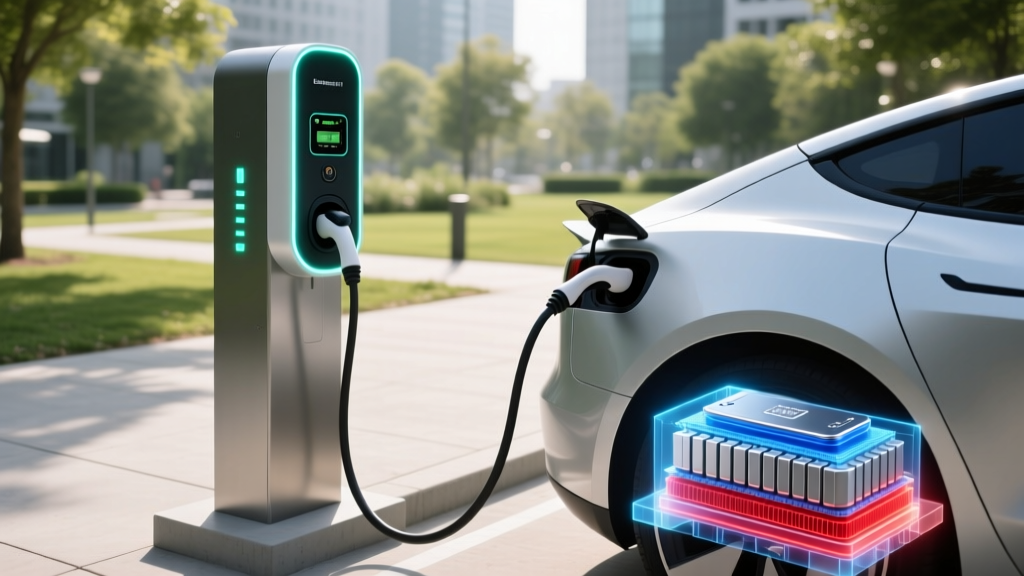
The battery charging system in your car is far more sophisticated than simply pushing electrons into cells. The Battery Management System (BMS) constantly monitors cell voltage, temperature, and current flow across hundreds or thousands of individual cells. Here's how it protects the pack:
- Thermal management: Active liquid cooling/heating keeps cells in the optimal 20–40°C (68–104°F) range during charging and driving. This is why preconditioning — warming the battery before DC fast charging — is critical for both speed and longevity.
- Charge curve management: The BMS limits charging speed above ~80% State of Charge (SoC) to reduce stress on cells. This is why a 250 kW peak charge rate might taper to 50 kW above 80% — it's protection, not a limitation.
- Cell balancing: The BMS equalizes voltage across cell groups during and after charging, preventing individual cells from overcharging or underperforming.
- Buffer zones: Most EVs have a top and bottom buffer (typically 2–5% of total capacity) that the BMS never allows you to use, protecting against over-discharge and over-charge damage even when the display shows 0% or 100%.
Factors That Accelerate Battery Degradation
While modern BMS systems do excellent protective work, owner habits still influence long-term battery health. Here are the primary degradation accelerators, ranked by impact:
Battery Care Best Practices:
- ✅ Limit DC fast charging to road trips. Frequent use of 150+ kW DC charging generates sustained high temperatures. Studies show vehicles that DC fast-charge more than 3x per week degrade ~1–2% faster over 5 years compared to predominantly Level 2 home charging.
- ✅ Set daily charge limit to 80% for NMC/NCA. Sustained high SoC accelerates electrolyte decomposition. LFP owners can charge to 100% daily — the chemistry tolerates it well, and periodic full charges help the BMS recalibrate.
- ✅ Avoid leaving the car at 0% or 100% for extended periods. If you must store the vehicle, aim for 50–60% SoC. A week at 100% in hot weather causes more degradation than a month at 60%.
- ✅ Use preconditioning before DC fast charging. Most EVs (Tesla, Hyundai, Ford, BMW) automatically precondition when you navigate to a charger. This brings the battery to optimal temperature, reducing charge time and cell stress.
- ✅ Park in shade or a garage during extreme heat. Sustained battery temperatures above 40°C (104°F) — even when parked — accelerate calendar degradation. Cold exposure is less harmful to long-term health but reduces available range temporarily.
- ✅ Don't baby it too much. Modern EV batteries are robust. Occasional 100% charges for road trips, an unexpected DC fast charge, or a cold-soak overnight won't cause meaningful harm. The BMS is designed for real-world use.
How to Check Your Battery's State of Health (SoH)
State of Health (SoH) is the percentage of original capacity your battery retains. A new battery is 100% SoH; at 70% SoH, it holds 70% of its original energy. Here's how to monitor it:
- In-vehicle display: Some manufacturers (BMW, Mercedes, newer Tesla software builds) show a battery health percentage in the settings or service menu. Hyundai/Kia provides SoH via the dealer diagnostic tool on request.
- OBD-II diagnostic tools: Devices like the OBDLink SX paired with apps such as EV Bat Health or Car Scanner can read BMS-reported SoH directly. This works on most 2020+ EVs.
- Manufacturer app: Tesla, Ford, and Rivian provide battery health data through their companion apps or service-center diagnostics.
- Manual calculation: Track your actual range at a known SoC over time. If your 2024 Ioniq 5 (EPA 303 mi) consistently delivers 270 miles at 100% SoC after 40,000 miles, that suggests ~89% SoH — consistent with expected degradation.
Most owners will see SoH decline slowly enough that it's imperceptible in daily driving. It's only when you compare year-over-year range at the same SoC that the gradual loss becomes visible.
Emerging Battery Technology: What's Next and When
Several next-generation battery technologies are in active development. It's important to separate what's available now from what's still years away:
- Silicon-dominant anode batteries: Companies like Sila Nanotechnologies and Group14 are replacing graphite anodes with silicon composites, boosting energy density by 20–40%. Early commercial applications appear in 2026–2027 model-year vehicles, with the Mercedes G-Class EV expected to be among the first adopters. These are announced/preliminary for most consumer vehicles.
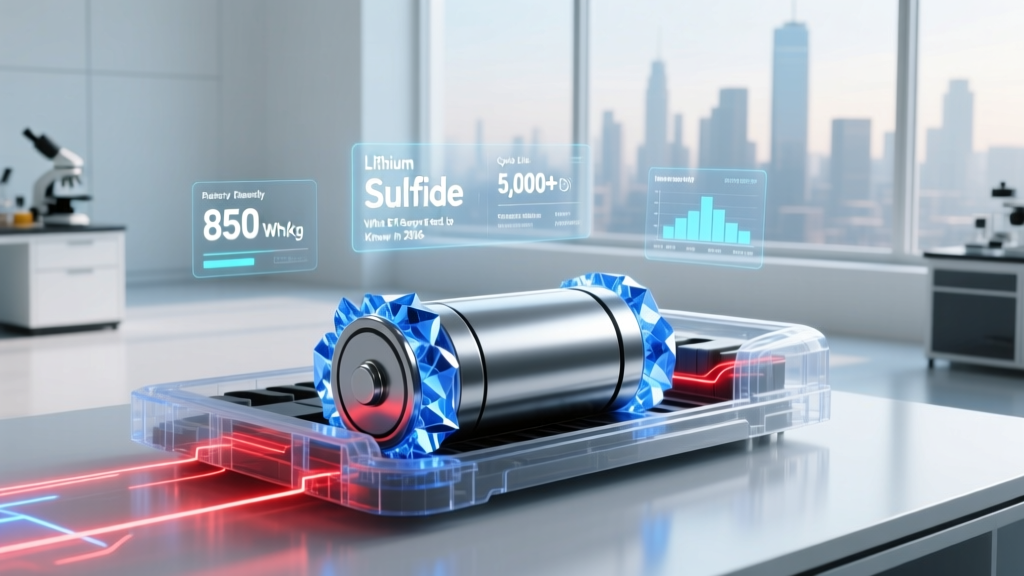
- Solid-state batteries: Using a solid electrolyte instead of liquid, these promise higher energy density (~400+ Wh/kg), faster charging, and improved safety. Toyota has announced a solid-state battery targeting 2027–2028 production, with initial deployment likely limited to premium, low-volume models. Widespread, affordable solid-state EVs are realistically a 2029–2032 timeline.
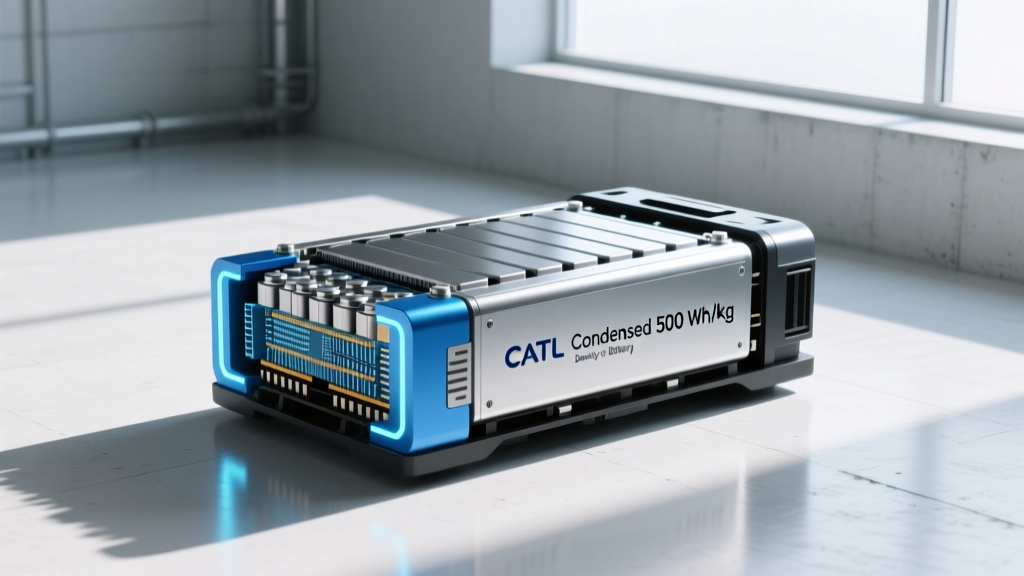
- Sodium-ion batteries: Lower cost and no lithium or cobalt required, but significantly lower energy density (~120 Wh/kg). CATL and BYD are deploying these in Chinese-market micro-EVs and energy storage. US-market adoption for passenger vehicles is unlikely before 2028 and will likely target budget city cars.
For buyers shopping today, current LFP and NMC chemistries are mature, well-understood, and backed by extensive warranty coverage. Waiting for solid-state is not a practical purchase strategy for anyone who needs a vehicle in the next 2–3 years.
Frequently Asked Questions
How long do EV batteries last in years and miles?
Modern EV batteries are engineered for 15–20 years and 150,000–200,000+ miles before reaching 70% capacity. Real-world fleet data from Geotab and manufacturer reports show average degradation of 1.5–2% per year, meaning most batteries retain 80–90% of original capacity at the 8-year warranty mark. The battery rarely "dies" — it simply provides less range over time.
How much does an EV battery cost to replace?
Full pack replacement ranges from approximately $8,000 for a smaller LFP pack (Tesla Model 3 RWD, 60 kWh) to $30,000+ for large NMC packs (F-150 Lightning Extended Range, 131 kWh). However, most batteries never need replacement during the vehicle's life, and module-level repairs ($2,000–$6,000) are increasingly common. Pack costs continue declining as cell manufacturing scales.
What does the EV battery warranty cover?
Federal minimum is 8 years / 100,000 miles (10 yr / 150,000 mi in CARB states). The warranty covers defects and abnormal degradation below a specified capacity threshold — typically 70% of original capacity. If your battery falls below 70% SoH within the warranty period, the manufacturer must repair or replace it. Normal gradual degradation above the threshold is not covered. Hyundai and Kia offer 10 yr / 100,000 mi coverage; Rivian extends to 8 yr / 175,000 mi.
How do I check and maximize my EV battery health?
Check SoH through your vehicle's settings menu, manufacturer app, or an OBD-II diagnostic tool. To maximize health: limit DC fast charging to road trips, set daily charge to 80% for NMC/NCA (100% is fine for LFP), use preconditioning before fast charging, avoid leaving the car at extreme SoC (0% or 100%) for days, and park in shade during extreme heat.
LFP vs NMC — which battery chemistry is better for me?
Choose LFP if you want maximum cycle life (3,000–5,000 cycles), lower cost, the ability to charge to 100% daily, and don't need maximum range. Choose NMC/NCA if you prioritize higher energy density (more range in a lighter pack), better cold-weather performance, or are buying a long-range AWD model. LFP is ideal for daily commuters and home-charging-dominant owners; NMC suits road-trippers and cold-climate drivers.
Does fast charging damage my EV battery?
Occasional DC fast charging does not meaningfully harm your battery — the BMS manages temperature and tapers charge speed to protect cells. However, frequent DC fast charging (3+ times per week as your primary charging method) can add 1–2% additional degradation over 5 years compared to Level 2 home charging. For daily use, Level 2 at 7–11 kW is optimal for battery longevity. Reserve DC fast charging for road trips.
Will my EV battery need replacing before I sell the car?
Statistically, no. The average American drives ~13,500 miles per year and keeps a vehicle ~6 years (approximately 81,000 miles). At that mileage, most EV batteries retain 88–93% of original capacity. Even at 150,000 miles (11+ years), most packs remain above the 70% warranty threshold. Battery replacement is the exception, not the rule — the data from NHTSA complaint databases and manufacturer service records consistently shows battery failure rates below 2% within the warranty period.
Your EV's battery charging system is one of the most thoroughly engineered components in modern automotive history. With current chemistries, robust BMS protection, and comprehensive warranty coverage, battery longevity is a solved problem for the vast majority of owners. The best strategy: charge mostly at home on Level 2, follow the SoC guidelines for your chemistry, and let the BMS do the heavy lifting.