How Long Does an EV Battery Actually Last?
The single most persistent question among EV shoppers isn't about range or charging speed—it's about longevity. When you're charging a battery in your car day after day, how many years and miles before it needs replacement? The short answer, backed by a decade of fleet and consumer data: most modern EV traction batteries outlast the vehicles they power.
Real-world degradation studies from Geotab's analysis of over 10,000 EVs show that the average lithium-ion EV battery loses roughly 1.8% of its original capacity per year under typical use. That translates to approximately 82–88% State of Health (SoH) remaining at the 10-year mark. For a vehicle with an original EPA range of 310 miles, that means roughly 255–275 miles of usable range a decade in—still practical for most daily driving.
But averages mask important variables. A Tesla Model 3 Standard Range with an LFP (lithium iron phosphate) battery charged daily to 100% may degrade slower than a long-range NMC (nickel manganese cobalt) pack routinely fast-charged to 90% in Arizona heat. Chemistry, climate, and charging habits all shape the curve.
- Tesla fleet data (2025 Impact Report): Model 3/Y batteries retain ~88% capacity at 150,000 miles.
- Nissan Leaf (passive-cooled, NMC): Earlier generations (2013–2017) showed 20–25% loss by year 8 in hot climates—a cautionary case for thermal management importance.
- Chevrolet Bolt EV (65 kWh NMC, liquid-cooled): Owner reports average 6–9% degradation at 80,000–100,000 miles.
- Taxi/fleet Tesla Model 3s: Units exceeding 200,000 miles report 12–15% capacity loss, with most still operational on original packs.
LFP vs. NMC/NCA: Which Battery Chemistry Is Right for You?
Not all EV batteries are built alike. The two dominant chemistries in 2026 model-year EVs—LFP and NMC/NCA—carry fundamentally different trade-offs. Understanding them helps you choose the right vehicle and adopt the correct charging habits.
| Attribute | LFP (Lithium Iron Phosphate) | NMC / NCA (Nickel-based) |
|---|---|---|
| Energy Density | Lower (~160–180 Wh/kg cell-level) | Higher (~220–300 Wh/kg cell-level) |
| Cycle Life | 3,000–6,000+ cycles to 80% SoH | 1,000–2,500 cycles to 80% SoH |
| Cold-Weather Performance | Weaker; greater range loss below 32°F | Better low-temp conductivity |
| Charging to 100% Daily | Recommended by most OEMs | Not recommended; accelerates degradation |
| Cost (per kWh) | ~$80–100/kWh at pack level (2025–2026) | ~$110–140/kWh at pack level |
| Thermal Stability | Superior; lower runaway risk | Good with active thermal management |
| Common In (2026 Models) | Tesla Model 3 RWD, Model Y RWD, Ford Mustang Mach-E Select (LFP option), BYD, Rivian Standard | Hyundai Ioniq 5/6 Long Range, Tesla LR/Performance, BMW i4/iX, VW ID.4 Pro, Porsche Taycan |
Which is better? It depends on your use case. If you charge at home nightly, commute under 80 miles daily, and live in a moderate or warm climate, LFP is the longevity champion—you can charge to 100% without guilt, and the cycle life is exceptional. If you need maximum range per charge, regularly take long road trips, or live where winters are severe, NMC/NCA's energy density and cold-weather edge make it the stronger pick. Neither is universally superior; both are mature, safe, and well-warrantied in 2026.
What Factors Affect EV Battery Life?
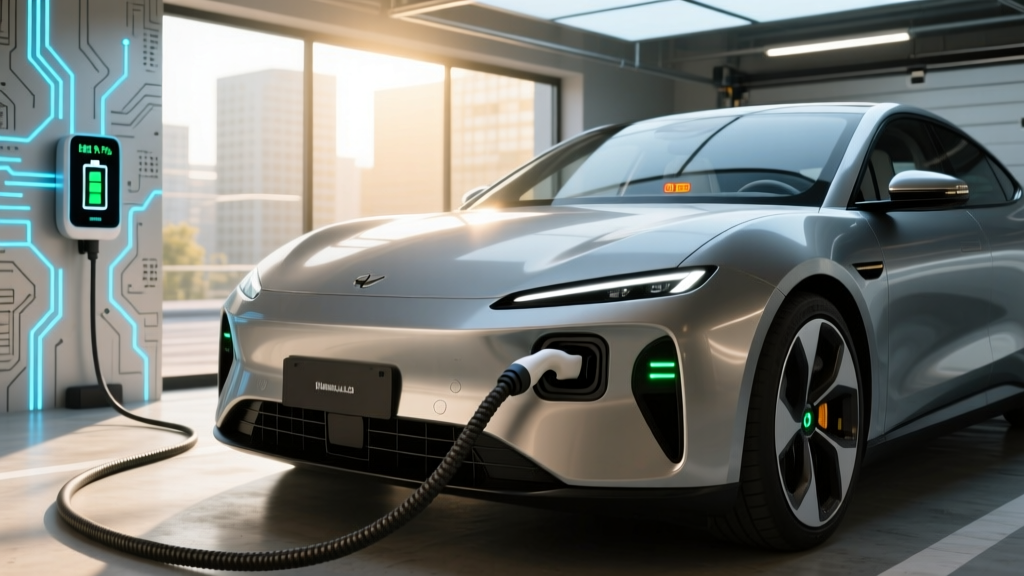
When you're charging a battery in your car, the habits you build matter as much as the chemistry under the floor. Here are the primary degradation accelerators, ranked by impact:
1. Extreme State of Charge (SoC) Habits
For NMC/NCA batteries, routinely sitting at 100% SoC or draining below 10% stresses the cathode structure. The lithium ions crowd the anode at high SoC and strip it at low SoC, accelerating capacity fade. Most OEMs recommend a daily charge limit of 80% for NMC, reserving 100% for road trips. LFP batteries are the exception—their flat voltage curve and structural stability mean OEMs like Tesla and Ford explicitly recommend periodic 100% charges to recalibrate the battery management system (BMS).
2. DC Fast-Charging Frequency
DC fast charging (typically 50–350 kW) generates significant heat and forces lithium ions through the electrolyte at high C-rates. Occasional fast charging on road trips has negligible long-term impact, but relying on it daily—especially at peak rates above 150 kW—can add 1–3% additional degradation over 5 years compared to Level 2 home charging. Modern BMS systems precondition the battery and taper the charge curve above 80% SoC to mitigate this, which is why you'll see peak kW sustained only in the 10–50% SoC window before tapering sharply.
3. Temperature Extremes
Battery packs prefer the same temperatures humans do—roughly 60–80°F. Prolonged exposure to ambient temperatures above 95°F (especially in vehicles with passive cooling, like older Nissan Leafs) accelerates electrolyte decomposition. Extreme cold doesn't permanently damage batteries but temporarily reduces available capacity and slows charge acceptance. Vehicles with active liquid thermal management—standard on nearly all 2026 BEVs—mitigate this substantially, but garage parking in Phoenix or pre-conditioning in Minneapolis still pays dividends.
4. Calendar Aging
Even a parked EV battery degrades over time. Calendar aging is driven by SoC and temperature: a battery stored at 100% SoC in 100°F heat loses capacity faster than one stored at 50% SoC in a 65°F garage. If you're leaving an EV unused for weeks, aim for ~50% SoC and a cool environment.
- Set daily charge limit to 80% (NMC/NCA) or 100% (LFP, per OEM guidance)
- Use Level 2 home charging as your primary method; reserve DCFC for road trips
- Enable battery preconditioning before fast charging (most EVs do this automatically when a charger is set in navigation)
- Avoid leaving the vehicle at 100% SoC for extended periods—start your trip soon after a full charge
- In extreme heat, park in shade or a garage when possible
- In extreme cold, precondition while plugged in to warm the pack using grid power, not battery energy
- For long-term storage: ~50% SoC, cool environment, check monthly
EV Battery Warranty: What's Actually Covered?
Federal law mandates a minimum EV battery warranty of 8 years / 100,000 miles (10 years / 150,000 miles in CARB states including California, New York, Massachusetts, and others). Most manufacturers meet or exceed this baseline. Here's how major 2026 warranties stack up:
| Manufacturer | Warranty Period | Capacity Retention Threshold | Notes |
|---|---|---|---|
| Tesla (Model 3/Y RWD – LFP) | 8 yr / 100,000 mi | 70% | Long Range/Performance: 8 yr / 120,000 mi |
| Hyundai / Kia (Ioniq 5/6, EV6) | 10 yr / 100,000 mi | 70% | Among the longest coverage periods |
| Ford (Mustang Mach-E, F-150 Lightning) | 8 yr / 100,000 mi | 70% | LFP and NMC packs covered identically |
| General Motors (Equinox EV, Blazer EV, Silverado EV) | 8 yr / 100,000 mi | 70% (some models 60% for modules) | Ultium platform; verify trim-specific terms |
| BMW (i4, iX, i7) | 8 yr / 100,000 mi | 70% | Module-level replacement available |
| Rivian (R1T, R1S) | 8 yr / 175,000 mi | 70% | Highest mileage threshold among major OEMs |
| Volkswagen (ID.4) | 8 yr / 100,000 mi | 70% | CARB states: 10 yr / 150,000 mi |
What the warranty covers: If your battery's usable capacity drops below the stated threshold (typically 70% of original) within the warranty period, the manufacturer will repair or replace the pack—or individual modules—at no cost. This covers abnormal degradation, not damage from accidents, flooding, or unauthorized modifications.
What it doesn't cover: Normal, gradual capacity loss above the threshold is expected and not warrantable. A battery at 72% SoH at year 9 is functioning within spec, even though you've lost roughly 80–90 miles of original range on a 300-mile vehicle. Cosmetic issues, 12V auxiliary battery failures, and charging port hardware are covered under separate warranty terms.
EV Battery Replacement Cost: What to Expect
This is the question that generates the most anxiety—and the most misinformation. Let's ground it in actual numbers.
| Vehicle | Battery Capacity | Chemistry | Estimated Full Replacement Cost |
|---|---|---|---|
| Tesla Model 3 RWD | ~60 kWh | LFP | $10,000–$14,000 |
| Tesla Model Y Long Range | ~75 kWh | NMC | $14,000–$18,000 |
| Hyundai Ioniq 5 Long Range | 77.4 kWh | NMC | $14,000–$19,000 |
| Ford F-150 Lightning Extended Range | ~131 kWh | NMC | $22,000–$30,000 |
| Chevrolet Equinox EV | ~85 kWh | NMC (Ultium) | $14,000–$18,000 |
| BMW iX xDrive50 | ~105 kWh usable | NMC | $20,000–$28,000 |
| Rivian R1T (Large Pack) | ~128 kWh | NMC | $20,000–$27,000 |
When is replacement typically needed? For most owners, it isn't. The vast majority of EV batteries in liquid-cooled packs from 2019 onward are lasting 150,000–200,000+ miles before dropping below 70% SoH—and many exceed 200,000 miles still above that threshold. Full pack replacement under warranty is uncommon; when it does occur, it's usually due to a manufacturing defect or cell imbalance caught early, often resolved with a module swap rather than a full pack replacement.
Module-level repair: Several manufacturers—BMW, GM (Ultium platform), and Rivian among them—design packs with individually serviceable modules. Instead of replacing a $20,000 pack, a technician can swap a single degraded or faulty module for $1,500–$4,000. This architecture is becoming the industry norm and substantially reduces worst-case cost exposure.
Aftermarket and refurbished packs: A growing ecosystem of certified refurbishers and salvage-yard packs offers replacement options at 40–60% of new OEM pricing, particularly for higher-volume models like the Tesla Model 3 and Nissan Leaf. As the first-generation EV fleet ages, this market will expand further.
How to Check Your EV Battery Health (State of Health)
Monitoring your battery's State of Health (SoH) is straightforward, though the method varies by brand:
In-Vehicle Displays
Some vehicles expose SoH directly. The Hyundai Ioniq 5 and Kia EV6 show a battery health percentage in the settings menu. Nissan Leaf owners can check the BMS-reported SoH via the dashboard (though earlier models required an OBD-II dongle and the Leaf Spy app for precise readings). Tesla does not display a SoH percentage natively but provides estimated range at full charge, which you can compare to the original EPA figure.
OBD-II Diagnostic Tools
For vehicles without a native SoH display, an OBD-II Bluetooth adapter paired with apps like Leaf Spy (Nissan), TeslaFi or Tessie (Tesla), or manufacturer-specific diagnostic tools can read the BMS-reported capacity. These tools pull the same data the dealer's service computer reads.
Dealer Health Checks
Any authorized service center can run a full battery health report, typically during scheduled service visits. This is particularly useful before purchasing a used EV—request a printed SoH report as a condition of sale.
Third-Party Services
Companies like Recurrent offer battery health reports that compare your pack's degradation to a fleet of identical vehicles, giving you a percentile ranking. Some insurers and used-EV marketplaces now integrate these reports into vehicle listings.
What's Next: Solid-State and Silicon-Anode Batteries
Emerging battery technologies promise step-changes in energy density, charge speed, and longevity—but realistic timelines matter more than press-release promises.
Solid-state batteries replace the liquid electrolyte with a solid ceramic, polymer, or sulfide conductor. The theoretical advantages are substantial: 2–3× the energy density of current NMC, 10-minute fast charging, improved safety (no flammable electrolyte), and 5,000+ cycle life. Toyota has announced solid-state production for select models beginning in 2027–2028, though initial volumes will be limited and pricing premium. Samsung SDI, QuantumScape (with Volkswagen), and Nissan are targeting 2028–2030 production timelines. Expect solid-state to appear first in luxury and performance vehicles before reaching mainstream price points around 2031–2033.
Silicon-anode batteries are closer to market. By blending silicon into the graphite anode, manufacturers can boost energy density by 20–40% without the manufacturing challenges of full solid-state cells. Sila Nanotechnologies (partnered with Mercedes-Benz for the G-Class EV) and Group14 (backed by Porsche) have production underway in 2025–2026. These batteries are arriving now in limited applications and will scale through the end of the decade.
Sodium-ion batteries are entering the market for entry-level and urban EVs, particularly from Chinese manufacturers (BYD, CATL). They sacrifice energy density for dramatically lower cost and zero reliance on lithium or cobalt. Don't expect them in US-market long-range vehicles, but they may appear in affordable compact EVs by 2028.
All of these technologies are forward-looking. If you're buying in 2026, today's LFP and NMC packs are mature, well-warrantied, and backed by a decade of real-world durability data. Waiting for solid-state means waiting at least 2–4 years for limited availability at premium pricing.
Frequently Asked Questions
How long do EV batteries last in years and miles?
Most liquid-cooled EV batteries from 2019 onward last 150,000–200,000+ miles before dropping below 70% capacity. In years, expect 12–20 years of usable service under normal conditions. Fleet data from Tesla, Geotab, and Recurrent consistently shows that the majority of EVs are retired for reasons other than battery failure.
How much does an EV battery cost to replace?
Full pack replacement ranges from roughly $10,000 for a smaller LFP pack (Tesla Model 3 RWD) to $22,000–$30,000 for a large NMC pack (F-150 Lightning Extended Range). However, most replacements are covered under the 8-year/100,000-mile federal warranty, and module-level repairs can cost $1,500–$4,000 for a single faulty module rather than a full pack swap.
Does frequent DC fast charging damage the battery?
Occasional DC fast charging on road trips has minimal long-term impact. Daily reliance on DCFC—especially at rates above 150 kW—can add an estimated 1–3% additional degradation over 5 years compared to exclusive Level 2 home charging. Modern thermal management and charge-curve tapering above 80% SoC significantly mitigate this risk.
LFP vs. NMC—which is better for daily driving?
For daily commuting with home charging, LFP is generally the better choice: longer cycle life, tolerance for daily 100% charges, lower cost, and superior thermal stability. NMC is better when you need maximum range, frequently drive long distances, or operate in very cold climates where its energy density and cold-weather performance provide a tangible advantage.
Should I charge my EV battery to 100% every night?
If your EV has an LFP battery (Tesla Model 3 RWD, some Ford and Rivian Standard trims), yes—OEMs recommend regular 100% charges for accurate BMS calibration. If your EV has an NMC/NCA battery, set the daily charge limit to 80% and reserve 100% for road trips. Check your owner's manual for chemistry-specific guidance.
What voids an EV battery warranty?
Warranties typically exclude damage from accidents, flooding, fire, unauthorized modifications (aftermarket tuning, non-OEM charging equipment that causes damage), and use as a stationary power source beyond the vehicle's designed V2L/V2H specifications. Normal degradation above the 70% threshold is not warrantable. Always review your specific warranty booklet for exact exclusions.
Can I upgrade my EV battery to a larger capacity later?
In most cases, no. Battery packs are structurally integrated and software-matched to the vehicle. A few exceptions exist—Nio's battery swap program in China allows upgrades, and some aftermarket specialists offer capacity upgrades for older Nissan Leafs—but for the vast majority of 2026 EVs, the battery you buy is the battery you keep. Choose your capacity at purchase.