Charging Time vs. Battery Lifespan: What Every EV Owner Needs to Know
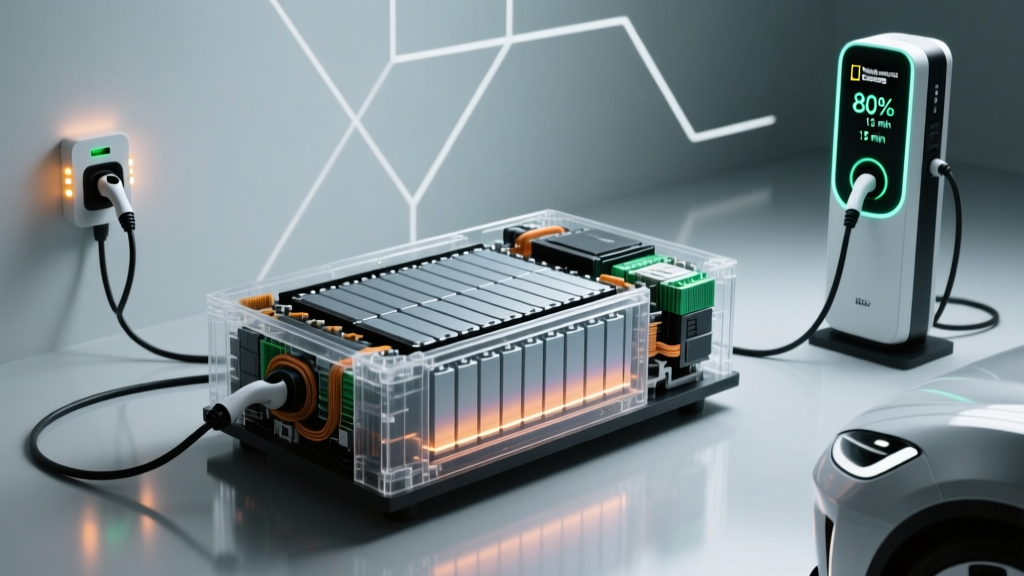
When shoppers ask "how long does it take to charge the battery," the honest answer depends on three variables: your charger's power output (measured in kW), your battery's capacity (measured in kWh), and the battery chemistry inside the pack. A 75 kWh battery on a 7.7 kW Level 2 home charger takes roughly 10 hours from empty to full. That same battery at a 250 kW DC fast charger can recover from 10% to 80% in about 20 minutes. But charging speed is only half the story — the battery's chemistry, thermal management, and your daily habits determine whether that pack delivers reliable range for 150,000 miles or 300,000 miles.
This guide covers the exact charge times across all three charging levels, the two dominant battery chemistries (LFP and NMC/NCA), real-world degradation data, warranty protections, and what replacement actually costs if you ever need it.
How Long Does It Take to Charge the Battery at Each Level?
EV charging is a function of power (kW) flowing into capacity (kWh). Think of kW as the flow rate of a hose and kWh as the size of the tank. A bigger hose fills the tank faster — but only up to the point where the battery's management system tapers the flow to protect the cells.
| Charging Level | Voltage | Power (kW) | Miles of Range per Hour | Typical 10–80% Time (75 kWh Pack) | Where You'll Find It |
|---|---|---|---|---|---|
| Level 1 (120V AC) | 120V | 1.0–1.4 kW | 3–5 mi/hr | ~50+ hours | Standard household outlet |
| Level 2 (240V AC) | 240V | 3.3–19.2 kW | 12–75 mi/hr | 4–10 hours | Home wallbox, public AC stations |
| DC Fast Charging | 400–800V DC | 50–350 kW | 150–1,000+ mi/hr | 15–35 minutes | Tesla Superchargers, Electrify America, EVgo |
Real-world nuance: Peak kW ratings are not sustained rates. A vehicle rated for 250 kW peak charging may only hold that rate for 5–10 minutes before the battery management system (BMS) tapers the curve to prevent overheating. The 10–80% time is the industry-standard metric because charging slows dramatically above 80% State of Charge (SoC). Charging from 80–100% on a DC fast charger can take as long as the 10–80% portion.
Preconditioning matters. Most modern EVs (Tesla, Hyundai/Kia E-GMP, Rivian, BMW) will warm the battery to optimal temperature when you navigate to a fast charger. Without preconditioning, a cold battery at 40°F might accept only 50 kW at a 250 kW station — tripling your charge time. Always use the vehicle's built-in navigation to route to a charger when possible.
LFP vs. NMC/NCA: Which Battery Chemistry Is in Your EV?
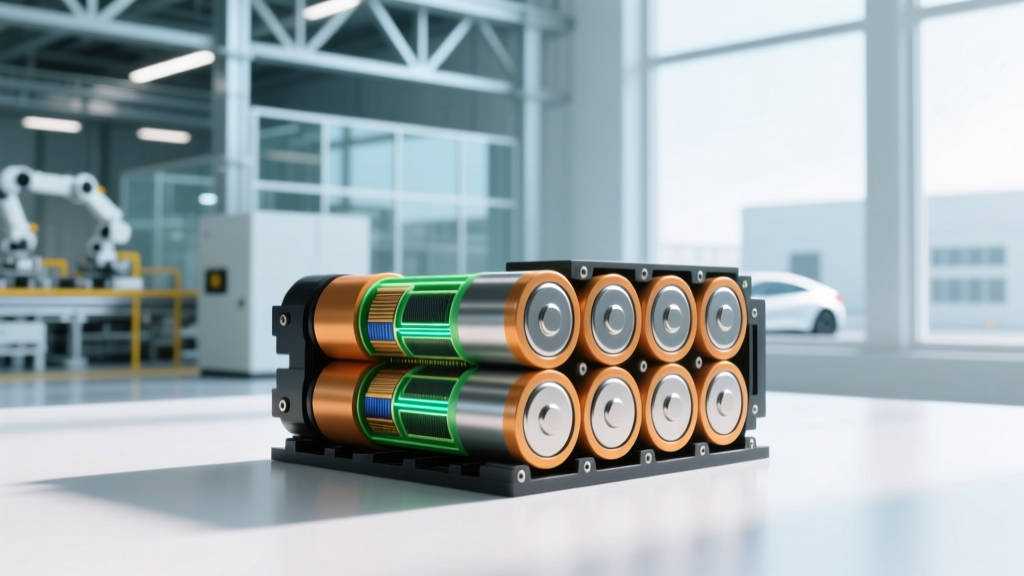
The two dominant lithium-ion chemistries in 2026 EVs are Lithium Iron Phosphate (LFP) and Nickel Manganese Cobalt / Nickel Cobalt Aluminum (NMC/NCA). Your EV's chemistry affects range, charging habits, longevity, and cold-weather performance.
| Attribute | LFP (Lithium Iron Phosphate) | NMC / NCA (Nickel-based) |
|---|---|---|
| Energy Density | Lower (~160 Wh/kg cell-level) | Higher (~250–300 Wh/kg cell-level) |
| Typical Use | Standard Range models, fleet vehicles | Long Range, Performance models |
| Cycle Life | 3,000–5,000+ cycles to 80% SoH | 1,000–2,000 cycles to 80% SoH |
| Recommended Daily SoC | 100% (charge to full daily) | 80% (reserve 100% for trips) |
| Cold-Weather Performance | Moderate — greater range loss below freezing | Better low-temp discharge capability |
| Cost | ~15–20% cheaper per kWh | Higher due to nickel/cobalt content |
| Thermal Stability | Excellent — lower thermal runaway risk | Good, but requires robust BMS |
| Notable 2026 Vehicles | Tesla Model 3 RWD, Ford Mustang Mach-E Select (LFP option), BYD models | Tesla Model Y LR, Hyundai Ioniq 5, Kia EV6, Rivian R1T, BMW iX |
The practical takeaway: LFP batteries trade range density for exceptional longevity and the convenience of daily 100% charging. If your commute fits within an LFP pack's range, you'll likely never see meaningful degradation within typical ownership. NMC/NCA packs deliver more range per kilogram but benefit from being charged to 80% daily and only taken to 100% before long trips. Most manufacturers now clearly disclose chemistry by trim — check the window sticker or spec sheet before buying.
How Long Do EV Batteries Last? Degradation Data
EV batteries don't "die" suddenly — they gradually lose capacity over time, measured as State of Health (SoH). A battery at 90% SoH holds 90% of its original kWh capacity, meaning proportionally less range.
Based on aggregated fleet data and manufacturer disclosures, here is what typical degradation looks like:
- Year 1–2 (0–30,000 miles): 2–5% capacity loss. This initial drop is normal and represents electrolyte stabilization and SEI (solid electrolyte interphase) layer formation.
- Year 3–5 (30,000–75,000 miles): Additional 3–5% loss. Total SoH typically 90–95%.
- Year 6–10 (75,000–150,000 miles): Gradual linear decline. Most NMC packs sit at 85–92% SoH; LFP packs often remain above 93%.
- Beyond 150,000 miles: Data from fueleconomy.gov and fleet operators like Recurrent Auto show most modern EV batteries retain 80–90% capacity at 200,000 miles. Complete pack failure is rare.
Key data point: A 2025 Recurrent Auto study of over 15,000 EVs found the average 3-year-old EV retained 94% of its original range. Tesla's 2024 Impact Report showed Model S/X batteries retaining approximately 88% capacity at 200,000 miles. These are averages — individual results depend heavily on climate, charging habits, and thermal management quality.
What Does the Battery Warranty Cover?
Federal law mandates a minimum 8-year/100,000-mile warranty on EV battery packs (10 years/150,000 miles in California and states that follow CARB standards). Most manufacturers exceed this baseline. The warranty guarantees that the battery will retain a specified percentage of its original capacity — typically 70%.
| Manufacturer | Warranty Period | Mileage Limit | Capacity Retention Threshold | Chemistry Covered |
|---|---|---|---|---|
| Tesla (Model 3/Y RWD — LFP) | 8 years | 100,000 mi | 70% | LFP |
| Tesla (Model 3/Y LR — NMC) | 8 years | 120,000 mi | 70% | NMC |
| Hyundai / Kia (E-GMP) | 10 years | 100,000 mi | 70% | NMC |
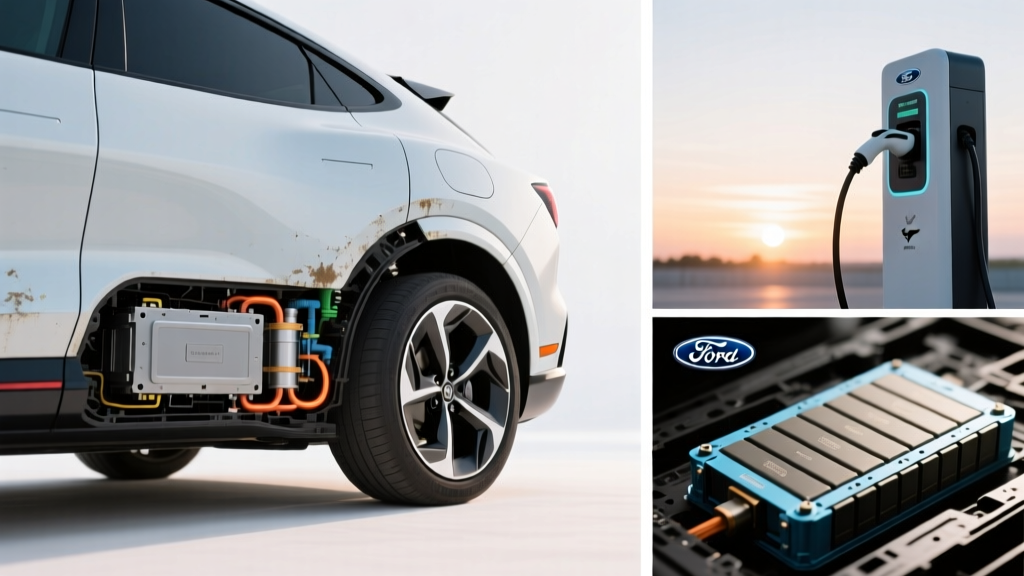
| Ford (Mach-E, F-150 Lightning) | 8 years | 100,000 mi | 70% | NMC / LFP |
| BMW (iX, i4) | 8 years | 100,000 mi | 70% | NMC |
| Rivian (R1T, R1S) | 8 years | 175,000 mi | 70% | NMC |
What triggers a warranty claim: If your battery's SoH drops below the threshold (e.g., 70% of original capacity) within the warranty window, the manufacturer will repair or replace the pack at no cost. Some manufacturers replace individual modules rather than the entire pack. The warranty covers defects and abnormal degradation — not damage from accidents, flooding, or unauthorized modifications.
How Much Does an EV Battery Cost to Replace?
Out-of-warranty battery replacement is the most cited fear among prospective EV buyers. Here is the reality with current pricing:
| Vehicle / Pack Size | Battery Capacity | Estimated Replacement Cost (Parts + Labor) | When Is It Typically Needed? |
|---|---|---|---|
| Tesla Model 3 RWD (LFP) | 60 kWh | $8,000–$12,000 | Rarely — LFP cycle life exceeds 3,000+ cycles |
| Hyundai Ioniq 5 / Kia EV6 | 77.4 kWh | $12,000–$16,000 | Typically 200,000+ mi if at all |
| Ford F-150 Lightning Ext. Range | 131 kWh | $20,000–$28,000 | Rare within vehicle lifetime |
| Tesla Model S / X | 100 kWh | $14,000–$20,000 | Some early packs at 150,000+ mi |
| Chevrolet Bolt EV/EUV (prior gen) | 65 kWh | $9,000–$14,000 | Most covered under recall/warranty |
Context that matters: The vast majority of EV batteries outlast the vehicle itself. According to data from the U.S. Department of Energy, less than 2% of EVs on the road have required a full battery replacement outside of recall campaigns. Module-level repairs (replacing a few degraded cells rather than the full pack) are increasingly common and cost $2,000–$5,000. As battery manufacturing scales and second-life markets develop, replacement costs continue declining year over year.
Factors That Affect Battery Life — and How to Maximize It
Battery longevity isn't random. These factors have the greatest measurable impact on degradation:
- Limit DC fast charging to road trips. Frequent 150+ kW charging accelerates degradation by ~1–2% per year compared to primarily Level 2 charging. Use DCFC when you need it, but don't make it your daily routine.
- Follow chemistry-specific SoC guidance. NMC/NCA: charge to 80% daily, 100% only before trips. LFP: charge to 100% regularly — the BMS needs full charges to calibrate cell balancing.
- Avoid prolonged storage at extreme SoC. Don't leave an NMC vehicle at 100% or below 10% for weeks. Store at ~50% SoC if the vehicle will sit unused.
- Precondition in extreme temperatures. Use scheduled departure times to warm or cool the battery while plugged in. Charging a cold battery (below 32°F) without preconditioning causes lithium plating — permanent capacity loss.
- Minimize exposure to extreme heat. Parking in shade or a garage when ambient temps exceed 95°F reduces calendar aging. Battery thermal management systems work harder (and consume energy) in sustained heat.
- Drive moderately when the battery is very cold or very hot. Aggressive acceleration and heavy regen on a cold pack stress the cells.
How to Check Your Battery's State of Health (SoH)
Monitoring SoH helps you track degradation and provides documentation if you ever need a warranty claim.
Built-in vehicle tools: Many 2026 EVs display battery health in the settings menu. Tesla offers a battery health assessment via the service menu. Hyundai/Kia's connected services app shows estimated SoH. BMW's iDrive includes a battery diagnostics screen.
OBD-II diagnostics: Third-party tools like the OBDLink MX+ paired with apps such as ABRP (A Better Route Planner) or Scan My Tesla can read real-time battery data including pack voltage, individual cell delta, and calculated SoH. This is more granular than the manufacturer's displayed estimate.
Dealer assessment: Request a battery health report during scheduled service. Most manufacturers can run a diagnostic that compares current usable kWh to the original capacity. Keep these records — they're essential for warranty claims and resale value.
Range-based estimation: Track your vehicle's displayed range at 100% SoC over time. If your NMC vehicle originally showed 310 miles at full charge and now shows 285 miles (with the same tire size and software version), that's roughly a 8% capacity loss. Account for seasonal variation — cold weather temporarily reduces displayed range by 15–30%.
Emerging Battery Technology: What's on the Horizon
Several next-generation battery technologies are in development, but none are available in production consumer EVs as of 2026. Here is a realistic timeline based on manufacturer announcements and industry analysis:
- Silicon-dominant anodes: Companies like Sila Nanotechnologies and Group14 are supplying silicon-carbon anode materials that boost energy density by 15–25%. Early adoption is appearing in select 2026–2027 model-year vehicles from Mercedes-Benz and others. Expect gradual rollout, not a single launch event.
- Semi-solid-state batteries: NIO (China) has deployed a 150 kWh semi-solid-state pack in limited fleet applications. Toyota, Samsung SDI, and QuantumScape target 2027–2029 for initial production-scale solid-state packs. These promise faster charging (10–80% in under 10 minutes) and higher energy density, but manufacturing yield and cost remain significant barriers.
- Sodium-ion batteries: CATL and BYD are producing sodium-ion packs for lower-cost, shorter-range applications. These eliminate lithium entirely but offer lower energy density (~120 Wh/kg). Expect them in budget city cars and fleet vehicles before reaching the U.S. market.
The practical advice: Don't delay an EV purchase waiting for solid-state. Current LFP and NMC chemistries are mature, well-warrantied, and — as the degradation data above shows — capable of outlasting the vehicle. Future technologies will arrive incrementally and at a premium price before becoming mainstream.
Frequently Asked Questions
How long does it take to charge the battery at home overnight?
On a 48-amp (11.5 kW) Level 2 home charger — the most common hardwired installation — a 75 kWh battery charges from 20% to 100% in approximately 7 hours. This comfortably covers overnight charging for most daily commutes. A 32-amp (7.7 kW) charger extends that to roughly 10 hours. Both are sufficient for drivers who plug in each evening.
Does fast charging damage the battery?
Occasional DC fast charging does not meaningfully accelerate degradation. However, data from fleet studies shows that vehicles that DC fast charge more than 3 times per week degrade approximately 1–3% more over 5 years compared to vehicles that primarily use Level 2 charging. Modern thermal management systems mitigate most of the risk. Use DCFC for road trips; rely on Level 2 for daily needs.
LFP vs NMC — which is better for my situation?
Choose LFP if: your daily driving is under 200 miles, you want maximum battery lifespan, you prefer the simplicity of charging to 100% daily, and you live in a moderate climate. Choose NMC/NCA if: you need maximum range (300+ miles), you regularly drive in very cold climates, or you need the lightest possible pack for performance applications. Neither is universally "better" — the right choice depends on your driving profile.
Will I need to replace the battery before I sell the car?
Statistically, no. The average American keeps a vehicle for 8.4 years and drives roughly 14,000 miles per year (about 117,000 miles total). Current EV batteries are designed to retain 80%+ capacity well beyond 150,000 miles. Most original owners will sell or trade the vehicle before the battery requires attention. Second owners benefit from the remaining warranty coverage.
What about the 12V battery?
EVs also have a 12V auxiliary battery that powers lights, infotainment, and control electronics — separate from the high-voltage traction battery discussed in this guide. The 12V battery is a conventional lead-acid or lithium unit that may need replacement every 3–5 years, similar to a gas car. It does not affect driving range or propulsion. Many 2026 models (including Teslas and newer Hyundai/Kia EVs) use a 12V lithium-iron-phosphate auxiliary battery that lasts significantly longer.