Can I Charge My Battery in the Car — And What That Means for Longevity
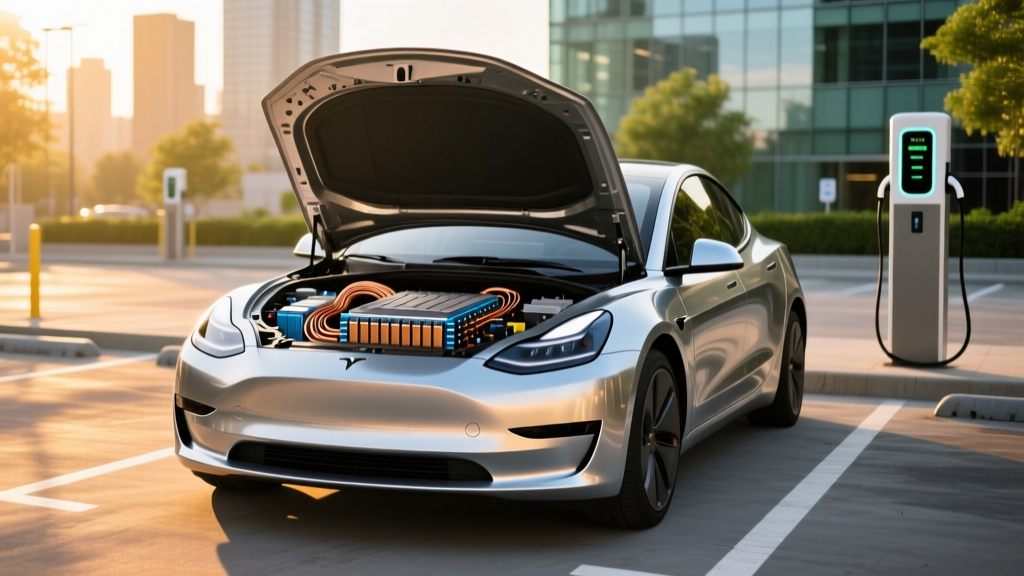
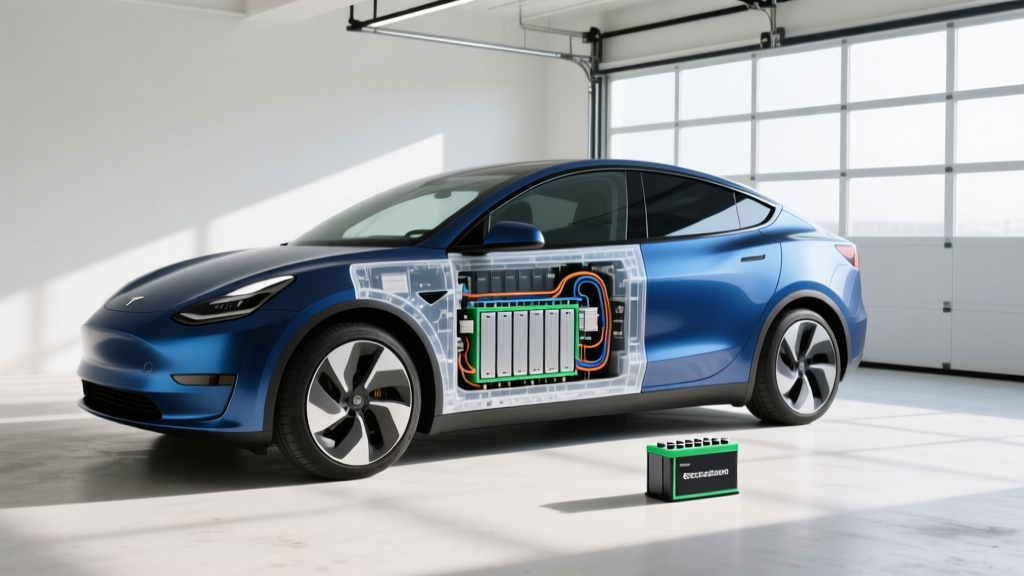
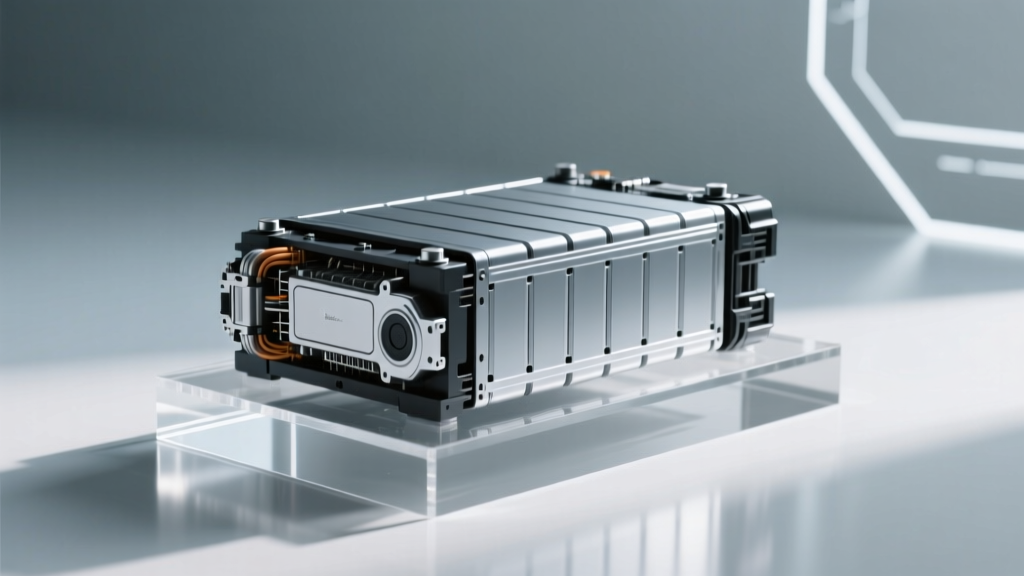
When new EV owners ask "can I charge my battery in the car?" they're usually asking one of two things: whether charging happens inside the vehicle (yes — the onboard charger manages AC-to-DC conversion), or whether frequent charging degrades the high-voltage traction battery over time. The short answer to both is straightforward: your EV's battery management system (BMS) handles charging internally, and modern lithium-ion packs are engineered to last the life of the vehicle with minimal capacity loss — provided you follow a few evidence-based habits.
This guide breaks down exactly what's happening inside your battery when you plug in, which chemistry your car uses, how much degradation to expect, what warranties actually cover, and when (or if) you'll face a replacement bill. All data points reference current 2026 model-year vehicles and published manufacturer specifications.
LFP vs NMC: Which Battery Chemistry Is in Your EV?
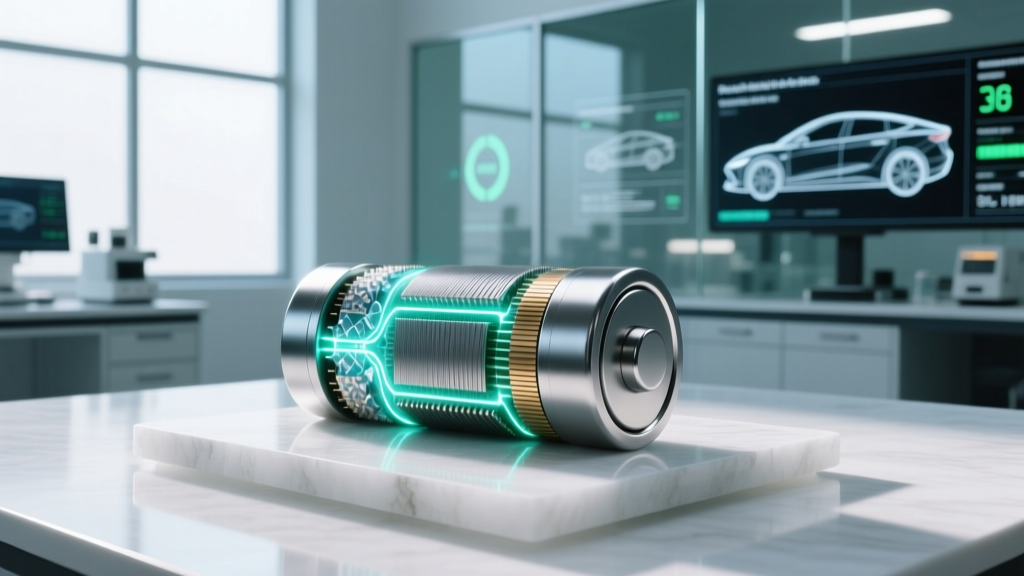
The two dominant lithium-ion chemistries in 2026 EVs are LFP (lithium iron phosphate) and NMC/NCA (nickel manganese cobalt / nickel cobalt aluminum). The chemistry determines your battery's energy density, cycle life, cold-weather behavior, and cost. Knowing which one your car has changes how you should charge and care for it.
| Attribute | LFP (LiFePO₄) | NMC / NCA |
|---|---|---|
| Energy Density | ~160–180 Wh/kg (lower) | ~230–260 Wh/kg (higher) |
| Typical Cycle Life | 3,000–5,000+ cycles | 1,000–2,000 cycles |
| Cold-Weather Performance | Moderate loss; slower charging below 32°F | Better low-temp conductivity |
| Cost per kWh | ~$90–$110 (lower) | ~$120–$150 (higher) |
| Recommended Daily SoC | 100% is fine; periodic full charges help BMS calibration | 80% daily; 100% for trips only |
| Thermal Stability | Excellent; lower runaway risk | Good; requires active thermal management |
| Common 2026 Vehicles | Tesla Model 3/Y RWD, Ford Mustang Mach-E Select (LFP option), BYD models | Hyundai Ioniq 5, Chevrolet Equinox EV, Tesla Long Range/Performance, Rivian R1T/R1S |
The practical takeaway: If your EV has an LFP pack, you can charge to 100% daily without accelerating degradation — Tesla explicitly recommends this in the Model 3 RWD owner's manual. NMC/NCA owners should target 80% for daily driving and reserve 100% charges for road trips. LFP sacrifices some range per kilogram but gains dramatically in cycle life and cost, which is why it's becoming the standard for base-trim and standard-range models.
How Long Do EV Batteries Actually Last?
The fear that EV batteries need replacement every few years is not supported by fleet data. According to fueleconomy.gov, most modern EV batteries retain 90% or more of their original capacity after 100,000 miles. Real-world degradation studies from Recurrent Auto and manufacturer-reported data paint a consistent picture:
| Mileage | Average Capacity Retained | Notes |
|---|---|---|
| Year 1 / ~15,000 mi | 95–98% | Initial drop as SEI layer stabilizes |
| Year 3 / ~45,000 mi | 92–96% | Gradual linear decline |
| Year 5 / ~75,000 mi | 89–94% | Most packs well above warranty threshold |
| Year 8 / ~120,000 mi | 85–92% | Warranty period ends; most exceed 70% threshold |
| Year 10+ / 150,000+ mi | 80–90% | Pack still functional; reduced range noticeable |
These figures represent fleet averages across multiple models. Individual results vary based on climate, charging habits, and whether the pack uses active liquid cooling (standard on most 2026 EVs) versus passive air cooling. Tesla's 2025 Impact Report noted their fleet averaged roughly 12% degradation at 200,000 miles — meaning a 350-mile EPA range Model 3 would still deliver ~308 miles when new-equivalent conditions apply.
Most EV batteries will outlast the vehicle they're installed in. The average US car age is 12.6 years; at 12,000 miles annually, that's ~151,000 miles — squarely within the range where modern packs still retain 85%+ capacity.
What Does the EV Battery Warranty Actually Cover?
Federal law mandates a minimum 8-year / 100,000-mile warranty on EV battery packs for emissions-related compliance, and nearly every automaker matches or exceeds this baseline. California-emissions states (which include 16 states plus DC as of 2026) require 10-year / 150,000-mile coverage. Here's how major manufacturers structure their warranties:
| Manufacturer | Warranty Period | Mileage Cap | Capacity Threshold |
|---|---|---|---|
| Tesla (Model 3/Y RWD — LFP) | 8 years | 100,000 mi | 70% retention |
| Tesla (Model 3/Y Long Range) | 8 years | 120,000 mi | 70% retention |
| Hyundai / Kia | 10 years | 100,000 mi | 70% retention |
| Chevrolet (Equinox EV / Blazer EV) | 8 years | 100,000 mi | 60% retention |
| Ford (Mustang Mach-E / F-150 Lightning) | 8 years | 100,000 mi | 70% retention |
| Rivian (R1T / R1S) | 8 years | 120,000 mi | 70% retention |
| BMW (i4 / iX) | 8 years | 100,000 mi | 70% retention |
Critical detail: The warranty covers capacity loss below the stated threshold — not cosmetic range reduction. If your 300-mile EPA-rated EV drops to 220 miles (73% retention) at year 7, that's still above the 70% floor and would not trigger a warranty replacement. The warranty also covers manufacturing defects, module failures, and BMS faults. It does not cover damage from accidents, flooding, improper charging equipment, or aftermarket modifications.
Warranty claims are rare. Industry data suggests fewer than 1–2% of EV battery packs are replaced under warranty, and most of those involve isolated module failures rather than wholesale degradation.
How Much Does an EV Battery Cost to Replace?
If your battery falls outside warranty coverage and needs replacement — a scenario that's uncommon but possible for high-mileage vehicles or those kept 12+ years — here's what to expect in 2026:
| Vehicle Class / Example | Battery Size (kWh) | Parts Cost Range | Labor (est.) | Total Range |
|---|---|---|---|---|
| Compact (Chevy Bolt, Nissan Leaf) | 40–65 kWh | $6,000–$10,000 | $1,500–$2,500 | $7,500–$12,500 |
| Mid-size (Tesla Model 3, Ioniq 5) | 60–77 kWh | $8,000–$14,000 | $1,500–$3,000 | $9,500–$17,000 |
| Large SUV / Truck (F-150 Lightning, Rivian R1T) | 98–135 kWh | $15,000–$25,000 | $2,000–$4,000 | $17,000–$29,000 |
| Luxury (Tesla Model S, BMW iX) | 90–111 kWh | $12,000–$22,000 | $2,000–$3,500 | $14,000–$25,500 |
Battery pack prices have fallen from ~$1,200/kWh in 2010 to approximately $130–$140/kWh at the pack level in 2026, per BloombergNEF data. Third-party remanufacturers and module-level repair shops are increasingly available, offering partial pack repairs (replacing only degraded modules) for $3,000–$7,000 — a fraction of a full pack swap. This is worth investigating before accepting a dealer full-replacement quote.
When is replacement actually needed? Almost never during normal ownership timelines. A replacement typically only makes economic sense for vehicles with 180,000+ miles that have dropped below 70% capacity and where the owner intends to keep the vehicle for several more years. For most owners, the car will be retired or traded before the battery requires replacement.
Factors That Affect Battery Life — and What You Can Control
Not all charging is equal. The rate at which your battery degrades depends on several variables, some within your control and some not:
Battery Care Best Practices
- Limit DC fast charging frequency. Occasional road-trip fast charging is fine. Daily reliance on 150+ kW DC charging accelerates degradation by an estimated 1–3% over 5 years compared to Level 2 home charging. The heat generated at high C-rates stresses cell chemistry.
- Avoid extreme State of Charge (SoC) storage. Don't leave an NMC battery at 100% for days. Don't store any EV near 0% for extended periods. For NMC, the sweet spot is 20–80% for daily use. LFP owners can charge to 100% but should avoid leaving the car fully charged in extreme heat for days.
- Use preconditioning. Most 2026 EVs allow you to schedule departure times. Preconditioning warms or cools the battery to optimal temperature before driving and charging, reducing stress and improving charge acceptance — especially critical below 40°F where charging speeds can drop 30–50%.
- Park in shade or a garage when possible. Sustained battery temperatures above 95°F accelerate calendar aging. A garage or shaded spot meaningfully reduces thermal load, particularly in Arizona, Texas, and Southern California climates.
- Drive moderately in extreme cold. Below 20°F, expect 20–30% range reduction due to increased internal resistance and cabin heating demand. This is normal physics, not damage — range returns when temperatures rise.
- Keep software updated. OTA updates often include BMS refinements that optimize charge curves and thermal management. Tesla, Rivian, Ford, and Hyundai regularly push battery-management improvements.
How to Check and Monitor Your Battery's State of Health (SoH)
State of Health (SoH) is the percentage of your battery's original capacity that remains usable. A new battery is 100% SoH; one that has degraded to hold 85 kWh out of an original 100 kWh is at 85% SoH. Here's how to check it:
- In-vehicle displays: Tesla offers a battery health estimate in the service menu (introduced in 2024 software updates). Hyundai's Ioniq 5/6 provides a SoH readout via the infotainment diagnostics screen. Ford's Mach-E and F-150 Lightning display estimated range that adjusts based on learned capacity.
- OBD-II dongles + apps: Third-party tools like OBDeleven, Leaf Spy (Nissan Leaf), and Scan My Tesla can read BMS-reported SoH directly. These typically cost $30–$80 for the hardware and provide more granular data than the in-car display.
- Dealer diagnostic reports: Any authorized service center can pull a full battery health report showing individual module voltages, internal resistance, and total capacity. Request this when buying a used EV — it's the most reliable verification method.
- Manual calculation: Charge to 100%, note the displayed range, and compare it to the original EPA rating (adjusted for temperature). If your 310-mile EPA car shows 275 miles at 100% in mild weather, you're at roughly 89% SoH — a reasonable figure for a 3-year-old vehicle.
Recurrent Auto provides a free battery health report for subscribers by analyzing telematics data — a useful option for tracking long-term trends without specialized hardware.
Emerging Battery Tech: Solid-State and Silicon Anodes
Next-generation battery technologies are advancing but remain in pre-commercial or limited-production stages as of 2026:
- Solid-state batteries replace the liquid electrolyte with a solid material, promising higher energy density (~400 Wh/kg projected), faster charging, and improved safety. Toyota has announced a solid-state EV for 2027–2028 with a claimed 466-mile range and 10-minute 10–80% charge. Samsung SDI and QuantumScape are also in advanced testing. However, manufacturing scalability and cost remain unsolved challenges. These are not yet available in any production vehicle sold in the US.
- Silicon anode batteries substitute graphite anodes with silicon, increasing energy density by 20–40%. Sila Nanotechnologies and Group14 Technologies are supplying early production cells. The Mercedes-Benz G-Class EQ (announced for late 2026) is expected to feature silicon-dominant anode cells from Sila. Availability is limited and costs are premium.
- Sodium-ion batteries are entering the market for budget EVs, primarily from Chinese manufacturers (CATL, BYD). They offer lower energy density but eliminate cobalt and nickel entirely, reducing cost and supply-chain risk. No sodium-ion EVs are currently sold in the US market as of 2026, though this may change by 2027–2028.
Realistic timeline: Expect solid-state batteries in limited luxury/sports applications by 2028–2029 and broader availability by 2030+. For buyers shopping today, current LFP and NMC chemistries are mature, reliable, and backed by extensive warranty coverage. Waiting for solid-state is not a practical purchase strategy unless your timeline extends 3–4 years out.
Frequently Asked Questions
Can I charge my EV battery to 100% every day?
If your EV uses an LFP battery (Tesla Model 3/Y RWD, some Ford Mach-E trims), yes — Tesla and other manufacturers recommend periodic 100% charges to help the BMS calibrate cell balancing. If your EV uses NMC/NCA chemistry (most Long Range, Performance, and AWD variants), daily charging to 80% is recommended for longevity, with 100% reserved for trips where you need maximum range.
Does fast charging damage my EV battery?
DC fast charging at 150–350 kW generates significant heat, which accelerates degradation if used as your primary charging method. Studies suggest daily DC fast charging can add 1–3% extra capacity loss over 5 years compared to Level 2 home charging. Occasional fast charging on road trips has negligible impact — the BMS actively manages temperature and tapers charge rate above 80% SoC to protect cells. If you have home Level 2 access, use it for daily charging and save DC fast charging for travel.
How do I know if my battery needs to be replaced?
Most EV batteries never need replacement during typical ownership. Signs that warrant investigation include: displayed range dropping significantly below the expected degradation curve (e.g., a 3-year-old car showing 60% of original range), warning lights indicating cell imbalance or module failure, or a dealer diagnostic report showing capacity below the warranty threshold (typically 70%). If you're within the warranty period and below the threshold, the manufacturer covers replacement at no cost.
What happens to my EV battery in extreme cold?
Below 32°F, expect 15–30% range reduction depending on severity. Below 0°F, losses can reach 40%. This is temporary — caused by increased internal resistance and energy diverted to battery and cabin heating. It does not damage the battery. Preconditioning your EV while plugged in (using grid power rather than battery power to warm the pack) recovers most of this range. DC fast charging speeds also drop significantly in cold weather until the pack warms — preconditioning before arriving at a charger is essential for acceptable charge times.
Is it worth buying a used EV with high mileage?
Often yes, provided you verify battery health. A 5-year-old EV with 80,000 miles and 90% SoH remaining is a strong value proposition — you're getting 90% of the battery life at a fraction of the new-car price. Always request a dealer diagnostic report or use an OBD-II tool to check SoH before purchasing. Verify the remaining warranty coverage (most transfer to second owners). High-mileage EVs with documented home-charging history tend to have better battery health than those charged primarily on DC fast chargers.
LFP vs NMC — which battery chemistry is better for me?
Choose LFP if: you want maximum cycle life, plan to keep the car 8+ years, mostly charge at home, live in a moderate climate, and don't need maximum range (LFP packs are typically heavier for the same kWh). Choose NMC/NCA if: you need the longest possible range per charge, frequently drive in cold weather, want the lightest pack for performance, or regularly take road trips where energy density matters. Neither is objectively "better" — they optimize for different priorities.
Sources: US Department of Energy / fueleconomy.gov — EV technology and battery overview; IRS.gov — §30D Clean Vehicle Credit rules (for battery sourcing requirements affecting chemistry choices); manufacturer warranty documentation (Tesla, Hyundai, Ford, GM, Rivian, BMW — 2026 model year).