The single biggest question prospective EV buyers ask isn't about range or charging speed — it's about longevity. Will the battery survive the life of the car? What happens when it degrades? And if the worst occurs, what does a replacement actually cost?
After years of tracking real-world fleet data, manufacturer warranty claims, and independent battery-health reports, the short answer is reassuring: modern EV traction batteries are outlasting the vehicles they power in most cases. But the details — chemistry choice, charging habits, climate exposure — matter enormously. Here's the data-driven breakdown of battery car lifespan in 2026.
How Long Do EV Batteries Actually Last?
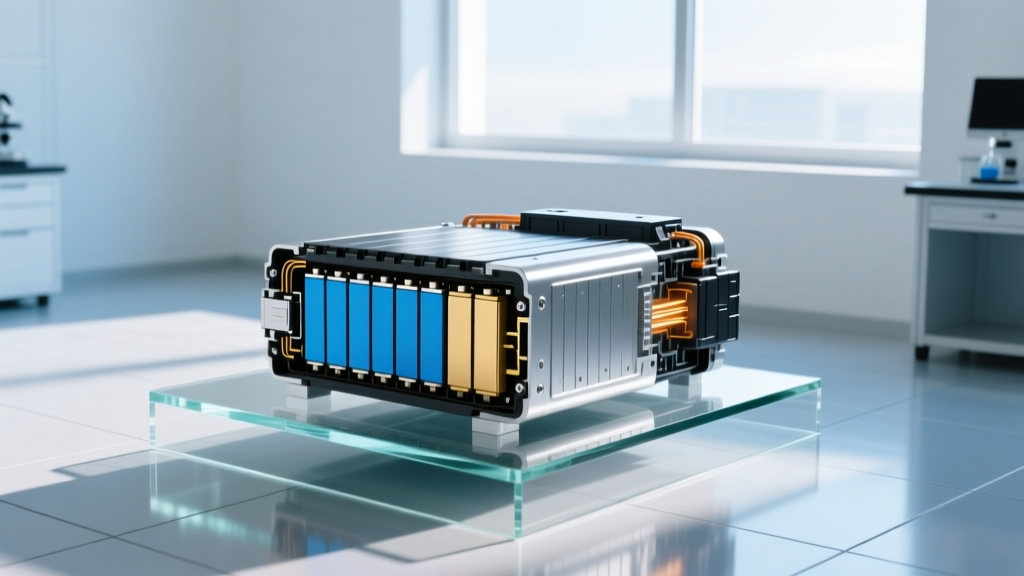
When we talk about battery car lifespan, we're referring to the high-voltage traction battery — the large lithium-ion pack (typically 50–120 kWh) that powers the electric motor. This is entirely separate from the 12V auxiliary battery that runs lights and infotainment.
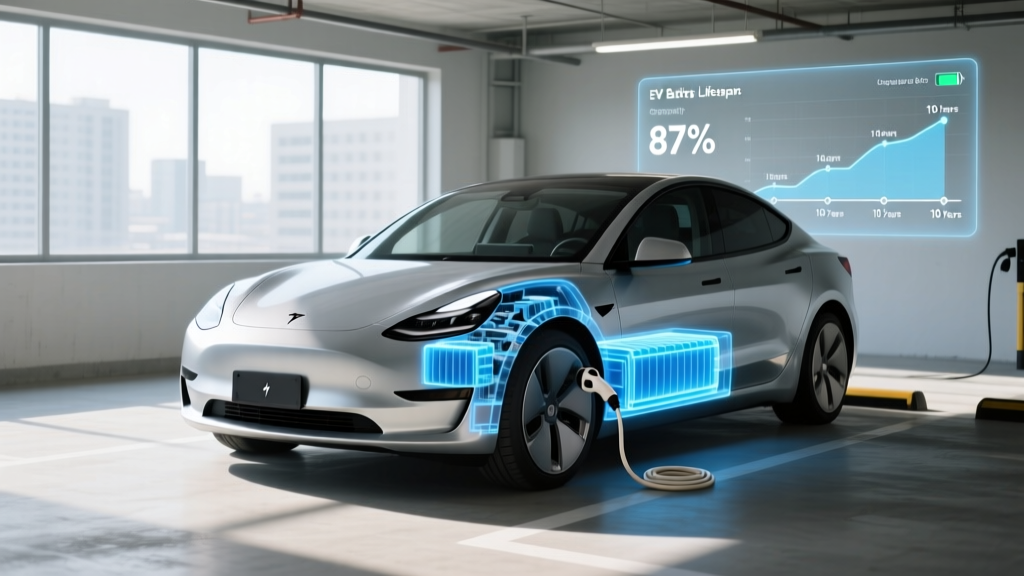
Based on aggregated fleet data from sources like fueleconomy.gov and long-term owner reports, most modern EV batteries retain between 85% and 93% of their original capacity after 100,000 miles. At typical degradation rates of 1.5% to 2.5% per year, a well-maintained pack should deliver usable service for 15 to 20 years or 200,000+ miles before dropping to 70% of original capacity — the threshold most manufacturers use to define end-of-warranty life.
The key distinction: batteries don't "die" the way a gas engine blows up. They slowly lose capacity over time, meaning a car with a 300-mile EPA range when new might deliver 255 miles at 85% State of Health (SoH). Most owners adapt to this gradually and never experience a moment where the car becomes unusable.
LFP vs NMC: Chemistry Determines Longevity
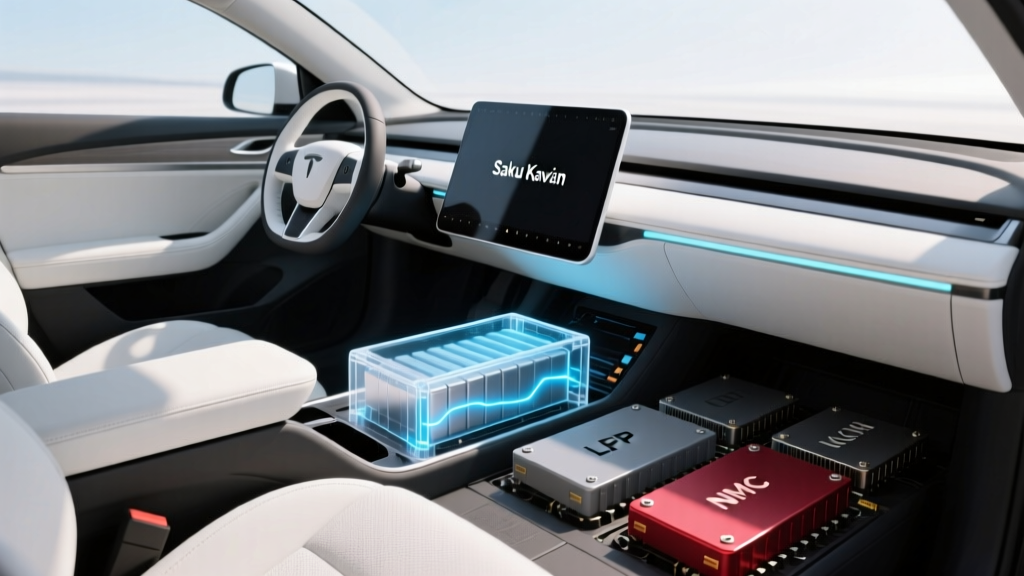
Not all EV batteries are created equal. The two dominant chemistries in 2026 passenger EVs are Lithium Iron Phosphate (LFP) and Nickel Manganese Cobalt (NMC) / Nickel Cobalt Aluminum (NCA). Your chemistry choice directly affects lifespan, range, and charging behavior.
| Attribute | LFP (Lithium Iron Phosphate) | NMC / NCA (Nickel-based) |
|---|---|---|
| Energy Density | Lower (~160 Wh/kg cell-level) | Higher (~250-300 Wh/kg cell-level) |
| Cycle Life | 3,000-5,000+ cycles | 1,000-2,000 cycles |
| Calendar Aging | Slower degradation over time | Moderate; sensitive to high SoC storage |
| Cold Performance | Weaker — more range loss below 32°F | Better low-temperature performance |
| Charging to 100% | Recommended regularly for BMS calibration | Best kept at 80% daily; 100% for trips only |
| Cost | Lower — no cobalt or nickel | Higher — commodity-sensitive materials |
| Typical Applications | Tesla Model 3/Y RWD, Ford Mustang Mach-E Select, BYD models | Long-range/AWD trims, performance models |
The longevity verdict: If pure cycle life is your priority, LFP wins decisively. An LFP pack can tolerate 3,000+ full charge cycles before hitting 80% capacity — that's roughly 500,000+ miles for a 250-mile-range EV. NMC offers superior energy density (more range in a lighter, smaller pack) but trades off some cycle life. For most buyers who charge at home daily and don't regularly drain the pack below 20%, both chemistries will outlast the car's useful life.
LFP's weakness is cold weather. In sub-freezing testing, LFP-equipped vehicles can lose 30-40% of range compared to EPA estimates, while NMC vehicles typically lose 20-30%. If you live in northern climates and need maximum winter range, NMC remains the stronger pick.
Battery Degradation: What the Data Shows
Degradation follows a predictable pattern: a steeper initial drop (2-3% in the first year) followed by a long, slow linear decline. Here's what aggregated real-world data shows across major EV platforms:
| Time / Mileage | Average Capacity Retained (NMC) | Average Capacity Retained (LFP) |
|---|---|---|
| Year 1 / ~12,000 mi | 95-97% | 96-98% |
| Year 3 / ~36,000 mi | 91-94% | 93-96% |
| Year 5 / ~60,000 mi | 88-92% | 90-95% |
| Year 8 / ~96,000 mi | 84-89% | 88-93% |
| Year 10 / ~120,000 mi | 82-87% | 86-91% |
| Year 15 / ~180,000 mi | 76-83% | 82-88% |
Several factors explain variance within these ranges. Vehicles in hot climates (Arizona, Texas) tend to degrade 0.5-1% faster per year than those in moderate climates. Frequent DC fast charging (multiple times per week) adds roughly 1-2% additional loss over 100,000 miles compared to predominantly Level 2 home charging. And vehicles regularly stored at 100% State of Charge in hot weather show accelerated calendar aging, particularly with NMC chemistry.
What the Battery Warranty Actually Covers
Federal law mandates that EV battery warranties cover a minimum of 8 years / 100,000 miles. Most manufacturers meet or exceed this, and California-emissions states (which include about a dozen states following CARB rules) require 10 years / 150,000 miles for certain components. Here's how major manufacturers structure coverage in 2026:
| Manufacturer | Warranty Period | Capacity Threshold | Notes |
|---|---|---|---|
| Tesla (Model 3/Y LFP) | 8 yr / 100,000 mi | 70% retention | Transferable to second owner |
| Tesla (Model S/X / LR) | 8 yr / 120,000-150,000 mi | 70% retention | Varies by model |
| Hyundai / Kia | 10 yr / 100,000 mi | 70% retention | Among the longest coverage |
| Ford (Mach-E, F-150 Lightning) | 8 yr / 100,000 mi | 70% retention | Covers battery + HV components |
| GM (Ultium platform) | 8 yr / 100,000 mi | 70% retention | Covers module-level replacement |
| Volkswagen / BMW | 8 yr / 100,000 mi | 70% retention | Module replacement vs full pack |
| Rivian | 8 yr / 120,000-175,000 mi | 70% retention | Varies by model; Commercial use differs |
Critical warranty nuance: The 70% threshold means the manufacturer only owes you a repair or replacement if your battery drops below 70% of its original usable capacity within the warranty window. A battery at 72% SoH that has lost 28% of its range is technically not covered. In practice, however, most batteries that degrade this quickly in the warranty window have defective cells or modules, and manufacturers typically replace individual modules rather than the entire pack — a less invasive and faster repair.
Always check whether your warranty covers the full high-voltage system (inverter, BMS, cooling) or just the battery modules. And confirm whether the warranty is fully transferable to a second owner — this directly affects resale value.
EV Battery Replacement Cost: The Real Numbers
This is where fear-mongering runs rampant, so let's ground this in actual data. Full battery replacement is rare — most EVs are scrapped or sold before the pack needs replacing. But when it does happen, here's what to expect in 2026:
| Vehicle / Pack Size | Battery Size (kWh) | Full Pack Replacement (Parts + Labor) | Module-Level Repair |
|---|---|---|---|
| Tesla Model 3 RWD (LFP) | ~60 kWh | $12,000 - $16,000 | $2,500 - $5,000 per module |
| Tesla Model Y Long Range | ~75 kWh | $14,000 - $18,000 | $3,000 - $5,500 per module |
| Hyundai Ioniq 5 / Kia EV6 | ~77 kWh | $13,000 - $18,000 | $2,500 - $5,000 per module |
| Ford Mustang Mach-E ER | ~91 kWh | $18,000 - $24,000 | $3,500 - $6,000 per module |
| Ford F-150 Lightning ER | ~131 kWh | $25,000 - $35,000 | $4,000 - $7,000 per module |
| Chevrolet Silverado EV | ~200 kWh | $35,000 - $45,000 | $4,000 - $8,000 per module |
| Rivian R1T / R1S (Max Pack) | ~149 kWh | $28,000 - $38,000 | $4,500 - $7,500 per module |
Important context: Battery pack prices have fallen roughly 10-15% per year over the past decade, and that trend continues into 2026. A replacement pack for a 2023 vehicle purchased in 2029 will likely cost significantly less than today's estimates. Additionally, most manufacturers now design packs with serviceable modules — meaning a single failed module (not the entire pack) can be swapped for a fraction of the full-pack cost.
The used-EV battery market is also growing. Refurbished packs from salvaged vehicles and repurposed modules from fleet retirements are creating a secondary supply that drives costs down further. For most buyers, battery replacement is a theoretical concern, not a practical one — data from NHTSA and insurance industry reports shows that battery-related total-loss claims remain extremely uncommon.
Factors That Accelerate (or Extend) Battery Life
Your daily habits have a measurable impact on long-term battery health. Here are the factors ranked by impact, based on battery-research data:
- Minimize DC fast charging frequency: Daily DCFC use accelerates degradation by ~1-2% over 100k miles vs. Level 2. Use DCFC for road trips; charge at home on Level 2 for daily needs.
- Avoid extreme State of Charge storage: For NMC, don't store above 80% or below 20% for extended periods. LFP can (and should) be charged to 100% regularly for BMS calibration.
- Precondition before fast charging: Most EVs do this automatically when you navigate to a charger. A cold battery charged at high kW sustains more stress. Preconditioning warms the pack to optimal temperature (~70-95°F).
- Park in shade or garages in hot climates: Sustained high ambient temperatures (above 95°F) accelerate calendar aging. A garage can reduce pack temperature by 15-25°F.
- Use scheduled charging: Set your EV to finish charging right before departure rather than sitting at high SoC for hours. This is especially important for NMC packs.
- Don't baby it too much: Moderate use (20-80% daily cycling) is ideal, but occasional 100% charges for road trips cause negligible harm. The biggest risk is chronic high-SoC storage in heat, not occasional full charges.
Thermal management systems in modern EVs are sophisticated — liquid-cooled packs with active heating and cooling maintain cell temperatures within a narrow optimal band. This is a major reason 2024-2026 EVs show better longevity than early-2010s models with passive air cooling (looking at you, early Nissan Leaf).
How to Check Your Battery's State of Health
State of Health (SoH) is the percentage of original usable capacity your battery retains. A new battery is 100% SoH; a battery that held 75 kWh usable when new but now holds 67.5 kWh is at 90% SoH.
Built-in methods:
- Tesla: The service menu (accessible via the software screen) shows a battery health test that runs over several days and reports SoH percentage.
- Hyundai/Kia: The EV menu in the infotainment system displays battery health as a percentage on many 2024+ models.
- GM (Ultium): The myChevrolet/myCadillac app includes battery health monitoring on newer models.
- BMW: The iDrive system includes a battery health report accessible through the service menu.
Third-party tools:
- OBD-II dongles + apps: Devices like the OBDLink SX paired with apps such as LeafSpy (Nissan), TeslaFi (Tesla), or ABRP's OBD integration can read detailed cell-level data including individual module voltages, internal resistance, and estimated SoH.
- Dealer diagnostics: Any authorized service center can run a full battery health report — request this during routine service visits or before purchasing a used EV.
- Geotab / fleet telematics: For fleet buyers, telematics platforms provide continuous SoH tracking and predictive degradation modeling.
When buying a used EV, always request a battery health report. A vehicle at 92% SoH with 40,000 miles is in excellent shape; one at 84% SoH with the same mileage warrants investigation into charging habits and climate exposure.
What's Next: Solid-State and Silicon Anode Batteries
Looking forward, two technologies promise to reshape battery longevity and performance — but neither is ready for mass-market passenger EVs as of 2026:
Solid-state batteries replace the liquid electrolyte with a solid material (ceramic, sulfide, or polymer), enabling lithium-metal anodes that could double energy density and dramatically improve cycle life. Toyota has announced solid-state EVs for limited production around 2027-2028, while Samsung SDI targets 2027 for sample production. However, manufacturing yield challenges and cost remain significant hurdles. Realistic mass-market availability: 2029-2032 at earliest.
Silicon-dominant anodes (replacing graphite) can increase energy density by 20-40% and are already appearing in limited applications. Companies like Sila Nanotechnologies and Group14 are supplying silicon-anode materials to manufacturers. Expect incremental adoption starting in 2026-2027 premium models, with broader availability by 2028-2030.
Frequently Asked Questions
How long do EV batteries last in years and miles?
Most modern EV batteries (2022+ model years) last 15-20 years or 200,000+ miles before degrading to 70% of original capacity. Real-world fleet data shows median capacity retention of ~90% at 100,000 miles. Batteries degrade gradually — they don't suddenly fail.
How much does it cost to replace an EV battery?
Full pack replacement ranges from $12,000-$18,000 for a 60-80 kWh pack (Tesla Model 3, Ioniq 5) to $25,000-$45,000 for large packs (F-150 Lightning, Silverado EV). However, module-level repairs cost $2,500-$7,500 and are more common. Most EVs are retired before needing any battery replacement.
What does the EV battery warranty cover?
Federal law requires a minimum 8-year/100,000-mile warranty. Most manufacturers warrant the battery against dropping below 70% capacity within that window. Some brands (Hyundai, Kia) offer 10-year coverage. The warranty typically covers the battery pack, BMS, and high-voltage components, and is often transferable to second owners.
How do I check and maximize my EV battery health?
Check SoH through your vehicle's built-in battery health menu, a dealer diagnostic, or an OBD-II dongle with an app like TeslaFi or LeafSpy. To maximize lifespan: charge primarily on Level 2 at home, limit DC fast charging, avoid storing at 100% SoC in heat (NMC), precondition before fast charging, and park in shade when possible.
Is LFP or NMC better for battery longevity?
LFP (lithium iron phosphate) offers superior cycle life — 3,000-5,000 cycles vs 1,000-2,000 for NMC — and slower calendar aging. LFP also tolerates daily 100% charging. However, NMC provides higher energy density (more range per pound) and better cold-weather performance. For pure longevity, LFP wins. For maximum range in cold climates, NMC is preferable.
Does fast charging damage my EV battery?
Occasional DC fast charging causes negligible harm. However, daily DCFC use (3-5 times per week) accelerates degradation by approximately 1-2% over 100,000 miles compared to Level 2 charging. Modern thermal management systems mitigate much of the stress, but frequent high-power charging does increase cell wear over time. Use DCFC for road trips; rely on home Level 2 for daily needs.
Do EV batteries degrade in cold weather permanently?
No. Cold-weather range loss (20-40% in freezing temps) is temporary and reversible — the battery recovers its full capacity when warmed. Permanent degradation comes from sustained heat exposure, not cold. However, charging a very cold battery at high power without preconditioning can cause lithium plating, which does cause permanent damage. Always precondition before winter fast charging.
The data is clear: battery car lifespan is no longer the gamble it was a decade ago. With modern thermal management, improved chemistry, and robust warranties, today's EV batteries are designed to outlast the car around them. Buy the chemistry that fits your climate and driving pattern, charge smart at home, and let the engineering do the rest.