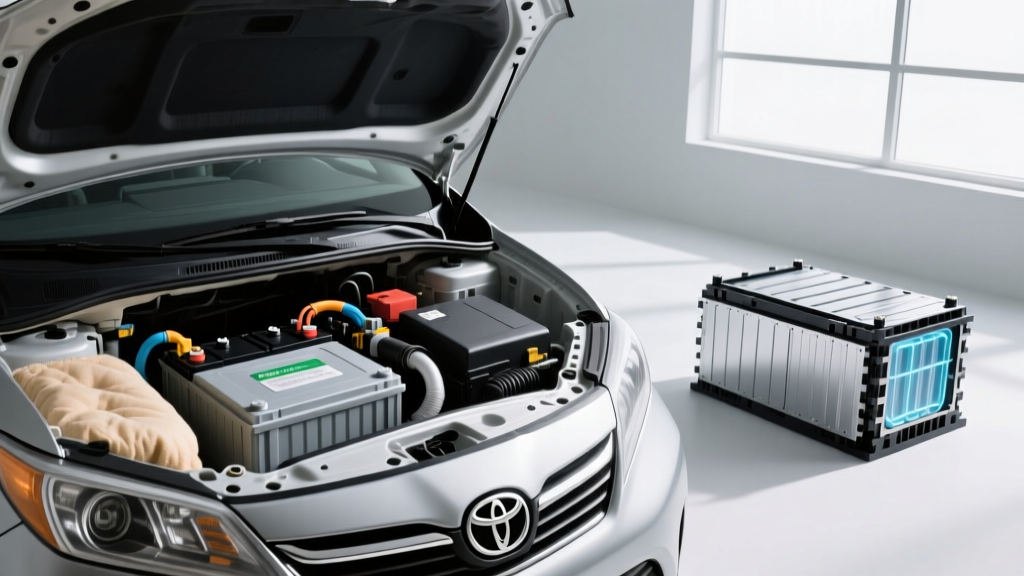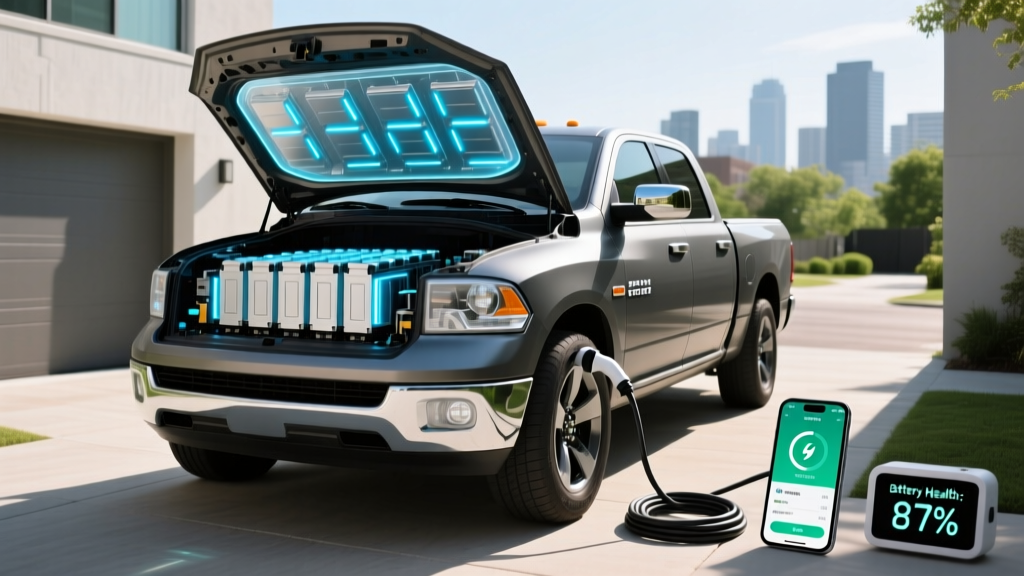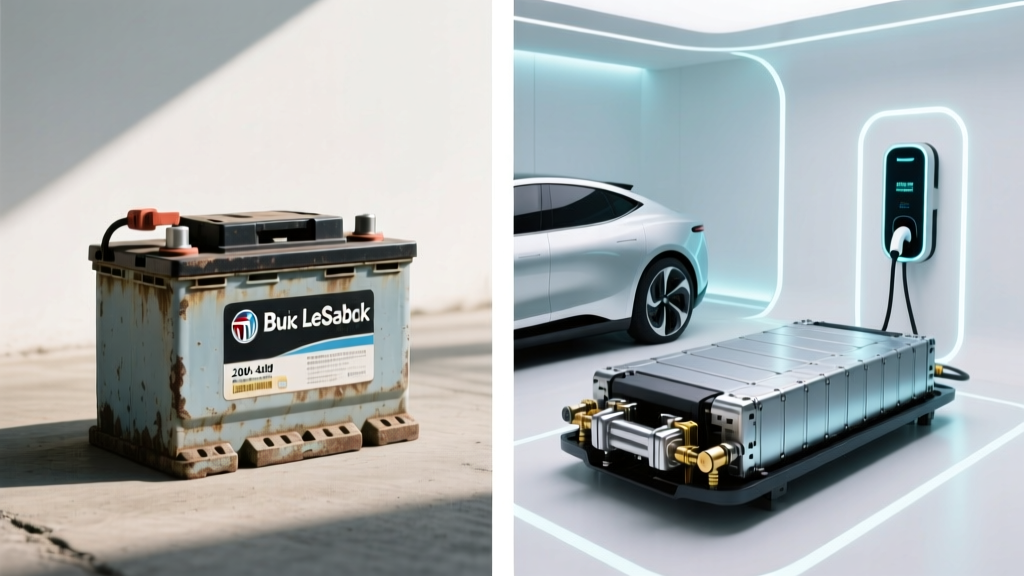
The high-voltage traction battery is the single most expensive component in any electric vehicle. It's also the most misunderstood. Buyers fixate on peak range and 0-60 times, but the metric that determines your EV's long-term value is how much of its original battery capacity for electric car use remains after five, eight, or fifteen years of driving.
This guide breaks down what actually happens inside your battery pack over time, the chemistry trade-offs between LFP and NMC/NCA cells, what warranties really cover, and what replacement costs look like in 2026 — backed by real degradation data rather than marketing claims.
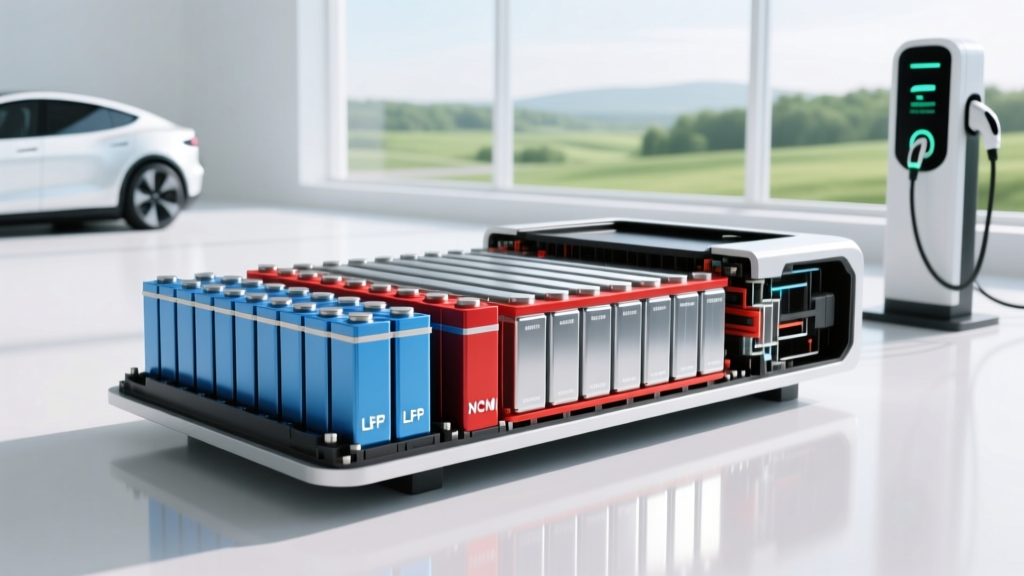
EV Battery Chemistry Explained: LFP vs NMC vs NCA
Not all lithium-ion batteries are built the same. The cathode chemistry determines energy density, cycle life, thermal stability, and cost. In 2026, two families dominate the US EV market:
- NMC (Nickel Manganese Cobalt) and NCA (Nickel Cobalt Aluminum) — used in most long-range and performance models (Tesla Model 3/Y Long Range, Hyundai Ioniq 5, Ford Mustang Mach-E Extended Range).
- LFP (Lithium Iron Phosphate) — used in standard-range and cost-optimized models (Tesla Model 3 RWD, base Chevrolet Equinox EV trims, many BYD models sold globally).
| Attribute | LFP (LiFePO₄) | NMC / NCA |
|---|---|---|
| Energy Density (cell-level) | ~160–180 Wh/kg | ~220–300 Wh/kg |
| Typical Cycle Life | 3,000–6,000+ cycles | 1,000–2,500 cycles |
| Cold-Weather Performance | Moderate (slower charge below 32°F) | Better low-temp conductivity |
| Thermal Stability | Excellent (higher runaway threshold) | Good (requires more BMS management) |
| Recommended Daily SoC | 100% OK (no calendar-degradation penalty) | 80% preferred for daily use |
| Cost per kWh (2026 pack-level) | ~$90–$110 | ~$120–$145 |
| Cobalt Content | None | Yes (NMC) / Minimal (NCA) |
| Best For | Daily commuters, fleet, cost-sensitive buyers | Long-range, performance, cold-climate drivers |
The practical takeaway: LFP sacrifices roughly 20-30% energy density for dramatically longer cycle life and the ability to charge to 100% daily without accelerated degradation. If you need 300+ miles of EPA range in a mid-size sedan, NMC/NCA is still the answer. If you drive 40 miles round-trip and want a battery that will likely outlast the car's body, LFP is the superior choice.
How Long Do EV Batteries Last? Real Degradation Data
The short answer: far longer than most buyers assume. Data aggregated from fleet operators, owner surveys, and manufacturer studies consistently shows that modern EV batteries lose roughly 5–10% of original capacity in the first 100,000 miles, after which the degradation curve flattens significantly.
Here's what real-world data points look like across popular models:
| Vehicle / Battery | Mileage | Avg. Capacity Retained | Source |
|---|---|---|---|
| Tesla Model 3/Y (NMC/NCA) | 100,000 mi | ~90–92% | Tesla Impact Report 2024 |
| Tesla Model 3 RWD (LFP) | 100,000 mi | ~94–96% | Fleet operator data (Recurrent) |
| Chevrolet Bolt EV (NMC, 60 kWh) | 80,000 mi | ~91–93% | Owner community aggregation |
| Hyundai Ioniq 5 (NMC, 77.4 kWh) | 60,000 mi | ~94–96% | Recurrent Auto fleet data |
| Nissan Leaf (early air-cooled, 24–40 kWh) | 80,000 mi | ~75–85% | EPA / owner reports |
The Nissan Leaf entry is instructive: early-generation Leaf packs lacked active liquid thermal management, leading to accelerated degradation in hot climates. Every mainstream EV sold in the US since roughly 2018 uses liquid-cooled battery packs, which is the single biggest factor in improved longevity.
Realistic lifespan expectation: A 2026 EV with a liquid-cooled 75 kWh NMC pack driven 12,000 miles/year will likely retain 85–90% capacity at year 10 (120,000 miles). That same pack at 200,000 miles typically sits at 78–85%. Most EV batteries will outlast the vehicle's body, suspension, and interior before they become functionally unusable.
What Does the EV Battery Warranty Actually Cover?
Federal law mandates a minimum battery warranty of 8 years / 100,000 miles for all EVs sold in the US. In California Air Resources Board (CARB) states — which include CA, CO, CT, ME, MD, MA, NJ, NY, OR, RI, VT, WA, and others adopting CARB rules — the mandate extends to 10 years / 150,000 miles.
However, warranty terms vary meaningfully between manufacturers:
| Manufacturer | Warranty Period | Capacity Threshold | Notes |
|---|---|---|---|
| Tesla | 8 yr / 120,000 mi (Model 3/Y LR) | 70% retention | Model S/X: 8 yr / 150,000 mi |
| Hyundai / Kia | 10 yr / 100,000 mi | 70% retention | Among the longest standard coverage |
| Ford | 8 yr / 100,000 mi | 70% retention | Covers battery and hybrid components |
| General Motors | 8 yr / 100,000 mi | 60% retention (Ultium) | Lower threshold — note the difference |
| BMW | 8 yr / 100,000 mi | 70% retention | Covers cell modules, not just full pack |
Critical detail: The capacity retention threshold matters enormously. A 70% threshold on a 75 kWh pack means the manufacturer will replace or repair the battery only if it drops below 52.5 kWh of usable capacity. GM's 60% threshold on a 85 kWh Ultium pack means the battery must fall below 51 kWh — a significantly lower bar. Read the fine print before purchase.
Warranties typically cover defects and excessive degradation but exclude damage from collisions, flooding, improper charging equipment, or modifications. They also do not cover normal gradual loss — only loss beyond the stated threshold.
EV Battery Replacement Cost: What You'll Actually Pay
Here's the number that generates the most anxiety — and the most misinformation. Let's ground it in 2026 data.
| Battery Pack Size | Typical Models | Replacement Cost Range (2026) |
|---|---|---|
| 40–55 kWh | Chevrolet Bolt EV, Nissan Ariya (std), base sedans | $5,500 – $9,000 |
| 60–75 kWh | Tesla Model 3/Y, Hyundai Ioniq 5, Ford Mach-E | $8,000 – $14,000 |
| 80–100 kWh | Tesla Model S/X, Rivian R1T/R1S, GMC Hummer EV | $12,000 – $22,000 |
| 100+ kWh | GMC Hummer EV (212 kWh), heavy-duty trucks | $18,000 – $30,000+ |
These figures include the battery pack and labor but can vary by $2,000–$4,000 depending on the service center, whether refurbished modules are used, and diagnostic complexity.
When is replacement actually needed? Based on current degradation curves, the vast majority of EV owners will never need a full battery replacement during their ownership. The typical scenario where replacement occurs:
- Manufacturing defect within the warranty period (covered by warranty)
- Physical damage from a collision or ground strike (covered by insurance)
- Very high-mileage vehicles (200,000+ miles) that are kept in service beyond 15 years
Pack-level battery prices have fallen from over $1,000/kWh in 2010 to roughly $100–$140/kWh in 2026, according to BloombergNEF tracking. This trend continues, meaning replacement costs for today's EVs will likely be lower in 2035 than they are now.
Factors That Accelerate (or Preserve) Battery Capacity
Not all miles are equal when it comes to battery wear. These are the variables you can control:
Charging Habits
- NMC/NCA daily limit: Set charge limit to 80% for daily driving. Reserve 100% for road trips.
- LFP daily limit: Charge to 100% regularly — Tesla and others recommend at least one full charge per week for LFP calibration.
- Avoid prolonged storage above 90% or below 15% SoC. If leaving the car for 2+ weeks, target 50–60%.
- DC fast charging: Occasional use (1–2x per week) shows minimal impact in current studies. Daily DCFC at 250+ kW does accelerate degradation slightly — roughly 1–3% additional loss over 100,000 miles compared to Level 2 charging exclusively, per Recurrent Auto research.
Temperature Management
- Precondition the battery before fast charging in cold weather (below 40°F). Most EVs do this automatically when a charger is set in navigation.
- Avoid repeated fast charging in extreme heat (above 95°F) without preconditioning — the thermal management system works harder and cells run hotter.
- Garage parking in extreme climates reduces calendar degradation by keeping the pack in a moderate temperature band.
Driving Patterns
- Aggressive acceleration and sustained high speeds (85+ mph) generate more heat in cells, contributing to faster degradation over time.
- Regenerative braking actually helps — it reduces mechanical brake wear and returns energy without the heat spikes of friction braking, though extreme regen settings in cold weather can stress cells.
How to Check Your EV's Battery State of Health (SoH)
State of Health (SoH) is the percentage of original capacity your battery currently holds. A new battery is 100% SoH; a battery that held 75 kWh when new but now holds 67.5 kWh is at 90% SoH.
Here's how to monitor it across major platforms:
- Tesla: The in-car Service menu (hold the model badge on the About screen) reveals a battery health test. Third-party apps like Tessie or TeslaFi log SoH estimates from charging data over time.
- Hyundai/Kia: The dealer can pull SoH via the KDS diagnostic tool. Some owners use OBD-II dongles with apps like Car Scanner to read BMS-reported SoH.
- Ford: FordPass shows estimated range trends. Dealer diagnostic tools provide precise SoH readings from the BMS.
- GM (Ultium): myChevrolet/myCadillac apps track range; dealer tools read module-level voltage and SoH data.
- Universal OBD-II: Devices like the OBDeleven or Carista adapters, paired with apps that read BMS PIDs, can pull SoH data on most EVs. Results vary in accuracy.
When to check: Run a SoH assessment when buying a used EV (critical for valuation), annually after the vehicle passes 50,000 miles, and whenever you notice a significant range drop that isn't explained by cold weather or tire pressure.
Emerging Battery Tech: Solid-State and Silicon Anodes
Next-generation battery technologies are in active development, but it's essential to separate lab results from production reality.
Silicon-dominant anodes: Companies like Sila Nanotechnologies and Group14 are replacing graphite anodes with silicon composites, boosting energy density by 20–40%. These are entering production in 2026–2027 in limited applications (the Mercedes G-Class EV uses a Sila-supplied anode). Expect broader adoption by 2028–2029.
Solid-state batteries: These replace the liquid electrolyte with a solid conductor, promising higher energy density, faster charging, and improved safety. Toyota has announced a solid-state EV targeting 2027–2028 with a projected 460-mile range and 10-minute 10–80% charge. Samsung SDI, QuantumScape, and Solid Power are also advancing prototypes. However, manufacturing scale-up remains the primary bottleneck. No solid-state EV is currently available for purchase in the US as of 2026. Realistic mass-market availability is 2029–2032.
For buyers today: current lithium-ion technology is mature, reliable, and cost-competitive. Waiting for solid-state means waiting at minimum 3–5 more years with no guarantee of affordable pricing at launch.
Frequently Asked Questions
How long do EV batteries last in years and miles?
Most modern liquid-cooled EV batteries retain 85–92% of original capacity at 100,000 miles (roughly 8–10 years of average driving). At 200,000 miles, expect 78–88% retention. Batteries rarely "die" — they gradually lose capacity, and most will outlast the vehicle's usable life as a daily driver.
How much does it cost to replace an EV battery?
In 2026, replacement costs range from roughly $5,500 for a small pack (40–55 kWh) to $22,000+ for large packs (100+ kWh). The most common mid-size packs (60–80 kWh) cost $8,000–$14,000 installed. Most owners never need a replacement — the battery is typically covered under the 8-year/100,000-mile federal warranty, and pack prices continue to decline year over year.
What does the EV battery warranty actually cover?
Federal law requires at minimum 8 years / 100,000 miles of battery coverage (10 years / 150,000 miles in CARB states). The warranty guarantees the battery will retain a specified percentage of original capacity — usually 70%, though GM sets a 60% threshold. It covers defects and excessive degradation but not physical damage, flooding, or third-party modifications.
How do I maximize my EV battery's health and lifespan?
For NMC/NCA batteries: limit daily charging to 80%, avoid leaving the car at 100% or below 10% for extended periods, precondition before DC fast charging in cold weather, and minimize daily 250+ kW fast charging. For LFP batteries: charge to 100% regularly (at least weekly) for BMS calibration. All chemistries benefit from garage parking in extreme climates and moderate driving habits.
LFP vs NMC — which battery chemistry is better?
Neither is universally better — they serve different needs. LFP offers longer cycle life (3,000–6,000 cycles vs. 1,000–2,500), no cobalt, lower cost, and the ability to charge to 100% daily, but with lower energy density (160–180 Wh/kg vs. 220–300 Wh/kg) and weaker cold-weather performance. NMC/NCA delivers more range per pound and better cold-weather charging but requires 80% daily limits for longevity. Choose LFP for commuting and cost savings; choose NMC for long-range trips and cold climates.
Does frequent DC fast charging damage my battery?
Current research from Recurrent Auto shows that occasional DC fast charging (1–3 times per week) has minimal measurable impact on battery health compared to Level 2 charging. The risk increases with daily high-power (250–350 kW) fast charging in extreme temperatures without preconditioning. For most owners who charge at home on Level 2 and use DCFC only for road trips, the effect on long-term degradation is negligible — roughly 1–2% additional loss over 100,000 miles.
Can I check my battery health myself without going to a dealer?
Yes, with limitations. Tesla owners can run an in-car battery health test or use apps like Tessie. For other brands, an OBD-II adapter paired with an EV-compatible app (Car Scanner, OBDeleven) can read BMS-reported SoH data. These readings are estimates — for a definitive assessment, a dealer diagnostic scan reads individual module voltages and internal resistance, which is more accurate.
Your EV's battery capacity is not a ticking time bomb — it's a slowly diminishing asset that, in most cases, will still hold 80%+ of its original energy when you trade the car in a decade from now. Understanding the chemistry under your floor, charging within the recommended SoC window, and knowing your warranty terms are the three highest-leverage things you can do as an owner. The data is clear: modern EV batteries are lasting longer than early skeptics predicted, and replacement costs are falling every year.