What Are Battery Additives and Why Do They Matter for EV Longevity?
When automakers and battery cell suppliers talk about extending the life of a lithium-ion pack, much of the engineering happens at the molecular level — in the form of battery additives. These are chemical compounds blended into the electrolyte or applied as coatings on the cathode and anode, typically making up less than 5% of the electrolyte by volume. Their job is outsized: they stabilize the solid electrolyte interphase (SEI) layer on the anode, suppress gas generation, reduce impedance growth, and slow the micro-cracking that degrades cathode particles over hundreds of charge cycles.
For EV buyers and owners, you will never choose your cell's additive package — that is locked in at the factory by the cell supplier (CATL, LG Energy Solution, Panasonic, BYD, SK On, Samsung SDI). But understanding that additive chemistry is a key differentiator between cells that degrade 8% in five years versus 15% helps explain why two batteries with the same nominal kWh and chemistry label (say, NMC 811) can age very differently in the real world.
Common electrolyte additives in 2026 production cells include vinylene carbonate (VC), fluoroethylene carbonate (FEC), lithium bis(oxalato)borate (LiBOB), and various proprietary phosphazene-based flame retardants. VC and FEC are the workhorses: they form a more robust SEI layer that resists cracking during the expansion and contraction of silicon-containing anodes. Cells with optimized additive packages routinely achieve 2,000+ full equivalent cycles to 80% capacity retention in lab testing — translating to well over 300,000 miles in typical driving before the pack hits the warranty threshold.
This guide breaks down the battery chemistry landscape, real-world degradation data, warranty protections, replacement economics, and the care habits that let your pack outlast the vehicle it powers.
LFP vs NMC vs NCA: Chemistry Trade-Offs Explained
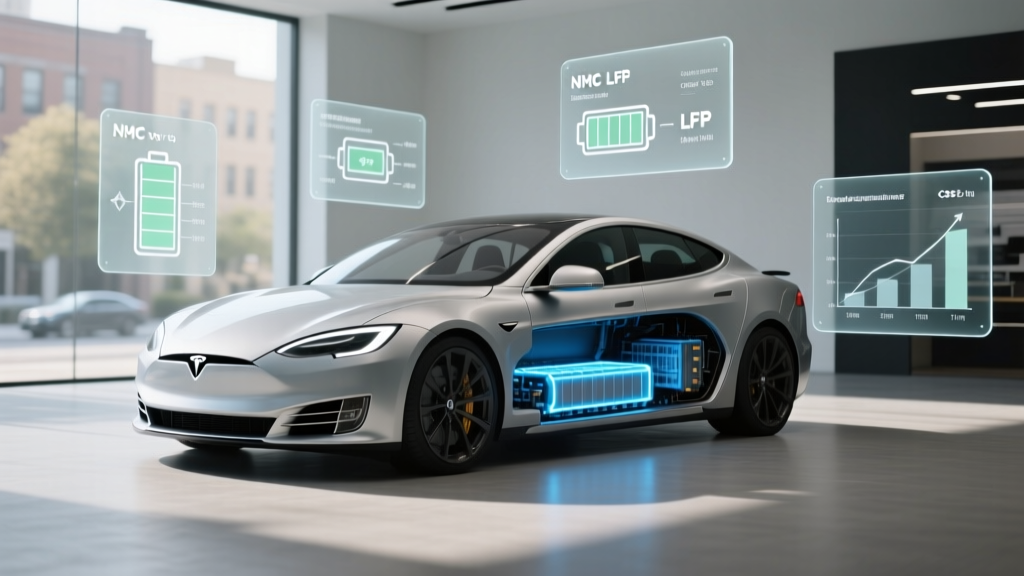
The two dominant cathode chemistries in 2026 EVs are lithium iron phosphate (LFP) and nickel-manganese-cobalt (NMC), with nickel-cobalt-aluminum (NCA) appearing in some Tesla and Panasonic cells. Each has distinct strengths shaped by its atomic structure — and additive packages are tuned differently for each.
| Attribute | LFP (LiFePO₄) | NMC 811 / NCA |
|---|---|---|
| Energy Density (cell-level) | 160–180 Wh/kg | 250–300 Wh/kg |
| Typical Cycle Life (to 80% SoH) | 3,000–5,000 cycles | 1,500–2,500 cycles |
| Cold-Weather Performance | Moderate — slower charge acceptance below 32°F | Better low-temp conductivity |
| Thermal Stability | Excellent — onset of thermal runaway ~518°F | Good — onset ~410°F (additive-dependent) |
| Cobalt/Nickel Content | None | High nickel, low cobalt |
| Cell Cost (2026 est.) | $70–85/kWh | $95–115/kWh |
| Typical Applications | Tesla Model 3/Y RWD, BYD, Ford Mustang Mach-E Select | Long-range AWD models, Hyundai Ioniq 5/6, Rivian |
| Recommended Charge Habit | 100% daily OK; periodic full charge calibrates BMS | 80% daily; 100% for trips only |
The trade-off is fundamentally energy density versus longevity and cost. LFP cells are heavier per kWh, which is why you rarely see LFP in a 100+ kWh pack — the weight penalty would cut into range and efficiency. But LFP's flat voltage curve and structural stability mean it degrades more slowly and tolerates daily 100% charges without the accelerated cathode wear that plagues NMC held at high state of charge.
NMC cells, enhanced with additive packages that include VC and proprietary cathode coatings, have closed the cycle-life gap considerably. Modern NMC 811 cells from top-tier suppliers now reach 2,000+ cycles to 80% SoH — enough for 300,000+ miles at average efficiency. The additive chemistry is doing heavy lifting here: without FEC and LiBOB stabilizing the SEI and reducing transition-metal dissolution from the cathode, those numbers would be significantly lower.
Real-World Degradation: What the Data Actually Shows
The fear that EV batteries need replacing at 100,000 miles is not supported by fleet data. Multiple large-scale studies and telematics datasets paint a consistent picture:
Typical Degradation Curve (Fleet Average Data, 2026)
- Year 1 / 15,000 mi: 2–4% capacity loss (initial SEI formation — steepest part of the curve)
- Year 3 / 45,000 mi: 5–8% total loss
- Year 5 / 75,000 mi: 7–12% total loss
- Year 8 / 120,000 mi: 10–17% total loss (warranty threshold is typically 70% retained capacity)
- Year 10 / 150,000 mi: 12–20% total loss for NMC; 8–14% for LFP
These figures align with data from Geotab's fleet battery health study, which tracked over 6,000 EVs and found an average annual degradation rate of roughly 1.8% per year across all chemistries, with significant variation based on climate and charging behavior.
The critical insight: degradation is not linear. The largest drop occurs in the first 12–18 months as the SEI layer matures. After that, capacity loss slows to roughly 1–2% per year under normal conditions. A 2026 Tesla Model 3 RWD with an LFP pack that starts at 272 miles EPA range will likely retain 240–250 miles of usable range at 100,000 miles — still very practical for daily driving.
Cold-climate owners see slightly accelerated degradation due to lithium plating risk during cold fast-charging, while hot-climate owners (consistently above 95°F ambient) see faster electrolyte decomposition. Both effects are mitigated by the vehicle's thermal management system — another reason liquid-cooled packs with active preconditioning outperform passively cooled designs.
Battery Warranty Terms: What Is Actually Covered
Federal law mandates a minimum 8-year/100,000-mile warranty on EV battery packs (10 years/150,000 miles in California and states that adopted CARB standards). Most automakers meet or exceed this baseline. Here is how the major warranties stack up:
| Automaker | Coverage Period | Capacity Retention Threshold | Notes |
|---|---|---|---|
| Tesla (Model 3/Y LFP) | 8 yr / 120,000 mi | 70% | Includes drive unit |
| Tesla (Model 3/Y LR/Perf NMC) | 8 yr / 120,000 mi | 70% | Long-range/AWD models |
| Hyundai / Kia | 10 yr / 100,000 mi | 70% | Among the longest coverage |
| Ford (Mustang Mach-E) | 8 yr / 100,000 mi | 70% | Covers battery + EV components |
| GM (Ultium platform) | 8 yr / 100,000 mi | 70% | Covers battery, motor, power electronics |
| Rivian | 8 yr / 175,000 mi | 70% | Higher mileage cap reflects truck use |
| BMW / Mercedes-Benz | 8 yr / 100,000 mi | 70% | Some offer buyback guarantees at threshold |
The 70% capacity retention threshold is standard across the industry. If your battery's usable capacity drops below 70% of its original kWh within the warranty period, the manufacturer must repair or replace it at no cost. In practice, warranty claims are rare — most packs retain well above 70% at the mileage and time limits, as the degradation data above shows.
Important caveat: warranties typically exclude damage from collisions, flooding, improper modifications, or use of non-approved charging equipment. They also do not cover normal gradual degradation above the 70% threshold. Read your specific warranty booklet — terms vary by model year.
Battery Replacement Cost: When and How Much
Full battery pack replacement is uncommon in the first 10–12 years of ownership, but it is important to understand the economics if it becomes necessary — whether from a manufacturing defect that falls outside warranty coverage, accident damage, or extreme end-of-life degradation on a vehicle you plan to keep past 200,000 miles.
| Vehicle / Pack Size | Battery Capacity | Replacement Cost (Parts + Labor, 2026 Est.) | Typical Need Timeline |
|---|---|---|---|
| Tesla Model 3 RWD (LFP) | 60 kWh | $8,000–$11,000 | 15+ years / 200,000+ mi |
| Hyundai Ioniq 5 (NMC) | 77.4 kWh | $12,000–$16,000 | 15+ years / 200,000+ mi |
| Ford F-150 Lightning (Extended) | 131 kWh | $18,000–$25,000 | 15+ years / 200,000+ mi |
| Chevrolet Silverado EV (Max) | 200 kWh | $25,000–$35,000 | 15+ years / 200,000+ mi |
| BMW iX xDrive50 | 111.5 kWh | $20,000–$28,000 | 15+ years / 200,000+ mi |
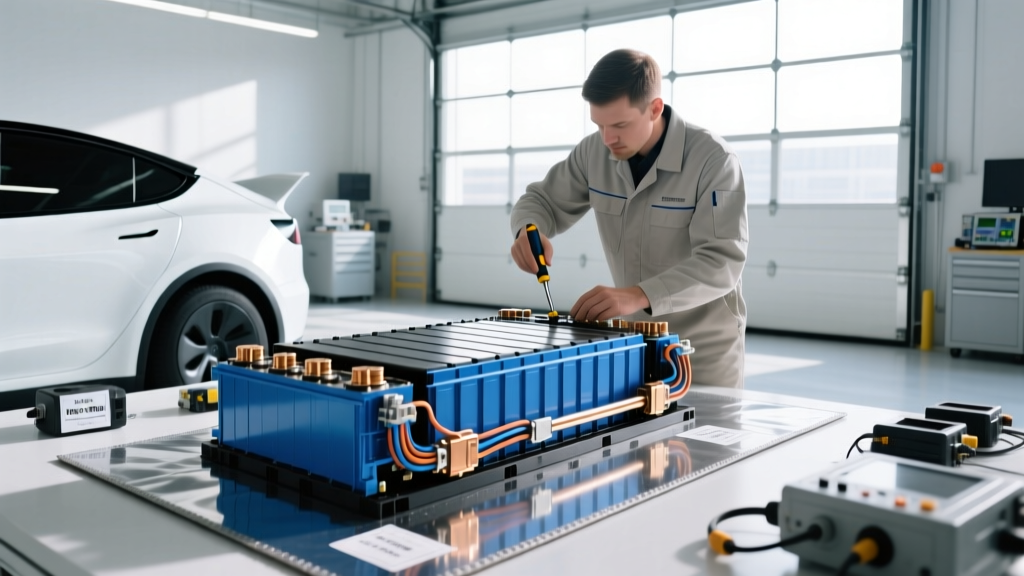
Cell-level pricing has fallen significantly — LFP cells are now in the $70–85/kWh range at the pack level — but labor, diagnostic, coolant system service, and BMS reprogramming add substantially to the total. Independent EV shops and third-party refurbishers are increasingly offering module-level replacements (swapping only the degraded modules rather than the entire pack) for $4,000–$8,000 on common platforms, which can extend a pack's life at a fraction of a full replacement.
For context, the average EV in 2026 is scrapped for reasons unrelated to the battery (body damage, electronics failure, owner upgrade) long before the pack reaches end-of-life. A study by Recurrent Auto found that fewer than 1.5% of EVs in their tracked dataset required battery replacement outside of recall campaigns.
Factors That Accelerate or Slow Battery Degradation
Your charging habits and operating environment have a measurable impact on how quickly your battery loses capacity. Here is what the data shows, ranked roughly by impact magnitude:
- State of charge extremes (high impact): Regularly holding an NMC battery at 100% SoC accelerates cathode oxidation and electrolyte decomposition. Daily charging to 80% and avoiding drops below 10% can add years of useful life. LFP is more tolerant of 100% SoC — follow your manufacturer's guidance.
- DC fast-charging frequency (moderate impact): Occasional road-trip fast charging is fine. Daily reliance on 150+ kW DC charging generates sustained high cell temperatures and promotes lithium plating on the anode, especially if the pack is cold. Studies show exclusive DC fast-charging can increase degradation rates by 30–50% versus Level 2 home charging over 100,000 miles.
- Extreme heat exposure (moderate impact): Sustained ambient temperatures above 95°F, especially combined with high SoC, accelerate electrolyte breakdown. Park in shade or garages when possible. The battery's thermal management system works harder in heat, consuming energy even when parked.
- Cold fast-charging without preconditioning (moderate impact): Charging a cold battery at high power causes lithium plating — metallic lithium deposits on the anode that permanently reduce capacity. Always use your vehicle's preconditioning feature (navigate to a charger, or manually enable it) to warm the pack before DC fast-charging in cold weather.
- Deep cycling (low impact): Regularly driving the battery down to 0% or near-zero stresses cells more than partial cycles. Keeping daily swings between 20–80% SoC is gentler than 0–100% swings, even if the total energy throughput is the same.
- Calendar aging (unavoidable): Even a parked EV battery degrades over time. High SoC + high temperature is the worst combination for calendar aging. If storing for weeks, aim for ~50% SoC in a cool environment.
The single most impactful habit: charge at home on Level 2 (7–11 kW) to 80% daily, and reserve DC fast charging for road trips. This approach minimizes thermal stress and avoids the high-voltage conditions that accelerate electrolyte decomposition — conditions that even the best additive packages cannot fully eliminate.
Monitoring Battery Health: How to Check State of Health (SoH)
State of Health (SoH) is expressed as a percentage of your battery's current maximum usable capacity relative to its original capacity when new. A 77.4 kWh pack at 90% SoH can store approximately 69.7 kWh. Here is how to monitor it:
Built-in vehicle displays: Some automakers (Hyundai, Kia, BMW, Mercedes) provide a battery health or SoH indicator in the infotainment system or companion app. Tesla does not display SoH directly, but you can estimate it by comparing your current maximum rated range at 100% charge to the EPA-rated range when new.
OBD-II diagnostic tools: Third-party tools like the OBDeleven adapter (for VW Group vehicles), Leaf Spy (for Nissan Leaf), or general-purpose EV diagnostic apps can read the BMS-reported SoH directly. These typically require a Bluetooth OBD-II dongle ($30–80) and a smartphone app.
Telematics services: Companies like Recurrent offer free battery health reports that connect to your vehicle's telematics data and provide SoH tracking, degradation curves, and range estimates over time. These services aggregate anonymized fleet data to benchmark your pack against similar vehicles.
Manual calculation: Charge to 100%, note the displayed range, and compare it to the original EPA range. If your Model 3 Long Range originally showed 341 miles at 100% and now shows 307 miles, your approximate SoH is 307/341 = 90%. This method is imprecise (displayed range varies with recent driving efficiency and temperature) but provides a reasonable ballpark.
Emerging Battery Technologies: What Is Coming and When
Several next-generation technologies aim to further reduce degradation, increase energy density, or eliminate liquid electrolyte entirely. None are in mass-production EVs available for purchase in 2026, but timelines are becoming clearer:
Silicon-dominant anodes: Replacing graphite with silicon can boost anode capacity by up to 10x on a weight basis, but silicon swells ~300% during lithiation, cracking the SEI layer. Additive chemistry (advanced FEC formulations and polymer binders) is key to making silicon anodes viable. Companies like Sila Nanotechnologies and Group14 have begun limited production for consumer electronics, with automotive-scale production expected in 2027–2029 models. Expect incremental silicon blending (10–20% of anode content) before full silicon-dominant anodes.
Semi-solid-state batteries: These replace part of the liquid electrolyte with a gel or ceramic separator, improving thermal stability and enabling lithium-metal anodes. NIO's 150 kWh semi-solid pack (supplied by WeLion) entered limited service in China in 2024, achieving over 620 miles of range in the ET7 sedan. Broader availability outside China is expected in 2027–2028 model years, initially in premium segments.
Full solid-state batteries: The long-promised technology that eliminates liquid electrolyte entirely, enabling lithium-metal anodes, faster charging, and improved safety. Toyota has announced a solid-state battery targeting 2027–2028 production, with claimed 750 km (WLTP) range and 10-minute 10–80% charging. Samsung SDI and QuantumScape are pursuing similar timelines. Realistic mass-market availability is 2029–2031 at the earliest, with initial cost premiums likely restricting adoption to luxury and performance models first.
Sodium-ion batteries: CATL has begun shipping sodium-ion cells in some Chinese-market EVs. Sodium-ion chemistry offers lower energy density than LFP but uses abundant, inexpensive materials and performs well in cold weather. It is positioned as a budget-tier option for city EVs and energy storage, not as a replacement for NMC in long-range vehicles. US-market availability is not yet announced.
Frequently Asked Questions
How long do EV batteries last in years and miles?
Most modern EV batteries are designed to retain above 70% of their original capacity for at least 8 years and 100,000–175,000 miles, depending on the manufacturer. Real-world fleet data shows typical degradation of 1.5–2% per year after the initial break-in period. Many packs reach 200,000+ miles before dropping to the 70% threshold. LFP chemistry generally outlasts NMC in cycle count, though NMC has closed the gap with improved additive packages and cell designs.
How much does it cost to replace an EV battery?
Full pack replacement ranges from approximately $8,000 for a 60 kWh LFP pack (e.g., Tesla Model 3 RWD) to $25,000–$35,000 for large truck packs (e.g., Chevrolet Silverado EV 200 kWh). Module-level repairs at independent shops can cost $4,000–$8,000. However, fewer than 2% of EVs require out-of-warranty battery replacement — most packs outlast the vehicle's useful life for other reasons.
What does the EV battery warranty actually cover?
Standard warranties cover battery capacity loss below 70% of original capacity within 8 years / 100,000 miles (10 yr / 150,000 mi in CARB states). Coverage includes cell replacement, module replacement, or full pack replacement at the manufacturer's discretion. Exclusions typically include collision damage, flooding, unauthorized modifications, and use of non-approved charging equipment. The warranty covers defects and abnormal degradation — not normal gradual loss above the 70% threshold.
How do I check and maximize my EV battery health?
Monitor SoH through your vehicle's built-in display (if available), an OBD-II diagnostic adapter with an EV app, or a telematics service like Recurrent. To maximize longevity: charge to 80% daily on Level 2, precondition before DC fast-charging in cold weather, avoid storing at 100% SoC in hot conditions, and minimize exclusive reliance on DC fast charging. LFP owners can charge to 100% daily per manufacturer guidance and should do so periodically to keep the BMS calibrated.
LFP vs NMC — which battery chemistry is better for me?
Choose LFP if you prioritize longevity, lower cost, and daily full-charge convenience, and if the vehicle's range meets your needs (LFP packs are typically smaller due to lower energy density). LFP is ideal for commuters who charge at home and want a pack that will likely outlast the car. Choose NMC if you need maximum range in a given pack size, better cold-weather fast-charging performance, or are buying a long-range AWD model where the extra energy density matters. Both chemistries in 2026 are well-supported by advanced additive packages that ensure multi-year durability.
Do battery additives mean I need to add anything to my EV battery?
No. Battery additives are chemical compounds incorporated into the electrolyte during cell manufacturing. They are sealed inside the cells and require no owner maintenance or supplementation. The term refers to the engineering choices your cell supplier made — not a consumer product. No aftermarket additive, conditioner, or "battery rejuvenator" sold online has any proven effect on a sealed lithium-ion EV battery pack.