What Actually Happens to an EV Battery at End of Life?
The short answer to "are EV batteries recyclable" is yes — and the infrastructure for doing so is scaling rapidly. Companies like Redwood Materials (founded by Tesla co-founder JB Straubel), Li-Cycle, and Cirba Solutions now recover 90–95% of critical minerals from spent lithium-ion packs, including lithium, cobalt, nickel, and copper. These recovered materials feed directly back into new battery production, closing the supply chain loop.
But recycling is only half the story. The more important question for buyers is: how long before a battery needs recycling? Most modern EV battery packs are outlasting the vehicles they power. Data from fleet operators, manufacturer warranty claims, and independent testing shows that the vast majority of EV batteries retain 70–90% of their original capacity after 150,000–200,000 miles. The battery isn't the ticking time bomb that early EV skeptics claimed.
This guide covers the full lifecycle: chemistry choices that affect longevity, real degradation data, warranty protections, replacement economics, and what recycling looks like in 2026.
LFP vs NMC vs NCA: Chemistry Determines Lifespan and Recyclability
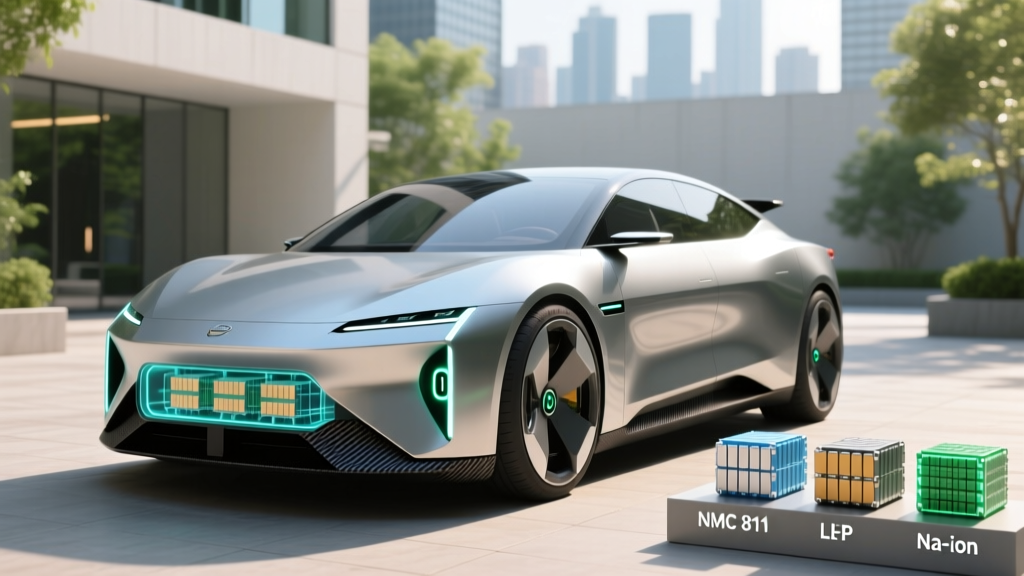
Not all EV batteries are built the same. The cathode chemistry inside the cells drives differences in energy density, cycle life, cold-weather performance, cost, and even how straightforwardly the pack can be recycled. The three dominant chemistries in the 2026 US market are LFP (lithium iron phosphate), NMC (nickel manganese cobalt), and NCA (nickel cobalt aluminum).
| Attribute | LFP (e.g., Tesla Model 3 RWD, Ford Mustang Mach-E Select) | NMC (e.g., Hyundai Ioniq 5, VW ID.4, Rivian R1T) | NCA (e.g., Tesla Model S/X, Lucid Air) |
|---|---|---|---|
| Energy Density | Lower (~160 Wh/kg cell-level) | Higher (~220–260 Wh/kg) | Highest (~260–300 Wh/kg) |
| Typical Cycle Life | 3,000–5,000+ cycles to 80% SoH | 1,000–2,000 cycles to 80% SoH | 800–1,500 cycles to 80% SoH |
| Cold-Weather Performance | Weaker — more range loss below 32°F | Better low-temp discharge | Good low-temp performance |
| Cost per kWh (pack-level) | ~$90–$110 | ~$120–$145 | ~$130–$160 |
| Cobalt Content | None | Some (reducing yearly) | Moderate |
| Recycling Value | Lower (no cobalt/nickel premium) | Higher — cobalt & nickel recover value | Higher — cobalt & nickel recover value |
| Max Charge to 100% Daily? | Yes — Tesla & Ford recommend periodic 100% charges | No — 80% daily, 100% for trips only | No — 80% daily, 100% for trips only |
What this means for you: If longevity and low cost matter most, and you don't need maximum range per charge, LFP is the durability champion. Its cycle life is 2–4× longer than NMC, meaning a 60 kWh LFP pack could theoretically endure 1.5 million miles of equivalent full cycles before hitting 80% capacity. NMC and NCA deliver more range in a smaller, lighter pack — the trade-off is a shorter cycle life that still comfortably exceeds typical ownership periods.
Real-World Degradation: How Long Do EV Batteries Actually Last?
Degradation isn't linear. Most EV batteries experience a steeper capacity drop in the first 1–2 years (roughly 2–5%), then settle into a slow, gradual decline of about 1–2% per year thereafter. Here's what the data shows across major platforms:
- Tesla Model 3/Y (NMC & LFP): Average ~12% degradation at 150,000 miles; ~88% State of Health (SoH) retained (Recurrent Auto)
- Chevrolet Bolt EV/EUV (NMC, 65 kWh): ~8–10% loss at 100,000 miles; most packs above 90% SoH at 5 years
- Hyundai Ioniq 5 (NMC, 77.4 kWh): Early fleet data shows ~5–7% loss at 60,000 miles; tracking well within warranty
- Nissan Leaf (LMO/NMC, 40 & 62 kWh): Older air-cooled packs showed 15–25% loss at 100K miles; liquid-cooled 2023+ models significantly improved
- Ford Mustang Mach-E (NMC, 70 & 91 kWh): ~9% average degradation at 100,000 miles per Recurrent data
- LFP packs broadly: Showing 3–5% degradation at 100,000 miles in fleet averages — substantially less than NMC equivalents
The 200,000-mile benchmark: Most data points suggest that a typical liquid-cooled NMC pack will retain roughly 75–85% of original capacity at 200,000 miles. LFP packs are tracking higher — often 85–92% at the same mileage. For context, the average US driver covers ~13,500 miles per year (per FHWA data), meaning 200,000 miles represents roughly 15 years of driving.
Battery Warranties: What's Covered and for How Long?
Federal law mandates a minimum 8-year/100,000-mile warranty on EV battery packs (10 years/150,000 miles in California and states adopting CARB standards). Most manufacturers exceed this baseline. The key metric is the capacity retention threshold — the SoH percentage below which the manufacturer will repair or replace the pack.
| Manufacturer | Warranty Term | Capacity Retention Threshold | Notes |
|---|---|---|---|
| Tesla (Model 3/Y RWD — LFP) | 8 yr / 120,000 mi | 70% | LFP packs covered same as NMC |
| Tesla (Model 3/Y LR, Model S/X) | 8 yr / 120,000–150,000 mi | 70% | Varies by model |
| Hyundai / Kia | 10 yr / 100,000 mi | 70% | Among the longest coverage terms |
| Ford (Mach-E, F-150 Lightning) | 8 yr / 100,000 mi | 70% | Components + capacity |
| General Motors (Ultium platform) | 8 yr / 100,000 mi | 70% | Includes battery management system |
| Volkswagen (ID.4) | 8 yr / 100,000 mi | 70% | Transferable to second owner |
| Rivian (R1T, R1S) | 8 yr / 175,000 mi | 70% | Higher mileage cap reflects adventure use |
| BMW (i4, iX) | 8 yr / 100,000 mi | 70% | Includes preconditioning system |
What the warranty actually covers: Defects in materials/workmanship AND capacity loss below the threshold. If your 77.4 kWh Ioniq 5 pack drops below ~54 kWh of usable capacity within the warranty window, Hyundai will repair or replace it. What it does not cover: damage from collisions, flooding, improper modifications, or using non-approved charging equipment.
Real-world warranty claims are rare. According to data from major OEMs and Recurrent Auto's fleet analysis, fewer than 2–3% of EV battery packs have required warranty replacement. The vast majority of packs are still functioning above threshold well beyond the warranty period.
EV Battery Replacement Cost: When and How Much?
If your battery degrades below the warranty threshold outside the coverage window — or if it's physically damaged — replacement is expensive but increasingly less so as pack prices fall and the refurbished market grows.
| Vehicle | Battery Size (kWh) | Chemistry | New Pack Cost (parts + labor) | Refurbished/Remanufactured |
|---|---|---|---|---|
| Chevrolet Bolt EV | 65 | NMC | $14,000–$16,000 | $9,000–$11,000 |
| Tesla Model 3 RWD | 60 | LFP | $12,000–$15,000 | $8,000–$10,000 |
| Tesla Model Y LR | 75 | NMC | $15,000–$18,000 | $10,000–$13,000 |
| Hyundai Ioniq 5 | 77.4 | NMC | $16,000–$20,000 | $11,000–$14,000 |
| Ford F-150 Lightning (extended) | 131 | NMC | $20,000–$25,000+ | $14,000–$18,000 |
| VW ID.4 | 82 | NMC | $17,000–$21,000 | $12,000–$15,000 |
| Lucid Air | 112 | NMC | $22,000–$28,000 | Limited availability |
When is replacement actually needed? Almost never during typical first-ownership periods. The cases where batteries are replaced tend to be: (1) physical damage from accidents or ground strikes, (2) manufacturing defects caught under warranty, or (3) high-mileage fleet vehicles past 250,000+ miles. For a personal-use vehicle driven 12,000–15,000 miles per year, the battery will almost certainly outlast the car's body, suspension, and interior.
The module-repair option: Many shops now replace individual modules rather than the entire pack. A pack with 12–16 modules might only need 1–2 swapped, bringing costs down to $2,000–$5,000. This is becoming the standard approach at EV-specialist repair facilities.
Factors That Accelerate (or Slow) Battery Degradation
Not all miles are equal when it comes to battery wear. The following factors have measurable, data-backed impacts on how quickly your pack loses capacity:
- Limit DC fast charging frequency. Occasional road-trip fast charging is fine. Daily reliance on 150+ kW DC charging accelerates degradation by ~1–2% extra over 100K miles vs. Level 2 home charging. Use Level 2 (7–11 kW) for daily needs.
- Avoid sustained 100% or 0% State of Charge. For NMC/NCA packs, keep daily SoC between 20–80%. Charge to 100% only when departing on a trip. LFP packs are the exception — manufacturers recommend periodic 100% charges for calibration.
- Precondition before fast charging. Most EVs do this automatically when you navigate to a charger. A cold battery charged at high power suffers lithium plating — permanent capacity loss. Preconditioning warms the pack to optimal temperature (~70–95°F cell temp).
- Park in shade or a garage when possible. Sustained high ambient temperatures (95°F+) accelerate calendar degradation. A garage-kept battery in Phoenix will outlast one parked on asphalt all summer.
- Don't leave the car at 100% SoC for days. If you charge to full, drive it within 24 hours. High SoH + high SoC + heat = accelerated chemical aging.
- Use regenerative braking in moderate settings. Max-regen in cold weather can stress a cold battery. Many EVs automatically limit regen when the pack is cold — let the system manage this.
Cold weather note: Batteries don't permanently degrade faster in cold weather — they temporarily lose range (15–30% in sub-freezing temps) due to increased internal resistance and cabin heating demand. Once the pack warms up, capacity returns. The permanent degradation risk is from charging a cold pack at high power, which preconditioning prevents.
How to Check Your EV Battery's State of Health (SoH)
State of Health (SoH) is the percentage of original capacity your battery can still hold. A new 77.4 kWh pack at 95% SoH holds ~73.5 kWh usable. Monitoring SoH helps you track degradation, plan for warranty claims, and assess value when buying or selling used.
Methods for checking SoH:
- In-car displays: Some EVs (Tesla via service mode, Hyundai/Kia via the infotainment diagnostics screen, Nissan Leaf via Leaf Spy OBD-II app) show SoH directly. Tesla's app also estimates range at 100% SoC, which you can compare to original EPA figures.
- OBD-II diagnostic tools: Devices like the OBDLink SX paired with apps such as EV Battery Health, Leaf Spy, or Scan My Tesla can read the BMS (Battery Management System) directly for precise SoH, cell voltage variance, and pack temperature data.
- Third-party services: Companies like Recurrent Auto offer free battery health reports by connecting to your vehicle's telematics data. These reports compare your pack's degradation against a fleet average for your model and year.
- Dealer diagnostic: Any authorized service center can pull a full battery health report. Request this during routine service visits — it's typically free and takes minutes.
What's a concerning SoH number? Below 90% within the first 3 years or 50,000 miles warrants attention and a dealer visit. Below 80% at any point within the warranty window should trigger a warranty claim. Remember: most packs are tracking at 85–92% SoH at 100,000 miles, so gradual decline in the low single digits per year is normal and not cause for alarm.
EV Battery Recycling in 2026: The Closed Loop Is Real
The recycling ecosystem has matured considerably since the early 2020s. Here's how it works today:
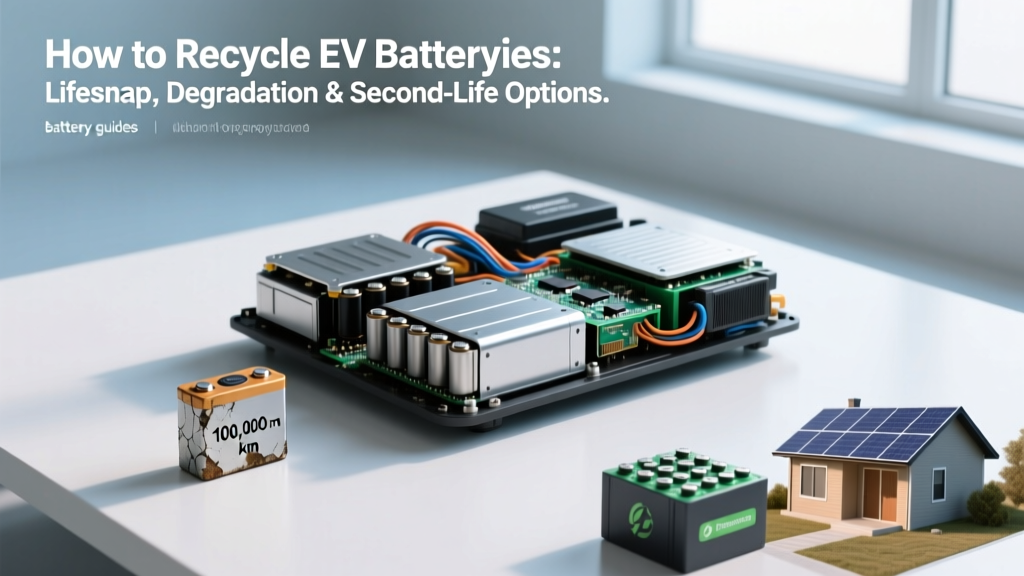
Step 1 — Second-life applications: Before recycling, packs with 70–80% SoH are often repurposed for stationary energy storage — grid-scale battery farms, commercial backup power, or residential solar storage. A degraded EV battery that can't deliver 300 kW of peak power for acceleration can still store and discharge solar energy over hours. Companies like B2U Storage Solutions and Betteries repurpose packs from Nissan, BMW, and others for this purpose, extending useful life by 7–12 additional years.
Step 2 — Hydrometallurgical recycling: When packs are fully spent, recyclers like Redwood Materials and Li-Cycle use hydrometallurgical processes (dissolving cell materials in aqueous solutions) to recover 95%+ of lithium, 95%+ of cobalt, 95%+ of nickel, and 98%+ of copper. These materials are refined to battery-grade purity and sold back to cathode manufacturers.
Step 3 — Direct recycling (emerging): A newer approach preserves the cathode crystal structure intact, avoiding the energy cost of breaking materials down to raw elements. Companies like Princeton NuEnergy and OnTo Technology are scaling direct recycling, which could reduce recycling costs by 30–40% and preserve more material value.
The economics: Recycling is increasingly profitable. A single 75 kWh NMC pack contains roughly $800–$1,200 worth of recoverable metals at 2026 commodity prices. LFP packs are less valuable to recyclers (no cobalt or nickel), which is one reason manufacturers are exploring direct recycling and second-life pathways for LFP specifically.
Landfill risk is minimal: The EPA classifies lithium-ion batteries as requiring special handling. No major EV battery pack is ending up in a landfill in 2026 — the economic value of the materials alone ensures they're collected and processed. State-level regulations in California, New York, and Washington now mandate producer responsibility for end-of-life battery collection.
What's Next: Solid-State, Silicon Anodes, and Beyond
Several next-generation battery technologies are in development. None are available in production vehicles as of 2026, but timelines are becoming clearer:
- Solid-state batteries: Replace the liquid electrolyte with a solid ceramic or polymer, enabling lithium-metal anodes for 30–50% more energy density and potentially faster charging. Toyota has announced a solid-state battery for a limited-production vehicle expected around 2027–2028. Samsung SDI and QuantumScape are targeting 2028–2030 for broader availability. Expect initial deployment in premium vehicles at significant cost premiums.
- Silicon-dominant anodes: Companies like Sila Nanotechnologies and Group14 are replacing graphite anodes with silicon-composite materials, boosting energy density 15–25% without changing cathode chemistry. Mercedes-Benz's next-gen EQ platform is expected to incorporate silicon-anode cells. This is closer to market than solid-state — likely appearing in 2027–2028 production models.
- Sodium-ion batteries: CATL and other Chinese manufacturers have begun producing sodium-ion cells for lower-cost, shorter-range EVs. These use no lithium, cobalt, or nickel, dramatically reducing material costs and supply chain risk. Range is lower (~150–200 miles in compact vehicles), but cost could drop below $60/kWh at the pack level. US availability is uncertain before 2028–2029.
These technologies will eventually make today's batteries look dated — but they also mean that current NMC and LFP packs will become candidates for recycling sooner if vehicles are retired early. The recycling infrastructure being built now is designed to handle multiple chemistries, including future solid-state and sodium-ion formats.
Frequently Asked Questions
How long do EV batteries last in years and miles?
Most modern liquid-cooled EV batteries retain 75–90% of their original capacity at 150,000–200,000 miles, which translates to 12–18 years for the average US driver. LFP packs are tracking even better, often above 85% SoH at 200,000 miles. Battery failure (complete, sudden loss) is extremely rare — degradation is gradual and predictable.
How much does an EV battery cost to replace?
Full pack replacement ranges from approximately $12,000 to $28,000 including labor, depending on battery size and vehicle model. However, module-level repairs (replacing 1–3 degraded modules instead of the whole pack) cost $2,000–$5,000. In practice, fewer than 3% of packs ever require replacement, and most are covered under the 8-year/100,000-mile minimum warranty.
What does the EV battery warranty actually cover?
Federal law requires at minimum 8 years/100,000 miles of coverage (10/150K in CARB states). The warranty covers defects and capacity loss below a threshold — typically 70% of original capacity. If your pack drops below that threshold within the warranty period, the manufacturer repairs or replaces it at no cost. Physical damage, flooding, and unauthorized modifications are excluded.
How do I check and maximize my EV battery health?
Check SoH via your car's built-in diagnostics, an OBD-II app like Scan My Tesla or Leaf Spy, or a free service like Recurrent Auto. To maximize life: use Level 2 home charging for daily needs, keep NMC/NCA packs between 20–80% SoC daily, precondition before DC fast charging, avoid leaving the car at 100% SoC for extended periods, and park in shade when possible in hot climates.
LFP vs NMC — which battery chemistry is better?
It depends on your priorities. LFP wins on longevity (3,000–5,000 cycle life vs. 1,000–2,000 for NMC), cost ($90–$110/kWh vs. $120–$145/kWh), and safety (no thermal runaway risk from cobalt). NMC wins on energy density (more range in a lighter, smaller pack) and cold-weather performance. If you drive under 250 miles daily and want maximum battery life, LFP is the stronger choice. If you need 300+ miles of range and drive in cold winters, NMC is the better fit.
Are EV batteries recyclable at scale?
Yes. In 2026, major recyclers like Redwood Materials, Li-Cycle, and Cirba Solutions recover 90–95% of critical minerals from spent packs. Before recycling, many packs serve a second life in stationary energy storage for an additional 7–12 years. The economic value of recovered materials ensures that EV batteries are collected and processed rather than landfilled. As the first large wave of EVs reaches end-of-life in the late 2020s and 2030s, recycling capacity is scaling to meet demand.