The Chemistry Inside Your EV: LFP vs NMC/NCA
Not all EV batteries are created equal. The two dominant lithium-ion chemistries in today's electric vehicles — LFP (lithium iron phosphate) and NMC/NCA (nickel manganese cobalt / nickel cobalt aluminum) — make fundamentally different trade-offs between energy density, longevity, cost, and cold-weather performance. Understanding which chemistry powers a specific model is one of the most consequential purchase decisions you'll make, because it affects everything from real-world range to how the battery ages over a decade of ownership.
kWh (kilowatt-hours) measures the energy capacity of the battery pack — think of it as the size of the fuel tank. kW (kilowatts) measures power — the rate at which energy flows in or out during charging or acceleration. These units are not interchangeable, and confusing them is the single most common mistake in EV discussions.
| Attribute | LFP (Lithium Iron Phosphate) | NMC/NCA (Nickel-based) |
|---|---|---|
| Energy Density | Lower (~160–180 Wh/kg cell-level) | Higher (~220–300 Wh/kg cell-level) |
| Cycle Life | 3,000–5,000+ cycles to 80% capacity | 1,000–2,000 cycles to 80% capacity |
| Cold-Weather Performance | Weaker — more range loss below 32°F | Better — retains more capacity in cold |
| Thermal Stability / Safety | Excellent — very resistant to thermal runaway | Good — requires more robust BMS management |
| Cost | Lower — no cobalt or nickel | Higher — commodity-priced metals |
| Optimal Daily SoC | Can charge to 100% regularly | Best kept at 80% for daily use |
| Common in (2026 models) | Tesla Model 3/Y RWD, Ford Mustang Mach-E Select (some trims), BYD models, Rivian Standard | Tesla Long Range, Hyundai Ioniq 5/6, Kia EV6/EV9, BMW iX, Lucid Air, Chevy Equinox EV |
Which is better? It depends on your use case. If you prioritize maximum range per charge and live in a cold climate, NMC/NCA gives you higher energy density and better winter performance. If you plan to keep the vehicle for 10+ years, charge at home daily, and want minimal degradation anxiety, LFP's superior cycle life and tolerance for 100% daily charging make it the more practical long-haul chemistry. Many buyers never check which chemistry their chosen trim uses — and it should be one of the first things you verify.
How Long Do EV Batteries Actually Last?
The short answer: far longer than most buyers assume. Based on fleet data from Tesla, real-world owner reports aggregated by sources like fueleconomy.gov, and long-term studies from Recurrent Auto, the typical EV battery loses roughly 5–10% of its original capacity in the first 100,000 miles, with degradation slowing significantly after the initial break-in period.
- Year 1 / ~15,000 miles: ~2–5% capacity loss (initial drop)
- Year 3 / ~45,000 miles: ~5–8% total loss
- Year 5 / ~75,000 miles: ~7–10% total loss
- Year 8 / ~120,000 miles: ~10–14% total loss
- Year 10 / ~150,000 miles: ~12–18% total loss
Sources: Recurrent Auto fleet data (2025 report), Tesla Impact Report, owner-reported datasets. LFP packs typically show slower degradation, often remaining above 90% capacity at 100,000 miles.
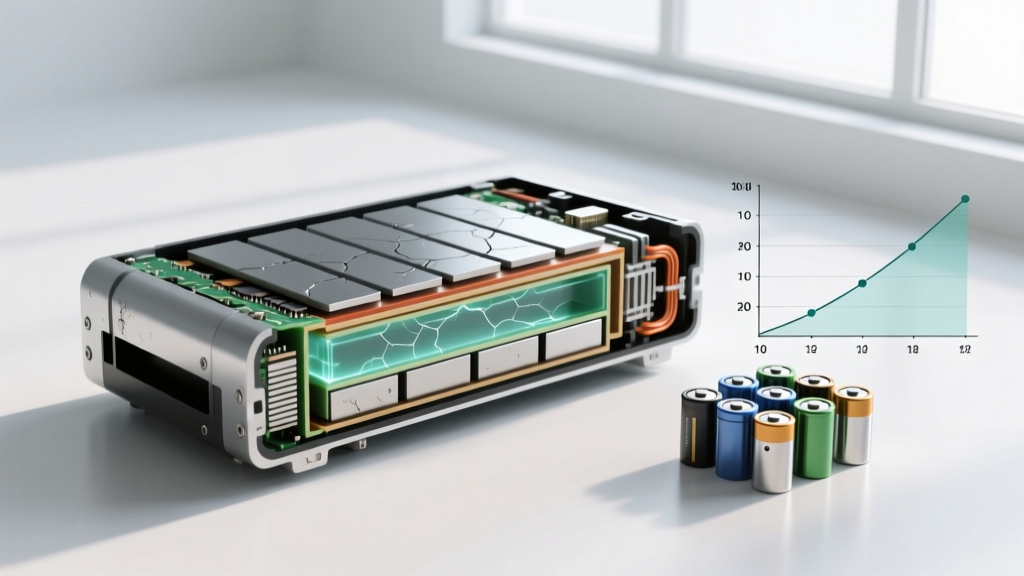
The key insight is that degradation is non-linear. Most lithium-ion packs experience a steeper drop in the first 20,000–30,000 miles as the solid electrolyte interface (SEI) layer forms on the anode, then settle into a very gradual decline. A 2025 Tesla Model 3 Long Range with an 82 kWh (usable) NMC pack rated at 341 miles EPA might realistically deliver 310–320 miles after three years and 45,000 miles of mixed use — still well within daily usability for the vast majority of drivers.
For LFP packs, the data is even more encouraging. Tesla's standard-range Model 3 RWD uses an LFP pack (approximately 60 kWh usable, EPA 272 miles) and fleet data suggests these packs commonly retain 92–95% capacity at 100,000 miles, thanks to the chemistry's inherent cycle-life advantage and the fact that owners can charge to 100% regularly without accelerating wear.
What the Battery Warranty Actually Covers
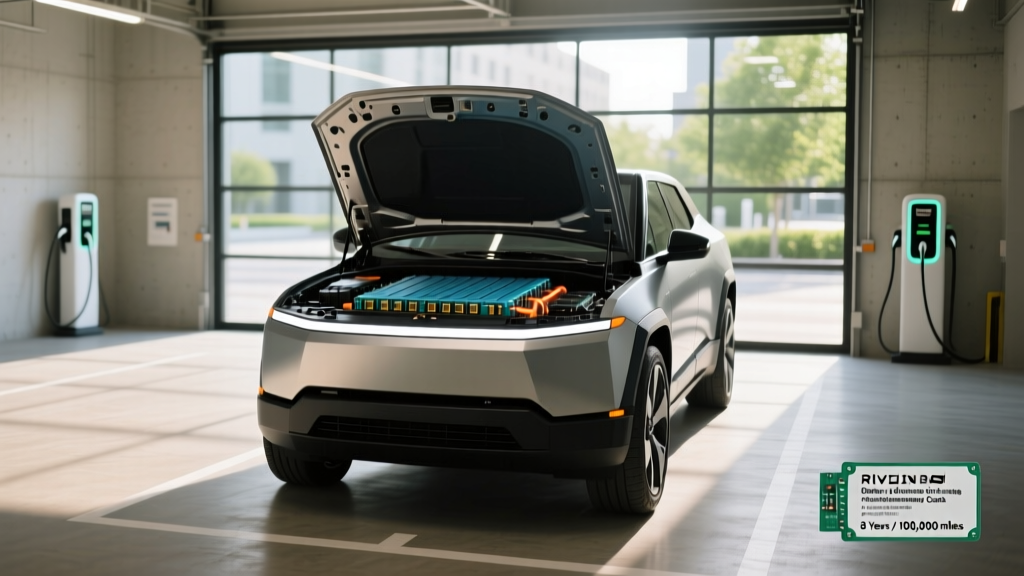
Federal law mandates that EV battery warranties cover a minimum of 8 years / 100,000 miles (10 years / 150,000 miles in California Air Resources Board states). But the details matter enormously, because the threshold at which a manufacturer will replace or repair the battery varies.
| Manufacturer | Warranty Term | Capacity Retention Threshold | Notes |
|---|---|---|---|
| Tesla (Model 3/Y) | 8 yr / 120,000 mi (LR) · 8 yr / 100,000 mi (RWD) | 70% | Covers defects and capacity below threshold |
| Hyundai / Kia | 10 yr / 100,000 mi | 70% | Among the longest terms in the industry |
| Ford (Mach-E, F-150 Lightning) | 8 yr / 100,000 mi | 70% | Covers battery components and capacity |
| General Motors (Ultium-based) | 8 yr / 100,000 mi | 70% | Applies to Equinox EV, Blazer EV, Silverado EV, Lyriq |
| BMW | 8 yr / 100,000 mi | 70% | Transferable to second owner |
| Rivian | 8 yr / 175,000 mi (Large) · 8 yr / 120,000 mi (Standard) | 70% | Higher mileage cap on Large pack |
The 70% capacity retention threshold is the industry standard. If your battery's usable capacity falls below 70% of its original kWh within the warranty period, the manufacturer is obligated to repair or replace it — typically by swapping in a refurbished pack that meets the threshold, not necessarily a brand-new one. In practice, very few owners hit this threshold within the warranty window. A battery would need to lose 30% of its capacity — an extreme scenario usually indicating a defect rather than normal aging.
EV Battery Replacement Cost: What You'd Actually Pay
This is the question that generates the most anxiety, and the most misinformation. Let's look at the actual numbers.
| Vehicle | Pack Size (usable kWh) | Chemistry | Estimated Out-of-Warranty Replacement |
|---|---|---|---|
| Tesla Model 3 RWD | ~60 kWh | LFP | $8,000–$12,000 |
| Tesla Model Y Long Range | ~75 kWh | NMC | $12,000–$16,000 |
| Hyundai Ioniq 5 | ~77.4 kWh | NMC | $14,000–$20,000 |
| Ford F-150 Lightning (Extended) | ~131 kWh | NMC | $20,000–$30,000 |
| Chevrolet Equinox EV | ~85 kWh | NMC (Ultium) | $14,000–$18,000 |
| BMW iX xDrive50 | ~105.2 kWh | NMC | $22,000–$30,000 |
These are full-pack replacement figures including parts and labor at OEM service centers. However, context is critical: the vast majority of EV batteries never need replacement during the vehicle's useful life. Data from Recurrent Auto shows that fewer than 1.5% of EVs have had their battery packs replaced under warranty through 2025, and most of those were early defect replacements, not end-of-life swaps.
Additionally, module-level repair is increasingly common. Rather than replacing the entire pack, many service centers can diagnose and swap individual modules (a pack may contain 4–24 modules) for $2,000–$5,000, addressing a single degraded or failed cell group without touching the rest of the pack.
Factors That Accelerate (or Slow) Battery Degradation
Battery chemistry sets the ceiling, but your habits determine how close you get to it. Here are the five factors with the largest measurable impact on long-term State of Health (SoH):
- Avoid sustained 100% SoC (NMC/NCA): Store and daily-charge at 70–80%. Charge to 100% only when you'll drive immediately. LFP packs are the exception — Tesla and BYD recommend periodic 100% charges for accurate BMS calibration.
- Minimize DC fast-charging frequency: Occasional road-trip fast charging is fine. Daily reliance on 150+ kW DC charging accelerates degradation by an estimated 1–3% additional loss over 100,000 miles vs. Level 2 home charging.
- Precondition before fast charging: Most modern EVs do this automatically when you navigate to a charger. A cold battery charged at high power suffers more lithium plating. Always use the car's built-in preconditioning.
- Avoid extreme SoC in extreme heat: A fully charged battery parked in 100°F+ ambient heat for extended periods accelerates calendar aging. If you must park in hot conditions, aim for ~50% SoC.
- Don't let it sit at 0%: Leaving a pack fully depleted for days or weeks risks the battery dropping below the minimum voltage threshold, which can cause permanent cell damage. If storing, leave it at ~50%.
- Use Level 2 home charging as your baseline: Charging at 7–11 kW (240V) generates far less thermal stress than 150+ kW DC. For daily use, a home Level 2 charger is both cheaper and gentler on the pack.
The single biggest misconception is that DC fast charging will "destroy" your battery. The reality is more nuanced. Tesla's own fleet data shows that Model S/X vehicles that fast-charged frequently lost approximately 2–3% more capacity over 150,000 miles compared to those that primarily used Level 2 — a meaningful but not catastrophic difference. Modern battery management systems (BMS) actively limit charge rates when the pack is too cold, too hot, or at high SoC, which is why the charge curve tapers significantly above 80% — the car is protecting itself.
How to Check Your Battery's State of Health
State of Health (SoH) is the percentage of original capacity your battery currently retains. A brand-new pack is at 100% SoH; one that has degraded to hold 90% of its original kWh is at 90% SoH. Monitoring this metric is essential for understanding your battery's aging trajectory and for resale value.
Here's how to check SoH on popular platforms:
- Tesla: The in-car service menu (hold the model name on the About screen for 3 seconds, enter "service") shows a battery health test. Third-party apps like Tessie or Stats can log SoH over time via the Tesla API.
- Hyundai/Kia: Use an OBD-II dongle with apps like Car Scanner or EVNotify to read BMS-reported SoH. The dealer can also pull this during service visits.
- Ford: The FordPass app provides battery health status, and the dealer can run a full diagnostic showing SoH percentage.
- General Motors (Ultium): The myChevrolet/myCadillac app includes a battery health indicator. OnStar diagnostics can provide a detailed SoH report.
- Universal method: An OBD-II reader paired with an EV-specific app (Car Scanner, ABRP's OBD integration, LeafSpy for Nissan) can read BMS data on most vehicles. Expect to pay $30–$60 for a compatible dongle.
For buyers evaluating a used EV, a SoH reading is the single most important data point — more valuable than mileage alone. A 60,000-mile EV at 94% SoH is a healthier buy than a 30,000-mile example at 88% SoH (which may indicate repeated fast-charging abuse or prolonged storage at extreme SoC).
What's Next: Solid-State and Silicon-Anode Batteries
Next-generation battery technologies are real, but timelines matter. Here's where things stand as of 2026:
Solid-state batteries replace the liquid electrolyte in current lithium-ion cells with a solid material (ceramic, sulfide, or polymer), promising higher energy density (potentially 400–500 Wh/kg at the cell level), faster charging, and improved safety. Toyota has announced a solid-state battery targeting 2027–2028 production in limited volumes, initially in hybrid applications. Samsung SDI and QuantumScape are also pursuing solid-state technology with pilot production lines running, but no mass-market EV currently on sale uses a solid-state pack. Realistic volume availability for consumer EVs is 2028–2030 at the earliest, and likely in premium models first at significant cost.
Silicon-anode batteries are closer to market. Companies like Sila Nanotechnologies and Group14 Technologies are supplying silicon-dominant anode materials that boost energy density by 20–40% compared to graphite anodes. Mercedes-Benz's next-generation G-Class EV (announced for 2028) is expected to feature silicon-anode cells from Sila. These batteries are entering low-volume production now but won't be mainstream until 2027–2029.
Sodium-ion batteries are an emerging low-cost alternative for budget EVs, using abundant sodium instead of lithium. CATL and BYD are producing sodium-ion cells for Chinese-market vehicles. These offer lower energy density (~140 Wh/kg) but dramatically lower cost and no reliance on lithium, cobalt, or nickel. Expect them in entry-level EVs in the US market by 2028–2030, potentially in vehicles targeting the sub-$30,000 segment.
The practical takeaway: today's lithium-ion batteries — both LFP and NMC — are mature, well-understood technologies with proven lifespans. Waiting for solid-state is not a rational reason to delay an EV purchase, as the timeline to affordable, high-volume production remains years away.
Frequently Asked Questions
How long do EV batteries last in years and miles?
Most EV batteries are designed to last the life of the vehicle. Fleet data shows typical NMC packs retain 85–92% capacity at 150,000 miles, while LFP packs often retain 90–95% at the same mileage. In practical terms, that means a usable lifespan of 15–20 years for most owners before capacity loss becomes a significant inconvenience. The federal warranty mandate of 8 years / 100,000 miles sets the floor, not the ceiling.
How much does it cost to replace an EV battery?
Full pack replacement ranges from approximately $8,000 for a smaller LFP pack (Tesla Model 3 RWD) to $30,000 for a large NMC pack (F-150 Lightning Extended Range). However, fewer than 1.5% of EVs have required battery replacement, and module-level repairs can cost $2,000–$5,000 for localized issues. Battery prices continue to decline — pack-level costs fell below $130/kWh in 2025 according to BloombergNEF — meaning replacement costs will be lower in the future than they are today.
What does the EV battery warranty cover?
EV battery warranties cover manufacturing defects and capacity loss below a specified threshold — typically 70% of original capacity — within the warranty period (8 years / 100,000 miles minimum, 10 years / 100,000 miles for Hyundai/Kia, 8 years / 175,000 miles for Rivian's Large pack). The warranty does not cover damage from accidents, modifications, or neglect (such as leaving the vehicle at 0% SoC for extended periods). See IRS §30D guidelines for how battery sourcing requirements affect federal tax credit eligibility on new purchases.
LFP vs NMC — which battery chemistry should I choose?
Choose LFP if: you want maximum long-term durability, you charge primarily at home, you prefer the simplicity of charging to 100% daily, you live in a moderate climate, and you plan to keep the vehicle 8+ years. Choose NMC/NCA if: you need the longest possible range per charge, you frequently drive in cold weather, you take regular road trips and want faster DC charging speeds, or you need maximum performance. Neither chemistry is universally "better" — the right choice depends on your driving patterns, climate, and ownership timeline.
Does fast charging damage the battery?
Frequent DC fast charging (150+ kW) causes slightly more degradation than Level 2 charging — approximately 2–3% additional capacity loss over 100,000 miles based on fleet data. This is a modest difference, not a dealbreaker. Modern BMS systems actively protect the pack by throttling charge speed when conditions aren't ideal. The bigger concern is fast-charging a cold battery without preconditioning, which can cause lithium plating. Always let the car precondition before a DC session.
How do I check my EV battery health before buying used?
Use an OBD-II reader with an EV-compatible app (Car Scanner, Tessie for Tesla, LeafSpy for Nissan) to pull the BMS-reported State of Health (SoH) percentage. Anything above 90% SoH is excellent for a vehicle with under 80,000 miles. You can also compare the car's current estimated full-charge range to its original EPA rating — a significant gap (more than 10–12%) warrants a deeper diagnostic. Request a battery health report from the dealer as part of any pre-purchase inspection.