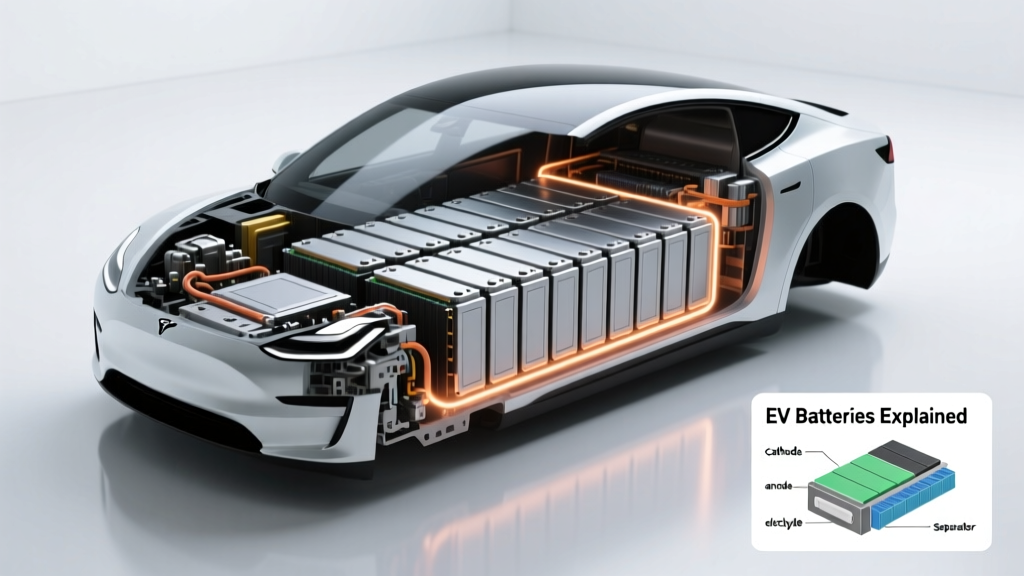
The high-voltage traction battery is the single most expensive component in any electric vehicle. It's also the most misunderstood. Shoppers fixate on range and charging speed, but the battery pack's chemistry, degradation trajectory, and eventual replacement cost determine whether an EV remains economical over a decade of ownership.
This guide breaks down what actually happens inside modern e batteries — from the lithium iron phosphate (LFP) packs in the Tesla Model 3 Standard Range to the nickel manganese cobalt (NMC) cells in long-range SUVs — using real-world degradation data, current warranty terms, and replacement pricing from manufacturers and independent testing labs.
LFP vs NMC vs NCA: Which Battery Chemistry Powers Your EV?
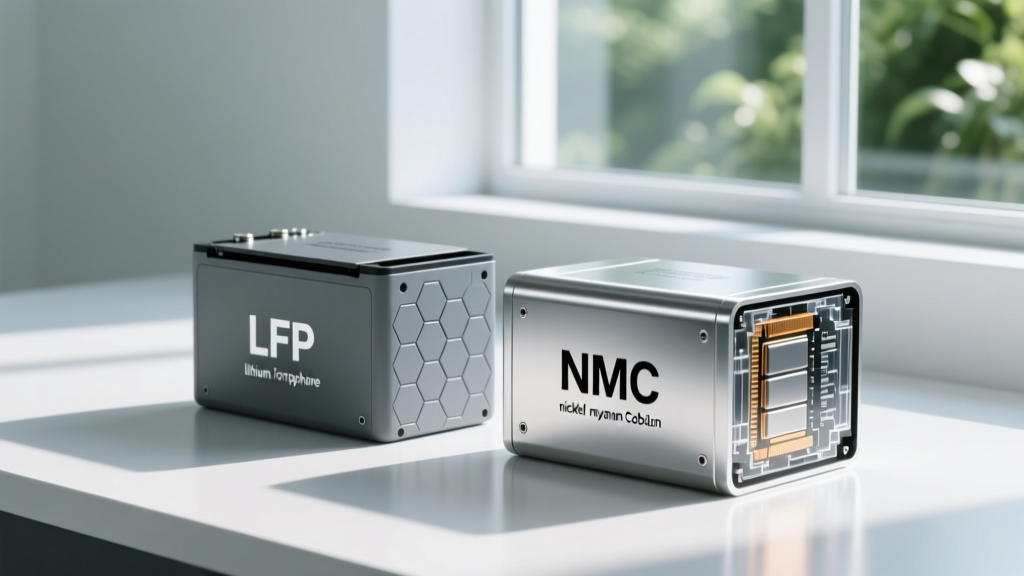
Not all EV batteries are built from the same materials. The cathode chemistry determines energy density, longevity, cold-weather behavior, and cost. In 2026, three chemistries dominate the US market:
- LFP (Lithium Iron Phosphate): Used in Tesla Model 3/Y Standard Range, Ford Mustang Mach-E Select (2025+), and most BYD models. Lower energy density but exceptional cycle life and thermal stability.
- NMC (Nickel Manganese Cobalt): Found in Hyundai Ioniq 5/6, Kia EV6/EV9, Ford F-150 Lightning Extended Range, Rivian R1T/R1S, and most long-range models. Higher energy density, more sensitive to high SoC storage.
- NCA (Nickel Cobalt Aluminum): Primarily Tesla Long Range and Performance variants. Very high energy density, similar care requirements to NMC.
| Attribute | LFP | NMC | NCA |
|---|---|---|---|
| Energy Density (Wh/kg, cell-level) | 160–200 | 220–300 | 250–300 |
| Typical Cycle Life (to 80% SoH) | 3,000–5,000+ | 1,000–2,500 | 1,000–2,000 |
| Cold Performance (range loss at 20°F) | Higher loss (~35–40%) | Moderate loss (~25–30%) | Moderate loss (~25–30%) |
| Recommended Daily Charge Limit | 100% (can charge fully daily) | 80% (for daily use) | 80% (for daily use) |
| Thermal Runaway Risk | Very low | Low (with BMS management) | Low (with BMS management) |
| Cost per kWh (pack-level, 2026 est.) | ~$90–$110 | ~$120–$150 | ~$120–$150 |
| Cobalt Content | None | Yes (supply-chain concern) | Yes (lower than NMC) |
The practical takeaway: If you can charge at home daily and don't need maximum range, LFP is the longevity champion — you can charge to 100% every day without accelerating degradation. If you need 300+ miles of EPA range and regularly take road trips, NMC/NCA gives you the energy density to do it, but you'll want to set your charge limit to 80% for daily driving and only charge to 100% before long trips.
How Long Do EV Batteries Actually Last?
The short answer: far longer than most buyers fear. Data aggregated from fleets, owner reports, and testing organizations consistently shows that modern e batteries retain 85–95% of their original capacity after 100,000 miles. Complete failure before 200,000 miles is rare in liquid-cooled packs.
Here's what the data shows across major platforms:
Real-World Degradation Data Points
- Tesla Model 3/Y (NMC/NCA, 2018–2023): Average ~12% degradation at 100,000 miles, per Tesla's 2023 Impact Report and independent data from Recurrent Auto. Degradation curve flattens significantly after the initial 10–15% loss in the first 30,000 miles.
- Tesla Model 3 Standard Range (LFP, 2021+): Early fleet data suggests <8% degradation at 80,000 miles, consistent with LFP's superior cycle life.
- Nissan LEAF (passive air-cooled, 2011–2017): Notorious for 20–30%+ degradation by 80,000 miles due to lack of active thermal management. This is the cautionary tale that drove the industry toward liquid cooling.
- Hyundai Ioniq 5 / Kia EV6 (NMC, liquid-cooled): Owner-reported data via fueleconomy.gov and forums shows ~5–8% loss at 50,000 miles — among the best in the NMC category thanks to robust thermal management and a heat pump.
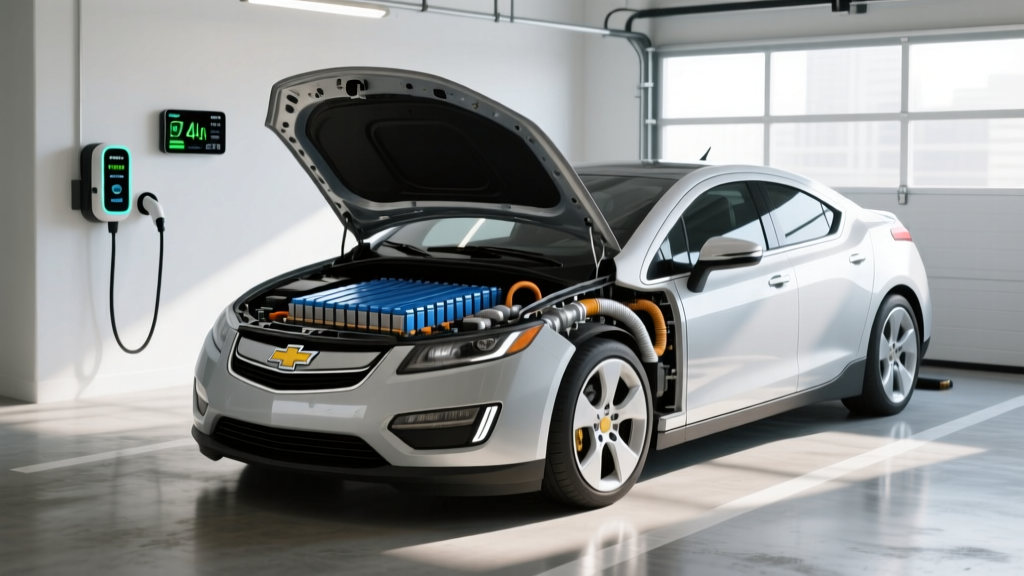
- Chevrolet Bolt EV/EUV (NMC, liquid-cooled): Post-recall replacement packs (2022+) show minimal degradation. Pre-recall packs varied, but most retained 88–92% at 60,000 miles.
The pattern is clear: initial degradation (the "break-in" loss) accounts for roughly 5–10% in the first year or 20,000 miles. After that, the curve flattens to roughly 1–2% per year under normal use. At this rate, reaching the warranty threshold of 70% capacity would require 200,000–300,000+ miles for most liquid-cooled packs.
What Does the EV Battery Warranty Actually Cover?
Federal law mandates a minimum 8-year / 100,000-mile warranty on EV battery packs for emissions-related compliance, and most manufacturers exceed this baseline. Here's how the major warranties compare:
| Manufacturer | Duration | Mileage | Capacity Retention Threshold | Notes |
|---|---|---|---|---|
| Tesla (Model 3/Y RWD — LFP) | 8 years | 100,000 mi | 70% | Covers defects + degradation below threshold |
| Tesla (Model 3/Y LR/Perf — NCA) | 8 years | 120,000 mi | 70% | Higher mileage cap for larger packs |
| Hyundai / Kia | 10 years | 100,000 mi | 70% | Among the longest duration in the industry |
| Ford (Mach-E, F-150 Lightning) | 8 years | 100,000 mi | 70% | Covers components + capacity loss |
| General Motors (Ultium platform) | 8 years | 100,000 mi | 70% | Applies to Equinox EV, Blazer EV, Silverado EV |
| Rivian | 8 years | 175,000 mi | 70% | Highest mileage cap — reflects truck/adventure use case |
| BMW (i4, iX, i7) | 8 years | 100,000 mi | 70% | Standard across BMW EV lineup |
Critical nuance: The 70% threshold means the manufacturer only replaces or repairs the battery if its usable capacity drops below 70% of the original nameplate kWh within the warranty window. Gradual degradation from 100% to 72% is considered normal wear and is not covered. A battery at 71% capacity is still functional — it simply offers reduced range. Also, warranties typically do not cover damage from accidents, flooding, or improper aftermarket modifications.
How Much Does an EV Battery Replacement Cost?
This is the question that generates the most anxiety — and the most misinformation. Yes, a full battery replacement is expensive. But context matters enormously.
| Vehicle / Platform | Battery Size (kWh usable) | Chemistry | Estimated Replacement Cost (parts + labor) | Notes |
|---|---|---|---|---|
| Tesla Model 3 Standard Range | ~57 kWh | LFP | $8,000–$12,000 | Cost declining rapidly; LFP cells cheaper |
| Tesla Model Y Long Range | ~75 kWh | NCA | $12,000–$16,000 | Structural pack complicates labor |
| Hyundai Ioniq 5 | ~72.6 kWh | NMC | $10,000–$15,000 | Modular pack allows partial module replacement |
| Ford F-150 Lightning Extended Range | ~131 kWh | NMC | $18,000–$25,000 | Largest consumer pack; highest replacement cost |
| Chevrolet Equinox EV | ~85 kWh | NMC (Ultium) | $12,000–$17,000 | Ultium modular design may reduce partial replacement cost |
| Rivian R1T (Large Pack) | ~128 kWh | NMC | $18,000–$22,000 | Complex pack architecture |
When is replacement actually needed? Almost never during the warranty period for liquid-cooled packs. Most EV batteries outlive the vehicle's economic life. According to data from Recurrent Auto, fewer than 2% of EVs in their dataset of 15,000+ vehicles required battery replacement under warranty. The vehicles most likely to need out-of-warranty replacement are early-generation models (2011–2016 LEAF, early Fiat 500e) with passive thermal management — not current-production vehicles.
Also worth noting: pack-level costs have fallen from roughly $1,000/kWh in 2010 to approximately $110–$140/kWh in 2026 (per BloombergNEF data). Module-level repairs — replacing only the degraded modules rather than the entire pack — are increasingly viable on platforms like the Hyundai E-GMP and GM Ultium, reducing out-of-pocket costs to $3,000–$8,000.
What Kills EV Batteries? Five Degradation Accelerators
Calendar aging (time) and cycle aging (charge-discharge cycles) are unavoidable. But five factors can meaningfully accelerate degradation:
Battery Care Checklist: Maximize Longevity
- 1. Avoid sustained high State of Charge (SoC) on NMC/NCA. Storing an NMC battery at 100% for days or weeks accelerates cathode degradation. Set your daily charge limit to 80% and only charge to 100% when you'll drive immediately. LFP owners can ignore this — charge to 100% daily, as recommended by Tesla.
- 2. Minimize DC fast charging when Level 2 is available. DC fast charging (50–350 kW) generates significant heat. Occasional road-trip fast charging is fine — modern battery management systems (BMS) precondition and limit charge rates to protect cells. But daily fast charging as your primary routine will accelerate degradation compared to Level 2 home charging (7–11.5 kW). Data from Recurrent Auto shows vehicles that fast-charge more than 90% of the time show ~1–2% additional degradation over 100,000 miles compared to primarily L2-charged vehicles.
- 3. Avoid extreme heat exposure. Battery degradation accelerates above 95°F (35°C) ambient, particularly if the vehicle is parked at high SoC. If you live in Phoenix, Las Vegas, or similar climates, park in shade or a garage when possible, and avoid leaving the car at 100% SoC in summer heat. Liquid-cooled packs handle this far better than passively cooled ones.
- 4. Don't let the battery sit at 0% SoC. Deep discharge below the BMS buffer (the car's hidden reserve below "0% displayed") can cause copper dissolution in the anode, leading to permanent capacity loss. If storing the vehicle for weeks, set SoC to 40–60%.
- 5. Use preconditioning before fast charging. Most modern EVs automatically precondition the battery when you navigate to a DC fast charger. This warms (or cools) the pack to the optimal temperature window (roughly 77–95°F / 25–35°C) for fast charging, reducing stress and improving charge speed. If your EV has manual preconditioning, use it.
How to Check Your EV Battery's State of Health (SoH)
State of Health (SoH) is the percentage of original capacity your battery retains. A new battery is 100% SoH; one that has degraded to hold only 85% of its original kWh is at 85% SoH. Monitoring SoH helps you track degradation, verify warranty eligibility, and assess a used EV's value.
Here's how to check SoH across major platforms:
- Tesla: The in-car display does not show SoH directly. However, you can estimate it by comparing the displayed range at 100% charge to the original EPA rating. Third-party apps like TeslaFi and Tessie log detailed energy data and calculate SoH. Tesla service centers can also run a battery health diagnostic on request.
- Hyundai / Kia: The infotainment system includes an EV battery health readout under the EV menu (varies by model year). Some models display SoH as a percentage; others show it in the dealer diagnostic tool only.
- Ford: The FordPass app provides a battery health indicator. For a precise SoH percentage, a dealer diagnostic scan is required.
- General Motors (Ultium): The myChevrolet/myCadillac app shows estimated battery health. OnStar diagnostics can provide a more detailed report.
- OBD-II Dongles (universal): Devices like the OBDLink MX+ paired with apps such as LeafSpy (for Nissan), ABRP, or Car Scanner can read BMS-reported SoH data on most EVs. This is the most accessible method for used-EV buyers.
For used-EV buyers: Always request a battery health report before purchasing. A reputable dealer should be able to pull a BMS diagnostic. If buying privately, an OBD-II scan or a pre-purchase inspection at a brand-certified service center is strongly recommended. Battery SoH is the single most important data point for a used EV's remaining value and usability.
What's Next? Solid-State and Silicon-Anode Batteries
Next-generation battery technologies promise step-change improvements in energy density, charge speed, and safety. But timelines matter — and hype has consistently outpaced reality.
- Solid-state batteries: Replace the liquid electrolyte with a solid ceramic, polymer, or sulfide material. Potential benefits include 40–50% higher energy density, faster charging, and near-zero fire risk. Toyota, Nissan, and Samsung SDI have announced production timelines targeting 2027–2029 for initial limited deployment. Realistically, expect solid-state batteries to appear in low-volume premium models first (late 2020s), with mainstream cost-parity likely not until the early 2030s. Toyota has confirmed a 2027–2028 target for a solid-state EV with ~745 km (463 mi) range, but this is announced/preliminary and subject to production delays.
- Silicon-anode batteries: Replace or supplement the graphite anode with silicon, which can store roughly 10x more lithium ions per unit mass. Companies like Sila Nanotechnologies and Group14 are in early commercial production (Group14's silicon anode material is used in the Mercedes-Benz G580 EQG's battery). Expect gradual adoption through the late 2020s, initially boosting energy density by 10–20% rather than a dramatic leap.
- Sodium-ion batteries: Use abundant sodium instead of lithium, drastically reducing material costs. CATL has begun mass production in China for lower-range city EVs. Energy density is roughly 30–40% lower than LFP, making sodium-ion best suited for affordable, short-range vehicles. US market availability is expected in the 2027–2028 timeframe for entry-level models.
For buyers making a decision today: current LFP and NMC batteries are mature, well-understood technologies with proven longevity data. Waiting for solid-state means waiting at minimum 3–5 years for limited availability, likely at a premium price.
Frequently Asked Questions
How long do EV batteries last in years and miles?
Most modern liquid-cooled EV batteries are designed to last 15–20 years or 200,000+ miles before dropping below 70% of original capacity. Real-world data from Tesla, Hyundai, and fleet operators shows average degradation of roughly 10–15% over 100,000 miles. Many packs will outlive the vehicle itself. The notable exceptions are early-generation EVs with passive (air) cooling, such as the 2011–2017 Nissan LEAF, which degraded significantly faster in hot climates.
How much does it cost to replace an EV battery in 2026?
Full battery replacement costs range from roughly $8,000 for a smaller LFP pack (Tesla Model 3 Standard Range) to $25,000 for a large NMC pack (Ford F-150 Lightning Extended Range). However, most replacements are covered under the 8-year/100,000-mile warranty, and out-of-warranty failures are statistically rare in liquid-cooled packs. Module-level repairs on modular platforms (Hyundai E-GMP, GM Ultium) can reduce costs to $3,000–$8,000.
What does the EV battery warranty actually cover?
The standard warranty covers battery defects and capacity degradation below a specified threshold — typically 70% of original capacity — within 8 years and 100,000 miles (Hyundai/Kia offer 10 years). It does not cover gradual, normal degradation (e.g., dropping from 100% to 75% is considered normal). Damage from accidents, flooding, or unauthorized modifications is excluded. Check your specific owner's manual for exact terms, as they vary by manufacturer and model.
Is LFP or NMC better for my EV?
It depends on your use case. LFP is better if you charge at home daily, want maximum longevity (3,000+ cycles), and don't need 300+ miles of range — it tolerates daily 100% charging and has no cobalt. NMC/NCA is better if you need long range, frequently road-trip, or live in a cold climate (better cold-weather performance). Neither is universally "better" — the right choice depends on your driving patterns and charging access. Consult the IRS §30D tax credit rules as well, since battery sourcing requirements may affect your purchase decision.
Does fast charging damage my EV battery?
Occasional DC fast charging does not meaningfully harm modern batteries — the BMS manages temperature and tapers charge rate to protect cells. However, exclusive reliance on DC fast charging (90%+ of all charging sessions) has been associated with 1–2% additional degradation over 100,000 miles compared to primarily Level 2 charging, per data from Recurrent Auto. If you have home Level 2 charging, use it as your daily routine and reserve fast charging for road trips.
Can I check my EV battery health myself?
Yes, with varying precision. Some brands (Hyundai, Kia) show SoH in the infotainment system. Tesla owners can estimate SoH by comparing displayed range at 100% to the original EPA figure, or use third-party apps like TeslaFi. For any EV, an OBD-II dongle (OBDLink MX+ or similar) paired with a compatible app can read BMS-reported SoH data. For a certified reading, request a battery diagnostic from a brand-authorized service center.