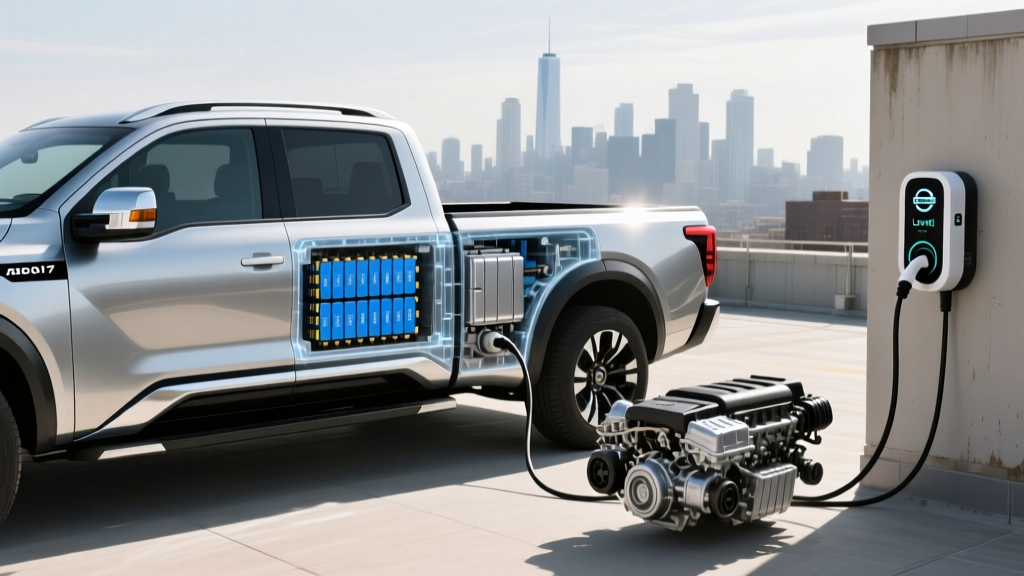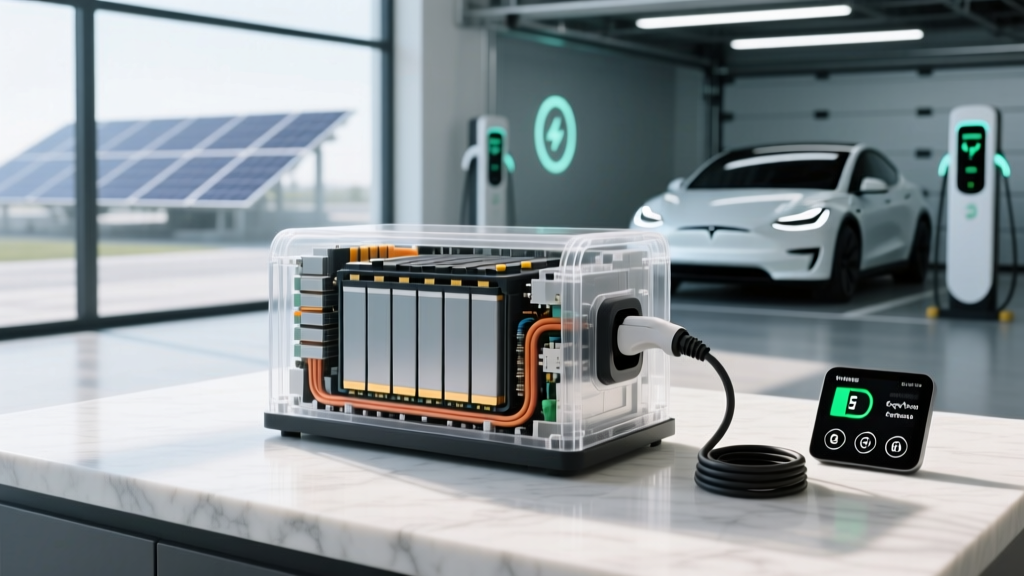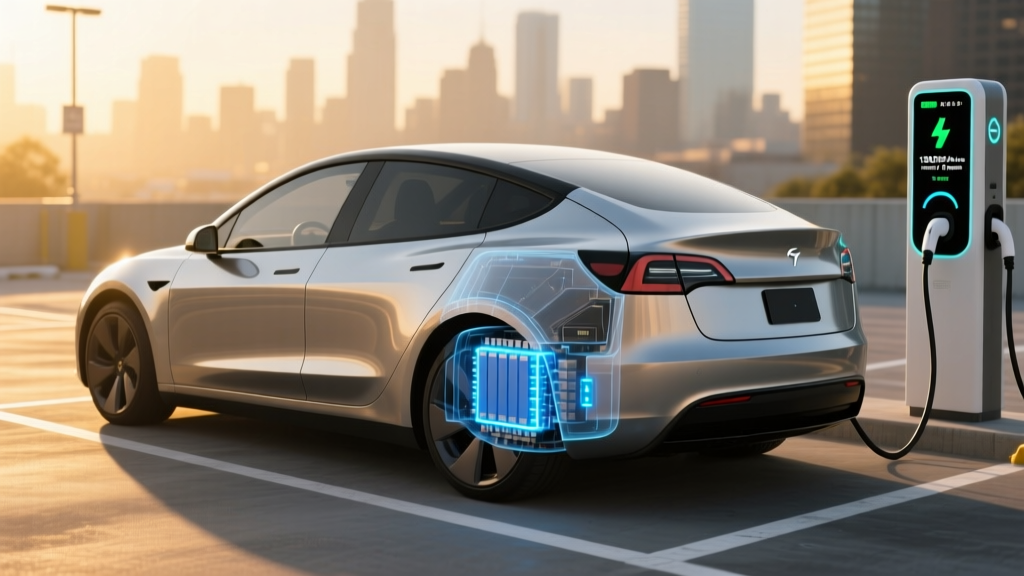
Every EV shopper eventually asks the same question: how long will the battery actually last? Unlike a gas car where the engine might need a timing belt at 100,000 miles, an EV's high-voltage traction battery has no single wear item to replace — it slowly loses capacity over time. The good news, backed by millions of miles of fleet and owner data, is that modern EV batteries typically outlast the vehicles they power.
This guide breaks down the real numbers behind the average battery life for car EVs, including chemistry trade-offs, degradation curves, warranty protections, and what a replacement actually costs if you ever need one.
How Long Do EV Batteries Actually Last?
The short answer: most modern lithium-ion EV batteries are designed to retain at least 70% of their original capacity after 150,000 to 200,000 miles, which translates to roughly 15 to 20 years of average driving. That's based on both manufacturer warranties and real-world fleet data from high-mileage vehicles.
For context, the average American drives about 13,500 miles per year according to the Federal Highway Administration. At that rate, a battery warrantied for 100,000 miles covers roughly 7.4 years — but real-world degradation data shows most packs retain 85-90% capacity at that milestone.
Typical EV Battery Degradation Curve
Based on aggregated fleet data from sources like Recurrent Auto and manufacturer reports:
- Year 1 (0-15,000 mi): ~2-3% capacity loss (initial formation loss)
- Year 3 (~40,000 mi): ~5-7% total loss from new
- Year 5 (~67,500 mi): ~8-10% total loss
- Year 8 (~108,000 mi): ~10-14% total loss
- Year 12 (~162,000 mi): ~15-20% total loss (projected)
Key insight: degradation is non-linear. The steepest drop occurs in the first year, then the curve flattens considerably. A pack that retains 92% at year 2 will likely hold 85%+ at year 8.
Real-world example: Tesla's 2025 Impact Report showed Model 3/Y batteries retaining an average of 85% capacity after 200,000 miles. Hyundai/Kia's E-GMP platform vehicles (Ioniq 5, EV6) have shown similar trajectories in owner-reported data. Early Nissan Leaf models (2011-2017) with passive air-cooling degraded faster — sometimes losing 20-30% by 80,000 miles — highlighting how thermal management matters enormously.
LFP vs NMC/NCA: Which Chemistry Lasts Longer?
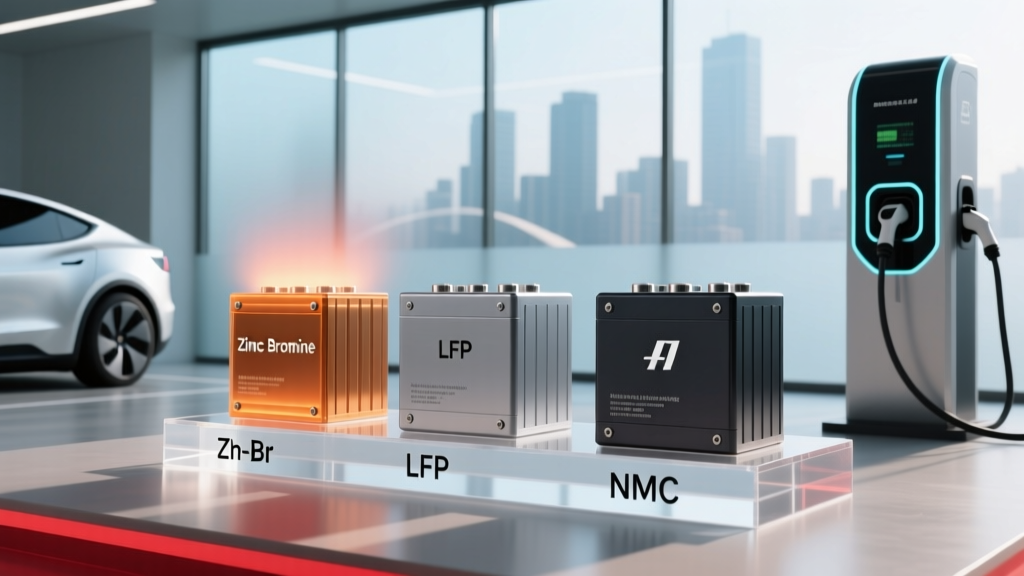
Not all EV batteries are the same. The two dominant chemistries in 2026 are Lithium Iron Phosphate (LFP) and Nickel Manganese Cobalt / Nickel Cobalt Aluminum (NMC/NCA). The choice between them affects energy density, cycle life, cold-weather performance, and cost.
| Attribute | LFP (Lithium Iron Phosphate) | NMC / NCA (Nickel-based) |
|---|---|---|
| Energy Density | Lower (~160-180 Wh/kg cell-level) | Higher (~230-290 Wh/kg cell-level) |
| Cycle Life | 3,000-5,000+ cycles to 80% SoH | 1,000-2,000 cycles to 80% SoH |
| Calendar Life | Excellent — less degradation at high SoC | Good — accelerated aging if held at 100% |
| Cold Performance | Moderate — loses more range below 32°F | Better low-temp conductivity |
| Cost (per kWh) | Lower (~$80-95/kWh at cell level) | Higher (~$100-130/kWh at cell level) |
| Thermal Stability | Superior — less prone to thermal runaway | Good with active thermal management |
| Typical Use | Standard-range models (Tesla Model 3 RWD, Ford Mustang Mach-E Select) | Long-range / performance trims |
| Charging to 100% | Recommended periodically for BMS calibration | 80% daily limit recommended |
The bottom line: If longevity is your top priority, LFP wins on cycle life and tolerance for high state-of-charge storage. If maximum range per charge matters more (road trips, towing), NMC/NCA offers better energy density. Most buyers won't experience a meaningful range difference in daily driving because manufacturers compensate with larger NMC packs.
Notably, Tesla has shifted its Standard Range Model 3 and Model Y to LFP globally, while reserving NMC for Long Range and Performance variants. BYD uses LFP exclusively (its "Blade Battery"). Ford, Hyundai, and GM use primarily NMC/NCA in their long-range packs but have begun offering LFP in base trims.
What Does the EV Battery Warranty Actually Cover?
Federal law mandates a minimum 8-year / 100,000-mile warranty on EV battery packs for emissions-related compliance, and most manufacturers meet or exceed this baseline. California Air Resources Board (CARB) states require 10 years / 150,000 miles. Here's what the major warranties look like in 2026:
| Manufacturer | Warranty Period | Mileage Cap | Capacity Retention Threshold |
|---|---|---|---|
| Tesla (Model 3/Y LFP) | 8 years | 120,000 mi | 70% minimum |
| Tesla (Model 3/Y LR/Perf) | 8 years | 120,000 mi | 70% minimum |
| Hyundai / Kia (E-GMP) | 10 years | 100,000 mi | 70% minimum |
| Ford (Mustang Mach-E) | 8 years | 100,000 mi | 70% minimum |
| GM (Ultium platform) | 8 years | 100,000 mi | 70% minimum (60% for Bolt EV/EUV legacy) |
| BMW (iX / i4) | 8 years | 100,000 mi | 70% minimum |
| Rivian (R1T / R1S) | 8 years | 175,000 mi | 70% minimum |
What triggers a warranty claim? If your battery's State of Health (SoH) drops below the stated threshold (typically 70%) within the warranty window, the manufacturer will repair or replace the pack — usually by swapping in a refurbished unit with capacity above the threshold. The warranty covers defects and abnormal degradation, not damage from accidents, flooding, or unauthorized modifications.
Important nuance: "70% retention" doesn't mean your 300-mile-range EV suddenly becomes a 210-mile car at the warranty boundary. Degradation is gradual. At 75% SoH, a 300-mile EPA vehicle still delivers roughly 225 miles of real-world range — still very usable for most drivers.
How Much Does It Cost to Replace an EV Battery?
This is the question that generates the most anxiety — and the most misleading headlines. Let's look at actual numbers rather than worst-case sticker shocks.
| Vehicle | Battery Size (kWh) | Chemistry | Estimated Pack Cost (Parts) | Labor | Total Estimated |
|---|---|---|---|---|---|
| Tesla Model 3 RWD (LFP) | 60 kWh | LFP | $5,500 – $7,500 | $1,500 – $2,500 | $7,000 – $10,000 |
| Tesla Model Y Long Range | 82 kWh | NMC | $8,000 – $11,000 | $1,500 – $2,500 | $9,500 – $13,500 |
| Hyundai Ioniq 5 | 77.4 kWh | NMC | $8,500 – $12,000 | $2,000 – $3,000 | $10,500 – $15,000 |
| Ford Mustang Mach-E ER | 91 kWh | NMC | $10,000 – $14,000 | $2,000 – $3,500 | $12,000 – $17,500 |
| Ford F-150 Lightning ER | 131 kWh | NMC | $14,000 – $20,000 | $3,000 – $4,500 | $17,000 – $24,500 |
| Chevrolet Equinox EV | 85 kWh | NMC | $8,000 – $11,500 | $2,000 – $3,000 | $10,000 – $14,500 |
Critical context: The vast majority of EV owners never pay for a battery replacement. Data from Recurrent Auto, which tracks over 15,000 EVs, shows battery replacement rates below 2% for vehicles under 150,000 miles. When replacements do occur, they're often covered under warranty. Out-of-pocket replacements typically happen on vehicles 12-15+ years old — at which point the car's resale value has already depreciated significantly regardless of powertrain.
Battery cell prices have also fallen dramatically. In 2010, lithium-ion cells cost roughly $1,100/kWh. By 2025, that figure dropped to approximately $90-110/kWh for NMC and $75-90/kWh for LFP, according to BloombergNEF. This downward trend continues as manufacturing scales and new processes (like dry electrode coating) reduce production costs.
What Factors Accelerate (or Slow) Battery Degradation?
Battery longevity isn't purely a function of time and miles. How you charge, where you park, and how you drive all influence the rate of capacity loss. Here are the primary factors, ranked by impact:
Battery Care Best Practices
- State of Charge (SoC) habits — HIGH IMPACT: For NMC/NCA batteries, keeping daily SoC between 20% and 80% minimizes stress. Regularly charging to 100% and leaving the car parked at full charge for days accelerates calendar aging. LFP batteries are more tolerant — most manufacturers recommend periodic 100% charges for cell balancing.
- Extreme heat exposure — HIGH IMPACT: Sustained battery temperatures above 95°F (35°C) accelerate degradation. Parking in shade or a garage during summer matters more than most owners realize. Active liquid cooling (standard on nearly all 2026 EVs) mitigates this significantly.
- DC fast-charging frequency — MODERATE IMPACT: Exclusive DC fast charging (3-4x/week with no Level 2) correlates with slightly faster degradation — studies show roughly 2-4% additional loss over 100,000 miles compared to primarily Level 2 charging. Occasional road-trip fast charging is not a concern.
- Extreme cold — MODERATE IMPACT: Cold temperatures reduce available range temporarily (not permanent degradation). However, charging a frozen battery without preconditioning can cause lithium plating. Always precondition before charging in sub-freezing weather.
- Aggressive acceleration — LOW IMPACT: High discharge rates generate heat, but modern battery management systems (BMS) limit peak current to protect the cells. This is a minor factor compared to SoC and temperature.
- Calendar aging — UNAVOIDABLE: Even a parked, unused battery loses some capacity over years. This is typically 1-2% per year at moderate SoC and temperature.
The single most impactful habit: avoid leaving an NMC/NCA battery at 100% SoC for extended periods. Set your charge limit to 80% for daily use and bump it to 100% only when you need maximum range for a trip. For LFP owners, this rule is relaxed — charge to 100% at least once a week to keep the BMS calibrated.
How to Monitor Your Battery's State of Health
State of Health (SoH) is the percentage of your battery's current maximum capacity relative to its original capacity when new. A brand-new pack is 100% SoH; a pack that held 75 kWh when new but now holds 66 kWh is at 88% SoH.
Here's how to check it:
In-Vehicle Displays
Most 2026 EVs show battery health somewhere in the settings menu, though the level of detail varies. Tesla displays a rated range estimate that implicitly reflects degradation. Hyundai/Kia provides a battery health percentage in the EV settings on newer model years. BMW's iDrive includes a battery SoH readout.
OBD-II Diagnostic Tools
For more precise data, an OBD-II dongle paired with an app like Car Scanner, LeafSpy (for Nissan Leaf), or Scan My Tesla can read the BMS-reported SoH directly. These tools pull the same data the manufacturer's service center sees, often showing individual cell voltages and module balance.
Third-Party Services
Companies like Recurrent offer battery health reports that compare your vehicle's degradation curve to the fleet average for your make and model. Some dealerships and independent EV shops also offer battery health assessments using manufacturer diagnostic software.
When to be concerned: If your SoH drops more than 3-4% in a single year (after the initial first-year formation loss), or if you notice sudden range drops that don't correlate with temperature, schedule a diagnostic with your dealer. Sudden drops can indicate a failing module rather than normal degradation.
Emerging Battery Tech: What's Coming Next?
While today's lithium-ion batteries are mature and reliable, several next-generation technologies are in development. It's important to understand their realistic timelines — none of these are available in production vehicles as of 2026.
Solid-State Batteries
Solid-state batteries replace the liquid electrolyte with a solid material (ceramic, sulfide, or polymer), promising higher energy density (potentially 400+ Wh/kg at the cell level), faster charging, and improved safety. Toyota has announced solid-state battery production for limited EV models targeting 2027-2028, with claims of 750 km (~465 miles) range and 10-minute fast charging. Samsung SDI and QuantumScape are also advancing prototypes. However, manufacturing scalability and cost remain significant hurdles. Realistic mass-market availability: 2029-2032.
Silicon Anode Batteries
Replacing graphite anodes with silicon can increase energy density by 20-40%. Companies like Sila Nanotechnologies and Group14 are supplying silicon-dominant anode materials to battery manufacturers. The Mercedes-Benz G-Class EQ (announced for 2025-2026) was among the first vehicles to feature silicon anode cells from Factorial Energy. This technology is closer to mainstream adoption than solid-state, with broader availability expected by 2027-2029.
Sodium-Ion Batteries
Sodium-ion chemistry uses abundant, inexpensive materials and shows promise for budget EVs and stationary storage. CATL and BYD have begun limited production. Energy density is lower than LFP (~120-150 Wh/kg), making it best suited for city cars with shorter range requirements. US-market availability in passenger vehicles: 2028+ at earliest.
Practical takeaway: If you're buying an EV in 2026, today's lithium-ion technology (both LFP and NMC) is mature, well-understood, and backed by robust warranties. Waiting for solid-state means waiting at least 3-5 more years for limited availability at premium pricing.
Frequently Asked Questions
How long do EV batteries last in years and miles?
Most modern EV batteries retain 80-85% of their original capacity after 150,000-200,000 miles, which corresponds to roughly 12-15 years of average driving. Manufacturer warranties guarantee at least 70% retention over 8 years / 100,000 miles (10 years / 150,000 miles in CARB states). Many packs continue functioning well beyond these thresholds — they don't "die" suddenly but gradually lose range.
How much does an EV battery cost to replace?
Out-of-pocket replacement costs range from approximately $7,000 for a 60 kWh LFP pack (Tesla Model 3 RWD) to $24,500 for a 131 kWh NMC pack (F-150 Lightning Extended Range), including labor. However, fewer than 2% of EVs need battery replacement before 150,000 miles, and most replacements within the warranty period are covered by the manufacturer. Cell prices continue to decline year over year.
What does the EV battery warranty cover?
The battery warranty covers capacity loss below a specified threshold (typically 70% of original capacity) and manufacturing defects for 8 years / 100,000 miles minimum (federal mandate), or 10 years / 150,000 miles in CARB states. It does not cover damage from collisions, flooding, fire, or unauthorized modifications. If a claim is approved, the manufacturer typically replaces the pack with a refurbished unit meeting the retention threshold.
How do I check and maximize my EV battery health?
Monitor SoH through your vehicle's settings menu, an OBD-II diagnostic app (Car Scanner, LeafSpy, Scan My Tesla), or a third-party service like Recurrent. To maximize longevity: keep NMC/NCA batteries between 20-80% SoC for daily use, avoid leaving the car parked at 100% for extended periods, precondition before DC fast charging in cold weather, and park in shade during extreme heat. LFP owners should charge to 100% at least weekly for BMS calibration.
LFP vs NMC — which battery chemistry is better for me?
Choose LFP if you prioritize maximum cycle life, lower cost, and don't mind slightly less range per charge (standard-range trims). Choose NMC/NCA if you need the longest possible range for road trips, towing, or cold-climate driving. LFP tolerates regular 100% charging better, while NMC benefits from an 80% daily charge limit. For most daily commuters, either chemistry will easily outlast the vehicle's useful life.
Does fast charging damage my EV battery?
Exclusive reliance on DC fast charging (daily or near-daily with no Level 2 charging) can add roughly 2-4% additional degradation over 100,000 miles compared to primarily Level 2 home charging. However, occasional fast charging during road trips has negligible impact. Modern battery management systems carefully control charge rates and temperature to minimize stress. The convenience of road-trip fast charging far outweighs the marginal long-term degradation cost.
Will my EV battery need replacing before the car wears out?
In most cases, no. Data from Recurrent Auto and manufacturer reports show that modern liquid-cooled battery packs typically retain 75-85% capacity at 150,000+ miles. The rest of the vehicle (suspension, interior, electronics) often reaches end-of-life before the battery becomes unusable. Early EVs with passive cooling (pre-2018 Nissan Leaf, first-generation Fiat 500e) showed worse longevity, but active thermal management has largely solved this.