If you're shopping for an electric vehicle—or already own one—the high-voltage traction battery is the single most expensive component in the car. It's also the most misunderstood. Headlines about $20,000 replacement bills create outsized fear, while marketing claims about "million-mile batteries" create unrealistic expectations. The reality, backed by years of fleet data and manufacturer warranty terms, falls somewhere in between: modern EV batteries are lasting longer than most owners keep their cars, but how you charge and drive still matters.
This guide covers exactly what's inside today's EV battery packs, how much capacity they lose over time, what warranties actually cover, what replacement really costs, and how to monitor and maximize your pack's State of Health (SoH). We'll also look at where battery tech is heading next.
LFP vs NMC: Which Battery Chemistry Powers Your EV?
Not all EV batteries are the same. The two dominant lithium-ion chemistries in 2026 passenger vehicles are LFP (lithium iron phosphate) and NMC/NCA (nickel manganese cobalt / nickel cobalt aluminum). The chemistry determines energy density, cycle life, cold-weather performance, cost, and even how you should charge the pack day-to-day.
NMC/NCA packs dominate long-range and performance vehicles. Their higher energy density means more kWh in a smaller, lighter package—critical for vehicles targeting 300+ miles of EPA range. Tesla's Model 3 Long Range, Hyundai Ioniq 5, and BMW iX all use NMC variants. The trade-off: NMC cells degrade somewhat faster under high-heat and high-state-of-charge stress, and they rely on cobalt and nickel, which carry supply-chain and cost volatility.
LFP packs have surged in standard-range and more affordable models. Tesla's Model 3 Rear-Wheel Drive, the base Ford Mustang Mach-E Select, and several BYD models sold globally use LFP. The chemistry offers a dramatically longer cycle life (often 3,000+ full cycles vs. 1,000–2,000 for NMC), lower material cost, and better thermal stability. The downside: lower energy density (roughly 15–20% less Wh/kg), reduced cold-weather range, and a flatter voltage curve that can make state-of-charge estimation less precise.
| Attribute | LFP (Lithium Iron Phosphate) | NMC / NCA (Nickel-based) |
|---|---|---|
| Energy Density | ~160–180 Wh/kg (cell-level) | ~220–260 Wh/kg (cell-level) |
| Typical Cycle Life | 3,000–5,000 full cycles | 1,000–2,000 full cycles |
| Cold-Weather Range Loss | Higher (~35–40% at 20°F) | Moderate (~25–30% at 20°F) |
| Recommended Daily Charge Limit | 100% (manufacturer-recommended) | 80% for daily; 100% for trips |
| Cost per kWh (pack-level, est.) | ~$100–$120 | ~$130–$160 |
| Thermal Stability | Excellent (higher runaway threshold) | Good (requires robust BMS cooling) |
| Common In 2026 Models | Tesla Model 3 RWD, BYD Seal, base Mach-E | Model 3 LR, Ioniq 5, BMW iX, Rivian R1T |
Which is better? Neither is universally superior. If you prioritize maximum range, tow frequently, or live in a cold climate, NMC is the stronger fit. If you want the longest possible calendar life, plan to keep the car 10+ years, charge at home nightly, and can accept slightly less range, LFP is arguably the more durable long-term choice. Tesla explicitly recommends charging LFP packs to 100% at least once a week to keep the battery management system (BMS) calibrated—a practice that would accelerate degradation in NMC cells.
How Long Do EV Batteries Actually Last?
The short answer: most modern EV batteries will outlast the typical ownership period. But "last" needs defining. A battery doesn't suddenly die; it gradually loses capacity. Industry and warranty standards define end-of-life as the point where the pack can no longer hold 70% of its original usable capacity—not total failure.
Here's what real-world degradation data shows for liquid-cooled packs in current-generation EVs:
Typical Capacity Retention Over Time (Liquid-Cooled Packs)
- Year 1 / ~15,000 miles: 2–5% loss (initial formation loss; steepest part of the curve)
- Year 3 / ~45,000 miles: 5–8% total loss
- Year 5 / ~75,000 miles: 8–12% total loss
- Year 8 / ~100,000 miles: 10–15% total loss
- Year 10 / ~150,000 miles: 12–20% total loss (highly usage-dependent)
Sources: Geotab fleet data (6,300+ vehicles), Recurrent Auto battery health reports, manufacturer warranty thresholds.
A 2023 study by Recurrent Auto, analyzing data from over 15,000 EVs, found that the average EV battery retains roughly 90% of its original range after 100,000 miles—well above the 70% warranty threshold. Geotab's fleet analysis similarly shows an average annual degradation of about 1.8% across all chemistries, though LFP packs trend lower.
Early-generation EVs with passive (air-cooled) battery systems—like the first-gen Nissan Leaf—degraded far faster, sometimes losing 20–30% in five years. Modern liquid-cooled thermal management has largely solved this, which is why every major OEM now mandates liquid cooling in 2026 models.
What Does the Battery Warranty Actually Cover?
Federal law in the United States requires that EV batteries carry a minimum warranty of 8 years or 100,000 miles, whichever comes first. California and states that follow CARB (California Air Resources Board) emissions standards extend this to 10 years or 150,000 miles. Most manufacturers meet or exceed these floors.
| Manufacturer | Warranty Period | Mileage Cap | Capacity Threshold |
|---|---|---|---|
| Tesla (Model 3/Y RWD — LFP) | 8 years | 100,000 mi | 70% retention |
| Tesla (Model 3/Y LR, S, X — NMC) | 8 years | 120,000 mi (3/Y); 150,000 mi (S/X) | 70% retention |
| Hyundai / Kia | 10 years | 100,000 mi | 70% retention |
| Ford (Mach-E, F-150 Lightning) | 8 years | 100,000 mi | 70% retention |
| BMW (iX, i4) | 8 years | 100,000 mi | 70% retention |
| Rivian (R1T, R1S) | 8 years | 120,000 mi | 70% retention |
| CARB-state coverage (CA, NY, WA, etc.) | 10 years | 150,000 mi | Varies by OEM (typically 70%) |
What's covered: Defects in materials or workmanship, and capacity loss below the stated threshold (usually 70%) during the warranty period. If your 82 kWh pack drops below ~57 kWh usable capacity within 8 years/100,000 miles, the manufacturer must repair or replace it at no cost.
What's NOT covered: Damage from accidents, flooding, improper modifications, or use outside manufacturer guidelines (e.g., persistent DC fast charging beyond recommended limits, though this is rarely enforced). Normal degradation above the 70% threshold is also not a warranty claim—you simply live with the reduced range.
Key nuance: Warranty replacement doesn't guarantee a brand-new battery. Manufacturers may install a refurbished or remanufactured pack that meets the 70% capacity floor. This is standard practice and explicitly stated in most warranty documents.
EV Battery Replacement Cost: What You'll Actually Pay
Out-of-warranty battery replacement is the scenario that generates alarming headlines. The costs are real but context is critical: the vast majority of EV owners never need an out-of-warranty replacement. Pack failure rates in the first 10 years remain well under 5% for liquid-cooled systems, and gradual degradation usually keeps the pack above 70% capacity through 150,000+ miles.
That said, if you plan to keep an EV for 15+ years or buy a high-mileage used EV with a depleted pack, here's the current replacement landscape:
| Vehicle / Pack Size | Battery Cost (Parts) | Labor | Total Estimate |
|---|---|---|---|
| Tesla Model 3 RWD (~60 kWh LFP) | $7,000–$9,000 | $1,500–$2,500 | $8,500–$11,500 |
| Tesla Model 3 LR / Model Y (~82 kWh NMC) | $10,000–$13,000 | $1,500–$2,500 | $11,500–$15,500 |
| Hyundai Ioniq 5 (~77.4 kWh NMC) | $9,000–$12,000 | $2,000–$3,000 | $11,000–$15,000 |
| Ford F-150 Lightning Extended (~131 kWh NMC) | $15,000–$20,000 | $2,500–$4,000 | $17,500–$24,000 |
| Chevrolet Bolt EV (~65 kWh NMC) | $7,500–$10,000 | $2,000–$3,000 | $9,500–$13,000 |
These prices have been trending downward. Pack-level costs have fallen from over $1,000/kWh in 2010 to roughly $110–$140/kWh in 2026, per BloombergNEF data. Module-level repair—replacing individual cell modules rather than the entire pack—is increasingly available and can cut costs by 50–70% for localized cell failures. Independent EV shops like Gruber Motors and Electrified Garage now offer module-level diagnostics and repair, a market that barely existed five years ago.
When is replacement typically needed? Based on current degradation curves, most EV batteries won't hit the 70% capacity threshold until 200,000+ miles under normal use. Catastrophic failure (sudden, total pack death) is rare and almost always covered under warranty. The owners most likely to face out-of-warranty replacement are those keeping vehicles past year 12 or purchasing older, high-mileage EVs with documented heavy DC fast-charging histories.
What Kills an EV Battery Faster? Five Degradation Factors
Not all miles are equal when it comes to battery wear. These five factors accelerate capacity loss, and understanding them lets you make informed trade-offs:
- 1. Frequent DC fast charging. Repeatedly charging at 150+ kW generates significant heat inside cells. While occasional road-trip fast charging is fine, daily reliance on DCFC (common for ride-share or fleet drivers without home charging) can add 2–4% additional degradation over 100,000 miles compared to Level 2-only charging. Tesla's own data shows vehicles that fast-charge more than 90% of the time degrade slightly faster, though the difference is measured in single-digit percentage points, not catastrophic loss.
- 2. Sustained high state of charge (NMC only). Storing an NMC pack at 100% SoC for days or weeks accelerates electrolyte decomposition. This is why most OEMs recommend an 80% daily charge limit for NMC packs and reserve 100% for trip days. LFP packs are more tolerant of 100% storage, which is why Tesla recommends periodic full charges for LFP vehicles.
- 3. Deep discharges to near 0%. Regularly running the pack below 10% SoC stresses the anode. Occasional deep discharges won't ruin a pack, but making it a habit accelerates wear. The BMS maintains a hidden buffer (typically 2–5 kWh at the bottom) to prevent true zero, but relying on that buffer regularly isn't advisable.
- 4. Extreme heat exposure. Battery degradation is a chemical process that accelerates with temperature. Packs regularly exposed to ambient temperatures above 95°F—especially when parked at high SoC without thermal management active—degrade faster. This is less of a concern in 2026 models with active liquid cooling, which maintains cell temperature even when parked (drawing a small amount of grid power if plugged in).
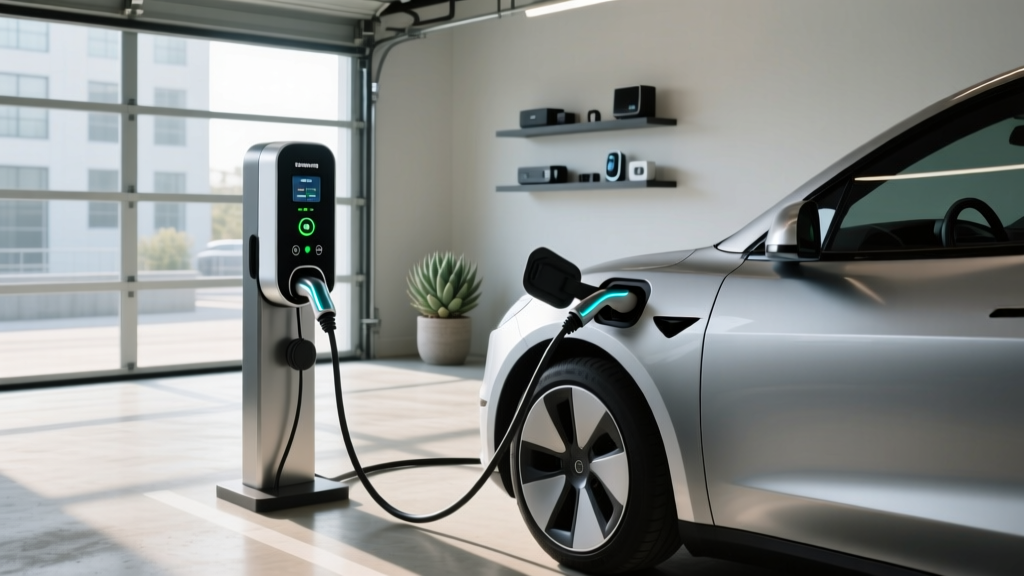
- 5. Extreme cold charging without preconditioning. Charging a cold battery (below ~40°F cell temperature) at high power causes lithium plating on the anode—a permanent, irreversible form of degradation. Modern EVs mitigate this by restricting charge power when cells are cold and by offering battery preconditioning: the car warms the pack before you arrive at a charger (triggered by navigating to a DCFC in the navigation system). Always use preconditioning in cold weather—it's one of the most impactful things you can do to preserve battery health.
How to Check and Monitor Your Battery's State of Health
State of Health (SoH) is the percentage of original capacity your pack can still hold. A brand-new pack is 100% SoH; a pack that originally held 82 kWh and now holds 73.8 kWh is at 90% SoH. Monitoring SoH helps you track degradation, plan for warranty claims, and assess value when buying or selling a used EV.
In-vehicle tools: Some manufacturers now provide SoH estimates directly in the infotainment system or app. Tesla's service menu (accessible via the software screen) shows a battery health test result. Hyundai/Kia's Bluelink app provides a battery health indicator. BMW's iDrive system includes a battery health display in later software versions.
OBD-II diagnostic tools: Third-party apps like Scan My Tesla, LeafSpy (for Nissan Leaf), and Car Scanner ELM OBD2 can read the BMS-reported SoH, cell voltage variance, and pack temperature data via an OBD-II Bluetooth dongle (~$20–$40 for the adapter). These give more granular data than the OEM app, including individual module voltages—a large variance between modules can indicate a weak cell group.
Third-party services: Companies like Recurrent Auto offer free battery health reports that compare your pack's degradation to a fleet of identical vehicles. You grant access to your telematics data, and they provide a personalized degradation curve. This is particularly useful when buying a used EV—ask the seller for a Recurrent report or run an OBD-II scan before purchase.
What to look for: A healthy pack should show gradual, linear degradation with cell voltage variance under 30 mV between modules. Sudden drops, large variance spikes, or SoH readings that don't match your observed range loss may indicate a failing module that warrants a warranty claim or module-level repair.
What's Next? Solid-State and Silicon Anode Batteries
Next-generation battery technologies promise transformative improvements—but timelines matter, and none of these are available in production passenger EVs as of 2026.
Solid-state batteries replace the liquid electrolyte with a solid ceramic, polymer, or sulfide material. The theoretical benefits are substantial: 30–50% higher energy density, faster charging (potentially 10–80% in under 10 minutes), improved safety (no flammable electrolyte), and longer cycle life. Toyota has announced solid-state battery production for 2027–2028, initially in limited-run vehicles. Samsung SDI and QuantumScape are targeting similar timelines for commercial cells. However, manufacturing scale-up, cost reduction, and durability validation remain significant hurdles. Realistically, solid-state batteries will appear in premium/low-volume models first and won't reach mainstream pricing until the early 2030s.
Silicon anode technology is closer to market. Replacing graphite anodes with silicon-dominant composites can boost energy density by 20–40%. Sila Nanotechnologies (partnered with Mercedes-Benz and Panasonic) and Group14 (partnered with Porsche) have production silicon anode cells in limited deployment. Expect broader adoption in 2027–2029 model-year vehicles, with incremental energy density gains rather than dramatic step-changes.
Sodium-ion batteries are emerging as a low-cost alternative for entry-level and urban EVs. CATL has begun production, and several Chinese-market vehicles now use sodium-ion packs. Energy density is lower (~120–150 Wh/kg), but material costs are dramatically lower since sodium is abundant. This chemistry may appear in affordable US-market EVs by 2028–2030.
The practical takeaway: if you're buying an EV in 2026, today's lithium-ion packs (both LFP and NMC) are mature, well-understood, and backed by extensive real-world data. Waiting for solid-state means waiting at least 2–4 years for limited availability and likely 5+ years for mainstream pricing. Current technology is genuinely good enough for the vast majority of use cases.
Frequently Asked Questions
How long do electric car batteries last in years and miles?
Based on fleet data from Geotab and Recurrent Auto, modern liquid-cooled EV batteries typically retain 85–90% of their original capacity at 100,000 miles and 80–88% at 150,000 miles. In calendar terms, expect 10–15+ years of usable service before the pack drops below the 70% capacity threshold that defines end-of-life. LFP packs often exceed these figures due to their higher cycle life.
How much does it cost to replace an EV battery out of warranty?
Full pack replacement ranges from roughly $8,500 for a 60 kWh LFP pack (Tesla Model 3 RWD) to $24,000 for a 131 kWh NMC pack (F-150 Lightning Extended Range), including parts and labor. Module-level repair, where available, can reduce costs by 50–70%. However, most EV batteries never require out-of-warranty replacement—pack failure rates remain under 5% through year 10.
What does the EV battery warranty cover?
Federal law mandates a minimum 8-year/100,000-mile battery warranty; CARB states extend this to 10 years/150,000 miles. Coverage includes manufacturing defects and capacity loss below a stated threshold (typically 70% of original capacity). The warranty does not cover accident damage, modifications, or normal degradation above the threshold. Replacement packs may be refurbished units that meet the capacity floor.
How do I check my EV battery's health?
Check SoH through your vehicle's built-in diagnostics (Tesla service menu, Hyundai Bluelink, BMW iDrive), use an OBD-II Bluetooth adapter with apps like Scan My Tesla or LeafSpy for cell-level data, or enroll in a free service like Recurrent Auto for fleet-comparison reports. If buying used, request a battery health report or run an OBD-II scan before purchase.
Is LFP or NMC better for long-term battery health?
LFP chemistry generally offers superior long-term cycle life (3,000–5,000 cycles vs. 1,000–2,000 for NMC) and can be stored at 100% SoC without accelerated degradation, making it ideal for daily drivers who charge at home and plan to keep the vehicle 10+ years. NMC offers higher energy density and better cold-weather performance, making it preferable for long-range driving, towing, and cold climates. Neither is universally better—the right choice depends on your driving patterns and ownership timeline.
Does frequent DC fast charging damage the battery?
Occasional DC fast charging (road trips, a few times per month) has minimal impact on modern liquid-cooled packs. Daily DC fast charging does accelerate degradation slightly—studies show 2–4% additional capacity loss over 100,000 miles compared to Level 2-only charging. The bigger risk is fast charging in extreme cold without preconditioning, which can cause lithium plating. Always enable navigation-based preconditioning when heading to a DCFC in cold weather.
Should I charge my EV to 100% every day?
For NMC/NCA packs: no. Set your daily charge limit to 80% and reserve 100% for days you need maximum range. For LFP packs: yes—Tesla and other OEMs recommend charging to 100% at least once per week to maintain BMS calibration. Check your owner's manual for chemistry-specific guidance, as the recommendation depends entirely on which chemistry your pack uses.
Sources consulted: Geotab EV Battery Degradation Study, Recurrent Auto Battery Health Data, EPA fueleconomy.gov for model-year specifications, and manufacturer warranty documentation for Tesla, Hyundai, Ford, BMW, and Rivian.