Understanding the EcoFlow Ocean Pro Battery in an EV Context
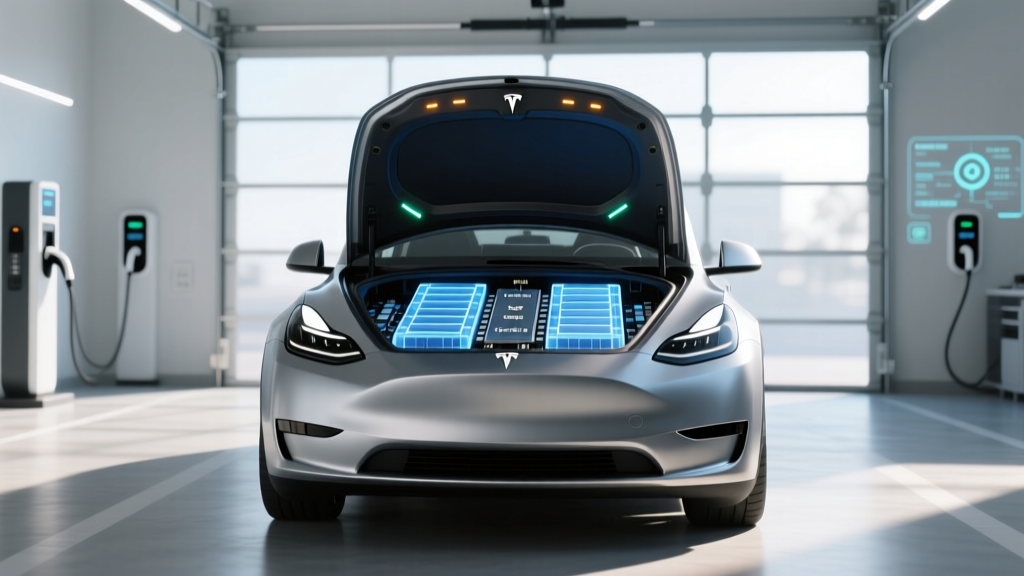
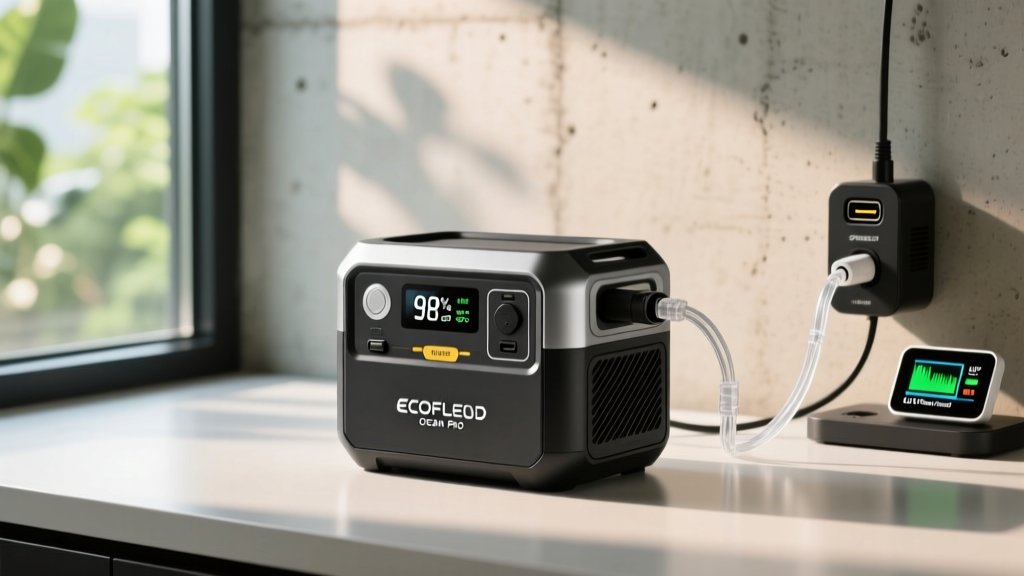
When EV owners and enthusiasts search for the EcoFlow Ocean Pro battery, they are often looking at the intersection of home energy storage and electric vehicle technology. While EcoFlow is primarily known for its portable power stations and home backup solutions like the Delta Pro and the Ocean series, the battery technology inside these units—specifically Lithium Iron Phosphate (LFP)—is the same chemistry powering many of today's most popular electric vehicles, including the Tesla Model 3 RWD and the Ford F-150 Lightning standard-range.
As an EV analyst, I look at the EcoFlow Ocean Pro as a case study in LFP longevity. Understanding how these batteries perform in stationary storage helps us understand what to expect from the 80 kWh to 100 kWh traction batteries sitting under our cars. This guide breaks down the chemistry, the real-world degradation data, and the economics of battery ownership in 2026.
LFP vs. NMC: The Chemistry Breakdown
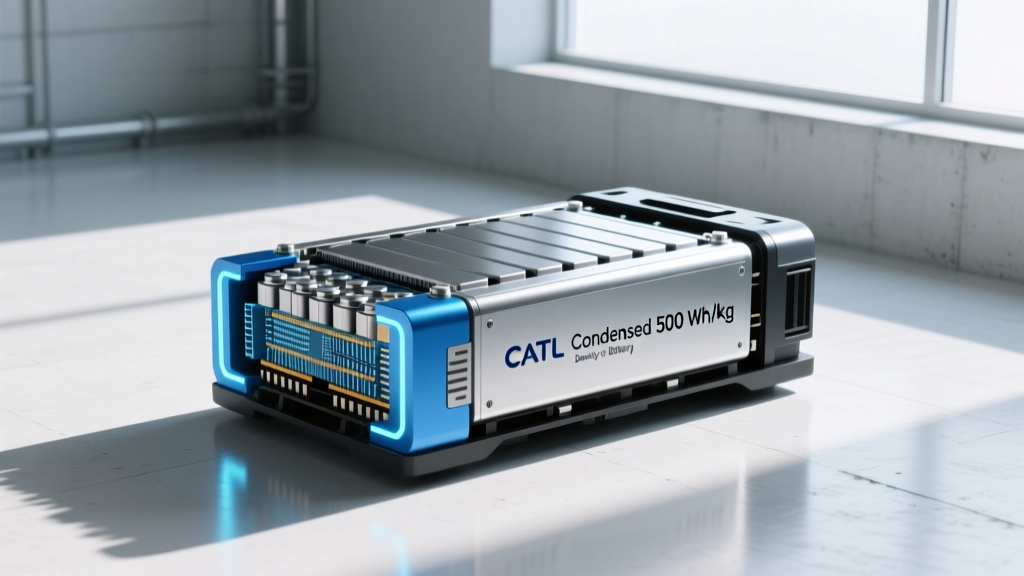
The most critical decision in battery tech is the cathode chemistry. The EcoFlow Ocean Pro utilizes LFP (Lithium Iron Phosphate), a chemistry favored for its safety and cycle life. Most long-range EVs, however, still use NMC (Nickel Manganese Cobalt) or NCA (Nickel Cobalt Aluminum) for their higher energy density.
| Feature | LFP (Lithium Iron Phosphate) | NMC / NCA (Nickel-based) |
|---|---|---|
| Energy Density | Lower (~160 Wh/kg); heavier for same capacity | Higher (~250+ Wh/kg); lighter, more range |
| Cycle Life | 3,000–5,000+ cycles to 80% health | 1,000–2,000 cycles to 80% health |
| Safety / Thermal | Extremely stable; high thermal runaway threshold | More volatile; requires robust cooling systems |
| Cold Performance | Poor; significant range loss below freezing | Better; more efficient in cold climates |
| Cost | Lower (no cobalt or nickel) | Higher (tied to volatile commodity markets) |
| Typical Use | Standard-range EVs, home storage (EcoFlow) | Long-range / performance EVs |
Real-World Degradation: What the Data Shows
Battery degradation is non-linear. You will see a steeper drop in the first year or two (typically 2-5%), followed by a long, slow plateau. According to data aggregated from fleet tests and fueleconomy.gov resources, most modern liquid-cooled EV batteries retain between 85% and 90% of their original capacity after 100,000 miles.
Typical Degradation Curve (Liquid-Cooled NMC 80 kWh Pack):
- Year 1 (12k miles): ~96% State of Health (SoH)
- Year 3 (36k miles): ~92% SoH
- Year 5 (60k miles): ~89% SoH
- Year 8 (100k miles): ~85% SoH
Note: LFP packs, like those in the EcoFlow Ocean Pro or Tesla Model 3 RWD, often show even slower degradation, with some units retaining 90%+ SoH after 100k miles when kept within recommended charge limits.
Warranty Terms and Replacement Economics
Federal law mandates that EV manufacturers provide a battery warranty of at least 8 years or 100,000 miles. In states that follow California’s CARB standards, this is often extended to 10 years or 150,000 miles. The threshold for a warranty claim is usually a failure to maintain 70% of the original capacity.
| Manufacturer | Warranty Period | Capacity Threshold |
|---|---|---|
| Tesla (Model 3/Y LFP) | 8 yrs / 100,000 mi | 70% retention |
| Hyundai / Kia | 10 yrs / 100,000 mi | 70% retention |
| Ford (F-150 Lightning) | 8 yrs / 100,000 mi | 70% retention |
How Much Does a Replacement Cost?
While most batteries outlive the car's first ownership cycle, out-of-pocket replacement is a reality for high-mileage users. In 2026, battery pack prices have fallen to approximately $110-$130 per kWh at the cell level, but installed costs remain higher.
- 40-60 kWh Pack (Nissan Leaf, Bolt): $8,000 – $12,000 installed
- 80 kWh Pack (Model 3, Ioniq 5): $14,000 – $19,000 installed
- 100+ kWh Pack (Model S, F-150 Ext. Range): $20,000 – $28,000 installed
Maximizing Battery Health: The 2026 Checklist
Whether you are managing an EcoFlow Ocean Pro at home or a 100 kWh EV on the road, the physics of lithium-ion care remain the same. Heat and extreme State of Charge (SoC) are the primary enemies of longevity.
- The 20-80% Rule: For NMC/NCA batteries, keep daily SoC between 20% and 80%. LFP batteries (like EcoFlow's) should be charged to 100% at least once a week to help the BMS balance the cells.
- Limit DC Fast Charging: Frequent 150 kW+ sessions accelerate degradation. Use Level 2 (7-19 kW) for daily needs.
- Preconditioning: Always use your EV's "navigation to charger" feature to warm or cool the battery before a fast-charge session.
- Storage: If leaving the vehicle for weeks, leave it plugged in with a 50% SoC limit set in the app.
Monitoring State of Health (SoH)
Owners can check SoH through the vehicle’s service menu or by using third-party OBD-II dongles that read the BMS (Battery Management System) data. For home storage units like the EcoFlow Ocean Pro, the companion app provides a direct SoH percentage based on total energy throughput versus nameplate capacity.
Future Tech: Solid-State and Silicon Anodes
Looking beyond 2026, the industry is moving toward silicon-dominant anodes (from companies like Sila Nanotechnologies) which increase energy density by 20-30%. Solid-state batteries, which replace the liquid electrolyte with a solid material, promise even greater safety and density. However, these remain in limited production for high-end prototypes and are not expected to reach mass-market affordability until the early 2030s.
Frequently Asked Questions
How long do EV batteries actually last?
Most modern liquid-cooled EV batteries are designed to last 200,000+ miles before reaching the 70% capacity threshold. In years, that is typically 15-20 years of average use.
Is the EcoFlow Ocean Pro battery the same as a car battery?
Chemically, yes—both often use LFP. However, EV traction batteries are built to handle high-current "C-rates" for acceleration and fast charging, whereas home storage batteries are optimized for slower, steady discharge.
Does the federal tax credit cover battery replacement?
No. The §30D credit applies to the purchase of a new or qualified used EV. It does not cover aftermarket battery replacements for existing vehicles.