Headlines around the Donut Lab solid state battery have EV shoppers asking whether they should wait for next-generation cells or buy now. The short answer: solid-state technology remains in limited production and pilot programs as of 2026, while today's lithium-ion packs — whether LFP or NMC — already deliver 200,000+ mile lifespans with manageable degradation. This guide breaks down what Donut Lab is actually promising, how it compares to the batteries in current EVs, and everything you need to know about longevity, warranties, and replacement costs for the pack in your car today.
What Is the Donut Lab Solid State Battery?
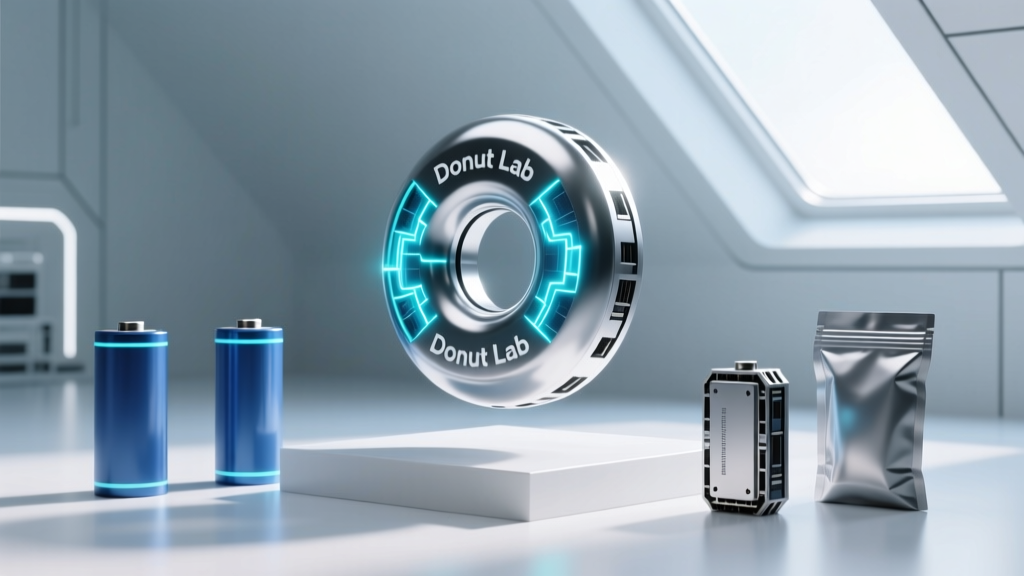
Donut Lab, a startup that emerged from the European battery research ecosystem, has been developing a solid-state cell that replaces the liquid electrolyte in conventional lithium-ion batteries with a solid ceramic or polymer material. The theoretical advantages are significant:
- Higher energy density: Solid-state cells can potentially use lithium-metal anodes, pushing energy density past 400 Wh/kg at the cell level — roughly double today's best NMC cells.
- Faster charging: Without liquid electrolyte breakdown concerns, solid-state cells could theoretically accept higher C-rates, enabling 10–80% charges in under 10 minutes.
- Safety: No flammable liquid electrolyte means reduced thermal runaway risk.
- Longer cycle life: Solid electrolytes resist dendrite formation, potentially extending cycle life beyond 2,000 full cycles.
However, as of early 2026, Donut Lab's cells are in pre-production and pilot validation phases. They are not available in any production vehicle you can buy today. Companies like Toyota, Samsung SDI, and QuantumScape are pursuing similar timelines, with low-volume production vehicles expected between 2027 and 2029. For buyers making a decision now, understanding today's battery technology matters far more than waiting for solid-state promises.
Today's EV Battery Chemistry: LFP vs. NMC/NCA Explained
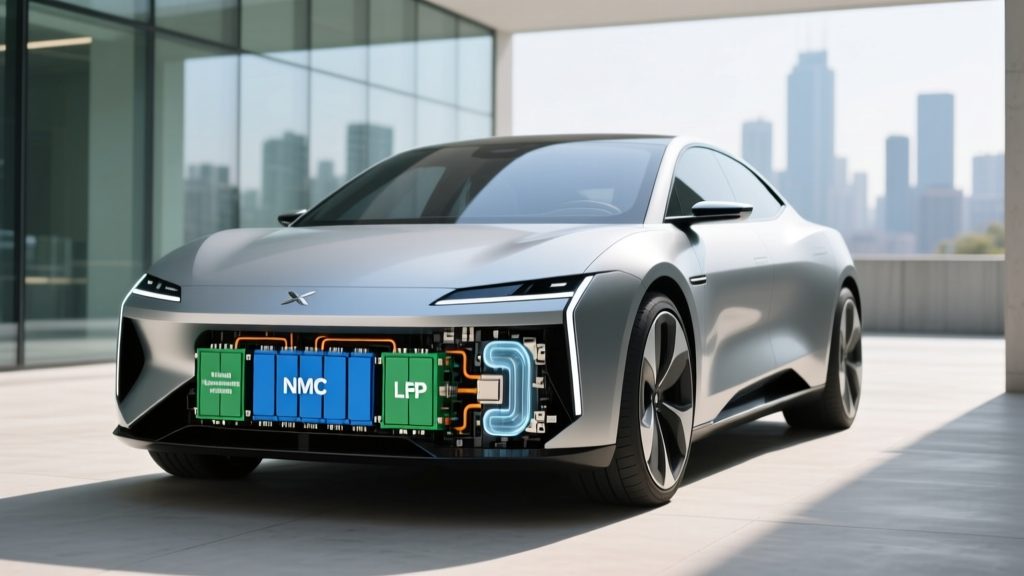
Every EV sold in the US in 2026 uses one of two dominant cathode chemistries: LFP (lithium iron phosphate) or NMC/NCA (nickel manganese cobalt / nickel cobalt aluminum). The chemistry determines your vehicle's range, charging behavior, degradation profile, and cost.
| Attribute | LFP (Lithium Iron Phosphate) | NMC / NCA (Nickel-Based) |
|---|---|---|
| Energy Density (cell-level) | 160–180 Wh/kg | 220–300 Wh/kg |
| Typical EV Range | 230–330 mi EPA (e.g., Tesla Model 3 RWD: 272 mi, base Ford Mustang Mach-E: 250 mi) | 280–400+ mi EPA (e.g., Tesla Model 3 LR: 363 mi, Hyundai Ioniq 6 LR: 361 mi) |
| Cycle Life | 3,000–5,000+ full cycles | 1,000–2,000 full cycles |
| Cold-Weather Performance | Greater range loss in cold (30–40% at 20°F); slower charge acceptance without preconditioning | Better cold performance (20–30% loss at 20°F); faster cold-weather charging |
| Charging Recommendation | Can charge to 100% daily — no degradation penalty | Best kept at 80% daily; 100% only for trips |
| Cost ($/kWh, pack-level) | ~$90–$110/kWh | ~$120–$150/kWh |
| Thermal Stability | Excellent — higher thermal runaway threshold (~270°C) | Good — lower threshold (~210°C), requires more active thermal management |
| Cobalt Content | None | Contains cobalt (supply-chain and ethical considerations) |
Which is better? It depends on your use case. LFP wins on longevity, cost, and daily convenience (charge to 100% freely). NMC wins on range per pound and cold-weather usability. If you commute 30 miles daily and charge at home, LFP is arguably the smarter long-term choice. If you road-trip frequently in northern climates, NMC's energy density and cold tolerance matter more.
How Long Do EV Batteries Last? Real Degradation Data
The most common question from prospective EV buyers: how long will the battery last? Based on fleet data, owner reports, and manufacturer testing, the answer is longer than most expect.
Here's what degradation looks like in practice, drawn from Geotab's fleet study of 6,300+ EVs and owner-reported data:
| Vehicle / Chemistry | Miles Driven | Capacity Retained | Source |
|---|---|---|---|
| Tesla Model 3 (NMC, 2018–2021) | 100,000 mi | ~90–93% | Tesla Impact Report / owner surveys |
| Tesla Model 3 (LFP, 2022+) | 80,000 mi | ~94–97% | Fleet data / Recurrent Auto |
| Chevrolet Bolt EV (NMC, 65 kWh) | 120,000 mi | ~88–92% | Recurrent Auto fleet data |
| Nissan Leaf (NMC, 40 kWh, passive cooling) | 100,000 mi | ~78–85% | Owner reports / Geotab |
| Hyundai Ioniq 5 (NMC, 77.4 kWh) | 60,000 mi | ~93–96% | Owner forums / Recurrent |
Why the Nissan Leaf degrades faster: Earlier Leaf models used passive air cooling rather than active liquid thermal management. Heat is the primary enemy of lithium-ion longevity. Every modern EV sold in 2026 — from the Chevy Equinox EV to the Rivian R1T — uses liquid-cooled battery packs, which is why degradation rates have improved dramatically.
The degradation curve is not linear. Most batteries experience a 2–5% capacity drop in the first year (initial formation losses), then settle into a slow, steady decline of roughly 1–2% per year or per 15,000–20,000 miles. This means a 300-mile EPA vehicle might offer ~275–285 miles of range after five years and 75,000 miles — still eminently usable.
EV Battery Warranty Terms: What's Actually Covered?
Federal law in the US mandates that EV batteries carry a minimum warranty of 8 years or 100,000 miles (whichever comes first). California Air Resources Board (CARB) states extend this to 10 years or 150,000 miles. Most manufacturers exceed these minimums.
| Manufacturer | Warranty Period | Capacity Threshold | Notes |
|---|---|---|---|
| Tesla (all models) | 8 yr / 120,000 mi (Model 3/Y RWD); 8 yr / 150,000 mi (LR/Performance) | 70% retention | Covers defects and excessive degradation below threshold |
| Hyundai / Kia | 10 yr / 100,000 mi | 70% retention | Among the longest coverage in the industry |
| Ford (Mach-E, F-150 Lightning) | 8 yr / 100,000 mi | 70% retention | Covers battery components and degradation |
| GM (Chevy, Cadillac EVs) | 8 yr / 100,000 mi | 60–70% retention (varies by model) | Ultium platform; check specific model terms |
| Rivian | 8 yr / 175,000 mi (R1T); 8 yr / 150,000 mi (R1S) | 70% retention | Higher mileage cap reflects truck use cases |
What the warranty covers: Manufacturing defects, module failures, and capacity degradation below the stated threshold. If your 82 kWh pack drops below 57.4 kWh (70%) within the warranty period, the manufacturer must repair or replace it at no cost.
What it does NOT cover: Damage from accidents, modifications, improper charging equipment, or using the battery as a stationary power source outside of approved V2H/V2L functions. Normal gradual degradation above the threshold is expected and not warrantable.
How Much Does an EV Battery Replacement Cost?
This is the fear that keeps some buyers on the sideline. Let's put it in perspective with current data.
| Vehicle | Battery Size | Chemistry | Estimated Replacement Cost |
|---|---|---|---|
| Tesla Model 3 RWD | 60 kWh | LFP | $8,000–$12,000 |
| Tesla Model Y Long Range | 81 kWh | NMC | $12,000–$16,000 |
| Ford Mustang Mach-E ER | 91 kWh | NMC | $14,000–$20,000 |
| Chevy Equinox EV | 85 kWh | NMC (Ultium) | $12,000–$18,000 |
| Ford F-150 Lightning ER | 131 kWh | NMC | $18,000–$28,000 |
| GMC Hummer EV | 212 kWh | NMC (Ultium) | $28,000–$40,000 |
Important context: Full battery replacement is rare. According to Recurrent Auto's analysis of 15,000+ EVs, fewer than 1.5% of EVs have required battery replacement, and most of those were covered under warranty. When replacements are needed, it's often individual modules (a fraction of the full-pack cost) rather than the entire battery.
Battery costs continue to fall. Pack-level prices have dropped from over $1,000/kWh in 2010 to roughly $100–$130/kWh in 2026, according to BloombergNEF. By the time most current EVs actually need a replacement (2035+), costs will likely be significantly lower. A Donut Lab solid-state battery, if it reaches mass production, could initially cost more than current lithium-ion before economies of scale kick in — a common pattern for new battery technologies.
Factors That Affect EV Battery Life (and How to Minimize Them)
Not all miles are created equal when it comes to battery wear. Here's what actually accelerates degradation, ranked by impact:
- 🌡️ Avoid extreme heat exposure: Parking in direct sun in 100°F+ weather repeatedly is worse than any charging habit. Use shaded or covered parking when possible. Liquid-cooled packs manage this better than passively cooled ones.
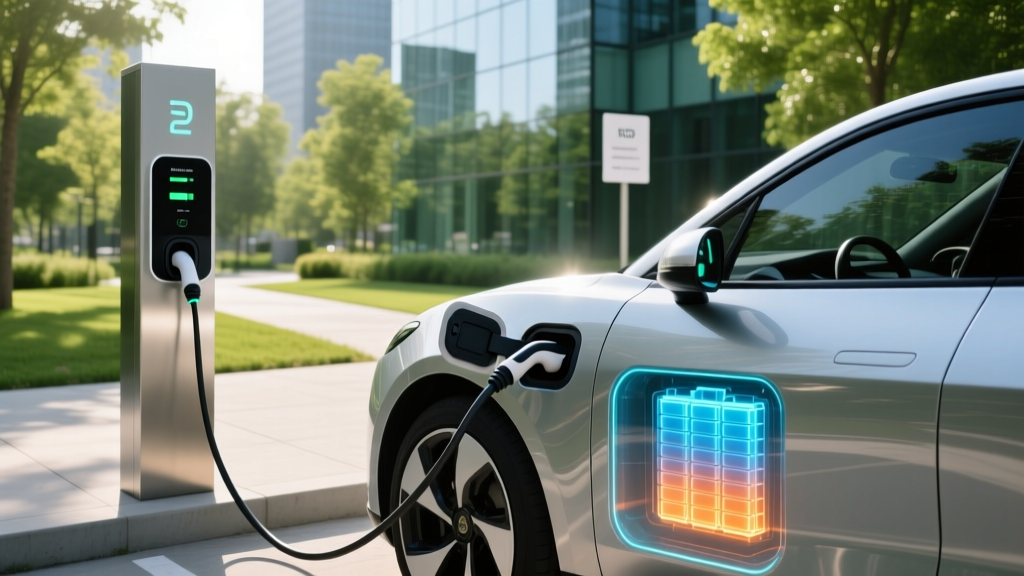
- ⚡ Limit DC fast charging to road trips: Occasional DC fast charging (50–250 kW) is fine. Daily DC fast charging accelerates degradation by ~1–2% extra over the battery's life due to sustained high temperatures. For daily use, Level 2 home charging (7–11 kW) is ideal.
- 🔋 Manage state of charge (NMC only): For NMC/NCA batteries, keep daily SoC between 20–80%. Charging to 100% occasionally for trips is fine — just don't let it sit at 100% for days. LFP batteries should be charged to 100% at least weekly for BMS calibration.
- ❄️ Precondition before charging in cold: Cold batteries resist charge acceptance and can cause lithium plating if charged at high rates without warming. Use your vehicle's preconditioning feature (usually activated by setting a departure time or navigating to a charger) to warm the pack.
- 🚗 Drive moderately in extreme temperatures: Hard acceleration draws high current, generating heat. In hot weather, this compounds thermal stress. Moderate driving extends pack life.
- 📱 Keep software updated: OEMs regularly release BMS (battery management system) updates that optimize charge curves and thermal management. These can meaningfully extend battery life.
How to Check and Monitor Your Battery's State of Health (SoH)
State of Health (SoH) is the percentage of your battery's original capacity that remains usable. A new battery is 100% SoH; one that has degraded to hold only 75 kWh of its original 82 kWh is at ~91.5% SoH.
How to check SoH:
- In-vehicle displays: Some EVs (notably Tesla, Hyundai/Kia) show battery health or range-degradation indicators in the settings menu. Tesla's "Battery Health" screen under Service mode shows estimated capacity.
- OBD-II diagnostic apps: Tools like Leaf Spy (Nissan Leaf), Scan My Tesla, or Car Scanner ELM OBD2 can read BMS data including SoH, cell voltages, and temperature. A $25–$50 OBD-II dongle plus the app gives you dealer-level data.
- Dealer service visits: Any authorized service center can pull a full battery health report. Request this during routine service if you're monitoring degradation.
- Third-party services: Companies like Recurrent Auto offer free battery health tracking by connecting to your vehicle's telematics data, providing degradation curves and peer comparisons.
When to be concerned: A sudden drop in SoH (e.g., 3–5% in a single month), significant range discrepancy between cells (visible via OBD-II), or a dashboard battery warning light all warrant immediate service attention. Gradual 1–2% annual loss is normal and expected.
Solid-State Batteries and Beyond: Realistic Timelines
Donut Lab joins a growing list of companies — Toyota, QuantumScape, Samsung SDI, Solid Power, ProLogium — racing to commercialize solid-state batteries. Here's where the technology actually stands in 2026:
| Company | Status (2026) | Target Vehicle Production | Key Challenge |
|---|---|---|---|
| Donut Lab | Pilot production / validation | 2028–2030 (estimated) | Scaling manufacturing yield |
| Toyota | Pilot line operational | 2027–2028 (limited models) | Cost per kWh; manufacturing complexity |
| QuantumScape | A-sample testing with OEM partners | 2028–2030 (estimated) | Cell durability at scale |
| Samsung SDI | Prototype stage | 2027+ (announced) | Interface stability over cycles |
| Solid Power | Pilot line; BMW/Ford partnership | 2028–2030 (estimated) | Sulfide electrolyte handling |
Near-term improvements that are real now: While solid-state remains years away, incremental advances are already benefiting 2026 EVs. Silicon-dominant anode cells (used in some Porsche and Mercedes models) offer 5–10% more energy density than traditional graphite anodes. Improved electrolyte additives have extended NMC cycle life by 20–30% compared to 2020 cells. These aren't headline-grabbing, but they mean today's batteries are genuinely better than those from even three years ago.
Should You Wait for Solid-State or Buy Now?
Here's a practical decision framework:
- You need a vehicle within the next 12–24 months
- Your daily driving is under 250 miles and you have home charging access
- You qualify for the §30D federal tax credit (up to $7,500, subject to MSRP caps, buyer income limits, and battery sourcing requirements — verify current-year eligibility with a tax professional)
- You value proven reliability data and established service networks
- Your current vehicle is reliable and you can wait 3–5 years
- You need 400+ miles of range with 10-minute charging (the solid-state promise)
- You're interested in next-gen models from Toyota, Hyundai, or others who have confirmed solid-state vehicle plans
The reality is that today's LFP and NMC batteries are mature, well-warrantied products that will serve most drivers for 150,000–200,000+ miles with minimal degradation. The Donut Lab solid state battery and its competitors represent genuine long-term progress, but they won't be in driveways for several more years — and when they arrive, they'll carry a premium that today's batteries don't.
Frequently Asked Questions
How long do EV batteries last in years and miles?
Most modern EV batteries (2022+) are designed to last 15–20 years or 150,000–200,000+ miles before dropping below 70–80% of original capacity. LFP chemistry batteries typically outlast NMC in terms of cycle life, with some projected to exceed 300,000 miles before reaching the 70% threshold. Real-world data from fueleconomy.gov and fleet operators confirms that catastrophic battery failure is extremely rare in liquid-cooled packs.
How much does it cost to replace an EV battery in 2026?
Full-pack replacement costs range from roughly $8,000 for smaller LFP packs (Tesla Model 3 RWD, ~60 kWh) to $28,000–$40,000 for large NMC packs (GMC Hummer EV, 212 kWh). However, full replacements are rare — fewer than 1.5% of EVs have ever needed one, and most were covered under the 8-year/100,000-mile minimum warranty. Module-level repairs cost significantly less, typically $1,500–$5,000.
What does the EV battery warranty actually cover?
EV battery warranties cover manufacturing defects and capacity degradation below a specified threshold (usually 70% of original capacity) for 8 years/100,000 miles minimum (federal requirement) or 10 years/150,000 miles in CARB states. They do not cover damage from accidents, unauthorized modifications, or misuse. If your battery drops below the threshold within the warranty period, the manufacturer replaces or repairs it at no cost.
How do I check my EV battery's health?
You can check State of Health (SoH) through your vehicle's built-in diagnostics (if available), an OBD-II scanner with an EV-compatible app like Scan My Tesla or Leaf Spy, a dealer service visit, or a free third-party service like Recurrent Auto. Monitoring SoH every 6–12 months gives you a clear picture of your degradation curve and early warning of any anomalies.
LFP vs. NMC — which battery chemistry is better for me?
Choose LFP if you want maximum longevity (3,000–5,000 cycles), lower cost, the ability to charge to 100% daily without degradation concerns, and your daily range needs are under 250 miles. Choose NMC/NCA if you need maximum range (300–400+ miles), frequently drive in cold weather, or take regular road trips where energy density matters. Both chemistries will comfortably outlast 150,000 miles with proper care.
Will solid-state batteries like Donut Lab's make today's EVs obsolete?
Not in the near term. Solid-state batteries are expected to enter limited production vehicles around 2027–2029, likely at a significant price premium. They'll offer advantages in range and charging speed, but today's LFP and NMC batteries are mature, well-warrantied, and cost-effective. The EV you buy today will still be practical and valuable when solid-state vehicles eventually reach mainstream pricing — likely not until the early 2030s.