If you've ever asked, "do car batteries recharge?" — the short answer is yes, but not the way you might think. Unlike a gas car's 12V battery, which is kept topped up by an alternator while the engine runs, an electric vehicle's high-voltage traction battery (the large pack that actually propels the car) recharges through two distinct mechanisms: plugging into an external power source and regenerative braking. Understanding exactly how this works — and what it means for long-term battery health — is essential for any current or prospective EV owner.
This guide breaks down the physics of EV battery recharging, compares the two dominant battery chemistries on the market, examines real-world degradation data, and gives you actionable steps to maximize your pack's lifespan. We'll cover everything from warranty coverage to replacement costs, all grounded in current 2026 model-year data.
How EV Batteries Recharge: Regenerative Braking and Plug-In Charging
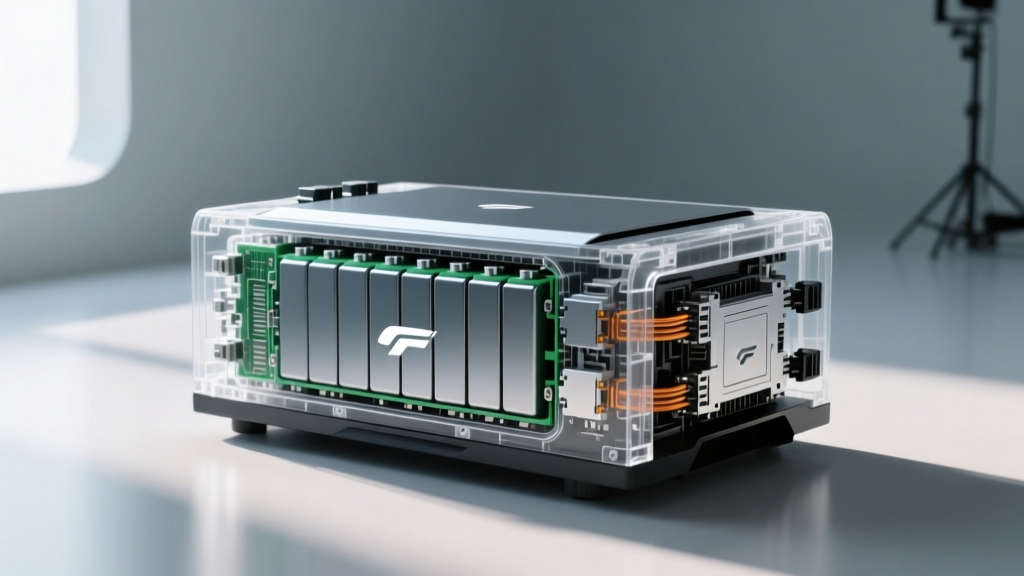
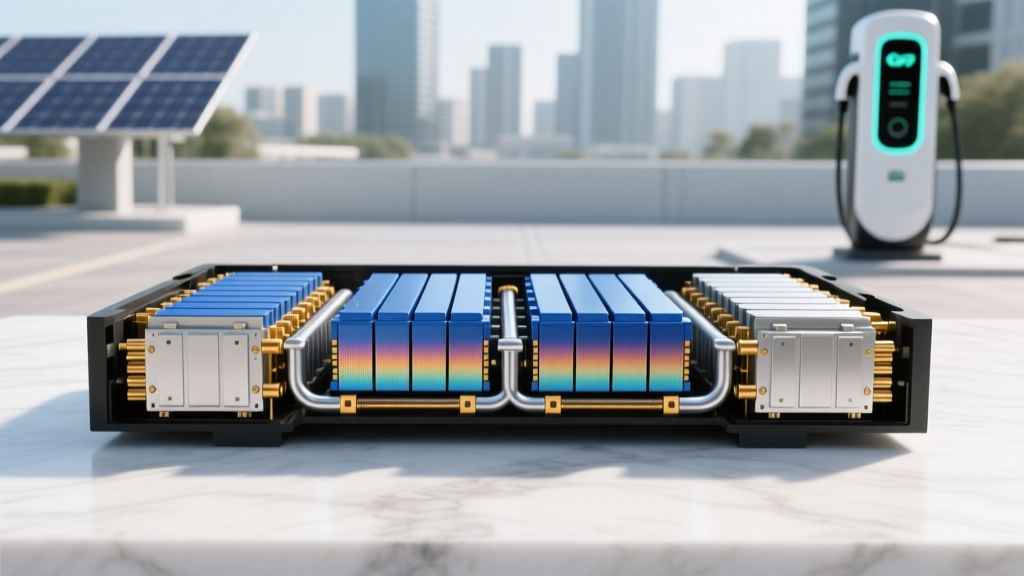
An EV's traction battery — typically ranging from 40 kWh to over 130 kWh depending on the vehicle — stores electrical energy in lithium-ion cells. That energy is depleted as you drive and must be replenished. There are two ways this happens:
1. Plug-In Charging (Level 1, Level 2, and DC Fast Charging)
The primary way to recharge an EV battery is by connecting it to an external electrical source. This is fundamentally different from how a conventional car's 12V battery works. An EV has no alternator; it cannot generate net new energy from its own motion. When you plug in:
- Level 1 (120V AC): Delivers roughly 1.0–1.4 kW, adding about 3–5 miles of range per hour. Suitable for overnight top-ups on low-mileage days.
- Level 2 (240V AC): Delivers 7.2–19.2 kW depending on the vehicle's onboard charger and circuit amperage, adding roughly 25–60 miles per hour. This is the standard home and workplace charging method.
- DC Fast Charging (DCFC): Bypasses the onboard charger and feeds DC current directly to the battery at rates from 50 kW up to 350+ kW. A modern EV with a 250 kW peak charge rate can go from 10–80% State of Charge (SoC) in roughly 18–25 minutes.
2. Regenerative Braking (Recapturing Kinetic Energy)
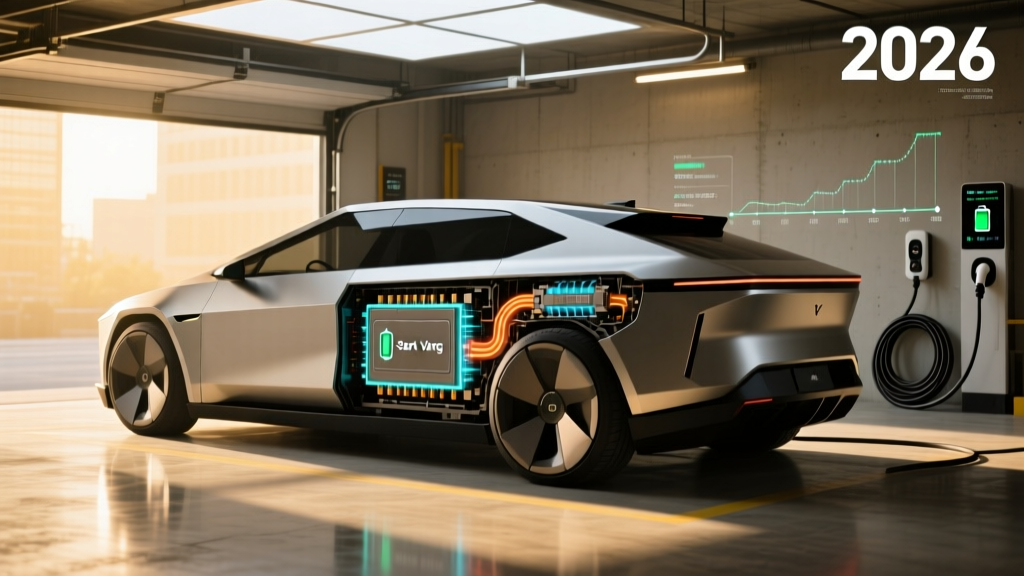
This is where the "do car batteries recharge themselves" question gets interesting. When you lift off the accelerator or apply the brakes, the electric motor reverses its function, acting as a generator. It converts the vehicle's kinetic energy back into electrical energy and feeds it into the battery. This is regenerative braking, and it's why EVs achieve dramatically better efficiency in stop-and-go city traffic than on sustained highway runs.
However, regen is not free energy. It recaptures a portion of energy you already spent accelerating — typically 15–30% in mixed driving, depending on terrain and driving style. You still need to plug in to fully recharge the pack. Think of regen as extending your range between plug-in sessions, not replacing them.
LFP vs. NMC/NCA: Which Battery Chemistry Is in Your EV?
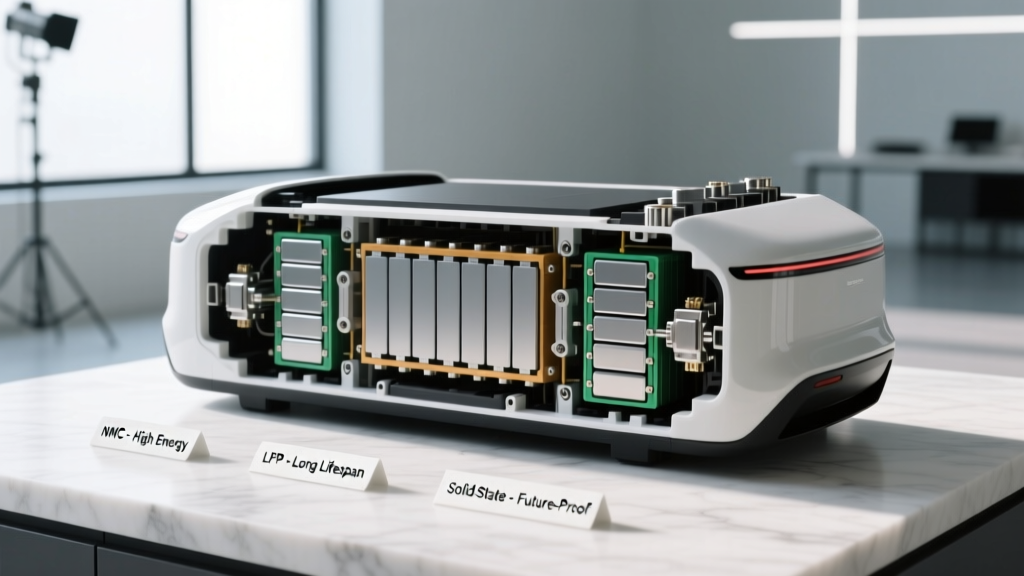
Not all EV batteries are identical. The two dominant lithium-ion chemistries in 2026 model-year vehicles are LFP (Lithium Iron Phosphate) and NMC/NCA (Nickel Manganese Cobalt / Nickel Cobalt Aluminum). The chemistry in your car affects range, charging habits, longevity, and even how you should care for the pack.
| Attribute | LFP (Lithium Iron Phosphate) | NMC / NCA (Nickel-Based) |
|---|---|---|
| Energy Density | Lower (~160–180 Wh/kg cell-level) | Higher (~220–300 Wh/kg cell-level) |
| Typical Use | Standard-range models (Tesla Model 3 RWD, Model Y RWD, BYD, some Ford models) | Long-range and performance models (most AWD, extended-range trims) |
| Cycle Life | 3,000–5,000+ full cycles before 80% retention | 1,000–2,000 full cycles before 80% retention |
| Cold-Weather Performance | More range loss in freezing temps (~30–40% loss below 20°F) | Better cold performance (~20–30% loss below 20°F) |
| Recommended Daily SoC | 100% charging is fine and even recommended periodically for BMS calibration | 80% daily limit recommended; 100% only for trips |
| Cost | Lower — no cobalt or nickel | Higher — dependent on nickel/cobalt commodity prices |
| Thermal Stability | Excellent — less prone to thermal runaway | Good — requires more active thermal management |
Which is better? It depends on your use case. If you prioritize maximum range per charge and regularly drive in cold climates, NMC/NCA is the stronger choice. If you want a battery that can tolerate daily 100% charging, has a longer cycle life, and costs less upfront, LFP is ideal — especially for commuters who charge at home every night. According to U.S. Department of Energy research, LFP cells have demonstrated over 5,000 cycles at 80% capacity retention in laboratory conditions, making them arguably the most durable chemistry available to consumers today.
How Long Do EV Batteries Actually Last? Real-World Degradation Data
Battery degradation — the gradual loss of total capacity over time and use — is the single most common concern among EV shoppers. The data, however, is reassuring: modern EV batteries are lasting far longer than early skeptics predicted.
What the Numbers Show
Based on aggregated fleet data and manufacturer disclosures through 2025–2026:
- Year 1–2: Most packs lose 1–3% capacity as cells stabilize (this initial drop is normal and expected).
- Year 3–5 / 50,000–100,000 miles: Total degradation typically settles at 5–10%. Tesla's 2024 Impact Report noted their fleet averaged roughly 12% degradation at 200,000 miles.
- Year 8–10 / 150,000–200,000 miles: Most NMC packs retain 75–85% of original capacity. LFP packs often retain 85–92%+ at equivalent mileage.
- Beyond 200,000 miles: Degradation curves flatten significantly. A pack that has retained 80% at 150k miles is likely to retain 75%+ at 300k miles.
For context, a vehicle with an original EPA range of 310 miles that has degraded to 85% capacity still delivers approximately 263 miles — more than adequate for most daily driving and many road trips.
What Does the EV Battery Warranty Cover?
Federal law mandates a minimum battery warranty of 8 years / 100,000 miles (whichever comes first) for all EVs sold in the U.S. Some manufacturers go further. Here's what current warranties look like across major brands:
| Manufacturer | Warranty Term | Capacity Retention Threshold | Coverage Type |
|---|---|---|---|
| Tesla (Model 3/Y RWD — LFP) | 8 years / 100,000 mi | 70% minimum | Defect + degradation |
| Tesla (Model 3/Y LR/Perf — NMC) | 8 years / 120,000 mi | 70% minimum | Defect + degradation |
| Hyundai / Kia | 10 years / 100,000 mi | 70% minimum | Defect + degradation |
| Ford (Mustang Mach-E, F-150 Lightning) | 8 years / 100,000 mi | 70% minimum | Defect + degradation |
| Chevrolet (Equinox EV, Blazer EV) | 8 years / 100,000 mi | 70% minimum | Defect + degradation |
| BMW (i4, iX, i7) | 8 years / 100,000 mi | 70% minimum | Defect + degradation |
| Rivian (R1T, R1S) | 8 years / 175,000 mi | 70% minimum | Defect + degradation |
The 70% threshold is critical: the manufacturer will repair or replace the battery only if it falls below 70% of its original capacity within the warranty period. In practice, very few modern EVs hit this threshold under normal use. The warranty also covers manufacturing defects — bad cells, BMS failures, coolant leaks into the pack — regardless of capacity level.
For official warranty requirements and federal EV tax credit battery-sourcing rules under IRS §30D, always verify current-year eligibility, as critical-mineral and battery-component sourcing requirements continue to tighten.
How Much Does an EV Battery Replacement Cost?
This is the question that generates the most anxiety — and the most misinformation. Let's ground it in actual figures.
| Vehicle / Pack Size | Battery Chemistry | Estimated Replacement Cost (Parts + Labor) | Typical When Needed |
|---|---|---|---|
| Tesla Model 3 RWD (~57 kWh, LFP) | LFP | $8,000–$12,000 | Rarely within vehicle lifetime |
| Tesla Model Y LR (~75 kWh, NMC) | NMC | $12,000–$16,000 | Rarely within vehicle lifetime |
| Hyundai Ioniq 5 (~77.4 kWh, NMC) | NMC | $11,000–$15,000 | Rarely within vehicle lifetime |
| Ford F-150 Lightning Ext. Range (~131 kWh, NMC) | NMC | $18,000–$28,000 | Rarely within vehicle lifetime |
| Chevrolet Bolt EV (~65 kWh, NMC) | NMC | $9,000–$14,000 | Rarely within vehicle lifetime |
| Rivian R1T Max Pack (~149 kWh, NMC) | NMC | $20,000–$30,000 | Rarely within vehicle lifetime |
Important context: Full battery replacement is exceedingly rare. When it does occur, it's usually due to a manufacturing defect (covered under warranty), physical damage from a collision, or water intrusion — not gradual degradation. Module-level repairs, where a technician replaces individual cell modules rather than the entire pack, can cost $2,000–$5,000 and address isolated failures without a full swap.
Battery costs have also fallen dramatically. According to BloombergNEF, average lithium-ion pack prices dropped below $120/kWh at the cell level in late 2025, meaning replacement costs will continue trending downward as your vehicle ages. By the time a 2026 EV might need a replacement (2036+), costs are projected to be significantly lower than today's estimates.
Factors That Accelerate Battery Degradation (and How to Avoid Them)
While modern battery management systems (BMS) do an excellent job protecting the pack, your habits still matter. Here are the primary factors that accelerate capacity loss:
- Avoid sustained 100% SoC (NMC/NCA only): Charge to 80% daily; reserve 100% for road trips. LFP owners can charge to 100% regularly — in fact, Tesla recommends periodic 100% charges for LFP to keep the BMS calibrated.
- Minimize DC fast charging frequency: Occasional DCFC is fine. But if you DC fast charge daily (especially at 150+ kW rates), expect slightly higher degradation — roughly 0.5–1% additional loss per year vs. Level 2 charging, per Geotab fleet data.
- Don't let the battery sit at very low SoC: Storing an EV at 5% SoC for weeks stresses the cells. If parking long-term, leave the car plugged in at 50% SoC.
- Precondition before fast charging: Most EVs automatically precondition the battery when you navigate to a charger. This warms or cools the cells to the optimal temperature for fast charging, reducing stress and improving charge speed.
- Extreme heat is worse than extreme cold for longevity: Sustained exposure to 95°F+ ambient temperatures accelerates chemical degradation more than cold does. Garage parking in hot climates helps. Cold weather reduces range temporarily but doesn't cause permanent damage.
- Use scheduled charging: Set your car to finish charging to 80% just before you leave — rather than hitting 80% at 10 PM and sitting there until 7 AM.
The Charging Curve Reality
Understanding the charge curve is essential for both battery health and trip planning. A battery charging at a peak rate of 250 kW does not sustain that rate for the entire session. The typical curve looks like this:
- 10–30% SoC: Near peak rate (e.g., 220–250 kW)
- 30–60% SoC: Gradually tapering (e.g., 180–220 kW)
- 60–80% SoC: Significant taper (e.g., 100–150 kW)
- 80–100% SoC: Dramatic taper (e.g., 20–50 kW) — this is why charging to 100% at a DCFC adds 20–40 extra minutes for relatively few miles
This taper exists because the BMS limits current to protect cell integrity at higher SoC levels. It's not a flaw — it's a feature that directly extends your battery's life.
How to Check Your EV Battery's State of Health (SoH)
State of Health (SoH) is the percentage of original capacity your battery currently retains. A brand-new pack is 100% SoH; a pack that held 75 kWh when new and now holds 67.5 kWh is at 90% SoH.
Methods for Checking SoH
- In-vehicle displays: Some manufacturers (notably Tesla via the Service menu, and Hyundai/Kia via the infotainment system) provide a SoH percentage or battery health indicator directly in the car.
- OBD-II diagnostic tools: Devices like the OBDLink MX+ paired with apps such as LeafSpy (Nissan), ABRP (multiple brands), or Scan My Tesla can read the BMS-reported capacity and compare it to the original spec.
- Dealer service visits: Any authorized service center can run a full battery health diagnostic and provide a capacity report. This is often free during scheduled maintenance.
- Third-party services: Companies like Recurrent Auto offer free battery health reports by connecting to your vehicle's telematics data, tracking your SoH over time and benchmarking it against similar vehicles.
Monitoring SoH every 3–6 months is sufficient for most owners. If you notice a sudden drop (more than 2–3% in a short period), that warrants a service visit, as it could indicate a failing module rather than normal degradation.
What's Next: Solid-State Batteries and Silicon Anodes
The battery technology landscape is evolving rapidly, but it's important to separate what's available now from what's on the horizon.
Solid-State Batteries
Solid-state batteries replace the liquid electrolyte in current lithium-ion cells with a solid material (ceramic, sulfide, or polymer). The promised benefits are significant: higher energy density (potentially 400+ Wh/kg at the cell level), faster charging, improved safety (no flammable liquid electrolyte), and longer cycle life.
Realistic timeline: Toyota has announced plans for limited solid-state EV production beginning in 2027–2028, initially in small volumes and likely in premium models. Samsung SDI and QuantumScape are also targeting 2027–2029 production windows. Widespread, affordable solid-state EVs are not expected before 2030–2032. These are announced targets, not guarantees — production scaling remains the key challenge.
Silicon Anode Technology
Silicon can store roughly 10x more lithium ions per gram than the graphite anodes used in current cells. Companies like Sila Nanotechnologies and Group14 Technologies are bringing silicon-dominant anodes to market incrementally. The Mercedes-Benz G-Class EQS with a silicon-anode battery from Group14 is among the first production applications, offering modest energy density gains. Expect silicon anode adoption to expand through 2026–2029, initially blended with graphite and gradually increasing silicon content.
Bottom line for buyers today: Don't delay an EV purchase waiting for solid-state. Current lithium-ion technology — especially LFP — already delivers excellent longevity, and the vehicles available now will benefit from declining replacement costs if a swap is ever needed.
Frequently Asked Questions
Do EV batteries recharge while driving?
Partially. Regenerative braking converts kinetic energy back into electrical energy during deceleration and coasting, recharging the battery by a modest amount. However, this only recaptures energy already used to accelerate — it doesn't create new energy. You still need to plug in to fully recharge the pack.
How long do EV batteries last in years and miles?
Based on current fleet data, most modern EV batteries retain 75–90% of their original capacity after 150,000–200,000 miles (roughly 10–15 years of average driving). Full battery failure is rare; most packs outlast the vehicle's useful economic life. LFP chemistry packs tend to degrade more slowly than NMC, often retaining 85%+ at 200,000 miles.
How much does it cost to replace an EV battery?
Out-of-warranty replacement costs range from approximately $8,000–$15,000 for standard-range packs (50–80 kWh) to $18,000–$30,000 for large packs (100–150 kWh) like those in the F-150 Lightning or Rivian R1T. However, most replacements are covered under the 8-year/100,000-mile federal warranty mandate, and actual out-of-pocket replacements due to degradation are extremely uncommon.
What does the battery warranty actually cover?
EV battery warranties cover both manufacturing defects and excessive capacity degradation. The standard threshold is 70% capacity retention over 8 years / 100,000 miles (some manufacturers offer 10 years). If your battery drops below that threshold within the warranty period, the manufacturer will repair or replace it at no cost. Physical damage from accidents or modifications is not covered.
Should I charge my EV to 100% every night?
It depends on your battery chemistry. If you have an LFP battery (common in Tesla Model 3/Y RWD, BYD models), charging to 100% daily is acceptable and even recommended periodically for BMS calibration. If you have an NMC/NCA battery (most long-range and performance models), set your daily charge limit to 80% and only charge to 100% when you need maximum range for a trip.
Does DC fast charging damage my battery?
Occasional DC fast charging does not meaningfully accelerate degradation. However, exclusive reliance on DCFC (charging at 150+ kW rates daily over years) can add roughly 0.5–1% additional annual capacity loss compared to Level 2 home charging, based on fleet studies. For daily use, Level 2 at 7–11 kW is gentler on the cells and significantly cheaper.
How do I know if my EV battery needs replacing?
Signs include a sudden, significant range drop (not explained by cold weather), a dashboard battery fault warning, or a SoH reading below 70% confirmed by a diagnostic scan. In most cases, a service center can identify whether a single module replacement (far cheaper) will resolve the issue rather than a full pack swap.