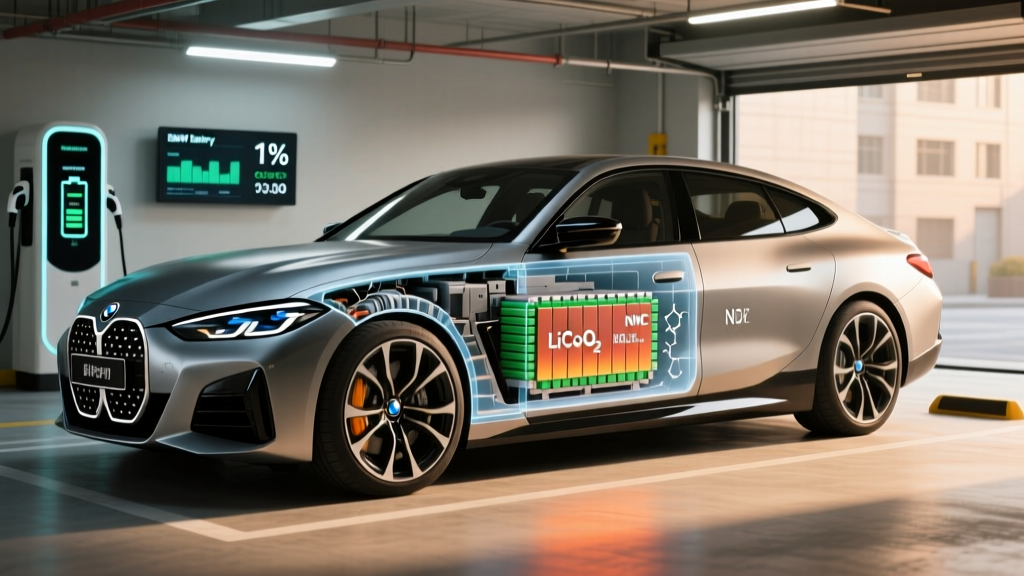
If you're picking up a new electric vehicle or shopping for your first one, a surprisingly common question surfaces: do car batteries come charged? The short answer is yes — every new EV leaves the factory with its high-voltage traction battery partially charged, typically between 40% and 60% State of Charge (SoC). That's deliberate. Shipping a lithium-ion pack at 100% SoC accelerates calendar degradation and poses a greater thermal risk during transport, so manufacturers target the middle of the charge curve where the cells are most stable.
But that factory charge is only the beginning. What really matters to EV buyers and owners is how that battery will perform over 5, 10, or 15 years — how much range it will lose, what the warranty actually covers, and whether a replacement will ever be necessary. This guide breaks down the data.
How Long Do EV Batteries Actually Last?
Modern EV traction batteries are engineered for longevity that typically exceeds the mechanical lifespan of the vehicle itself. Real-world fleet data and manufacturer testing converge on a consistent picture:
- Years: Most lithium-ion EV packs are designed to last 15–20 years under normal use before degrading to a point where range becomes impractical for daily driving.
- Miles: Expect 150,000–200,000+ miles before significant capacity loss, with many packs exceeding 200,000 miles while retaining 80% or more of original capacity.
- Cycles: A typical NMC (nickel manganese cobalt) pack is rated for 1,000–2,000 full charge-discharge cycles. An LFP (lithium iron phosphate) pack can handle 3,000–5,000+ cycles.
To put that in perspective, the average American drives roughly 13,500 miles per year according to FHWA data. At that rate, a 250-mile-range EV would complete one full cycle roughly every 18 days — meaning even a conservative 1,500-cycle NMC pack would last over 70 years of average driving. The limiting factor is calendar aging, not cycle count.
Real-World Degradation Data Points:
- Tesla fleet data (2024 Impact Report): Model S/X batteries retained ~88% capacity at 200,000 miles; Model 3/Y packs showed similar trajectories.
- Geotab fleet study (1,600+ EVs over 48 months): Average annual degradation was 1.8% per year, meaning ~10% total loss after 5 years — slightly better than earlier projections.
- Nissan Leaf (passive-cooled, older generation): Early 24 kWh packs showed 10–20% loss within 3–4 years, highlighting the importance of active thermal management in modern designs.
EV Battery Warranty Terms Explained
Federal law mandates a minimum 8-year/100,000-mile warranty on EV battery packs. Most automakers meet or exceed this baseline. Here's how the major warranties stack up for 2026 models:
| Manufacturer | Warranty Period | Mileage Cap | Capacity Retention Threshold |
|---|---|---|---|
| Tesla (Model 3/Y) | 8 years | 120,000 mi (LR/AWD) | 70% |
| Hyundai / Kia | 10 years | 100,000 mi | 70% |
| Ford (Mustang Mach-E) | 8 years | 100,000 mi | 70% |
| Chevrolet (Equinox EV) | 8 years | 100,000 mi | 70% |
| BMW (iX / i4) | 8 years | 100,000 mi | 70% |
| Toyota (bZ4X) | 8 years | 100,000 mi | 70% |
What the warranty covers: If your battery's usable capacity drops below the stated threshold (typically 70% of original) within the warranty period, the manufacturer will repair or replace the pack — or individual modules — at no cost. This covers defects and abnormal degradation, not damage from accidents, flooding, or aftermarket modifications.
What it does not cover: Normal, gradual capacity loss above the threshold is expected and not warrantable. A battery at 75% capacity after 9 years is functioning within design parameters — it simply has less range than new.
LFP vs NMC: Which Battery Chemistry Is Better?
Not all EV batteries are the same. The two dominant lithium-ion chemistries in 2026 EVs are LFP (lithium iron phosphate) and NMC (nickel manganese cobalt), with NCA (nickel cobalt aluminum) used primarily by Tesla in performance trims. Each has distinct trade-offs that affect your ownership experience.
| Attribute | LFP (Lithium Iron Phosphate) | NMC / NCA (Nickel-based) |
|---|---|---|
| Energy Density | Lower (~160 Wh/kg cell-level) | Higher (~250–300 Wh/kg cell-level) |
| Typical Range | Shorter for same pack weight | Longer range per kWh of pack |
| Cycle Life | 3,000–5,000+ cycles | 1,000–2,000 cycles |
| Calendar Aging | Slower degradation over time | Faster calendar aging, especially at high SoC |
| Cold-Weather Performance | Weaker — more range loss below freezing | Better low-temp discharge capability |
| Charge-to-100% Tolerance | Can be charged to 100% daily without harm | Best kept between 20–80% for daily use |
| Cost | ~20–30% cheaper per kWh | More expensive due to cobalt/nickel |
| Common In | Tesla Model 3 RWD, standard-range EVs | Long-range, performance, and AWD models |
Bottom line: If you prioritize maximum range and don't mind managing charge habits, NMC is the better fit. If you want a battery you can charge to 100% every night without worrying about degradation — and you can accept slightly less range — LFP offers superior longevity and lower cost. For most daily commuters with home charging, LFP's "charge to full" convenience is a meaningful quality-of-life advantage.
How Much Does an EV Battery Replacement Cost?
This is the question that generates the most anxiety — and the most misinformation. Here are the actual numbers:
| Vehicle / Pack Size | Battery Capacity | Estimated Replacement Cost (2026) | Notes |
|---|---|---|---|
| Tesla Model 3 RWD | ~60 kWh (LFP) | $8,000–$12,000 | Module-level repair often cheaper |
| Tesla Model Y Long Range | ~82 kWh (NMC) | $12,000–$16,000 | Full pack replacement rare |
| Hyundai Ioniq 5 | ~77.4 kWh (NMC) | $10,000–$15,000 | 10-yr warranty reduces owner risk |
| Ford F-150 Lightning (ER) | ~131 kWh (NMC) | $20,000–$30,000 | Largest consumer pack; highest cost |
| Chevrolet Bolt EV (older) | ~65 kWh (NMC) | $9,000–$14,000 | Recall-replaced packs now improved |
Context that matters: Full battery replacements are rare. Most degradation-related issues involve individual modules or cell groups, which can be replaced for a fraction of the full-pack cost. And because battery prices have fallen roughly 80% since 2013 (per BloombergNEF), a replacement in 2035 will likely cost significantly less than today's estimates.
Most EV batteries outlast the vehicles they power. The more common end-of-life scenario is the car being retired for other mechanical or cosmetic reasons while the battery still holds 75–85% capacity.
Factors That Accelerate Battery Degradation
Your driving and charging habits directly influence how quickly your pack loses capacity. The five biggest factors, ranked by impact:
- Sustained high State of Charge: Storing an NMC battery at 100% SoC for days or weeks accelerates electrolyte decomposition. This is why Tesla and others recommend a daily charge limit of 80% for NMC packs. LFP packs are more tolerant of 100% storage.
- Frequent DC fast charging at high power: Repeated sessions at 150+ kW generate heat that stresses cells. Occasional road-trip fast charging is fine — daily reliance on it adds up. Preconditioning the battery before a fast-charge session (most EVs do this automatically when you navigate to a charger) reduces this stress.
- Extreme temperatures: Prolonged exposure to heat above 95°F accelerates calendar aging. Extreme cold doesn't permanently damage cells but temporarily reduces range by 20–40% until the pack warms. Active thermal management systems mitigate both, but parking in shade or a garage helps.
- Deep discharge cycles: Routinely driving the battery below 10% SoC stresses the anode. Try to keep the pack above 15–20% for daily use.
- High-mileage fast-charging patterns: Fleet vehicles that fast-charge 2–3 times daily show measurably higher degradation than those using Level 2 overnight charging.
Battery Care Best Practices:
- Set daily charge limit to 80% (NMC) or 100% (LFP) — use scheduled charging to finish right before departure.
- Use Level 2 home charging as your primary method; reserve DC fast charging for road trips.
- Enable battery preconditioning when navigating to a DC fast charger.
- Avoid leaving the car at 100% SoC for more than 24 hours (especially NMC).
- In extreme heat, park in shade or a garage when possible.
- Don't let the battery sit below 10% SoC for extended periods.
- Keep tires properly inflated — underinflation increases energy draw and charging frequency.
How to Check and Monitor Battery Health (SoH)
State of Health (SoH) is the metric that tells you what percentage of your battery's original capacity remains. Here's how to track it:
In-vehicle displays: Most modern EVs show estimated range and energy consumption, but few display SoH directly. Tesla's service menu and some Hyundai/Kia models provide a battery health percentage. BMW's iDrive includes a battery capacity readout in the service information menu.
OBD-II apps and tools: Devices like the OBDLink SX or Carista adapter, paired with apps such as EVbatmon (for some brands) or LeafSpy (Nissan Leaf), can read the battery management system (BMS) and report SoH, cell voltage variance, and pack temperature.
Manual calculation: Charge to 100%, note the displayed range, and compare it to the original EPA-rated range. If your 310-mile EPA-rated EV now shows 270 miles at full charge, that's roughly 87% SoH. This isn't perfectly precise — the BMS estimate fluctuates with temperature and driving patterns — but it's a useful trend tracker over months.
Dealer diagnostic: Request a battery health report during routine service. Most manufacturers can pull a detailed SoH printout that shows individual module balance and capacity.
Emerging Battery Technology: What's Coming Next
Several next-generation technologies are in development, though none are available in production consumer EVs as of 2026:
Solid-state batteries: These replace the liquid electrolyte with a solid material, promising 30–50% higher energy density, faster charging, and reduced fire risk. Toyota has announced a solid-state EV target for 2027–2028, but production volumes will initially be very small. Samsung SDI and QuantumScape are also advancing prototypes. Realistic mass-market availability: 2029–2032.
Silicon-dominant anodes: Companies like Sila Nanotechnologies and Group14 are replacing graphite anodes with silicon composites, boosting energy density by 10–20%. Early versions are appearing in limited production (e.g., Mercedes G-Class 580e). Broader adoption expected 2027–2029.
Sodium-ion batteries: Cheaper than lithium-ion and free of critical minerals, but with lower energy density. CATL and BYD are producing these for Chinese-market EVs. US availability for passenger vehicles is not yet confirmed; likely use case is budget city EVs and energy storage.
For buyers today, current lithium-ion technology — whether LFP or NMC — is mature, reliable, and backed by extensive warranty coverage. Waiting for solid-state means waiting years with no guaranteed pricing advantage.
Frequently Asked Questions
Do car batteries come charged when you buy a new EV?
Yes. New EVs ship from the factory with the high-voltage traction battery at approximately 40–60% State of Charge. This is the optimal storage level for lithium-ion cells and ensures safe transport. You'll want to charge to your preferred level before your first drive.
Should I charge my EV to 100% every night?
It depends on your battery chemistry. If your EV has an LFP battery (common in Tesla Model 3 RWD, some BYD models), charging to 100% daily is recommended — the BMS actually needs periodic full charges for accurate calibration. For NMC/NCA batteries, set the daily limit to 80% and save 100% charges for road trips.
How do I know what chemistry my EV battery uses?
Check your owner's manual, the manufacturer's spec page, or your vehicle's window sticker. Tesla lists chemistry in the app under battery settings. Generally, standard-range/RWD trims use LFP, while long-range/AWD/performance trims use NMC or NCA.
Does fast charging damage my EV battery?
Occasional DC fast charging causes negligible harm. The concern is exclusive reliance on high-power DC charging (150+ kW) without Level 2 alternatives. Fleet data shows vehicles that fast-charge 2+ times daily degrade 1–2% faster per year than those primarily using Level 2. Modern thermal management systems significantly mitigate this.
What happens if my EV battery degrades to 70% capacity?
You still have a functional car — just with reduced range. A 300-mile EPA-rated EV at 70% SoH delivers roughly 210 miles of range, which remains adequate for most daily driving and commuting. The battery doesn't "die" at 70%; it simply holds less energy. Many EVs continue operating well below this threshold.
Is it worth buying an EV with battery replacement cost in mind?
For most buyers, no — because the battery will likely outlast the car. Focus instead on the warranty coverage (8–10 years, 100,000+ miles), your charging habits, and the vehicle's total cost of ownership. The IRS §30D tax credit can offset up to $7,500 of the purchase price (subject to MSRP caps, income limits, and battery-sourcing requirements), further improving the economics.