Why the DIY Lithium Battery Pack Conversation Keeps Coming Up
Search forums, Reddit threads, or YouTube and you will find a growing community of hobbyists building a DIY lithium battery pack from raw 18650 or prismatic cells. The appeal is straightforward: perceived cost savings, customization, and the satisfaction of engineering your own energy storage. But when the conversation shifts from off-grid solar storage or e-bike conversions to electric vehicle traction batteries, the gap between a home-built pack and a factory-engineered system becomes enormous — and consequential.
This guide dissects what goes into modern EV battery packs, how they compare to DIY builds on chemistry, longevity, safety, and cost, and what every EV owner or prospective buyer needs to know about battery degradation, warranties, replacement economics, and health monitoring. Whether you are considering a battery swap on an aging EV or simply want to understand the 60–100 kWh box under your floor, the data below will ground your expectations in real numbers.
LFP vs NMC/NCA: The Chemistry Decision That Defines Everything
Every EV battery pack — factory or DIY — starts with a cell chemistry choice. In 2026, two chemistries dominate the EV market: Lithium Iron Phosphate (LFP) and Nickel Manganese Cobalt (NMC), with Nickel Cobalt Aluminum (NCA) appearing in select Tesla and Panasonic applications. Each has distinct trade-offs that affect range, lifespan, cold-weather behavior, and cost.
| Attribute | LFP (LiFePO₄) | NMC / NCA |
|---|---|---|
| Energy Density (cell-level) | ~160–180 Wh/kg | ~220–300 Wh/kg |
| Typical Cycle Life | 3,000–6,000+ cycles | 1,000–2,500 cycles |
| Cold-Weather Performance | Reduced; slower charge acceptance below 32°F (0°C) | Better low-temp discharge; still loses range |
| Thermal Stability | Excellent; higher thermal runaway threshold (~518°F / 270°C) | Lower threshold (~338–410°F / 170–210°C) |
| Cost per kWh (cell) | ~$70–$90 | ~$100–$130 |
| State of Charge Recommendation | Can charge to 100% daily | Best kept 20–80% for longevity |
| Notable 2026 Applications | Tesla Model 3/Y RWD, Ford Mustang Mach-E Select (LFP option), BYD models | Hyundai Ioniq 5/6, Kia EV6/EV9, Chevrolet Equinox EV, Tesla Long Range/Performance |
Which is better? There is no universal winner. LFP excels in cycle life, safety, and cost — making it ideal for daily commuters who charge at home and do not need maximum range. NMC/NCA delivers higher energy density, which translates to more miles in a lighter, more compact pack — critical for long-range and performance trims. For a DIY lithium battery pack builder sourcing cells online, LFP prismatic cells (such as EVE or CATL 280 Ah cells) are popular because they are forgiving of imperfect balancing and less prone to thermal events. But assembling those cells into a safe, vehicle-grade 400V+ pack with proper compression, busbars, and a battery management system (BMS) is a fundamentally different project than wiring up a 48V solar storage bank.
How Long Do EV Batteries Actually Last?
The fear that an EV battery will need replacement at 80,000 miles is outdated. Real-world fleet data from multiple manufacturers and independent studies tells a more encouraging story.
- Geotab fleet study (2024 update, 10,000+ EVs): Average degradation of ~2.3% per year across all chemistries, meaning a typical EV retains approximately 88–90% of original capacity after 5 years.
- Tesla Impact Report: Model S/X batteries retain ~88% capacity at 150,000 miles; Model 3/Y (NMC) retain ~85% at 150,000 miles.
- LFP-specific data (CATL/EVE prismatic cells): Lab tests show <10% degradation after 3,000 full charge-discharge cycles. At an average of 250 miles per cycle, that equates to 750,000 miles before reaching 90% State of Health — far beyond the vehicle's mechanical life.
- Nissan Leaf (passive air-cooled, earlier generations): Notable outlier with accelerated degradation in hot climates; some owners reported 20–30% loss over 5–7 years. Modern liquid-cooled packs from other manufacturers have largely solved this.
How long do EV batteries last in years and miles? Most liquid-cooled EV batteries from 2020 onward are engineered to outlast the vehicle itself. A reasonable expectation is 15–20 years or 200,000+ miles before the pack drops below 70–80% of original capacity — the threshold where range reduction becomes meaningfully noticeable in daily driving. Catastrophic failure (a pack that simply stops working) is rare and usually covered under warranty.
What Does the Battery Warranty Actually Cover?
Federal law in the United States mandates that EV batteries carry a minimum warranty of 8 years / 100,000 miles (10 years / 150,000 miles in California Air Resources Board states). Most manufacturers meet or exceed this baseline. Here is how the major warranties stack up:
| Manufacturer | Warranty Term | Capacity Retention Threshold | Coverage Details |
|---|---|---|---|
| Tesla (Model 3/Y LFP) | 8 yr / 120,000 mi | 70% | Defect + capacity below threshold |
| Tesla (Model S/X) | 8 yr / 150,000 mi | 70% | Defect + capacity below threshold |
| Hyundai / Kia | 10 yr / 100,000 mi | 70% | Defect + capacity below threshold |
| Ford (Mach-E, F-150 Lightning) | 8 yr / 100,000 mi | 70% | Defect + capacity below threshold |
| GM (Chevrolet, Cadillac) | 8 yr / 100,000 mi | 70% | Defect + capacity below threshold |
| BMW | 8 yr / 100,000 mi | 70% | Defect + capacity below threshold |
| Rivian | 8 yr / 175,000 mi | 70% | Defect + capacity below threshold |
What the warranty covers: Defects in materials or workmanship, and capacity loss below the stated threshold (typically 70% of original kWh). If your 82 kWh pack can only hold 55 kWh or less within the warranty period, the manufacturer must repair or replace it.
What it does not cover: Damage from accidents, improper modifications (including aftermarket DIY battery pack swaps not performed by authorized service centers), or abuse such as repeated deep discharges to 0% and storage at extreme temperatures without maintenance charging. This is a critical consideration for anyone contemplating a DIY lithium battery pack replacement — you will almost certainly void the factory warranty.
EV Battery Replacement Cost: The Numbers
Battery replacement is the single biggest financial fear among EV shoppers. Here is what it actually costs in 2026, based on manufacturer service data and third-party repair shops:
| Vehicle | Battery Size | Estimated Pack Cost | Labor + Total | When Typically Needed |
|---|---|---|---|---|
| Tesla Model 3 RWD (LFP) | ~60 kWh | $8,000–$10,000 | $10,000–$13,000 | Rare before 200k+ mi |
| Tesla Model Y LR (NMC) | ~82 kWh | $12,000–$15,000 | $14,000–$18,000 | Rare before 200k+ mi |
| Hyundai Ioniq 5 | ~77.4 kWh | $11,000–$14,000 | $13,000–$17,000 | Rare before 200k+ mi |
| Ford F-150 Lightning Ext. Range | ~131 kWh | $18,000–$25,000 | $22,000–$30,000 | Rare before 150k+ mi |
| Chevrolet Bolt EV (older, NMC) | ~65 kWh | $9,000–$12,000 | $11,000–$15,000 | Some early recalls; generally 150k+ |
| Nissan Leaf (40 kWh, air-cooled) | 40 kWh | $6,500–$9,000 | $8,000–$11,000 | More common at 80–120k mi in hot climates |
Context that matters: These costs are declining. Cell prices have fallen from over $1,000/kWh in 2010 to roughly $80–$130/kWh in 2026, according to BloombergNEF. More importantly, the vast majority of EVs will never need a full pack replacement under normal ownership. Battery modules can sometimes be individually replaced for $1,500–$4,000 per module rather than swapping the entire pack. And for those considering a DIY lithium battery pack as a cost-saving alternative: the raw cells may cost $5,000–$8,000 for a 75 kWh pack, but adding a proper BMS ($500–$2,000), thermal management integration, high-voltage safety systems, and the engineering labor to make it communicate with the vehicle's powertrain electronics often brings the total cost close to — or above — a factory replacement, without the warranty or safety certifications.
Five Factors That Accelerate (or Preserve) Battery Life
Not all miles age a battery equally. The following factors have the largest measurable impact on long-term State of Health (SoH):
- Avoid chronic DC fast charging. Occasional road-trip fast charging is fine. But daily use of 150+ kW DC fast chargers accelerates degradation. Data from the Geotab fleet study shows vehicles that fast-charge more than 3x per week degrade roughly 1.5–2x faster than those primarily using Level 2 home charging. Aim for Level 2 (7–11 kW) as your daily charging method.
- Manage State of Charge (SoC) extremes. For NMC/NCA packs, set your daily charge limit to 80% and only charge to 100% when you need the full range for a trip. Avoid leaving the car at 100% SoC for extended periods (multiple days). For LFP packs, manufacturers like Tesla recommend charging to 100% at least once per week to allow the BMS to calibrate — LFP's flat voltage curve makes SoC estimation harder without periodic full charges.
- Minimize extreme temperature exposure. Battery degradation accelerates above 95°F (35°C) ambient and below 14°F (-10°C). If you live in a hot climate, park in shade or a garage when possible. Precondition your battery (most EVs do this automatically when you set a departure time or navigate to a charger) before fast charging in cold weather — cold lithium resists ion flow, and forcing high current into a cold cell causes lithium plating, a permanent degradation mechanism.
- Don't store at 0% or 100%. If your EV will sit unused for weeks (vacation, seasonal storage), leave it plugged in with the charge limit set to 50–60%. The vehicle's thermal management and vampire-load systems draw power; a near-empty battery left unplugged can brick itself.
- Use regenerative braking wisely. Aggressive regen in cold weather (below 40°F / 4°C) can stress a cold battery. Most modern EVs automatically reduce regen when the battery is cold, but if your vehicle allows manual regen settings, dial it back in winter until the pack warms up through driving.
How to Check and Monitor Your Battery's State of Health
State of Health (SoH) is the percentage of your battery's original capacity that remains usable. A new 82 kWh pack at 90% SoH holds approximately 73.8 kWh. Here is how to check it:
Built-in vehicle tools: Many 2026 EVs include SoH or battery health indicators in the infotainment system or mobile app. Tesla displays estimated range at 100% charge, which you can compare to the original EPA-rated range. Hyundai and Kia offer a battery health readout in the EV settings menu on recent models. Nissan Leaf owners can check "health bars" on the dashboard (12 bars when new; each lost bar represents roughly 8–10% degradation).
OBD-II diagnostic tools: Devices like the OBDLink MX+ ($120–$140) paired with apps such as EV Battery Health or LeafSpy (for Nissan) can read the BMS-reported SoH directly. This is the most accurate consumer-accessible method and works on most EVs with a standard OBD-II port.
Third-party testing: Services like Recurrent offer battery health reports based on telematics data, which can be valuable when buying or selling a used EV. Some dealerships can also pull a detailed battery health report during service visits.
DIY estimation method: Charge your EV to 100% (on an LFP pack or occasionally on NMC), note the displayed range or kWh consumed from a known SoC to full, and compare against the original spec. If your 82 kWh Ioniq 5 only accepts 68 kWh from 10% to 100% on a calibrated Level 2 charger, your SoH is roughly 68 ÷ (82 × 0.9) = ~92%. This method has margin of error (charging losses, BMS buffer) but provides a useful ballpark.
Emerging Battery Tech: What Is Real and What Is Still Coming
The battery landscape is shifting, but timelines matter. Here is a realistic assessment of next-generation technologies as of 2026:
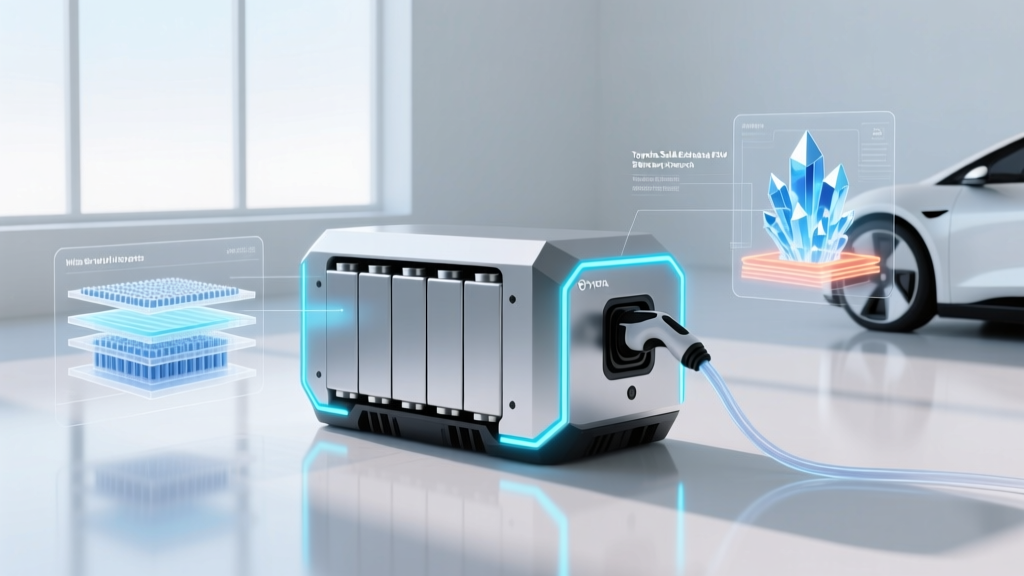
Solid-state batteries: These replace the liquid electrolyte with a solid material, promising higher energy density (potentially 400–500 Wh/kg at the cell level), faster charging, and improved safety. Toyota has announced limited production of solid-state EVs for 2027–2028, but these are expected to debut in low-volume, premium models. Samsung SDI and QuantumScape are also advancing prototypes. Widespread, affordable solid-state EVs are realistically a 2029–2032 proposition. No currently available consumer EV uses a solid-state battery.
Silicon-dominant anodes: Replacing graphite anodes with silicon can boost energy density by 20–40%. Companies like Sila Nanotechnologies and Group14 are supplying silicon-anode materials to battery manufacturers. The Mercedes-Benz G-Class electric (2025+) uses silicon-anode cells from Sila. Expect this technology to proliferate through 2027–2028 model-year vehicles.
Sodium-ion batteries: CATL and BYD are producing sodium-ion cells for lower-cost, shorter-range EVs (primarily in China). Energy density is lower (~120–160 Wh/kg) but raw materials are cheaper and more abundant. US-market adoption is uncertain before 2028 due to supply chain and manufacturing buildout requirements.
For DIY builders, none of these next-gen chemistries are accessible at the cell level yet. The cells available to consumers today — LFP prismatic and NMC cylindrical/pouch — remain the practical options, and they are already remarkably capable when properly managed.
DIY Lithium Battery Pack vs Factory Pack: The Honest Comparison
Building a DIY lithium battery pack for an EV is technically possible. Enthusiasts have successfully converted older vehicles (VW buses, BMWs, Porsches) using modules from salvaged Tesla packs, CATL LFP prismatic cells, or LG/Samsung NMC pouches. But the comparison to a factory pack reveals significant gaps:
Safety engineering: Factory packs undergo UN38.3 transport testing, UL certification, crash testing (per NHTSA FMVSS standards), and thermal propagation validation. A DIY pack in a converted vehicle has none of this. In a collision, improperly secured or insufficiently protected cells can vent, ignite, and produce toxic hydrogen fluoride gas. The high-voltage system (typically 350–800V in modern EVs) also poses lethal electrocution risk during assembly and maintenance without proper training and equipment.
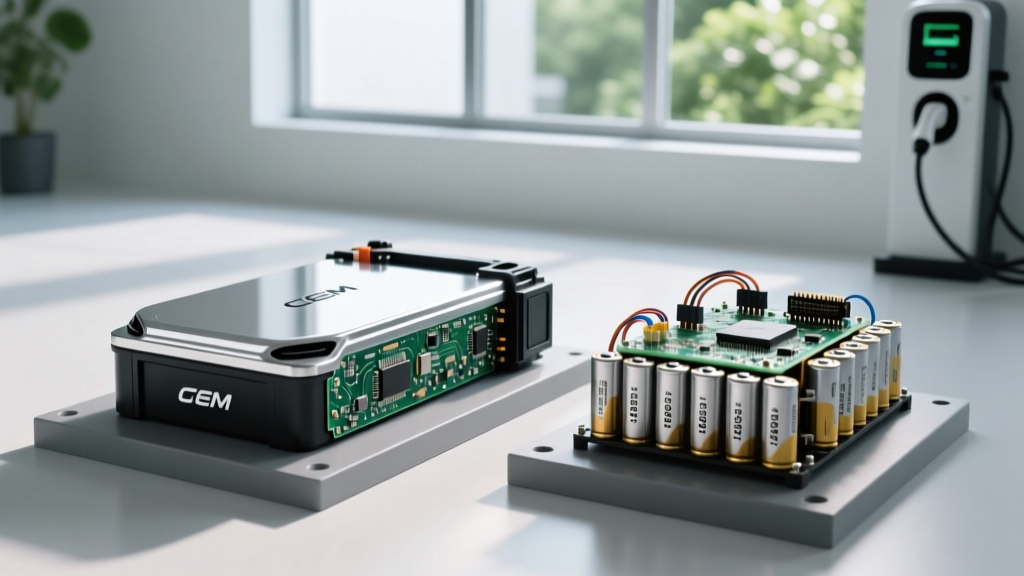
BMS sophistication: Factory battery management systems monitor individual cell voltages (to millivolt precision), temperatures at dozens of points, current flow, and isolation resistance — thousands of times per second. They manage cell balancing, thermal conditioning (heating and cooling), charge-rate limiting, and communicate with the vehicle's powertrain, braking, and safety systems. Consumer-available BMS boards (Orion, SimpBMS, etc.) are capable but not equivalent in integration depth or redundancy.
Cost reality: A DIY 75 kWh pack using CATL 280 Ah LFP cells might cost $5,000–$7,000 in raw materials, plus $1,500–$3,000 for BMS, busbars, compression fixtures, wiring, contactors, and fuses. Add $2,000–$5,000 if you need custom fabrication for enclosures and thermal management. Total: $8,500–$15,000 before labor — comparable to or exceeding a factory replacement pack that comes with a warranty, safety certification, and dealer support.
When DIY makes sense: Classic car EV conversions, off-grid solar storage, marine applications, robotics, and educational projects are legitimate use cases for DIY lithium battery packs. For replacing the traction battery in a modern production EV, the economics, safety, and warranty arguments overwhelmingly favor factory or certified-refurbished packs.
Frequently Asked Questions
How long do EV batteries last in years and miles?
Most modern liquid-cooled EV batteries (2020 and later) last 15–20 years or 200,000+ miles before degrading below 70–80% of original capacity. LFP chemistry packs may last significantly longer — 3,000–6,000+ full cycles, equating to 500,000+ miles in lab conditions. Real-world data from fleet operators like Geotab shows average annual degradation of approximately 2.3%.
How much does an EV battery cost to replace?
Replacement costs range from approximately $8,000–$11,000 for smaller packs (Nissan Leaf 40 kWh) to $22,000–$30,000 for large packs (Ford F-150 Lightning 131 kWh), including labor. Most mid-range EVs (60–82 kWh) fall in the $10,000–$18,000 range. Cell costs continue to decline, and individual module replacement is sometimes possible for $1,500–$4,000 per module.
What does the battery warranty cover?
Federal law requires at minimum 8 years / 100,000 miles of coverage (10 years / 150,000 miles in CARB states). Warranties cover manufacturing defects and capacity loss below a threshold — typically 70% of original capacity. They do not cover damage from accidents, unauthorized modifications, or abuse. Always review your specific manufacturer's warranty document for exact terms.
How do I check and maximize my EV battery health?
Check SoH through your vehicle's built-in battery health display, an OBD-II diagnostic tool (OBDLink MX+ with a compatible app), or a third-party service like Recurrent. Maximize lifespan by favoring Level 2 home charging over frequent DC fast charging, keeping NMC packs between 20–80% SoC for daily use (LFP packs should be charged to 100% weekly for calibration), avoiding extreme temperature storage, and preconditioning the battery before fast charging in cold weather.
LFP vs NMC — which is better for my EV?
Choose LFP if you prioritize longevity, lower cost, daily home charging, and can accept slightly less range per pound. LFP is ideal for commuters and drivers who charge to 100% regularly. Choose NMC/NCA if you need maximum range, better cold-weather performance, or are buying a long-range or performance trim. NMC requires more careful SoC management (20–80% daily) for optimal lifespan. Neither chemistry is universally superior — the right choice depends on your driving patterns and charging access.