Inside the Cybertruck Battery Pack: What Powers Tesla's Electric Truck
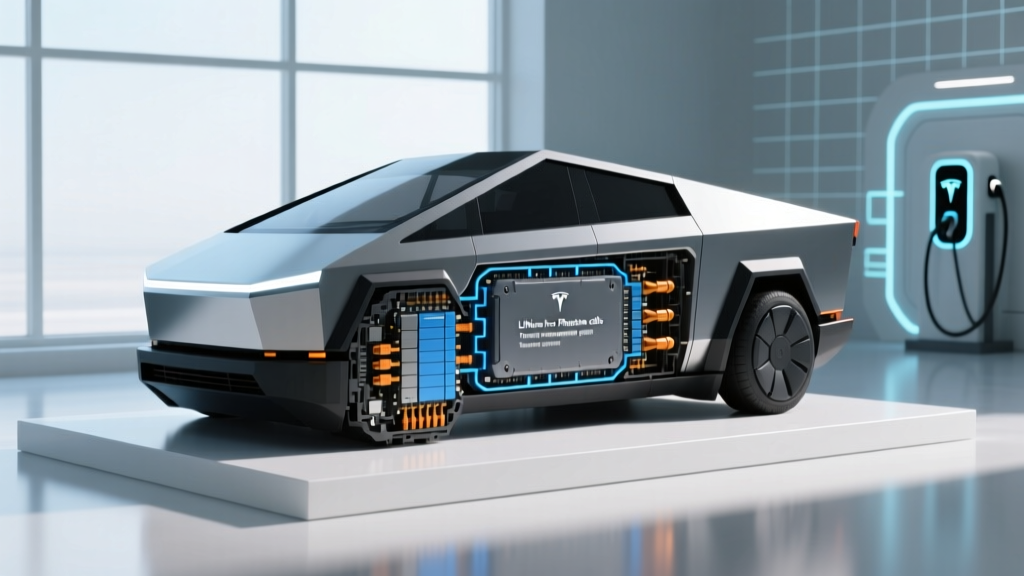
The Tesla Cybertruck uses a structural battery pack built around Tesla's 4680-format cylindrical cells — a design where the battery itself serves as a load-bearing component of the vehicle's chassis. This approach reduces overall vehicle weight and increases pack-level rigidity, but it also makes the battery pack far more integrated than a conventional bolt-in module design. For buyers and owners, understanding the Cybertruck battery pack's chemistry, real-world degradation behavior, warranty coverage, and long-term replacement economics is essential before signing a purchase order.
As of the 2025–2026 model years, the Cybertruck is offered in several configurations, each with different powertrain outputs and effective range. The battery pack sits at the center of the vehicle's skateboard architecture, and its characteristics directly influence everything from EPA-rated range to DC fast-charging behavior to how the truck handles a Wisconsin winter.
| Specification | AWD (Dual Motor) | Cyberbeast (Tri-Motor) |
|---|---|---|
| Battery Chemistry | NMC (Nickel Manganese Cobalt) — 4680 cells | NMC — 4680 cells |
| Usable Battery Capacity | ~123 kWh | ~135 kWh |
| EPA Range | 340 miles | 320 miles |
| Real-World Highway Range | ~260–290 mi (70 mph, moderate temps) | ~240–270 mi |
| Peak DC Fast Charge Rate | ~250 kW | ~250 kW |
| 10–80% DC Charge Time | ~30 minutes (with preconditioning) | ~30 minutes |
| Level 2 Charge Rate | 11.5 kW (48A) | 11.5 kW (48A) |
| 0–60 mph | 3.9 seconds | 2.6 seconds |
| Horsepower | 600 hp | 845 hp |
| Base MSRP | $79,990 | $99,990 |
| Battery & Drive Unit Warranty | 8 years / 120,000 miles | 8 years / 120,000 miles |
NMC vs LFP: Understanding the Cybertruck's Cell Chemistry
Tesla uses two primary battery chemistries across its lineup: NMC (nickel manganese cobalt) and LFP (lithium iron phosphate). The Cybertruck battery pack uses NMC chemistry in Tesla's 4680 cylindrical cell format. Understanding why requires looking at the trade-offs between these two chemistries.
NMC cells offer higher energy density — meaning more kWh packed into less weight and volume. For a heavy, high-performance truck like the Cybertruck that needs to deliver 300+ miles of range while also providing 600–845 horsepower, NMC is the practical choice. LFP cells, while cheaper and longer-lasting in terms of cycle life, are heavier per kWh and struggle to deliver the same peak power output. Tesla reserves LFP for the Model 3 and Model Y Standard Range variants, where ultimate range and peak acceleration are secondary priorities.
| Characteristic | NMC (Cybertruck) | LFP (Model 3/Y Std Range) |
|---|---|---|
| Energy Density | Higher (~250–300 Wh/kg cell-level) | Lower (~160–200 Wh/kg) |
| Cost per kWh | Higher (cobalt/nickel cost exposure) | Lower (iron/phosphate abundant) |
| Cycle Life | ~1,000–2,000 full cycles before 80% SoH | ~3,000–5,000+ full cycles |
| Cold-Weather Performance | Better low-temp discharge capability | More range loss in freezing temps |
| Recommended Daily SoC | 80% for daily use; 100% only for trips | 100% regularly recommended by Tesla |
| Thermal Runaway Risk | Higher (managed via pack engineering) | Lower (inherently more stable) |
| Used In | Cybertruck, Model S/X, Long Range variants | Model 3/Y Standard Range |
For Cybertruck owners, the practical implication of NMC chemistry is the daily charging recommendation: Tesla advises setting the charge limit to 80% for routine driving and only charging to 100% when you need maximum range for a road trip. Consistently storing an NMC battery at 100% State of Charge (SoC) accelerates degradation. This is fundamentally different from LFP, where Tesla actually recommends periodic 100% charges to help the battery management system (BMS) calibrate accurately.
Cybertruck Battery Degradation: What the Data Shows
Every lithium-ion battery loses capacity over time. The question is how much and how fast. Based on fleet data from Tesla's higher-mileage vehicles using similar NMC cell chemistries, and early owner reports from Cybertruck drivers, a reasonable degradation curve looks like this:
- Year 1 / 15,000 miles: ~3–5% capacity loss (initial formation period)
- Year 3 / 45,000 miles: ~7–10% total loss
- Year 5 / 75,000 miles: ~10–13% total loss
- Year 8 / 120,000 miles: ~13–18% total loss
Data synthesized from Tesla's 2023 Impact Report fleet degradation curves for Model S/X (NMC) and early 4680-cell field reports. Individual results vary based on charging habits, climate, and DC fast-charging frequency. Source: Tesla Impact Report.
The degradation curve is not linear. Most NMC batteries experience their steepest capacity drop in the first year or two — often called the "formation loss" — after which the degradation rate slows significantly. This means a Cybertruck with 340 miles of EPA range when new might realistically offer 310–325 miles after one year and 280–305 miles by year five, assuming typical usage patterns.
Tesla's structural 4680 pack introduces some variables. The larger cell format has different thermal characteristics than the older 2170 cells used in the Model 3 and Model Y Long Range. Tesla's dry-electrode manufacturing process (used in some 4680 production lines) is still maturing, and early-production cells from the 2023–2024 Cybertruck launch may exhibit slightly different degradation profiles than cells produced in 2025–2026 as the manufacturing process stabilizes.
Battery Warranty Coverage: What Tesla Guarantees
Tesla provides a Battery and Drive Unit Limited Warranty on the Cybertruck that covers 8 years or 120,000 miles, whichever comes first. This warranty guarantees that the battery will retain at least 70% of its original capacity over that period. If the battery degrades below 70% within the warranty window, Tesla will repair or replace it at no cost to the owner.
| Warranty Element | Details |
|---|---|
| Coverage Period | 8 years or 120,000 miles (whichever comes first) |
| Minimum Capacity Retention | 70% of original usable capacity |
| What's Covered | Battery pack, drive unit(s), high-voltage components |
| What's Not Covered | Damage from accidents, misuse, unauthorized modifications, flooding |
| Transferable? | Yes — warranty follows the VIN, transfers to subsequent owners |
| Remedy | Repair, replacement, or refurbished pack at Tesla's discretion |
The 70% threshold is the industry norm — most manufacturers including Ford, GM, Hyundai, and Rivian use similar retention targets over 8 years or 100,000–150,000 miles. For the Cybertruck AWD with its ~123 kWh usable capacity, the 70% threshold translates to roughly 86 kWh of usable capacity remaining. In range terms, that's approximately 238 miles of the original 340-mile EPA rating at the warranty's end — still functional for most daily driving.
It's worth noting that Tesla's warranty covers capacity degradation but not cosmetic issues or minor range fluctuations caused by software updates. Owners who believe their battery has fallen below the 70% threshold can request a diagnostic evaluation through Tesla service, which will pull detailed BMS logs to verify actual State of Health (SoH).
Cybertruck Battery Replacement Cost: When and How Much
Out-of-warranty battery replacement is the single largest potential maintenance cost for any EV owner. For the Cybertruck, the large structural pack means replacement costs are significant — but the likelihood of needing one within the vehicle's typical ownership period is low based on current fleet data.
| Scenario | Estimated Cost Range | Notes |
|---|---|---|
| Full pack replacement (out of warranty) | $20,000–$35,000 | Includes pack + labor; structural pack increases labor complexity |
| Single module repair (if applicable) | $5,000–$12,000 | 4680 structural pack may limit module-level service; Tesla policy varies |
| Under warranty (below 70% SoH) | $0 to owner | Covered by 8-year/120,000-mile warranty |
| Refurbished/remanufactured pack | $12,000–$20,000 | Tesla may offer refurbished packs as packs age out of warranty |
The structural nature of the Cybertruck's battery pack complicates replacement. Unlike older EV designs where the battery module bolts in as a self-contained unit, the Cybertruck's pack is bonded into the vehicle structure. This means replacement requires more labor and specialized equipment, pushing costs toward the higher end of the range.
For context, most Tesla vehicles with NMC chemistry have not required full battery replacements within the first 150,000–200,000 miles of operation. According to Tesla's fleet data, the median degradation at 200,000 miles across Model S and Model X vehicles is approximately 12–15%, meaning most packs still operate above the 85% capacity mark well past the warranty period. The Cybertruck's 4680 cells are newer and long-term data is still accumulating, but the chemistry fundamentals are similar.
Factors That Affect Cybertruck Battery Longevity
Battery degradation is not purely a function of age or mileage. How you charge, store, and drive the Cybertruck significantly influences how quickly the pack loses capacity. Here are the most impactful factors:
- Daily charge limit: Set to 80% for NMC chemistry. Only charge to 100% before long trips, and drive soon after reaching full charge.
- Avoid deep discharge: Try not to let the battery drop below 10–15% SoC regularly. Occasional low SoC is fine; habitual deep cycling accelerates wear.
- Minimize DC fast charging: Frequent use of 250 kW Superchargers generates sustained high temperatures in the cells. For daily use, Level 2 home charging (11.5 kW) is gentler on the pack.
- Precondition before fast charging: Use the Tesla app or navigation-based preconditioning to warm the battery before arriving at a Supercharger. This optimizes the charge curve and reduces stress.
- Park in shade or a garage in summer: Prolonged exposure to ambient temperatures above 95°F with a high SoC accelerates calendar degradation.
- Plug in during extreme cold: When plugged in, the Cybertruck can use shore power to maintain battery temperature rather than consuming its own charge.
- Don't store at 100% or 0%: If leaving the truck unused for weeks, leave it at approximately 50% SoC.
The Cybertruck's thermal management system is active and sophisticated — it will cool or heat the battery as needed during driving and charging. However, the physics of lithium-ion chemistry means that every high-temperature, high-SoC event inflicts a small amount of irreversible capacity loss. Minimizing the frequency and duration of these events is the single most effective strategy for maximizing pack life.
Real-world data from Tesla fleet operators suggests that vehicles primarily charged on Level 2 at home with moderate DC fast-charging use (fewer than 50 Supercharger sessions per year) show measurably less degradation than vehicles that rely heavily on DC fast charging. The difference at 100,000 miles can be 3–5 percentage points of capacity retention.
Monitoring Battery Health: State of Health (SoH) for Owners
Tesla does not display a direct State of Health (SoH) percentage on the Cybertruck's touchscreen the way some competitors do. Instead, owners can infer battery health through several methods:
- Rated range at 100% charge: Charge the Cybertruck to 100% (occasionally, for calibration) and note the displayed rated range. Compare this to the original EPA figure. A new Cybertruck AWD shows ~340 miles at 100%; if it shows 306 miles, that indicates approximately 10% degradation.
- Tesla Service diagnostics: Request a battery health check through the Tesla app. Service can pull detailed BMS data including cell voltage variance, internal resistance, and computed SoH.
- Third-party OBD-II tools: Devices like the Scan My Tesla app paired with an OBD-II dongle can read real-time BMS data including nominal full pack capacity (in kWh), energy remaining, and cell-level voltage deltas. This is the most granular method available to owners.
- Charging behavior observation: If the Cybertruck's charge curve is noticeably slower than when new — for example, peak DC fast charging drops from 250 kW to 200 kW or below — this can indicate increased internal resistance, a sign of cell aging.
Tesla's BMS is one of the most sophisticated in the industry, actively balancing cells and managing thermal conditions. However, the displayed range estimate can fluctuate based on recent driving patterns and software updates. For the most accurate SoH assessment, a controlled 100% charge followed by a comparison to the original rated range is the simplest reliable method.
Looking Ahead: Solid-State and Silicon-Anode Batteries
The battery industry is pursuing next-generation technologies that could eventually replace or supplement today's lithium-ion cells. Two are worth tracking for Cybertruck owners considering long-term ownership or future vehicle purchases:
Solid-state batteries replace the liquid electrolyte in current lithium-ion cells with a solid material (ceramic, sulfide, or polymer). The theoretical advantages include higher energy density (potentially 400+ Wh/kg at the cell level), faster charging, and reduced fire risk. Companies like Toyota, QuantumScape, and Samsung SDI have demonstrated prototype cells, but mass production at automotive scale remains unproven. Realistic timelines for solid-state batteries in production vehicles are 2028–2032 for initial limited deployment, with broad availability unlikely before the early 2030s. No automaker, including Tesla, currently offers a solid-state battery in a production vehicle.
Silicon-anode batteries replace the graphite anode in conventional cells with silicon, which can store roughly 10 times more lithium ions per gram. This translates to meaningful energy density improvements without requiring entirely new manufacturing infrastructure. Companies like Sila Nanotechnologies and Group14 are already shipping silicon-anode materials in limited production. Tesla's own 4680 cells are believed to incorporate some silicon content in the anode, though exact composition details are not publicly disclosed. Expect incremental silicon-anode adoption to continue through the late 2020s, delivering 5–15% energy density gains per generation rather than step-change breakthroughs.
For current Cybertruck owners and buyers, these technologies are forward-looking context rather than purchase-decision factors. The NMC 4680 pack in today's Cybertruck is the battery you'll live with for the next 8–15 years, and its performance characteristics are well-understood.
Frequently Asked Questions
How long do Cybertruck batteries last in years and miles?
Based on Tesla fleet data for NMC chemistry vehicles, most battery packs retain 82–88% of their original capacity at 200,000 miles. In terms of calendar years, a Cybertruck driven 12,000–15,000 miles annually should see its battery remain above the 70% warranty threshold well past the 8-year warranty period, potentially lasting 15–20 years before degrading to a level that materially impacts usability (below 70% capacity). The battery does not "die" at a specific mileage — it gradually loses capacity over time.
How much does a Cybertruck battery cost to replace?
A full out-of-warranty Cybertruck battery pack replacement is estimated at $20,000–$35,000 including parts and labor. The structural pack design increases labor complexity compared to older Tesla models. However, based on degradation data from similar NMC packs, the vast majority of Cybertruck owners will never need a full replacement — the battery is likely to outlast the vehicle's practical ownership period. Within the 8-year/120,000-mile warranty, replacement is free if capacity drops below 70%.
What does the Cybertruck battery warranty cover?
Tesla's Battery and Drive Unit Limited Warranty covers 8 years or 120,000 miles (whichever comes first). It guarantees the battery will retain at least 70% of its original capacity. The warranty covers the battery pack, drive unit(s), and high-voltage components. It does not cover damage from accidents, misuse, unauthorized modifications, or environmental events like flooding. The warranty transfers to subsequent owners via the VIN.
How do I check and maximize my Cybertruck battery health?
To check health: periodically charge to 100% and compare displayed rated range to the original EPA figure (340 mi for AWD, 320 mi for Cyberbeast). For detailed data, use an OBD-II tool with BMS access or request a diagnostic through Tesla Service. To maximize health: set daily charge limit to 80%, minimize DC fast-charging frequency, precondition before Supercharging, avoid prolonged storage at extreme SoC levels, and park in temperature-moderate environments when possible.
LFP vs NMC — which chemistry is better for the Cybertruck?
For the Cybertruck's use case, NMC is the better fit. The truck's large size, high performance targets (600–845 hp), and 300+ mile range requirement demand the higher energy density that NMC provides. LFP cells would require a heavier, larger pack to achieve the same range, compromising payload and efficiency. LFP's advantages — lower cost, longer cycle life, and 100% daily charging capability — are better suited to lighter, less performance-oriented vehicles like the Model 3 Standard Range. The trade-off is that NMC requires an 80% daily charge limit and has a shorter cycle life, but for a truck driven 12,000–15,000 miles per year, NMC's cycle life is more than sufficient.
Does frequent Supercharging damage the Cybertruck battery?
Frequent DC fast charging does accelerate degradation compared to Level 2 charging, but the effect is manageable. Tesla's thermal management system actively cools the battery during Supercharging to limit heat damage. Fleet data suggests that owners who Supercharge 2–3 times per week show approximately 2–4% more degradation at 100,000 miles compared to owners who primarily charge at home on Level 2. For road-trip-heavy owners, this is an acceptable trade-off. The key is to always precondition the battery before fast charging and to avoid charging to 100% on DC unless necessary.
Sources: Tesla Vehicle Warranty, Fueleconomy.gov EV Technology, Tesla Impact Report.