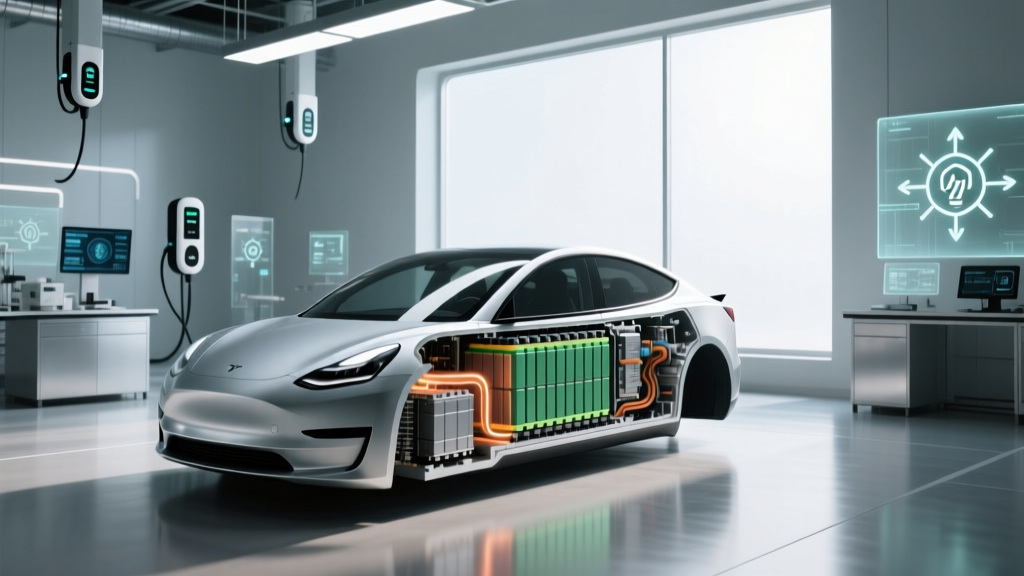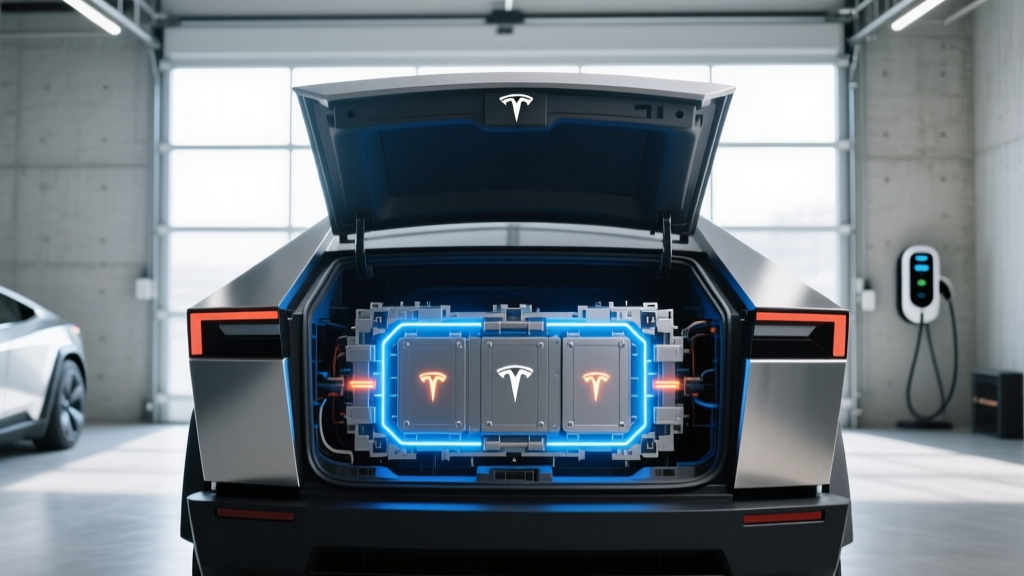
The Tesla Cybertruck's massive 123 kWh (usable) battery pack is one of the largest ever fitted to a consumer vehicle. For buyers and owners, the inevitable question follows: what happens when that pack degrades or fails out of warranty? Replacement costs for large EV battery packs remain a top concern, and the Cybertruck's stainless-steel, 48-volt architecture adds layers of complexity that affect both pricing and service logistics.
This guide breaks down the real numbers behind Cybertruck battery cost — from current replacement estimates and warranty coverage to the NMC chemistry inside, projected degradation curves, and the daily habits that maximize pack longevity. We also compare the Cybertruck's battery economics against other large-pack EVs to give you a complete ownership picture.
Cybertruck Battery Specs: Chemistry, Capacity, and Architecture
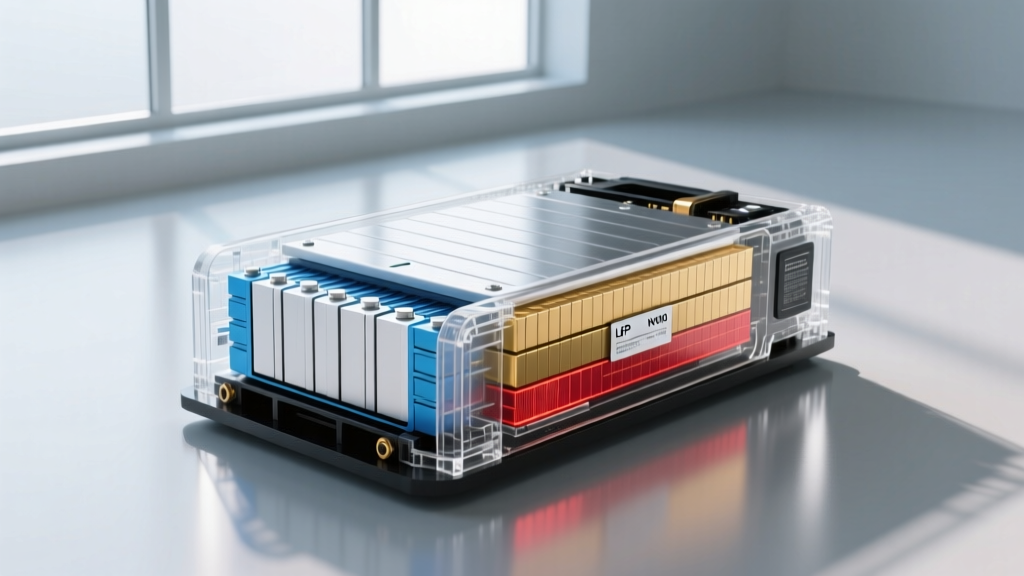
The Cybertruck uses a structural battery pack based on Tesla's 4680-format cells with a nickel-manganese-cobalt (NMC) cathode chemistry. This is not an LFP (lithium iron phosphate) pack — Tesla reserves LFP for its standard-range, rear-wheel-drive Model 3 and Model Y variants where cost and cycle life outweigh energy density needs.
| Specification | Cybertruck AWD | Cybertruck Cyberbeast |
|---|---|---|
| Battery Chemistry | NMC (4680 cells) | NMC (4680 cells) |
| Usable Capacity | ~123 kWh | ~123 kWh |
| EPA Range | 340 miles | 320 miles |
| Real-World Highway Range | ~270–290 mi | ~255–275 mi |
| Peak DC Fast Charge | ~350 kW | ~350 kW |
| 10–80% DC Charge Time | ~15–17 min (est.) | ~15–17 min (est.) |
| Level 2 Charge Rate | ~11.5 kW | ~11.5 kW |
| Vehicle Architecture | 48-volt | 48-volt |
| 0–60 mph | 3.9 sec | 2.6 sec |
The 48-volt electrical architecture — a first for a mass-production vehicle — reduces current and wiring harness weight but means replacement procedures and diagnostic tooling differ from the industry-standard 12V/400V/800V platforms. Any out-of-warranty service will likely require a Tesla-certified service center.
Real-World Range Note: The EPA rates the dual-motor AWD Cybertruck at 340 miles. In real-world highway driving at 70–75 mph, expect roughly 270–290 miles. In cold weather (below 32°F), range can drop an additional 15–25% depending on cabin heating demand and whether the battery is preconditioned. The Cybertruck's large frontal area and ~6,600 lb curb weight work against highway efficiency, yielding roughly 2.0–2.2 kWh/mile in mixed driving.
NMC vs LFP: Why the Cybertruck Uses Nickel-Based Chemistry
Understanding battery chemistry is essential for projecting longevity, replacement cost, and daily charging habits. The Cybertruck's NMC pack makes specific trade-offs compared to the LFP chemistry found in some Tesla models.
| Attribute | NMC / NCA (Cybertruck) | LFP (Model 3 RWD, Model Y RWD) |
|---|---|---|
| Energy Density | High (~250–300 Wh/kg cell-level) | Moderate (~160–200 Wh/kg cell-level) |
| Typical Cycle Life | 1,000–2,000 full cycles | 3,000–5,000+ full cycles |
| Cold-Weather Performance | Better low-temp discharge capability | Reduced performance below freezing; needs more preconditioning |
| Cost per kWh (cell) | Higher (~$100–$130/kWh) | Lower (~$70–$90/kWh) |
| Recommended Daily Charge Limit | 80–90% for daily use | 100% OK for regular use |
| Thermal Stability | Good; requires active thermal management | Excellent; inherently more stable |
| Used In | Cybertruck, Model S/X, Long Range variants | Model 3 RWD, Model Y RWD, some commercial storage |
Why NMC for the Cybertruck? A truck with a ~6,600 lb curb weight and a 340-mile EPA target needs maximum energy density. An LFP pack of equivalent range would be significantly heavier and larger, compromising payload and handling. The trade-off is a somewhat shorter cycle life and the need to avoid routinely charging to 100% for daily use.
How Long Do Cybertruck Batteries Last? Degradation Data
The single most important context for any battery-cost discussion is that most EV battery packs outlast the vehicles they're installed in. Tesla's own 2024 Impact Report showed that Model S/X packs (also NMC/NCA) retained approximately 85% of original capacity after 200,000 miles. The 4680-cell packs in the Cybertruck are expected to follow a similar or slightly improved trajectory, though long-term fleet data is still accumulating.
Projected Cybertruck Battery Degradation (NMC 4680 Pack)
| Mileage / Time | Estimated Capacity Retained | Approx. Range (AWD, from 340 mi EPA) |
|---|---|---|
| New | 100% | 340 miles |
| 30,000 mi / ~2 years | ~94–96% | ~320–326 miles |
| 60,000 mi / ~4 years | ~90–93% | ~306–316 miles |
| 100,000 mi / ~7 years | ~86–90% | ~292–306 miles |
| 150,000 mi / ~10 years | ~82–87% | ~279–296 miles |
| 200,000 mi / ~14 years | ~78–85% | ~265–289 miles |
Sources: Tesla Impact Report fleet data, fueleconomy.gov, and independent EV fleet studies. Individual results vary based on charging habits, climate, and fast-charging frequency.
Key takeaway: even at 200,000 miles with a pessimistic 78% retention, the Cybertruck AWD would still deliver roughly 265 EPA-equivalent miles — adequate for most daily driving and road trips with a single fast-charge stop.
Factors That Accelerate Degradation
- Frequent DC fast charging to high SoC: Repeatedly charging above 80% at high kW rates generates heat stress. Occasional road-trip fast charging is fine; daily 100% fast charges are not ideal.
- Sustained high State of Charge: Letting an NMC pack sit at 100% SoC for days or weeks accelerates calendar degradation. Set your daily charge limit to 80–90%.
- Extreme heat exposure: Prolonged operation or parking in ambient temperatures above 100°F without thermal management active can stress cells.
- Deep discharge cycles: Routinely running the pack below 10% SoC stresses NMC chemistry more than shallow cycles between 20–80%.
- Cold charging without preconditioning: Charging a cold NMC pack at high power can cause lithium plating. Always use the vehicle's navigation-based preconditioning or manually warm the battery before fast charging in winter.
Cybertruck Battery Warranty: What Tesla Covers
Tesla provides a battery and drive unit warranty that covers capacity loss below a defined threshold. For the Cybertruck, this mirrors Tesla's coverage on other all-wheel-drive and performance models.
| Coverage Item | Cybertruck Warranty Terms |
|---|---|
| Battery Pack Warranty | 8 years or 120,000 miles (whichever comes first) |
| Minimum Capacity Retention | 70% of original capacity during warranty period |
| Drive Unit Warranty | 8 years or 120,000 miles |
| What's Covered | Battery defects, excessive degradation below 70%, drive unit failure |
| What's NOT Covered | Damage from accidents, misuse, aftermarket modifications, cosmetic corrosion |
| Remedy | Repair, replacement, or refurbished pack at Tesla's discretion |
The 70% threshold means that if your Cybertruck's 123 kWh pack drops below ~86 kWh of usable capacity within 8 years or 120,000 miles, Tesla will replace or refurbish it at no cost. Based on current degradation data, hitting this threshold under normal use within the warranty period is unlikely — most owners will retain well above 80% at the 120,000-mile mark.
Important note: If you purchase a used Cybertruck, the battery warranty transfers to subsequent owners for the remainder of the original 8-year/120,000-mile term. This is a significant resale-value factor. Always verify remaining warranty through the Tesla app or a pre-purchase inspection at a service center.
Cybertruck Battery Cost: What Replacement Actually Costs
This is the question behind every EV battery anxiety headline. Here are the real numbers, based on current Tesla service pricing, industry replacement data, and the Cybertruck's specific pack size.
| Scenario | Estimated Cost Range | Notes |
|---|---|---|
| Full Pack Replacement (Out of Warranty) | $15,000 – $22,000 | Based on ~123 kWh at current Tesla pack pricing + labor. 48V architecture may add complexity. |
| Single Module/Section Repair | $3,000 – $7,000 | Tesla's 4680 structural pack may limit module-level repair; depends on failure mode. |
| Refurbished/Remanufactured Pack | $10,000 – $15,000 | Likely option post-warranty as Tesla scales refurbishment programs. |
| Under Warranty (Degradation Below 70%) | $0 to owner | Covered by 8-year/120,000-mile battery warranty. |
| Accident/Physical Damage | $15,000 – $22,000+ | Typically covered by comprehensive insurance; check your policy's EV battery clause. |
Context that matters: The $15K–$22K full-replacement figure sounds steep, but consider the comparison. A new transmission and engine rebuild on a comparable gas-powered truck (Ford F-150, Ram 1500) can cost $5,000–$9,000 and may be needed more than once over 200,000 miles. An EV battery is effectively the only major powertrain component, and it rarely needs full replacement — most packs are still functional (if degraded) well past 200,000 miles.
For perspective, here's how the Cybertruck's potential replacement cost compares to other large-pack EVs:
| Vehicle | Pack Size | Est. Full Replacement Cost |
|---|---|---|
| Tesla Cybertruck | ~123 kWh | $15,000 – $22,000 |
| GMC Hummer EV | ~212 kWh | $25,000 – $35,000 |
| Ford F-150 Lightning (Ext. Range) | ~131 kWh | $18,000 – $25,000 |
| Rivian R1T (Max Pack) | ~149 kWh | $20,000 – $28,000 |
| Tesla Model Y Long Range | ~75 kWh | $10,000 – $14,000 |
Cell prices continue to decline. BloombergNEF's annual battery price survey has tracked a general downward trend from ~$140/kWh (pack-level) in 2023 toward sub-$100/kWh by the late 2020s. If your Cybertruck needs a replacement in 2035 or 2036, the cost could be meaningfully lower than today's estimates.
How to Maximize Cybertruck Battery Health
NMC chemistry rewards moderate habits. Here's a practical checklist for getting the longest life from your pack:
- Set daily charge limit to 80–90%: Use the Tesla app or in-car settings to cap charging. Reserve 100% for road trips when you'll drive immediately after reaching full charge.
- Use Level 2 home charging as your primary method: Slow charging at 11.5 kW generates far less heat than DC fast charging. The Cybertruck's battery management system handles thermal regulation, but slower is always gentler on cells.
- Precondition before fast charging: Navigate to a Supercharger using the built-in nav — the car will automatically warm the battery for optimal charge-curve performance. In cold weather, this can cut 10–80% charge time by several minutes and reduce lithium-plating risk.
- Avoid prolonged storage at extremes: If storing the Cybertruck for more than a week, leave it plugged in with the charge limit set to ~50%. Never store at 100% or below 10%.
- Minimize DC fast-charging frequency: Daily Supercharging is not catastrophic, but it does accelerate degradation compared to Level 2. If you rely on public charging, seek Level 2 destinations where possible for regular top-ups.
- Use Sentry Mode and cabin overheat protection judiciously: These features draw from the traction battery. In hot climates, cabin overheat protection can consume 1–3 kWh per day — minor, but it adds up if the vehicle sits unplugged for extended periods.
- Keep tires properly inflated: Underinflated tires increase rolling resistance, forcing the battery to work harder. The Cybertruck's weight makes tire maintenance especially impactful on efficiency.
How to Check Cybertruck Battery State of Health (SoH)
Tesla does not expose a direct State of Health percentage in the vehicle's UI the way some competitors (like Hyundai/Kia or BMW) do. However, there are several methods to assess your pack's condition:
Method 1: Tesla App Energy Graph
The Tesla app tracks your energy consumption over time. By comparing your current average Wh/mile to your early-ownership baseline, you can infer relative degradation. A consistent 5–8% increase in Wh/mile over two years is normal and reflects both battery degradation and driving-pattern changes.
Method 2: Full Charge Range Comparison
Charge to 100% (do this occasionally for calibration, not daily) and note the displayed range. Compare it to the original EPA rating of 340 miles (AWD) or 320 miles (Cyberbeast). A new Cybertruck may display 325–340 miles at 100% depending on recent driving efficiency. If you see 290 miles at 100% after 60,000 miles, that's roughly 85% retention — perfectly normal.
Method 3: Third-Party OBD-II Diagnostics
Tools like TeslaFi, Tessie, or an OBD-II dongle paired with apps like Scan My Tesla can read detailed battery telemetry, including nominal full-pack capacity in kWh. Comparing this reading to the original ~123 kWh gives a precise SoH percentage.
Method 4: Tesla Service Center Health Report
Request a battery health report during a scheduled service visit. Tesla can pull detailed cell-balancing data, internal resistance measurements, and a formal capacity assessment. This is the most authoritative method and is recommended before purchasing a used Cybertruck.
Future Battery Technology: What's on the Horizon
If you're weighing a Cybertruck purchase against concerns about long-term battery economics, it's worth noting where the technology is heading — with realistic timelines.
Silicon-Dominant Anodes
Tesla and suppliers like Sila Nanotechnologies are working on silicon-rich anode materials that can increase energy density by 20–40% compared to graphite anodes. Higher energy density means smaller, lighter packs for the same range — and potentially lower replacement costs per kWh. Limited production integration is expected in the 2026–2028 timeframe, with broader adoption by 2030.
Solid-State Batteries
Solid-state cells replace the liquid electrolyte with a solid conductor, promising higher energy density, faster charging, and improved safety. Companies like QuantumScape, Samsung SDI, and Toyota are targeting initial production in the 2027–2029 window. However, mass-market automotive deployment at competitive pricing is realistically a 2030+ proposition. These will not be retrofittable into existing Cybertrucks.
Sodium-Ion Batteries
CATL and other manufacturers are producing sodium-ion cells for lower-cost, lower-energy-density applications. These are unlikely to appear in a heavy truck like the Cybertruck (which needs NMC's energy density) but may reduce costs for smaller EVs and stationary storage, indirectly benefiting the overall battery supply chain and pricing.
Bottom line on future tech: None of these technologies will help a current Cybertruck owner avoid a replacement. But they do signal that replacement pack costs will likely decline over the next decade as cell manufacturing scales and chemistry improves.
Frequently Asked Questions
How much does a Cybertruck battery cost to replace out of warranty?
Based on current Tesla service pricing and the ~123 kWh pack size, a full out-of-warranty replacement is estimated at $15,000–$22,000 including labor. Module-level repairs, if feasible with the structural 4680 pack, could cost $3,000–$7,000. Prices are expected to decline as cell costs fall and refurbished pack availability increases.
How long will a Cybertruck battery last before needing replacement?
Based on Tesla's fleet data for NMC/NCA packs, expect 85%+ capacity retention at 200,000 miles. Most Cybertruck batteries will remain functional for 15–20 years or 200,000+ miles before degradation makes the vehicle impractical. Full replacement within the first 10 years is rare and usually covered by warranty if due to defect or excessive degradation.
What does the Cybertruck battery warranty cover?
Tesla covers the battery pack for 8 years or 120,000 miles, guaranteeing at least 70% capacity retention. If the pack degrades below 70% within that period, Tesla will repair or replace it at no cost. The warranty also covers manufacturing defects and drive unit failures. It does not cover accident damage, aftermarket modifications, or cosmetic issues.
Should I charge my Cybertruck to 100% every day?
No. The NMC chemistry in the Cybertruck performs best with daily charging limited to 80–90%. Reserve 100% charges for road trips when you'll begin driving shortly after reaching full charge. Prolonged time at 100% SoC accelerates calendar degradation in nickel-based chemistries.
Does frequent Supercharging damage the Cybertruck battery?
Occasional DC fast charging is fine and expected. However, exclusive reliance on Supercharging (daily, for months or years) does accelerate degradation compared to primarily using Level 2 home charging. The battery management system actively manages heat during fast charging, but the physics of high-current charging still impose more stress on cells than slow charging.
How do I check my Cybertruck's battery health?
Use the Tesla app's energy tracking, compare your 100% displayed range to the original EPA figure, or use third-party tools like TeslaFi or Tessie to read nominal pack capacity via OBD-II. For the most accurate reading, request a battery health report from a Tesla Service Center — especially important before buying a used Cybertruck.
Will a Cybertruck battery replacement cost less in the future?
Very likely. Battery pack prices have trended downward over the past decade, and continued manufacturing scale, chemistry improvements, and a growing refurbished-pack market should push replacement costs lower by the early-to-mid 2030s when most current Cybertrucks might first need service.
Is the Cybertruck battery covered if it's damaged in an accident?
Physical damage to the battery pack is not covered by Tesla's battery warranty — it's treated as collision/comprehensive damage. Your auto insurance policy should cover this. Check that your insurer has specific EV battery coverage provisions, as some policies have exclusions or special deductibles for high-voltage components.
Sources: Tesla Vehicle Warranty, EPA Fuel Economy — Cybertruck, Tesla 2024 Impact Report (fleet degradation data).