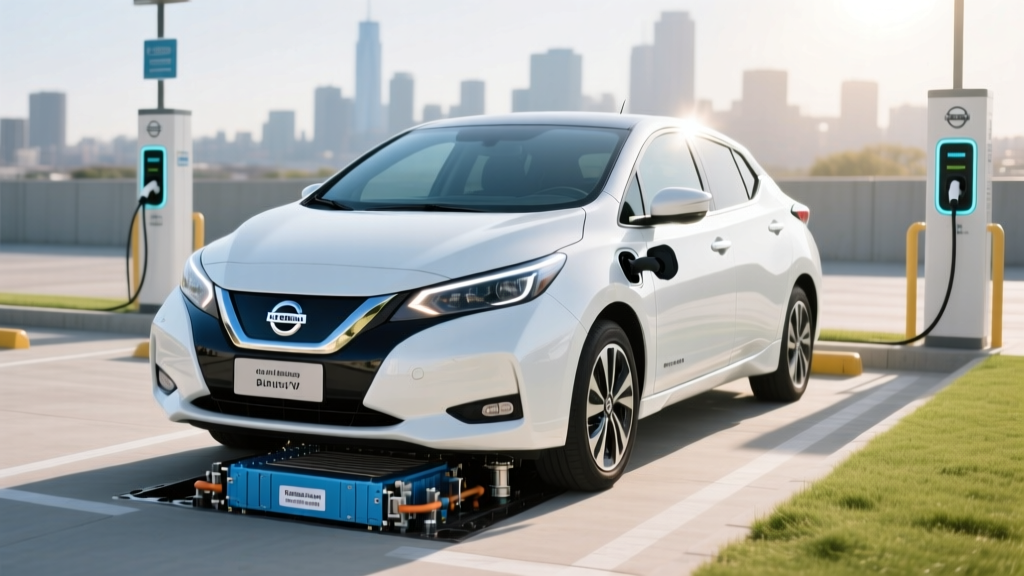
If you own a Nissan Leaf — or are considering a used one — the single biggest question looming over the purchase is the high-voltage traction battery. Specifically: what is the cost to replace the battery in a Nissan Leaf, and will you actually need to? The short answer is that most Leaf owners will never pay for a battery replacement out of pocket, but understanding the real numbers behind degradation, warranty thresholds, and replacement pricing is essential for making an informed ownership decision.
This guide breaks down the exact replacement costs across Leaf model years, explains the battery chemistry inside your Leaf, reviews real-world degradation data, and walks you through how to monitor and maximize your battery's State of Health (SoH). We'll also compare the Leaf's air-cooled battery approach to the liquid-cooled systems used by most modern EVs — a critical distinction that directly affects longevity.
Nissan Leaf Battery Replacement Cost: What You'll Actually Pay
Replacement cost depends heavily on which Leaf generation and battery pack size you have. Nissan has offered three main battery capacities over the Leaf's production run: 24 kWh (2011–2017), 30 kWh (2016–2018), 40 kWh (2018–present), and 62 kWh (2019–present, Leaf Plus). Here's what replacement looks like in 2026:
| Battery Pack | Model Years | Estimated Part Cost | Labor Cost | Total Estimated Range |
|---|---|---|---|---|
| 24 kWh | 2011–2015 | $4,500–$6,500 | $1,000–$2,000 | $5,500–$8,500 |
| 30 kWh | 2016–2018 | $5,500–$7,500 | $1,000–$2,000 | $6,500–$9,500 |
| 40 kWh | 2018–2026 | $7,000–$9,500 | $1,500–$2,500 | $8,500–$12,000 |
| 62 kWh (Plus) | 2019–2026 | $9,000–$13,000 | $1,500–$3,000 | $10,500–$16,000 |
Important context: These figures represent out-of-warranty replacement through a Nissan dealer using new or Nissan-certified refurbished packs. Third-party refurbishment shops sometimes offer lower pricing — typically 20–35% below dealer quotes — but warranty coverage on those packs varies. Some early 24 kWh Leaf owners have found used salvage packs for $2,500–$4,000, though these carry unknown degradation history.
For perspective, a 2013 Leaf with a 24 kWh pack that has degraded to 60% capacity might only be worth $5,000–$7,000 as a vehicle. In those cases, replacement can exceed the car's value. For 2018+ models with the 40 kWh or 62 kWh packs, replacement is more economically justifiable given the vehicle's higher residual value.
Nissan Leaf Battery Warranty: What's Covered and for How Long
Nissan's lithium-ion battery warranty is one of the most specific in the industry, with a clear capacity-retention threshold. Here's the current structure:
| Coverage Type | Duration | Details |
|---|---|---|
| Defect / Malfunction Warranty | 8 years / 100,000 miles | Covers manufacturing defects, internal component failures, and sudden faults |
| Capacity Loss Warranty | 8 years / 100,000 miles | Covers replacement if battery drops below 9 out of 12 capacity bars (roughly ~70–75% of original capacity) on the dashboard gauge |
The capacity bar system is unique to Nissan. Your Leaf's instrument cluster displays 12 bars representing battery health. A new Leaf starts at 12/12 bars. If your pack falls to 8 bars or fewer within the warranty period, Nissan will replace or refurbish the battery at no cost. According to Nissan's owner documentation, this threshold corresponds to approximately 66.25% of original capacity — though many owners report the 9th bar dropping around 70–75% real-world capacity.
Key limitation: The warranty does not cover gradual degradation that stays above the bar threshold. A Leaf that loses 20% of its range over 7 years but still shows 9 bars is not eligible for a warranty replacement, even though you've lost roughly 30–50 miles of practical range depending on the pack size.
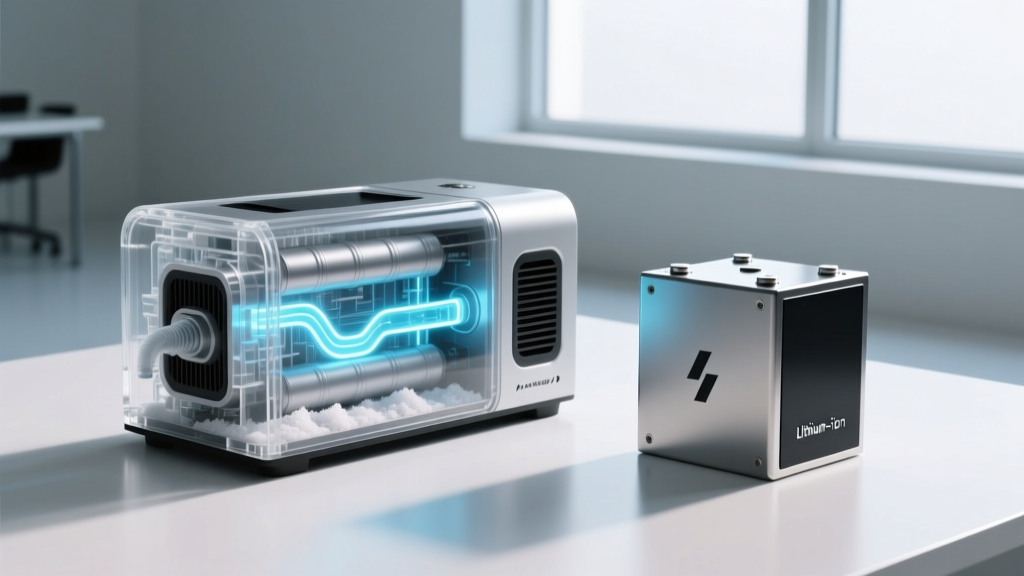
Battery Chemistry in the Nissan Leaf: NMC and the Air-Cooling Question
The Nissan Leaf uses lithium manganese oxide (LMO) cathode chemistry in its earlier packs (2011–2017) and shifted to a variant of NMC (nickel manganese cobalt) chemistry in later 40 kWh and 62 kWh packs. Understanding how this compares to other chemistries helps explain the Leaf's degradation profile.
| Property | NMC / NCA (Leaf, most EVs) | LFP (Tesla Model 3 RWD, BYD) |
|---|---|---|
| Energy Density | Higher (~200–260 Wh/kg cell-level) | Lower (~140–180 Wh/kg cell-level) |
| Cycle Life | ~1,000–2,000 full cycles | ~3,000–5,000+ full cycles |
| Cold-Weather Performance | Better low-temp discharge | Reduced performance below 32°F |
| Thermal Stability | Moderate — benefits from active cooling | Excellent — inherently more stable |
| Cost per kWh | Higher (cobalt/nickel content) | Lower (iron/phosphate — no cobalt) |
| Optimal Daily Charge | 80% recommended for longevity | 100% okay; periodic full charge recommended for BMS calibration |
The air-cooling factor: This is the single most important differentiator for Leaf battery longevity. Unlike the Tesla Model 3, Hyundai Ioniq 5, Ford Mustang Mach-E, and virtually every other modern EV, the Nissan Leaf uses passive air cooling rather than a liquid thermal management system. This means the battery cannot be actively heated in winter or cooled during fast charging and hot weather.
Real-world consequence: Leaf batteries experience accelerated degradation in hot climates (Arizona, Texas, Florida) and when subjected to frequent DC fast charging. The pack temperature can climb significantly during a 50 kW or 100 kW DC fast charge session, and without liquid cooling, that heat lingers. This phenomenon — sometimes called "Rapidgate" in Leaf communities — led Nissan to issue software updates limiting consecutive fast-charge speeds on some model years.
Real-World Degradation Data: What Leaf Owners Actually Experience
Degradation is not linear. Most lithium-ion packs experience a steeper drop in the first 1–2 years (roughly 5–8%), then settle into a slower, more linear decline of 1–2% per year. Here's what data from Leaf owner surveys, fueleconomy.gov, and fleet studies show:
- 2011–2015 (24 kWh, LMO): Average 25–35% capacity loss after 8–10 years. Many early Leafs in hot climates dropped to 8–9 bars within 5–6 years. Some 2011 models reported as low as 55–60% SoH after 100,000 miles.
- 2016–2018 (30 kWh, LMO/NMC blend): Paradoxically, some 30 kWh packs degraded faster than the older 24 kWh packs in the first 2 years, with reports of 10–15% loss in year one. Nissan issued a BMS firmware update to address reporting accuracy. Typical 5-year SoH: ~80–85%.
- 2018+ (40 kWh, NMC): Improved chemistry and slightly better thermal management. Average degradation: ~5–7% in year one, then ~1.5–2% annually. Typical 5-year SoH: ~85–90%. Some owners at 80,000+ miles report 10–11 bars.
- 2019+ (62 kWh Leaf Plus, NMC): Largest pack means less stress per cell for equivalent driving. Early data suggests similar or slightly better degradation rates than the 40 kWh. Typical 4-year SoH: ~90–93%.
For a concrete example: a 2020 Leaf Plus with an original EPA range of 226 miles and 62 kWh usable capacity might realistically deliver 200–210 miles at 4 years old — a loss of roughly 15–25 miles. That's noticeable but far from catastrophic.
How Long Do Nissan Leaf Batteries Actually Last?
The answer depends on your definition of "last." If "last" means the battery becomes completely non-functional, that almost never happens. Lithium-ion packs don't die the way a 12V lead-acid battery does — they gradually lose capacity.
If "last" means the battery retains enough capacity for practical daily driving, here's the realistic timeline:
- Years 1–5: Minimal impact. You'll lose 5–12% capacity depending on climate and charging habits. A 150-mile-range Leaf becomes a ~135–142-mile car.
- Years 5–10: Moderate impact. Cumulative loss of 12–25%. A 150-mile car might deliver 115–132 miles. Still viable for most commutes but road trips require more planning.
- Years 10–15: Significant impact for early-generation Leafs. 24 kWh packs may drop below 60% SoH, making a once-84-mile car a ~50-mile car. The 62 kWh Leaf Plus, introduced in 2019, won't reach this age until the early 2030s — projected to retain 75–85% at 15 years based on current degradation curves.
Most second-generation Leafs (2018+) will outlast their owners' desire to keep the car before the battery becomes truly impractical. The first-generation Leafs (2011–2017) are the ones where replacement costs become a genuine economic decision.
Factors That Accelerate (or Slow) Leaf Battery Degradation
- Avoid frequent DC fast charging. The Leaf's passive air cooling means heat from 50–100 kW DC sessions accumulates. Limit DC fast charging to road trips; rely on Level 2 (6.6 kW) for daily needs.
- Don't regularly charge to 100% unless needed. For NMC chemistry, storing the pack at 100% accelerates calendar degradation. Set your Leaf's charge timer to stop at ~80% for daily use. Charge to 100% only before longer drives.
- Avoid deep discharge below 10%. Repeatedly running the pack to near-zero stresses cells. Plug in when you hit 15–20%.
- Park in shade or a garage in hot climates. Battery temperature is the #1 degradation accelerator for air-cooled packs. A Leaf parked in 100°F+ ambient heat degrades measurably faster than one in a climate-controlled garage.
- Precondition while plugged in during winter. Using the Leaf's climate timer to warm the cabin while connected to shore power preserves range and avoids drawing heavily from a cold pack.
- Use the Leaf's built-in charge timer. Scheduling charges to finish just before you leave minimizes time spent sitting at high SoC.
The single most impactful thing a Leaf owner can do is minimize DC fast charging and avoid extreme heat exposure. Data from fleet operators shows that Leafs in temperate, coastal climates (Pacific Northwest, Northern Europe) retain 5–10% more capacity at the 5-year mark than identical models in desert climates — primarily due to thermal exposure.
How to Check Your Nissan Leaf's Battery Health (SoH)
Nissan makes battery health monitoring straightforward through the dashboard capacity bars, but there are more precise methods available:
1. Dashboard Capacity Bars (Basic): Navigate to the battery health screen on your Leaf's instrument cluster. You'll see up to 12 bars. Each bar represents roughly 5.5–6.25% of original capacity. A car showing 11 bars has approximately 91–94% SoH. A car showing 9 bars is approaching the warranty threshold.
2. Leaf Spy Pro (Precise): This third-party OBD-II app (approximately $20 for the Pro version, plus a compatible OBD-II Bluetooth dongle for ~$15) reads the battery management system directly. It provides:
- Exact State of Health percentage (e.g., 87.3%)
- Individual cell voltage readings (identifying weak cell pairs)
- Battery temperature in real time
- Total charge/discharge cycle count
- Ah (amp-hour) capacity vs. original spec
3. Dealer Battery Health Report: Any Nissan dealer can run a diagnostic that produces a printed battery health report. This is useful when buying a used Leaf — ask the seller for a recent dealer report, or budget $50–$100 for one as part of your pre-purchase inspection.
For buyers evaluating a used Leaf, Leaf Spy is nearly essential. The dashboard bars are a coarse approximation, and a car showing 10 bars could be anywhere from 78% to 87% actual SoH. Leaf Spy removes the ambiguity.
The Bigger Picture: Battery Replacement Economics and Alternatives
If your Leaf's battery does degrade to the point where replacement is necessary, consider these alternatives to a dealer-installed new pack:
- Nissan-certified refurbished packs: Nissan has offered refurbished replacement packs for older Leafs at a lower cost than brand-new units. Availability varies by model year and region.
- Third-party battery rebuilds: Some specialist EV shops can replace individual degraded cell modules within your existing pack casing. Cost: typically $3,000–$5,500 for a 24 kWh pack. This restores capacity without the full replacement price.
- Used/salvage packs: Pulled from wrecked Leafs with low mileage. Pricing: $2,500–$5,000 depending on capacity and verified SoH. Risk: no warranty and unknown long-term trajectory.
- Trade-in or sell as-is: For early 24 kWh Leafs, the replacement cost may exceed the vehicle's value. In those cases, trading toward a newer EV (potentially capturing a federal used-EV tax credit of up to $4,000 under §25E) may be more economical.
Looking Ahead: Solid-State and Next-Gen Battery Technology
Nissan has been vocal about its solid-state battery development, announcing a pilot production line at its Yokohama plant and targeting commercialization around 2028–2029. Solid-state batteries promise roughly double the energy density, faster charging, and improved safety compared to current lithium-ion cells.
However, solid-state packs are not available in any production vehicle as of 2026, and when they do arrive, they will debut in new models — not as retrofit replacements for existing Leafs. Current Leaf owners should make maintenance and replacement decisions based on today's technology and economics, not future promises.
Silicon-anode technology, which increases the anode's lithium storage capacity, is closer to market and is already appearing in small percentages in some manufacturers' cells. This will incrementally improve energy density and charge speed over the next 3–5 years but won't fundamentally change the replacement calculus for current Leaf owners.
Frequently Asked Questions
How much does it cost to replace the battery in a Nissan Leaf in 2026?
Depending on the pack size and model year, expect to pay between $5,500 and $16,000 for a dealer-installed replacement. The 24 kWh pack (2011–2015) is the cheapest to replace at ~$5,500–$8,500 total. The 62 kWh Leaf Plus pack costs $10,500–$16,000. Third-party refurbishment and cell-level rebuilds can reduce costs by 20–40%.
How long do Nissan Leaf batteries last before needing replacement?
Most Leaf batteries remain functional for 10–15 years, though with reduced range. First-generation 24 kWh Leafs in hot climates may need replacement at 8–10 years if range drops below practical levels. Second-generation 40 kWh and 62 kWh packs are projected to remain viable for 12–15+ years for most owners. Complete failure is extremely rare — degradation is gradual.
Does Nissan's battery warranty cover degradation?
Yes, but only if degradation drops the pack below approximately 9 out of 12 capacity bars (roughly 66–70% of original capacity) within 8 years or 100,000 miles. Gradual capacity loss above that threshold is considered normal wear and is not covered. The warranty also covers manufacturing defects and sudden malfunctions for the same 8-year/100,000-mile period.
Is LFP or NMC better for an EV battery?
Neither is universally better — it depends on priorities. NMC offers higher energy density (more range in a smaller, lighter pack) and better cold-weather performance, making it the standard for most long-range EVs. LFP offers dramatically longer cycle life (3,000–5,000+ cycles vs. 1,000–2,000), lower cost, and better thermal stability, but with lower energy density and reduced cold-weather range. LFP is ideal for standard-range models where weight and volume are less constrained. The Leaf uses NMC-type chemistry.
Can I upgrade my older Leaf to a larger battery?
Some owners of 2011–2017 Leafs have successfully upgraded from the original 24 kWh pack to a 40 kWh or even 62 kWh pack through specialist shops. However, this requires compatible BMS hardware and software, and Nissan does not officially support or warranty such upgrades. Cost typically ranges from $8,000 to $14,000 including labor. If you're considering this, research shops with documented Leaf upgrade experience and get warranty terms in writing.
How do I check my Leaf's exact battery health percentage?
The most precise method is using the Leaf Spy Pro app with an OBD-II Bluetooth dongle, which reads the BMS directly and reports exact SoH percentage, cell voltages, and cycle count. The dashboard's 12-bar display gives a rough estimate (each bar ≈ 5.5–6.25%). A Nissan dealer can also run a diagnostic battery health report for approximately $50–$100.