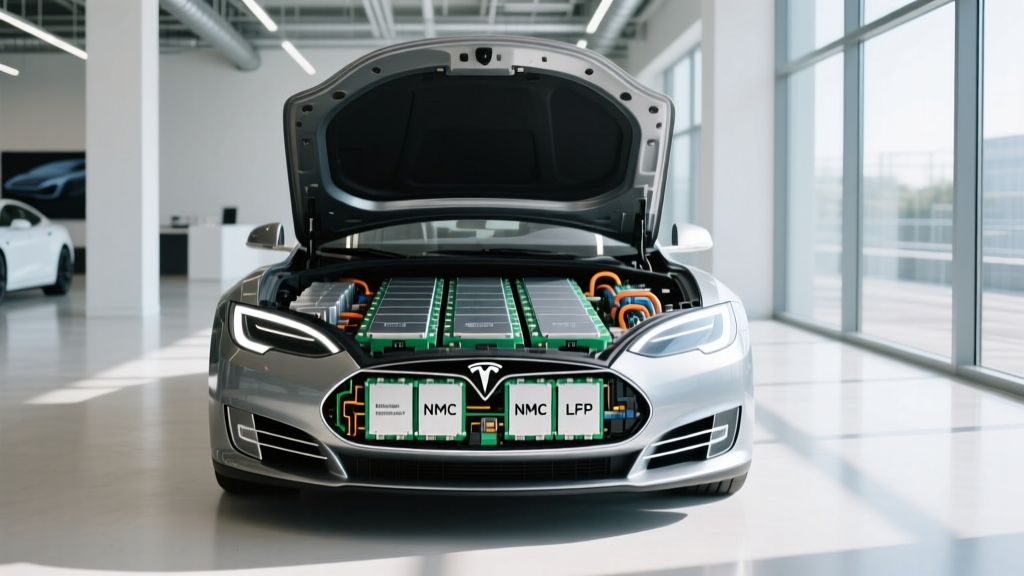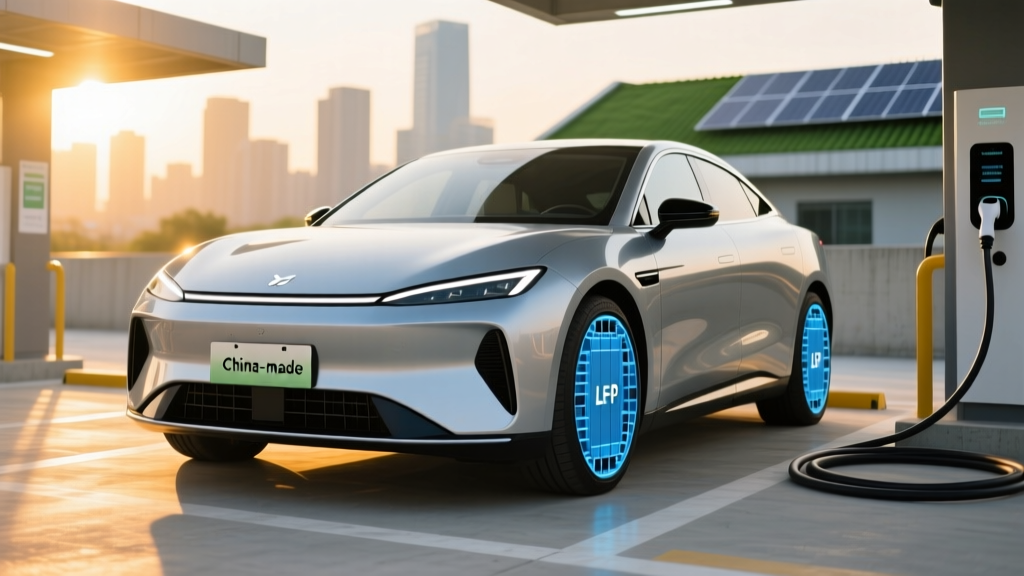
Chinese battery manufacturers now supply the majority of lithium-ion cells used in electric vehicles sold worldwide. CATL and BYD — both headquartered in China — account for over 60% of global EV battery production as of 2025, and their cells are found in vehicles from Tesla, Ford, BMW, Hyundai, and dozens of other brands. For EV buyers and owners, understanding what "Chinese batteries" actually means in practice — the chemistry, the longevity, the warranty coverage, and the real-world performance — is more important than the country of origin.
This guide breaks down the battery technology coming from China's dominant manufacturers, explains how LFP (lithium iron phosphate) and NMC (nickel manganese cobalt) chemistries compare, provides real degradation data, and gives you a practical framework for maximizing battery health over the life of your EV.
Who Makes Chinese Batteries for EVs?
Two companies dominate the landscape:
- CATL (Contemporary Amperex Technology Co., Limited): The world's largest battery manufacturer, supplying Tesla (Model 3/Y Standard Range), BMW, Mercedes-Benz, Volkswagen, Hyundai, and others. CATL produces both LFP and NMC cells, and is pioneering cell-to-pack (CTP) and cell-to-chassis (CTC) integration.
- BYD (Build Your Dreams): Both an automaker and battery supplier. BYD's "Blade Battery" uses LFP chemistry in a unique cell-to-pack design that improves structural rigidity and thermal stability. BYD supplies its own vehicles plus Tesla (some European Model Y variants) and Toyota.
Other notable Chinese cell makers include Gotion High-Tech (backed by Volkswagen), CALB, and EVE Energy. The key takeaway: Chinese batteries are not a niche product — they are the baseline for the global EV industry in 2026.
LFP vs NMC/NCA: Chemistry Trade-Offs Explained
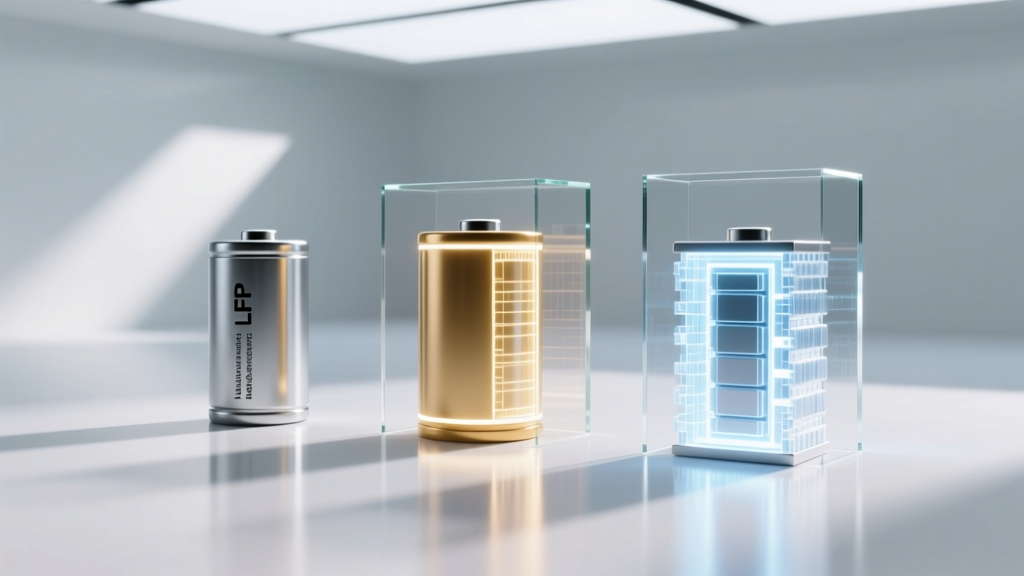
The single most consequential decision in EV battery design is chemistry. Chinese manufacturers produce both major types, and each has distinct strengths. Here is how they compare:
| Attribute | LFP (Lithium Iron Phosphate) | NMC / NCA (Nickel-based) |
|---|---|---|
| Energy Density | Lower (~160-180 Wh/kg cell-level) | Higher (~220-300 Wh/kg cell-level) |
| Range per kWh | Same (kWh is kWh at the pack level) | Same — but lighter pack for same capacity |
| Cycle Life | 3,000-5,000+ full cycles | 1,000-2,000 full cycles |
| Cold-Weather Performance | Weaker — more range loss below 32°F | Better low-temp discharge capability |
| Thermal Stability | Excellent — very resistant to thermal runaway | Good but requires more active cooling |
| Cost per kWh | Lower — no cobalt or nickel | Higher — commodity metals exposure |
| State-of-Charge Recommendation | Can charge to 100% daily without harm | Best kept 20-80% for daily use |
| Common In | Tesla Model 3/Y RWD, Ford Mustang Mach-E Select, BYD vehicles | Long-range/AWD trims, performance models |
The practical translation: If you buy a standard-range Tesla Model 3 with a CATL LFP pack, you can charge to 100% every night and the battery will still outlast the car. If you buy a long-range AWD model with an NMC pack, you should set your daily charge limit to 80% and only charge to 100% before road trips. Neither approach is wrong — they are simply different chemistries optimized for different use cases.
LFP's lower energy density means a heavier battery for the same kWh capacity, which is why it tends to appear in standard-range trims. But at the pack level, CATL and BYD have narrowed the gap through cell-to-pack designs that eliminate modules and pack more cells into the same volume. BYD's Blade Battery, for instance, achieves pack-level energy density competitive with older NMC packs despite using LFP cells.
Real-World Degradation: What the Data Shows
EV battery degradation is not a cliff — it is a gradual, non-linear decline. Most loss occurs in the first 20,000-30,000 miles, after which the curve flattens significantly. Here is what real-world data from fleet operators and owner surveys tells us:
| Mileage | Typical Capacity Retention (LFP) | Typical Capacity Retention (NMC) | Real-World Range Impact (300-mi EPA vehicle) |
|---|---|---|---|
| New | 100% | 100% | ~300 miles |
| 25,000 mi | ~96-97% | ~94-96% | ~282-291 miles |
| 50,000 mi | ~94-96% | ~91-94% | ~273-288 miles |
| 100,000 mi | ~91-94% | ~86-91% | ~258-282 miles |
| 150,000 mi | ~88-92% | ~82-88% | ~246-276 miles |
| 200,000 mi | ~85-90% | ~78-85% | ~234-270 miles |
Sources: Recurrent Auto battery health reports, Geotab fleet data (2024-2025), Tesla Impact Reports. Individual results vary based on climate, charging habits, and thermal management.
A few important observations from this data:
- LFP batteries from CATL and BYD consistently show lower degradation than NMC counterparts at equivalent mileage, primarily due to the inherent stability of the iron-phosphate cathode.
- Most EVs will retain 85-90%+ of original capacity at 150,000 miles with LFP — meaning a 300-mile EPA vehicle still delivers 255-270 usable miles. That is livable for nearly every driver.
- The "knee" in the degradation curve — a sudden acceleration in capacity loss — is rare in modern liquid-cooled packs and typically appears only after 200,000+ miles or with severe abuse (repeated 100% SoC + DC fast charging in extreme heat).
Battery Warranty Terms: What Is Actually Covered?
Federal law mandates that EV batteries carry a minimum warranty of 8 years or 100,000 miles (whichever comes first) in most states, and 10 years/150,000 miles in California Air Resources Board (CARB) states. Most manufacturers meet or exceed these minimums. Here is a comparison of current warranty terms on vehicles using Chinese-made batteries:
| Vehicle (2025-2026 MY) | Battery Source | Warranty Term | Capacity Threshold |
|---|---|---|---|
| Tesla Model 3 RWD | CATL (LFP) | 8 yr / 100,000 mi | 70% retention |
| Tesla Model 3 Long Range AWD | Panasonic (NCA) | 8 yr / 120,000 mi | 70% retention |
| Ford Mustang Mach-E Select (LFP) | CATL / BYD (LFP) | 8 yr / 100,000 mi | 70% retention |
| BYD Atto 3 / Dolphin | BYD Blade (LFP) | 8 yr / 100,000 mi | 70% retention |
| BMW iX xDrive50 | CATL (NMC) | 8 yr / 100,000 mi | 70% retention |
| Hyundai Ioniq 5 (Standard Range) | CATL (LFP, select markets) | 10 yr / 100,000 mi | 70% retention |
What the warranty covers: If your battery's usable capacity drops below the stated threshold (typically 70% of original capacity) within the warranty period, the manufacturer will repair or replace the battery at no cost. This covers defects in materials, manufacturing, and abnormal degradation. It does not cover damage from accidents, flooding, or unauthorized modifications.
What it does not cover: Normal degradation above the 70% threshold. If your battery is at 75% capacity at 95,000 miles, you are within spec and the warranty does not apply. In practice, very few modern liquid-cooled packs fall below 70% within the warranty window — the data above shows most are still above 85% at 100,000 miles.
EV Battery Replacement Cost: When and How Much?
The fear of a $20,000 battery replacement is the single biggest psychological barrier to EV adoption. Let us put this in context with actual 2025-2026 replacement pricing:
| Vehicle | Battery Size (usable kWh) | Chemistry | Estimated Replacement Cost (parts + labor) |
|---|---|---|---|
| Tesla Model 3 RWD | 57.5 kWh | LFP (CATL) | $12,000 - $15,000 |
| Tesla Model Y Long Range | 75 kWh | NCA (Panasonic) | $14,000 - $18,000 |
| Ford Mustang Mach-E Extended Range | 91 kWh | NMC | $18,000 - $23,000 |
| Hyundai Ioniq 5 Long Range | 77.4 kWh | NMC (SK On) | $15,000 - $20,000 |
| BYD Seal | 82.5 kWh | LFP (BYD Blade) | $10,000 - $14,000 |
| BMW iX xDrive50 | 105.2 kWh | NMC (CATL/Samsung) | $22,000 - $28,000 |
When is replacement actually needed? Based on current degradation data, the vast majority of EV batteries will outlast the vehicle's economic life. The average American car is scrapped at around 12 years and 150,000-200,000 miles. At that mileage, an LFP pack from CATL or BYD is likely still at 85-90% capacity — perfectly functional. Full battery replacements are overwhelmingly due to collision damage, manufacturing defects caught under warranty, or rare thermal events — not end-of-life degradation.
It is also worth noting that pack-level repair is increasingly common. Many shops can now replace individual modules or cell groups within a pack for $2,000-$5,000 rather than replacing the entire battery. This is especially true of modular pack designs from CATL and BYD.
Factors That Affect Battery Lifespan
While modern EV batteries are remarkably durable, certain habits accelerate degradation. Understanding these factors helps you make informed choices:
Charging Habits
- NMC/NCA packs: Set daily charge limit to 80%. Charge to 100% only when needed for long trips. Avoid leaving the car at 100% SoC for extended periods (more than a few hours).
- LFP packs: Charge to 100% at least once per week — this helps the BMS (Battery Management System) accurately calibrate cell balancing. Daily 100% charging is fine for LFP.
- DC fast charging: Occasional use (road trips) has negligible impact. Daily DC fast charging in hot climates can add 1-3% extra degradation over 100,000 miles. Precondition the battery before fast charging whenever possible — most EVs do this automatically when you navigate to a charger.
Temperature Management
- Extreme heat is the primary enemy of lithium-ion longevity. Parking in shade or a garage during summer reduces degradation measurably.
- Extreme cold does not cause permanent damage, but it temporarily reduces range (15-30% loss at 20°F) and slows charging speeds. Always precondition in cold weather.
- Liquid-cooled packs (standard on virtually all 2026 EVs) handle thermal stress far better than passively cooled packs. This is a major reason modern degradation curves are so flat.
State of Charge (SoC) Storage
- If storing the vehicle for more than two weeks, leave the battery at 40-60% SoC. Do not store at 100% or below 10%.
- Plug in during extreme cold or heat if possible — the thermal management system will maintain battery temperature using grid power rather than battery energy.
How to Check and Monitor Battery Health
State of Health (SoH) is the metric that tells you how much of your battery's original capacity remains usable. Here is how to monitor it:
- In-vehicle displays: Some EVs (Tesla, Hyundai/Kia, BMW) show estimated range at 100% charge, which you can compare to the original EPA figure. A Tesla Model 3 RWD that originally showed 272 miles at 100% and now shows 255 miles has roughly 94% SoH.
- OBD-II scanners: Tools like the OBDLink MX+ paired with apps such as LeafSpy (Nissan) or Tesla-specific tools like Tessie or Teslamate can read the BMS-reported SoH directly.
- Third-party services: Recurrent Auto offers free battery health reports for many EV models, using aggregated fleet data to benchmark your pack against similar vehicles.
- Dealer diagnostics: Any authorized dealer can run a battery health check. Request this during routine service visits, especially before the warranty period expires.
For a more precise measurement, perform a controlled test: charge to 100%, drive until the battery reaches 10%, and record the miles driven and kWh consumed (available on the trip computer). Compare the kWh consumed to the battery's total usable capacity. If your 75 kWh pack only delivered 67 kWh over that discharge cycle, your SoH is approximately 89%.
Emerging Battery Technology: What Comes Next
Chinese battery manufacturers are at the forefront of next-generation cell development. Here is where the technology stands as of 2026 — with realistic timelines:
- Sodium-ion batteries: CATL has begun limited production of sodium-ion cells for low-cost, short-range EVs in China. Sodium-ion offers lower energy density than LFP (~120-150 Wh/kg) but uses abundant, cheap raw materials. Expect these in budget city cars first, likely reaching global markets by 2027-2028. Not a replacement for long-range packs.
- Solid-state batteries: Multiple manufacturers (Toyota, Samsung SDI, CATL) have announced solid-state or semi-solid-state prototypes promising 2x energy density and faster charging. However, mass production at automotive scale remains unproven. Realistic timeline for mainstream availability: 2028-2030 at the earliest, likely debuting in premium vehicles at high cost. Do not delay a purchase waiting for solid-state.
- Silicon anode technology: Companies like Sila Nanotechnologies and Group14 are working with battery makers to replace graphite anodes with silicon-dominant materials, boosting energy density by 20-40%. Early production cells are entering the market in 2025-2026, primarily in performance-oriented applications. Wider adoption expected by 2027-2028.
- CATL Shenxing LFP: Already in production as of 2024-2025, this next-generation LFP cell supports 4C charging (10-80% in approximately 10 minutes) while maintaining LFP's cost and longevity advantages. Vehicles equipped with Shenxing cells are appearing in the Chinese market and will reach global markets through 2026-2027.
These technologies are forward-looking and should not factor into a purchase decision today. Current LFP and NMC cells from Chinese manufacturers are mature, well-tested, and sufficient for the vast majority of drivers.
Tax Credit Implications for Chinese-Made Batteries
The IRS §30D Clean Vehicle Credit includes specific battery sourcing requirements that directly affect vehicles with Chinese-made batteries. As of 2026, the $7,500 credit is split into two $3,750 halves:
- $3,750 for critical minerals: A percentage of critical minerals in the battery must be extracted or processed in the US or a free-trade-agreement country. This percentage increases annually.
- $3,750 for battery components: A percentage of battery components must be manufactured or assembled in North America. This percentage also increases annually.
The China restriction: Starting in 2024, vehicles with battery components manufactured by a "foreign entity of concern" (FEOC) — which includes Chinese companies like CATL and BYD — are ineligible for the battery-component half of the credit. Starting in 2025, vehicles with critical minerals sourced from FEOCs lose eligibility for the critical-minerals half as well.
This means that vehicles relying heavily on Chinese-sourced battery cells and minerals may qualify for only $3,750, $0, or the full $7,500 depending on their specific supply chain. Always verify eligibility for your specific vehicle and model year on fueleconomy.gov before purchasing. The credit also has MSRP caps ($55,000 for sedans, $80,000 for SUVs/trucks/vans), buyer income limits ($150,000 single / $300,000 joint), and can be transferred to the dealer as a point-of-sale discount.
Frequently Asked Questions
How long do EV batteries from Chinese manufacturers actually last?
Based on fleet data and owner reports, LFP batteries from CATL and BYD routinely retain 85-92% of original capacity at 150,000 miles. At typical driving rates of 12,000-15,000 miles per year, that translates to 10-12 years of service with minimal range loss. The battery will almost certainly outlast the car's economic life.
Is LFP better than NMC for daily driving?
For most daily drivers, yes. LFP offers longer cycle life, better thermal stability, lower cost, and the convenience of daily 100% charging. The trade-off is slightly lower energy density (meaning a heavier pack for the same range) and more range loss in extreme cold. If you need maximum range in a single charge or live in a consistently cold climate, NMC may be preferable.
Will my EV battery need to be replaced?
Statistically, probably not. Full battery replacements are rare and usually due to collision damage or manufacturing defects caught under warranty. Gradual degradation reduces range over time but rarely renders the vehicle unusable. A 300-mile EV at 85% SoH still delivers 255 miles — adequate for nearly all daily needs.
Does frequent DC fast charging damage Chinese-made batteries?
Occasional DC fast charging (road trips, a few times per month) has negligible impact on longevity. Daily DC fast charging, especially in hot climates without preconditioning, can add 1-3% additional degradation over 100,000 miles. Modern thermal management systems in vehicles using CATL and BYD packs mitigate this significantly.
How do I know if my battery qualifies for warranty replacement?
If your battery's usable capacity falls below 70% of its original capacity within the warranty period (typically 8 years/100,000 miles), you are eligible for a free repair or replacement. Have a dealer run a diagnostic test or use an OBD-II tool to check SoH. Keep records of your charging habits, as manufacturers may deny claims if they find evidence of extreme abuse.
Are Chinese EV batteries safe?
Yes. CATL and BYD batteries undergo the same UN38.3, IEC 62660, and SAE J2464 testing as batteries from Panasonic, LG, or SK On. BYD's Blade Battery, which uses LFP chemistry, has demonstrated exceptional thermal stability in nail penetration tests — a worst-case internal short-circuit scenario. Chinese battery manufacturers supply cells to BMW, Mercedes-Benz, Tesla, and other brands with rigorous safety standards.