The Silverado EV Battery: Size, Chemistry, and What Owners Need to Know
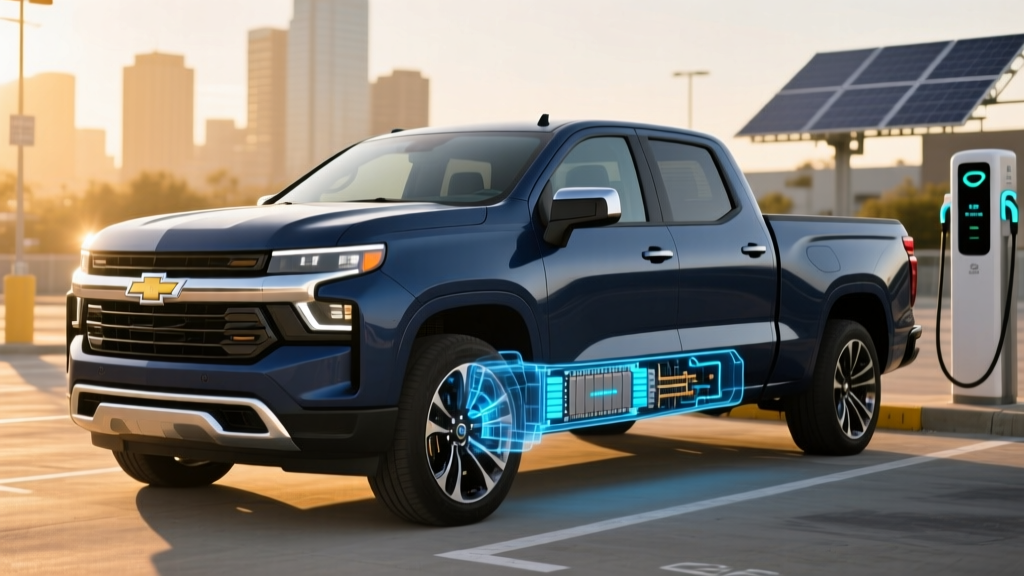
If you're searching for what size battery for Chevy Silverado 1500 in its electric form, the short answer is massive: the Chevrolet Silverado EV rides on GM's Ultium platform with a usable battery capacity of approximately 200 kWh (gross capacity slightly higher) in the 4WT and RST trims. That's roughly three times the energy stored in a Tesla Model Y Long Range and makes it one of the largest battery packs ever fitted to a production light-duty truck. For context, the gas Silverado 1500 uses only a conventional 12V auxiliary battery for starting and accessories — a completely different component that isn't the subject of this guide.
This article breaks down the Silverado EV's high-voltage traction battery in detail — chemistry, real-world degradation data, warranty coverage, replacement cost realities, and how to maximize pack longevity. We'll also compare LFP and NMC chemistries and look at what's coming next in battery tech.
2025-2026 Chevy Silverado EV Battery Specifications
| Platform | GM Ultium (BTX) |
| Usable Battery Capacity | ~200 kWh (4WT / RST) |
| Chemistry | NMC (Nickel Manganese Cobalt) — Ultium pouch cells |
| EPA Range | Up to 492 mi (4WT Max Range); 390 mi (RST AWD) |
| Max DC Fast Charge Rate | 350 kW peak (800V architecture) |
| 10-80% DC Charge Time | ~20-25 minutes (at capable charger) |
| Horsepower | 510 hp (4WT) / 754 hp (RST) |
| 0-60 mph | ~4.5 sec (4WT) / ~4.0 sec (RST) |
| Starting MSRP | ~$39,900 (4WT base) / ~$77,900 (RST) |
Source: Chevrolet Silverado EV specs, fueleconomy.gov. Specs reflect 2025-2026 model year.
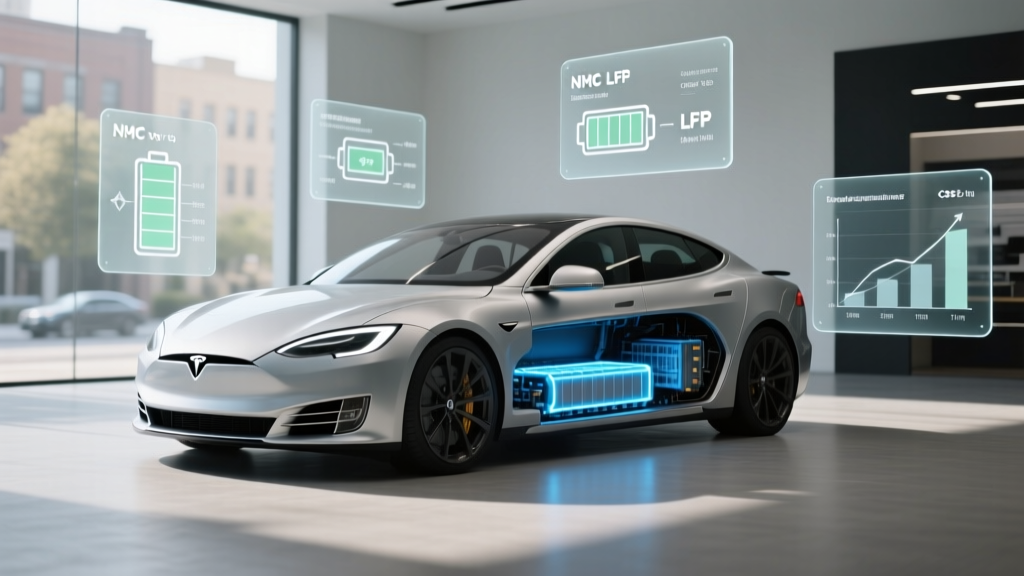
NMC vs LFP: Which Battery Chemistry Powers the Silverado EV?
GM's Ultium platform uses NMC (nickel manganese cobalt) pouch-type cells manufactured in partnership with LG Energy Solution. This is fundamentally different from the LFP (lithium iron phosphate) chemistry used in some Tesla Model 3 Standard Range vehicles, Ford's LFP-equipped F-150 Lightning base trims, and many Chinese-market EVs.
Here's how the two major lithium-ion chemistries stack up for truck applications:
| Attribute | NMC (Silverado EV) | LFP (e.g., F-150 Lightning Std) |
|---|---|---|
| Energy Density | Higher (~250-300 Wh/kg cell-level) | Lower (~160-180 Wh/kg) |
| Range Potential | Better for 400+ mi targets | Suited for 230-320 mi packs |
| Cycle Life | ~1,000-2,000 full cycles | ~3,000-5,000+ full cycles |
| Cold-Weather Performance | Better low-temp conductivity | More range loss below 20°F |
| Fast-Charging Tolerance | Good, with active thermal mgmt | Excellent — can charge to 100% regularly |
| Cost (per kWh) | Higher (cobalt/nickel content) | ~20-30% cheaper |
| Thermal Stability | Good with BMS management | Superior — inherently safer |
| Recommended SoC Range | 20-80% daily; 100% for trips | Can sit at 100% regularly |
Why NMC for the Silverado EV? GM needs the energy density to hit 400-490+ miles of range in a heavy truck platform. An LFP pack of equivalent capacity would be significantly heavier and physically larger. For fleet buyers and long-haul truck owners, range outweighs the cycle-life advantage of LFP. That said, LFP is increasingly viable for work-truck trims with shorter range needs — and GM has signaled interest in offering LFP variants for commercial applications.
How Long Do EV Batteries Last? Degradation Data and Real-World Numbers
EV batteries don't suddenly "die" — they gradually lose capacity over time and charge cycles. The industry measures this as State of Health (SoH), where 100% is a brand-new pack and degradation is the percentage of original capacity lost.
Based on aggregated fleet data from sources including Recurrent Auto and Geotab, here's what modern NMC packs typically experience:
Typical NMC Battery Degradation Curve
| Time / Mileage | Avg. Capacity Retained | Approx. Range (492-mi EPA pack) |
|---|---|---|
| Year 1 / 15,000 mi | ~95-97% | ~467-477 mi |
| Year 3 / 45,000 mi | ~90-93% | ~443-458 mi |
| Year 5 / 75,000 mi | ~86-90% | ~423-443 mi |
| Year 8 / 100,000 mi | ~80-87% | ~394-428 mi |
| Year 10 / 150,000 mi | ~75-83% | ~369-408 mi |
Data synthesized from Recurrent Auto battery research and Geotab fleet studies on liquid-cooled NMC packs. Individual results vary based on climate, charging habits, and usage patterns.
Key takeaway: degradation is non-linear. Most packs lose 3-5% in the first year (an initial "break-in" drop), then degrade at roughly 1-2% per year afterward. A 200 kWh Silverado EV pack losing 15% over 8 years still retains ~170 kWh usable — translating to over 400 miles of real-world range in many conditions. Most modern EV batteries will outlast the vehicle's body and chassis.
What Does the Silverado EV Battery Warranty Cover?
GM backs the Silverado EV's Ultium battery with a comprehensive warranty that aligns with federal requirements for EV powertrain components:
Chevrolet Silverado EV Battery Warranty Summary
| Coverage Period | 8 years / 100,000 miles (whichever comes first) |
| Capacity Retention Threshold | 70% of original usable capacity |
| What's Covered | Defects, excessive degradation below 70%, cell/module failure |
| What's NOT Covered | Cosmetic damage, damage from accidents/modifications, normal wear above 70% |
| Remedy | Module replacement or full pack replacement at GM's discretion |
Source: Chevrolet warranty information. Verify current terms with your dealer, as warranty details can update by model year.
The 70% threshold is the industry standard (also used by Ford, Tesla, Hyundai, and others). In practical terms, a Silverado EV battery would need to degrade from 200 kWh to below 140 kWh usable within 8 years to trigger a warranty claim — a scenario that current degradation data suggests is extremely unlikely under normal use. For California and states that follow CARB emissions rules, the warranty extends to 10 years / 150,000 miles on the battery.
How Much Does a Silverado EV Battery Cost to Replace?
This is the question that generates the most anxiety — and the most misinformation. Let's separate the hypothetical out-of-warranty replacement cost from the statistical likelihood of needing one.
EV Battery Replacement Cost Estimates (Out of Warranty)
| Vehicle / Pack Size | Full Pack Cost (Parts) | Labor + Installation | Total Estimated |
|---|---|---|---|
| Chevy Silverado EV (~200 kWh) | $25,000 - $35,000 | $2,500 - $4,000 | $27,500 - $39,000 |
| Ford F-150 Lightning (131 kWh) | $18,000 - $26,000 | $2,000 - $3,500 | $20,000 - $29,500 |
| Tesla Model Y (75 kWh) | $12,000 - $16,000 | $1,500 - $2,500 | $13,500 - $18,500 |
| Hyundai Ioniq 5 (77.4 kWh) | $11,000 - $15,000 | $1,500 - $2,500 | $12,500 - $17,500 |
Costs are estimates based on current OEM parts pricing and independent EV shop labor rates. Prices are expected to decline 3-5% annually as cell costs continue falling.
When is replacement actually needed? Based on current data, the answer for most owners is: never during their ownership. The average EV battery retains 85-90% capacity at 100,000 miles. Full pack replacement is typically only considered when a pack drops below 60-70% SoH — which, at current degradation rates, would require 200,000+ miles or 15+ years. More commonly, if a specific cell module fails, GM can replace individual modules within the Ultium pack rather than the entire assembly, reducing cost to roughly $3,000-$6,000 per module.
Also important: by the time a Silverado EV battery might need replacement (2035+), replacement pack costs are projected to be 30-50% lower than today's figures due to continued cell cost reductions.
Factors That Affect Battery Life — and How to Maximize It
Your charging habits and operating environment have a measurable impact on long-term battery health. Here's what the data shows matters most:
Silverado EV Battery Care Best Practices
- Daily SoC target: 80%. Set your charge limit to 80% for everyday driving. Reserve 100% charges for road trips. Sustained time at 100% SoC accelerates NMC degradation through increased electrode stress.
- Avoid frequent DC fast charging above 80%. The charge curve tapers significantly past 80% SoC — those last 20% can take as long as the first 80%. The heat generated during high-power charging, combined with high SoC, is the worst-case scenario for cell wear.
- Precondition before fast charging. Use the Silverado EV's navigation-based battery preconditioning. When you set a DC fast charger as your destination, the thermal management system warms the pack to optimal temperature (~95-105°F), enabling faster charging and reducing cell stress.
- Minimize prolonged exposure to extreme heat. Parking in shade or a garage when ambient temps exceed 95°F reduces calendar degradation. The Silverado EV's liquid-cooled pack actively manages temperature, but a hot-soaked pack still ages faster.
- Don't leave the truck at 0% or 100% for extended periods. If storing the vehicle for more than a week, aim for ~50% SoC. The 12V system and BMS draw a small parasitic load — an empty pack left sitting can drop below safe voltage thresholds.
- Use Level 2 home charging as your primary method. Overnight L2 charging at 11.5 kW (the Silverado EV's onboard charger rate) is gentle on cells, generates minimal heat, and is the most cost-effective way to charge.
Cold weather impact: In sub-freezing temperatures, expect 20-30% range reduction — not from permanent degradation, but from temporary increased internal resistance and energy diverted to cabin/battery heating. The Silverado EV's heat pump (standard on most trims) mitigates this compared to resistive heating systems. Capacity returns when temperatures rise.
How to Check Your Silverado EV Battery Health (SoH)
GM provides several ways to monitor your Ultium battery's State of Health:
1. myChevrolet App: The app displays estimated battery capacity and range trends over time. While it doesn't give a precise SoH percentage, you can track whether your achievable range at full charge is declining faster than expected.
2. In-Vehicle Diagnostics: Through the infotainment system's Energy menu, you can view charging history, energy consumption trends, and battery temperature. A sustained drop in "miles at 100%" over several months is a useful SoH proxy.
3. Dealer OBD-II Scan: Chevrolet service departments can pull the actual SoH percentage from the battery management system (BMS) during routine service visits. Request this specifically — it's not always included in standard diagnostics.
4. Third-Party Tools: Devices like the OBDLink SX paired with apps such as EVNotify or Scan My Tesla (adapted for GM vehicles) can read BMS data including cell voltages, pack temperature, and calculated SoH. Availability varies by model year and software version.
For warranty purposes, keep records of your range at full charge over time. If your Silverado EV shows a full-charge range dropping below ~344 miles (70% of the 492-mi EPA figure) within 8 years/100,000 miles, that may qualify for a warranty claim.
What's Next: Solid-State and Silicon-Anode Batteries
While the Silverado EV's current NMC Ultium pack represents mature, proven technology, the battery landscape continues to evolve. Here's a realistic timeline for emerging technologies:
Silicon-Anode Batteries (2026-2028 production): Companies like Sila Nanotechnologies and Group14 are replacing graphite anodes with silicon-dominant materials, boosting energy density by 20-40%. GM has invested in this space and may incorporate silicon-anode cells into future Ultium revisions. This could mean a lighter pack with equivalent range, or more range in the same physical footprint.
Solid-State Batteries (2028-2032 volume production): Solid-state cells replace the liquid electrolyte with a solid ceramic or polymer separator, promising higher energy density (~400+ Wh/kg), faster charging, and improved safety. Toyota, Samsung SDI, and QuantumScape are leading development. However, manufacturing scale-up remains the bottleneck — these cells are currently produced in small batches at costs 3-5x higher than conventional lithium-ion. Do not delay an EV purchase waiting for solid-state; it is years away from mainstream truck applications.
Sodium-Ion Batteries (2026-2028 for commercial/fleet): Lower energy density but significantly cheaper and free of lithium, cobalt, and nickel. CATL and BYD are already producing sodium-ion cells in China. These may appear in future Silverado EV work-truck or fleet variants where range requirements are lower and cost is paramount.
Frequently Asked Questions
What size battery does the gas Chevy Silverado 1500 use?
The conventional gas-powered Silverado 1500 uses a standard 12V lead-acid auxiliary battery (typically Group 48/H6 or Group 94R/H7, ~70-80 Ah) for engine starting and accessory power. This is entirely separate from the Silverado EV's high-voltage traction battery discussed in this guide. If you're replacing a 12V battery in a gas Silverado, check your owner's manual for the exact group size and CCA (cold cranking amps) specification.
How long will the Silverado EV battery last before needing replacement?
Based on current degradation data for liquid-cooled NMC packs, expect the Silverado EV's 200 kWh Ultium battery to retain 80-87% capacity at 100,000 miles (8 years). At typical annual mileage (12,000-15,000 mi), the pack should remain functional with 70%+ capacity well beyond 200,000 miles. Most owners will sell or trade the truck before the battery requires replacement.
Does the Silverado EV qualify for the federal tax credit?
The IRS §30D clean vehicle credit offers up to $7,500 for qualifying new EVs, but eligibility depends on MSRP caps (trucks: $80,000), buyer income limits ($300K joint / $150K single), battery component sourcing requirements, and critical mineral sourcing. The Silverado EV 4WT trims (starting ~$39,900) are more likely to qualify than the RST at ~$77,900. Point-of-sale transfer is available at participating dealers. Always verify current-year rules with a tax professional before purchasing.
Can I charge the Silverado EV at home on a standard outlet?
Yes, but slowly. A standard 120V outlet (Level 1) delivers roughly 1.4 kW — adding about 3-4 miles of range per hour. Fully replenishing a depleted 200 kWh pack would take over 6 days. A Level 2 home charger at 240V/48A (11.5 kW) adds approximately 28-30 miles per hour and can fully charge overnight in roughly 18-20 hours. Given the pack size, a Level 2 installation is strongly recommended for Silverado EV owners.
Is LFP better than NMC for a truck battery?
It depends on priorities. LFP offers longer cycle life (~3,000-5,000 cycles vs ~1,000-2,000 for NMC), lower cost, and better thermal safety. But NMC provides the higher energy density needed for 400+ mile range in a truck platform. For a fleet work truck doing 100 miles daily with overnight charging, LFP is arguably superior. For a personal-use truck where maximum range matters, NMC (like the Silverado EV's Ultium pack) is the better fit today.
Does frequent DC fast charging damage the battery?
Occasional DC fast charging has minimal impact. However, daily DC fast charging — especially to high SoC in hot weather — can accelerate degradation by 1-3% over the pack's lifetime compared to predominantly Level 2 charging. The Silverado EV's liquid-cooled thermal management mitigates much of this risk. If you rely on public DC fast charging regularly, try to charge to 80% rather than 100% and use preconditioning.
This guide reflects specifications and pricing for the 2025-2026 Chevrolet Silverado EV. Battery technology, pricing, and federal incentive rules are subject to change. Always verify current details with Chevrolet, fueleconomy.gov, and the IRS before making a purchase decision.