EV Battery Longevity: What the Data Actually Shows
When shoppers ask how long an electric vehicle battery will last, the answer is almost always longer than they expect. Real-world fleet data and manufacturer testing indicate that most modern EV traction batteries retain 85-92% of their original capacity after 100,000 miles, and many vehicles will be retired for other reasons before the battery reaches end-of-life. The fear of a sudden $20,000 replacement bill at 80,000 miles is largely a relic of early EV generations.
That said, how you treat the battery — particularly how you approach charging a battery on a daily basis — directly influences its degradation curve. Chemistry, thermal management, and charging habits all play measurable roles. This guide breaks down exactly what happens inside the pack, what the warranties actually cover, and how to maximize your battery's useful life.
How Long Do EV Batteries Last in Real-World Use?
The short answer: most EV batteries are engineered to outlast the vehicle they're installed in. Industry benchmarks target 80% capacity retention at 150,000–200,000 miles, and real-world fleet data from high-mileage vehicles supports this.
Typical EV Battery Degradation by Mileage
Based on aggregated fleet data from sources including Recurrent Auto and manufacturer reports:
- Year 1 / 15,000 miles: ~2-4% capacity loss (initial settling)
- Year 3 / 45,000 miles: ~5-8% total loss
- Year 5 / 75,000 miles: ~8-12% total loss
- Year 8 / 120,000 miles: ~12-18% total loss
- Year 10+ / 150,000+ miles: ~15-22% total loss (varies heavily by chemistry and climate)
Source: Recurrent Auto Battery Research
The degradation curve is not linear. Most lithium-ion packs experience a steeper drop in the first 12-18 months as the solid electrolyte interphase (SEI) layer stabilizes, then flatten into a slow, predictable decline. A vehicle that starts with 300 miles of EPA-rated range might realistically offer 260-270 miles at 100,000 miles — still eminently usable for daily driving and road trips.
LFP vs NMC/NCA: Choosing Your Battery Chemistry
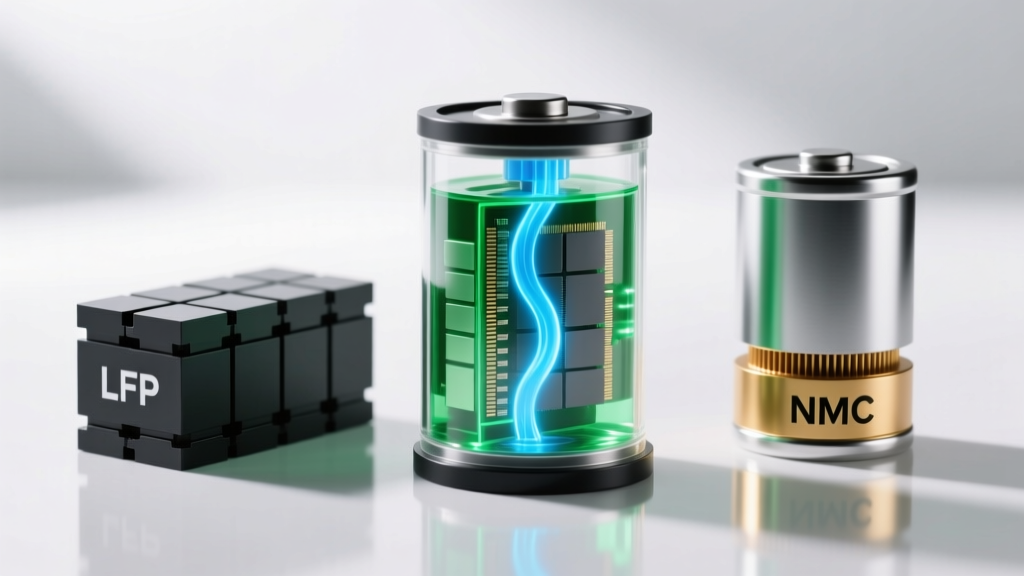
The two dominant chemistries in 2026 EV batteries are lithium iron phosphate (LFP) and nickel manganese cobalt (NMC), with nickel cobalt aluminum (NCA) appearing in some Tesla and Lucid applications. Each has distinct trade-offs that affect range, longevity, cost, and how you should approach charging a battery day to day.
| Attribute | LFP (Lithium Iron Phosphate) | NMC / NCA (Nickel-based) |
|---|---|---|
| Energy Density | Lower (~160-180 Wh/kg cell-level) | Higher (~220-280 Wh/kg cell-level) |
| Cycle Life | 3,000-5,000+ cycles to 80% SoH | 1,000-2,000 cycles to 80% SoH |
| Typical Range Impact | Shorter range for same pack weight | Longer range for same pack weight |
| Cold-Weather Performance | Greater range loss in freezing temps (~35-40%) | Moderate cold loss (~25-30%) |
| Charging to 100% | Recommended regularly for BMS calibration | Best kept at 80-90% daily; 100% for trips only |
| Cost per kWh | Lower — fewer critical minerals | Higher — nickel and cobalt pricing |
| Thermal Stability | Excellent — lower thermal runaway risk | Good — requires more active cooling |
| Common in (2026) | Tesla Model 3/Y RWD, Ford Mustang Mach-E Select, Rivian Standard | Hyundai Ioniq 5/6, BMW i4/iX, Chevy Equinox EV, most long-range trims |
Which is better? It depends on your driving pattern. If you commute 30-50 miles daily, charge at home, and want maximum cycle life with minimal maintenance anxiety, LFP is the pragmatic choice — you can charge to 100% every night without degradation concern. If you need 300+ miles of range for frequent road trips or live in a cold climate where every mile of buffer counts, NMC/NCA delivers higher energy density and better winter performance. Neither is universally superior; they're optimized for different use cases.
What Does the EV Battery Warranty Actually Cover?
Federal law mandates that EV batteries carry a minimum warranty of 8 years or 100,000 miles (whichever comes first), and in California Air Resources Board (CARB) states, that extends to 10 years / 150,000 miles. Most manufacturers exceed these minimums.
| Manufacturer | Warranty Period | Capacity Retention Threshold | Notes |
|---|---|---|---|
| Tesla (Model 3/Y RWD — LFP) | 8 yr / 120,000 mi | 70% | Long-range/AWD trims: 8 yr / 120,000 mi |
| Hyundai / Kia | 10 yr / 100,000 mi | 70% | Among the longest coverage periods |
| GM (Chevy, Cadillac, GMC) | 8 yr / 100,000 mi | 70% (Ultium platform) | Some commercial vehicles: 8 yr / 100,000 mi |
| Ford | 8 yr / 100,000 mi | 70% | Covers battery and electric drive components |
| Rivian | 8 yr / 175,000 mi | 70% | Highest mileage threshold among mainstream brands |
| BMW | 8 yr / 100,000 mi | 70% | Includes high-voltage components |
What triggers a warranty claim? The warranty covers capacity loss below the stated threshold — typically 70% of original capacity. If your 80 kWh battery (usable) can no longer hold at least 56 kWh, you have a valid claim. The warranty also covers manufacturing defects and cell failures. It does not cover damage from accidents, flooding, or aftermarket modifications to the high-voltage system.
Worth noting: capacity retention is measured by the manufacturer's diagnostic tools, not the dashboard range estimate. Range can fluctuate with temperature and driving style, but the State of Health (SoH) reading from a dealer scan tool is the definitive metric.
EV Battery Replacement Cost: What to Expect and When
Battery replacement is the single most cited fear among prospective EV buyers, and it deserves honest numbers rather than speculation.
| Vehicle / Battery Size | Battery Capacity (Usable) | Estimated Replacement Cost |
|---|---|---|
| Tesla Model 3 RWD (LFP) | ~60 kWh | $12,000 – $15,000 |
| Hyundai Ioniq 5 | ~77.4 kWh | $15,000 – $19,000 |
| Ford F-150 Lightning (Extended Range) | ~131 kWh | $25,000 – $32,000 |
| Chevy Equinox EV | ~85 kWh | $16,000 – $20,000 |
| Rivian R1T / R1S (Max Pack) | ~141 kWh | $28,000 – $35,000 |
| BMW i4 eDrive40 | ~81.5 kWh | $18,000 – $22,000 |
These figures include the battery module and labor but can vary by region and service center. The important context: the vast majority of EV owners will never need a full battery replacement. Batteries are most commonly replaced only after catastrophic damage (collision, flood) or in rare cases of early cell failure covered under warranty. For a vehicle purchased new and driven an average of 12,000-15,000 miles per year, the battery will likely still hold 75-85% capacity when the owner trades it in at year 8-10.
Module-level replacement is also increasingly common. Rather than swapping the entire pack, technicians can identify and replace individual failed modules for $2,000-$5,000, restoring capacity without the full-pack cost.
Factors That Accelerate Battery Degradation
Not all miles are created equal when it comes to battery wear. Research from the National Renewable Energy Laboratory (NREL) and real-world fleet data identify several factors that measurably accelerate capacity loss:
Battery Care Best Practices
- Avoid frequent DC fast charging above 150 kW — occasional use is fine, but daily 250+ kW sessions generate sustained heat that stresses cells. Aim for Level 2 home charging as your primary routine.
- Manage State of Charge (SoC) extremes — for NMC/NCA batteries, keep daily SoC between 20-80%. LFP batteries should be charged to 100% at least weekly for accurate BMS calibration. Neither chemistry likes sitting at 100% for days in hot weather.
- Precondition before fast charging — most modern EVs do this automatically when you navigate to a charger. Preconditioning warms the battery to optimal temperature (~70-95°F), enabling faster charging and reducing lithium plating risk in cold weather.
- Minimize prolonged storage at extreme SoC — if storing an EV for weeks, set SoC to 50-60% and keep it in a shaded or climate-controlled space if possible.
- Use regenerative braking moderately in extreme cold — aggressive regen on a freezing battery can stress cells. Many EVs automatically limit regen when the pack is cold; let the system do its job.
- Keep the thermal management system maintained — coolant flushes per the manufacturer's schedule (typically every 4-5 years) ensure the battery cooling loop operates efficiently.
The single most impactful habit is relying on Level 2 home charging (7-11 kW) for daily needs and reserving DC fast charging for road trips. A study of Tesla fleet data showed that vehicles charged primarily on Level 2 exhibited roughly 2-3% less degradation at 100,000 miles compared to those that fast-charged daily. That's not a reason to avoid road trips — it's a reason to install a home charger.
How to Monitor Your Battery's State of Health (SoH)
State of Health (SoH) is the percentage of original capacity your battery can still hold. A new battery is 100% SoH; a battery that held 80 kWh when new and now holds 68 kWh is at 85% SoH.
Most EVs don't display SoH directly on the dashboard, but there are several ways to check it:
- Manufacturer app: Tesla, Rivian, Hyundai, and BMW provide battery health indicators in their companion apps, though granularity varies.
- OBD-II diagnostic tools: Devices like the OBDLink SX paired with apps such as LeafSpy (Nissan), Scan My Tesla, or ABRP's OBD integration can read SoH directly from the BMS. Cost: $30-$80 for the adapter.
- Dealer diagnostic scan: Requesting a battery health report during a service visit gives you a manufacturer-certified SoH reading — useful for warranty claims or pre-purchase inspections on used EVs.
- Manual calculation: Charge to 100% (on LFP) or a known SoC, note the displayed range, and compare it to the EPA original. This is approximate — temperature and recent driving style affect the estimate — but it gives a rough trend line over time.
For used-EV buyers, a pre-purchase battery health check is as essential as a compression test was for gas cars. A 2023 model with 40,000 miles showing 93% SoH is in excellent shape; one showing 82% warrants negotiation or a deeper diagnostic.
Emerging Battery Technology: What's on the Horizon
Several next-generation technologies are in development, though none are available in production vehicles as of 2026:
- Solid-state batteries: Replace the liquid electrolyte with a solid material, promising higher energy density (potentially 400+ Wh/kg), faster charging, and improved safety. Toyota, Samsung SDI, and QuantumScape have announced pilot production timelines targeting 2027-2029, but cost and manufacturing scale remain significant barriers. Expect initial deployment in premium models at high MSRPs before any mainstream trickle-down.
- Silicon-dominant anodes: Companies like Sila Nanotechnologies and Group14 are replacing graphite anodes with silicon composites, boosting energy density by 20-40%. Early versions are appearing in limited applications, with broader automotive adoption expected around 2027-2028.
- Sodium-ion batteries: CATL and others are commercializing sodium-ion cells for lower-cost, lower-range applications. Energy density is below LFP, but raw material costs are dramatically lower. Best suited for city EVs and energy storage — not long-range vehicles.
These technologies are real and progressing, but buyers should make decisions based on today's proven chemistries. LFP and NMC batteries in 2026 EVs are mature, well-understood, and backed by substantial warranty coverage.
Frequently Asked Questions
How long do EV batteries last?
Most modern EV batteries are designed to retain 70-80% of original capacity after 150,000-200,000 miles (roughly 12-15 years of average driving). Fleet data from Recurrent Auto shows median degradation of about 12% at 120,000 miles across brands. Very few batteries fail catastrophically — degradation is a slow, predictable process.
How much does an EV battery cost to replace?
Full battery replacement costs range from roughly $12,000 for a smaller pack (Tesla Model 3 RWD, ~60 kWh) to $32,000+ for a large truck pack (F-150 Lightning Extended Range, ~131 kWh). However, the vast majority of EV owners never need a replacement — the battery typically outlasts the vehicle's economic life. Module-level repairs for isolated cell failures cost $2,000-$5,000.
What does the battery warranty cover?
Federal minimum is 8 years / 100,000 miles (10 yr / 150,000 mi in CARB states). Coverage applies if the battery degrades below the manufacturer's threshold — usually 70% of original capacity. It also covers manufacturing defects. It does not cover accident damage, environmental damage (flooding), or modifications. Check your specific owner's manual for exact terms.
How do I check and maximize battery health?
Monitor SoH through your manufacturer's app, an OBD-II adapter with EV-compatible software, or a dealer diagnostic scan. To maximize longevity: rely on Level 2 home charging for daily use, avoid routinely draining below 10% or sitting at 100% for extended periods (LFP excepted — charge to 100% weekly), precondition before DC fast charging, and keep up with coolant system maintenance.
LFP vs NMC — which is better and why?
LFP offers superior cycle life (3,000-5,000 cycles vs 1,000-2,000), lower cost, better thermal stability, and the convenience of routine 100% charging. NMC offers higher energy density (more range per pound), better cold-weather performance, and faster peak charging speeds. For a commuter who charges at home and drives under 200 miles daily, LFP is the lower-maintenance choice. For road-trip-heavy drivers or those in cold climates needing maximum range, NMC is the better fit.
Does fast charging damage my EV battery?
Occasional DC fast charging does not meaningfully accelerate degradation. However, exclusive reliance on high-power DC charging (150+ kW daily) adds thermal stress that can increase degradation by 2-4% over 100,000 miles compared to Level 2 charging. Modern battery management systems actively limit charge speed when the pack is too hot or too cold, providing built-in protection. Use DC fast charging for road trips and convenience — just don't make it your only charging method.