Every EV owner eventually asks the same question: how do I properly charge a battery in the car without degrading it? The high-voltage traction battery is the single most expensive component in your electric vehicle, and how you charge, store, and monitor it directly affects how many miles it will deliver over a decade of ownership. This guide breaks down battery chemistry, degradation data, warranty protections, replacement costs, and the daily habits that maximize State of Health (SoH).
LFP vs NMC: Which Battery Chemistry Should You Choose?
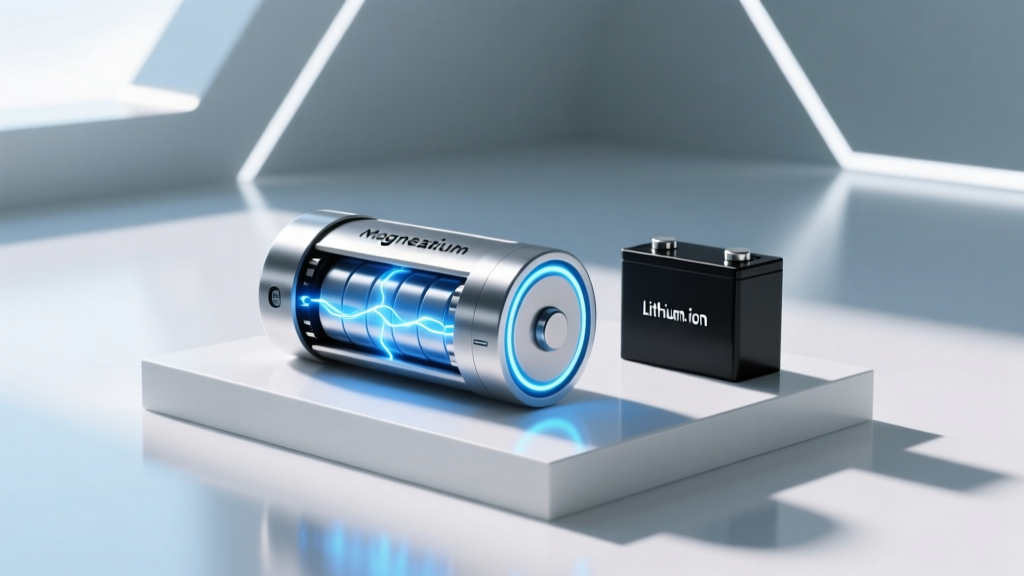
The two dominant lithium-ion chemistries in 2026 EVs are Lithium Iron Phosphate (LFP) and Nickel Manganese Cobalt (NMC), with some manufacturers using Nickel Cobalt Aluminum (NCA). The choice between them isn't about one being universally superior — it's about matching the chemistry to your driving patterns, climate, and budget.
LFP batteries, used in standard-range Tesla Model 3 and Model Y vehicles, the base Ford Mustang Mach-E Select, and most BYD models, offer exceptional cycle life and thermal stability. You can charge an LFP battery to 100% daily without accelerating degradation the way you would with NMC. The trade-off is lower energy density — meaning a heavier, physically larger pack for the same kWh — and worse cold-weather performance, where range loss can hit 30–40% below freezing compared to roughly 20–30% for NMC.
NMC (and NCA, used in long-range Teslas and some Hyundai/Kia models) packs more energy into a lighter, smaller footprint. This is why long-range and performance EVs almost universally use nickel-based chemistry. The cost is a more limited cycle life and sensitivity to sustained high states of charge — most manufacturers recommend keeping NMC packs between 20–80% for daily use.
| Attribute | LFP (Lithium Iron Phosphate) | NMC / NCA (Nickel-based) |
|---|---|---|
| Energy density | ~160–180 Wh/kg (lower) | ~220–300 Wh/kg (higher) |
| Typical cycle life | 3,000–5,000+ cycles | 1,000–2,000 cycles |
| Daily 100% charging OK? | Yes — recommended for calibration | No — keep 20–80% for daily use |
| Cold-weather range loss | 30–40% below 32°F | 20–30% below 32°F |
| Thermal runaway risk | Very low | Moderate (managed by BMS) |
| Cost per kWh | Lower (~$100–115/kWh pack-level) | Higher (~$130–150/kWh pack-level) |
| Common in | Tesla Model 3 SR, BYD, base Mach-E | Long-range/performance models, most premium EVs |
Bottom line: If you charge at home daily, commute under 60 miles, and live in a mild or warm climate, LFP is arguably the better long-term choice. If you need maximum range, tow frequently, or regularly drive in sub-freezing conditions, NMC's energy density and cold-weather edge matter more.
How Long Do EV Batteries Actually Last?
The data from hundreds of thousands of EVs on the road is clear: modern traction batteries significantly outlast their warranty periods and, in most cases, the vehicle itself. A 2025 study aggregated by Geotab, analyzing over 10,000 EVs, found an average annual degradation rate of approximately 1.8% per year across all chemistries — meaning a typical pack retains roughly 82% of its original capacity after 10 years.
Typical degradation trajectory (NMC, moderate climate, mixed charging):
- Year 1: ~2–3% loss (initial formation period)
- Years 2–5: ~1.5% per year (linear phase)
- Years 6–10: ~1.0–1.2% per year (flattening curve)
- Year 10 projected SoH: ~80–85%
- Year 15 projected SoH: ~73–78%
LFP packs tend to degrade more slowly in the linear phase (~1.0–1.2%/year after Year 1) and maintain a flatter curve overall, often exceeding 90% SoH at the 100,000-mile mark.
Real-world examples bear this out. Tesla's 2025 Impact Report showed Model S/X batteries retaining an average of 85% capacity at 200,000 miles. Hyundai/Kia's 8-year warranty is conservative relative to observed degradation in the Ioniq 5 and EV6 fleets, where reports of sub-85% SoH before 100,000 miles remain uncommon outside of extreme-use cases (frequent DC fast charging in hot climates).
The critical point: most EV batteries will never need replacement during typical first-owner use. The fear of a $20,000 battery swap at 80,000 miles is not supported by current failure-rate data.
What Does the Battery Warranty Actually Cover?
Federal law mandates a minimum 8-year/100,000-mile warranty on EV traction batteries (10 years/150,000 miles in California and states that adopted CARB standards). But the details of what triggers a warranty claim matter enormously.
| Manufacturer | Warranty Period | Capacity Threshold | Notes |
|---|---|---|---|
| Tesla (Model 3/Y LFP) | 8 yr / 100,000 mi | 70% retention | Standard Range; covers defects + excessive degradation |
| Tesla (Model 3/Y LR, S, X) | 8 yr / 120,000–150,000 mi | 70% retention | Varies by model; 150k mi for S/X |
| Hyundai / Kia | 10 yr / 100,000 mi | 70% retention | Among the longest coverage periods |
| Ford (Mach-E, F-150 Lightning) | 8 yr / 100,000 mi | 70% retention | Covers battery components + degradation |
| GM (Ultium-based) | 8 yr / 100,000 mi | 70% retention | Covers module-level replacement |
| BMW / Mercedes | 8 yr / 100,000 mi | 70% retention | Some offer 80% threshold in EU; US is 70% |
The 70% capacity retention threshold is the industry standard. If your battery's State of Health drops below 70% of its original capacity within the warranty window, the manufacturer must repair or replace it — often by swapping failed modules rather than the entire pack. However, warranties typically exclude degradation caused by misuse: leaving the vehicle at 100% SoC for extended periods in extreme heat, using non-approved chargers that cause damage, or physical damage from collisions or flooding.
EV Battery Replacement Costs: What to Budget
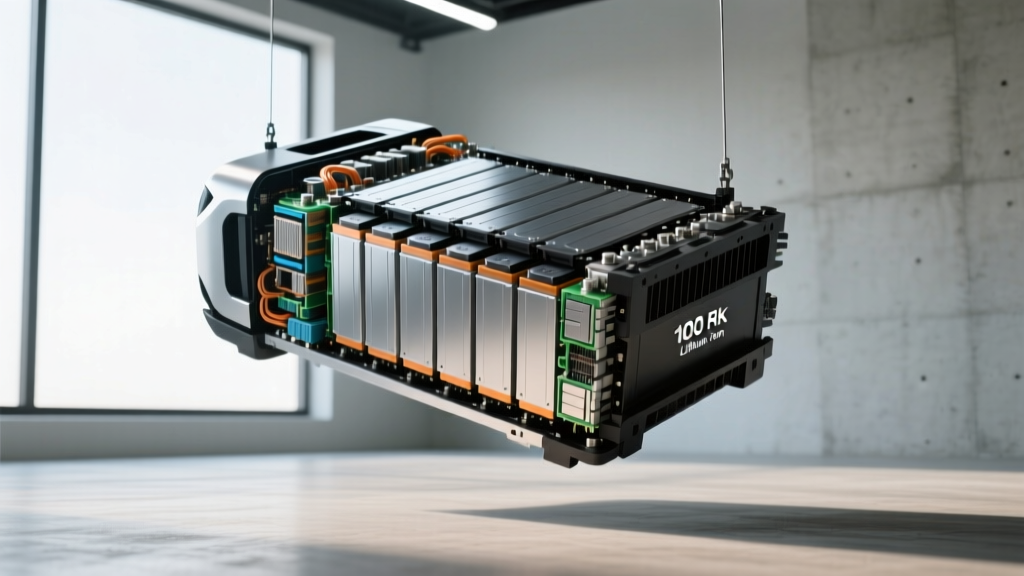
If a battery does need replacement outside of warranty — most commonly on high-mileage vehicles or after physical damage — the cost depends heavily on pack size and chemistry. Prices have fallen significantly: pack-level costs averaged roughly $130/kWh in 2025 per BloombergNEF, but installed replacement costs at a dealership include labor, diagnostics, and recalibration.
| Vehicle / Pack Size | Estimated Replacement Cost (2026) | Typical Replacement Trigger |
|---|---|---|
| Tesla Model 3 SR (~60 kWh, LFP) | $8,000–$12,000 | Rare before 200k+ mi; physical damage |
| Tesla Model Y LR (~75 kWh, NMC) | $12,000–$16,000 | Module failure, out-of-warranty degradation |
| Hyundai Ioniq 5 (~77.4 kWh, NMC) | $11,000–$15,000 | Module-level replacement often possible |
| Ford F-150 Lightning ER (~131 kWh) | $18,000–$28,000 | Largest packs = highest cost; modular repair may reduce |
| Chevy Silverado EV (~200 kWh) | $25,000–$35,000 | Ultium modular architecture may allow partial swap |
The silver lining: modular battery architectures (GM's Ultium, Hyundai's E-GMP) increasingly allow dealerships to replace individual modules rather than the entire pack, reducing out-of-warranty costs by 40–60%. And for vehicles still under warranty, the cost to the owner is $0.
How to Charge a Battery in the Car: Habits That Maximize Longevity
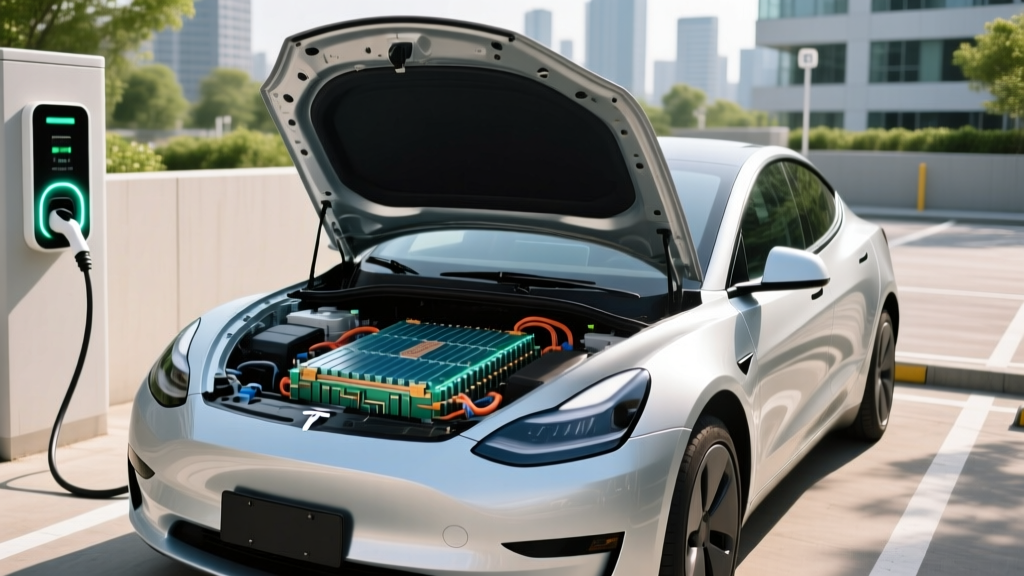
How you charge a battery in the car day-to-day has a measurable impact on its lifespan. The physics are straightforward: lithium-ion cells degrade faster at extreme states of charge, extreme temperatures, and high charge rates. Here's what the data supports:
- Keep NMC between 20–80% for daily use. Set your charge limit in the vehicle app. Charging to 100% occasionally for road trips is fine — it's sustained 100% that accelerates degradation.
- LFP owners: charge to 100% at least weekly. LFP cells have a very flat voltage curve, and the Battery Management System (BMS) needs a full charge to recalibrate cell balancing and SoC estimation. Tesla explicitly recommends this.
- Minimize DC fast charging when possible. Occasional DCFC is harmless. But daily use of 150+ kW chargers in hot climates has been correlated with 1–2% additional annual degradation in Geotab fleet data. Home Level 2 charging at 7–11 kW is the gentlest method.
- Precondition before fast charging. Cold batteries charge slowly and experience lithium plating at high charge rates. Use your vehicle's navigation preconditioning feature (Tesla, Hyundai/Kia, Ford all offer this) to warm the pack before arriving at a DC fast charger.
- Avoid leaving the car at 0% or 100% in extreme heat. If you're parking at an airport for a week in July, leave the SoC at 50% and plugged in if possible, so the thermal management system can keep the pack cool.
- Don't obsess over it. The difference between "perfect" battery care and "normal" use is typically 2–4% additional SoH over 10 years. The BMS is doing most of the work for you.
Monitoring Battery Health: How to Check Your State of Health
State of Health (SoH) is the percentage of your battery's original usable capacity that remains accessible. A brand-new 77.4 kWh pack at 95% SoH delivers roughly 73.5 kWh of usable energy. Monitoring SoH helps you plan for warranty claims and resale value.
Manufacturer apps and in-car displays: Tesla's Service Mode (accessible via the software menu) shows a detailed battery health reading. Hyundai/Kia's connected-car apps display SoH in the vehicle status section. Ford's Pass app includes battery health metrics for the Mach-E and Lightning. GM's Ultium-based vehicles surface SoH through the myChevrolet/myCadillac apps.
OBD-II tools and third-party apps: Devices like the OBDeleven or Carly adapters can pull detailed BMS data from most EVs, including individual cell voltages, internal resistance, and calculated SoH. Apps like ABRP (A Better Route Planner) can estimate SoH by comparing your actual energy consumption against the vehicle's original rated efficiency over a known route.
Dealership diagnostic reports: If you suspect abnormal degradation (a sudden drop in range, frequent cell-imbalance warnings), any authorized dealer can run a full pack diagnostic. Request a printout of the capacity test — this is your evidence for a warranty claim if SoH is below the threshold.
Factors That Accelerate Battery Degradation
Not all miles are created equal. The following conditions measurably increase the rate of capacity loss:
1. Frequent DC fast charging above 80% SoC. The charge curve tapers significantly above 80% — that's why a "10–80% in 18 minutes" claim exists. Pushing from 80–100% at high power generates excess heat in the cells. On road trips, this is unavoidable and harmless in isolation. As a daily pattern, it adds up.
2. Sustained high or low SoC in extreme temperatures. A pack sitting at 100% SoC in 105°F ambient heat experiences accelerated electrolyte decomposition. Similarly, storing a nearly empty pack in sub-zero temperatures risks copper dissolution in the anode. The 40–60% SoC window is the safest long-term storage range.
3. Aggressive driving in cold weather without preconditioning. Drawing 300+ kW from a cold battery (below ~50°F / 10°C internal temperature) causes lithium plating on the anode — a permanent, irreversible capacity loss mechanism. Preconditioning mitigates this almost entirely.
4. High-mileage, high-temperature fleet use. Taxis, rideshare vehicles, and delivery vans in hot climates (Phoenix, Dubai, Riyadh) show the highest observed degradation rates — up to 3–4% per year. For personal use in temperate climates, this scenario is extremely unlikely.
What's Next: Solid-State and Silicon-Anode Batteries
Two emerging technologies promise to reshape EV batteries, but neither is available in production vehicles as of 2026.
Solid-state batteries replace the liquid electrolyte with a solid ceramic or polymer layer, enabling lithium-metal anodes and energy densities above 400 Wh/kg. Toyota has announced a 2027–2028 production timeline for a solid-state EV with a claimed 750 km (~466 mi) range, while Samsung SDI targets 2027 for initial production. QuantumScape's cells have demonstrated over 800 charge cycles with less than 10% degradation in lab testing, but scaling manufacturing remains the primary bottleneck. Expect limited production runs in premium vehicles by 2028–2029, with mainstream availability no earlier than 2030–2032.
Silicon-anode batteries are closer to market. By blending silicon into the graphite anode (currently 5–10% silicon content), manufacturers can boost energy density by 15–25% without the manufacturing challenges of solid-state. Sila Nanotechnologies' silicon anode material is already in production for the Mercedes G-Class electric (2025), and Group14's silicon-carbon composite is being adopted by several cell makers. Expect silicon-anode blends to become standard in NMC cells by 2028–2029.
For buyers today, these timelines mean: current LFP and NMC batteries are mature, well-understood, and backed by robust warranty protections. There is no compelling reason to delay an EV purchase waiting for solid-state unless your timeline extends to 2030+.
Frequently Asked Questions
How long do EV batteries last in years and miles?
Based on fleet data from Geotab and manufacturer reports, modern EV batteries retain 80–85% of original capacity at 10 years or 150,000–200,000 miles. Many will exceed 200,000 miles before dropping below the 70% warranty threshold. LFP packs tend to last longer due to superior cycle life.
How much does an EV battery cost to replace?
Full pack replacement ranges from $8,000 for a 60 kWh LFP pack (Tesla Model 3 SR) to $28,000+ for a 131 kWh extended-range pack (F-150 Lightning). However, modular architectures increasingly allow partial module replacement at 40–60% lower cost. Most batteries never require replacement during typical ownership.
What does the battery warranty cover?
Federal law requires a minimum 8-year/100,000-mile warranty covering defects and excessive capacity loss (below 70% SoH). California and CARB-adopting states extend this to 10 years/150,000 miles. Warranties cover module and pack replacement but typically exclude damage from misuse, accidents, or unauthorized modifications.
How do I check my EV battery's State of Health?
Use your vehicle's native app (Tesla Service Mode, Hyundai/Kia connected app, Ford Pass) to view SoH percentage. For more granular data, OBD-II adapters like OBDeleven can pull individual cell voltages and internal resistance. Dealerships can run a full capacity test and provide a diagnostic printout.
LFP vs NMC — which is better for daily driving?
For daily commuting with home charging, LFP is generally the better choice: it tolerates 100% daily charging, has a longer cycle life, and costs less. NMC wins when you need maximum range in a lighter package, better cold-weather performance, or faster DC charging capability. Neither is universally superior — the right choice depends on your specific use case.
Is it okay to charge a battery in the car to 100% every night?
For LFP batteries, yes — manufacturers actually recommend regular 100% charges for cell balancing. For NMC/NCA batteries, set your daily charge limit to 80% and only charge to 100% when you need the full range for a trip. Sustained 100% SoC accelerates degradation in nickel-based chemistries.
Does fast charging damage my EV battery?
Occasional DC fast charging has negligible impact. However, fleet data shows that vehicles relying primarily on DC fast charging (especially above 150 kW) in hot climates experience 1–2% additional annual degradation compared to vehicles charged primarily on Level 2. Preconditioning the battery before fast charging significantly mitigates this effect.