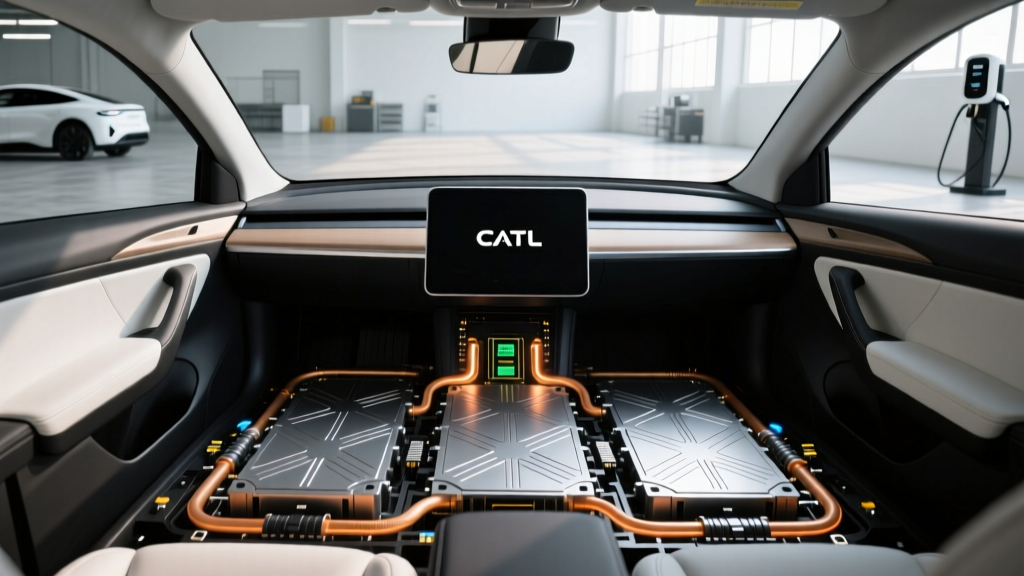
Contemporary Amperex Technology Co. Limited (CATL) supplies batteries to more automakers than any other company on earth — Tesla, Ford, BMW, Hyundai, Volvo, and dozens more. When CATL announces a new battery chemistry or cell design, it doesn't just affect one model; it reshapes the economics of entire vehicle lineups. In 2026, CATL's latest battery offerings span everything from next-generation LFP cells to sodium-ion packs entering mass production, and understanding what's inside your EV's battery case has never been more important for buyers.
This guide uses CATL's current portfolio as a lens to explain EV battery technology broadly: how chemistries compare, what degradation actually looks like in real ownership, what warranties cover, what replacement costs, and how to monitor and maximize the pack you're driving with today.
CATL's 2026 Battery Lineup: What's Shipping and What's Announced
CATL produces several cell families relevant to 2026-model EVs sold in North America and Europe:
- Shenxing LFP cells — lithium iron phosphate chemistry with superfast-charging capability (peak rates up to 4C, meaning a 10–80% charge in roughly 10–12 minutes on compatible chargers). Currently shipping in vehicles like the Tesla Model 3 Standard Range and several Chinese-market models.
- Qilin NMC cells — nickel-manganese-cobalt chemistry using CATL's cell-to-pack (CTP) 3.0 structural integration, delivering energy density above 255 Wh/kg at the cell level. Found in higher-range trims of vehicles like the BMW iX and select Volvo EX30/EX90 configurations.
- Sodium-ion (Na-ion) first-generation packs — announced for mass production in 2025–2026, targeting entry-level EVs and hybrid battery buffering. Lower energy density (~160 Wh/kg) but superior cold-weather performance and zero reliance on lithium or cobalt. Currently in limited deployment in Chinese-market vehicles; not yet available in US-market models.
- Condensed-matter battery — announced technology targeting up to 500 Wh/kg for aviation and premium EV applications. Still in pre-production/validation stages as of early 2026. Not commercially available.
The practical takeaway for US buyers: if you're purchasing a 2026 EV with an LFP battery — increasingly common in standard-range trims across Tesla, Ford, and Hyundai — there's a strong probability that LFP pack uses CATL or CATL-licensed cells. Understanding LFP behavior is understanding your car.
LFP vs NMC/NCA: The Chemistry Trade-Offs That Matter
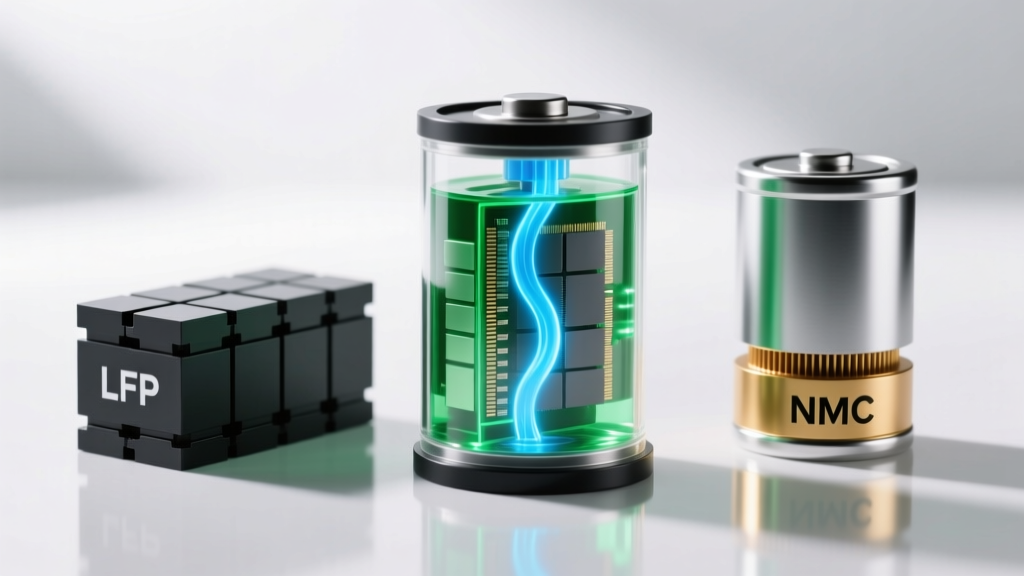
Every EV battery uses a specific cathode chemistry, and the two dominant families in 2026 are LFP (lithium iron phosphate) and NMC/NCA (nickel-manganese-cobalt or nickel-cobalt-aluminum). CATL manufactures both at scale. Here's how they compare on the metrics that affect ownership:
| Attribute | LFP (LiFePO₄) | NMC / NCA |
|---|---|---|
| Energy density (cell-level) | ~160–200 Wh/kg | ~230–290 Wh/kg |
| Typical cycle life | 3,000–6,000+ cycles | 1,000–2,500 cycles |
| Calendar lifespan | 15–20+ years | 10–15 years |
| Cold-weather performance | Moderate loss; slower charging below 32°F | Better low-temp charge acceptance |
| Recommended daily SoC | 100% (benefits from full charges) | 80% for daily; 100% only for trips |
| Cost per kWh (2026) | ~$70–$90 | ~$100–$130 |
| Cobalt/nickel content | None | Significant (supply-chain risk) |
| Safety / thermal runaway risk | Very low | Low, but higher than LFP |
| Best suited for | Daily commuting, standard-range, fleet | Long-range, performance, cold-climate |
The buyer's translation: LFP gives you a longer-lasting, cheaper, safer battery with slightly less range per pound. NMC gives you more range in the same physical space but degrades faster if routinely charged to 100% or exposed to sustained heat. CATL's Shenxing LFP cells have narrowed the charging-speed gap significantly — the historical weakness of LFP — making them viable for road-trip-heavy drivers who previously needed NMC for DC fast-charge speed.
How Long Do EV Batteries Actually Last? Degradation Data
The most persistent myth in EV ownership is that batteries "wear out like phone batteries" and need replacement every few years. The data tells a different story. Modern EV battery packs — particularly LFP — routinely outlast the vehicles they're installed in.
Here's what real-world degradation looks like based on fleet data, owner-reported studies, and manufacturer testing:
| Timeframe / Mileage | Typical Capacity Retention (NMC) | Typical Capacity Retention (LFP) |
|---|---|---|
| Year 1 / 15,000 mi | 95–98% | 97–99% |
| Year 3 / 45,000 mi | 90–94% | 94–97% |
| Year 5 / 75,000 mi | 85–91% | 91–96% |
| Year 8 / 120,000 mi | 78–87% | 87–94% |
| Year 10 / 150,000 mi | 73–84% | 84–92% |
These figures align with data tracked by sources like Recurrent Auto's fleet studies and Tesla's own impact reports. Note that degradation is non-linear: most capacity loss occurs in the first 12–24 months (a "formation" phase), then the curve flattens considerably. An EV that loses 5% in year one might lose only 1–2% per year thereafter.
For context, the average American drives roughly 14,000 miles per year according to the Federal Highway Administration. At that rate, a CATL LFP pack retaining 90% capacity at 100,000 miles still delivers, for example, 279 miles of range from an originally 310-mile EPA-rated vehicle. That's meaningful, usable range a decade into ownership.
What Does the Battery Warranty Actually Cover?
Federal law mandates a minimum 8-year / 100,000-mile warranty on EV battery packs (10 years / 150,000 miles in California Air Resources Board states). But the specifics of what triggers a warranty claim vary by automaker. Here's a comparison of current warranty terms on popular CATL-equipped and comparable vehicles:
| Automaker / Model | Warranty Period | Capacity Threshold | Chemistry |
|---|---|---|---|
| Tesla Model 3 RWD | 8 yr / 100,000 mi | 70% retention | LFP (CATL) |
| Tesla Model 3 Long Range | 8 yr / 120,000 mi | 70% retention | NMC |
| Hyundai Ioniq 5 | 10 yr / 100,000 mi | 70% retention | NMC |
| Ford Mustang Mach-E | 8 yr / 100,000 mi | 70% retention | NMC |
| BMW iX xDrive50 | 8 yr / 100,000 mi | 70% retention | NMC (CATL/Samsung) |
| Volvo EX30 | 8 yr / 100,000 mi | 70% retention | LFP (Single Motor) / NMC (Twin) |
Key details buyers miss:
- The threshold is almost universally 70% of original capacity. If your 310-mile EV degrades to 218 miles of range at 90,000 miles, that's still above 70% — no warranty claim.
- Warranties cover defects and abnormal degradation, not gradual expected wear above the threshold.
- Some automakers replace with a refurbished or remanufactured pack, not a brand-new one. The replacement pack will meet the capacity threshold but may not match original kWh.
- Warranty claims are statistically rare. According to Consumer Reports, fewer than 2% of EVs have required battery replacement under warranty.
EV Battery Replacement Cost: When, Why, and How Much
For the small percentage of owners who need an out-of-warranty replacement — typically after a collision, a manufacturing defect discovered late, or extreme high-mileage use (200,000+ miles) — the cost depends heavily on pack size and chemistry:
| Battery Pack Size | Chemistry | Replacement Cost Range (2026) | Typical Vehicle Examples |
|---|---|---|---|
| 50–60 kWh | LFP | $6,500 – $10,000 | Tesla Model 3 RWD, Volvo EX30 SM |
| 60–80 kWh | NMC | $10,000 – $16,000 | Hyundai Ioniq 5, Ford Mach-E SR |
| 80–100 kWh | NMC | $14,000 – $22,000 | Tesla Model S, BMW iX, F-150 Lightning ER |
| 100+ kWh | NMC | $18,000 – $30,000 | GMC Hummer EV, Lucid Air Grand Touring |
These figures include the pack and labor but can vary by $2,000–$5,000 depending on dealership vs. independent EV shop. LFP packs — increasingly common thanks to CATL's cost reductions — are meaningfully cheaper to replace than equivalently sized NMC packs because they contain no cobalt or nickel.
When is replacement actually needed? Almost never during normal ownership. Most EVs are scrapped or sold with their original battery intact. The packs that do get replaced tend to fall into three categories: (1) collision damage, (2) early manufacturing defects caught under warranty, or (3) fleet vehicles that accumulate 250,000+ miles. For a personal-use vehicle driven 12,000–15,000 miles per year, the battery will almost certainly outlast the rest of the car's useful life.
Factors That Accelerate (or Preserve) Battery Life
Not all miles and charges are created equal. The following factors have measurable impacts on how quickly your pack degrades:
Habits That Help
- Charge to 80% daily (NMC) or 100% (LFP only) — LFP batteries actually benefit from periodic full charges for cell balancing and BMS calibration.
- Use Level 2 home charging as your primary method — slow, steady charging generates far less heat than DC fast charging.
- Precondition the battery before fast charging in cold weather — most EVs do this automatically when you navigate to a charger.
- Park in shade or a garage when possible — sustained ambient heat above 95°F accelerates calendar degradation.
- Drive it regularly — batteries prefer cycling to sitting at a fixed SoC for weeks.
Habits That Hurt
- Frequent DC fast charging above 150 kW — occasional use is fine, but daily 250 kW sessions generate cumulative thermal stress. Data from Recurrent shows a measurable (though not catastrophic) degradation difference between frequent and infrequent fast-chargers.
- Storing at 100% SoC for extended periods — especially in heat. If leaving the car for a week+, set the charge limit to 50–60%.
- Repeated deep discharges to 0% — the very bottom of the battery's range stresses cells. Try not to regularly drop below 10%.
- Ignoring thermal management — if your EV's cooling system throws a fault code, address it immediately. A battery without active cooling degrades rapidly.
How to Check Your Battery's State of Health (SoH)
State of Health (SoH) is the percentage of your battery's original usable capacity that remains. A new battery is 100% SoH; a battery with 8% degradation is at 92% SoH. Here's how to monitor it:
In-Vehicle Methods
- Tesla: The Service menu (accessible via the software screen in recent updates) displays estimated range at 100% — compare this to the original EPA range for a rough SoH proxy. Third-party apps like Tessie or Stats provide more granular SoH estimates using OBD-II data.
- Hyundai/Kia: The EV-specific menu in the infotainment system shows battery condition percentage on most 2024+ models.
- BMW/Volvo/Ford: Increasingly include SoH readouts in diagnostic menus or companion apps. Consult your owner's manual for the specific path.
OBD-II Scanner & App Method
An OBD-II dongle (such as an OBDLink MX+ or Vgate iCar, typically $30–$60) paired with apps like EVnotify, Leaf Spy (Nissan), or Car Scanner can read the battery management system's (BMS) reported SoH directly. This is the most accurate consumer-accessible method and works across most brands.
Dealer Diagnostic
Any authorized service center can run a full battery health report, typically during routine service. If you're approaching a warranty threshold and suspect abnormal degradation, request this proactively — having a documented baseline strengthens any future claim.
What's Next: Solid-State, Silicon Anode, and CATL's Roadmap
CATL and its competitors are investing heavily in next-generation technologies. Here's a realistic assessment of timelines — with a clear distinction between what's shipping and what's still in the lab:
- Silicon-dominant anodes: Currently in limited production (e.g., Porsche Taycan Turbo GT uses a silicon-carbon anode blend). Expect broader adoption by 2028–2030. Benefit: 10–20% energy density improvement. Trade-off: silicon expands during cycling, requiring engineering solutions CATL and others are still refining for cost-effective mass production.
- Semi-solid-state batteries: NIO's 150 kWh semi-solid pack is in limited service in China. CATL has announced its own condensed-matter battery targeting 500 Wh/kg. Not available in US-market vehicles as of 2026. Realistic US availability: 2028–2030 at the earliest, likely in premium segments first.
- Full solid-state batteries: Toyota, Samsung SDI, and others target 2028–2032 for initial production. These promise 2x energy density and faster charging but face manufacturing scalability challenges. No solid-state EV is currently available for purchase anywhere.
- Sodium-ion scale-up: CATL's first-gen Na-ion packs are entering production vehicles in China now. The chemistry offers 90% capacity retention at -4°F (-20°C) — dramatically better than LFP or NMC in extreme cold. US-market vehicles with sodium-ion are announced but not yet confirmed for 2026 delivery.
For buyers making a decision today: current LFP and NMC batteries are mature, well-understood, and backed by robust warranties. Waiting for solid-state means waiting at minimum 3–5 years for real-world availability, likely at premium pricing initially.
Frequently Asked Questions
How long do EV batteries last in years and miles?
Modern LFP batteries (like those from CATL) routinely last 15–20+ years and 200,000–300,000+ miles before degrading below 80% capacity. NMC batteries typically last 10–15 years and 150,000–200,000 miles. In most cases, the battery outlasts the vehicle's economic life. Fewer than 2% of EVs have required battery replacement, according to Consumer Reports and industry fleet data.
How much does an EV battery cost to replace?
Replacement costs in 2026 range from roughly $6,500 for a small LFP pack (50–60 kWh) to $18,000–$30,000 for large NMC packs (100+ kWh). Most owners never pay this — the battery either remains functional for the car's lifetime or is replaced under the 8-year/100,000-mile federal warranty. LFP packs from CATL are at the lower end of the cost spectrum due to the absence of cobalt and nickel.
What does the EV battery warranty actually cover?
Federal law requires at minimum 8 years/100,000 miles of coverage (10/150,000 in CARB states). The warranty covers defects and abnormal degradation below a set threshold — typically 70% of original capacity. It does not cover gradual wear that stays above that threshold, collision damage (covered by insurance), or modifications. Some automakers use refurbished packs for replacements.
LFP vs NMC — which battery chemistry is better for me?
Choose LFP if you want maximum longevity, lower cost, the ability to charge to 100% daily without worry, and don't need the absolute longest range. Choose NMC if you need maximum range in a given pack size, frequently drive in very cold climates, or prioritize fast-charge speed on road trips. CATL's latest Shenxing LFP cells have significantly narrowed the fast-charging gap, making LFP viable for more use cases than ever.
How do I check my EV battery's health?
Check your vehicle's built-in battery health display (if equipped), use an OBD-II scanner with an EV-compatible app like Car Scanner or EVnotify for a direct SoH readout, or request a battery health report from your dealer during service. Monitoring SoH annually gives you a clear degradation trend and early warning of any abnormal behavior.
Does frequent DC fast charging damage my battery?
Occasional DC fast charging is fine and expected. Daily high-power (150+ kW) fast charging does measurably increase degradation over time — fleet data shows a roughly 2–5% additional capacity loss over 100,000 miles compared to primarily Level 2 charging. Modern battery management systems mitigate this with active cooling and charge-curve tapering, but Level 2 home charging remains the gentlest and most cost-effective daily method.
Are CATL batteries safe?
CATL is the world's largest battery manufacturer and supplies cells to Tesla, BMW, Volvo, Hyundai, Ford, and others — all of which must meet stringent NHTSA and international safety standards. LFP chemistry, in particular, has an exceptionally low thermal runaway risk compared to NMC. There have been no widespread safety recalls attributable to CATL cell defects as of early 2026.