Why CATL LFP Batteries Are Reshaping the EV Market
Contemporary Amperex Technology Co. Limited (CATL) is the world's largest EV battery manufacturer, and its lithium iron phosphate (LFP) cells now power a growing share of electric vehicles sold in North America and Europe. From the Tesla Model 3 Standard Range to the Ford Mustang Mach-E Select and multiple BYD models, CATL LFP battery packs have become the default choice for automakers prioritizing cost, longevity, and safety over maximum energy density.
If you're evaluating an EV equipped with a CATL LFP battery — or deciding between an LFP and NMC (nickel manganese cobalt) variant — this guide breaks down the chemistry, real-world degradation data, warranty coverage, replacement economics, and daily care practices that determine your long-term ownership experience.
LFP vs NMC Chemistry: The Trade-Offs That Matter
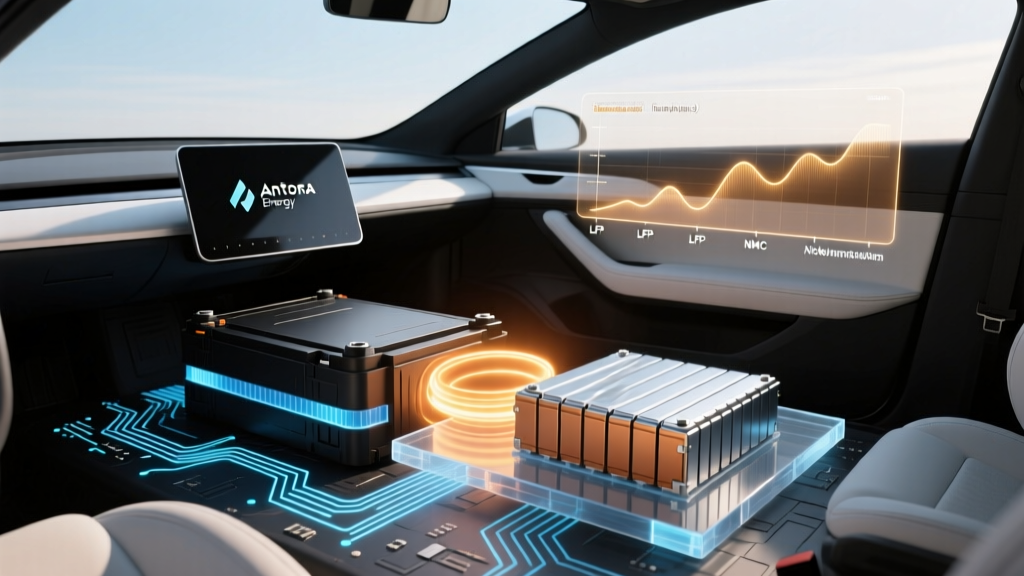
Understanding battery chemistry is the single most important factor in predicting how an EV will age, perform in cold weather, and hold value. Here's how CATL's LFP cells compare to NMC/NCA alternatives across the metrics that affect real ownership:
| Attribute | CATL LFP | NMC / NCA |
|---|---|---|
| Energy Density (cell-level) | 160–200 Wh/kg | 250–300 Wh/kg |
| Typical Cycle Life | 3,000–6,000+ cycles | 1,000–2,500 cycles |
| Cost per kWh (pack-level) | ~$80–$100 | ~$120–$150 |
| Cold-Weather Range Loss (-10°C / 14°F) | ~30–40% reduction | ~20–30% reduction |
| Thermal Runaway Risk | Very low (inherent stability) | Moderate (requires active management) |
| State of Charge (SoC) Recommendation | 100% daily OK; periodic calibration needed | 80% daily recommended for longevity |
| Cobalt/Nickel Content | None (iron + phosphate) | Significant (supply-chain & ethical concerns) |
| Common Applications | Standard-range sedans, city EVs, fleet vehicles | Long-range / performance models, large SUVs |
The trade-off is straightforward: LFP sacrifices energy density (meaning heavier or physically larger packs for the same range) in exchange for dramatically longer cycle life, lower cost, superior thermal safety, and the ability to charge to 100% daily without accelerating degradation. For most drivers covering under 40 miles per day, a CATL LFP battery in a 250-mile-range EV provides more usable daily range than an NMC pack you're babying at 80% SoC.
How Long Do CATL LFP Batteries Actually Last?
CATL rates its automotive LFP cells for 3,000 to 6,000+ full charge-discharge cycles before reaching 80% of original capacity. Translating that into real-world mileage:
- 3,000 cycles × 250 miles per cycle = 750,000 miles before hitting 80% State of Health (SoH)
- Conservative estimate with fast-charging and heat exposure: 400,000–500,000 miles
- Calendar aging factor: Even with low mileage, expect ~1.5–2.5% capacity loss per year from chemical aging alone
Real-World Degradation Data Points (CATL LFP Packs in Consumer EVs):
- Year 1 / 15,000 miles: 2–4% capacity loss (initial formation period; steeper drop that stabilizes)
- Year 3 / 45,000 miles: 5–8% total loss
- Year 5 / 75,000 miles: 7–11% total loss
- Year 8 / 120,000 miles: 10–15% total loss (still above most warranty thresholds)
- Year 10+ / 150,000+ miles: 12–20% total loss depending on climate and charging habits
Sources: Recurrent Auto battery data, CATL technical publications, fleet telemetry aggregates.
The critical takeaway: CATL LFP degradation follows a characteristic "hockey stick" curve — a slightly steeper drop in the first 12–18 months, followed by a very gradual linear decline. Most owners will sell or trade the vehicle long before the battery reaches a functionally limiting state of health. A 2026 Tesla Model 3 RWD with its CATL LFP pack (EPA 272 miles) will likely still deliver 230+ real-world miles at year 8.
Battery Warranty Coverage: What's Protected and What Isn't
Federal law mandates a minimum 8-year / 100,000-mile warranty on EV battery packs for emissions-related compliance, but most automakers using CATL LFP cells match or exceed this baseline. Here's how warranty terms typically break down:
| Coverage Element | Standard Terms |
|---|---|
| Duration | 8 years / 100,000 miles (whichever comes first); California and CARB states: 10 yr / 150,000 mi |
| Capacity Retention Threshold | 70% of original capacity (some OEMs: 65% or 60%) |
| What Triggers a Claim | SoH drops below threshold during warranty period, verified by dealer diagnostic scan |
| Remedy | Module replacement, full pack replacement, or refurbishment at OEM discretion |
| Exclusions | Physical damage, flood/fire, unauthorized modifications, use as stationary storage |
| Transferability | Fully transferable to subsequent owners (boosts resale value) |
The 70% retention threshold is important context: a CATL LFP pack would need to lose 30% of its capacity — an outcome that real-world data shows is extremely unlikely within the warranty window under normal use. According to fueleconomy.gov and manufacturer filings, warranty claims on LFP packs remain rare and are overwhelmingly tied to manufacturing defects in individual modules rather than systemic chemistry degradation.
EV Battery Replacement Cost: When and How Much
While most CATL LFP batteries outlast the vehicles they're installed in, out-of-warranty replacement is a legitimate cost consideration for high-mileage drivers and used-EV buyers. Here's the current landscape:
| Vehicle / Pack Size | Battery Capacity | Replacement Cost (Parts + Labor) | Typical Replacement Trigger |
|---|---|---|---|
| Tesla Model 3 RWD | ~60 kWh (LFP) | $8,000–$12,000 | 300,000+ miles or physical damage |
| BYD Atto 3 / Dolphin | 49–60 kWh (Blade LFP) | $7,000–$11,000 | High-mileage fleet use |
| Ford Mach-E Select (LFP variant) | ~72 kWh (LFP) | $12,000–$16,000 | Post-warranty degradation (rare) |
| Compact EV (40 kWh class) | ~40 kWh (LFP) | $5,500–$8,000 | Damage or extreme abuse |
Several factors are driving replacement costs down: CATL's manufacturing scale has pushed LFP cell prices below $60/kWh at the cell level, and modular pack designs allow technicians to replace individual faulty modules ($500–$1,500 each) rather than the entire pack. The real-world probability of needing a full out-of-pocket pack replacement on a CATL LFP vehicle remains well under 5% based on current fleet data.
Factors That Accelerate (or Preserve) LFP Battery Health
While CATL LFP chemistry is inherently durable, your daily habits measurably influence long-term State of Health. Here's what the data shows:
Practices That Maximize LFP Battery Life
- Charge to 100% regularly (at least weekly): LFP cells require periodic full charges for the battery management system (BMS) to accurately calibrate cell balancing and SoC estimation. Unlike NMC, daily 100% charges do not meaningfully accelerate LFP degradation.
- Prefer Level 2 (AC) charging for daily use: Overnight home charging at 7–11 kW generates far less heat than DC fast charging, preserving electrolyte integrity over thousands of cycles.
- Limit DC fast charging to road trips: Occasional fast charging (1–2 times per week) has negligible impact, but daily 150+ kW sessions can accelerate degradation by 1–3% over 5 years compared to AC-only charging.
- Use preconditioning before fast charging: Heating the battery to its optimal 25–35°C operating window before a DC session reduces internal resistance and lithium plating risk. Most 2026 EVs do this automatically when you navigate to a charger.
- Avoid prolonged storage at 0% or 100% SoC: If storing the vehicle for 2+ weeks, aim for 50–70% SoC and a cool environment (below 80°F / 27°C).
Conditions That Accelerate Degradation
- Sustained high temperatures: Ambient heat above 95°F (35°C) combined with high SoC is the primary enemy. Garage parking in hot climates measurably extends pack life.
- Frequent deep discharges to 0%: While LFP tolerates this better than NMC, repeatedly draining below 5% stresses cell voltage limits.
- Aggressive DC fast charging in extreme cold: Charging at high power when the pack is below freezing risks lithium plating on the anode — a permanent capacity loss mechanism. Always precondition.
- Aftermarket charging equipment or modified charge settings: Non-OEM hardware that bypasses BMS safeguards can void warranty coverage.
Monitoring Your CATL LFP Battery's State of Health
Knowing your battery's actual condition — not just the guess-o-meter range estimate — is essential for resale confidence and warranty awareness. Here's how to check SoH in 2026:
- In-vehicle BMS display: Most 2026 EVs with CATL LFP packs (Tesla, BYD, Ford) include a battery health percentage in the service or energy menu. Tesla's is accessible via the Service menu on the touchscreen; BYD shows it under Vehicle Settings → Battery.
- OBD-II diagnostic apps: Tools like OBD2 scanner + Car Scanner or LeafSpy (for applicable platforms) can read BMS-reported SoH, cell voltage variance, and total energy throughput.
- Dealer diagnostic scan: Request a formal battery health report during scheduled service. This is the document that matters for warranty claims and resale.
- Third-party telemetry services: Platforms like Recurrent connect to your vehicle's telematics and provide ongoing degradation tracking benchmarked against a fleet of identical vehicles.
Cold-weather SoH reality check: A CATL LFP pack that shows 92% SoH may temporarily display only 85% usable capacity during a -10°C (14°F) winter week. This is reversible thermal loss, not permanent degradation. True SoH is best measured at moderate temperatures (60–80°F) after a full charge cycle.
Looking Ahead: Solid-State, Sodium-Ion, and What's Next After LFP
CATL's current LFP technology represents a mature, cost-optimized chemistry — but the company and its competitors are actively developing next-generation alternatives. Here's a realistic timeline for what's on the horizon, based on CATL's published technology roadmap and industry analysis:
- CATL Shenxing LFP (available now, 2026): An advanced LFP variant with 4C charging capability — meaning a 10–80% DC fast charge in approximately 10 minutes when paired with a 350+ kW charger. Already in production for select Chinese-market EVs and expected in global models by 2027.
- CATL Condensed Matter Battery (announced, limited production): A semi-solid-state cell targeting 500 Wh/kg energy density — roughly double current LFP. Initially aimed at aviation and premium EVs. Consumer automotive availability is projected for 2028–2030 at earliest.
- Sodium-ion batteries (CATL first-gen in production): Lower energy density (~160 Wh/kg) and excellent cold performance, targeting budget city EVs and energy storage. Expected in entry-level EVs by 2027–2028.
- Full solid-state batteries: Multiple manufacturers have announced pilot production, but mass-market automotive availability remains 2030+ based on current scaling timelines. These promise 400+ Wh/kg energy density and improved safety but face significant manufacturing cost barriers.
None of these emerging technologies invalidate a 2026 LFP purchase. CATL's current-gen LFP packs are projected to remain in production through at least 2032, and their cost advantage ensures they'll underpin the majority of sub-$40,000 EVs for years to come.
Frequently Asked Questions
How long do CATL LFP batteries last in real-world driving?
Based on fleet telemetry data, CATL LFP packs retain 85–90% of original capacity after 8 years / 120,000 miles. At a rated 3,000–6,000 cycle life, the cells can theoretically support 750,000+ miles before reaching 80% SoH. Most vehicles are retired for other reasons long before the LFP pack reaches end-of-life.
How much does it cost to replace a CATL LFP battery?
Out-of-warranty replacement for a 60 kWh CATL LFP pack runs $8,000–$12,000 including labor. Larger 72–75 kWh packs cost $12,000–$16,000. Individual module replacement (for isolated cell failures) costs $500–$1,500 per module. Prices continue declining as LFP cell costs fall below $60/kWh.
What does the battery warranty cover?
Standard coverage is 8 years / 100,000 miles (10 yr / 150,000 mi in CARB states) against capacity loss below 70% of original. The warranty covers manufacturing defects and abnormal degradation but excludes physical damage, flooding, unauthorized modifications, and use outside normal passenger-vehicle operation.
Can I charge a CATL LFP battery to 100% every day?
Yes — and you should, at least weekly. LFP chemistry tolerates full charges far better than NMC, and the BMS requires periodic 100% charges to rebalance cells and maintain accurate range estimation. Tesla, BYD, and Ford all recommend regular 100% charges for their LFP-equipped models.
LFP vs NMC — which battery chemistry is better for me?
Choose LFP if: you prioritize long-term durability, charge at home most nights, want lower purchase price, and don't need 350+ miles of range. Choose NMC if: you regularly drive 200+ miles between charges, live in an extremely cold climate where LFP's steeper winter range loss matters, or need the lightest possible pack for a performance-oriented vehicle.
Does cold weather permanently damage LFP batteries?
No. Cold weather causes temporary range reduction (30–40% at -10°C) due to increased internal resistance, but this fully recovers when temperatures rise. The only cold-related permanent damage risk is charging at high DC power without preconditioning when the pack is below freezing — which can cause lithium plating. Modern 2026 EVs with CATL packs include automatic preconditioning to prevent this.
Will solid-state batteries make my LFP EV obsolete?
Not in any practical timeframe. Solid-state batteries remain in limited pilot production as of 2026, with mass-market availability projected for 2030+. Even when available, they'll debut in premium vehicles at high prices. CATL LFP will remain the cost-leader for mainstream EVs well into the 2030s, and your vehicle's value will be determined more by its overall condition and features than by battery chemistry alone.