When CATL unveiled its condensed-state battery technology and floated a 1,500 km (932-mile) range figure, it dominated EV forums overnight. The headline number is staggering — roughly triple the EPA range of a long-range Tesla Model 3. But separating laboratory energy-density achievements from production-ready, road-legal battery packs requires a careful look at chemistry, thermal management, pack-level engineering, and the realities of vehicle integration.
This guide breaks down what CATL's condensed-state cell actually is, how it fits into the broader battery-chemistry landscape, and what current and near-future EV buyers need to know about battery longevity, degradation, warranties, and replacement costs in 2026.
What Is CATL's Condensed-State Battery?
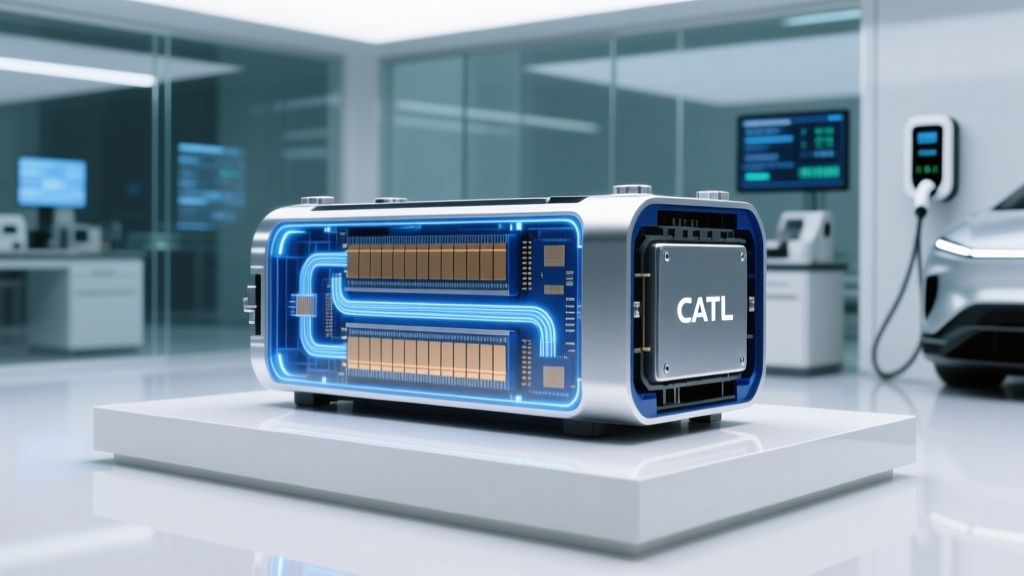
CATL's condensed-state battery uses a high-concentration electrolyte that forms a stable, dense interface on the electrode surface. The company claims cell-level energy density of up to 500 Wh/kg — roughly double today's best production NMC (nickel manganese cobalt) cells, which sit around 250–300 Wh/kg at the cell level.
The 1,500 km figure CATL has referenced applies to a large pack in an optimized, low-drag vehicle under favorable test conditions (likely CLTC, China's more generous cycle). Translated to the U.S. EPA test cycle — which runs hotter highway speeds and includes more aggressive acceleration phases — a realistic expectation for a production vehicle using this chemistry would be closer to 550–700 miles EPA, assuming a 150–180 kWh usable pack. That is still transformative for long-haul trucking, luxury sedans, and even electric aviation, which is where CATL has indicated early deployment interest.
As of early 2026, CATL has begun limited production of condensed-state cells primarily for aerospace applications, with automotive deployment expected in select premium Chinese-market EVs later in the year. U.S.-market vehicles using this chemistry have not been confirmed. CATL's technology remains, for now, an announced/preliminary development for American buyers.
LFP vs. NMC vs. Condensed-State: Chemistry Trade-Offs
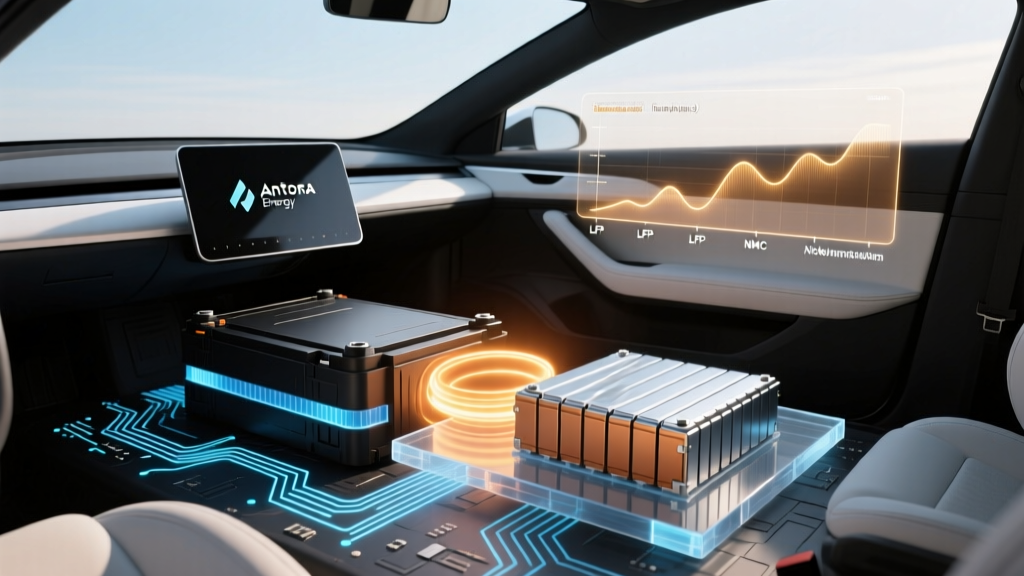
Understanding CATL's achievement requires context on the two dominant EV battery chemistries available today, plus where condensed-state fits on the spectrum.
| Attribute | LFP (Lithium Iron Phosphate) | NMC / NCA (Nickel-based) | Condensed-State (CATL) |
|---|---|---|---|
| Cell Energy Density | 160–200 Wh/kg | 250–300 Wh/kg | ~500 Wh/kg (claimed) |
| Typical Pack-Level Density | 120–160 Wh/kg | 180–220 Wh/kg | TBD (pack engineering critical) |
| Cycle Life | 3,000–6,000+ cycles | 1,000–2,000 cycles | Not yet published at scale |
| Cold-Weather Performance | Moderate loss (15–30% below freezing) | Better cold performance (10–20% loss) | Unknown — electrolyte behavior unconfirmed |
| Cost (per kWh, cell-level) | ~$60–80 | ~$90–120 | Estimated $200+ (early production) |
| Thermal Stability / Safety | Excellent — high thermal runaway threshold | Good — requires robust BMS and cooling | Claimed improved stability; independent validation pending |
| Best Use Case | Standard-range, fleet, daily commuting | Long-range, performance vehicles | Ultra-long-range, aviation, premium segment |
LFP dominates the value segment. Tesla uses LFP in Model 3 and Model Y Standard Range trims, and BYD's Blade Battery (LFP) powers most of its lineup. The trade-off is lower energy density — you need a heavier, larger pack for the same range — but the payoff is exceptional cycle life and lower cost.
NMC/NCA remains the choice for vehicles where maximizing range per kilogram matters: Hyundai Ioniq 6 Long Range, BMW iX, Ford F-150 Lightning Extended Range, and most premium European EVs. The nickel-rich cathode delivers more energy but degrades faster under high-heat and high-state-of-charge conditions.
Condensed-state technology, if it scales to automotive volumes at reasonable cost, could fundamentally shift the range-per-kilogram equation. But cell-level energy density is only part of the story — pack-level thermal management, structural integration, and BMS (battery management system) calibration determine real-world outcomes.
How Long Do EV Batteries Actually Last?
The short answer: longer than most buyers expect, and typically longer than the vehicle's useful life for non-powertrain components.
Based on fleet data from Tesla's 2025 Impact Report and independent analysis from Recurrent, a battery-data firm tracking over 15,000 EVs in real-world conditions:
- Average degradation at 100,000 miles: 8–12% capacity loss for NMC packs; 5–8% for LFP packs
- Average degradation at 200,000 miles: 15–20% for NMC; 8–14% for LFP
- Calendar aging (time-based): Roughly 1.5–2.5% per year regardless of mileage, influenced heavily by storage temperature and state of charge
A 2024 Tesla Model Y Long Range (75 kWh usable, NMC) that starts at an EPA-rated 310 miles will typically show about 275–285 miles of range at 100,000 miles and 250–265 miles at 200,000 miles. This is gradual, linear, and rarely sudden.
LFP packs, such as those in the Tesla Model 3 Standard Range and BYD Seal, show even less degradation — often retaining 92–95% capacity at 100,000 miles. The trade-off is that LFP's lower energy density means a smaller starting range, so the absolute mile loss feels similar even though the percentage loss is lower.
Battery Warranty Terms: What's Actually Covered
Federal law mandates a minimum battery warranty of 8 years / 100,000 miles for emissions-related components, and most automakers apply this standard to EV traction batteries. California and states adopting CARB rules require 10 years / 150,000 miles.
| Manufacturer (2026 Models) | Warranty Period | Capacity Retention Threshold | Notes |
|---|---|---|---|
| Tesla (Model 3/Y NMC) | 8 yr / 120,000 mi | 70% | LFP variants: 8 yr / 100,000 mi |
| Hyundai / Kia (E-GMP) | 10 yr / 100,000 mi | 70% | Among the best in the industry |
| Ford (F-150 Lightning, Mustang Mach-E) | 8 yr / 100,000 mi | 70% | Standard across BEV lineup |
| BMW (iX, i4, i7) | 8 yr / 100,000 mi | 70% | Transferable to second owner |
| BYD (Seal, Atto 3) | 8 yr / 100,000 mi (U.S. TBD) | 70% | Blade LFP; U.S. availability pending |
The critical detail: the warranty threshold is typically 70% of original capacity. If your 82 kWh pack degrades to 57.4 kWh (70%), the manufacturer is obligated to repair or replace. In practice, very few packs fall below 70% within the warranty window — most retain 80–88% at the 8-year mark under normal use.
EV Battery Replacement Costs: The Real Numbers
Battery replacement is the single biggest fear among prospective EV buyers. The cost is real, but the context matters enormously: most EV batteries never need replacement during the vehicle's ownership life.
| Vehicle / Pack Size | Chemistry | Replacement Cost (Parts + Labor) | Typical Replacement Trigger |
|---|---|---|---|
| Tesla Model 3 Standard Range (60 kWh) | LFP | $10,000–$13,000 | Rare before 250,000+ mi |
| Tesla Model Y Long Range (75 kWh) | NMC | $13,000–$16,000 | Rare before 200,000+ mi |
| Hyundai Ioniq 5 (77.4 kWh) | NMC | $14,000–$18,000 | Rare before 200,000+ mi |
| Ford F-150 Lightning Ext. Range (131 kWh) | NMC | $22,000–$30,000 | Rare before 200,000+ mi |
| Chevrolet Silverado EV (200+ kWh) | NMC | $28,000–$40,000 | Rare before 200,000+ mi |
These figures come from manufacturer service bulletins and independent shop data as of 2025–2026. Costs have declined roughly 8–12% per year as cell prices fall, but labor and diagnostic overhead remain significant. Refurbished or remanufactured packs are increasingly available at 30–50% lower cost for out-of-warranty vehicles.
For context, a conventional vehicle's engine or transmission replacement at high mileage typically runs $4,000–$8,000 — but those failures are far more common than EV battery failures within the first 150,000 miles.
Factors That Accelerate Battery Degradation
Not all miles are equal when it comes to battery wear. The following factors have the most measurable impact on long-term capacity retention:
- Avoid sustained 100% SoC: For NMC packs, charge to 80–90% for daily use; reserve 100% for road trips. LFP packs are an exception — manufacturers like Tesla recommend periodic 100% charges to recalibrate the BMS.
- Minimize DC fast charging when possible: Occasional Supercharging or Electrify America stops are fine. But daily 150+ kW DC fast charging accelerates degradation by an estimated 2–4% over 100,000 miles compared to Level 2 home charging (per Recurrent data).
- Avoid extreme heat exposure: Parking in direct sun in 100°F+ climates without thermal management active can cause calendar aging to accelerate. Most modern EVs run cooling loops even when parked — don't disable this feature.
- Don't store at 0% or 100%: If leaving the vehicle for weeks, set charge limit to 50–60%. Storage at high SoC and high temperature is the single worst condition for lithium-ion cells.
- Use preconditioning: When navigating to a DC fast charger, the vehicle warms or cools the battery to optimal temperature. This protects the cells during high-power charging and improves charge speed.
Cold weather does not cause permanent degradation — it temporarily reduces available capacity and slows charge rates. Once the battery warms (via driving or preconditioning), full capacity returns. This is a common misconception worth correcting.
Monitoring Battery Health: State of Health (SoH) in Practice
Most EVs provide limited direct battery health information through the infotainment system. Here's how to get meaningful data:
- In-vehicle displays: Tesla, Hyundai, and BMW show estimated range at full charge, which indirectly reflects degradation. A Model Y that showed 310 miles at 100% when new and now shows 282 miles at 100% has roughly 91% SoH.
- OBD-II tools: Devices like the OBDLink SX paired with apps such as Scan My Tesla or Leaf Spy (for Nissan) can read cell voltage variance, pack capacity estimates, and cycle counts.
- Third-party services: Recurrent and ClearVin offer battery health reports based on connected-car data, useful for used-EV buyers.
- Dealer diagnostics: A service center can run a full capacity test, typically requiring a controlled discharge cycle. This is the most accurate method but takes several hours.
Cell imbalance — where individual cells or modules drift to different voltages — is often the first sign of pack health issues. Modern BMS systems actively balance cells, but if variance exceeds 50–100 mV across the pack, a service check is warranted.
Beyond Condensed-State: Solid-State and Silicon Anode Timelines
CATL's condensed-state cell is one of several next-generation battery technologies in development. Here is where the broader landscape stands in 2026:
Solid-state batteries — using a solid electrolyte instead of liquid — promise higher energy density (400–500 Wh/kg at cell level), faster charging, and improved safety. Toyota has announced a pilot production line targeting 2027–2028 for limited deployment, with a goal of 750 km (466 mi) EPA-equivalent range. Samsung SDI and QuantumScape are also advancing prototypes. However, manufacturing yield, cost, and scale remain significant hurdles. Expect solid-state in premium vehicles no earlier than 2028–2030 at volumes meaningful to U.S. buyers.
Silicon-dominant anodes — replacing graphite with silicon to increase lithium-ion storage capacity — are closer to production. Companies like Sila Nanotechnologies and Group14 are supplying silicon-anode materials to battery manufacturers now. The Mercedes-Benz G-Class EV (announced for 2025–2026) was among the first to feature a silicon-anode pack from Factorial Energy, claiming 25–40% more energy density than conventional cells. This technology is real and arriving incrementally, not as a single breakthrough moment.
Sodium-ion batteries — CATL's other major initiative — use abundant, inexpensive sodium instead of lithium. Energy density is lower (~120–160 Wh/kg), making them suitable for city cars, two-wheelers, and grid storage rather than long-range vehicles. CATL began shipping sodium-ion packs in select Chinese-market EVs in 2024–2025.
None of these technologies invalidate current EV purchases. Today's NMC and LFP packs, managed well, will deliver 15–20 years of service — by which time the next generation will be mature, cheaper, and widely available as replacement options.
What CATL's 1500km Battery Means for Today's Buyers
If you're shopping for an EV in 2026, CATL's condensed-state technology is worth watching but not waiting for — unless you're in the Chinese premium-EV market where early adoption vehicles may appear within 12–18 months.
For U.S. buyers, the practical decision framework is straightforward:
Choose an NMC-powered EV if: You need 300+ miles of EPA range, frequently take road trips, tow, or live in a cold climate where NMC's better low-temperature performance matters. Examples: Tesla Model Y Long Range, Hyundai Ioniq 5/6, Ford F-150 Lightning, BMW iX.
Wait for condensed-state or solid-state if: You need 500+ miles of real range for commercial or overland use, are purchasing a premium vehicle in 2028+, or are evaluating electric aviation. For 95% of passenger-vehicle use cases, today's batteries are sufficient.
Frequently Asked Questions
Is CATL's 1500km battery available in U.S. vehicles?
No. As of early 2026, CATL's condensed-state battery is in limited production for aerospace and select Chinese-market premium EVs. No U.S.-sold vehicle currently uses this chemistry. The 1,500 km figure is based on the CLTC test cycle; U.S. EPA range would be substantially lower (estimated 550–700 miles for a large pack).
How long do EV batteries last in years and miles?
Most modern EV batteries retain 80–90% of original capacity at 100,000 miles and 75–85% at 200,000 miles. In calendar years, expect 15–20+ years of usable service before capacity drops below 70%. LFP chemistries generally outlast NMC in cycle life.
How much does it cost to replace an EV battery?
Replacement costs range from approximately $10,000 for a 60 kWh LFP pack (Tesla Model 3 Standard Range) to $30,000–$40,000 for large 130–200 kWh packs (F-150 Lightning, Silverado EV). Most batteries never require replacement during the vehicle's normal ownership life, and costs continue declining annually.
What does the EV battery warranty cover?
Federal minimum is 8 years / 100,000 miles. Most automakers guarantee the battery will retain at least 70% of original capacity during the warranty period. If it falls below that threshold, the manufacturer covers repair or replacement. Some brands (Hyundai, Kia) extend to 10 years.
LFP vs NMC — which battery chemistry is better?
Neither is universally better. LFP offers longer cycle life (3,000–6,000+ cycles), lower cost, and superior thermal safety, but with lower energy density (shorter range for the same pack weight). NMC delivers higher energy density for long-range and performance vehicles but degrades slightly faster. Your driving pattern determines which is right for you.
Does fast charging damage the battery?
Occasional DC fast charging (1–3 times per week) has minimal impact. Daily high-power DC charging (150+ kW) can accelerate degradation by 2–4% over 100,000 miles compared to Level 2 home charging. Modern thermal management systems mitigate much of the stress, but Level 2 remains the optimal daily charging method.
How do I check my EV battery's state of health?
Monitor your estimated range at 100% charge over time — a decline from the original EPA figure indicates degradation. For precise data, use an OBD-II scanner with EV-compatible software (Scan My Tesla, Leaf Spy), request a dealer capacity test, or use a third-party service like Recurrent for a battery health report.
Sources: fueleconomy.gov (EPA range and efficiency data), IRS §30D Clean Vehicle Credit rules, Recurrent battery degradation research.