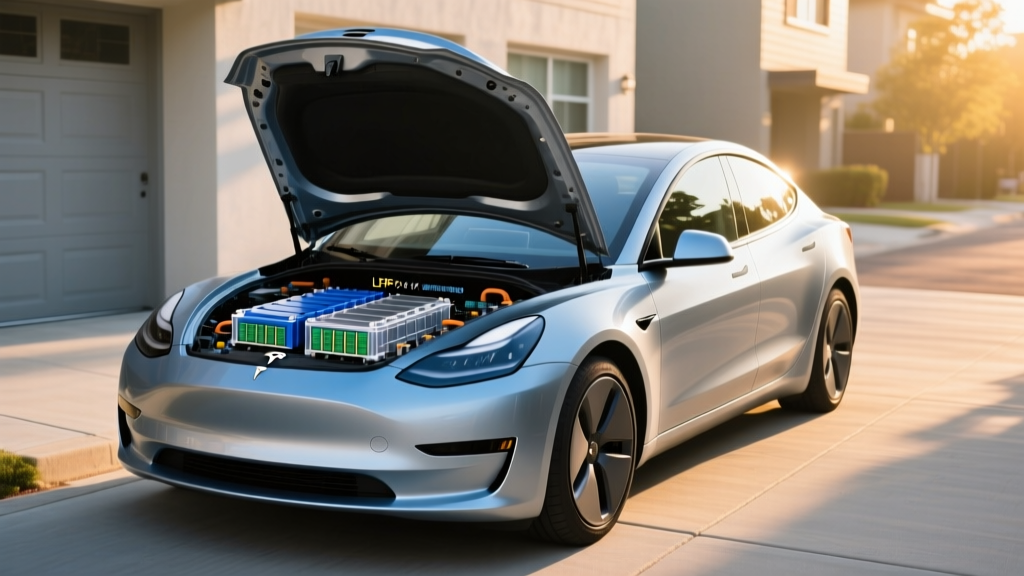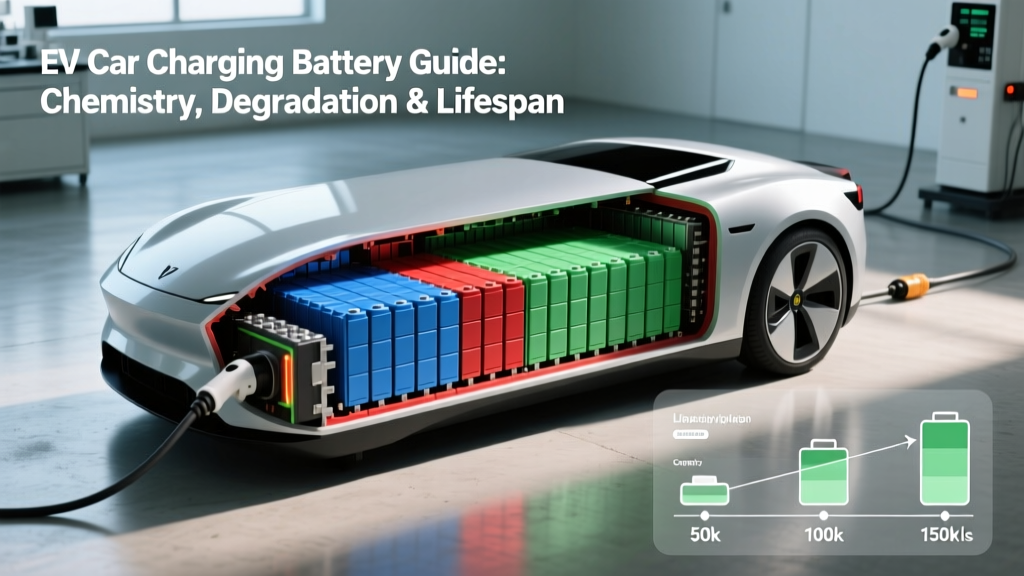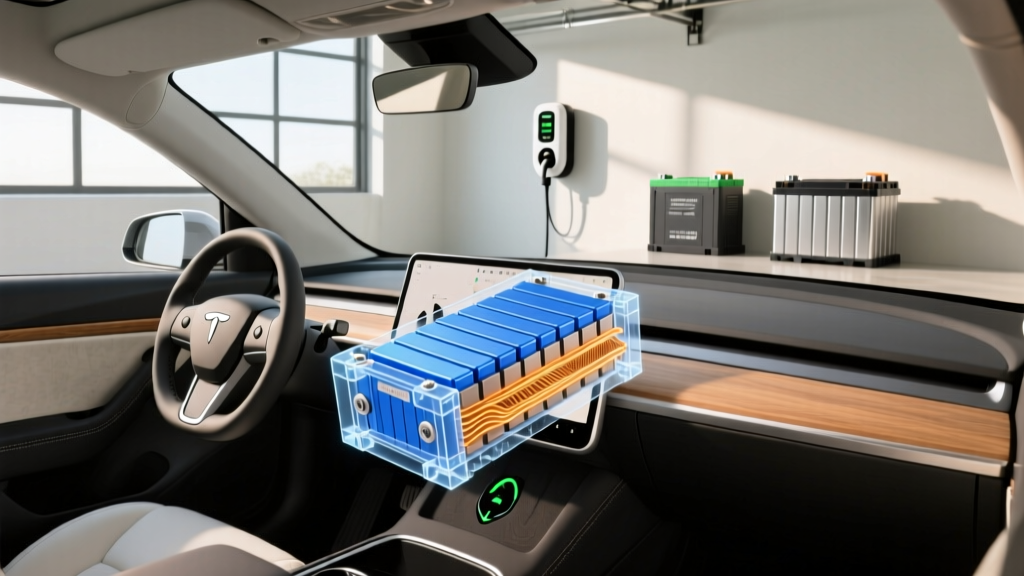
If you've owned your electric vehicle for a few years and noticed the range dropping — or if you simply wish your EV went further on a charge — you've probably wondered: can I put a bigger battery in my car? The short answer is almost always no, at least not in the way you'd swap a larger gas tank into a conventional vehicle. But the full picture involves understanding how EV battery packs are engineered, what actually determines your range, and what realistic options exist when your battery ages or underperforms.
This guide walks through the technical, financial, and practical realities of EV battery upgrades, replacements, and longevity — with hard numbers on chemistry, degradation, warranty coverage, and replacement costs as of 2026.
Why You Can't Simply Install a Bigger Battery
EV battery packs are not modular accessories. They're structurally integrated components designed around a specific vehicle platform's dimensions, weight distribution, thermal management system, high-voltage architecture, and software calibration. Here's why an aftermarket "bigger battery" swap isn't feasible for virtually any production EV:
- Physical packaging: The battery pack occupies a precisely shaped cavity in the vehicle's skateboard platform. A larger pack simply won't fit without modifying the chassis, which would compromise crash safety and void all certifications.
- Thermal management: The cooling and heating loops are calibrated for a specific battery size and chemistry. A larger pack would overwhelm or underperform with the existing thermal system.
- High-voltage architecture: The inverter, onboard charger, and DC-DC converter are matched to the pack's voltage and capacity. Mismatched components risk electrical failure.
- Software and BMS: The Battery Management System (BMS) is firmware-locked to the original pack's cell configuration, chemistry, and capacity. You can't simply reflash it for a different pack.
- Safety and legality: Any structural modification to a high-voltage system would void NHTSA compliance, your manufacturer warranty, and likely your insurance policy.
There are narrow exceptions — Tesla offered a 60 kWh to 75 kWh software unlock on certain Model S/X vehicles with physically identical packs that were software-limited at the factory. Some early Nissan Leaf owners have sourced higher-capacity packs from later model years (e.g., swapping a 40 kWh pack into a 24 kWh Leaf), but this requires specialist shops, custom firmware, and carries significant risk. For 99% of EV owners, a bigger battery is not an option.
LFP vs NMC: Understanding Your Battery's Chemistry
The battery you have is defined by its cell chemistry, and this matters far more for longevity and daily use than raw capacity. Two chemistries dominate the 2026 EV market:
| Attribute | LFP (Lithium Iron Phosphate) | NMC/NCA (Nickel Manganese Cobalt / Nickel Cobalt Aluminum) |
|---|---|---|
| Energy Density | Lower (~160 Wh/kg cell-level) | Higher (~250-300 Wh/kg cell-level) |
| Typical Vehicles | Tesla Model 3/Y RWD, Ford Mustang Mach-E Select (2025+), Rivian Standard | Tesla Long Range, Hyundai Ioniq 5/6, Chevy Equinox EV, BMW iX |
| Cycle Life | 3,000-5,000+ cycles to 80% SoH | 1,000-2,000 cycles to 80% SoH |
| Cold-Weather Performance | More range loss in freezing temps (~30-40% reduction) | Better cold performance (~20-30% reduction) |
| Charging to 100% | Recommended regularly; BMS needs full charge for calibration | Daily limit of 80% recommended; 100% only for trips |
| Cost (per kWh) | Lower — no cobalt or nickel | Higher — commodity-sensitive materials |
| Thermal Stability | Excellent — very low thermal runaway risk | Good — requires robust BMS and cooling |
Which is better? It depends on your usage. If you charge at home daily, drive moderate distances, and want maximum battery lifespan, LFP is the superior choice — it degrades slower and tolerates full charges. If you need maximum range per charge, frequently road-trip in cold climates, or tow, NMC's higher energy density gives you more miles in the same physical pack size. According to fueleconomy.gov, both chemistries are proven and widely deployed across the 2026 model-year lineup.
How Long Do EV Batteries Actually Last?
The fear that EV batteries need replacing every few years is not supported by fleet data. Most modern EV battery packs are engineered to outlast the vehicle's economic life.
Typical Degradation Curve (NMC and LFP, based on fleet telemetry):
| Timeframe | Average Capacity Retained | Notes |
|---|---|---|
| Year 1 / 15,000 mi | 95-97% | Initial "break-in" drop is normal |
| Year 3 / 45,000 mi | 92-95% | Degradation rate slows significantly after Year 1 |
| Year 5 / 75,000 mi | 89-93% | Most owners notice ~5-8% range loss vs. new |
| Year 8 / 120,000 mi | 85-90% | Warranty threshold period — most packs still above 70% |
| Year 10 / 150,000 mi | 82-88% | Well-maintained packs; LFP often higher |
| Year 15 / 200,000+ mi | 75-85% | Approaching end-of-automotive-life; still drivable |
Real-world data from Recurrent Auto's fleet analysis (covering over 15,000 EVs) shows that the median 2020-era EV retains roughly 90% of its original range at 100,000 miles. LFP-equipped vehicles — particularly Tesla Model 3 RWD units — trend toward the higher end of retention. Early-generation EVs like the 2011-2015 Nissan Leaf (which lacked active liquid cooling) degraded faster, but modern thermal management has largely solved this.
Key insight: Degradation is not linear. The largest drop occurs in the first year or two, then the curve flattens considerably. A pack that retains 92% at Year 3 is very likely to retain 85%+ at Year 10.
What Does the EV Battery Warranty Cover?
Federal law mandates that EV battery warranties cover a minimum of 8 years / 100,000 miles. In California Air Resources Board (CARB) states, that extends to 10 years / 150,000 miles. Here's how major manufacturers structure their coverage in 2026:
| Manufacturer | Warranty Period | Capacity Retention Threshold | Notes |
|---|---|---|---|
| Tesla (Model 3/Y) | 8 yr / 120,000 mi (LFP RWD); 8 yr / 100,000 mi (LR) | 70% | LFP packs have longer mileage coverage |
| Hyundai / Kia | 10 yr / 100,000 mi | 70% | Among the longest coverage in the industry |
| Ford (Mach-E, F-150 Lightning) | 8 yr / 100,000 mi | 70% | Covers cells, BMS, and thermal system |
| GM (Ultium platform) | 8 yr / 100,000 mi | 70% (some models 60% for commercial) | Modular pack allows partial module replacement |
| BMW | 8 yr / 100,000 mi | 70% | Includes capacity certification for resale |
| Rivian | 8 yr / 175,000 mi (Max Pack); 8 yr / 120,000 mi (Standard) | 70% | Higher mileage threshold on larger packs |
What "70% capacity retention" means: If your 80 kWh pack can no longer hold at least 56 kWh (70% of original) within the warranty period, the manufacturer must repair or replace it — typically by swapping in a refurbished pack with equivalent or better capacity. The warranty covers defects and abnormal degradation, not damage from accidents, flooding, or unauthorized modifications (which includes any attempt to install a non-OEM battery).
How Much Does an EV Battery Replacement Cost?
If your battery falls outside warranty coverage — or if you're buying an older used EV and want to budget for a worst-case scenario — here are realistic replacement cost ranges for 2026:
| Vehicle Class / Example | Battery Size | Estimated Replacement Cost (Parts + Labor) | When Typically Needed |
|---|---|---|---|
| Compact EV (Chevy Bolt, Nissan Leaf) | 40-65 kWh | $6,500 - $12,000 | Rarely before 150,000+ mi |
| Mid-size sedan/crossover (Tesla Model 3, Ioniq 5) | 60-84 kWh | $10,000 - $16,000 | Rarely before 180,000+ mi |
| Large SUV / truck (F-150 Lightning, Rivian R1S) | 100-149 kWh | $15,000 - $25,000 | Rarely before 150,000+ mi |
| Luxury EV (Mercedes EQS, BMW iX) | 90-120 kWh | $18,000 - $30,000 | Rarely before 150,000+ mi |
Important context: These are worst-case, full-pack-replacement figures. In practice, many manufacturers — particularly GM with its Ultium platform and BMW with its modular packs — can replace individual modules rather than the entire pack, reducing costs to $2,000-$6,000. Most EV batteries never need replacement during the vehicle's usable life. Data from NHTSA incident reports and consumer surveys consistently show battery failure rates well below 1% within the warranty period.
What Actually Affects Battery Life — and What You Can Control
Battery degradation is driven by chemistry, temperature, and charge habits. Here are the primary factors, ranked by impact:
Battery Longevity Best Practices
- Avoid sustained high State of Charge (NMC only): For NMC/NCA packs, set your daily charge limit to 80%. Only charge to 100% when you're leaving for a trip within hours. LFP packs are the exception — charge to 100% at least weekly for BMS calibration.
- Minimize DC fast charging frequency: Occasional fast charging is fine, but daily 150+ kW sessions accelerate degradation by 1-3% over the pack's life compared to Level 2 home charging. The high current generates heat that stresses cells.
- Precondition before fast charging: Use your EV's navigation-based preconditioning (Tesla, Hyundai, Ford all offer this) to warm the battery before arriving at a DC charger. Cold batteries charged at high power suffer lithium plating — a permanent degradation mechanism.
- Avoid extreme storage SoC: If storing your EV for weeks, leave it at 50-60% SoC. Never store at 100% or below 10%.
- Use a heat pump or garage in cold climates: Keeping the vehicle in a garage (even unheated) moderates battery temperature swings. EVs with heat pumps (standard on most 2024+ models) manage pack temperature more efficiently.
- Don't obsess over daily fluctuations: The BMS actively manages cell balancing. Normal driving and charging within recommended limits is sufficient — you don't need to micro-manage.
How to Check Your Battery's State of Health (SoH)
State of Health (SoH) is the percentage of your battery's original capacity that remains usable. Here's how to monitor it:
- In-vehicle displays: Many 2024+ EVs (BMW iX, Hyundai Ioniq 6, Mercedes EQS) include a battery health indicator in the settings menu. Tesla does not natively display SoH percentage but shows estimated range at full charge, which you can compare to the original EPA figure.
- OBD-II diagnostic tools: Devices like the OBDLink SX paired with apps such as EV Health or Car Scanner can read the BMS-reported SoH directly. This is the most accurate consumer-accessible method.
- Manufacturer service centers: Request a battery health report during scheduled service. Most brands will provide a capacity certification — useful for resale.
- Third-party services: Companies like Recurrent and Geotab offer fleet and individual battery health monitoring via connected-car data, often available through subscription or included with certain insurance policies.
Practical benchmark: If your EV originally had an EPA-estimated 300 miles of range and your full-charge estimate now reads 270 miles (90% SoH) after 60,000 miles, that's completely normal and indicates healthy degradation. If you're seeing below 80% SoH before 100,000 miles, contact your dealer — you may have a warranty claim.
Emerging Battery Tech: What's Coming (and When)
If you're hoping future technology will let you upgrade your current EV's battery to something better, here's a realistic timeline of what's in development:
- Silicon-dominant anode cells: Companies like Sila Nanotechnologies and Group14 are producing silicon-carbon anode materials that boost energy density by 15-25% over current graphite anodes. These are entering production in select 2026-2027 model-year vehicles (notably the Mercedes G-Class EV and certain Panasonic/Tesla cells). However, they won't be retrofit-compatible with existing packs.
- Solid-state batteries: Toyota, Samsung SDI, and QuantumScape have demonstrated prototype solid-state cells with 50-80% higher energy density and faster charging. Toyota has announced a 2027-2028 production timeline for limited vehicle integration. Solid-state packs will require entirely new vehicle platforms — they will not drop into existing EVs.
- Sodium-ion batteries: CATL and BYD are deploying sodium-ion cells in affordable Chinese-market EVs. Lower energy density but cheaper and more cold-tolerant. Unlikely to appear in US-market vehicles before 2028, and again, platform-specific.
The practical takeaway: emerging battery technologies will benefit new EV purchases, not existing vehicles. Your current EV's battery is the one it will have for life — which is why proper care and understanding its chemistry matters more than hoping for an upgrade.
Frequently Asked Questions
Can I put a bigger battery in my car to get more range?
No. EV battery packs are structurally integrated, thermally managed, and software-calibrated to the specific vehicle platform. There is no aftermarket "larger battery" option for any mass-production EV. The only realistic way to get more range is to purchase a vehicle with a larger pack or more efficient drivetrain.
How long do EV batteries last in years and miles?
Most modern EV batteries (2020+) retain 85-90% of their original capacity at 100,000 miles and 80-88% at 150,000 miles. In practical terms, a well-maintained pack should provide reliable service for 15-20 years or 200,000+ miles before degrading to a point where range becomes noticeably limiting.
How much does an EV battery cost to replace?
Full pack replacements range from $6,500 for a compact EV to $25,000-$30,000 for a large luxury EV. However, most packs never need replacement during the vehicle's life, and many manufacturers can replace individual modules for $2,000-$6,000 rather than the entire pack. Warranty coverage (minimum 8 yr / 100,000 mi per federal mandate) protects against premature failure.
What does the battery warranty actually cover?
EV battery warranties cover defects and abnormal capacity loss below a stated threshold (typically 70% retention) within the warranty period (8-10 years, 100,000-175,000 miles depending on manufacturer and state). They do not cover damage from accidents, flooding, unauthorized modifications, or normal wear below the threshold. Check your specific manufacturer's terms via IRS.gov for credit-related battery sourcing requirements, as warranty and tax credit eligibility are separate considerations.
Is LFP or NMC better for my EV battery?
LFP (Lithium Iron Phosphate) offers longer cycle life (3,000-5,000+ cycles), lower cost, and better thermal stability, making it ideal for daily commuting and home charging. NMC/NCA offers higher energy density (more range in the same pack size) and better cold-weather performance, making it better for long-range and cold-climate drivers. Neither is universally "better" — the right choice depends on your driving patterns.
Does fast charging damage my EV battery?
Occasional DC fast charging has minimal impact. However, daily use of 150+ kW chargers can accelerate degradation by 1-3% over the battery's lifespan compared to exclusive Level 2 home charging. The primary mechanism is heat generation at high charge rates. Using your vehicle's preconditioning feature before fast charging significantly mitigates this effect.
Can I upgrade my EV's battery in the future when solid-state batteries arrive?
Almost certainly not. Solid-state and next-generation battery packs will require entirely new vehicle platforms with different structural, thermal, and electrical architectures. They will not be retrofit-compatible with current EVs. Future battery tech benefits new vehicle purchases, not existing ones.