The Short Answer: EV Batteries Don't Freeze Solid — But Cold Hits Them Hard
Let's address the core question directly: can battery cars freeze? The lithium-ion cells inside an EV's high-voltage traction battery pack will not freeze into a solid block of ice under any temperature you'd actually encounter. The electrolyte inside these cells has a freezing point well below -40°F (-40°C), and the battery management system (BMS) actively prevents the pack from reaching temperatures that could cause physical damage.
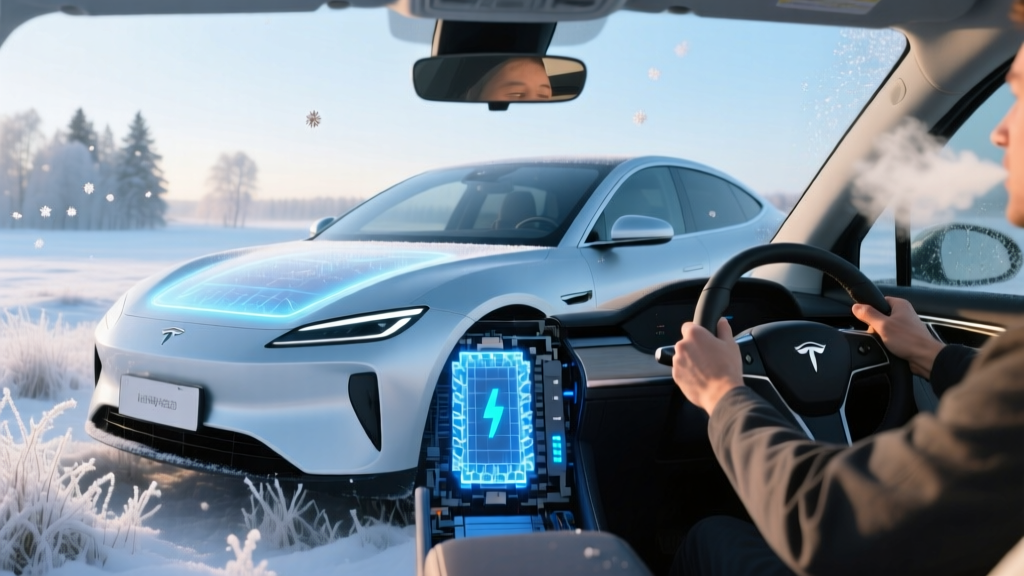
However, cold weather has a profound and measurable impact on EV performance. At 20°F (-7°C), expect to lose roughly 20-30% of your EPA-rated range depending on the vehicle, whether you're using cabin heat, and whether the battery was preconditioned. At 0°F (-18°C), some models lose 35-40% of range. This isn't a defect — it's electrochemistry.
Cold-Weather Range Reality Check: A Tesla Model Y Long Range AWD with an EPA rating of 320 miles might deliver only 210-250 miles in sustained 20°F highway driving with the heater on. An LFP-equipped Model 3 RWD (EPA 272 mi) could see 175-200 miles under the same conditions. Preconditioning the battery while plugged in and using heated seats instead of cabin air heat can recover 5-10% of that loss.
The performance loss comes from three factors: increased internal resistance in the cells (slowing the electrochemical reactions), energy diverted to battery heating, and cabin climate demand. Once the pack warms up through driving or preconditioning, performance returns to near-normal. The battery isn't damaged — it's temporarily constrained.
Why Cold Affects Lithium-Ion Batteries: The Chemistry Behind the Range Loss
Lithium-ion cells move lithium ions between a cathode and an anode through a liquid electrolyte. At low temperatures, three things happen simultaneously:
- Electrolyte viscosity increases. The liquid electrolyte thickens, slowing ion transport between electrodes. This raises internal resistance and reduces the power the battery can deliver or accept.
- Lithium plating risk during charging. If you attempt to charge a cold battery at high rates, lithium ions can plate onto the anode surface as metallic lithium instead of intercalating into the graphite structure. This is genuinely damaging and permanent — which is why every modern BMS severely restricts charge rate until the pack warms up.
- Regenerative braking is limited. Because the battery can't accept charge as quickly when cold, regen braking is reduced or disabled until the pack reaches operating temperature (typically 50-70°F / 10-21°C at the cell level). This means you'll use friction brakes more in the first 10-20 minutes of a cold drive.
The BMS mitigates these issues by routing energy (from the grid if plugged in, or from the battery itself) to warm the pack. This is why preconditioning — telling the car to warm the battery before you leave, while it's still connected to your Level 2 home charger — is the single most impactful cold-weather habit you can adopt.
LFP vs NMC vs NCA: Which Battery Chemistry Handles Cold Best?
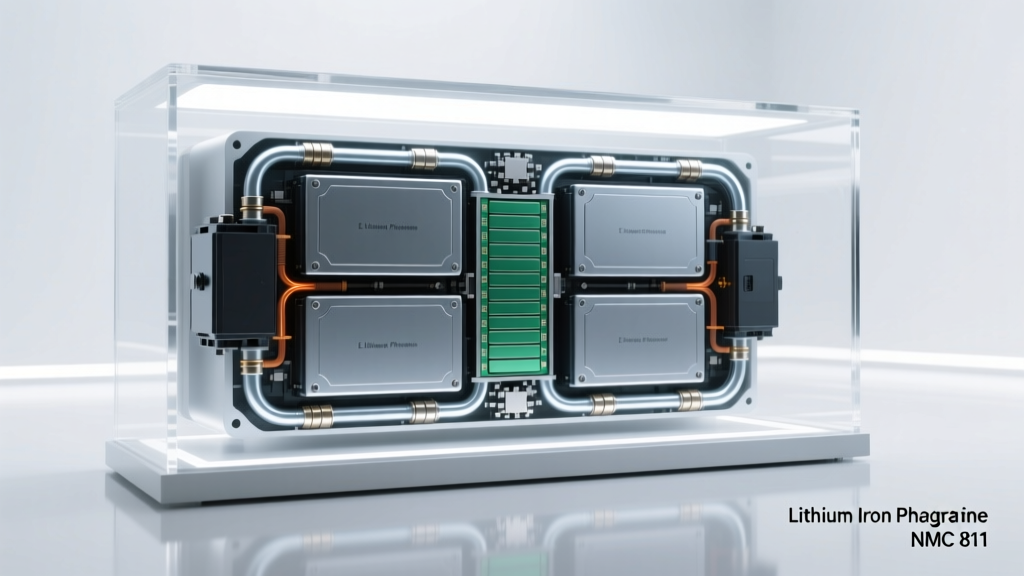
Not all EV batteries are built the same. The cathode chemistry determines energy density, cycle life, cost, and cold-weather behavior. Here's how the three main chemistries in 2026-model-year EVs compare:
| Attribute | LFP (Lithium Iron Phosphate) | NMC (Nickel Manganese Cobalt) | NCA (Nickel Cobalt Aluminum) |
|---|---|---|---|
| Energy Density | Lower (~160-180 Wh/kg cell-level) | Higher (~220-260 Wh/kg) | Highest (~250-280 Wh/kg) |
| Cycle Life | Excellent (3,000-5,000+ cycles to 80% SoH) | Good (1,000-2,000 cycles to 80% SoH) | Good (1,000-1,500 cycles to 80% SoH) |
| Cold Performance | Worse — higher internal resistance at low temps; more range loss below 32°F | Better — lower internal resistance; retains more usable range in cold | Better — similar to NMC |
| Cost per kWh | Lower (~$80-100/kWh pack-level, 2025-2026) | Higher (~$110-140/kWh pack-level) | Higher (~$110-135/kWh pack-level) |
| Thermal Stability | Superior — very resistant to thermal runaway | Good — requires more active BMS management | Good — similar management needs |
| Recommended SoC for Daily Use | 100% (LFP benefits from periodic full charges for BMS calibration) | 80-90% (prolonged 100% storage accelerates degradation) | 80-90% (same as NMC) |
| Common 2026 Applications | Tesla Model 3/Y RWD, Ford Mustang Mach-E Select (some), BYD models | Hyundai Ioniq 5/6, Kia EV6/EV9, VW ID.4, most long-range/AWD models | Tesla Model S/X, some Model 3/Y LR/AWD |
The cold-weather takeaway: If you live in a region with harsh winters (sustained temps below 32°F for months), an NMC or NCA pack will generally lose less range to cold than an LFP pack of equivalent size. However, LFP's superior cycle life means it degrades more slowly over years of use — so the total-life picture is more nuanced. Tesla's own guidance for LFP vehicles recommends charging to 100% at least once per week to keep the BMS cell-balancing accurate, which partially offsets LFP's cold-weather disadvantage by ensuring you start with a truly full pack.
How Long Do EV Batteries Actually Last? Degradation Data
The fear that EV batteries need replacement every few years is not supported by fleet data. Most modern liquid-cooled packs are engineered to outlast the vehicle's economic life. Here's what real-world degradation looks like:
Typical Degradation Curve (Liquid-Cooled NMC/NCA Packs, 2020-2026 Models):
- Year 1 / 15,000 mi: ~2-4% capacity loss (initial formation loss, steepest part of the curve)
- Year 3 / 45,000 mi: ~6-9% total loss
- Year 5 / 75,000 mi: ~8-12% total loss
- Year 8 / 120,000 mi: ~10-15% total loss
- Year 10 / 150,000 mi: ~12-18% total loss (many packs still above 80% SoH)
Source context: Recurrent Auto, which tracks over 15,000 EVs in real-world conditions, reports that the median 2020-2023 model-year EV retains roughly 90-93% of original range at 3 years and 85-90% at 5 years. Tesla's own 2023 Impact Report showed Model 3/Y packs retaining ~88% capacity at 200,000 miles.
LFP packs show a different pattern: slightly faster initial degradation but a much flatter long-term curve, often retaining 90%+ capacity well past 100,000 miles. The trade-off is that LFP's lower energy density means you start with fewer miles, so a 10% loss on a 272-mile EPA car leaves you at ~245 miles, while a 10% loss on a 330-mile car leaves ~297.
What accelerates degradation:
- Frequent DC fast charging above 150 kW without preconditioning — adds heat stress to cells. Occasional road-trip fast charging is fine; daily 350 kW sessions will shorten pack life.
- Regularly storing the battery at 100% SoC in heat — the worst combination for NMC/NCA. If you live in Phoenix and leave your car at 100% in a parking lot all day, you're accelerating calendar degradation.
- Deep discharges to 0% — running the battery to true zero (not just the car's displayed 0%, which has a buffer) stresses cells. Most manufacturers build in a ~5-10% top and bottom buffer you can't access.
- Extreme ambient heat — sustained 100°F+ environments cause more long-term degradation than cold. Cold reduces range temporarily; heat degrades capacity permanently.
EV Battery Warranties: What's Covered and What's Not
Federal law mandates that EV battery warranties cover a minimum of 8 years / 100,000 miles (in California Air Resources Board states, it's 10 years / 150,000 miles). Most manufacturers exceed these minimums. Here's how major brands stack up for 2026:
| Manufacturer | Battery Warranty | Capacity Retention Threshold |
|---|---|---|
| Tesla (Model 3/Y) | 8 yr / 120,000 mi (LR/AWD); 8 yr / 100,000 mi (RWD LFP) | 70% of original capacity |
| Hyundai / Kia | 10 yr / 100,000 mi | 70% of original capacity |
| Ford (Mach-E, F-150 Lightning) | 8 yr / 100,000 mi | 70% of original capacity |
| Volkswagen (ID.4) | 8 yr / 100,000 mi | 70% of original capacity |
| Chevrolet (Equinox EV, Blazer EV) | 8 yr / 100,000 mi | 70% of original capacity |
| BMW (i4, iX) | 8 yr / 100,000 mi | 70% of original capacity |
| Rivian (R1T, R1S) | 8 yr / 175,000 mi | 70% of original capacity |
What the warranty actually covers: If your battery's usable capacity drops below the stated threshold (typically 70% of original) within the warranty period, the manufacturer will repair or replace modules or the full pack to bring it back above that threshold. This is not a "new battery" guarantee — it's a floor. Also covered: manufacturing defects, BMS failures, and cooling system failures that damage cells.
What's typically NOT covered: Damage from accidents, improper charging equipment, modifications, flooding, or failure to follow maintenance guidelines. Normal degradation above the 70% threshold is considered expected wear.
According to the U.S. Department of Energy's fueleconomy.gov, battery replacement under warranty is rare — the vast majority of packs retain well above 70% capacity through the full warranty term.
How Much Does an EV Battery Replacement Cost?
This is the question that generates the most anxiety, and the most misinformation. Here's the honest picture for 2026:
| Vehicle / Pack Size | Battery Chemistry | Estimated Full Pack Replacement Cost (2026) | When Typically Needed |
|---|---|---|---|
| Tesla Model 3 RWD (~60 kWh) | LFP | $8,000 - $12,000 | Rarely before 200,000+ mi |
| Tesla Model Y LR (~82 kWh) | NMC/NCA | $12,000 - $16,000 | Rarely before 200,000+ mi |
| Hyundai Ioniq 5 (~77.4 kWh) | NMC | $11,000 - $15,000 | Rarely before 175,000+ mi |
| Ford F-150 Lightning Ext. Range (~131 kWh) | NMC | $18,000 - $25,000 | Rarely before 150,000+ mi |
| Chevrolet Bolt EV (~65 kWh) | NMC | $9,000 - $14,000 | Post-recall replacement packs |
| Rivian R1T (~128 kWh) | NMC | $18,000 - $24,000 | Rarely before 175,000+ mi |
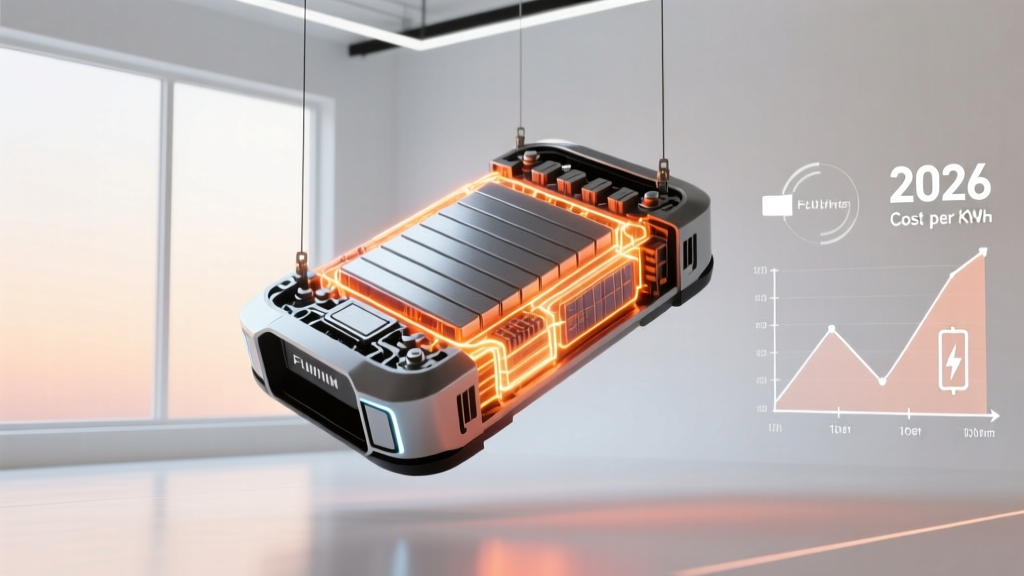
Context that matters: These costs are declining. In 2020, pack replacement costs were 30-50% higher. By 2026, pack-level pricing has fallen to roughly $110-140/kWh for NMC and $80-100/kWh for LFP at the manufacturer level, though out-of-warranty replacement includes labor ($1,500-$3,000) and dealer markup.
More importantly, most EV owners never replace the battery pack. The pack typically outlasts the vehicle's economic life. At 15 years and 150,000 miles, a well-maintained pack at 82-88% capacity still provides ample range for daily use. The car will more likely be retired due to body damage, suspension wear, or interior deterioration than battery failure.
Module-level repair is also increasingly common: if one cell group degrades unevenly, a technician can replace individual modules (typically 12-24 per pack) for $1,500-$4,000 rather than the entire pack.
Maximizing Battery Health: A Practical Care Checklist
You can't stop degradation entirely, but you can slow it meaningfully. These habits, based on lithium-ion chemistry fundamentals and fleet data, will keep your State of Health (SoH) as high as possible:
- Daily charging limit: Set to 80% for NMC/NCA vehicles. Set to 100% for LFP vehicles (and charge to 100% at least weekly for BMS calibration).
- Precondition while plugged in: Schedule departure times in your car's app so the battery warms to optimal temperature using grid power, not battery energy. This is critical in cold weather and beneficial in extreme heat (cooling the pack before a fast-charge session).
- Minimize DC fast charging as a daily routine: Use Level 2 (7-11 kW) at home for daily needs. Reserve DC fast charging (150-350 kW) for road trips. Fleet data from Recurrent shows vehicles that fast-charge more than 3x per week degrade ~1-3% faster over 5 years than those that primarily use Level 2.
- Avoid prolonged storage at extreme SoC: If leaving the car unused for more than a week, store at 50-60% SoC. Never store at 100% in hot weather, and never leave it near 0% for extended periods.
- Use battery preconditioning for fast charging: Navigate to a DC fast charger using the car's built-in nav (Tesla, Hyundai/Kia, Ford all support this). The BMS will warm or cool the pack to the ideal temperature for accepting high-power charge, reducing taper and cell stress.
- Park in shade or a garage in summer: Sustained heat is worse for long-term degradation than cold. A garage that stays at 75°F is dramatically better than a driveway baking at 120°F surface temperature.
- Don't obsess over 1-2% differences: Degradation is non-linear. You may see a quick initial drop then a long plateau. SoH fluctuates with temperature and recent driving patterns — a single reading isn't a trend.
How to Check Your EV Battery's State of Health (SoH)
State of Health (SoH) is a percentage representing your battery's current maximum capacity relative to its original capacity when new. A new battery is 100% SoH; a battery that can only hold 88% of its original energy is at 88% SoH.
Built-in methods:
- Tesla: The Service menu (hold the model name on the About screen for 3 seconds, enter "service") shows a battery health test. You can also monitor range at 100% SoC over time — if your 100% range drops from 320 to 290 miles over 3 years, that's roughly 90% SoH.
- Hyundai/Kia: The EV-specific menu in the infotainment system displays battery health information, and the Bluelink/UVO connected services app may show SoH percentage.
- Ford: The FordPass app and the in-vehicle SYNC system can display battery health metrics. A dealer can run a more detailed diagnostic.
- Universal: Any dealer can pull a full battery health report via the OBD-II port, showing individual module voltages, internal resistance, and capacity estimates.
Third-party tools: Apps like Recurrent, Tessie (for Teslas), and ABRP (A Better Route Planner) can estimate SoH by tracking your charging data and range over time. OBD-II dongles like the OBDLink SX paired with apps such as LeafSpy (Nissan Leaf) or Scan My Tesla provide real-time cell-level data including voltage spread, pack temperature, and degradation estimates.
For a pre-purchase inspection on a used EV, always request a battery health report from the selling dealer or use a service like Recurrent's free battery report (available for many models) to verify SoH before buying.
What's Coming Next: Solid-State and Silicon-Anode Batteries
If you're reading this and wondering whether to wait for next-generation battery tech, here's the realistic timeline as of 2026:
Solid-state batteries — which replace the liquid electrolyte with a solid conductor, promising higher energy density, faster charging, and better cold performance — remain in limited production. Toyota has announced a solid-state-equipped vehicle for 2027-2028, and Samsung SDI is targeting 2027 for mass production. However, these will debut in premium, low-volume applications. Broad market availability at mainstream price points is not expected before 2030-2032.
Silicon-anode batteries — which replace graphite anodes with silicon to increase energy density by 20-40% — are closer. Sila Nanotechnologies and Group14 Technologies are supplying silicon-anode materials to manufacturers, with initial production vehicles expected in 2026-2027. These will improve range without fundamentally changing charging behavior or cold-weather dynamics.
Sodium-ion batteries — cheaper than LFP but with lower energy density — are entering production in China (CATL, BYD) for budget vehicles and stationary storage. US-market availability in passenger EVs is not expected before 2028-2029.
The practical advice: today's lithium-ion packs (NMC, NCA, LFP) are mature, well-understood, and backed by strong warranties. Waiting for solid-state means waiting 4-6+ years for mainstream availability at today's price points. If you need a vehicle now, current battery technology is more than adequate for a decade or more of reliable service.
Frequently Asked Questions
Can I leave my EV parked outside in sub-zero temperatures?
Yes. The battery won't freeze or suffer permanent damage from cold alone. However, range will be significantly reduced until the pack warms up, and regenerative braking will be limited. If possible, plug in and precondition before driving. If you must park unplugged in extreme cold, leave the SoC at 50-70% — this is the most chemically stable state for storage.
Does cold weather permanently damage the battery?
No. Cold reduces performance temporarily but does not cause permanent degradation. What can cause damage is charging at high power when the battery is cold — but the BMS prevents this by throttling charge rates. The only cold-related permanent risk is if you force-charge a frozen pack with aftermarket equipment that bypasses the BMS, which you should never do.
How much range do I actually lose in winter?
Real-world data from Recurrent Auto and independent testing shows 20-30% range loss at 20°F and 30-40% loss at 0°F, depending on the vehicle, whether you precondition, and cabin heat usage. Vehicles with heat pumps (Tesla Model Y/3, Hyundai Ioniq 5/6, Kia EV6) lose less range than those using resistive PTC heaters because heat pumps move heat rather than generating it, using 2-3x less energy for cabin warming.
Should I charge to 100% before a winter road trip?
Yes, for a long trip, charge to 100% regardless of chemistry. The 80% daily limit is for routine use to minimize calendar degradation. Occasional 100% charges (a few times per month) have negligible impact on battery life. In cold weather, you'll want every available mile. Just don't let the car sit at 100% for days — start your trip within a few hours of reaching full charge.
Is an LFP battery a bad choice for cold climates?
Not necessarily bad, but less optimal than NMC/NCA for harsh winters. LFP packs lose more range to cold due to higher internal resistance. If your daily commute is short (under 40 miles round trip) and you can charge at home, LFP's cold-weather loss may not matter. But if you regularly need 200+ miles of winter range, an NMC or NCA vehicle with a larger pack is the better choice.
Does fast charging in cold weather damage the battery?
Not if the car manages it properly — and all modern EVs do. When you navigate to a DC fast charger, the BMS preconditions the battery to the ideal temperature before you arrive. If you plug in cold without preconditioning, the car will accept power very slowly (sometimes under 20 kW) until the pack warms. This isn't damage — it's protection. Always use the car's built-in navigation to route to a charger so preconditioning activates.
What's the single best thing I can do for battery longevity?
Charge at home on Level 2, set your daily limit to 80% (NMC/NCA) or 100% (LFP), precondition in extreme temperatures, and avoid letting the car sit at very high or very low SoC for days at a time. Following these four habits will keep your pack above 85% SoH for a decade or more of typical driving.