If you've ever searched for a 2005 Honda Odyssey battery, you probably found yourself looking at a 12-volt lead-acid unit costing around $150–$250, rated for 60–75 amp-hours, and designed to crank a 3.5L V6 engine. It's a simple, well-understood piece of automotive hardware. But if you're now shopping for an electric vehicle in 2026, the "battery" means something entirely different: a high-voltage lithium-ion traction pack storing 60–100+ kilowatt-hours (kWh) of energy, priced between $10,000 and $25,000 to replace, and engineered to last the lifetime of the vehicle.
This guide bridges that gap. We'll explain how modern EV battery technology works, how long these packs actually last (with real data), what warranties cover, what replacement costs look like, and why the battery in your old Odyssey is both completely different and philosophically similar to the one in a new Tesla, Hyundai, or Ford EV.
The 2005 Honda Odyssey Battery: A Baseline for Comparison
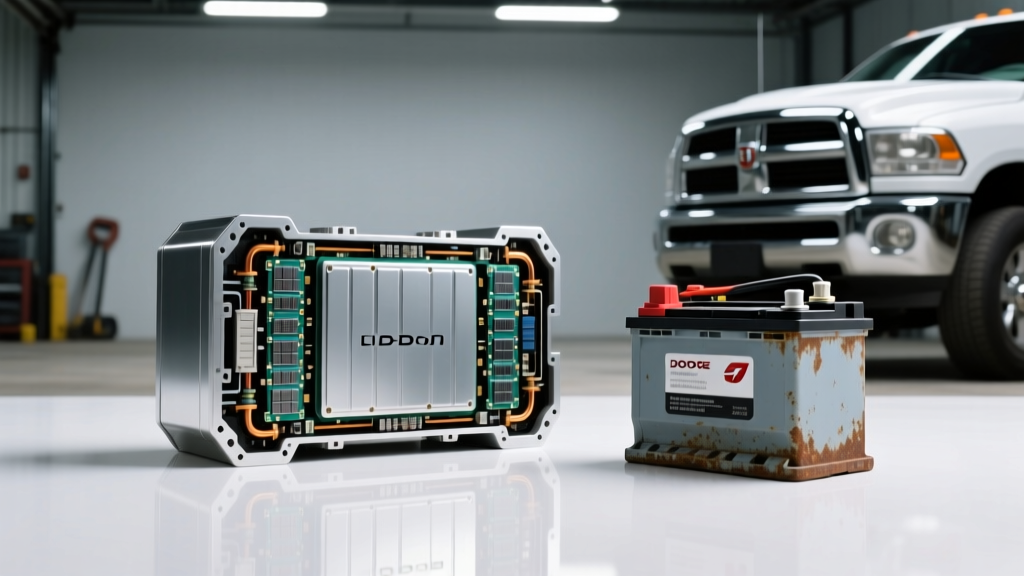
The 2005 Honda Odyssey used a conventional 12V lead-acid battery — typically a Group 24F or Group 35 size, producing around 650 cold-cranking amps (CCA). Its job was singular: start the engine and power accessories when the alternator wasn't running. Expected lifespan was 3–5 years. Replacement cost was (and remains) roughly $130–$220 at an auto parts store.
This is the battery most drivers grew up understanding. It degrades predictably, fails suddenly on cold mornings, and is trivially replaceable. It has nothing to do with propulsion.
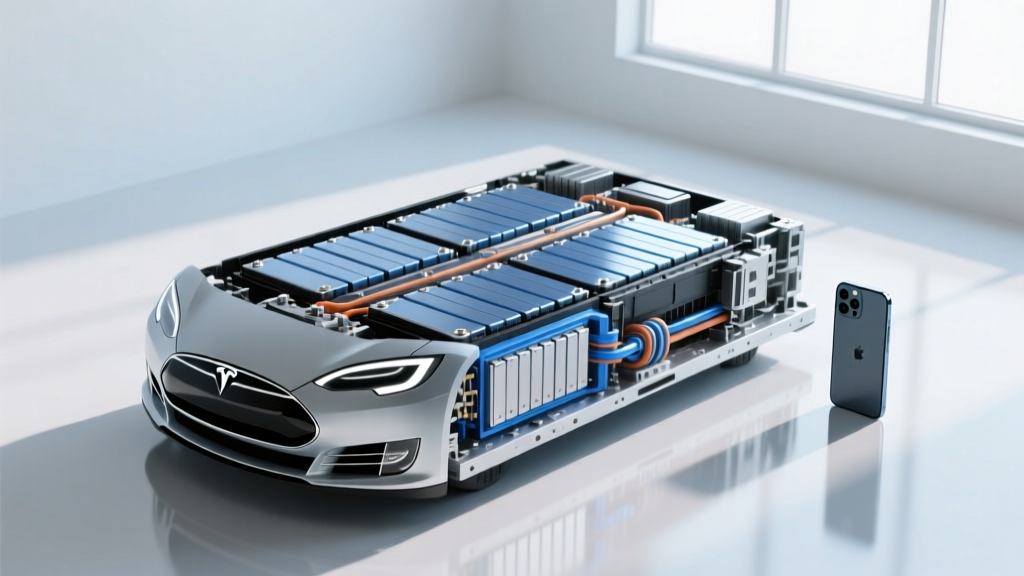
Modern EVs also carry a 12V auxiliary battery (often lead-acid or increasingly lithium 12V) to power lights, infotainment, and control computers. But the traction battery — the high-voltage pack that actually moves the car — is a fundamentally different system. That's what this guide focuses on.
EV Battery Chemistry in 2026: LFP vs. NMC vs. NCA
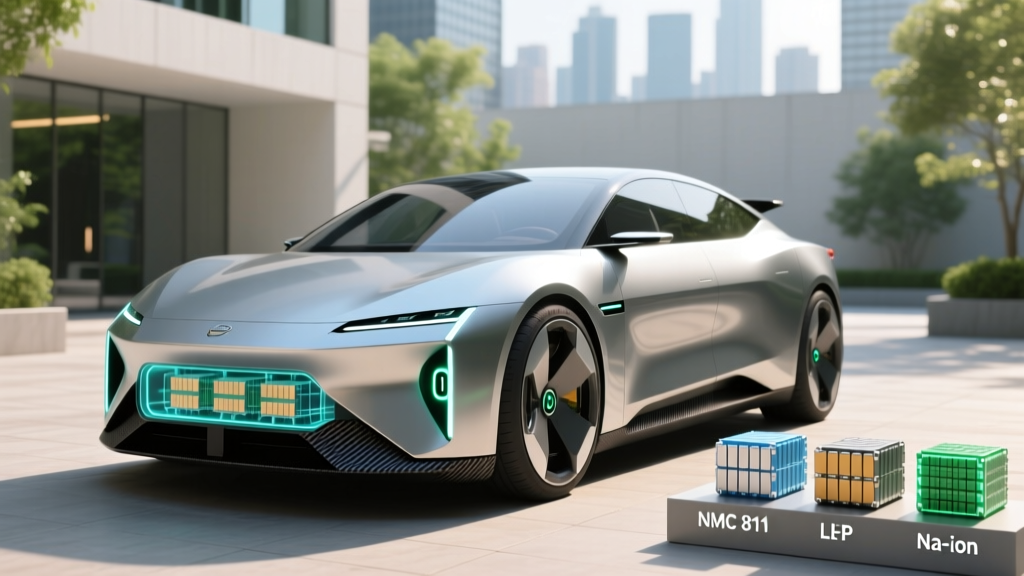
Not all EV batteries are the same. The two dominant chemistries in 2026 are LFP (lithium iron phosphate) and NMC/NCA (nickel manganese cobalt / nickel cobalt aluminum). Each has distinct trade-offs that affect range, longevity, cost, and cold-weather performance.
| Attribute | LFP (Lithium Iron Phosphate) | NMC / NCA (Nickel-based) |
|---|---|---|
| Energy Density | Lower (~160–180 Wh/kg cell-level) | Higher (~220–300 Wh/kg cell-level) |
| Typical Use | Standard-range models (Tesla Model 3 RWD, Ford Mustang Mach-E Select) | Long-range / performance models (Model 3 LR, Hyundai Ioniq 5, Rivian) |
| Cycle Life | 3,000–5,000+ cycles to 80% SoH | 1,000–2,000 cycles to 80% SoH |
| Cold-Weather Performance | Weaker — more range loss below 32°F | Better — retains more capacity in cold |
| Charging to 100% | Recommended periodically for BMS calibration | Generally capped at 80–90% for daily use |
| Cost per kWh (pack-level) | ~$95–$115 | ~$120–$145 |
| Thermal Stability | Excellent — very low thermal runaway risk | Good — requires more active management |
| Cobalt Content | None | Present (supply chain/ethical concern) |
Which is better? It depends on your use case. If you drive a standard commute, can charge at home, and want maximum pack longevity, LFP is the pragmatic choice — it simply lasts longer. If you need maximum range per charge, frequently drive in cold climates, or tow, NMC/NCA packs deliver higher energy density and better cold-weather retention. Neither is universally superior; the chemistry choice reflects a vehicle's design priorities.
How Long Do EV Batteries Actually Last?
The short answer: most EV batteries outlast the cars they're installed in. But "last" needs definition. A battery doesn't suddenly die like a lead-acid unit in your 2005 Odyssey. It gradually loses capacity over time — a process called degradation.
Typical Degradation Curve (Real-World Fleet Data)
Based on aggregated fleet data from sources including Recurrent Auto and manufacturer warranty claims:
- Year 1–2: ~2–5% capacity loss (initial "break-in" degradation)
- Year 3–5: ~1–2% loss per year (linear phase)
- Year 6–8: ~1–2% loss per year (continues linearly)
- Year 10+: Most packs retain 80–90% of original capacity
- At 150,000–200,000 miles: Typical retention is 82–92%
For context, a 2026 Tesla Model 3 Long Range with an EPA-rated 363 miles and an NMC pack might realistically deliver 310–330 miles after 8 years and 100,000 miles — still more than adequate for most drivers. An LFP-equipped Model 3 RWD (EPA 272 mi) would show even less degradation, potentially retaining 90%+ capacity at the same interval.
Compare this to the 2005 Honda Odyssey's lead-acill battery, which typically lost 40–60% of its cranking capacity within 4 years and required complete replacement. EV traction batteries degrade far more slowly and remain functional at reduced capacity for far longer.
What Does the Battery Warranty Cover?
Federal law in the United States mandates that EV battery warranties cover a minimum of 8 years or 100,000 miles (whichever comes first). In California Air Resources Board (CARB) states, that extends to 10 years or 150,000 miles. But the details matter — specifically the capacity retention threshold that triggers a warranty claim.
| Manufacturer | Warranty Period | Mileage Limit | Capacity Threshold | Chemistry Covered |
|---|---|---|---|---|
| Tesla (Model 3/Y RWD — LFP) | 8 years | 100,000 mi | 70% retention | LFP |
| Tesla (Model 3/Y LR — NMC) | 8 years | 120,000 mi | 70% retention | NMC |
| Hyundai / Kia | 10 years | 100,000 mi | 70% retention | NMC |
| Ford (Mach-E, F-150 Lightning) | 8 years | 100,000 mi | 70% retention | NMC / LFP |
| GM (Ultium platform) | 8 years | 100,000 mi | 70% retention | NMC |
| Rivian | 8 years | 175,000 mi | 70% retention | NMC |
| BMW (iX, i4) | 8 years | 100,000 mi | 70% retention | NMC |
The critical number is that 70% capacity threshold. If your battery drops below 70% of its original kWh capacity within the warranty period, the manufacturer must repair or replace it at no cost. In practice, very few packs hit this threshold under normal use — the degradation data above shows most retain 80%+ even at 150,000 miles. The warranty is a safety net, not a prediction.
EV Battery Replacement Cost: What to Expect
This is where EV ownership diverges most sharply from replacing a $180 battery in a 2005 Odyssey. High-voltage traction battery replacement is expensive — but it's also rare within the first 15 years of ownership.
| Vehicle | Battery Size (kWh) | Chemistry | Replacement Cost Range | Typical Replacement Timeline |
|---|---|---|---|---|
| Tesla Model 3 RWD | 57.5 kWh (usable) | LFP | $12,000–$15,000 | 15–20+ years (if ever) |
| Tesla Model Y Long Range | 75 kWh (usable) | NMC | $14,000–$18,000 | 15–20+ years |
| Hyundai Ioniq 5 | 77.4 kWh (usable) | NMC | $15,000–$20,000 | 15–20+ years |
| Ford F-150 Lightning (Extended) | 131 kWh (usable) | NMC | $22,000–$30,000 | 15–20+ years |
| Chevrolet Equinox EV | 85 kWh (usable) | NMC | $15,000–$19,000 | 15–20+ years |
| Rivian R1T (Max Pack) | 149 kWh (usable) | NMC | $25,000–$35,000 | 15–20+ years |
These figures include the battery pack and labor but can vary by region, service center, and whether a refurbished pack is available. Some manufacturers offer remanufactured or refurbished packs at 30–50% less than new. As production scales and packs from early-2020s vehicles enter the secondary market, replacement costs are trending downward.
The honest framing: most EV batteries will never need replacement during typical first-owner or even second-owner use. The car's suspension, interior, and electronics are more likely to reach end-of-life before the traction battery fails catastrophically.
Factors That Accelerate (or Slow) Battery Degradation
Battery longevity isn't random. Several measurable factors determine how quickly your pack loses capacity:
Battery Care Best Practices
- Avoid sustained 100% SoC (NMC/NCA): Daily charging to 80–90% significantly slows degradation. LFP packs are an exception — periodic 100% charges help the BMS calibrate.
- Minimize DC fast charging frequency: Occasional road-trip fast charging is fine. Daily reliance on 150+ kW DC charging accelerates wear due to heat stress. Level 2 home charging (7–11 kW) is gentler.
- Precondition before fast charging: Most EVs automatically warm the battery when navigating to a charger. This reduces the charge-curve taper and thermal stress. In cold weather, preconditioning can cut 10–80% charge times by 30–50%.
- Avoid extreme SoC storage: Don't leave the car at 5% or 100% for weeks. If storing, target 40–60% SoC.
- Manage heat exposure: Parking in shade or a garage during sustained 95°F+ weather reduces passive degradation. Active thermal management systems in modern EVs handle this during driving and charging.
- Don't fear cold weather — plan for it: Cold reduces usable range temporarily (15–30% loss at 20°F) but doesn't cause permanent damage. The battery recovers capacity when temperatures rise.
The single most impactful habit: charge at home on Level 2 for daily use, and reserve DC fast charging for road trips. Data from Recurrent Auto shows that vehicles primarily charged on Level 2 exhibit measurably slower degradation curves than those relying heavily on DCFC.
How to Check and Monitor Battery Health (State of Health)
Unlike the 2005 Odyssey — where you tested battery health with a multimeter or a load tester at AutoZone — EV battery health monitoring is software-driven.
State of Health (SoH) is expressed as a percentage: the ratio of your battery's current maximum capacity to its original capacity when new. A 77.4 kWh pack at 92% SoH can store approximately 71.2 kWh.
Methods to check SoH in 2026:
- In-vehicle display: Many EVs (Tesla, Hyundai/Kia, BMW) show estimated range that adjusts with degradation. Comparing your current full-charge range to the original EPA figure gives a rough SoH estimate.
- Manufacturer app: Tesla, Ford, Hyundai, and GM apps provide battery health metrics or range estimates that reflect SoH.
- OBD-II diagnostic tools: Devices like the OBDLink SX paired with apps such as EV Battery Health or Leaf Spy (for Nissan) can read BMS-reported SoH directly.
- Third-party services: Companies like Recurrent offer battery health reports based on telematics data, useful for used-EV buyers.
- Dealer diagnostic: A service center can pull a full BMS report showing individual cell-group voltages, internal resistance, and precise SoH.
For used-EV shoppers: always request a SoH reading before purchase. A pack at 90%+ SoH with 60,000 miles has decades of useful life remaining.
Emerging Battery Technology: Solid-State and Silicon Anodes
The battery landscape is evolving, but timelines matter. Here's where next-generation technologies actually stand in 2026:
Solid-state batteries replace the liquid electrolyte with a solid material, promising higher energy density (potentially 400+ Wh/kg at the cell level), faster charging, and improved safety. Toyota, Samsung SDI, and QuantumScape have demonstrated prototype cells. However, mass production for consumer vehicles remains in the 2028–2032 window based on current manufacturer roadmaps. Early deployments will likely appear in limited-production or premium models first.
Silicon anode technology increases the proportion of silicon in the anode (replacing graphite), boosting energy density by 20–40%. Companies like Sila Nanotechnologies and Group14 are supplying materials to battery manufacturers now. Expect incremental adoption in 2026–2028 model-year vehicles, particularly in higher-range trims.
Sodium-ion batteries are entering the market for lower-cost, lower-range applications. CATL has begun production, and these packs may appear in budget EVs by 2027–2028. Energy density is lower than LFP, but cost is significantly less and sodium is abundant.
None of these technologies are available in production vehicles you can buy today. If a salesperson suggests otherwise, ask for the spec sheet. Current purchases should be evaluated on today's proven LFP and NMC/NCA chemistries.
From the 2005 Odyssey to 2026: What Battery Ownership Really Means
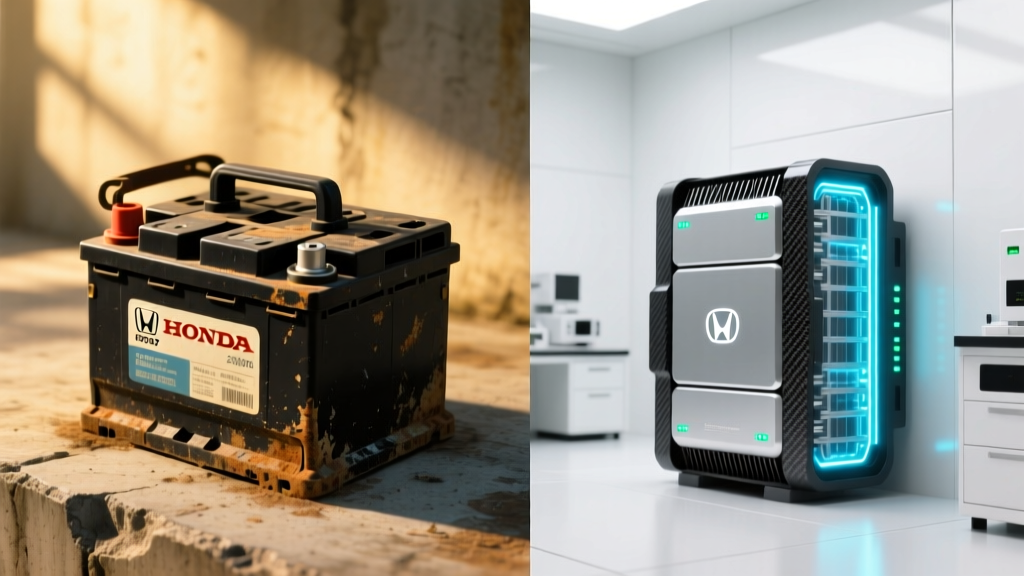
The battery in your 2005 Honda Odyssey was a consumable — a $180 part you replaced every 4 years without much thought. The traction battery in a 2026 EV is a structural, warrantied, long-life component that will likely outlast the rest of the vehicle.
The economics reflect this difference. Over 10 years and 120,000 miles, you'd likely buy 2–3 lead-acid batteries for an Odyssey ($400–$600 total). An EV battery will cost $0 in that timeframe — it's still on warranty and still at 85%+ capacity. The EPA's fueleconomy.gov data shows that even accounting for electricity costs, the total energy spend for an EV over that distance is typically 40–60% less than gasoline for the Odyssey's 3.5L V6 (rated at 18/25 MPG combined).
The fear of a catastrophic $20,000 battery replacement is real but statistically unlikely during normal ownership periods. The data consistently shows that modern lithium-ion packs — whether LFP or NMC — retain sufficient capacity for 15–20+ years of service. By the time replacement becomes necessary, the vehicle will likely be at the end of its economic life for other reasons.
Frequently Asked Questions
How long do EV batteries last in years and miles?
Most EV batteries retain 80–92% of their original capacity after 8–10 years or 150,000–200,000 miles. They don't "die" — they gradually lose range. At 70% capacity, the pack is still functional but may trigger a warranty claim. Realistic functional lifespan is 15–20+ years for most chemistries and use patterns.
How much does an EV battery cost to replace in 2026?
Replacement costs range from approximately $12,000 for a smaller LFP pack (e.g., Tesla Model 3 RWD, ~57.5 kWh) to $30,000+ for a large NMC pack (e.g., Ford F-150 Lightning Extended Range, 131 kWh). Refurbished packs may reduce cost by 30–50%. Most owners will never need a replacement during typical ownership.
What does the EV battery warranty actually cover?
Federal minimum is 8 years/100,000 miles; CARB states get 10 years/150,000 miles. The warranty guarantees the battery will retain at least 70% of its original capacity. If it drops below that threshold, the manufacturer repairs or replaces it at no cost. This covers defects and abnormal degradation, not damage from accidents or misuse.
How do I check my EV's battery health?
Use the manufacturer's app, the in-vehicle range display (comparing full-charge range to original EPA rating), an OBD-II diagnostic tool with EV-specific software, or a dealer BMS diagnostic. For used-EV purchases, always request a State of Health (SoH) percentage before committing.
LFP vs. NMC — which battery chemistry should I choose?
Choose LFP if you prioritize longevity, lower cost, can charge at home, and don't need maximum range. Choose NMC/NCA if you need longer range per charge, frequently drive in cold weather, or tow heavy loads. LFP cycles last 2–3x longer; NMC stores more energy per kilogram. Both are proven, safe, and warrantied for 8+ years.
Can I still drive an EV if the battery degrades to 70%?
Yes. A pack at 70% capacity is fully functional — it just offers less range. A vehicle originally rated for 300 miles would deliver approximately 210 miles at 70% SoH. For most daily commutes, this remains practical. The warranty threshold exists to protect against abnormal degradation, not because the car becomes unusable below it.
Does fast charging damage my EV battery?
Occasional DC fast charging (road trips, 2–3 times per month) causes negligible additional degradation. Daily DC fast charging at 150+ kW does accelerate wear due to sustained heat. For daily use, Level 2 home charging at 7–11 kW is the recommended approach. Preconditioning the battery before fast charging reduces thermal stress significantly.
For current federal EV tax credit rules that may apply to your purchase, consult the IRS §30D clean vehicle credit page — eligibility depends on MSRP caps, buyer income limits, and battery sourcing requirements that update regularly.