The Cadillac Escalade IQ arrives with one of the largest battery packs ever fitted to a production vehicle, but raw capacity is only part of the ownership equation. For a luxury SUV starting well over $100,000, buyers need to understand what that massive pack is made of, how it will age over a decade of use, and what protections General Motors provides when things go wrong. This guide breaks down the Escalade IQ's Ultium battery architecture, chemistry trade-offs, degradation expectations, warranty coverage, and the long-term cost picture — with hard numbers, not marketing gloss.
Cadillac Escalade IQ Battery Capacity and Ultium Architecture
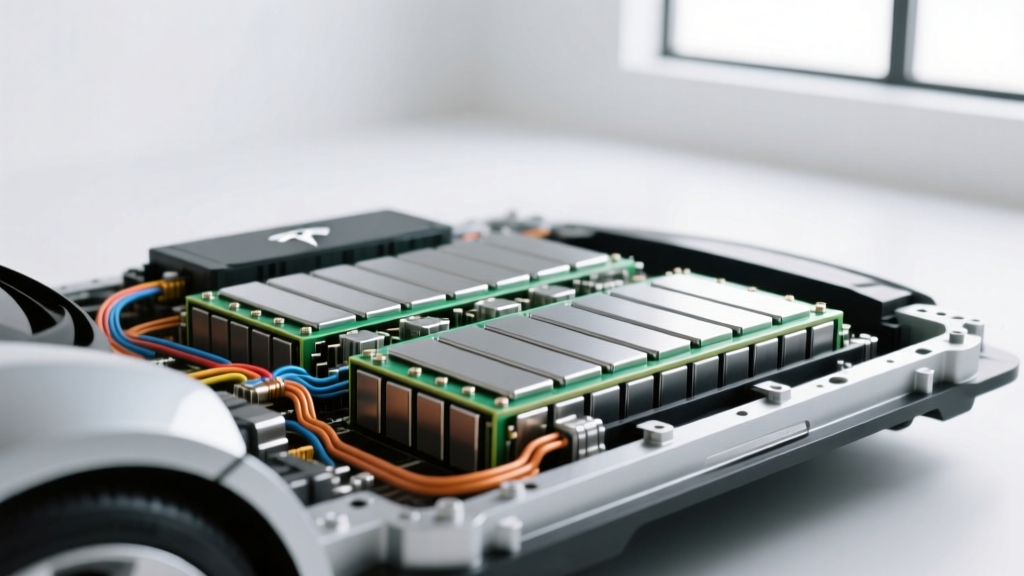
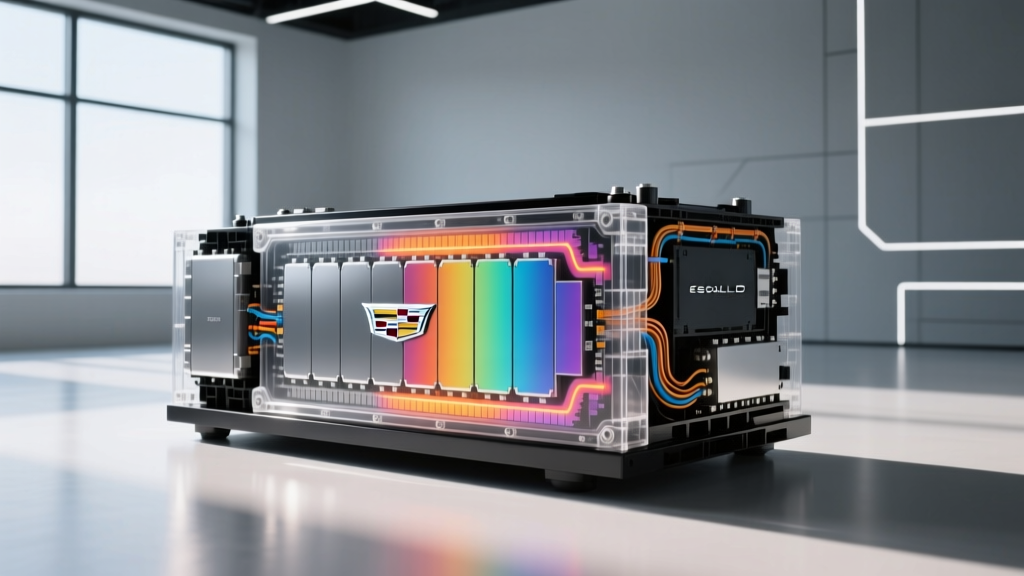
The Escalade IQ is built on GM's BT1 platform, the same dedicated EV architecture underpinning the Silverado EV and GMC Sierra EV. Its battery pack uses a double-stacked Ultium module configuration — two layers of pouch cells arranged in 24 modules — to achieve a usable capacity GM has confirmed at approximately 200 kWh. That figure places the Escalade IQ among the highest-capacity battery packs in any production passenger vehicle, rivaling the GMC Hummer EV's ~212 kWh pack.
This capacity is what enables GM's targeted EPA range of over 450 miles for the Escalade IQ (exact EPA certification figures will be confirmed closer to delivery). In real-world driving, expect highway range closer to 380–420 miles at 70 mph in moderate temperatures, with cold-weather highway range potentially dipping to 320–360 miles in sub-freezing conditions. A vehicle of this size and weight — likely exceeding 8,000 lbs curb weight — demands enormous energy to move, making the 200 kWh pack a necessity rather than excess.
| Specification | Value |
|---|---|
| Battery Chemistry | NCMA (Nickel Cobalt Manganese Aluminum) — Ultium Gen 2 |
| Total Pack Capacity | ~200 kWh usable |
| Module Configuration | 24 modules, double-stacked pouch cells |
| Platform | GM BT1 (dedicated EV) |
| Target EPA Range | 450+ miles (EPA certification pending) |
| Peak DC Fast Charge Rate | ~350 kW (800V architecture) |
| 10–80% DC Charge Time | Estimated ~25–30 minutes |
| Level 2 AC Charge Rate | Up to 19.2 kW |
| Battery/Powertrain Warranty | 8 years / 100,000 miles |
| Starting MSRP (estimated) | ~$130,000+ (Luxury / Sport trims) |
The 800-volt architecture is a critical detail: it enables the Escalade IQ to accept DC fast charging at up to approximately 350 kW at compatible stations, adding roughly 100 miles of range in about 10 minutes under ideal conditions. However, as with all EVs, peak charge rate is not sustained — the charge curve tapers significantly above 50–60% state of charge to protect the cells. Expect the 10–80% session to average closer to 200–250 kW, which is why the full 10–80% time is 25–30 minutes rather than the ~17 minutes a sustained 350 kW rate would suggest.
NCMA Chemistry: Why GM Chose It for the Escalade IQ
The Escalade IQ uses GM's second-generation Ultium cells with NCMA chemistry — nickel cobalt manganese aluminum. This is a variant of the broader NMC (nickel manganese cobalt) family, with aluminum added to the cathode to improve thermal stability and cycle life while slightly reducing cobalt content. Understanding this choice requires comparing it to the other dominant EV chemistry: LFP (lithium iron phosphate).
| Characteristic | LFP (Lithium Iron Phosphate) | NMC / NCMA (Nickel-based) |
|---|---|---|
| Energy Density | Lower (~160–180 Wh/kg cell-level) | Higher (~220–260 Wh/kg cell-level) |
| Range per kg of Battery | Less — requires heavier pack for same range | More — lighter pack achieves equivalent range |
| Cycle Life | Excellent (3,000–5,000+ cycles to 80% SoH) | Good (1,000–2,000 cycles to 80% SoH) |
| Cold-Weather Performance | Weaker — more range loss below freezing | Better — retains more capacity in cold |
| Cost per kWh | Lower — no cobalt or nickel | Higher — commodity metals add cost |
| Thermal Stability | Superior — lower risk of thermal runaway | Good — improved with aluminum (NCMA) |
| State of Charge Estimation | Harder — flatter voltage curve complicates BMS | Easier — steeper voltage curve aids accuracy |
| Best Application | Standard-range, fleet, daily-commuter vehicles | Long-range, performance, large/heavy vehicles |
For the Escalade IQ, NMC/NCMA was essentially the only viable choice. A 200 kWh LFP pack would be prohibitively heavy — potentially adding 500–800 lbs over the NCMA equivalent — and would compromise the vehicle's dynamics, efficiency, and payload. LFP's superior cycle life is a genuine advantage, but in a luxury flagship where range and packaging take priority, the energy-density advantage of NCMA wins out. Tesla uses LFP in the standard-range Model 3 and Model Y, but reserves NMC/NCA for long-range variants for exactly this reason.
GM's NCMA formulation also reduces cobalt content compared to older NMC chemistries, addressing both supply-chain ethics concerns and cost. According to GM's Ultium platform documentation, the cobalt content per kWh has been reduced by approximately 70% compared to GM's first-generation Bolt EV cells.
How Long Will the Escalade IQ Battery Last? Degradation Data
EV battery degradation is not a cliff — it's a gradual, non-linear curve. Most packs lose capacity fastest in the first 1–2 years (roughly 2–5%), then the rate slows considerably for the remainder of the battery's life. Based on data from GM's existing Ultium-based vehicles, industry-wide degradation studies, and third-party fleet data, here is what Escalade IQ owners can reasonably expect:
| Time / Mileage | Estimated Capacity Retained | Approx. Range Impact (from 450 mi baseline) |
|---|---|---|
| Year 1 / 15,000 mi | 96–98% | ~432–441 mi |
| Year 3 / 45,000 mi | 92–95% | ~414–428 mi |
| Year 5 / 75,000 mi | 88–92% | ~396–414 mi |
| Year 8 / 100,000 mi | 82–88% | ~369–396 mi |
| Year 10 / 150,000 mi | 78–85% | ~351–383 mi |
These projections align with data compiled by Geotab's large-scale EV battery health study, which analyzed over 6,000 vehicles and found an average annual degradation rate of approximately 2.3% across all chemistries, with NMC packs showing slightly higher early-year loss but stabilizing over time. NCMA's aluminum-enhanced cathode should perform at or slightly better than traditional NMC averages.
A critical point: even at 80% state of health (SoH), a 200 kWh pack still holds 160 kWh of usable energy — enough for roughly 360 miles of real-world range. That's more range than many new EVs offer at 100% SoH. Most EV batteries outlive the vehicles they're installed in; total pack failure is rare, and gradual capacity loss is the norm, not a sudden loss of function.
What the Escalade IQ Battery Warranty Covers
GM provides an 8-year / 100,000-mile battery and powertrain warranty on the Escalade IQ, consistent with its coverage across the Ultium-based lineup. Here is what that warranty actually means in practice:
| Term | Detail |
|---|---|
| Duration | 8 years or 100,000 miles (whichever comes first) |
| Capacity Retention Threshold | 70% of original usable capacity (industry standard) |
| What Triggers a Claim | Battery falls below 70% SoH within warranty period, as measured by GM diagnostic tools |
| What's Covered | Battery pack repair or replacement (modules or full pack at GM's discretion), plus related powertrain components |
| What's Not Covered | Damage from accidents, modifications, improper charging equipment, or neglect; 12V auxiliary battery |
| Transferability | Yes — warranty transfers to subsequent owners |
| California / CARB States | 10 years / 150,000 miles in states adopting CARB emissions standards |
The 70% threshold is important context. On a 200 kWh pack, 70% retention means 140 kWh of usable capacity — still good for roughly 315 miles of real-world range. Based on the degradation projections above, reaching below 70% within 8 years or 100,000 miles under normal use is unlikely. The warranty functions primarily as protection against manufacturing defects and outlier degradation, which is reassuring but probably won't be needed by most owners.
For buyers in California and the roughly 15 states that follow CARB (California Air Resources Board) standards, the extended 10-year / 150,000-mile warranty provides additional peace of mind — a significant advantage for second owners who purchase the vehicle used.
EV Battery Replacement Cost: What Escalade IQ Owners Should Budget For
Battery replacement is the most-cited fear among prospective EV buyers, and it's important to address it with numbers rather than anxiety. Full pack replacement is uncommon — most out-of-warranty repairs involve replacing individual modules rather than the entire assembly.
| Vehicle Class | Battery Size | Full Pack Replacement | Module-Level Repair |
|---|---|---|---|
| Compact EV (e.g., Bolt EV, Model 3 SR) | 60–75 kWh | $12,000–$18,000 | $2,000–$5,000 |
| Midsize SUV (e.g., Model Y, Ioniq 5) | 75–90 kWh | $15,000–$22,000 | $3,000–$6,000 |
| Large SUV / Truck (e.g., Escalade IQ, F-150 Lightning) | 130–200+ kWh | $25,000–$40,000+ | $4,000–$10,000 |
For the Escalade IQ specifically, a full pack replacement outside warranty would likely cost between $30,000 and $40,000 including parts and labor, based on current Ultium pack pricing and the complexity of a double-stacked 24-module configuration. However, module-level repair — replacing only the degraded or failed modules — would typically cost $4,000 to $10,000, which is the more realistic out-of-warranty scenario.
Two factors work in owners' favor: first, battery cell prices continue to decline (Bloomberg NEF reports pack-level prices dropping below $100/kWh in 2025, down from over $200/kWh in 2020), meaning a replacement in 2034 or 2036 would likely cost significantly less than today's estimates. Second, GM's modular Ultium design allows technicians to replace individual modules rather than the entire pack, keeping repair costs proportional to the actual problem.
Maximizing Escalade IQ Battery Health: Care Habits That Matter
Battery longevity is not purely a function of time and miles — how you charge, store, and drive the vehicle has a measurable impact on degradation rate. Here are the evidence-based practices that make a real difference for NCMA chemistry:
- Daily charge limit: 80–90%. NCMA batteries experience accelerated degradation when held at 100% SoC for extended periods. Set your daily charge limit to 80% or 90% via the Escalade IQ's infotainment system, and reserve 100% for road trips. Unlike LFP chemistry, which benefits from periodic full charges for cell balancing, NCMA prefers partial SoC.
- Avoid frequent DC fast charging when Level 2 is available. DC fast charging generates significant heat, and repeated high-rate sessions accelerate electrolyte breakdown. Using a home Level 2 charger (like the Escalade IQ's 19.2 kW capability) for daily charging and reserving DC fast charging for road trips is the optimal strategy.
- Use preconditioning before fast charging. The Escalade IQ's thermal management system can precondition the battery to the ideal temperature window (~25–35°C) before a DC fast-charge session. Navigate to a charging station via the built-in navigation to trigger automatic preconditioning — this protects the cells and enables faster charging.
- Minimize prolonged storage at extreme SoC. If storing the vehicle for more than two weeks, aim for 50–60% SoC. Storing at 100% or near 0% for extended periods accelerates calendar degradation, particularly in hot climates.
- Extreme heat is worse than extreme cold for longevity. While cold weather reduces range temporarily (recoverable when temperatures rise), sustained high battery temperatures — from repeated fast charging in hot climates or prolonged exposure above 100°F — cause permanent capacity loss. Park in shade or garages when possible in hot climates.
- Regenerative braking settings: moderate is fine. Aggressive regen doesn't meaningfully impact battery degradation — the charge currents involved are small compared to DC fast charging. Use whatever regen setting you prefer for driving comfort.
Monitoring Battery Health: How to Check State of Health (SoH)
The Escalade IQ's onboard diagnostics continuously monitor individual cell voltages, temperatures, and impedance across all 24 modules. Owners can access battery health information through several channels:
In-vehicle display: The Escalade IQ's infotainment system includes a battery health or energy information screen showing estimated range, energy consumption (kWh/100mi), and charge history. While GM has not historically displayed a raw SoH percentage in-vehicle (unlike Nissan's battery health bars), the estimated range at full charge compared to the original EPA figure provides a practical proxy.
myCadillac app: The connected services app provides charging history, energy usage data, and maintenance alerts. GM's OnStar-connected diagnostics can flag battery anomalies before they become noticeable to the driver.
Dealer diagnostic scan: A GM dealer can run a full battery diagnostic that provides module-level SoH data, identifying any individual modules degrading faster than the rest. This is recommended annually or before a warranty claim. Request the printout for your records — it's essential documentation for resale value.
Third-party tools: OBD-II dongles paired with apps like LeafSpy (originally for Nissan LEAF) or EV-specific diagnostic tools are expanding compatibility with GM's Ultium platform. Check compatibility before purchasing, as GM's proprietary BMS communication protocols may limit third-party access compared to older platforms.
Looking Ahead: Solid-State and Silicon-Anode Batteries
For buyers considering whether to wait for next-generation battery tech, here is a realistic timeline grounded in current industry development — not press-release optimism:
Solid-state batteries promise higher energy density (potentially 400+ Wh/kg at the cell level), faster charging, and improved safety by replacing the liquid electrolyte with a solid material. Toyota, Samsung SDI, and QuantumScape are leading development, with limited production runs expected between 2027 and 2029. However, mass-market availability at competitive pricing is realistically 2030 or later. The Escalade IQ's NCMA pack represents mature, proven technology — solid-state will not be available as a retrofit.
Silicon-anode batteries are closer to market. Companies like Sila Nanotechnologies and Group14 are supplying silicon-dominant anode materials to automakers now, with Mercedes-Benz's G-Class EV and GM's own upcoming models incorporating silicon-enhanced anodes for modest energy-density gains (10–20%). This technology is already entering production and may appear in future Ultium iterations, but again, it will not be retrofittable to existing packs.
The practical takeaway: battery technology will continue improving, but waiting for a hypothetical future breakthrough is rarely a sound purchasing strategy. The Escalade IQ's 200 kWh NCMA pack is built on chemistry that has been validated across millions of miles in GM's EV fleet, with a warranty that protects against the unlikely event of premature failure.
Frequently Asked Questions
How long do EV batteries last in years and miles?
Based on fleet data from Geotab and other large-scale studies, modern NMC/NCMA batteries retain approximately 82–88% of their original capacity at 8 years / 100,000 miles under normal use. Many EV batteries remain functional well beyond 150,000 miles with 75–80% capacity. Complete failure is rare — degradation is gradual. The Escalade IQ's 200 kWh pack has so much capacity that even at 70% SoH, it still delivers over 300 miles of range.
How much does it cost to replace an Escalade IQ battery?
A full pack replacement outside warranty would likely cost $30,000–$40,000 based on current Ultium pricing. However, most out-of-warranty repairs involve replacing individual modules at $4,000–$10,000. Battery cell prices continue to decline, so a replacement needed in the 2030s would likely cost substantially less. Under GM's 8-year/100,000-mile warranty, any defect or degradation below 70% is covered at no cost.
What does the GM battery warranty actually cover?
GM's Ultium battery warranty covers 8 years or 100,000 miles (10 years / 150,000 miles in CARB states). It guarantees the battery will retain at least 70% of its original usable capacity. If degradation exceeds that threshold within the warranty period, GM will repair or replace the battery at no cost. The warranty covers manufacturing defects and abnormal degradation but excludes damage from accidents, improper modifications, or abuse. It is fully transferable to subsequent owners.
How do I check and maximize my Escalade IQ's battery health?
Monitor your estimated range at full charge as a practical SoH proxy — if it drops significantly below the original EPA figure over time, request a dealer diagnostic scan for module-level health data. To maximize longevity: set daily charge limits to 80–90%, use Level 2 home charging as your primary method, reserve DC fast charging for road trips, use battery preconditioning when navigating to fast chargers, avoid prolonged storage at 100% or near 0% SoC, and park in shade or garages in hot climates.
Is LFP or NMC better for the Escalade IQ?
For a vehicle of the Escalade IQ's size and range requirements, NMC/NCMA is the correct choice. LFP offers superior cycle life and lower cost, but its lower energy density would make a 200 kWh LFP pack impractically heavy — adding hundreds of pounds and reducing efficiency. LFP is ideal for standard-range, lighter vehicles where weight is less critical. The Escalade IQ's NCMA pack delivers the energy density needed to achieve 450+ miles of range while keeping weight within engineering targets.
Does the Escalade IQ qualify for the federal EV tax credit?
Federal §30D tax credit eligibility depends on MSRP caps, buyer income limits, battery component sourcing, and critical mineral requirements as defined by current IRS rules. The Escalade IQ's expected MSRP (likely exceeding $130,000) may place it above the $80,000 MSRP cap for SUVs. Additionally, battery sourcing requirements continue to tighten annually. Consult a tax professional and check the latest IRS guidance at the time of purchase — do not assume credit eligibility based on announcements alone.