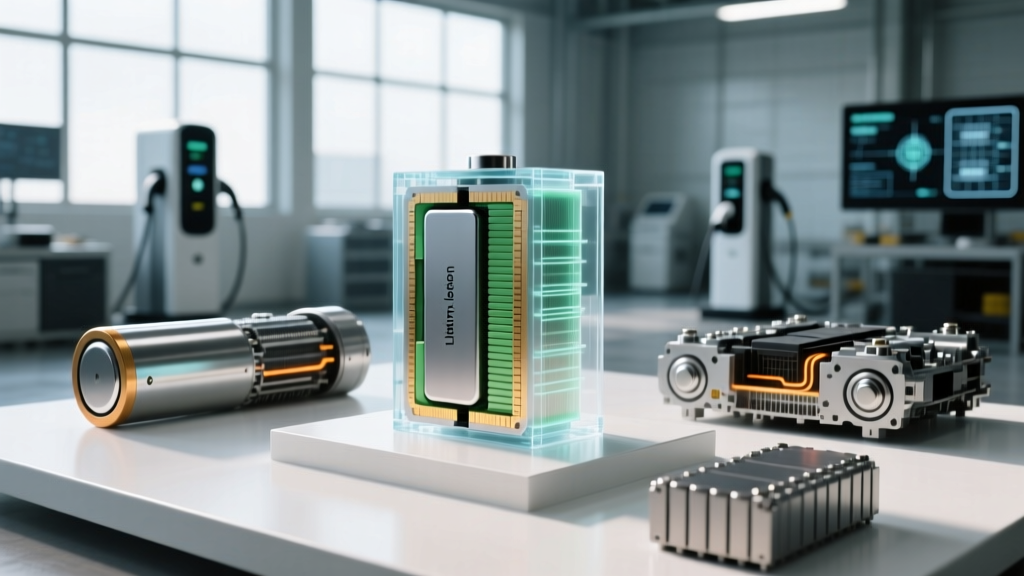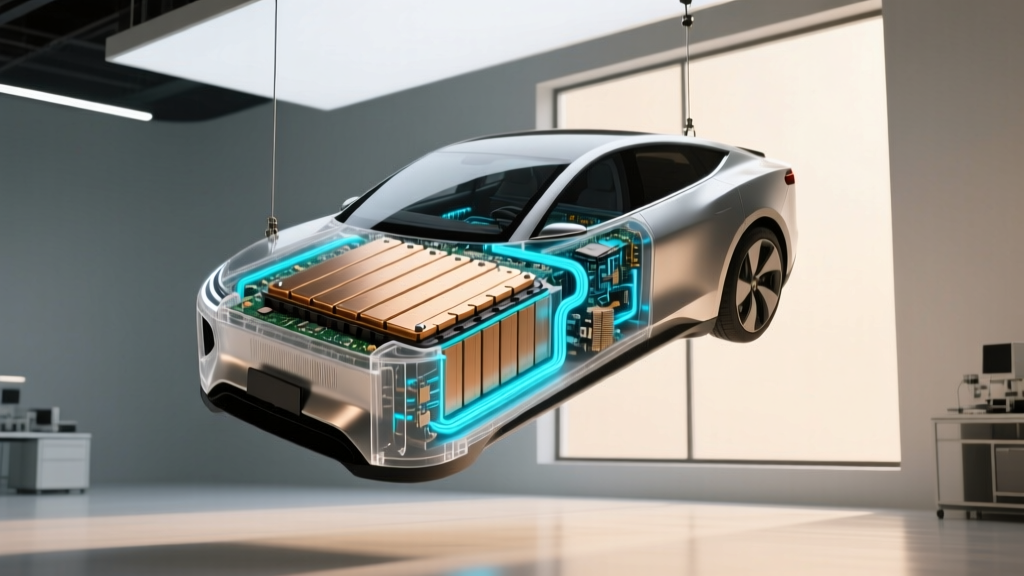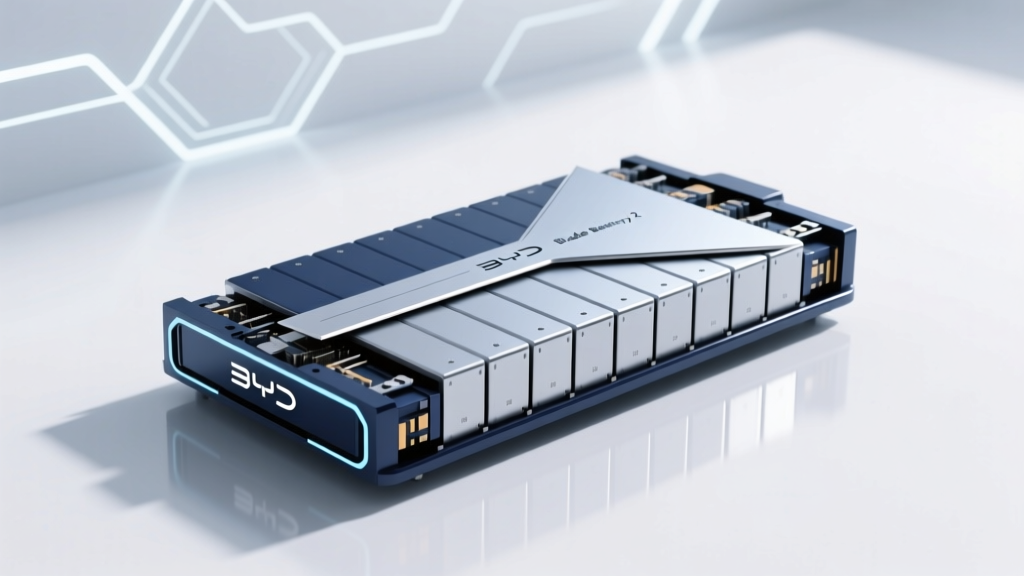
When BYD unveiled its second-generation Blade Battery—colloquially called the BYD Blade Battery 2—it reignited the industry debate about which lithium-ion chemistry actually serves EV owners best over a decade of daily driving. The original Blade, introduced in 2020, made lithium iron phosphate (LFP) competitive with nickel-manganese-cobalt (NMC) by solving the energy-density gap through a cell-to-pack (CTP) structural design. The Blade 2 iteration, rolling into BYD's 2025–2026 global lineup including the Seal, Atto 3 (Yuan Plus successor), and Dolphin, pushes usable pack capacity higher while maintaining the thermal stability and cycle-life advantages that define LFP chemistry.
But the Blade Battery 2 is just one data point in a much larger conversation every EV buyer needs to have: How long will my battery actually last, what will it cost me if something goes wrong, and which chemistry should I choose? This guide uses the Blade 2 as a lens to answer those questions with real numbers—not marketing claims.
LFP vs NMC/NCA: The Chemistry Decision That Shapes Your Ownership
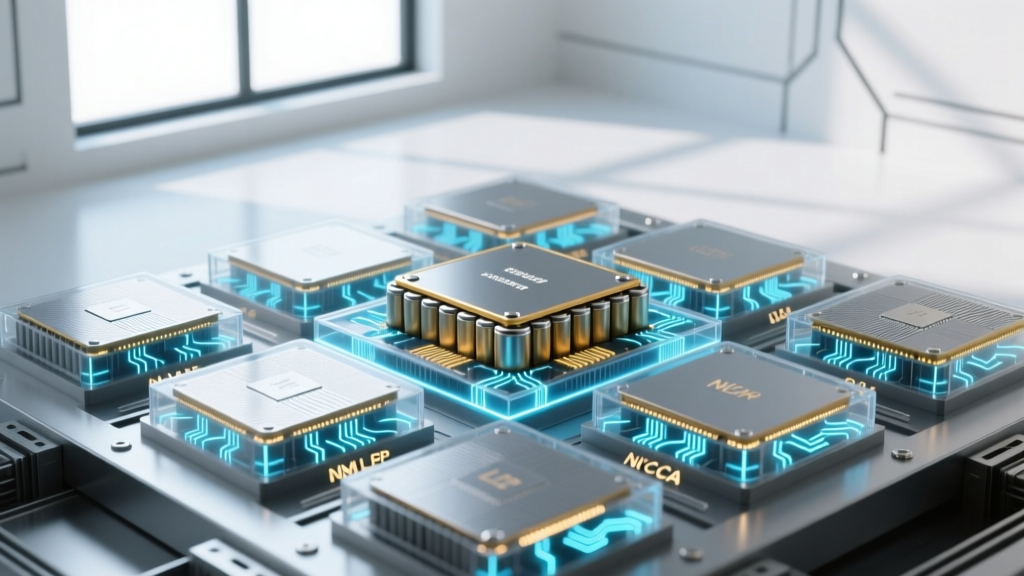
Every EV battery pack is built from individual cells, and those cells use one of two dominant cathode chemistries. The choice affects your range, how long the pack lasts, how it performs in winter, and what you pay upfront.
| Attribute | LFP (Lithium Iron Phosphate) | NMC / NCA (Nickel-based) |
|---|---|---|
| Energy Density (cell-level) | ~160–180 Wh/kg | ~220–300 Wh/kg |
| Pack-level Density (CTP designs) | ~140–165 Wh/kg (Blade 2 improves this) | ~170–210 Wh/kg |
| Cycle Life (to 80% capacity) | 3,000–6,000+ cycles | 1,000–2,500 cycles |
| Calendar Life | 15–20+ years typical | 10–15 years typical |
| Cold-Weather Performance | Moderate loss; ~25–35% range drop at 20°F | Better low-temp conductivity; ~20–30% range drop at 20°F |
| Thermal Stability / Safety | Excellent; no thermal runaway until ~500°F (260°C) | Lower threshold; runaway onset ~350–410°F (180–210°C) |
| Cost per kWh (pack-level, 2025–2026) | ~$85–$105/kWh | ~$110–$140/kWh |
| Cobalt / Nickel Content | None (iron + phosphate) | Significant (supply-chain & ethical concerns) |
| Typical Use Cases | Standard-range models, fleet/ride-hail, daily commuters | Long-range, performance, luxury models |
The BYD Blade Battery 2 exploits LFP's structural weakness—lower cell-level energy density—by eliminating modules entirely. The blade-shaped cells serve as both energy storage and structural beams within the pack, achieving a volume utilization rate that BYD claims exceeds 60%. In practice, this means a 60.5 kWh usable pack in the BYD Dolphin delivers an EPA-equivalent range of approximately 210–225 miles, while the Seal sedan's 82.5 kWh pack targets roughly 310–330 miles (WLTP; expect ~10–15% less on the EPA cycle for US-market equivalents).
The bottom line: If you prioritize maximum range in a single charge and live in a cold climate, NMC/NCA still holds an edge. If you want a battery that will likely outlast the car itself, cost less to manufacture, and resist thermal events, LFP—and the Blade 2 specifically—is the stronger play.
How Long Do EV Batteries Actually Last?
The most persistent myth in EV ownership is that batteries "wear out" like smartphone batteries and need replacement every few years. Real-world fleet data tells a different story.
Degradation Data Points from Real Fleets
Typical EV Battery Degradation Curve (NMC and LFP Combined Fleet Data):
- Year 1: ~2–3% capacity loss (initial "break-in" degradation)
- Year 2–3: ~1–1.5% loss per year (steady-state)
- Year 4–8: ~0.5–1% loss per year (plateau phase)
- Year 10 (average): ~85–92% original capacity retained
- Year 15 (projected): ~75–88% retained depending on chemistry and use
Sources: Geotab fleet study (6,300+ EVs), Recurrent Auto battery health reports, Tesla Impact Reports.
LFP cells, including BYD's Blade architecture, tend to cluster at the higher end of those retention figures. Geotab's longitudinal data shows that vehicles with LFP packs retain, on average, 2–4 percentage points more capacity at year 8 compared to equivalent-mileage NMC vehicles. The trade-off is that LFP's voltage curve is extremely flat—meaning the battery management system (BMS) has a harder time estimating state of charge precisely, which is why BYD and Tesla (which uses LFP in Model 3/Y Standard Range) both recommend periodic 100% charges to recalibrate.
Real-world expectation: A BYD Blade Battery 2 pack rated at 82.5 kWh will likely deliver 70–74 kWh of usable capacity at year 10 under normal use. For a vehicle originally rated at 320 miles, that translates to roughly 270–290 miles of range a decade in—still very usable for most drivers.
What Does the Battery Warranty Actually Cover?
Every EV sold in the United States carries a federally mandated minimum battery warranty of 8 years / 100,000 miles. Many manufacturers exceed this. Here's how major warranties compare, including BYD's coverage in markets where it operates:
| Manufacturer | Warranty Period | Mileage Cap | Capacity Retention Threshold |
|---|---|---|---|
| BYD (global markets) | 8 years | 100,000 mi (160,000 km) | 70% of original capacity |
| Tesla (Model 3/Y LFP) | 8 years | 100,000 mi | 70% |
| Hyundai / Kia | 10 years | 100,000 mi | 70% |
| Ford (Mustang Mach-E) | 8 years | 100,000 mi | 70% |
| Chevrolet (Equinox EV) | 8 years | 100,000 mi | 70% (60% for fleet) |
| Rivian | 8 years | 175,000 mi | 70% |
Key nuances: Warranty replacement doesn't mean a brand-new pack. Most manufacturers replace with a pack that meets the threshold—so you could receive a pack at 72% capacity. Also, warranties cover defects and excessive degradation, not damage from accidents, flooding, or unauthorized modifications. If you live in a CARB state (California and adopting states), the warranty extends to 10 years / 150,000 miles for many models under PZEV/EV provisions.
EV Battery Replacement Cost: The Numbers Nobody Wants to Hear
Let's address the fear directly: replacing an entire EV traction battery is expensive. But context matters enormously—most EV batteries never need replacement during the vehicle's useful life, and costs have been declining steadily.
| Battery Pack Size | Chemistry | Estimated Replacement Cost (parts + labor) | Typical Vehicle Segment |
|---|---|---|---|
| 40–55 kWh | LFP | $6,000–$9,000 | Compact / subcompact (e.g., BYD Dolphin, Chevy Bolt) |
| 60–75 kWh | LFP | $8,500–$13,000 | Mid-size sedan / crossover (e.g., BYD Seal, Tesla Model 3 RWD) |
| 75–90 kWh | NMC | $12,000–$18,000 | Mid-size long-range (e.g., Tesla Model Y LR, Hyundai Ioniq 5) |
| 90–110 kWh | NMC/NCA | $15,000–$24,000 | Full-size / luxury (e.g., Rivian R1T, Mercedes EQS) |
| 120+ kWh | NMC | $20,000–$32,000 | Heavy-duty trucks (e.g., Ford F-150 Lightning Extended) |
These figures represent out-of-warranty replacement at a dealership or authorized service center. Independent EV repair shops and refurbished packs can reduce costs by 30–40%. Importantly, module-level replacement is increasingly available—rather than swapping the entire pack, a technician can replace individual degraded modules for $1,500–$4,000 depending on the vehicle. BYD's Blade architecture, however, uses a highly integrated CTP design that makes module-level repair more difficult than in traditional module-based packs like the older Nissan Leaf or Chevy Bolt.
When is replacement typically needed? Almost never during the warranty period, and rarely before 200,000+ miles. The most common reason for out-of-warranty replacement is physical damage (collision, flood) rather than degradation. According to Recurrent Auto's analysis of 15,000+ EVs, fewer than 1.5% of EVs have needed a battery replacement outside of warranty recalls as of 2025.
Five Factors That Accelerate (or Preserve) Battery Health
Your habits matter more than chemistry alone. Here's what the data shows about maximizing the lifespan of any EV battery, whether it's a BYD Blade 2 LFP pack or a high-nickel NMC unit:
- Avoid habitual DC fast charging above 150 kW. Occasional road-trip fast charging is fine, but daily use of 250–350 kW chargers accelerates degradation by an estimated 1–2% per year compared to Level 2 home charging. The heat generated at high C-rates stresses cell internals.
- Keep state of charge between 20–80% for NMC; 0–100% is fine for LFP. This is the critical chemistry difference. NMC cells degrade faster when held at high SoC; LFP cells actually benefit from regular 100% charges for BMS calibration and don't suffer the same high-SoC stress.
- Precondition the battery before fast charging in cold weather. Most modern EVs (including BYD models) do this automatically when you navigate to a charger. A cold battery charged at high power experiences lithium plating—a permanent capacity-loss mechanism.
- Minimize prolonged storage above 90% or below 10% SoC. If you're leaving the car for a week or more, aim for ~50–60% SoC. Calendar degradation accelerates at the extremes.
- Use a Level 2 home charger (7–11 kW) for daily charging. This is the single best practice for battery longevity. At 240V / 32–48A, charging is efficient, generates minimal heat, and costs $0.10–$0.15 per mile equivalent in most US markets.
How to Monitor Your Battery's State of Health (SoH)
State of Health (SoH) is the percentage of original capacity your pack can still hold. A new battery is 100% SoH; a pack that held 82.5 kWh when new but now holds 74 kWh is at ~89.7% SoH. Here's how to check it:
OEM Tools and In-Car Displays
Most modern EVs display battery health information in the settings menu or companion app. BYD's infotainment system (DiLink) includes a battery health readout in the energy management section. Tesla provides a similar metric in the service menu. Hyundai/Kia's Bluelink app shows estimated range vs. original, which you can back-calculate into SoH.
Third-Party Diagnostics
Services like Recurrent Auto (free for owners) connect to your vehicle's telematics and provide monthly SoH reports benchmarked against similar vehicles. OBD-II dongles paired with apps like LeafSpy (for Nissan) or Scan My Tesla can pull raw BMS data including cell voltage variance, which is a leading indicator of pack imbalance.
Manual Calculation Method
Charge to 100%, note the displayed range, and compare it to the original EPA-rated range adjusted for the battery's usable capacity. If your BYD Seal originally showed 330 miles at 100% and now shows 300 miles, your SoH is approximately 91%. Repeat this test quarterly under similar temperature conditions for consistency.
The BYD Blade Battery 2 in Context: What Makes It Different
Understanding the Blade 2's specific engineering choices helps explain why it's generating attention in the LFP space:
- Short-blade cell design: The second-generation cells are shorter and wider than the original Blade, improving volumetric efficiency and allowing more flexible pack shapes across BYD's expanding model range.
- Improved energy density: BYD reports cell-level density improvements of approximately 10–15% over the first-generation Blade, narrowing the gap with NMC without sacrificing the thermal safety margin.
- Structural integration: The pack serves as a stressed member of the vehicle chassis (similar to Tesla's structural battery pack concept), reducing overall vehicle weight and improving torsional rigidity.
- Nail penetration test: Like the original, the Blade 2 passes the nail penetration test—a severe abuse scenario where a steel nail is driven through a fully charged cell—without fire or explosion. This remains a distinguishing safety benchmark that most NMC cells cannot pass.
For US buyers, the relevance depends on availability. As of early 2026, BYD has not re-entered the US passenger-vehicle market due to ongoing tariff structures (100% tariff on Chinese-manufactured EVs imposed in 2024). However, the Blade Battery 2 technology is licensing-adjacent: several non-Chinese manufacturers are evaluating LFP cell-to-pack architectures inspired by the Blade concept. If you're buying an LFP-equipped Tesla Model 3, the CATL-supplied prismatic cells share many of the same chemistry advantages, if not the identical structural design.
Emerging Battery Tech: What's Real and What's Years Away
The battery landscape is evolving, but timelines matter. Here's a grounded look at what's coming without the hype cycle:
Solid-state batteries: Toyota, Samsung SDI, and QuantumScape are the most visible players. Toyota has announced a 2027–2028 production target for a solid-state pack promising 460+ miles of range and 10-minute fast charging. However, production volume will be extremely limited initially—likely confined to low-volume Lexus models—and costs will be 3–5× current lithium-ion per kWh. Realistic mass-market timeline: 2030–2033.
Silicon-dominant anodes: Companies like Sila Nanotechnologies and Group14 are replacing graphite anodes with silicon composites, boosting energy density by 20–40%. These are already in limited production (the Mercedes G 580 with EQ Technology uses a Sila anode). Realistic broader adoption: 2026–2028 for premium models.
Sodium-ion batteries: CATL and BYD are both developing sodium-ion cells as a lower-cost alternative for entry-level EVs and energy storage. Energy density is ~25–30% lower than LFP, but raw material costs are dramatically lower. Realistic timeline for budget EVs: 2026–2027 in China; 2028+ in the US.
None of these technologies invalidate your current or near-term EV purchase. LFP packs like the BYD Blade Battery 2 represent the current sweet spot of cost, longevity, and safety for most buyers—and they'll remain mainstream through at least 2030 regardless of what emerges in labs.
Frequently Asked Questions
How long do EV batteries last in years and miles?
Most modern EV batteries are designed to last 15–20 years or 200,000–300,000 miles before degrading below 70–80% of original capacity. LFP batteries, including the BYD Blade Battery 2, typically reach the upper end of that range due to their superior cycle life (3,000–6,000+ full cycles). Many EVs will be retired for other mechanical or cosmetic reasons before the battery needs replacement.
How much does it cost to replace an EV battery?
Out-of-warranty replacement costs range from $6,000–$9,000 for small LFP packs (40–55 kWh) to $15,000–$24,000 for large NMC packs (90–110 kWh). Module-level repairs cost $1,500–$4,000. However, according to Recurrent Auto, fewer than 1.5% of EVs have required battery replacement outside of warranty recalls. The vast majority of owners will never face this cost.
What does the EV battery warranty cover?
Federal law mandates a minimum 8-year / 100,000-mile battery warranty for all EVs sold in the US. Most warranties guarantee the battery will retain at least 70% of its original capacity. Coverage includes defects and excessive degradation but excludes physical damage from accidents, flooding, or unauthorized modifications. CARB states extend coverage to 10 years / 150,000 miles.
How do I check my EV battery health?
Check your vehicle's in-car battery health display (usually in energy or service settings), use the manufacturer's companion app, or connect a third-party service like Recurrent Auto for ongoing SoH monitoring. For a manual check, charge to 100% and compare displayed range to the original EPA rating. Repeat quarterly under similar temperatures for accurate trend tracking.
LFP vs NMC — which battery chemistry is better for me?
Choose LFP (like the BYD Blade Battery 2 or Tesla Model 3 RWD) if you want maximum lifespan, lower cost, better thermal safety, and don't mind slightly less range per kWh. Choose NMC/NCA if you need maximum range, live in a very cold climate, or want a performance-oriented vehicle. For most daily commuters and suburban drivers, LFP is the more practical long-term choice in 2026.
Does frequent DC fast charging damage the battery?
Occasional DC fast charging (road trips, a few times per month) has minimal impact. Daily fast charging at 150+ kW accelerates degradation by roughly 1–2% per year compared to Level 2 home charging. The heat generated at high charge rates is the primary stressor. If fast charging is your only option, try to limit sessions to 80% SoC and use preconditioning whenever available.
Is the BYD Blade Battery 2 available in the United States?
As of 2026, BYD passenger vehicles are not sold in the US due to 100% tariffs on Chinese-manufactured EVs enacted in 2024. However, the LFP chemistry principles and cell-to-pack engineering of the Blade 2 are representative of the broader LFP trend. US buyers can access similar LFP technology in the Tesla Model 3/Y Standard Range, which uses CATL-supplied LFP cells with comparable cycle life and safety characteristics.
For official EPA range and efficiency data, see fueleconomy.gov. For federal EV tax credit eligibility under IRS §30D (including battery sourcing and critical mineral requirements), consult IRS.gov clean vehicle credits.