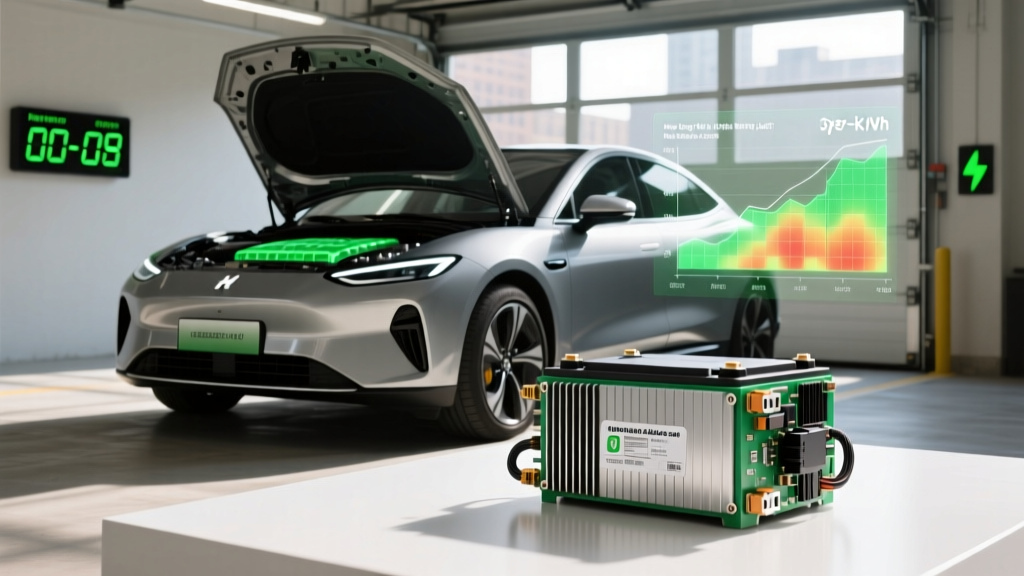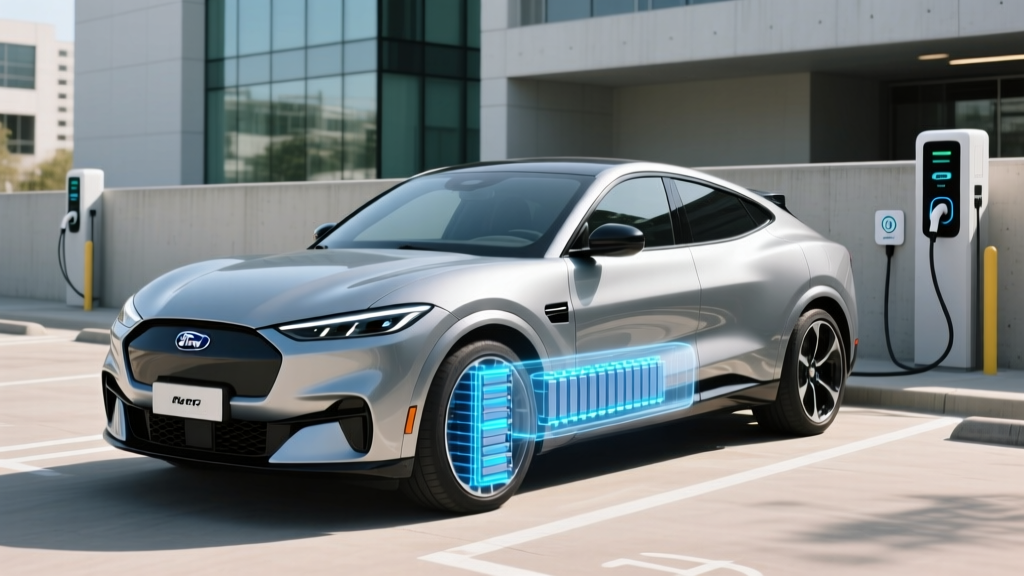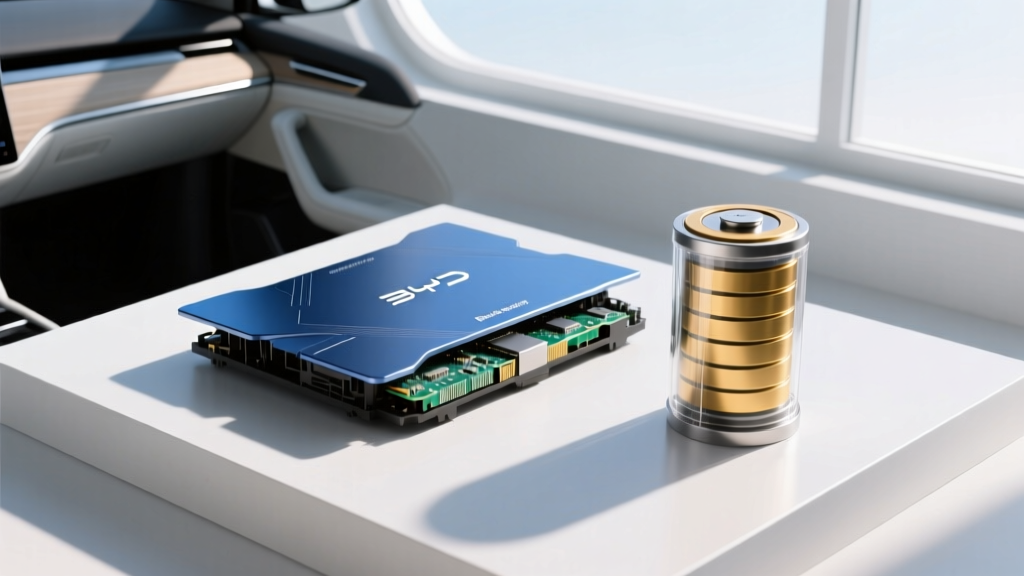
BYD's Blade Battery — a structural lithium iron phosphate (LFP) cell packaged in long, thin prismatic modules — has reshaped the global EV battery conversation. Originally launched in 2020 and now in its second-generation form across BYD's 2025–2026 lineup (Seal, Atto 3, Dolphin, and the refreshed Han), the Blade design addresses the two biggest buyer anxieties: thermal runaway risk and long-term degradation. But how does it stack up against the nickel-manganese-cobalt (NMC) packs used by Hyundai, BMW, Ford, and most legacy automakers? And what does ownership actually look like over 100,000+ miles?
This guide breaks down BYD Blade battery chemistry, real-world degradation data, warranty coverage, replacement economics, and daily care habits — with concrete numbers rather than marketing claims.
LFP vs. NMC: The Chemistry Trade-Offs That Matter
Before evaluating BYD's Blade specifically, it's essential to understand the two dominant EV battery chemistries. LFP (lithium iron phosphate) uses iron and phosphate in the cathode; NMC (nickel-manganese-cobalt) and its variant NCA (nickel-cobalt-aluminum) use nickel-heavy cathodes. The differences aren't academic — they dictate range, longevity, cold-weather behavior, and cost.
| Attribute | LFP (incl. BYD Blade) | NMC / NCA |
|---|---|---|
| Energy Density (cell-level) | ~160–180 Wh/kg | ~220–300 Wh/kg |
| Typical Cycle Life | 3,000–6,000+ cycles to 80% SoH | 1,000–2,500 cycles to 80% SoH |
| Cold-Weather Performance (−10°C / 14°F) | ~25–35% range loss | ~15–25% range loss |
| Thermal Runaway Onset | ~270°C (very stable) | ~210°C (more volatile) |
| Cobalt / Nickel Content | None (iron + phosphate) | High (supply-chain and ethical concerns) |
| Cell Cost (2025–2026) | ~$75–90 / kWh | ~$100–130 / kWh |
| Recommended Daily SoC | 100% (no penalty) | 80–90% (to limit degradation) |
| Voltage Curve | Very flat (harder to estimate SoC) | Sloped (easier SoC estimation) |
What BYD's Blade adds: The Blade form factor is a packaging innovation, not a chemistry change. BYD arranges long, thin LFP cells (roughly 960 mm × 118 mm × 13.5 mm) directly into the pack without traditional modules, achieving a cell-to-pack (CTP) volume utilization of ~60%. This narrows the energy-density gap: while LFP cells are inherently less dense, the Blade pack achieves system-level energy densities of ~140–150 Wh/kg — enough for a 82.5 kWh usable pack in the BYD Seal (EPA-estimated 330 mi range for the 2026 Design trim).
Bottom line: Choose LFP (including BYD Blade) for maximum cycle life, lower cost, safer chemistry, and 100% daily charging. Choose NMC if you need maximum range per pound (heavy trucks, long-range sedans) and don't mind charging to 80% daily. For most commuter and family EV use, LFP is the superior long-term ownership choice.
BYD Blade Battery Degradation: What the Data Shows
BYD claims its Blade cells retain 80% of original capacity after 3,000 full charge-discharge cycles — roughly 500,000 km (~310,000 miles) of driving in a vehicle like the Atto 3. Independent testing has largely validated this trajectory, though real-world results depend heavily on usage patterns.
Here's how degradation typically progresses across LFP (Blade-type) and NMC packs based on aggregated fleet data and Geotab's long-term EV battery health study:
| Timeframe | LFP / BYD Blade (avg) | NMC (avg, liquid-cooled) |
|---|---|---|
| Year 1 / 15,000 mi | ~1–2% loss | ~2–4% loss |
| Year 3 / 45,000 mi | ~3–5% loss | ~6–9% loss |
| Year 5 / 75,000 mi | ~5–7% loss | ~8–12% loss |
| Year 8 / 120,000 mi | ~7–10% loss | ~10–16% loss |
| Year 10 / 150,000 mi | ~9–13% loss | ~14–20% loss |
Key observations from this data:
- Early steep drop, then plateau: Both chemistries lose the most capacity in the first 12–18 months (calendar aging + initial SEI layer formation), then degradation slows significantly.
- LFP degrades roughly half as fast as NMC over a 10-year ownership horizon under moderate use.
- High-mileage outliers: BYD e6 taxis in China — using earlier-generation LFP cells — have logged 300,000+ miles with ~20% degradation, consistent with the cycle-life math.
- Cold-climate penalty: LFP's weaker cold-weather performance doesn't accelerate permanent degradation, but it does reduce usable range more noticeably in winter. A Blade-equipped Seal in Minneapolis will lose ~30% of range at 14°F; the same car in San Diego will see negligible seasonal variation.
Battery Warranty: What BYD Covers (and What It Doesn't)
BYD's high-voltage traction battery warranty varies by market, but the standard coverage in most regions where BYD sells directly (Europe, Southeast Asia, Australia, Latin America) is:
| Coverage Element | Term |
|---|---|
| Duration | 8 years / 160,000 km (~100,000 mi) in most markets; 8 yr / 100,000 mi in UK |
| Capacity Retention Threshold | 70% of original capacity (some markets: 65% for PHEV variants) |
| What Triggers a Claim | State of Health (SoH) drops below threshold during warranty period |
| Remedy | Module replacement, full pack replacement, or refurbished pack at BYD's discretion |
| Exclusions | Damage from accidents, flooding, unauthorized modifications, or use as a stationary storage unit |
| Transferability | Yes — warranty follows the vehicle, not the original owner |
Context for US buyers: As of 2026, BYD does not sell passenger vehicles in the United States (tariff barriers remain in place). However, BYD supplies LFP cells to other manufacturers, and Blade-type LFP packs appear in some Tesla Model 3 Standard Range units built in Shanghai. For US-spec EVs, federal law mandates a minimum 8-year / 100,000-mile battery warranty (10 yr / 150,000 mi in CARB states), with a typical 70% retention threshold. Always verify terms at IRS.gov for tax-credit-eligible vehicles, as battery sourcing requirements under §30D may affect your purchase decision.
EV Battery Replacement Cost: When and How Much
The single most persistent myth in EV ownership is that batteries need replacing every few years at catastrophic cost. The data tells a different story: the vast majority of EV batteries outlast the vehicle itself. Still, if a pack does fail outside warranty, here's what replacement costs look like in 2025–2026:
| Battery Pack Size | Chemistry | Replacement Cost (parts + labor) | Typical Scenario |
|---|---|---|---|
| 40–50 kWh | LFP (e.g., BYD Dolphin) | $6,000–$9,000 | Out-of-warranty failure at 150,000+ mi |
| 60–75 kWh | LFP (e.g., BYD Seal, Tesla M3 RWD) | $9,000–$14,000 | Rare; usually covered under warranty |
| 75–100 kWh | NMC (e.g., Hyundai Ioniq 5, BMW iX) | $14,000–$22,000 | Collision damage or extreme degradation |
| 100+ kWh | NMC (e.g., GMC Hummer EV, Lucid Air) | $20,000–$35,000 | Very rare; mostly crash-related |
When is replacement actually needed? In practice, almost never during normal ownership. Data from Consumer Reports and warranty claim records show that fewer than 1.5% of EV batteries require replacement within the first 10 years, and most of those are due to manufacturing defects covered under warranty. The more common scenario at 150,000–200,000 miles is reduced range (80–85% SoH) — inconvenient but not a failure requiring replacement.
BYD's Blade design offers an additional cost advantage: because cells are individually accessible within the CTP structure, a faulty module can sometimes be replaced without swapping the entire pack, reducing out-of-warranty repair bills by 40–60%.
Factors That Accelerate (or Preserve) Battery Life
Not all miles age a battery equally. The following factors have the most significant measurable impact on long-term State of Health:
Battery Care Best Practices
- Avoid sustained 100% SoC (NMC only): If your EV uses NMC/NCA, set daily charge limit to 80–90%. LFP owners (including BYD Blade) can — and should — charge to 100% regularly, as the flat voltage curve requires periodic full charges for accurate BMS calibration.
- Minimize DC fast charging above 50 kW when possible: Occasional road-trip fast charging is fine, but daily use of 150+ kW chargers accelerates electrolyte decomposition. Studies show vehicles that DC fast-charge more than 3x/week degrade ~1–2% faster over 5 years.
- Precondition before fast charging: Most modern EVs (including BYD models) warm the battery to ~35°C before a DC session. If your car has a preconditioning toggle, use it — charging a cold LFP pack at high power causes lithium plating.
- Avoid extreme SoC storage: If storing the vehicle for 2+ weeks, leave it at ~50% SoC. Storing at 100% or below 10% accelerates calendar aging.
- Thermal management matters: Park in shade or a garage when possible. Battery temperatures above 45°C (113°F) sustained for hours — like a dark driveway in Phoenix — cause measurable capacity loss over time.
- Drive moderately in extreme cold: LFP's cold-weather range loss is temporary, but aggressive acceleration on a freezing pack stresses cells. Allow 5–10 minutes of gentle driving after a cold start.
Monitoring Battery Health: How to Check SoH
State of Health (SoH) is the percentage of original capacity your battery retains. A new pack is 100% SoH; at 70% SoH, you've lost 30% of your original range. Here's how to monitor it:
- In-car BMS display: BYD's infotainment system (DiLink) on 2025–2026 models includes a battery health screen showing SoH percentage, total energy throughput, and cell voltage variance. Check it monthly.
- OBD-II diagnostic tools: Devices like the OBDLink SX paired with apps such as EV Bat Mon or Car Scanner can read SoH, cell delta voltage, and isolation resistance on most EVs.
- Dealer diagnostic report: Request a battery health printout during service visits. BYD dealers can pull a detailed module-by-module SoH report.
- Range tracking: The simplest method — track your actual range at a consistent SoC over time. If your 100%-to-10% range drops from 280 mi to 250 mi over two years, that's roughly 10% degradation (consistent with LFP expectations).
Cell voltage delta is an underappreciated metric. Healthy packs show less than 50 mV variance between the highest and lowest cell at rest. A delta exceeding 200 mV signals an imbalanced or failing module — catch this early and it may be fixable under warranty.
Beyond the Blade: Solid-State and Silicon-Anode Timelines
BYD's Blade represents the current state of the art for mass-produced LFP. But what's coming next?
- Sodium-ion (Na-ion): BYD has announced sodium-ion battery production beginning in late 2025 for lower-cost city cars. Na-ion offers lower energy density (~130 Wh/kg) but excels in cold performance and uses zero lithium. Expect initial applications in sub-$20,000 EVs in China and Southeast Asia — not US-market vehicles in the near term.
- Silicon-anode LFP: Adding silicon to the graphite anode can boost LFP energy density by 15–25%. Several manufacturers (including Sila Nanotechnologies and Group14) are ramping production. Realistic availability in mass-market EVs: 2027–2028.
- Solid-state batteries: Toyota, Samsung SDI, and QuantumScape continue to target 2027–2029 for limited production. Solid-state promises 400+ Wh/kg and ultra-fast charging, but manufacturing cost and yield challenges remain significant. No solid-state EV is currently available for purchase. Treat any announcement of "solid-state availability" before 2028 with skepticism — these are typically pilot-line demonstrations, not production-ready packs.
For buyers shopping today, BYD Blade LFP (or equivalent LFP from CATL, EVE, or Tesla's Shanghai-built packs) represents the best balance of longevity, safety, and cost available. Future chemistries will improve energy density, but LFP's cycle-life advantage means a Blade pack bought in 2026 will likely still be functional in 2040.
Frequently Asked Questions
How long do BYD Blade batteries last?
BYD rates Blade cells for 3,000+ full cycles to 80% capacity retention — equivalent to roughly 310,000 miles in a vehicle like the Atto 3. Real-world data from BYD taxi fleets shows 200,000+ miles with 15–20% degradation. For a typical driver covering 12,000 miles/year, the battery will outlast the vehicle's economic life.
How much does it cost to replace a BYD Blade battery?
Out-of-warranty replacement for a 60 kWh Blade pack runs approximately $9,000–$14,000 including labor. However, BYD's CTP design allows individual module replacement at lower cost (~$3,000–$5,000 per module) if only a segment fails. In practice, warranty coverage (8 years / 100,000+ miles) handles the rare early failures.
What does the BYD battery warranty cover?
BYD covers the high-voltage traction battery for 8 years / 100,000–160,000 km (varies by market) against capacity loss below 70% of original. The warranty is transferable to subsequent owners. It does not cover damage from accidents, flooding, or unauthorized modifications.
Can I charge a BYD Blade battery to 100% every day?
Yes — and you should. Unlike NMC chemistries, LFP experiences negligible additional degradation from 100% SoC. In fact, BYD recommends periodic full charges to calibrate the battery management system, since LFP's flat voltage curve makes SoC estimation difficult at partial states of charge.
LFP vs. NMC — which is better for most buyers?
For daily commuting, city driving, and owners who plan to keep their EV 8+ years, LFP (including BYD Blade) is the better choice: longer cycle life, lower cost, safer chemistry, and no daily charging restrictions. NMC remains preferable for buyers who need maximum range in a single charge (300+ miles EPA) and don't mind 80% daily limits. As of 2026, LFP is the fastest-growing chemistry segment globally, now representing over 40% of EV battery installations.
Does DC fast charging damage BYD Blade batteries?
Occasional DC fast charging (1–2 times per week) has minimal measurable impact. However, daily use of 150+ kW chargers can accelerate degradation by ~1–2% over 5 years compared to primarily Level 2 home charging. BYD Blade packs support up to 150 kW DC (10–80% in ~26 minutes in the Seal). For battery longevity, default to Level 2 (7–11 kW) at home and reserve DC fast charging for road trips.