The Real Story on EV Battery Longevity
If you're researching how to get the most out of an electric vehicle, boosting battery car lifespan comes down to understanding chemistry, managing charge habits, and knowing what the warranty actually protects. The good news: modern EV traction batteries routinely last 150,000–200,000+ miles before reaching 70–80% of original capacity. Most will outlive the vehicle they're installed in. But not all batteries degrade equally, and the choices you make — from chemistry at purchase to daily charging routine — meaningfully affect how much range you retain five, ten, or fifteen years down the road.
This guide breaks down the data that matters: LFP versus NMC/NCA chemistry trade-offs, measured degradation curves, warranty fine print, replacement economics, and the emerging solid-state and silicon-anode technologies on the horizon. All figures reflect 2026 model-year vehicles and current industry data.
LFP vs NMC/NCA: Which Chemistry Is Right for You?
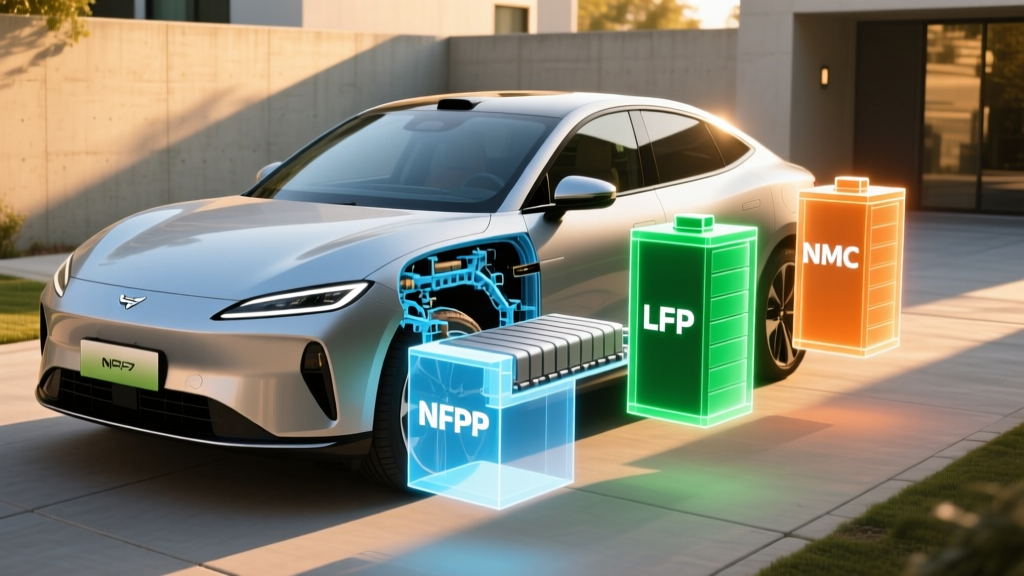
The two dominant lithium-ion chemistries in 2026 EVs are lithium iron phosphate (LFP) and nickel manganese cobalt / nickel cobalt aluminum (NMC/NCA). Each has distinct strengths, and the "better" choice depends entirely on your driving profile.
| Attribute | LFP (Lithium Iron Phosphate) | NMC / NCA (Nickel-Based) |
|---|---|---|
| Energy Density | Lower (~160–180 Wh/kg cell-level) | Higher (~220–260 Wh/kg cell-level) |
| Typical Cycle Life | 3,000–5,000+ full cycles | 1,000–2,000 full cycles |
| Cold-Weather Performance | Moderate — greater range loss below 32°F | Better low-temp conductivity |
| Cost per kWh | Lower (~$80–$100/kWh pack-level) | Higher (~$110–$140/kWh pack-level) |
| Recommended SoC Ceiling | 100% daily charging acceptable | 80% recommended for daily use |
| Thermal Stability | Excellent — higher runaway threshold | Good, but requires more active thermal management |
| Common in 2026 Models | Tesla Model 3/Y RWD, Ford Mustang Mach-E Select (LFP option), BYD, Rivian Standard | Hyundai Ioniq 5/6, Chevy Equinox EV, BMW iX, Tesla Long Range/Performance, most luxury EVs |
Choose LFP if you want maximum cycle life, plan to own the vehicle 8+ years, primarily commute in moderate climates, and can charge to 100% without guilt. Choose NMC/NCA if you need maximum range per charge (road trips, towing), live in consistently cold climates, or prioritize performance trims with higher energy density.
One practical note: LFP's flatter voltage curve makes state-of-charge estimation less precise. Tesla and other OEMs recommend periodically charging LFP packs to 100% so the battery management system (BMS) can recalibrate. With NMC, you set the daily limit to 80% and only charge to 100% before long trips.
How Long Do EV Batteries Actually Last?
The short answer: far longer than most buyers expect. According to data aggregated by Recurrent Auto from over 15,000 vehicles, the average EV battery retains roughly 90–95% of original capacity at 50,000 miles, 85–92% at 100,000 miles, and 80–88% at 150,000 miles. Degradation follows a curve that is steepest in the first 1–2 years (typically 2–5% loss as the solid electrolyte interphase stabilizes), then flattens to roughly 1–2% per year thereafter.
Typical Degradation Curve (Fleet Average Data)
| Mileage | Average Capacity Retained (All Chemistries) | LFP Average | NMC Average |
|---|---|---|---|
| New | 100% | 100% | 100% |
| 25,000 mi | 94–96% | 96–98% | 93–95% |
| 50,000 mi | 90–94% | 93–96% | 89–93% |
| 100,000 mi | 85–92% | 89–94% | 84–90% |
| 150,000 mi | 80–88% | 85–91% | 79–86% |
| 200,000 mi | 76–85% | 82–89% | 75–83% |
Sources: Recurrent Auto fleet data (2025 report), Geotab battery health study. Individual results vary with climate, charging habits, and thermal management quality.
For context, a 2026 Tesla Model Y Long Range with an EPA-rated 320 miles and an NMC pack would realistically offer roughly 270–290 miles at 100,000 miles of driving — still very usable. A 2026 Model Y RWD with LFP (EPA 295 miles) might retain 265–280 miles at the same mileage. In both cases, the battery remains functional well beyond typical vehicle trade-in timelines.
What the Battery Warranty Actually Covers
Federal law mandates a minimum 8-year/100,000-mile warranty on EV battery packs for emissions-related compliance, and most manufacturers match or exceed this. California Air Resources Board (CARB) states require 10 years/150,000 miles. The critical detail is the capacity retention threshold — the point at which the manufacturer considers the battery "failed" and will replace or repair it.
| Manufacturer | Warranty Term | Capacity Threshold | Notes |
|---|---|---|---|
| Tesla (Model 3/Y) | 8 yr / 120,000 mi (LR) or 100,000 mi (RWD) | 70% retention | Module-level repair when possible |
| Hyundai / Kia | 10 yr / 100,000 mi | 70% retention | Among the longest terms in the US market |
| Ford (Mach-E, F-150 Lightning) | 8 yr / 100,000 mi | 70% retention | Covers battery and hybrid/electric components |
| GM (Chevy, Cadillac EVs) | 8 yr / 100,000 mi | 70% retention (60% on some Bolt-era packs) | Ultium platform packs are modular for cheaper repair |
| BMW | 8 yr / 100,000 mi | 70% retention | Offers optional extended battery protection plan |
| Rivian | 8 yr / 175,000 mi | 70% retention | Higher mileage cap reflects truck/adventure use case |
Key warranty caveats: most warranties cover defects and excessive degradation but exclude damage from accidents, flooding, or unauthorized modifications. If your 5-year-old EV shows 72% capacity, you're still above the 70% threshold and the warranty won't trigger. The IRS §30D clean vehicle credit does not require a specific warranty beyond the federal minimum, but the battery sourcing and critical-mineral requirements do affect credit eligibility — currently up to $7,500, subject to MSRP caps ($55,000 sedans / $80,000 SUVs and trucks), buyer income limits, and North American assembly rules. Always verify current-year rules at irs.gov and consult a tax professional.
EV Battery Replacement Cost: What to Budget
Full battery pack replacement is rare before 150,000+ miles, but it's the number-one fear among prospective EV buyers. Here's what it actually costs in 2026, and when you'd realistically need it.
| Vehicle / Pack Size | Battery Capacity (kWh) | Full Pack Replacement | Module Repair |
|---|---|---|---|
| Tesla Model 3 RWD (LFP) | ~60 kWh | $8,000–$12,000 | $2,500–$4,500 |
| Tesla Model Y Long Range (NMC) | ~75 kWh | $10,000–$16,000 | $3,000–$5,500 |
| Hyundai Ioniq 5 (NMC) | ~77.4 kWh | $11,000–$17,000 | $3,500–$6,000 |
| Ford F-150 Lightning Extended | ~131 kWh | $18,000–$28,000 | $4,000–$8,000 |
| Chevy Equinox EV (Ultium) | ~85 kWh | $12,000–$18,000 | $3,000–$5,500 |
| BMW iX xDrive50 | ~105.2 kWh | $16,000–$24,000 | $4,500–$7,500 |
Several factors drive these ranges down compared to even three years ago. First, cell-level pricing has fallen — LFP cells now average under $80/kWh at the pack level. Second, modular pack designs (GM's Ultium, Hyundai's E-GMP) allow technicians to replace individual modules rather than the entire pack, cutting costs by 50–70%. Third, a growing aftermarket and OEM refurbishment market offers remanufactured packs at 30–40% below new-pack pricing.
When is replacement typically needed? Most EV batteries never require full replacement during the original owner's tenure. Out-of-warranty replacements are most common at 180,000–250,000+ miles, often on vehicles used for rideshare or fleet duty. For a private owner driving 12,000–15,000 miles per year, the pack will likely still hold 75–85% capacity when the rest of the vehicle reaches end-of-life.
Factors That Accelerate (or Slow) Battery Degradation
Not all miles are equal when it comes to battery wear. The following factors have the largest measurable impact on long-term capacity retention:
What Hurts Battery Health
- Exclusive DC fast charging: Vehicles that rely on DC fast charging (150–350 kW) for 90%+ of their charging show 2–4% additional degradation over 100,000 miles compared to primarily Level 2 (home) charging. The heat generated during high-C-rate charging stresses cells. That said, occasional fast charging on road trips has negligible impact — it's the daily pattern that matters.
- Sustained high state of charge: Storing an NMC battery at 100% SoC for days or weeks accelerates calendar aging. If you're not driving, keep it at 50–60%.
- Extreme heat exposure: Ambient temperatures consistently above 95°F without active thermal management (or parking in direct sun regularly with a hot pack) increase degradation rates by roughly 1–2% per year versus temperate climates.
- Deep discharge cycles: Routinely running the battery below 10% SoC stresses the anode. Most BMS systems include a bottom buffer (typically 2–5 kWh unusable) to protect against this, but habitually arriving at 0% still adds wear.
- Track use / sustained high-power discharge: Repeated hard acceleration and high-speed driving generates significant pack heat.
What Preserves Battery Health
- Level 2 home charging as primary: Charging at 7–11.5 kW generates far less heat than DC fast charging and is gentler on cells.
- 20–80% SoC window (NMC): For nickel-based chemistries, keeping daily use between 20% and 80% roughly doubles cycle life versus full 0–100% swings.
- 100% is fine for LFP: LFP chemistry tolerates full charge without meaningful calendar-aging penalty. Charge to 100% at least weekly for BMS calibration.
- Preconditioning before fast charging: Most 2026 EVs automatically warm or cool the pack when you navigate to a DC fast charger. This optimizes the charge curve and reduces stress. Always use the car's built-in navigation to chargers to enable preconditioning.
- Garage or shaded parking: Keeping the pack out of extreme ambient heat (or cold) reduces the thermal management system's workload and calendar aging.
- Software updates: OEMs periodically refine BMS algorithms via OTA updates that improve charge profiles and thermal management — keep your vehicle current.
Monitoring Your Battery's State of Health
State of Health (SoH) is the percentage of original capacity your battery can currently hold. A new battery is 100% SoH; one that held 75 kWh when new but now holds 67.5 kWh is at 90% SoH. Here's how to check it:
- In-vehicle displays: Tesla's app (under Battery Health, rolled out broadly in 2025), Hyundai's Bluelink, FordPass, and BMW's Connected app all now include SoH or estimated capacity readouts. Accuracy varies — these are BMS estimates, not laboratory measurements.
- OBD-II dongles + apps: Tools like the OBDLink SX paired with apps such as ABRP (A Better Route Planner) or Leaf Spy (Nissan-specific) can read detailed pack data including individual cell voltages, internal resistance, and calculated SoH.
- Dealer diagnostic: A service center can perform a full capacity test — typically a controlled discharge and recharge cycle — that gives the most accurate SoH reading. Some dealers offer this free during routine service; others charge $100–$200.
- Manual calculation: Charge to 100%, note the displayed range, and compare to the original EPA-rated range adjusted for your typical efficiency. This is rough but directionally useful. If your 320-mile EPA vehicle consistently shows 285 miles at 100% in moderate weather, you're at roughly 89% SoH.
Track SoH every 3–6 months. A sudden drop (more than 2–3% in a short period) warrants a dealer diagnostic — it could indicate a failing module rather than normal degradation.
What's Next: Solid-State and Silicon-Anode Batteries
The next major leap in battery technology is solid-state, which replaces the liquid electrolyte with a solid material, enabling lithium-metal anodes for dramatically higher energy density. Here's where things stand as of 2026:
- Toyota has announced a solid-state battery targeting 750+ km (WLTP) range and 10-minute 10–80% charging for a limited-production vehicle expected in 2027–2028. This is an announced timeline, not a currently available product.
- Samsung SDI is sampling solid-state cells to automakers with a stated mass-production target of 2027–2029.
- QuantumScape (backed by Volkswagen) continues pre-commercial testing of its solid-state cells, with initial low-volume production expected no earlier than 2028.
Silicon-anode batteries are closer to market. Sila Nanotechnologies and Amprius are producing silicon-dominant anode cells that offer 20–40% higher energy density than graphite anodes. The Mercedes G-Class 580e (2025–2026) uses Sila's silicon-anode cells in its plug-in hybrid battery — the first production vehicle to do so. Expect silicon-anode adoption in BEVs to expand through 2027–2029, initially in premium segments.
Realistic timeline for mainstream solid-state: 2029–2032 for broad availability in vehicles under $60,000. Early solid-state EVs will carry a significant price premium. If you're buying in 2026, today's LFP and NMC chemistries are mature, well-understood, and supported by extensive real-world longevity data.
Frequently Asked Questions
How long do EV batteries last in years and miles?
Most modern EV batteries (2022+ model years) retain 80–90% of original capacity at 150,000 miles or 10–12 years of typical use. LFP packs generally outlast NMC by 2–5 percentage points at equivalent mileage. Full failure before 150,000 miles is statistically rare — under 1–2% of the fleet based on Recurrent Auto and Geotab data.
How much does an EV battery cost to replace?
Full pack replacement ranges from $8,000–$28,000 depending on pack size and vehicle. Module-level repair (replacing only degraded segments) costs $2,500–$8,000. Refurbished packs from OEM or aftermarket sources can reduce costs by 30–40%. Prices have declined roughly 40% since 2020 due to falling cell costs and modular designs.
What does the EV battery warranty cover?
The standard US warranty is 8 years/100,000 miles (10 yr/150,000 mi in CARB states) against defects and capacity loss below a stated threshold — typically 70% of original capacity. It does not cover accident damage, unauthorized modifications, or gradual degradation above the threshold. Hyundai/Kia and Rivian offer among the most generous terms for 2026.
How do I check and maximize my EV battery health?
Check SoH via your vehicle's app, an OBD-II diagnostic tool, or a dealer capacity test. Maximize longevity by charging primarily on Level 2 at home, keeping NMC packs between 20–80% daily (LFP can go to 100%), avoiding exclusive reliance on DC fast charging, preconditioning before fast charges, and parking in shade or a garage when possible.
LFP vs NMC — which battery chemistry is better?
Neither is universally better. LFP wins on cycle life (3,000–5,000+ cycles), cost, thermal safety, and the ability to charge to 100% daily without penalty. NMC wins on energy density (more range in a lighter pack), cold-weather performance, and availability in performance/long-range trims. For a commuter who plans to keep the car 10+ years, LFP is often the smarter choice. For road-trippers, cold-climate drivers, and towing, NMC is preferable.
Does fast charging ruin EV batteries?
Exclusive reliance on DC fast charging adds roughly 2–4% more degradation over 100,000 miles compared to Level 2 home charging. It doesn't "ruin" the battery, but it accelerates wear. Using DC fast charging for road trips while relying on Level 2 at home has a negligible impact on long-term health. Always precondition the battery before fast charging — your EV does this automatically when you navigate to a charger.
Will my EV battery need replacing before the car wears out?
Statistically unlikely for a private owner. At 15,000 miles per year, a 2026 EV battery will typically retain 80–88% capacity at the 150,000-mile mark (year 10). The vehicle's suspension, interior, and electronics often show more age than the battery. Fleet and rideshare vehicles that accumulate 30,000+ miles per year and rely heavily on DC fast charging are the primary candidates for mid-life battery service.
Sources: Recurrent Auto Battery Degradation Report, fueleconomy.gov (EPA), IRS §30D Clean Vehicle Credit, manufacturer warranty documentation (Tesla, Hyundai, Ford, GM, BMW, Rivian — 2026 model year).