The BMW i3 remains one of the most distinctive electric vehicles ever sold — a carbon-fiber-reinforced plastic (CFRP) city car with an unmistakable silhouette and a pioneering approach to sustainability. Production ended in 2022, but thousands of i3s are still on the road in 2026, and as these vehicles age past the 8-year mark, one question dominates owner forums and searches: what does a BMW i3 replacement battery actually cost?
The short answer: expect to pay between $12,000 and $22,000 for a full high-voltage traction battery replacement in 2026, depending on whether you source a new OEM pack, a refurbished unit, or a third-party rebuilt module set. But before you panic, the data tells a reassuring story — most i3 battery packs are outlasting their vehicles. Let's break down exactly what you need to know about cost, chemistry, degradation, warranty coverage, and how to keep your i3's pack healthy for as long as possible.
BMW i3 Battery Packs: Generations and Chemistry
The BMW i3 was sold in the United States from the 2014 through 2021 model years with three distinct battery generations, each using NMC (nickel manganese cobalt) lithium-ion chemistry:
| Generation | Model Years | Usable Capacity | EPA Range | Chemistry |
|---|---|---|---|---|
| 60 Ah | 2014–2016 | 18.8 kWh | 81 miles | NMC (Samsung SDI) |
| 94 Ah | 2017–2018 | 27.2 kWh | 114 miles | NMC (Samsung SDI) |
| 120 Ah | 2019–2021 | 37.9 kWh | 153 miles | NMC (Samsung SDI) |
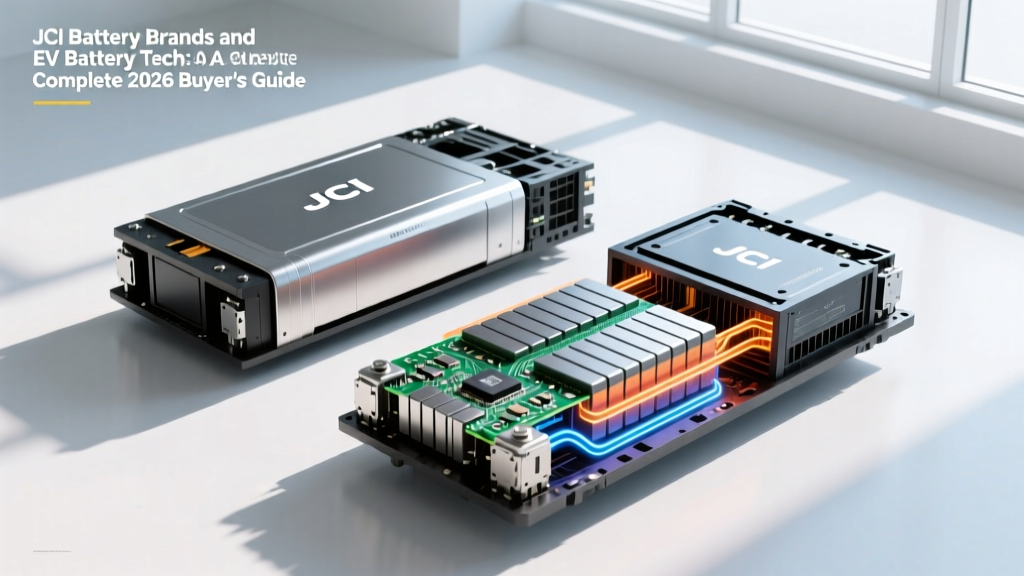
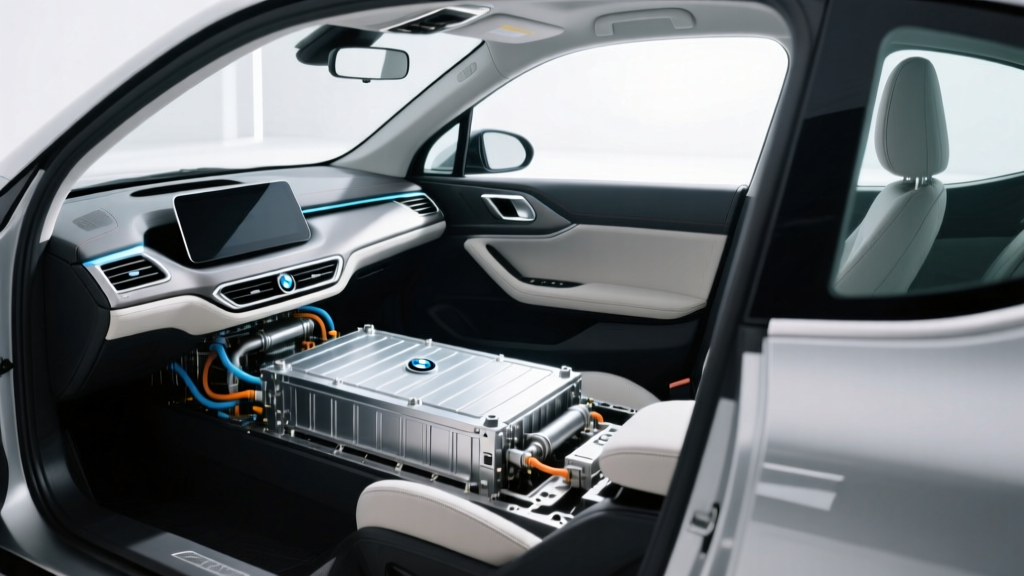
All i3 packs share the same physical module architecture: eight individual battery modules arranged in a flat tray beneath the floor. This modular design is actually good news for owners — in many cases, a dealer or specialist can replace only the degraded modules rather than the entire pack, significantly reducing cost.
LFP vs. NMC: Understanding Your i3's Battery Chemistry
The i3 uses NMC chemistry, which was the dominant EV battery type throughout the 2010s. Today's EV market has shifted significantly, with LFP (lithium iron phosphate) chemistry now powering many mainstream models including the Tesla Model 3 Standard Range, BYD vehicles, and several Ford offerings. Here's how the two chemistries compare:
| Attribute | NMC (Your i3) | LFP (Modern EVs) |
|---|---|---|
| Energy Density | Higher — more range per kg | Lower — heavier pack for same range |
| Cycle Life | ~1,000–2,000 full cycles | ~3,000–5,000+ full cycles |
| Cold-Weather Performance | Better in freezing temps | More range loss in cold |
| Thermal Stability | Good, requires active cooling | Excellent, inherently safer |
| Cost | Higher (cobalt, nickel) | Lower (iron, phosphate) |
| Optimal SoC Habit | Charge to 80% daily, 100% for trips | Charge to 100% regularly (recommended) |
| Degradation Profile | Gradual, accelerates slightly at high SoC | Very gradual, flat curve over thousands of cycles |
Which is better? There's no universal winner. NMC gives the i3 its compact, lightweight pack — critical for a car built around a carbon-fiber chassis with efficiency as the priority. LFP wins on longevity and cost but requires more mass for equivalent range. For i3 owners, the NMC pack is well-suited to the car's design; the real question is how to care for it properly.
Real-World i3 Battery Degradation: What the Data Shows
BMW i3 degradation data is among the most thoroughly documented in the EV world, thanks to an active owner community that tracks capacity loss meticulously. Here's what aggregated owner reports and fleet data reveal:
BMW i3 Degradation Milestones (Aggregated Owner Data)
- Year 1–2 / 15,000–30,000 miles: ~2–5% capacity loss (initial settling period)
- Year 3–5 / 45,000–75,000 miles: ~6–10% total loss from new
- Year 6–8 / 75,000–100,000 miles: ~10–15% total loss from new
- Year 9–12 / 100,000–150,000 miles: ~15–22% total loss (varies heavily by climate and charging habits)
Sources: BMW i3 owner forums (i3owners.com, SpeakEV), fleet operator data, and independent testing by Geotab's battery health study. Individual results vary significantly based on temperature exposure, DC fast-charging frequency, and SoC habits.
A critical nuance: the i3's battery management system (BMS) reserves a substantial buffer — approximately 10–15% of gross capacity is inaccessible to the driver. This means that even at 85% State of Health (SoH), you still have usable range that feels close to the original EPA figure, because the buffer gradually opens up as the pack ages. This is by design and is one reason i3 owners often report the car "feels fine" even with measurable degradation.
For the 60 Ah (2014–2016) models, the smaller usable capacity means degradation is more noticeable in daily driving — losing 15% of an 18.8 kWh pack leaves you with roughly 16 kWh usable, cutting an already modest 81-mile EPA range to around 65–70 real-world miles. The 120 Ah (2019–2021) models absorb degradation far more gracefully, with 15% loss still yielding roughly 130 real-world miles.
BMW i3 Replacement Battery Cost: 2026 Pricing Breakdown
If your i3's pack does fall below usable thresholds, here's what replacement looks like in 2026:
| Replacement Type | 60 Ah (2014–2016) | 94 Ah (2017–2018) | 120 Ah (2019–2021) |
|---|---|---|---|
| New OEM Pack (BMW Dealer) | $16,000–$20,000 | $18,000–$22,000 | $20,000–$24,000+ |
| Refurbished/Remanufactured Pack | $10,000–$14,000 | $12,000–$16,000 | $14,000–$18,000 |
| Individual Module Replacement (per module) | $800–$1,500 each | $1,000–$1,800 each | $1,200–$2,200 each |
| Labor (2–5 hours typical) | $300–$800 (independent); $500–$1,200 (dealer) | ||
Important context: The i3's modular design means that in many cases, only 1–3 of the 8 modules are significantly degraded. An experienced EV technician can test individual modules and replace only the weak ones, bringing costs down to $2,000–$6,000 total. This is the most common real-world repair path for i3 owners experiencing capacity loss outside of warranty.
As of 2026, OEM new-pack availability from BMW is limited — the company prioritizes newer models, and some dealers quote long lead times or simply cannot source new 60 Ah packs. The refurbished and third-party specialist market has become the primary replacement channel for early i3s.
BMW i3 Battery Warranty: What's Covered and For How Long
| Warranty Element | BMW i3 Coverage |
|---|---|
| Duration | 8 years or 100,000 miles (whichever comes first) |
| Capacity Retention Threshold | 70% of original usable capacity (below this = warranty claim) |
| What's Covered | Defects, premature capacity loss below threshold, module/pack failure |
| What's NOT Covered | Gradual degradation above 70%, physical damage, improper charging equipment, modifications |
| Transferable? | Yes — follows the VIN, transfers to subsequent owners |
For 2014–2016 i3 models, the 8-year/100,000-mile warranty has now expired (as of 2024–2026). Owners of 2017–2018 models are in the final window of coverage, while 2019–2021 i3s remain under warranty through 2027–2029. If your i3 is still within the warranty period and a BMW dealer's diagnostic test confirms capacity below 70%, BMW will repair or replace the pack at no cost — typically through module replacement rather than a full pack swap.
This warranty structure aligns with the federal requirement under EPA and CARB guidelines that EV batteries carry a minimum 8-year/100,000-mile warranty (10 years/150,000 miles in CARB states). BMW matches the federal baseline across all 50 states. See BMW's official warranty page for current terms.
Factors That Accelerate (or Slow) i3 Battery Degradation
Your i3's NMC pack doesn't degrade on a fixed timeline — how you use and store the car has a measurable impact on long-term State of Health. Based on fleet data and battery research from institutions like the National Renewable Energy Laboratory (NREL), here are the dominant factors:
✅ Do — Extend Battery Life
- Charge to 80% for daily driving; use the i3's built-in charge limit setting
- Use Level 2 (240V, 7.4 kW) home charging as your primary method
- Precondition the battery while plugged in before driving in extreme cold or heat
- Park in shaded or covered areas during summer — the i3's passive thermal management benefits enormously from avoiding heat soak
- Drive the car regularly; avoid leaving it sitting at 100% SoC for weeks
- Store at ~50% SoC if the car will sit unused for extended periods
❌ Avoid — Accelerated Degradation
- Frequent DC fast charging (50 kW on the i3) — occasional road-trip use is fine, but daily DCFC adds measurable wear to NMC cells
- Routinely charging to 100% and leaving it there overnight or for days
- Deep-discharging to 0% regularly — the buffer protects you, but habitual near-zero driving stresses cells
- Prolonged parking in extreme heat (above 95°F) at high SoC — this is the single worst condition for NMC chemistry
- Aftermarket charging equipment that doesn't follow proper charge protocols
The i3 has an important design characteristic to understand: unlike most modern EVs with active liquid cooling/heating loops, the i3 uses a passive air-cooling system with a refrigerant-based cooling plate for the battery. This is adequate for its power levels but means the pack is more sensitive to ambient temperature extremes. In hot climates like Arizona or Texas, i3 owners consistently report 3–5% more degradation over the same mileage compared to temperate-climate owners.
How to Check Your i3's Battery Health (State of Health)
Monitoring your i3's State of Health (SoH) is straightforward with the right tools:
Built-in Methods
The i3's iDrive system doesn't display a SoH percentage directly, but you can infer health by comparing your current maximum range estimate (shown on the dash after a full charge) to the original EPA figure. A 120 Ah i3 that originally showed 153 miles at 100% but now shows 138 miles is at roughly 90% SoH.
OBD-II Diagnostic Tools
For precise SoH readings, plug an OBD-II adapter into the port under the dashboard and use one of these apps:
- BimmerCode / BimmerLink: Reads BMW-specific battery data including SoH percentage, individual module voltages, and cell balance status
- LeafSpy (with BMW adapter): Despite the name, works with i3 packs when paired with the correct OBD-II dongle
- BMW dealer diagnostic (ISTA): The most authoritative reading — request a "battery health report" at your next service visit
What the Numbers Mean
- 90–100% SoH: Excellent — normal early-life settling
- 80–89% SoH: Good — typical for a 4–7 year old i3
- 70–79% SoH: Fair — noticeable range reduction; may qualify for warranty claim if within 8yr/100k
- Below 70% SoH: Below warranty threshold — repair or replacement recommended
Do Most i3 Owners Actually Need a Battery Replacement?
Here's the data-driven reality: the vast majority of BMW i3 owners will never need to pay for a battery replacement. The i3's pack, built by Samsung SDI with high-quality NMC cells, has proven to be one of the more durable EV batteries of its era. Multiple fleet studies and owner surveys indicate that fewer than 3–5% of i3 packs have required replacement due to failure or excessive degradation.
Most i3s will be retired, sold, or totaled in minor accidents before the battery reaches end-of-life. The car's relatively modest original MSRP ($42,000–$54,000 depending on year and trim) and the rapid pace of EV advancement mean that many owners upgrade rather than invest in a $15,000+ battery replacement on a vehicle with a current resale value of $8,000–$18,000.
That said, if you plan to keep your i3 as a long-term commuter — and the car's CFRP structure means the body won't rust like steel — a module-level refresh at 120,000+ miles for $3,000–$6,000 can extend the car's useful life by another decade. That's a strong value proposition compared to buying new.
Looking Ahead: Solid-State and Next-Gen Battery Tech
Battery technology is advancing rapidly, but it's critical to separate what's available now from what remains in development:
- Solid-state batteries: Companies including Toyota, Samsung SDI, and QuantumScape have announced solid-state prototypes with higher energy density and improved safety. Toyota targets limited production in 2027–2028, but widespread availability in affordable consumer vehicles is not expected before 2030. These will not be retrofit-compatible with the i3.
- Silicon-dominant anodes: Startups like Sila Nanotechnologies and Group14 are commercializing silicon-anode cells that boost energy density by 20–40%. Early production vehicles using this tech (Mercedes EQG, certain GM models) are arriving in 2025–2027. Again, not applicable to existing i3 packs.
- Sodium-ion batteries: CATL and BYD have begun producing sodium-ion packs for lower-cost vehicles in China. These offer lower energy density but excellent cycle life and no cobalt or lithium. Not expected in the US market before 2028+.
None of these technologies will retrofit into an existing BMW i3. If you own an i3 today, your path forward is caring for the NMC pack you have — and the data strongly suggests it will serve you well for years to come.
Frequently Asked Questions
How long do EV batteries last in years and miles?
Modern EV batteries, including the BMW i3's NMC pack, are designed to last 15–20 years or 150,000–200,000+ miles before reaching 70% State of Health. Real-world data from Geotab's fleet study of 6,300+ EVs shows average annual degradation of approximately 1.8% across all models — meaning most packs retain roughly 80%+ capacity at the 10-year mark. The i3's Samsung SDI cells perform in line with or slightly better than this average when properly maintained.
How much does an EV battery cost to replace?
Full pack replacement costs vary widely by vehicle: $12,000–$24,000 for a BMW i3 (depending on generation and source), $13,000–$20,000 for a Nissan Leaf, $15,000–$25,000 for a Tesla Model 3/Y, and $20,000–$35,000+ for large-pack vehicles like the GMC Hummer EV or Ford F-150 Lightning. However, most EVs never need a full replacement — module-level repairs are far more common and cost $2,000–$8,000.
What does the BMW i3 battery warranty cover?
BMW covers the i3's high-voltage battery for 8 years or 100,000 miles against defects and capacity loss below 70% of original usable capacity. If a BMW diagnostic test confirms your pack has fallen below this threshold within the warranty period, BMW will repair or replace the necessary modules at no cost. The warranty is fully transferable to subsequent owners.
How do I check and maximize my i3's battery health?
Use an OBD-II adapter with BimmerLink or BimmerCode to read precise SoH percentages and individual module voltages. To maximize longevity: charge to 80% daily, use Level 2 home charging, avoid frequent DC fast charging, precondition in extreme temperatures, and never leave the car sitting at 100% SoC for extended periods. The i3's built-in charge limit setting makes the 80% target easy to maintain.
LFP vs. NMC — which is better and why?
Neither is universally better — they serve different priorities. NMC (used in your i3) offers higher energy density, better cold-weather performance, and lighter weight, making it ideal for compact, efficiency-focused vehicles. LFP offers superior cycle life (3,000–5,000+ cycles vs. 1,000–2,000), lower cost, better thermal safety, and simpler maintenance (charge to 100% freely). LFP is becoming the standard for cost-conscious, high-volume EVs, while NMC remains preferred for performance and long-range applications. For the i3's use case — a lightweight city car — NMC was the correct engineering choice.
Is it worth replacing the battery in an older BMW i3?
It depends on the car's overall condition and your needs. A 2014–2016 i3 with a current market value of $8,000–$12,000 may not justify a $16,000+ OEM pack replacement. However, a $3,000–$6,000 module refresh that restores 90%+ capacity can be an excellent investment if the rest of the car (CFRP body, interior, REx engine if equipped) is in good shape. The i3's carbon-fiber structure doesn't corrode, making it one of the best candidates for long-term battery refurbishment.