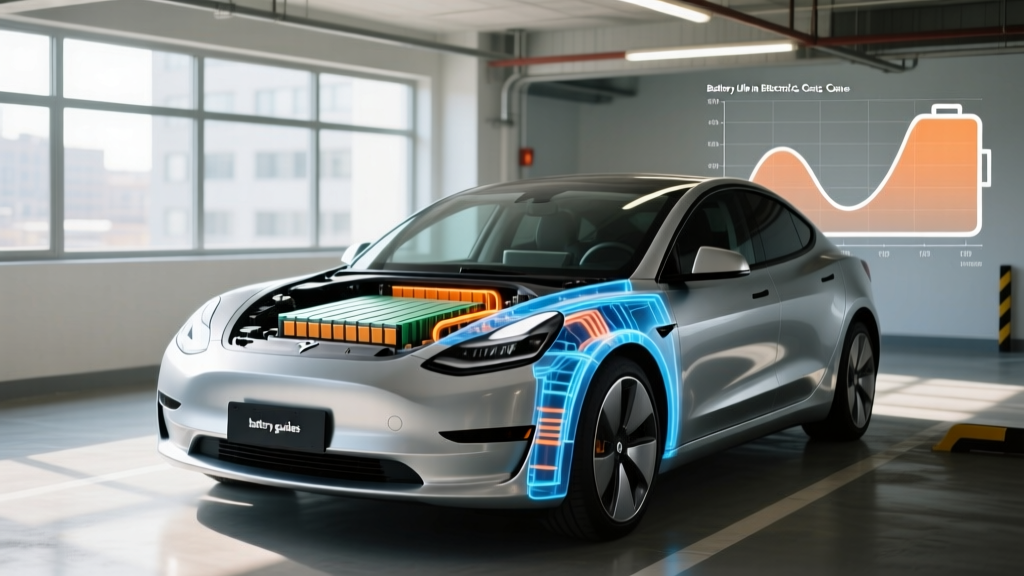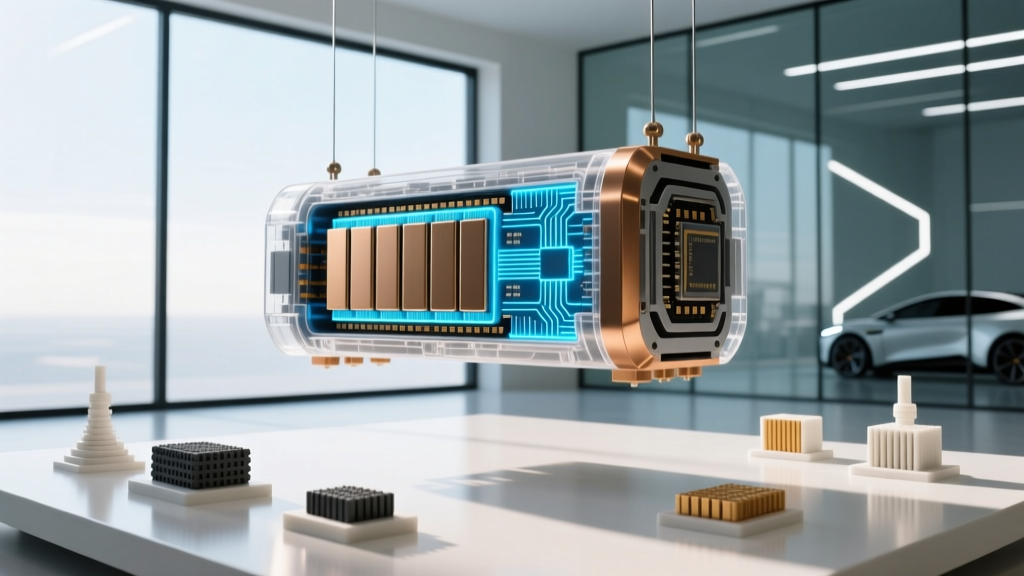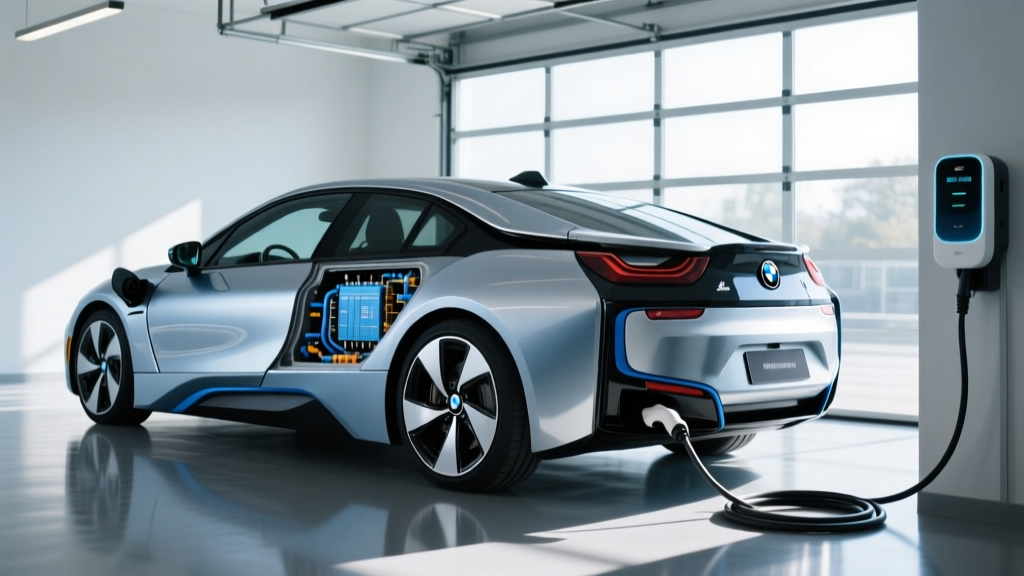
If you own or are shopping for a BMW electric vehicle—whether the i4, iX, i5, i7, or the newer iX3—understanding the high-voltage traction battery is the single most important factor in long-term satisfaction. BMW battery charging habits, chemistry choices, and thermal management directly shape how much range you retain at year five, year ten, and beyond. This guide covers the exact data on BMW's battery architecture, real-world degradation figures, warranty coverage, replacement economics, and what you can do to maximize pack health.
BMW's Battery Chemistry: NMC vs. the Industry Shift to LFP
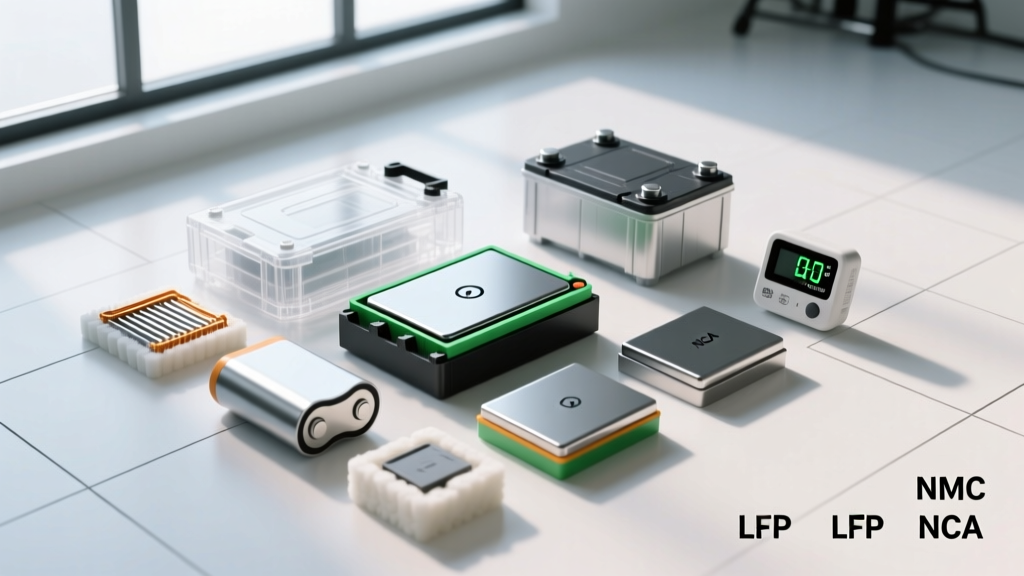
BMW has standardized on NMC (nickel manganese cobalt) lithium-ion chemistry across its Gen5 eDrive platform, which underpins the i4, iX, i5, i7, and the latest iX3. This is a deliberate engineering choice that trades some cycle life for higher energy density and stronger cold-weather performance—priorities that align with BMW's premium, long-range positioning.
NMC cells offer roughly 20–30% higher energy density than LFP (lithium iron phosphate), which is why BMW can pack a 105.7 kWh gross (approximately 101.7 kWh usable) battery into the iX xDrive50 while keeping the pack weight manageable. The trade-off: NMC cells degrade slightly faster over thousands of charge cycles and carry higher raw-material costs due to cobalt and nickel content.
| Attribute | NMC (BMW Gen5 eDrive) | LFP (e.g., Tesla Model 3 RWD, BYD) |
|---|---|---|
| Energy density | ~230–260 Wh/kg (cell-level) | ~160–180 Wh/kg (cell-level) |
| Typical cycle life | 1,000–2,000 cycles to 80% SoH | 2,500–5,000+ cycles to 80% SoH |
| Cold-weather performance | Better low-temp discharge & regen | More range loss below 32°F; needs preconditioning |
| Recommended daily SoC | 80% for daily; 100% for trips | 100% regularly is acceptable |
| Cost per kWh (pack-level) | ~$130–$150/kWh | ~$90–$110/kWh |
| Cobalt/nickel content | Yes (supply-chain & ethical considerations) | None (iron and phosphate only) |
For BMW owners, the practical implication is clear: you should charge NMC batteries to 80% for daily driving and reserve 100% charges for road trips. This differs from LFP-equipped vehicles, where manufacturers like Tesla and BYD recommend periodic 100% charges to help the battery management system (BMS) calibrate cell balancing.
LFP is gaining traction in entry-level EVs due to its lower cost and longer cycle life, but as of the 2026 model year, BMW has not adopted LFP for any production model. The brand's focus on 300+ mile EPA ranges and performance-oriented powertrains keeps NMC as the chemistry of choice.
Real-World Degradation: What the Data Shows
Battery degradation is not linear. Most lithium-ion packs experience a steeper capacity drop in the first 1–2 years (roughly 2–5%), then settle into a slow, gradual decline. BMW's Gen5 eDrive batteries have proven competitive with industry benchmarks, though long-term data is still accumulating given that the iX launched for the 2022 model year and the i4 for 2022 as well.
Typical NMC Degradation Curve (Industry Aggregates & BMW Owner Reports):
- Year 1 / 15,000 miles: ~2–4% capacity loss (initial settling)
- Year 3 / 45,000 miles: ~5–8% total loss
- Year 5 / 75,000 miles: ~8–12% total loss
- Year 8 / 100,000 miles: ~10–15% total loss (warranty threshold territory)
- Year 10 / 150,000 miles: ~12–18% total loss (projected, based on NMC aging models)
Sources: Geotab fleet battery health data, BMW owner forums (i4-talk.com, bimmerpost.com), and Recurrent Auto battery degradation studies.
For a BMW iX xDrive50 with an EPA-estimated 324 miles of range, an 8–12% loss at year five translates to roughly 285–298 miles of real-world range—still highly usable for the vast majority of drivers. The key takeaway: most EV batteries, including BMW's, retain well above 80% capacity at the 100,000-mile mark, which is the warranty threshold.
BMW's High-Voltage Battery Warranty Explained
BMW provides a dedicated high-voltage battery warranty separate from the standard 4-year/50,000-mile new-vehicle limited warranty. The battery warranty covers defects in materials and workmanship, as well as capacity loss below a defined threshold.
| Parameter | Coverage |
|---|---|
| Duration | 8 years or 100,000 miles (whichever comes first) |
| Capacity retention threshold | 70% of original usable capacity |
| What's covered | Defects, premature degradation below 70%, BMS failures, cell/module faults |
| What's NOT covered | Damage from accidents, flooding, unauthorized modifications, or improper charging equipment |
| Remedy | Module replacement, full pack replacement, or capacity restoration at BMW's discretion |
| Transferable? | Yes — transfers to subsequent owners automatically |
The 70% threshold is consistent with most EV manufacturers (Tesla, Hyundai, Ford, and others use the same benchmark). It's worth noting that BMW's warranty remedy often involves replacing individual modules rather than the entire pack. BMW's Gen5 battery is composed of multiple modules, which allows targeted repair—potentially reducing downtime and cost for out-of-warranty scenarios.
If your BMW's battery degrades to 69% state of health (SoH) at 95,000 miles, BMW will replace or repair the affected modules at no charge. In practice, very few owners report hitting this threshold, but the warranty provides a meaningful safety net.
Battery Replacement Costs: What to Budget For
Out-of-warranty battery replacement is the scenario that generates the most anxiety among prospective EV buyers. Here's the reality: the cost is significant, but the need for a full replacement is rare within a vehicle's typical ownership cycle.
| Model | Battery Size (Gross/Usable kWh) | Full Pack Replacement (Parts + Labor) | Single Module Repair |
|---|---|---|---|
| BMW i4 eDrive40 | 83.9 / 81.5 kWh (NMC) | $18,000 – $22,000 | $2,500 – $4,500 |
| BMW iX xDrive50 | 111.5 / 105.2 kWh (NMC) | $24,000 – $30,000 | $3,000 – $5,500 |
| BMW i5 eDrive40 | 84.3 / 81.2 kWh (NMC) | $18,000 – $22,000 | $2,500 – $4,500 |
| BMW i7 xDrive60 | 105.7 / 101.7 kWh (NMC) | $22,000 – $28,000 | $3,000 – $5,000 |
When is replacement typically needed? Based on current NMC aging data, a full pack replacement due to degradation alone is unlikely before 150,000–200,000 miles. Most BMW EVs will be on their second or third owner by then, and the vehicle's residual value may not justify the investment. Module-level repairs, however, are more practical and increasingly common as independent EV shops gain expertise.
It's also important to note that battery pack prices continue to decline. Pack-level costs have fallen from over $1,000/kWh in 2010 to roughly $130–$150/kWh in 2025, and are projected to drop further. If you do face a replacement at year 12 or 15, the cost will likely be lower than today's estimates.
BMW Battery Charging Best Practices for Longevity
How you charge your BMW is the single biggest variable you control. BMW's Gen5 eDrive system includes sophisticated thermal management—liquid cooling and heating for the battery pack—but owner habits still matter significantly.
Battery Care Checklist for BMW EV Owners:
- Set a daily charge limit of 80% in the iDrive charging menu. Use 100% only before long trips.
- Precondition the battery before DC fast charging. BMW's navigation system does this automatically when a charger is set as your destination—use it.
- Minimize DC fast charging frequency. Occasional road-trip fast charging is fine; daily DCFC accelerates degradation. Level 2 home charging at 7.4–11 kW is ideal for daily use.
- Avoid prolonged storage at extreme SoC. If leaving the car for weeks, set SoC to ~50% and keep it plugged in so the thermal management system can maintain temperature.
- Don't let the battery sit at 0% or near-zero for extended periods. Lithium-ion cells are stressed at both extremes.
- In extreme cold, plug in when parked. The BMS will use grid power to keep the battery in a healthy temperature range rather than draining the pack.
- Use BMW's built-in charge scheduling to take advantage of off-peak electricity rates while ensuring the car finishes charging close to departure time (reducing time spent at high SoC).
On BMW battery charging speeds specifically: the i4 and i5 support up to 205 kW peak DC fast charging, while the iX can accept up to 195 kW. In real-world conditions with preconditioning, expect a 10–80% charge in approximately 28–31 minutes at a 200+ kW station. However, peak charge rate is not sustained—the curve tapers significantly above 60% SoC, and charging from 80–100% can take nearly as long as 10–80%. This is normal for NMC chemistry and is managed by the BMS to protect cell health.
For Level 2 home charging, BMW's Wallbox (or a compatible third-party unit like ChargePoint Home Flex) delivers up to 11 kW on a 240V/48A circuit, adding roughly 30–35 miles of range per hour. A full Level 2 charge from 10–80% takes about 7–8 hours depending on the model—perfect for overnight charging.
How to Check Your BMW's Battery Health (SoH)
State of Health (SoH) is the percentage of original battery capacity remaining. BMW does not surface a precise SoH percentage in the standard iDrive interface, which frustrates some owners accustomed to Tesla's battery health readouts. Here are the ways to check:
- BMW Service / Dealer Diagnostic: Any BMW dealer can run a high-voltage battery health report using the ISTA diagnostic system. This provides module-level voltage data, capacity estimates, and overall SoH. Request this during routine service visits.
- BMW Connected App: While it doesn't show SoH directly, monitoring your real-world range over time relative to the EPA sticker gives a rough proxy. A consistent drop from 324 miles (iX) to ~290 miles over two years suggests ~10% degradation.
- Third-party OBD-II tools: Devices like the OBDeleven or BimmerCode/BimmerLink apps can read battery management system data, including estimated capacity and individual cell voltages. This is popular among enthusiast owners.
- Charging data analysis: If you track how many kWh it takes to charge from 10% to 80% on Level 2, you can estimate usable capacity. For example, if your i4 eDrive40 (81.5 kWh usable) previously required ~57 kWh for a 10–80% charge but now takes only ~51 kWh, that indicates roughly 10% capacity loss.
For buyers considering a used BMW EV, requesting a dealer battery health report before purchase is strongly recommended. It's a low-cost step that provides peace of mind and negotiation leverage.
What's Next: Solid-State Batteries and BMW's Roadmap
BMW is one of the few automakers investing heavily in solid-state battery technology through its partnership with Solid Power, a Colorado-based developer. Solid-state cells replace the liquid electrolyte in conventional lithium-ion batteries with a solid material, promising higher energy density (~30–50% improvement), faster charging, and improved safety (reduced fire risk).
However, solid-state batteries are not available in any production BMW as of 2026. BMW's Neue Klasse platform, launching with models like the next-generation iX3 and i3 sedan, uses an advanced version of cylindrical NMC cells (similar in form factor to Tesla's 4680 cells) rather than solid-state. BMW has stated publicly that solid-state batteries are expected to reach production vehicles no earlier than 2028–2030, and likely in limited, high-end applications first.
Other emerging technologies include silicon-anode cells, which increase energy density by using silicon instead of graphite in the anode. Companies like Sila Nanotechnologies and Group14 are supplying early silicon-anode materials to automakers, but widespread adoption is still 2–4 years away. These advances are worth tracking, but they should not delay a purchase decision—today's NMC batteries are proven, durable, and well-warrantied.
Frequently Asked Questions
How long do BMW EV batteries last in years and miles?
Based on NMC degradation data and BMW's 8-year/100,000-mile warranty with a 70% capacity retention threshold, most BMW EV batteries should last 12–15 years or 150,000–200,000 miles before reaching 70% state of health. Many will exceed this, as real-world fleet data from Geotab shows average degradation of roughly 1.8% per year across EV brands.
How much does it cost to replace a BMW EV battery?
A full high-voltage battery replacement for a BMW i4, i5, iX, or i7 ranges from approximately $18,000 to $30,000 depending on pack size. However, module-level repairs cost $2,500–$5,500 and are more common. Full replacement is rarely needed before 150,000+ miles, and pack prices continue to decline annually.
What does the BMW battery warranty cover?
BMW's high-voltage battery warranty covers 8 years or 100,000 miles against defects and capacity loss below 70% of original usable capacity. It is transferable to subsequent owners. It does not cover damage from accidents, floods, unauthorized modifications, or use of non-compliant charging equipment.
How do I maximize my BMW's battery health?
Charge to 80% daily, use preconditioning before DC fast charging, minimize frequent DCFC sessions, avoid prolonged storage at very high or very low SoC, keep the vehicle plugged in during extreme temperatures, and use Level 2 home charging as your primary method.
LFP vs NMC: Which battery chemistry is better?
Neither is universally better—each has trade-offs. NMC offers higher energy density, better cold-weather performance, and lighter packs for a given range, but costs more and has shorter cycle life. LFP is cheaper, lasts more cycles, and can be charged to 100% regularly, but is heavier and loses more range in cold weather. BMW uses NMC for its range and performance targets; LFP is more common in budget-oriented EVs.
Does frequent DC fast charging damage my BMW's battery?
Occasional DC fast charging (road trips, a few times per month) has minimal impact. Daily DCFC use does accelerate degradation due to sustained high temperatures and high C-rates. BMW's thermal management system mitigates this, but Level 2 home charging at 7–11 kW remains the healthiest routine charging method for NMC cells.
Can I check my BMW battery's state of health myself?
BMW does not display a precise SoH percentage in iDrive, but you can estimate it by tracking kWh consumed during a known SoC range on Level 2 charging, or by using third-party OBD-II diagnostic tools like BimmerLink. A dealer ISTA diagnostic provides the most accurate module-level health report.