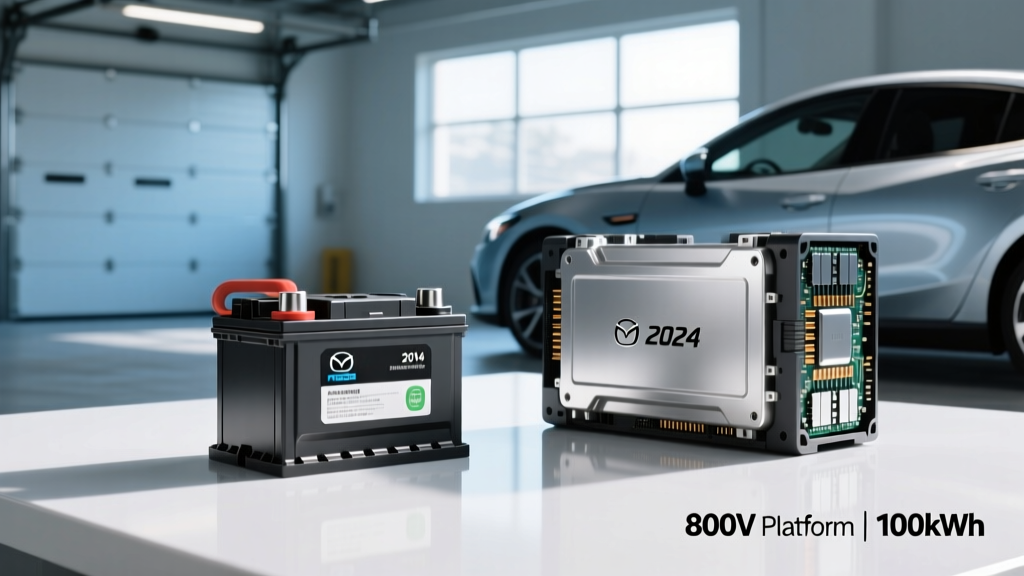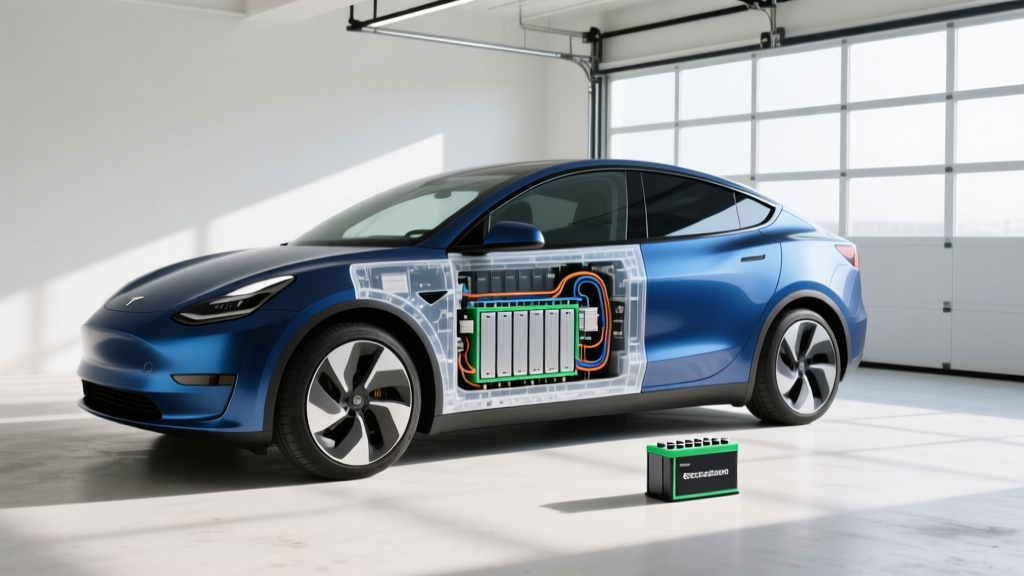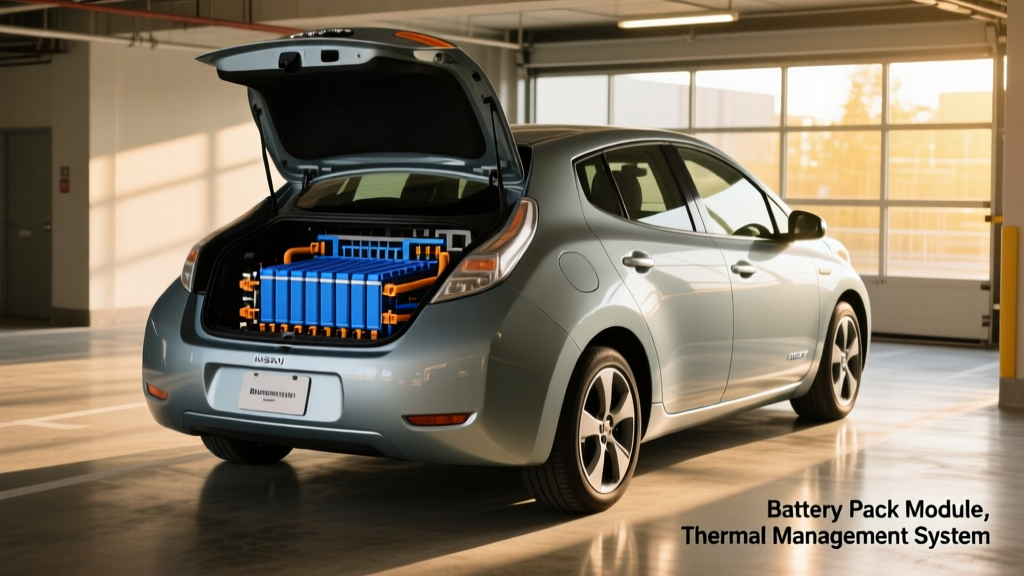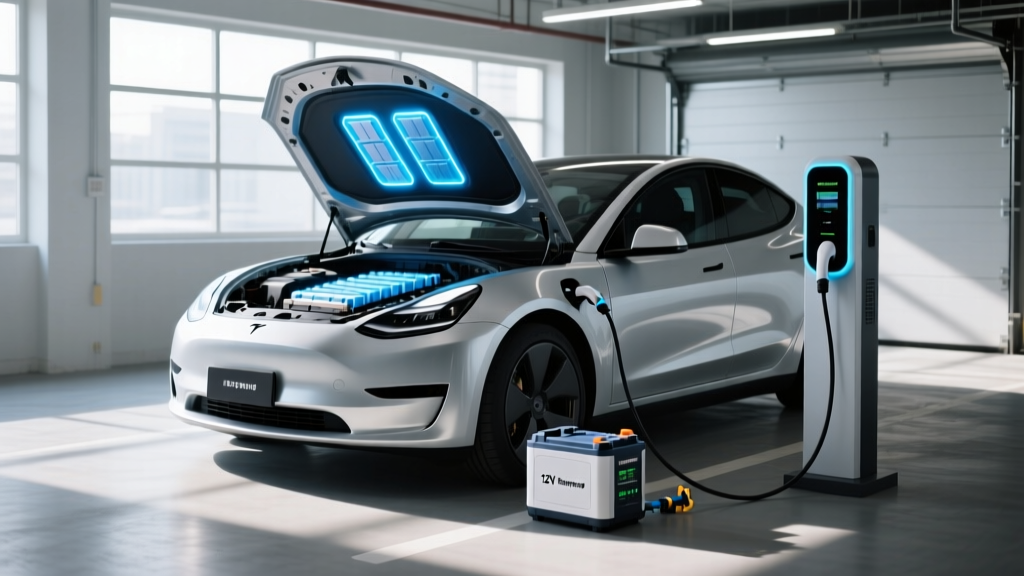
If you've ever searched for a battery tender for car maintenance, you're likely familiar with the small trickle chargers that keep a gas vehicle's 12V battery from dying during weeks of storage. But when you switch to an electric vehicle, the battery conversation changes dramatically. An EV carries two batteries: a familiar 12V auxiliary unit and a massive high-voltage traction battery (often 60–100+ kWh) that actually powers the car. Understanding which one needs a tender — and how to care for the traction pack over a decade or more of ownership — is one of the most consequential things an EV buyer can learn.
This guide covers EV battery chemistry, real-world degradation data, warranty coverage, replacement economics, and daily habits that maximize longevity. We'll also clarify exactly where a battery tender fits into EV ownership.
The Two Batteries in Your EV: Where a Battery Tender Actually Helps
Every modern EV sold in the U.S. has two separate battery systems:
- 12V auxiliary battery: Powers lights, infotainment, door locks, and the computers that manage the high-voltage system. Typically a lead-acid or lithium-ion 12V unit ranging from ~1 kWh to ~2 kWh.
- High-voltage traction battery: The main energy store, usually 50–100+ kWh of usable capacity, built from hundreds or thousands of lithium-ion cells in an NMC, NCA, or LFP configuration.
A traditional battery tender for car storage — the kind you buy for $30–$60 from brands like Battery Tender, NOCO, or CTEK — is designed for the 12V auxiliary battery. If you plan to leave your EV unplugged for more than 3–4 weeks (long trips, seasonal storage), a quality smart tender on the 12V system can prevent that battery from draining to the point where the car won't boot up and engage the high-voltage contactors.
The traction battery, however, requires entirely different care — and it's the expensive one. Let's focus there.
LFP vs. NMC vs. NCA: Choosing Your Chemistry
Not all EV batteries are built the same. The cathode chemistry determines energy density, cycle life, cold-weather performance, and cost. As of 2026, three chemistries dominate the U.S. market:
| Attribute | LFP (Lithium Iron Phosphate) | NMC (Nickel Manganese Cobalt) | NCA (Nickel Cobalt Aluminum) |
|---|---|---|---|
| Energy Density | Lower (~160–180 Wh/kg cell) | Higher (~230–280 Wh/kg cell) | Highest (~260–300 Wh/kg cell) |
| Cycle Life | 3,000–5,000+ cycles to 80% | 1,000–2,000 cycles to 80% | 1,000–1,500 cycles to 80% |
| Cold Performance | Moderate (more range loss below 32°F) | Better (heat pump + chemistry) | Better (heat pump + chemistry) |
| Charge to 100% Daily? | Yes — recommended by OEMs | No — 80% daily, 100% for trips | No — 80% daily, 100% for trips |
| Cost | Lower (no cobalt/nickel) | Higher | Higher |
| Common In | Tesla Model 3/Y RWD, Ford Mustang Mach-E Select (2025+), Rivian Standard | Hyundai Ioniq 5/6, Kia EV6/EV9, VW ID.4, Chevy Equinox EV | Tesla Model S/X, Lucid Air |
The practical takeaway: LFP is the durability and cost champion — ideal for daily commuters who can charge to 100% without worry. NMC/NCA delivers more range per pound, making it the choice for long-range and performance trims. If you regularly drive 300+ miles between charges or live in a cold climate, NMC/NCA's energy density and cold tolerance give a measurable edge. If you want maximum cycle life and lower upfront cost, LFP wins.
How Long Do EV Batteries Actually Last? Real Degradation Data
This is the question that dominates EV forums, and the answer is better than most buyers fear. Modern liquid-cooled traction batteries are remarkably durable, and real-world fleet data consistently outperforms early pessimistic projections.
Typical Degradation Curve (Fleet & Owner Data, 2020–2026 Models):
- Year 1 / 15,000 miles: 2–5% capacity loss (initial formation loss)
- Year 3 / 45,000 miles: 6–9% total loss
- Year 5 / 75,000 miles: 8–12% total loss
- Year 8 / 120,000 miles: 10–16% total loss (most remain above warranty threshold)
- Year 10 / 150,000 miles: 12–20% total loss (varies heavily by chemistry and care)
According to data compiled by Recurrent Auto from over 15,000 EVs in their fleet monitoring program, the median EV battery retains approximately 90% of original capacity at 100,000 miles. Tesla's own 2024 Impact Report showed Model 3/Y batteries retaining roughly 85% capacity at 200,000 miles.
For context: a vehicle with an EPA-rated 300-mile range that loses 15% over a decade still delivers ~255 miles — more than adequate for the vast majority of daily driving. Catastrophic battery failure (sudden, total loss) remains exceedingly rare in liquid-cooled packs.
What the Battery Warranty Actually Covers
Federal law mandates that EV manufacturers provide a minimum battery warranty of 8 years / 100,000 miles (10 years / 150,000 miles in CARB states like California, New York, and others). Most manufacturers match or exceed this baseline.
| Manufacturer | Warranty Period | Capacity Retention Threshold |
|---|---|---|
| Tesla (Model 3/Y RWD — LFP) | 8 yr / 100,000 mi | 70% |
| Tesla (Model 3/Y LR, Model S/X) | 8 yr / 120,000 mi | 70% |
| Hyundai / Kia (Ioniq 5, EV6, EV9) | 10 yr / 100,000 mi | 70% |
| Ford (Mustang Mach-E, F-150 Lightning) | 8 yr / 100,000 mi | 70% |
| Chevrolet (Equinox EV, Blazer EV, Silverado EV) | 8 yr / 100,000 mi | 70% (60% for fleet) |
| Rivian (R1T, R1S) | 8 yr / 120,000 mi | 70% |
| BMW (i4, iX, i7) | 8 yr / 100,000 mi | 70% |
Key detail: The warranty covers capacity falling below the stated threshold — typically 70% of original capacity. A battery at 72% State of Health (SoH) at 90,000 miles is considered normal, not defective. The warranty also covers manufacturing defects and premature cell failure. It does not cover damage from accidents, flooding, or aftermarket modifications.
According to fueleconomy.gov, the federal minimum standard for battery warranty coverage applies to all light-duty EVs sold in the U.S., and CARB-adopting states extend that requirement further.
EV Battery Replacement Cost: When and How Much
Full traction battery replacement is rare in the first decade of ownership. When it does occur, it's usually due to a manufacturing defect caught under warranty, physical damage from a collision or ground strike, or — in older, high-mileage vehicles — degradation beyond usable thresholds.
| Vehicle | Battery Size (Usable) | Chemistry | Estimated Parts Cost | Estimated Labor | Total Range |
|---|---|---|---|---|---|
| Tesla Model 3 RWD | 57 kWh | LFP | $8,000–$10,000 | $1,500–$2,500 | $9,500–$12,500 |
| Tesla Model Y Long Range | 75 kWh | NMC | $12,000–$15,000 | $1,500–$2,500 | $13,500–$17,500 |
| Hyundai Ioniq 5 | 77.4 kWh | NMC | $11,000–$14,000 | $2,000–$3,000 | $13,000–$17,000 |
| Ford F-150 Lightning Ext. Range | 131 kWh | NMC | $18,000–$25,000 | $3,000–$5,000 | $21,000–$30,000 |
| Chevrolet Equinox EV | 85 kWh | NMC | $12,000–$16,000 | $2,000–$3,500 | $14,000–$19,500 |
Important perspective: These costs look alarming until you compare them with what gas-car owners spend on powertrain repairs over the same period. A transmission replacement on a conventional vehicle often runs $4,000–$8,000, and timing chain or head gasket repairs can exceed $3,000–$5,000. Most EV batteries never need replacement — data from Recurrent Auto shows battery replacement rates below 5% across all monitored vehicles through 150,000 miles.
Module-level repair (replacing individual cell modules rather than the entire pack) is increasingly available from specialized EV shops for $3,000–$7,000, depending on the vehicle and the number of degraded modules.
Factors That Accelerate (or Slow) Battery Degradation
Battery chemistry sets the ceiling, but your habits determine where your pack lands on the degradation curve. Here's what the data shows matters most:
Habits That Preserve Battery Health
- Keep daily SoC between 20–80% for NMC/NCA: Charging to 100% and holding there stresses the cathode. Reserve 100% charges for road trips and start driving shortly after reaching full.
- LFP owners: charge to 100% at least weekly: LFP cells need periodic full charges for the BMS to calibrate cell balancing. Tesla and Ford both recommend this.
- Use DC fast charging sparingly: Occasional fast charging (road trips) is fine. Daily use of 150+ kW DCFC adds measurable wear — Recurrent data shows ~1–2% additional degradation over 100k miles for frequent fast-chargers vs. primarily L2 chargers.
- Precondition before fast charging: Most EVs do this automatically when you navigate to a charger. A warm battery (65–85°F) accepts charge faster and with less stress.
- Avoid prolonged storage at 100% or below 10%: If storing for 2+ weeks, aim for 50–60% SoC and leave the car plugged in to a Level 1 or Level 2 charger so the BMS can maintain the pack.
- Park in shade or a garage when possible: Sustained high ambient temperatures (above 95°F) accelerate calendar aging. Liquid cooling helps, but it's not magic.
Habits That Accelerate Degradation
- Daily DC fast charging as primary charging method
- Routinely draining below 10% before recharging
- Leaving NMC/NCA packs at 100% SoC for hours or days
- Repeated high-performance launches (track use) without cool-down
- Long-term storage at extreme SoC levels in high heat
Monitoring Your Battery's State of Health (SoH)
State of Health (SoH) is the percentage of original capacity your battery can still hold. A new EV starts at 100% SoH; a battery at 85% SoH holds 85% of its original kWh.
How to check SoH:
- In-car displays: Tesla shows battery health in the Service menu (Settings → Service → Battery Health). Hyundai/Kia provides a similar readout in newer models.
- OBD-II dongles + apps: Tools like OBDeleven, LeafSpy (Nissan Leaf), or Scan My Tesla can pull raw BMS data including SoH, cell voltage spread, and cycle count.
- Third-party monitoring: Services like Recurrent Auto connect to your vehicle's telematics and provide monthly SoH reports with fleet comparisons.
- Dealer diagnostics: Any authorized service center can run a full battery health check — often free during routine service visits.
What to watch for: Cell voltage imbalance (any single cell group more than 0.1V different from the pack average) can signal a weak module. Sudden range drops that don't correlate with temperature or driving style warrant a diagnostic visit.
Where a Battery Tender Fits in EV Ownership
To circle back to the original question: yes, a battery tender for car storage is still relevant for EVs — but only for the 12V auxiliary battery.
Here's the scenario where it matters: your EV's 12V battery powers the computers that connect the high-voltage pack. If the 12V dies, the car is effectively bricked — you can't even engage the contactors to use the main battery. This is the #1 cause of "dead EV" service calls, not traction battery failure.
When to use a 12V tender on your EV:
- Storing the vehicle for 3+ weeks without driving
- Leaving the car unplugged at an airport or long-term parking
- If your EV is known to have parasitic 12V drain issues (some early-model-year vehicles had firmware bugs causing this)
What to buy: Look for a smart tender with lithium-mode if your EV has a 12V lithium auxiliary battery (increasingly common in 2024+ models). Brands like CTEK (MXS 5.0), NOCO GENIUS5, and Battery Tender Junior all work well. Expect to spend $35–$80.
For the traction battery itself, the best "tender" is simply leaving the car plugged into a Level 2 home charger with the charge limit set appropriately (80% for NMC/NCA, 100% for LFP). The BMS handles the rest.
What's Next: Solid-State and Silicon Anode Batteries
The next generation of EV battery technology is in active development, but it's important to separate announcements from production reality:
- Silicon anode batteries: Companies like Sila Nanotechnologies and Group14 are shipping silicon-dominant anode materials to manufacturers now. These boost energy density by 15–25% over graphite anodes. Expect to see them in limited 2027–2028 model-year vehicles (Mercedes G-Class EV is one announced application).
- Semi-solid-state: NIO (in China) has deployed a 150 kWh semi-solid pack. U.S. availability remains uncertain and is not expected before 2028–2029.
- Full solid-state: Toyota, Samsung SDI, and QuantumScape target 2028–2030 for initial production, with mass-market availability likely 2030+. These promise faster charging (10–80% in under 10 minutes), higher energy density, and improved safety — but manufacturing scale-up remains the unresolved challenge.
Bottom line: If you're buying an EV in 2026, today's liquid-cooled LFP and NMC packs are mature, well-warranted, and proven to 200,000+ miles. Waiting for solid-state means waiting at least 4–5 years for meaningful U.S. market availability.
Frequently Asked Questions
Do I need a battery tender for my EV's main traction battery?
No. The high-voltage traction battery is managed by a sophisticated Battery Management System (BMS) that handles cell balancing, thermal regulation, and charge maintenance. Simply leaving your EV plugged into a Level 2 charger with the appropriate charge limit set (80% for NMC/NCA, 100% for LFP) is all that's needed. A battery tender is only useful for the 12V auxiliary battery during extended storage.
How long do EV batteries last in years and miles?
Based on fleet data from Recurrent Auto and manufacturer reports, most modern liquid-cooled EV batteries retain 85–90% of original capacity at 100,000 miles and 80–88% at 150,000 miles. In years, that translates to reliable service for 12–15+ years for average drivers (12,000–15,000 miles/year). LFP chemistries tend to outperform NMC/NCA in cycle life.
How much does it cost to replace an EV battery out of warranty?
Full pack replacement ranges from approximately $9,500 for a Tesla Model 3 RWD (57 kWh LFP) to $30,000 for a Ford F-150 Lightning Extended Range (131 kWh NMC). However, full replacements are rare — most packs outlive the vehicle, and module-level repairs ($3,000–$7,000) are increasingly available. Under warranty, replacement is free if capacity drops below the threshold (typically 70%).
Is LFP or NMC better for daily driving?
For daily commuting and moderate-range needs, LFP is generally the better choice: it tolerates daily 100% charges, has 2–3x the cycle life, and costs less. For long road trips, towing, or cold-climate driving where maximum energy density matters, NMC/NCA provides more range per kWh of battery weight. Neither is universally "better" — it depends on your driving pattern.
Does frequent DC fast charging really damage the battery?
"Damage" is too strong, but measurable extra wear does occur. Recurrent Auto's fleet data shows vehicles that DC fast charge more than 90% of the time exhibit approximately 1–2% more capacity loss over 100,000 miles compared to vehicles primarily charged on Level 2. Modern BMS and thermal management systems mitigate most of the risk. Occasional fast charging on road trips has negligible impact.
How do I check my EV battery's State of Health?
Most EVs provide SoH data through the infotainment system or mobile app (Tesla's Battery Health screen, for example). For more granular data, OBD-II tools like Scan My Tesla or OBDeleven can read raw BMS values. Dealerships can also run comprehensive diagnostics. Third-party services like Recurrent Auto offer ongoing monitoring with fleet benchmarking.